Camera sensor sizes explained in one sentence: the sensor is the light-sensitive surface that records your photograph, and its size controls how much light you gather, how your lenses frame the scene, how much background blur you can get and how large the whole camera must be. Everything else — megapixels, brand, price tier — is secondary to this physical fact, which is why sensor size is the first specification experienced photographers check and the one marketing mentions most confusingly.
This guide maps every sensor size you will meet, from the tiny chips in action cameras to medium format, explains the crop factor that links them, and shows what each size means for real photographs: low light, depth of field, lens size and cost. By the end, spec sheets will read plainly, and you will know which size suits your subjects — knowledge that feeds directly into decisions like full frame vs crop sensor and your eventual shortlist in how to choose a camera.
Disclosure: As an Amazon Associate, kajuandouglas.com earns from qualifying purchases. Links to Amazon on this page are affiliate links; they cost you nothing extra. Listing details such as price and availability change often, so check the current Amazon listing before you buy.
The Sensor Family, Largest to Smallest
Medium format sensors (roughly 44 x 33mm and up) sit at the top, in specialist cameras for studio, landscape and commercial work where ultimate detail justifies cost and bulk. Full frame (36 x 24mm), the size of a 35mm film frame, is the professional mainstream. APS-C (about 23.6 x 15.7mm, slightly smaller in Canon’s version) powers most enthusiast and many professional cameras. Micro Four Thirds (17.3 x 13mm) trades some light gathering for the smallest interchangeable lenses in the business.
Below those sit the fixed-lens sizes: 1-inch sensors (13.2 x 8.8mm) in premium compacts and some drones, then a descending ladder of small sensors in budget compacts, action cameras and phones, down to roughly 1/2.3-inch and smaller. Each step down roughly halves the light-gathering area of the step above, which is why the differences are most visible in darkness and least visible at noon. Note that names are historical and misleading — a ‘1-inch’ sensor is not one inch in any dimension — so compare the millimetre dimensions, not the labels.
In this guide
Why Size Matters: Light, Noise and Dynamic Range
Photography is the collection of light, and a larger sensor collects more of it for the same exposure settings — more light means a cleaner signal, which appears in your files as less noise at high ISO, smoother tonal gradations and more recoverable detail in shadows. This is not brand magic; it is arithmetic. Double the sensor area and, at equal technology, you gain about one stop of low-light performance. That is the entire basis of the full-frame advantage described in full frame vs crop sensor.
Dynamic range follows the same physics: larger photosites (the individual light buckets on the sensor) hold more charge before overflowing, so highlights and shadows coexist more gracefully. This is why a full-frame camera can often rescue an underexposed landscape in editing while a phone file falls apart — and why phones fight back with computational stacking, merging many frames to simulate a larger sensor’s light intake. Computation narrows the gap in daylight; in genuine darkness, area still wins.
Crop Factor and Equivalent Focal Lengths
Because a smaller sensor records only the centre of a lens’s image, it frames the scene more narrowly — as if you had used a longer lens. The crop factor expresses this: about 1.5x for APS-C (1.6x Canon), 2x for Micro Four Thirds, about 2.7x for 1-inch. Multiply a lens’s focal length by the factor to find its full-frame-equivalent field of view. A 35mm lens on APS-C frames like a 52mm on full frame; a 25mm on Micro Four Thirds frames like a 50mm.
Equivalence extends to depth of field and, for fair comparison, aperture: an f/2.8 lens on APS-C gives depth of field like f/4.2 on full frame at the same framing. This is not a flaw — it is a trade. Crop formats get telephoto reach and depth of field cheaply; full frame gets shallow focus and low-light cleanliness. Photographers who understand equivalence stop arguing about which is ‘real’ and start choosing the trade their subjects prefer.
Megapixels Are Not Sensor Size
The most persistent confusion in camera shopping is between sensor size (physical area) and resolution (pixel count). A 24-megapixel full-frame sensor and a 24-megapixel APS-C sensor produce files with the same dimensions, but the full-frame photosites are larger, gathering more light each. Conversely, cramming 60 megapixels onto a small sensor yields tiny photosites and files that are large but not necessarily cleaner. Resolution decides how much you can crop and print; size decides how gracefully the file handles darkness and editing.
For most photographers, 20–26 megapixels on any current format is a sweet spot: plenty for large prints, forgiving of technique, modest in file size. Higher resolutions reward tripod discipline and excellent lenses, and punish sloppy technique by recording it faithfully. Choose resolution for your output — prints, crops, client demands — and sensor size for your light.
Choosing Your Size by Subject
Match size to your dominant conditions. Low-light, event, wedding and portrait photographers gain most from full frame. Travellers, hikers and street photographers often prefer APS-C or Micro Four Thirds, where complete kits weigh half as much and quality in daylight is indistinguishable. Wildlife and sports shooters exploit crop factors for reach. Premium compacts with 1-inch sensors are the connoisseur’s everyday carry — vastly better than phones, small enough to always attend.
And remember the system truth from camera buying guide: you are buying lenses for a sensor size, and lenses outlive bodies. A photographer who commits happily to APS-C and buys three excellent lenses will out-shoot one who stretches to a full-frame body and can afford only a basic zoom. Sensor size matters — but it is the second decision, after the subject, not the first.
Gear for This Guide
Four sensor sizes in real cameras — full frame, APS-C, Micro Four Thirds and 1-inch — so you can compare the systems built around each:

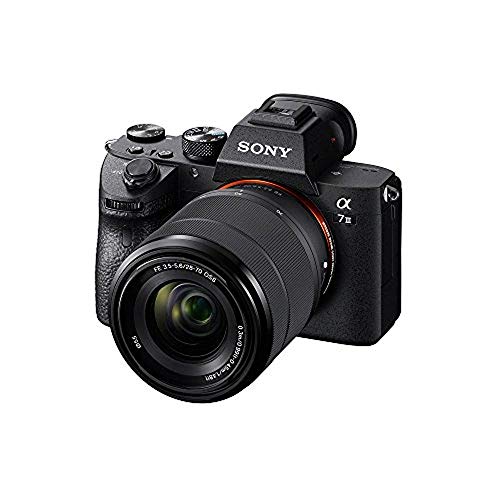
Sony Alpha a7 III Mirrorless Camera with 28-70mm Lens — Check price on Amazon. A solid, widely available option that fits this guide; confirm the exact kit contents and lens mount on the listing before ordering.

Fujifilm X-T30 II Mirrorless Camera with XF 18-55mm Kit — Check price on Amazon. A solid, widely available option that fits this guide; confirm the exact kit contents and lens mount on the listing before ordering.

Panasonic LUMIX G7 4K Mirrorless Camera with 14-42mm Lens — Check price on Amazon. A solid, widely available option that fits this guide; confirm the exact kit contents and lens mount on the listing before ordering.

Sony ZV-1 II Premium Compact Digital Camera — Check price on Amazon. A solid, widely available option that fits this guide; confirm the exact kit contents and lens mount on the listing before ordering.
Common Misconceptions
Misconception one: a bigger sensor always takes better photos. In good light, with good lenses, small-sensor cameras produce images most viewers cannot distinguish from full-frame results; the big sensor’s advantages appear in darkness, shallow-focus portraits and heavy editing. Misconception two: crop sensors are a beginner phase to outgrow. Entire professional systems — Fujifilm’s APS-C line, Micro Four Thirds video rigs — are built on crop formats by choice, not compromise.
Misconception three: more megapixels means a better sensor. Resolution and size are independent variables, and beyond the mid-twenties, megapixels mostly buy cropping room at the cost of file size and technique demands. Misconception four: the crop factor changes your lens. It changes only what the sensor records of the lens’s image — your 50mm stays a 50mm, with a narrower view. Understanding that single fact demystifies half of all camera forum arguments.
Camera Sensor Sizes Explained Through One Family of Photographs
Take one scene — a family group on a beach at dusk — through the formats. A phone works hardest: its tiny sensor gathers little light, so software stacks frames and sharpens aggressively; the result is bright and shareable, with waxy skin and a noisy sky on close inspection. A 1-inch compact gathers several times more light per frame and shows cleaner faces and a smoother sky. APS-C steps up again: faces hold texture, the sky grades gently, and a fast prime can separate the group from the background. Full frame at the same settings is cleaner still, with the shallowest focus and the most forgiving file for editing. Medium format renders the scene with a tonal smoothness professionals describe as ‘depth’, at the cost of a camera the size of a small appliance.
Now repeat the scene at noon. The ranking compresses dramatically: every format has light to spare, and differences shrink to depth of field and detail on extreme enlargement. This is the practical moral of sensor sizes — they are insurance policies for bad light and big output, priced in money and weight. Buy the policy your shooting conditions require, and no larger: the premium is paid on every walk, in every bag, for the life of the system.
How Sensor Size Shapes Lens Design
A lens must project an image circle covering its sensor, so sensor size dictates lens size with physical directness: full-frame lenses carry larger glass to cover a larger circle, Micro Four Thirds lenses stay small because their circle is small, and a phone’s lens is tiny because its sensor is tiny. This is why ‘the same’ 50mm-equivalent lens exists in dramatically different sizes across formats, and why adapting lenses only works downward — a big-circle lens can feed a small sensor, never the reverse without vignetting.
It also explains each format’s characteristic glass. Crop formats excel at long, light telephotos because their reach comes from the sensor, not the glass. Full frame excels at fast standard and wide lenses whose shallow depth of field is the format’s signature. When you choose a sensor size you are really choosing a lens wardrobe — its weight on your shoulder, its price on your card and its look on your subjects — which is why experienced buyers shop systems, not sensors.
Worked Example: One Scene Photographed on Four Sensor Sizes
Imagine a portrait in a garden in the early evening, the light soft and fading. On a phone-sized sensor, the camera compensates with computation, brightening and sharpening behind the scenes, and the whole garden stays in focus whether you wanted it or not. On a 1-inch sensor in a premium compact, you gain real optical quality and a hint of background separation at the long end of the zoom. On APS-C with a fast prime, the background dissolves into a gentle wash, the face is rendered with fine detail, and the fading light is still comfortable. On full frame with the equivalent fast lens, the separation deepens further and the file tolerates being lifted in editing when the light drops another stop. The scene did not change; what changed was the menu of choices available to you, depth of field, sensitivity, cropping freedom, and the size of the equipment that delivered them. That menu, not a quality ladder, is what sensor size actually is.
Run the same thought experiment with a landscape at midday and the differences nearly vanish, because abundant light is the great equaliser. Run it with a bird at distance and the ranking reshuffles again, because reach and cropping enter the equation. This is why experienced photographers resist declaring a best sensor size in the abstract: the answer is a function of the scene, the light and the lens, and the worked examples in your own photography will teach you your personal ranking faster than any chart.
Pixel pitch in plain language
Divide a sensor’s width by the number of pixels across it and you get a sense of how large each pixel site is, a figure often called pixel pitch. Larger individual pixels, all else equal, gather more light each and produce cleaner signals, which is one reason a lower-resolution full-frame camera can be a low-light specialist while a very high-resolution one trades some of that cleanliness for detail. The important phrase is all else equal, because sensor design, back-side illumination and modern processing keep redrawing what a given pixel size can do. Treat pixel pitch as an explanation of tendencies, not as a shopping score, and be suspicious of anyone who reduces a camera to this single number.
How Sensor Size Shapes the Photographs You Do Not Take
The least discussed effect of sensor size is behavioural. A large-sensor kit is heavier, more valuable and more deliberate, and its owner plans photography: the trip to the viewpoint, the portrait session, the event. A small-sensor camera is carried on the off chance, and its owner collects the unplanned photographs that planned photography never meets. Whole photographic lives have been built on each pattern, including celebrated documentary work shot on tiny cameras precisely because they were invisible and always present. When you choose a sensor size you are also, quietly, choosing a ratio between planned and found photographs in your future library. Neither ratio is superior; they produce different bodies of work, and the photographers happiest with their choice tend to be the ones who recognised which pattern was theirs.
Sensor size and video, briefly and practically
Video adds two size-related considerations. Larger sensors produce shallower focus in video, which looks cinematic and demands skilled focusing, while smaller sensors keep more of the scene sharp, forgiving for vlogging, family filming and run-and-gun work. Heat is the second: reading a large, high-resolution sensor continuously for video generates warmth that smaller sensors, or cropped readouts, avoid, which is one reason some large-sensor cameras limit certain recording modes. If video is central to your plans, judge a camera by its recording behaviour in the modes you will use, with sensor size as background context rather than the headline.
A Short Glossary of Sensor Terms Worth Owning
- Full frame: a sensor the size of a frame of traditional film, roughly thirty-six by twenty-four millimetres, the reference against which crop factors are measured.
- APS-C: the most common enthusiast crop format, around one and a half times smaller in linear terms than full frame, though the exact factor varies slightly by maker.
- Micro Four Thirds: a smaller format with a two-times crop factor, built around compact lenses and deep depth of field.
- 1-inch type: a sensor size common in premium compacts and drones, much larger than a phone sensor and much smaller than APS-C, despite the confusing historical name.
- Medium format: sensors larger than full frame, used where maximum detail and a distinctive rendering justify considerable cost and size.
- Back-side illuminated: a sensor construction that moves wiring behind the light-sensitive layer, improving light gathering, especially valuable on smaller sensors.
- Stacked sensor: a design with processing layered directly on the sensor, enabling very fast readout for action and video.
With those terms owned, the specification pages of any camera become readable in minutes, and the marketing language loses its power to confuse size with quality, which is most of what this explainer set out to do.
Sensor Size and Depth of Field, With the Nuance Restored
It is commonly said that larger sensors give shallower depth of field, and at the same framing, the same aperture number and the same subject distance that is true, because the larger format uses a longer lens to achieve that framing and longer lenses render shallower focus at a given aperture. But photographers do not live at fixed aperture numbers; they choose them. A crop photographer with a fast prime can achieve shallower focus than a full-frame photographer using a slow zoom, which is why lens choice routinely overwhelms format in real portraits. The accurate statement is about ceilings: the shallowest focus achievable in each system, with its fastest lenses at a given framing, is shallower on the larger format. Whether you ever visit that ceiling depends on your lenses and your subjects. Portrait photographers who live at the ceiling choose large sensors and fast glass together. Everyone else should treat depth of field as a lens conversation first and a sensor conversation second, and be deeply suspicious of any comparison that photographs the same aperture number on two formats and declares a winner.
Cropping as a hidden sensor-size decision
Every time you crop a photograph you are, in effect, choosing a smaller sensor after the fact, trading resolution for framing. This is why high-resolution large sensors are so versatile for wildlife and sports: they contain a respectable crop-format photograph inside them, available whenever the subject was too distant. It is also why crop-format cameras with dense sensors punch above their size for reach work. When you evaluate a camera for subjects you will crop, distant animals, small birds, details in a scene, evaluate the cropped result, not the full frame: how many pixels land on your subject is the figure that decides the print. Sensor size, pixel count and your typical cropping habit form a single equation, and solving it for your own subjects is more useful than any format ranking.
Cost Curves: Why Bigger Costs More Than Proportionally
Sensor manufacturing explains the price structure of the whole industry. A wafer of silicon yields many small sensors or few large ones, and a single defect ruins a larger area’s worth of product on the big formats, so large sensors cost disproportionately more to make, before any camera is built around them. The costs then cascade: larger sensors need larger lenses with larger glass, larger shutters or readout capacity, more processing for larger files, and bodies built to hold it all. This is why the step from crop to full frame is a step in the price of everything, not just the body, and why medium format occupies its remote price territory. It is also why small sensors keep improving photography for most people: the industry’s volume, phones, drones, action cameras, pours research into extracting astonishing results from tiny silicon, and dedicated cameras inherit those gains.
Drones, action cameras and the small-sensor frontier
The most interesting sensor development of recent years has happened at the small end, in the air and on helmets. Drones carry sensors from phone-sized up to 1-inch and larger in professional models, and their photographs benefit from a viewpoint no ground camera can buy. Action cameras extract watchable, stabilised video from small sensors through computation and frame rates. Even the humble webcam and doorbell camera are sensor stories. Mentioning them in this explainer is not a digression; it is the proof of the central point. Each of those devices chose its sensor size for its job, weight in the air, size on a helmet, cost on a door, and each is the right size for that job. Your camera deserves the same logic applied with the same honesty.
Reading a Camera Listing Like an Engineer
Product listings present sensor information in a code that becomes transparent once you know the few figures that matter. The format name tells you the family. The dimensions in millimetres tell you the truth when the name is vague, and they are always available in full specifications. The megapixel count tells you resolution, which interacts with size to suggest pixel pitch and therefore the camera’s likely character: moderate resolution on a large sensor suggests a low-light and video lean; very high resolution on a small sensor suggests detail in good light and a need for care in poor light. The sensor technology words, back-side illuminated and stacked, tell you about light gathering and readout speed respectively. With those four readings you can place any camera in the landscape of this explainer in under a minute, and the remaining specification page becomes detail rather than mystery.
Apply that reading to the second-hand market and it becomes a superpower, because older cameras with unfashionable names often hide excellent sensors. A previous-generation APS-C body with a well-regarded sensor and a bright prime lens will out-photograph a newer, smaller-sensor camera in most conditions, at similar money. Conversely, a large-sensor body from the early years of a format may be outclassed in autofocus, video and handling by a modern smaller camera in every way except raw sensor dimensions. Sensor size is one variable in a system, and the listings reward readers who keep it in its place: important, explanatory, and never sufficient on its own.
What sensor size means for your existing lenses
Photographers rarely start from zero, so the interaction between a new sensor size and lenses already owned deserves a direct answer. Moving from crop to full frame within a system, your full-frame-capable lenses gain their intended field of view, which can feel like receiving new lenses, while dedicated crop lenses may be restricted to a crop mode or sold on. Moving the other way, your full-frame lenses become longer in effect, which telephoto owners may welcome and wide-angle owners will mourn, because a beloved wide lens becomes merely moderate. Adapters preserve function across many combinations but never change the underlying geometry: the sensor records the portion of the lens’s image it can see. Plan a format change as a lens event with a body attached, and the costs and delights will both be accurately forecast.
The Human Factor: Hands, Eyes and the Cameras We Keep
Sensor size correlates with body size, and body size decides more purchases than image quality ever does. Small hands, travellers with strict baggage limits, photographers with joint pain or limited strength, and anyone who carries a camera all day for work will feel the smaller formats’ kindness in their shoulders by evening. Large hands, glove-wearing winter photographers and those who balance long lenses will feel the larger bodies’ steadiness as a genuine feature. Viewfinders follow the same pattern, with larger formats often carrying larger, brighter finders that glasses wearers and older eyes appreciate. None of this appears in sensor comparisons, and all of it decides whether a camera is carried for five years or sold in one. The right sensor size is partly an optical question and partly a question about your body, and there is no embarrassment in the second half of that answer. The camera that fits your hands gets used, and used cameras take the best photographs in this entire explainer.
Choosing a Sensor Size by Life Stage and Budget Reality
The student or young photographer, whose budget is real and whose subjects are everything, is best served by the formats where lenses are plentiful and used prices are kind, which today means APS-C and Micro Four Thirds systems with deep second-hand markets. The working professional chooses by genre, as this explainer has shown, and often owns two sizes deliberately. The returning photographer, coming back to the hobby after years, frequently finds that a modern crop system outperforms the professional full-frame gear they remember, at a fraction of the carrying weight, and that surprise is genuine: sensor progress has been that fast. The traveller chooses by the bag and the itinerary. The parent chooses by the living room’s light and the speed of the subjects. None of these decisions requires the largest sensor, and several of them are actively better served by smaller ones, which is why the market sustains all of them. A format’s survival is not nostalgia; it is evidence that a real population of photographers is being served well.
The one-format myth and the multi-format reality
Online discussion often assumes a photographer must pledge allegiance to a single size, but working reality is cheerfully polygamous. A wedding photographer may shoot full frame for the day and carry a small-sensor compact for the dance floor’s chaos. A landscape photographer may hike with Micro Four Thirds and keep a larger system for studio and print commissions. A journalist may file from whatever was in hand. Sensor size is a tool dimension, like focal length, and nobody asks whether a photographer is a 35mm person or an 85mm person for life. Release yourself from the allegiance model, choose the size your main work needs, and let other sizes visit as rentals, second bodies and compacts. Your photographs will not be confused, and your back will have opinions only about what you carried today.
Where Sensor Development Goes Next, and Why It Matters Less Than You Think
Sensor research continues toward faster readout, better dynamic range at every size, and computational techniques that merge multiple captures into single files of remarkable quality. The direction of travel is that the practical gaps between sizes narrow for most subjects while remaining real at the extremes of light and enlargement. For a buyer today, that trajectory carries a comforting implication: there is no wrong year to buy in, and no size that is about to be left behind. The photographs you take in the next five years with a sensibly chosen camera of any mainstream size will not be embarrassed by the cameras of five years later, because the limiting factors in most photographs are already light, lenses, access and the photographer’s eye. Choose the size that fits your subjects and your shoulders, spend the difference in money and weight on lenses and travel, and let the laboratories argue about the rest.
Sensor Size Questions From Real Buying Conversations
Certain questions recur whenever this topic meets a real purchase, and they deserve direct answers in one place. Does a larger sensor make photographs sharper? Not by itself; sharpness is delivered by lenses, focus accuracy and technique, with sensor size contributing detail potential through resolution and cleaner files rather than sharpness as such. Does a smaller sensor mean a worse camera? It means a different set of trade-offs, and some of the most capable cameras ever sold for travel, documentary and video work use smaller sensors by deliberate design. Will I regret not buying the largest sensor I could afford? Only if your subjects regularly demand its headroom; photographers regret oversized kits that stayed home far more often than they regret headroom they never needed. Is medium format worth considering for an enthusiast? For a small number of photographers who print very large, work slowly and love its rendering and its deliberate pace, yes, and for everyone else it is a beautiful answer to a question they are not asking. Each of these answers returns to the same root: the scene, the light, the lens and the carrying, in that order, and the sensor’s size serving all four rather than ruling them.
A decision shortcut for the genuinely torn
If you have read this far and remain torn between two sizes, use the lens test. Write down the three lenses you would own in each system over the next three years, with their weights. Total the kit you would carry on your most common outing in both worlds. Then ask which total you would still be carrying happily in year three, and which system’s lenses you looked at with more appetite. Appetite matters: photographers shoot more with lenses they desire. The size whose lens list excites you and whose bag weight you accept is your size, and the sensor inside it will be, in the only sense that ever mattered, the best one.
Putting It All Together: Three Buyers Revisited With Sensor Eyes
A parent buying a first real camera for family life needs clean files in living-room light, autofocus that finds children’s eyes, and a kit small enough to live on a shelf and travel in a changing bag. That brief is served beautifully by APS-C with a fast prime, and the money saved against larger formats buys the second lens and the bag that make the system complete. A landscape photographer who prints large and walks far faces the format’s true frontier: full frame offers the files, crop offers the legs, and their decision, made honestly about how large they print and how far they walk, will be right either way because it was made from their own constraints. A video creator filming interviews and travel needs readout speed, recording stamina and lenses for faces, and will find their answer in specific models across two formats rather than in a format badge. Three buyers, three different correct sensor sizes, and not one of them decided by the idea that bigger is simply better. That is the explainer’s whole argument, arrived at by the road of examples.
If you remember nothing else, remember the sequence this guide has used throughout: subjects first, light second, lenses third, carrying always, and sensor size as the servant of all four. Photographers who choose in that order are happy with every format. Photographers who choose by format first spend years discovering the other four the expensive way.
A Final Exercise: Audit Your Own Photographs by Light and Lens
Before any purchase, spend twenty minutes with your existing library, on a phone or a computer, and sort a hundred recent favourites into rough piles: bright daylight, ordinary indoor light, and dim conditions. Note how many were cropped significantly and how many wanted to be closer to the subject. That small audit, described earlier in this guide for format choice in general, is the most reliable sensor-size consultation available anywhere, because it measures your photography rather than the internet’s. If dim conditions dominate, weight clean high-sensitivity performance and fast lenses heavily, whatever the format. If reach and cropping dominate, weight pixel density on the subject. If daylight dominates, buy the lightest complete system you love carrying and spend the savings on going to photogenic places. Sensors are chosen well when they are chosen from evidence, and the best evidence has been sitting in your pocket, accumulating quietly, for years.
One closing thought belongs to every photographer who has ever felt their camera was the wrong size for the photograph in front of them. It happens in all directions: the full-frame owner facing a distant bird with a short lens, the crop owner in a candlelit room, the phone owner before a landscape that deserved better. The mature response is rarely to change systems on the spot; it is to note the moment, make the best photograph the present tool allows, which is often better than pride expects, and let a pattern of such moments, accumulated over a year, make any equipment case that needs making. Single photographs are weather. Patterns are climate. Choose and change by climate, and your sensor size will always be, in the ways that survive scrutiny, the right one for the photographer you have actually become.
The shortest honest summary
Larger sensors gather more light in total, offer shallower focus and more cropping and editing headroom, and demand larger lenses, larger budgets and stronger shoulders. Smaller sensors offer reach, depth of field, compact systems and remarkable value, and ask for more care in dim light. Every format in between trades those virtues in proportion. There is no format on the current market that cannot produce excellent, publishable, printable photographs in the hands of a photographer who understands it, and there is no format that will rescue photography that was never really looked at. Size your sensor to your subjects, your light and your carrying life, buy the best lenses you can for it one at a time, and then spend your attention where photographs actually come from.
And if a shop assistant, a forum or a well-meaning friend tries to settle your choice with a single sentence about sensor size, you now own the vocabulary to answer kindly and completely: it depends on the subjects, the light, the lenses and the carrying, and here is how each of those points in my case. That sentence, backed by the understanding in this explainer, will serve you through this purchase and every one after it, because camera ranges change every year and the logic of matching a sensor to a photographic life does not change at all.
That is the explainer complete: sizes named, trade-offs mapped, myths retired, and a method, subjects, light, lenses, carrying, for choosing that will outlast any particular camera you apply it to. Go and apply it to one real shortlist, with your own photographs open beside you, and the right sensor will stop feeling like a debate and start feeling like what it always was: a description of the photography you are about to do.
Related Guides
- best cameras for photography
- best cameras under 1000
- best cameras for low light under 3000
- best cameras for travel
- best cameras for portraits
Frequently Asked Questions
What is the most common camera sensor size?
APS-C is the most common size in interchangeable-lens cameras, used by Sony, Canon, Nikon and Fujifilm across their enthusiast ranges. Full frame dominates professional bodies, Micro Four Thirds serves Panasonic and OM System, and 1-inch sensors lead the premium compact category. Phones use far smaller sensors but compensate with computational photography that merges multiple frames.
Does a larger sensor mean more megapixels?
Not necessarily. Megapixel count and sensor size are independent: manufacturers offer full-frame cameras from about 12 to over 60 megapixels, and APS-C cameras cluster around 24–40. Larger sensors can host more or larger photosites; designers choose the balance. For most uses, pixel size matters more than pixel count once you pass roughly 20 megapixels.
Why do full-frame cameras cost more?
Sensor manufacturing cost rises steeply with area — a full-frame sensor costs many times an APS-C one to produce, with more defects per wafer — and full-frame bodies add larger viewfinders, shutters and mounts, plus lenses with bigger glass elements covering the larger image circle. The price reflects physics and glass, not merely positioning, which is why the gap persists across every brand.
What sensor size is best for beginners?
APS-C is the usual recommendation: cameras and lenses are affordable and compact, image quality is excellent, and the format forgives learning mistakes while leaving room to grow into professional work. Micro Four Thirds is equally good for travel-minded beginners. Full frame tempts many beginners but its lens costs surprise them later; a beginner is better served by a crop body and a second lens.
Can a small-sensor camera take professional photos?
Yes — professionals use 1-inch compacts for travel features, Micro Four Thirds for video and wildlife, and APS-C for everything from weddings to photojournalism. In controlled light, small sensors deliver fully professional files. What professionals buy with larger sensors is margin: cleaner files in bad light, shallower focus, and more cropping and editing headroom when conditions are hostile.
How do I find my camera’s sensor size?
Check the specifications page of your manual or the manufacturer’s site, where sensor dimensions are listed in millimetres. As a shortcut: Fujifilm X and G aside, most Sony A6xxx, Canon R7/R10/R50, Nikon Z 30–Z fc models are APS-C; Sony A7, Canon R5/R6/R8, Nikon Z 6/Z 7 are full frame; Panasonic G and OM System bodies are Micro Four Thirds; premium compacts like Sony’s ZV-1 and RX100 lines use 1-inch sensors.
Does sensor size affect battery life?
Only loosely. Larger cameras tend to carry larger batteries but also power larger sensors, brighter finders and faster processors. In practice, battery life follows the individual model’s design and your shooting style far more than its format. Both small and large formats include bodies that last a long day and bodies that want a spare by lunch, so check the specific camera and carry a spare for any important day of shooting.
Can I tell a camera’s sensor size from its photos?
Sometimes, with experience, and less often than photographers claim. Shallow depth of field in a wide scene hints at a larger sensor, deep focus in low light hints at a smaller one or a phone’s computation, and heavy cropping detail hints at resolution as much as size. But lenses, apertures and processing confuse every clue, and in good light at normal viewing sizes the honest answer is usually no. That invisibility is the point of this explainer: size shapes possibilities, not a visible stamp.
Which sensor size is best for a beginner?
The size whose system you can afford to complete. For most beginners that is APS-C or Micro Four Thirds, where a body, a standard zoom and a fast prime fit a learning budget and the lenses are light enough to carry while the habit forms. A beginner who will shoot mainly in dim indoor light and can afford the lenses may start larger happily. The wrong answer is the body that consumes the whole budget and leaves nothing for the lens that teaches the craft.


