The best keyboards for kids beginning piano turn a first lesson into something a child actually wants to repeat. A starter keyboard needs full-size keys that feel like a real piano, a teaching mode that shows which note to play, and a price that does not punish a family if the child moves on to another hobby. The keyboards in this guide are built for beginners: 37-key models for small children and 49- and 61-key models for older kids ready to learn properly.
This guide covers six keyboards for kids beginning piano, checked against current listings: two RockJam models, a Ktaxon 61-key set, a JIKADA 61-key set, and two 37-key models for younger children. Each pick names its exact model, key count, and included accessories, so you can match the keyboard to the child age and the space at home.
In this guide
Quick picks: best keyboards for kids beginning
| # | Product | Where to buy |
|---|---|---|
| 1 | RockJam RJ5061 61-Key Kit | Check on Amazon |
| 2 | RockJam RJ549 49-Key | Check on Amazon |
| 3 | Ktaxon 61-Key Set Nude Pink | Check on Amazon |
| 4 | JIKADA 61-Key Portable | Check on Amazon |
| 5 | BIGFUN 37-Key Toddler Piano Purple | Check on Amazon |
| 6 | Upgraded 37-Key Kids Piano Black | Check on Amazon |
How the picks were chosen
We started with keyboards built for beginners, not professional instruments. That means teaching modes, light-up keys, note stickers, and included lessons, which are the features that help a child learn without a teacher standing over them. A keyboard without teaching aids does not belong in a beginner guide.
Key count shaped the list next. A 37-key keyboard suits a small child learning notes and simple songs, while a 49-key or 61-key keyboard suits an older child who is ready for two-handed playing and real piano lessons. We covered both ends so the guide fits ages three to twelve.
Finally, we checked what comes in the box: a stand, a bench or stool, headphones, a microphone, and a music rest turn a keyboard into a complete practice setup. The six picks cover RockJam, Ktaxon, JIKADA, and BIGFUN, with the exact model numbers named in each section.
We also weighed the lesson content. Simply Piano lessons, included with both RockJam models, give a child a structured path with feedback, while the teaching modes on the Ktaxon and JIKADA models guide practice without a screen. A keyboard with a learning path keeps a child practicing longer than one without.
We excluded full-size 88-key pianos and professional keyboards. A beginner child does not need them, and their size and cost work against learning. Every pick here is sized for a child and priced for a family trying a new hobby.
Quick comparison
| Product | Key detail | Best for |
|---|---|---|
| RockJam RJ5061 61-Key Kit | 61 keys, stand, bench, headphones | a child starting real piano lessons |
| RockJam RJ549 49-Key | 49 keys, note stickers, Simply Piano | a younger beginner in a smaller room |
| Ktaxon 61-Key Set Nude Pink | 61 keys, 3 teaching modes, full bundle | a child who wants to sing and play |
| JIKADA 61-Key Portable | 61 keys, lighted keys, 3 teaching modes | a child learning alone with lighted keys |
| BIGFUN 37-Key Toddler Piano Purple | 37 keys, toddler toy, ages 3-7 | a toddler first instrument, ages 3 to 7 |
| Upgraded 37-Key Kids Piano Black | 37 keys, mic, music stand, ages 3-6 | a young child who sings and plays |

RockJam RJ5061 61 Key Keyboard Piano Kit with Stand, Bench and Headphones
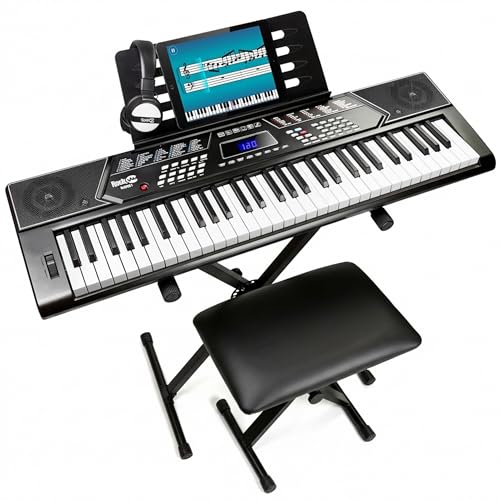
The RockJam RJ5061 is the most complete pick in this guide. The listing states a 61-key keyboard piano kit with a stand, bench, and headphones, plus pitch bend, an LED panel, Simply Piano lessons, and note stickers. It is a beginner electric keyboard piano set built as a full practice station.
Sixty-one keys is the right size for a child ready to learn properly: enough range for two-handed songs without the size and cost of a full 88-key piano. The pitch bend wheel adds expression to playing, and the LED panel shows settings at a glance.
The Simply Piano lessons included with the kit give a child a structured path from first notes to simple songs, which matters when practice time is unsupervised. With the stand, bench, and headphones in the box, the RJ5061 needs nothing else to start.
The LED panel is a small detail that helps a parent check settings at a glance: the mode, the voice, and the volume are all visible without opening a manual. For a family where the parent sets up the keyboard, that display saves time every practice session.
Key specs: 61 keys; includes stand, bench, and headphones; pitch bend; LED panel; Simply Piano lessons; note stickers.
Strengths:
- A complete kit: stand, bench, and headphones included.
- 61 keys suits two-handed playing and real lessons.
- Simply Piano lessons give a structured learning path.
Trade-offs:
- A 61-key keyboard needs real floor space for the stand.
- The bench suits a child, not an adult player.
- Costs more than the smaller 37-key models here.
This keyboard fits children aged six and up who are starting piano lessons and need a proper practice setup at home. It also fits families who want one purchase that covers the keyboard, stand, bench, and headphones.
Best for: a child starting real piano lessons
Not suited for: a toddler who needs a small first keyboard
Check price on Amazon: RockJam RJ5061 61-Key Kit

RockJam RJ549 49 Key Keyboard Piano for Beginners with Note Stickers
The RockJam RJ549 is the smaller RockJam pick, with 49 keys for beginners who are not ready for a full 61-key board. The listing states note stickers, a power supply, a sheet music stand, and Simply Piano lessons for kids, so the essentials for learning are in the box.
Forty-nine keys cover four octaves, which is enough for beginner songs and early two-handed playing. The note stickers label each key, so a child can find notes without reading sheet music first, and the sheet music stand holds a book or a tablet at eye level.
For a younger child or a smaller room, the RJ549 is the right size. It costs less than the 61-key kit and takes up less space, while still offering real lessons and a proper keyboard feel.
The 49-key size is a good compromise for a smaller room: it fits on a desk or a table without a stand, and it still covers four octaves for beginner songs. For a child who is not ready for a full kit, it is the right middle step.
Key specs: 49 keys; note stickers; power supply; sheet music stand; Simply Piano lessons for kids.
Strengths:
- 49 keys suit a younger beginner and a smaller room.
- Note stickers help a child find notes quickly.
- Simply Piano lessons included for structured learning.
Trade-offs:
- 49 keys limit more advanced two-handed songs.
- No stand or bench included in the listing.
- Fewer keys than the 61-key models in this guide.
This keyboard fits younger beginners and smaller rooms where a 61-key kit would not fit. It also fits families who want a proper beginner keyboard without the cost of a full kit.
Best for: a younger beginner in a smaller room
Not suited for: an older child ready for 61 keys
Check price on Amazon: RockJam RJ549 49-Key

Ktaxon 61 Key Keyboard Piano Electric Keyboard, Nude Pink
The Ktaxon 61 Key set is the most generous bundle in this guide. The listing states headphones, a microphone, a music rest, a piano stand, a piano bench, and stickers, plus three teaching modes and dual power, in a nude pink finish. It is a complete electric piano set for a child who wants to sing as well as play.
Three teaching modes give a child different ways to learn: follow the lights, play along, or practice freely. The microphone adds a singing element that keeps practice fun, and dual power means the keyboard runs from mains or batteries for playing away from a socket.
The nude pink finish suits a child who wants a keyboard that looks like theirs, not a plain black slab. With the stand, bench, and microphone included, this set covers practice, performance, and play in one box.
The dual power option is the practical win here: mains power at home and batteries on the move. A keyboard that works at a grandparent house or in the garden gets played more than one tied to a single socket.
Key specs: 61 keys; includes headphones, microphone, music rest, piano stand, piano bench, and stickers; 3 teaching modes; dual power; nude pink.
Strengths:
- The most complete bundle here, with microphone and bench.
- Three teaching modes suit different learning styles.
- Dual power allows playing away from a mains socket.
Trade-offs:
- The pink finish may not suit every child.
- A 61-key set with stand needs floor space.
- The microphone is a toy feature, not a recording tool.
This keyboard fits children who want to sing and play, and families who want the most complete set for one purchase. It also fits a child who likes the pink finish and the teaching modes.
Best for: a child who wants to sing and play
Not suited for: a buyer who wants a plain black keyboard
Check price on Amazon: Ktaxon 61-Key Set Nude Pink

JIKADA 61 Key Portable Electronic Keyboard Piano with 3 Teaching Modes
The JIKADA 61 Key set pairs a 61-key keyboard with three teaching modes and lighted keys. The listing states a stand, stool, LCD screen, built-in speakers, headphones, microphone, and note stickers, so the box holds a full practice setup with a screen that shows settings.
Lighted keys are the teaching feature that matters most for a beginner: the keyboard shows which key to press, so a child can follow a song without reading music. The LCD screen shows the mode and settings, and the built-in speakers mean the keyboard works without headphones.
For a child learning alone, the lighted keys and teaching modes turn practice into a game. The stand and stool complete the setup, and the microphone adds a performance element for family recitals.
The LCD screen shows the teaching mode, the tempo, and the voice in use, so a child can see what the keyboard is doing. Combined with the lighted keys, it makes the JIKADA one of the easiest keyboards in this guide for a child to use alone.
Key specs: 61 keys; 3 teaching modes; lighted keys; stand, stool, LCD screen, built-in speakers, headphones, microphone, note stickers.
Strengths:
- Lighted keys show a beginner exactly which note to play.
- Three teaching modes suit different learning styles.
- LCD screen and built-in speakers make setup simple.
Trade-offs:
- A 61-key set with stand needs floor space.
- Lighted keys can become a crutch if used forever.
- The stool suits a child, not an adult player.
This keyboard fits children learning alone who benefit from lighted keys and teaching modes. It also fits families who want a full set with a screen and speakers.
Best for: a child learning alone with lighted keys
Not suited for: an advanced player who needs 88 keys
Check price on Amazon: JIKADA 61-Key Portable

BIGFUN 37 Keys Toddler Piano Instrument Toy, Purple
The BIGFUN 37 Keys piano is the youngest pick in this guide, built for toddlers aged three to seven. The listing names it a kids electronic multifunction music educational keyboard toy in purple, for three- to seven-year-old girls and boys. It is a first instrument, not a lesson keyboard.
Thirty-seven keys suit small hands and short arms, and the multifunction design adds sounds and rhythms that keep a toddler engaged. The educational angle matters: a child learns that keys make notes, that notes make songs, and that practice is play.
For a first birthday or a holiday gift, this is the right scale. It introduces music without the cost or the commitment of a full keyboard, and a child who outgrows it is ready for a 49-key or 61-key model.
The purple finish and multifunction sounds make this keyboard a toy first and an instrument second, which is exactly right for a toddler. A three-year-old learns that keys make notes, and that simple lesson is the foundation for everything that follows.
Key specs: 37 keys; toddler piano instrument toy; multifunction music educational keyboard; for ages 3-7; purple.
Strengths:
- 37 keys suit small hands and young children.
- Multifunction sounds keep a toddler engaged.
- A low-cost first instrument for ages 3 to 7.
Trade-offs:
- Too small for a child ready for real lessons.
- A toy keyboard, not a lesson instrument.
- No stand, bench, or teaching mode listed.
This keyboard fits toddlers aged three to seven getting a first taste of music. It also fits grandparents and gift buyers who want a fun, low-cost first instrument.
Best for: a toddler first instrument, ages 3 to 7
Not suited for: a child ready for real piano lessons
Check price on Amazon: BIGFUN 37-Key Toddler Piano Purple

Upgraded 37 Keys Kids Piano Keyboard with Mic and Music Stand, Black
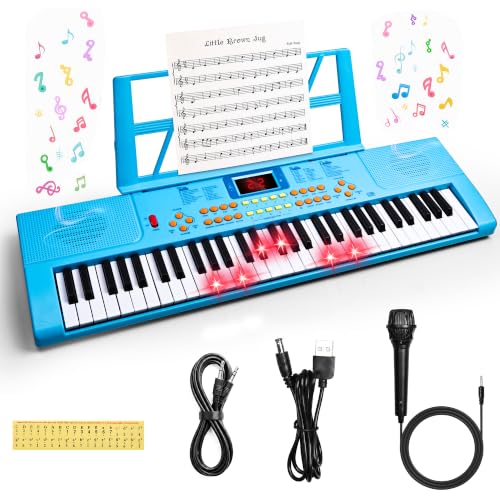
The Upgraded 37 Keys piano adds a microphone and a music stand to the small-keyboard formula. The listing states a kids piano keyboard with mic and music stand for ages three to six, in black, as a portable musical toy for toddlers and young children.
The microphone is the feature that sets this one apart from the BIGFUN model: a child can sing along while playing, which turns practice into a performance. The music stand holds a songbook or a tablet, so a parent can follow along with a simple tune.
For a young child who loves to sing, this is the more engaging of the two 37-key picks. The black finish also suits a home where a purple toy would clash with the room.
The black finish suits a home where a bright toy would stand out, and the portable design means the keyboard moves from room to room easily. For a young child who plays in different places, that portability matters more than extra keys.
Key specs: 37 keys; kids piano keyboard with mic; music stand; for ages 3-6; black; portable musical toy.
Strengths:
- Microphone lets a child sing while playing.
- Music stand holds a songbook or tablet.
- Portable design suits play in different rooms.
Trade-offs:
- Too small for a child ready for real lessons.
- A toy keyboard, not a lesson instrument.
- No teaching mode or lighted keys listed.
This keyboard fits young children aged three to six who love to sing and play. It also fits families who want a portable first keyboard with a microphone.
Best for: a young child who sings and plays
Not suited for: a child ready for 49 or 61 keys
Check price on Amazon: Upgraded 37-Key Kids Piano Black
Best keyboards for kids beginning piano: what matters most
Key count is the first decision, and it depends on the child age. A 37-key keyboard suits ages three to seven, a 49-key keyboard suits a younger beginner, and a 61-key keyboard suits a child ready for real lessons. Buy the size for the child today, not the size they will need in three years.
Teaching modes matter more than sound quality for a beginner. Lighted keys, note stickers, and guided lessons turn practice into a game, while a plain keyboard leaves a child guessing. The RockJam, Ktaxon, and JIKADA models all include teaching aids, which is why they lead this guide.
What comes in the box decides the real cost. A keyboard without a stand needs one bought separately, and a keyboard without headphones cannot be practiced quietly. The kits in this guide include the stand, bench, and headphones, so the listed set is the whole setup.
Size and space matter at home. A 61-key keyboard with a stand needs a dedicated corner, while a 37-key toy fits on a table or a shelf. Measure the space before you buy, and pick the keyboard that fits the room as well as the child.
Key feel matters more than it first appears. A child learning on keys that are too light or too stiff builds bad habits, while keys with a piano-like resistance teach proper finger strength. The 61-key models in this guide use full-size keys, which is the right feel for a beginner.
Sound variety keeps a child engaged. A keyboard with several instrument voices lets a child try piano, organ, and strings, which turns practice into exploration. The multifunction sounds on the 37-key models serve the same purpose for younger children, who learn by playing.
Buying guide: choosing keyboards for kids beginning piano
Start with the child age. Ages three to six suit a 37-key toy keyboard, ages six to nine suit a 49-key or 61-key beginner model, and ages ten and up suit a 61-key keyboard with real lessons. Buy for the age today, and upgrade when the child outgrows the keys.
Check the teaching features. Lighted keys, note stickers, and included lessons such as Simply Piano help a child learn without a teacher. A keyboard without teaching aids is cheaper, but it is also harder to learn on.
Check what is included. A stand, bench, headphones, and microphone each cost extra when bought separately, so a complete kit often costs less than a bare keyboard plus accessories.
Read the model number and key count in the listing. Two keyboards with the same brand can differ in keys, teaching modes, and included accessories, and the exact model number is the only way to know which one you are getting.
Think about the noise level at home. A child practicing the same song ten times is loud, and headphones keep the household peaceful. The RockJam RJ5061, Ktaxon, and JIKADA sets include headphones, which is a real advantage over a bare keyboard.
Check the power options. A keyboard that runs on batteries as well as mains power, such as the Ktaxon with dual power, can be played in the garden or at a grandparent house without hunting for a socket.
Using and caring for your keyboards for kids beginning piano
Keep the keyboard away from drinks and snacks. A spill on the keys can stick them or damage the electronics, and a keyboard that lives near a snack table will not last. Set a rule: no food or drink at the piano.
Wipe the keys with a dry cloth regularly. Dust and sticky fingers build up on the keys, which dulls the feel and can stain the finish. A quick wipe after practice keeps the keyboard looking and feeling new.
Store the keyboard on its stand or flat on a shelf, not leaning against a wall. A keyboard that falls can crack keys or damage the screen, and a stand keeps it stable and ready to play.
Keep the keyboard dust-free with a soft cloth. Dust settles between the keys and dulls the action over time, and a quick wipe once a week keeps the keys moving freely. Avoid sprays and wet wipes, which can seep under the keys.
Check the stand screws every few months. A stand that loosens wobbles during practice, which distracts a child and can tip the keyboard. A quick tighten keeps the setup stable and safe.
Common mistakes to avoid
A common mistake is buying an 88-key piano for a beginner. A full-size piano is expensive, heavy, and intimidating for a child, and a 61-key keyboard teaches the same first lessons for far less. Start small and upgrade when the child is ready.
Another mistake is buying a toy keyboard for a child ready for lessons. A 37-key toy cannot play two-handed songs, and a child who outgrows it in a month will be frustrated. Match the keyboard to the child stage, not just the budget.
A third mistake is skipping the headphones. A child practicing the same song ten times is loud, and headphones keep the household peaceful while the child practices as long as they like.
A fourth mistake is expecting a child to practice without a routine. Ten minutes a day with a teaching mode beats an hour once a week, and a regular time after school or dinner builds the habit that makes lessons stick.
A fifth mistake is buying a keyboard in a color the child dislikes. A child who loves the look of their keyboard practices more, and the pink Ktaxon and purple BIGFUN models exist for exactly that reason. Let the child choose the color when you can.
A sixth mistake is starting with songs that are too hard. A child who struggles with a difficult piece gives up, while a child who masters a simple song wants another. Start with the easiest songs in the lesson app and build up slowly.
Budget and value
At the budget end, the 37-key models cover a first instrument for ages three to seven at the lowest spend in this guide. They are toys, not lesson keyboards, but they introduce music cheaply and show whether a child is interested.
Mid-range buyers should look at the RockJam RJ549 and the 61-key sets. The RJ549 suits a younger beginner, while the Ktaxon and JIKADA sets include a stand, bench, and microphone for a complete practice station.
At the top of this guide, the RockJam RJ5061 kit is the most complete pick, with a stand, bench, headphones, and Simply Piano lessons. It costs the most, but it is the only purchase a family needs to start lessons properly.
For a gift, the 37-key models are the right spend: cheap enough for a birthday or holiday, fun enough to spark interest, and easy to replace with a bigger keyboard if the child takes to music.
If the child is already taking lessons, spend the extra on a 61-key kit. The RockJam RJ5061 or the Ktaxon set covers the keyboard, stand, bench, and headphones in one purchase, which costs less than buying each piece separately.
How many keys does a beginner child need
A child aged three to six needs 37 keys, which cover three octaves and fit small hands. A child aged six to nine needs 49 or 61 keys, which cover four or five octaves and allow two-handed songs. A child aged ten and up should start on 61 keys, which is the standard beginner size.
Eighty-eight keys is the full piano size, but it is not needed for a beginner. A child who learns on 61 keys can move to 88 keys later without relearning anything, since the keys and the layout are the same.
Teaching modes and lighted keys: do they help
Lighted keys help a beginner find notes without reading sheet music, which keeps early practice fun instead of frustrating. The JIKADA model lights the next key to press, so a child can follow a song by sight.
Teaching modes add structure: a follow mode plays a note and waits, a play-along mode keeps time, and a free mode lets the child explore. Used together, they build confidence faster than a plain keyboard, though a teacher is still the best guide for technique.
Setting up a practice corner at home
Pick a quiet corner with enough room for the keyboard stand, a bench, and a music stand. The child should sit with feet flat and arms level with the keys, which is why the bench height matters more than it first appears.
Keep the keyboard set up and ready to play. A keyboard that lives in a cupboard gets practiced far less than one that sits out in the open, and a child who sees it every day is more likely to sit down for ten minutes.
How to keep a child practicing piano
Keep practice short and regular: ten minutes a day beats an hour once a week, and a regular time after school or dinner builds the habit. Praise the effort, not the result, so the child enjoys the practice itself rather than fearing mistakes.
Let the child choose some songs. A child who picks a favorite tune practices it willingly, while a child forced through exercises they dislike will quit. Mix one chosen song with one lesson song in each practice session.
When to upgrade from a beginner keyboard
Upgrade when the child runs out of keys: if their songs need notes beyond the 37 or 49 keys they have, it is time for a 61-key board. Another sign is when the child plays with two hands regularly and needs the extra range for the left hand.
Do not rush to 88 keys. A 61-key keyboard covers beginner and intermediate playing, and a child can stay on it for years before needing a full-size piano. Upgrade when the teacher recommends it, not before.
Final recommendation
For most families, the RockJam RJ5061 is the balanced pick: 61 keys, a stand, bench, and headphones, plus Simply Piano lessons for a structured start. It is the only purchase needed to begin lessons properly at home.
If the child is younger, buy the RockJam RJ549 with 49 keys, or a 37-key model for a toddler. Match the keyboard to the child age, keep practice short and regular, and upgrade to a larger keyboard when the child outgrows the keys.
Let the child try the keyboard before you commit to lessons. A few weeks with a beginner keyboard shows whether the interest is real, and the 37-key and 49-key models are cheap enough to be a fair test. If the child keeps playing, upgrade to a 61-key kit and start proper lessons. Keep the keyboard set up and ready, since a child who sees it every day is far more likely to sit down and play.
Frequently asked questions
What size keyboard should a beginner child start with?
Ages three to six suit a 37-key keyboard, ages six to nine suit a 49-key or 61-key keyboard, and ages ten and up suit a 61-key keyboard. Buy the size for the child today, and upgrade when they outgrow the keys.
Are 61 keys enough for a beginner?
Yes, 61 keys cover five octaves, which is enough for beginner and intermediate songs with two-handed playing. A full piano has 88 keys, but a beginner does not need them, and a child can move to 88 keys later without relearning.
Do lighted keys help a child learn piano?
Yes, lighted keys show a beginner which note to play, which keeps early practice fun and builds confidence. They work best alongside lessons, since a teacher still guides technique and timing.
What should come with a beginner keyboard?
A stand, bench, headphones, and a music rest turn a keyboard into a complete practice setup. The kits in this guide include these accessories, so the listed set is the whole purchase.
How long should a child practice each day?
Ten to fifteen minutes a day suits a young beginner, while older children can practice twenty to thirty minutes. Short, regular practice builds the habit better than a long session once a week.
Can a child learn piano without a teacher?
A child can learn the basics with teaching modes, lighted keys, and lessons such as Simply Piano, which the RockJam models include. A teacher helps with technique and motivation, but a good beginner keyboard is a strong start.
What is the difference between 37, 49, and 61 keys?
The number is the key count: 37 keys cover three octaves for toddlers, 49 keys cover four octaves for younger beginners, and 61 keys cover five octaves for children ready for two-handed songs. More keys allow more advanced playing.
Should I buy a keyboard with a microphone?
A microphone adds fun for a child who likes to sing, and the Ktaxon and JIKADA sets include one. It is not needed for piano lessons, but it keeps practice playful and encourages a child to perform.
At what age should a child start piano?
Most children start piano between ages five and seven, when they can sit still, follow instructions, and reach the keys. Younger children can start with a 37-key toy keyboard to learn notes and rhythm through play.
Do I need a piano teacher for my child?
A teacher helps with technique, posture, and motivation, but a child can start with teaching modes, lighted keys, and lessons such as Simply Piano. Many families start with a keyboard at home and add a teacher once the child shows real interest.
How much does a beginner keyboard cost?
A 37-key toy keyboard costs the least, a 49-key beginner model sits in the middle, and a complete 61-key kit with stand, bench, and headphones costs the most in this guide. A complete kit is the best value when the child is ready for real lessons.
Can adults learn on a kids keyboard?
A 61-key keyboard works for an adult beginner too, since the keys are full-size and the teaching modes help anyone. The 37-key models are too small for adult hands, so an adult should start with a 61-key model.
Does a beginner keyboard need a stand?
A stand is not strictly required, since a keyboard can sit on a table, but a stand puts the keys at the right height for good posture. The kits in this guide include a stand and bench, which is one less purchase to make.
What is Simply Piano?
Simply Piano is a learning app that listens as you play and guides you through songs and exercises step by step. The RockJam models in this guide include Simply Piano lessons, which give a child a structured path from first notes to simple songs.