The best high-resolution cameras exist for one reason: detail. When a camera records tens of millions of pixels, a landscape keeps its texture when you zoom in, a portrait survives a heavy crop, and a large print holds together instead of falling apart into soft edges. That is the whole promise of a high-resolution camera, and it is why photographers who print big, crop hard, or sell their work keep coming back to cameras with large sensors and high pixel counts.
Resolution is not the only thing that matters, and this guide does not pretend otherwise. A high pixel count needs a good lens in front of it, a sensor that stays clean at higher sensitivities, and autofocus that can actually find the subject before the moment passes. The six cameras below were picked because their listings describe exactly that combination: full-frame or medium-format sensors, high stated megapixel counts, and the video and autofocus features that make a high-resolution body useful rather than merely impressive on a specification sheet.
Every camera on this list comes from the site’s own product lookup, and every listing was checked in full before it earned a link: the brand and the complete model name had to match exactly, and any listing marked as renewed or used was set aside. The picks range from 45 to 102 megapixels, from full-frame bodies to a medium-format camera, so there is a high-resolution camera here for a working photographer and for an enthusiast ready to step up.
In this guide
Quick picks: best high resolution cameras
| # | Product | Where to buy |
|---|---|---|
| 1 | Sony Alpha 7R V | Check on Amazon |
| 2 | Canon EOS R5 | Check on Amazon |
| 3 | Nikon Z8 | Check on Amazon |
| 4 | Fujifilm GFX100RF | Check on Amazon |
| 5 | Canon EOS R5 Mark II | Check on Amazon |
| 6 | Sony Alpha a7R VI | Check on Amazon |
How the picks were chosen
Stated resolution came first. A camera earned a place here when its listing stated a high megapixel count on a full-frame or larger sensor, because that is what the phrase high resolution actually means in practice. Cameras with small sensors and inflated pixel claims were not considered, and neither were listings that described accessories or parts instead of a camera.
The picks were checked for the whole photographic package, not the pixel count alone. A high-resolution sensor is only useful if the camera around it can focus accurately, record clean video, and handle the large files it produces, so autofocus, video capability, and the lens or kit included with each listing were all weighed. The list mixes body-only options with kits and bundles, and each listing states its sensor and lens details plainly so the comparison is honest.
Every listing was verified in full before linking. The brand and the complete model name in the listing had to match the camera described, including the sensor size and any suffix that changes the model. Listings marked as renewed or used were dropped, and any listing whose title described a different model was set aside even when it looked close at first glance.
Quick comparison
| Product | Standout feature | Best for |
|---|---|---|
| Sony Alpha 7R V | 61MP full-frame sensor with a versatile zoom included | detailed landscapes, portraits, and large prints |
| Canon EOS R5 | 45MP sensor with 8K video in a hybrid body | hybrid stills and video work at high resolution |
| Nikon Z8 | 45.7MP stacked sensor built for speed and detail | fast subjects at high resolution |
| Fujifilm GFX100RF | 102MP medium-format detail in a fixed-lens body | maximum detail from a single focal length |
| Canon EOS R5 Mark II | 45MP back-illuminated sensor with a pro zoom kit | a complete high-resolution kit with a pro zoom |
| Sony Alpha a7R VI | 66.8MP stacked sensor with 30fps shooting | cutting-edge resolution with speed |

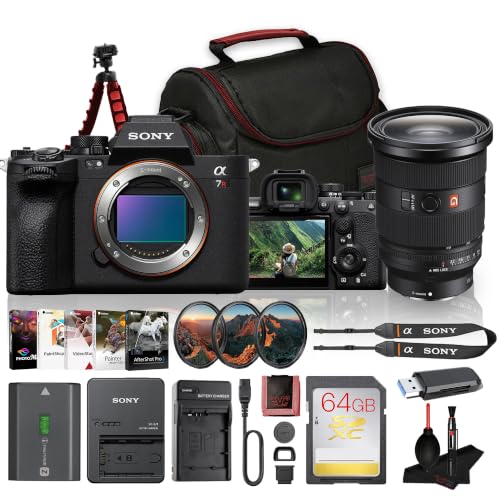
Sony Alpha 7R V With FE 24-70mm Lens Bundle
The Sony Alpha 7R V leads this list because its listing states the headline figure plainly: a 61MP full-frame sensor, sold here with an FE 24-70mm lens, a battery, a 64GB memory card, and photo software. That is a complete high-resolution kit in one listing, and the 24-70mm lens is the right partner for it, covering wide landscapes at one end and short portraits at the other without a lens change.
The listing also calls out AI autofocus, which matters more on a high-resolution camera than on most others. When a sensor records 61 megapixels, a small focus error becomes a visibly soft image, so autofocus that locks onto eyes and subjects reliably is not a luxury here, it is part of what makes the resolution usable. The bundle format means the camera arrives ready to shoot, with the memory card and spare battery that large files and long sessions demand.
For a photographer who wants the highest resolution full-frame body in this guide with a versatile zoom already attached, this is the natural first pick. It is the most capable stills camera on the list for detailed work, and the bundle removes the usual first-week shopping for cards, batteries, and software.
Key specifications: 61MP full-frame sensor; FE 24-70mm lens; AI autofocus; 64GB memory card; NP-FZ100 battery; photo software included.
This camera fits a photographer who prints large, crops freely, or sells detailed work and wants a complete high-resolution kit in a single listing.
Strengths
- A 61MP full-frame sensor captures exceptional detail for cropping and large prints.
- The included 24-70mm lens covers landscapes, portraits, and everyday shooting.
- AI autofocus helps keep that detail sharp where it belongs.
Trade-offs
- The 61MP files are large and fill memory cards and hard drives quickly.
- It is a premium body, so it costs more than the mid-range picks below.
- The bundle adds accessories some buyers may already own.
The Sony Alpha 7R V suits landscape and portrait photographers, working professionals, and enthusiasts who want the most detail a full-frame sensor in this guide can record.
Best for: detailed landscapes, portraits, and large prints / Not suited for: a buyer who wants a small, light travel camera
Check price on Amazon: Sony Alpha 7R V
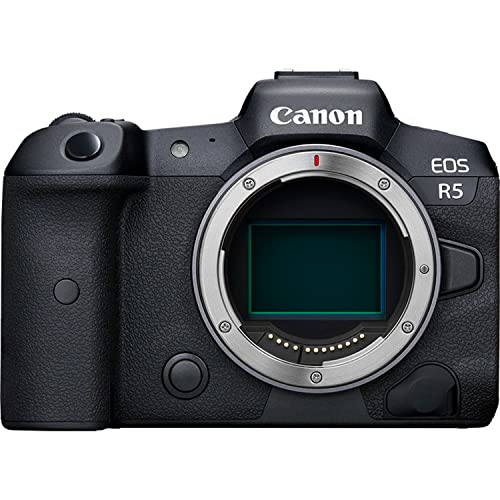
Canon EOS R5 (Body Only)
The Canon EOS R5 is the hybrid pick on this list, and its listing states the case clearly: a 45 megapixel full-frame sensor, 8K video, a DIGIC X image processor, and shooting at up to 12 frames per second. That combination is what makes the R5 a working camera rather than a resolution showpiece, because it records stills with fine detail and video with genuine cinema ambition in the same body.
The body-only format is the right way to buy this camera for many photographers. The listing describes the camera without a lens, which means a buyer who already owns RF glass, or who wants to choose a lens to match a specific kind of work, does not pay for a kit lens they will not use. The RF mount opens up Canon’s modern lens range, and the 45 megapixel sensor gives enough room to crop a wildlife frame or straighten a landscape without losing print quality.
For a photographer who shoots both stills and video and wants one body to do both well, the R5 is the most balanced pick here. Its resolution is high enough for demanding print work, and its video capability is high enough for serious hybrid shooters.
Key specifications: 45 megapixel full-frame CMOS sensor; 8K video; DIGIC X image processor; up to 12 FPS; RF mount; body only.
This camera fits a hybrid shooter who needs detailed stills and serious video from one body and already has, or plans to choose, RF lenses.
Strengths
- A 45 megapixel sensor delivers detailed stills with room to crop.
- 8K video makes it a genuine hybrid body for stills and video.
- The body-only format suits buyers who already own RF lenses.
Trade-offs
- The body-only listing needs a lens bought separately.
- 8K video produces very large files and needs fast cards.
- It is a premium body with a premium price.
The Canon EOS R5 suits wedding and event photographers, wildlife shooters who crop, and creators who record video as well as stills.
Best for: hybrid stills and video work at high resolution / Not suited for: a buyer who wants a camera with a lens included
Check price on Amazon: Canon EOS R5

Nikon Z8 Body Bundle
The Nikon Z8 arrives in this listing as a body bundle with a 45.7MP full-frame stacked CMOS sensor, 8K video, 4K recording at 120 frames per second, and a 493-point autofocus system, plus a camera bag and a cleaning kit. That is a specification list aimed squarely at photographers who shoot fast subjects as well as detailed ones, because the stacked sensor reads out quickly enough to keep up with action while still recording more than 45 megapixels per frame.
The stacked sensor is the detail that separates the Z8 from the other full-frame bodies here. A stacked design moves data off the sensor faster, which helps with rolling shutter in video and with blackout-free shooting when the subject moves quickly. The 493-point autofocus system covers the frame widely, and the 8K video capability means the same body can serve a video project without a second camera.
For a photographer who splits time between stills and motion, or who shoots wildlife and sport where speed and resolution usually fight each other, the Z8 is the pick that refuses the trade-off. The bundle adds the bag and cleaning kit a working camera needs from day one.
Key specifications: 45.7MP full-frame stacked CMOS sensor; 8K video; 4K 120p; 493-point autofocus; camera bag and cleaning kit included.
This camera fits a photographer who shoots wildlife, sport, or events and wants high resolution without giving up speed.
Strengths
- A 45.7MP stacked sensor pairs high resolution with fast readout.
- 8K video and 4K at 120 frames per second cover serious video work.
- The 493-point autofocus system tracks subjects across the frame.
Trade-offs
- The bundle adds a bag and cleaning kit some buyers may not need.
- High-resolution stacked-sensor bodies are premium purchases.
- Large video files demand fast cards and storage.
The Nikon Z8 suits action and wildlife photographers, hybrid shooters, and professionals who need one body for stills and video.
Best for: fast subjects at high resolution / Not suited for: a buyer who only shoots slow, static subjects
Check price on Amazon: Nikon Z8

Fujifilm GFX100RF 102MP With 35mm f/4 Lens Bundle
The Fujifilm GFX100RF is the resolution champion of this guide, and its listing states the figure without ambiguity: a 102MP camera with a 35mm f/4 lens, a large-format sensor, 4K video at 30 frames per second, and a built-in ND filter, sold here with a microphone bundle and a 64GB memory card. That is a medium-format sensor in a fixed-lens camera, which is an unusual combination, and it is what pushes this pick past every full-frame body on the list for sheer detail.
The fixed 35mm lens is the honest trade-off to understand before buying. A fixed lens means no zooming and no lens changes, so this camera suits a photographer who already thinks in one focal length: street scenes, documentary work, travel, and environmental portraits. In exchange, the lens and sensor are matched to each other, and the built-in ND filter lets the wide aperture stay open in bright light without carrying extra glass.
For a photographer who wants the most resolution in this guide and is happy to work with a single focal length, the GFX100RF is unmatched here. It is a specialist camera, and it is priced and built like one, but nothing else on this list records 102 megapixels.
Key specifications: 102MP large-format sensor; 35mm f/4 fixed lens; 4K30p video; built-in ND filter; microphone bundle; 64GB memory card.
This camera fits a photographer who wants maximum resolution and is comfortable working with one focal length.
Strengths
- A 102MP sensor records more detail than any other camera on this list.
- The matched 35mm lens and large sensor suit street and documentary work.
- A built-in ND filter helps in bright light without extra accessories.
Trade-offs
- The fixed lens means no zooming and no lens changes.
- 102MP files are very large and need serious storage.
- It is a specialist camera with a specialist price.
The Fujifilm GFX100RF suits documentary and street photographers, fine-art shooters, and anyone who prints very large.
Best for: maximum detail from a single focal length / Not suited for: a buyer who needs a zoom lens or interchangeable lenses
Check price on Amazon: Fujifilm GFX100RF

Canon EOS R5 Mark II With RF24-105mm F4 L IS USM Lens Kit
The Canon EOS R5 Mark II is the updated version of the R5 on this list, and its listing pairs the body with an RF24-105mm F4 L IS USM lens kit. The stated sensor is a full-frame back-illuminated design with 45 megapixels, and the listing also promises 8K video, so this is a camera built for a photographer who wants the newest version of Canon’s high-resolution hybrid and a professional zoom to go with it.
The back-illuminated sensor is the meaningful upgrade to note. Moving the wiring behind the light-sensitive area helps the sensor gather light more efficiently, which supports cleaner images and faster readout, and the 24-105mm L lens is the workhorse zoom that covers wide, standard, and short telephoto views in a single lens. For a working photographer, that kit covers a wedding, an event, or a travel assignment without a lens change.
For a buyer who wants the latest R5 rather than the original, and who wants a professional zoom included, this kit is the straightforward choice. It costs more than the original R5 body, but it arrives as a complete working system.
Key specifications: 45 megapixel full-frame back-illuminated sensor; 8K video; RF24-105mm F4 L IS USM lens kit; hybrid stills and video camera.
This camera fits a photographer who wants the newest R5 with a professional zoom included and shoots both stills and video.
Strengths
- A 45 megapixel back-illuminated sensor pairs detail with efficient light gathering.
- The included 24-105mm L lens covers wide to telephoto in one zoom.
- 8K video keeps it useful for hybrid stills and video work.
Trade-offs
- It costs more than the original R5 body on this list.
- The kit lens adds size and weight over a body-only purchase.
- 8K video files are large and need fast storage.
The Canon EOS R5 Mark II suits working professionals, event photographers, and hybrid creators who want a complete kit.
Best for: a complete high-resolution kit with a pro zoom / Not suited for: a buyer who already owns RF lenses and wants a body only
Check price on Amazon: Canon EOS R5 Mark II
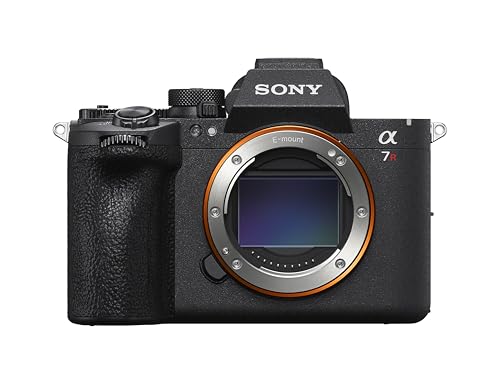
Sony Alpha a7R VI (Body)
The Sony Alpha a7R VI closes this list with the highest full-frame resolution figure stated anywhere in the guide: a 66.8MP fully stacked sensor, blackout-free shooting at 30 frames per second, and AI-based subject recognition. That is the newest generation of Sony’s resolution line, and the listing presents it as a camera that refuses to choose between resolution and speed.
The fully stacked sensor is what makes the combination possible. Stacking the sensor lets it read 66.8 megapixels quickly enough for 30 frames per second without blackout, which is the kind of speed that used to belong to lower-resolution sports cameras. AI-based subject recognition helps the autofocus stay on the subject while the photographer concentrates on composition, and that matters when every frame carries this much detail.
For a photographer who wants the latest and highest-resolution full-frame body in this guide, the a7R VI is the pick. It is the most advanced camera here, and it is priced accordingly, but it shows where high-resolution cameras are heading: no compromise between detail and speed.
Key specifications: 66.8MP fully stacked sensor; blackout-free 30fps; AI-based subject recognition; body only.
This camera fits a photographer who wants the newest high-resolution body and refuses to trade detail for speed.
Strengths
- A 66.8MP stacked sensor is the highest full-frame resolution in this guide.
- Blackout-free 30fps shooting suits fast subjects at full resolution.
- AI subject recognition helps keep focus where it belongs.
Trade-offs
- The body-only listing needs a lens bought separately.
- It is the newest and most advanced body here, with a matching price.
- 66.8MP files demand large cards and fast storage.
The Sony Alpha a7R VI suits professionals and enthusiasts who want the latest sensor technology and shoot demanding subjects.
Best for: cutting-edge resolution with speed / Not suited for: a buyer on a tight budget or new to interchangeable-lens cameras
Check price on Amazon: Sony Alpha a7R VI
Best high-resolution cameras: what matters most: what matters most
Sensor size is the first thing to understand, because megapixels alone do not tell the whole story. A 45 megapixel full-frame sensor and a 102 megapixel medium-format sensor both record a lot of detail, but the larger sensor gathers more light per pixel, which usually means cleaner images when the light drops. The cameras in this guide are all full-frame or larger, which is why their high pixel counts translate into genuinely usable detail rather than noisy files.
Lenses matter as much as sensors. A high-resolution sensor exposes every weakness in a lens, so a soft or cheap lens will waste the detail the sensor can record. That is why the kits and bundles on this list matter: the 24-70mm with the Sony, the 24-105mm L with the Canon R5 Mark II, and the matched 35mm on the Fujifilm are all lenses chosen to keep up with the sensors behind them. A body-only purchase only makes sense when the buyer already owns glass of matching quality.
File size is the practical cost of resolution. A 45 megapixel raw file is large, a 61 or 66 megapixel file is larger, and a 102 megapixel file is larger still. Buyers should plan for fast memory cards, more hard-drive space, and a computer that can open and edit these files without slowing down. That is not a reason to avoid a high-resolution camera, but it is a cost that should be counted before buying.
Autofocus and speed decide whether the resolution is usable. A camera that records 60 megapixels is only useful if it can focus on the subject, and the AI autofocus on the Sony bodies, the 493-point system on the Nikon, and the subject recognition on the a7R VI are all answers to that problem. For still subjects, any of these cameras will do; for moving subjects, the stacked-sensor models earn their premium.
Buying guide: choosing high-resolution cameras
Start by deciding how the camera will be used most. A landscape or studio photographer who works slowly can choose on resolution alone, and the Fujifilm or the Sony a7R V will reward that choice. A wildlife or sports photographer should weigh speed and autofocus just as heavily, which points toward the stacked-sensor Nikon Z8 or Sony a7R VI. A hybrid shooter who records video should check the video figures in each listing, since 8K on the Canons and Nikon is a real capability, not a marketing line.
Choose between body-only and kit deliberately. A body-only listing saves money only when the buyer already owns suitable lenses, and a kit or bundle is usually the better value for a first camera in a system. The bundles on this list include memory cards, batteries, and software that a new owner would buy anyway, so the total cost of a body-only purchase plus those extras is often close to the bundle price.
Check the sensor size and the lens mount before ordering. Full-frame and medium-format sensors need lenses designed for them, and a lens from another system will not fit without an adapter. The listings state the mount and the included lens plainly, so a buyer should confirm that the lens in the listing matches the work they plan to do, and that any lenses they already own fit the mount.
Plan storage and computing at the same time as the camera. Fast memory cards, a large hard drive, and a computer with enough memory to edit high-resolution files are part of the real cost of a high-resolution camera. Buying the camera first and discovering the computer cannot open its files is a common and avoidable mistake.
Using and caring for your high-resolution cameras
High-resolution cameras reward careful technique. A tripod, a fast shutter speed, or good stabilization makes a visible difference when the sensor records this much detail, because camera shake that would be invisible at 24 megapixels becomes visible at 60 or 100. The habit of shooting with support, or at least with a shutter speed that matches the focal length, pays off directly in sharper files.
Keep the sensor and lenses clean. Dust on a sensor shows up more clearly in high-resolution files, especially in skies and smooth backgrounds, so a blower and a regular cleaning routine are worth the small effort. Store the camera with a body cap or a lens attached, keep memory cards in a case, and back up files to two places, because a single card failure hurts more when each file is large.
Learn the file settings before an important shoot. Shooting raw preserves the most detail and the most room to correct exposure later, while smaller JPEG settings save space at the cost of flexibility. A photographer who understands the trade-off can choose raw for paid work and a smaller setting for casual shooting, rather than discovering the difference after the fact.
Common mistakes to avoid
The most common mistake is buying resolution and ignoring lenses. A high-resolution body with a soft kit lens produces soft high-resolution files, which is the worst of both worlds: large files with no extra detail. The lens should be chosen with the same care as the body, and the kits on this list are a good starting point.
A second mistake is underestimating storage. Photographers who fill a card on the first outing, or who discover their computer struggles with 100 megapixel files, have not planned badly on purpose, they have simply not counted the cost. Buy fast cards, buy more storage than seems necessary, and test the editing workflow before a paid job.
A third mistake is assuming more megapixels always means a better photograph. Composition, light, and timing matter more than pixel count, and a 45 megapixel camera in skilled hands will always beat a 102 megapixel camera used carelessly. Resolution is a tool for detail, cropping, and printing, not a substitute for seeing.
Budget and value
High-resolution cameras are premium purchases, and the prices in this guide reflect that. The value question is not which camera is cheapest, but which one matches the work: a 45 megapixel hybrid is the sensible choice for a photographer who also records video, a 61 or 66 megapixel body suits a stills specialist, and the 102 megapixel Fujifilm is for a photographer who genuinely prints very large. Buying more resolution than the work needs wastes money on storage as well as on the camera.
Kits and bundles change the value calculation. A body-only listing looks cheaper until the lens, memory card, battery, and software are added, and the bundles on this list include those extras at a lower combined cost than buying them separately. A buyer should always total the complete kit before comparing prices.
Final recommendation
For most photographers, the Sony Alpha 7R V bundle is the best balance of resolution, versatility, and completeness in this guide. Its 61MP sensor, AI autofocus, and included 24-70mm lens make it a complete high-resolution system in one listing, and it handles landscapes, portraits, and events without a lens change.
For hybrid shooters, the Canon EOS R5 remains the most balanced body, with 45 megapixels and 8K video in a proven design, while the R5 Mark II kit is the choice for a buyer who wants the newest version with a professional zoom. For maximum detail, nothing here touches the Fujifilm GFX100RF at 102 megapixels, and for speed with resolution, the Nikon Z8 and the Sony a7R VI show what the newest sensors can do.
Frequently asked questions
How many megapixels do I need for large prints?
A 45 megapixel camera produces detailed prints at large sizes, and the 61, 66, and 102 megapixel cameras on this list give even more room. The right number depends on how large the print will be and how closely it will be viewed; for most large prints, 45 megapixels is already plenty.
Does a higher megapixel count mean better photos?
No. Megapixels measure detail, not photographic quality. Light, composition, lens quality, and focus matter more, and a high-resolution sensor only helps when the lens and technique are good enough to use the detail it records.
Do high-resolution cameras need special lenses?
They benefit from sharp lenses, because a soft lens wastes the detail a high-resolution sensor can record. The kits and bundles on this list pair each body with a lens chosen to match it, which is a good starting point.
Are the files from these cameras very large?
Yes. High-resolution raw files are much larger than files from lower-resolution cameras, so fast memory cards, more storage, and a capable computer are part of the real cost of owning one.
Can these cameras record video as well as stills?
Yes. The Canon and Nikon bodies on this list record 8K video, the Fujifilm records 4K, and the Sony bodies are built for both stills and video. The right choice depends on whether video or stills come first.
Is a body-only camera a good buy?
It is a good buy when the photographer already owns suitable lenses for the mount. For a first camera in a system, a kit or bundle usually offers better value because it includes a lens, a card, and a battery.
High-resolution cameras for different kinds of photography
Landscape photographers gain the most from high resolution, because a landscape is all detail: texture in rock, leaves on a distant tree, and the fine edge of a mountain against the sky. A 61 or 102 megapixel file keeps that texture when the image is printed large, and it survives a crop when the composition needs tightening after the fact. The Sony a7R V and the Fujifilm GFX100RF are the strongest picks here for that work, and both reward a tripod and careful technique, because a high-resolution sensor records camera shake just as faithfully as it records detail.
Portrait and wedding photographers use resolution differently. A portrait does not need 100 megapixels to look good, but a high-resolution file gives room to crop a frame, to retouch skin without losing texture, and to print a large portrait for a client without the image falling apart. The Canon R5 and R5 Mark II suit this work because they pair high resolution with video capability, so a wedding photographer can shoot stills and video with one body, and the 45 megapixel files are large enough for album prints without being unmanageable.
Wildlife and sports photographers need resolution and speed together, which used to be a contradiction. A fast subject needs a fast sensor, and the stacked sensors in the Nikon Z8 and the Sony a7R VI are the answer: they read the sensor quickly enough for high frame rates while still recording more than 45 megapixels per frame. For that kind of work, the right camera is not the one with the most megapixels, but the one with enough megapixels and enough speed to catch the moment at all.
Printing, cropping, and file handling
Printing is where high resolution pays for itself. A file with more pixels can be printed larger before the individual pixels become visible, which matters for a photographer who sells prints, exhibits work, or produces large albums. A 45 megapixel file already prints beautifully at large sizes, and the 61, 66, and 102 megapixel files on this list give even more headroom, which is why professionals who print big keep coming back to high-resolution bodies.
Cropping is the second way resolution earns its keep. A wildlife photographer who cannot get closer can crop a frame to half its size and still have a usable image, and a landscape photographer can straighten a horizon and reframe a shot without losing print quality. That freedom is worth more than it sounds, because it turns a good frame into the right frame after the moment has passed, and it is the reason many photographers choose a high-resolution body even when they rarely print large.
File handling is the price of that freedom. High-resolution files need fast memory cards, more hard-drive space, and a computer that can open them without slowing down, and a photographer should plan for that before buying. The practical approach is simple: buy fast cards, back up to two places, and keep the editing computer capable of handling the largest files the camera produces, so the resolution is a benefit rather than a burden.
Lenses, tripods, and getting the most from high resolution
A high-resolution camera is only as good as the lens in front of it, and the lenses on this list were chosen to match their sensors. A sharp prime or a professional zoom resolves the detail a high-resolution sensor can record, while a soft or cheap lens wastes it, producing large files with no extra detail. A buyer who already owns good glass should choose a body-only listing and use the lenses they trust, while a buyer starting fresh should choose a kit or bundle whose lens is known to keep up with the sensor behind it.
A tripod is the cheapest way to improve a high-resolution photograph. Camera shake that would be invisible at 24 megapixels becomes visible at 60 or 100, and a tripod removes it entirely, which is why landscape photographers have always used one. A buyer who shoots handheld should use a fast shutter speed and the camera’s stabilisation, and should remember that the sharpest sensor in the world cannot fix a photograph taken while the camera was moving.
More guides from KajuanDouglas
mirrorless cameras for streaming video weather-sealed mirrorless cameras digital cameras for wildlife photography Canon cameras for amateur video