kajuandouglas.com is reader-supported. When you buy through links on our site, we may earn an affiliate commission.
Where to Buy
Choosing among the best digital video cameras for documentaries is less like picking a gadget and more like hiring the colleague who will stand beside you for the next three years of a story’s life. A documentary camera is present at the interview that runs long because the subject finally trusts you, at the dawn shoot in a town you cannot afford to revisit, at the archive screening where your footage must hold a cinema screen without apology. It must be reliable in the way a friend is reliable — not glamorous every day, but incapable of ruining the important one.
The six cameras below divide the documentary world by working style rather than by price ladder. Two full-frame hybrids anchor the guide for filmmakers who shoot formal interviews and cinematic b-roll with interchangeable lenses. A creator-focused crop body serves the one-person crew who must move fast and light. A pocket gimbal camera and an action camera cover the vérité and embedded roles — the footage gathered while running, riding, swimming, or simply being allowed inside a moment that a large rig would frighten away. Every linked pick comes from our verified pool, and the judgements weigh audio, endurance, and discretion alongside the image, because documentary is the genre where a missed sentence outweighs a missed pixel.
One boundary deserves stating before the table. Dedicated cinema cameras and camcorders exist above this guide’s territory, with internal neutral-density filters, timecode ecosystems, and rental-house support, and a funded feature production should hire that world rather than improvise below it. The cameras here serve the independent, the journalist, the institutional storyteller, and the festival hopeful — filmmakers whose constraint is not imagination but the size of the bag that fits in an overhead locker.
Key Takeaways
- The Panasonic LUMIX S5II is the documentary all-rounder, with open-gate recording and serious audio options.
- Sony’s Alpha 7 IV brings autofocus a solo shooter can trust through long interviews.
- Canon’s EOS R6 Mark II delivers beautiful colour and low-light grace for intimate subjects.
- The Sony ZV-E10 II is the lightweight run-and-gun body for one-person crews.
- DJI’s Osmo Pocket 3 gathers vérité footage where a full rig would change the room.
- The GoPro HERO13 Black survives the journeys that become the film’s most honest scenes.
In this guide
Quick Picks
| Badge | Pick | Why it stands out |
|---|---|---|
| Documentary All-Rounder | Panasonic LUMIX S5II | Open-gate flexibility, cooling for long takes, and deep audio support. |
| Solo Shooter’s Anchor | Sony Alpha 7 IV | Autofocus that babysits an interview while you listen properly. |
| Intimate Colour and Low Light | Canon EOS R6 Mark II | Skin tones and shadow grace for close, human stories. |
| Lightweight Run-and-Gun | Sony ZV-E10 II | A small body and huge lens shelf for one-person crews. |
| Vérité in a Coat Pocket | DJI Osmo Pocket 3 | Gimbal steadiness and a face-tracking manner subjects forget. |
| Survives the Journey | GoPro HERO13 Black | Waterproof toughness for boats, bikes, dust, and weather. |
Read the badges as job descriptions. A documentary rarely needs the single best camera; it needs the right camera in each of the half-dozen roles a production cycles through, and many finished films in this class are shot on two of the bodies below working as a pair.
How Did We Weigh Cameras for Stories That Cannot Be Reshot?
Endurance came first, because documentary failure is usually thermal or electrical rather than optical. An interview that blooms at minute fifty cannot pause for a camera to cool, so sustained recording behaviour, honest battery consumption, and the option of powering from a brick or a wall outlet carried decisive weight. Bodies designed with active cooling or generous thermal headroom rose; bodies famous for stopping mid-sentence fell, whatever their showreel beauty.
Audio architecture came second, and it is the criterion beginners most often undervalue. A documentary camera should accept a proper microphone gracefully, monitor sound through headphones without gymnastics, and record levels the editor can trust. Several picks below offer accessory audio interfaces or multi-channel tricks that punch far above their size; the verdicts name them, because the audience will forgive a soft frame long before it forgives unintelligible speech.
Third came the image’s editorial flexibility: recording formats that tolerate colour grading, aspect-ratio tools like open gate that let one shoot feed several deliverables, and low-light behaviour for the unlit rooms where real life insists on happening. Autofocus trustworthiness, lens ecosystem depth, and sheer discretion — how a subject behaves in front of the machine — completed the judging, in that order.
Why Does the Interview Decide the Camera, Not the Landscape?
New filmmakers shop with their eyes on vistas, yet most documentaries are built from faces talking in rooms. The interview is where the film’s claims are made, its emotions land, and its legal exposure concentrates, so the camera that serves the interview best usually deserves to be the production’s anchor. That means a sensor and lens combination that flatters skin without plasticising it, autofocus that holds an eye while its owner weeps or laughs, and a recording chain that never, ever truncates the answer that took an hour of trust to reach.
The room itself conspires. Windows blow out, radiators click, a subject leans toward the interesting part of their own story and out of a shallow plane of focus. Cameras were favoured here if they offered the solo operator defences: reliable eye detection, focus breathing handled gracefully, zebras and monitoring tools that keep exposure honest without an extra crew member’s eyes. The prettiest b-roll camera in the world is a liability if its interview footage needs rescuing.
There is also the human optics of the machine. A modest body on a small tripod invites candour; a shoulder rig with a matte box can turn a kitchen-table conversation into a performance. Several picks below earn their place partly by being forgettable to the person in front of them — the highest compliment documentary equipment can receive, and one no specification sheet knows how to print.

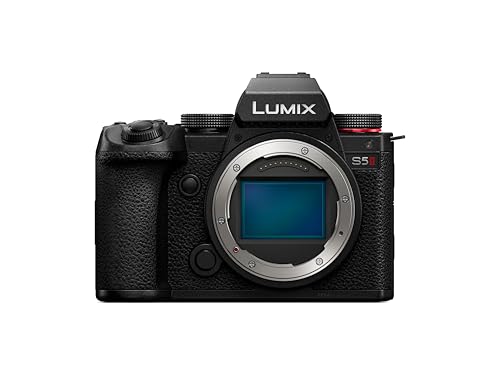
Panasonic LUMIX S5II — Documentary All-Rounder
The S5II reads as if Panasonic interviewed working documentarians and built their complaints into a checklist of answers. Its open-gate mode records the sensor’s full height, letting an editor extract vertical clips for a funder’s social feed, reframe a shot that drifted, or protect a 4:3 archive ratio from the same master — flexibility that used to require shooting everything twice. Active cooling means the long interview, the full council meeting, the ninety-minute oral history all record in one unbroken take, which is the single most documentary-specific virtue a camera can own.
Audio receives the same seriousness. With Panasonic’s accessory interface the camera records multi-channel sound from proper microphones, and its monitoring and level tools behave like equipment rather than decoration. The image itself is a strong full-frame picture with colour that grades willingly, phase-detect autofocus that finally matches the brand’s ambitions, and stabilisation that rescues walking shots when a gimbal would slow the day. L-mount lenses arrive from several makers at several prices, so a kit can grow from one documentary to the next without changing bodies.
The reservations are matters of taste and entourage. The autofocus, while genuinely good, sits a half-step behind Sony’s best in chaotic vérité crowds; the body is a working size, not a pocketable one; and Panasonic’s menu depth rewards an evening of customisation before the shoot rather than during it. None of that displaces it. For a filmmaker buying one camera to anchor a serious independent production, this is the guide’s first name, chosen for the unglamorous excellences that decide whether footage exists at all.
- Recording: open-gate full-height capture for flexible reframing
- Endurance: fan-assisted cooling for unbroken long takes
- Audio: accessory multi-channel interface for pro microphones
- Focus: phase-detect system, dependable in interviews
- Mount: L-alliance lenses from multiple makers
Strengths
- Long-form recording confidence few hybrids can match
- Open gate future-proofs one shoot for many deliverables
- Audio pathway grows from simple to broadcast-minded
Trade-offs
- Autofocus trails Sony slightly in chaotic scenes
- Menus demand homework before production days
- Full working rig outgrows a jacket-pocket philosophy
Best for: independent features, oral histories, and funded shorts shot by small crews. Not suited for: anyone determined to travel with the smallest possible camera.

Sony Alpha 7 IV — Solo Shooter’s Anchor
The solo documentarian’s scarcest resource is attention: every glance at a focus peaking display is a glance not spent listening, and listening is what makes subjects say the true thing. The Alpha 7 IV earns its badge by automating the watching. Its eye autofocus is the most trustworthy in this guide for a seated subject who rocks, gestures, and turns to address someone off-camera, and that trust lets one person run camera, sound, and conversation simultaneously without the footage confessing the multitasking.
Around that core, the camera is a mature hybrid in the best sense. Its sensor resolves enough for confident cropping in the edit, its colour science handles mixed household lighting with less protest than most, and its recording options cover the sensible documentary middle ground without exotic media costs. The lens shelf is the deepest in this guide — fast primes for candlelit kitchens, silent zooms for ceremonies, adapted glass for the broke and brilliant — and the body’s stills quality means the same camera shoots the production’s poster and press kit.
Sony ownership asks for two honest accommodations. Long-form recordists should plan power and heat management for the very longest unbroken takes in warm rooms, where the Panasonic’s fan holds an edge; and the menu system, though improved, still hides documentary essentials behind more archaeology than it should. Build custom modes before the shoot and those complaints shrink to footnotes. What remains is the camera most likely to let a one-person crew come home with an interview that looks like a two-person crew shot it.
- Focus: class-leading eye detection for seated subjects
- Sensor: resolution headroom for reframing in the edit
- Mount: the deepest lens ecosystem in this guide
- Hybrid: stills strong enough for posters and press kits
- Media: sensible card formats without exotic costs
Strengths
- Lets one operator listen instead of babysitting focus
- Lens choice for every budget a production will ever have
- Footage grades and crops with generous freedom
Trade-offs
- Very long hot-room takes need thermal planning
- Menus bury documentary settings deeper than rivals
- No open-gate mode for full-height reframing
Best for: solo filmmakers, journalists, and interview-led productions. Not suited for: multi-hour unbroken recordings in warm venues as the main job.

Canon EOS R6 Mark II — Intimate Colour and Low Light
Some documentaries live or die on how a face looks at the moment it decides to be honest, and the R6 Mark II is this guide’s most flattering witness. Canon’s colour renders skin with a warmth editors describe as forgiving — the elderly subject’s hands, the night-shift nurse’s tired eyes, the teenager mid-confession all emerge with dignity rather than forensic detail. Its low-light files hold together in the unlit community halls, fishing boats at dawn, and family kitchens where documentaries actually happen and lighting rigs are neither affordable nor welcome.
The camera’s temperament suits intimate work in smaller ways too. Its stabilisation steadies handheld footage shot while walking beside a subject; its autofocus is quiet, confident, and happy to hold a face in a crowd; and its controls fall under the fingers of anyone raised on Canon stills cameras, which describes a large share of the photographers crossing into film. Recording limits and heat deserve the same honesty given to the Sony: plan the longest takes, especially in warm rooms, and the camera will not surprise you.
Where it cedes ground is in the documentary specialist’s toolkit — no open gate, a lens mount whose finest glass prices ambitiously, and an audio pathway less elaborate than Panasonic’s. Filmmakers whose films are built from people rather than processes will forgive all three. The R6 Mark II is the pick for the portraitist’s documentary: character studies, family histories, and community stories where the audience must fall a little in love with the subject, and the camera’s colour is the matchmaker.
- Colour: skin tones with a warmth subjects deserve
- Low light: clean files in unlit real-world rooms
- Stabilisation: steady handheld walking footage
- Focus: quiet, confident face and eye tracking
- Handling: familiar Canon ergonomics for stills converts
Strengths
- The most flattering interview image in this guide
- Thrives in available light others would fight
- Gentle learning curve for Canon photographers
Trade-offs
- Longest takes need the usual thermal planning
- Premium native lenses price the kit upward
- Fewer documentary-specific recording tricks
Best for: character-led, intimate, and community documentaries. Not suited for: productions built around multi-format reframing deliverables.

Sony ZV-E10 II — Lightweight Run-and-Gun
There is a class of documentary that cannot wait for a tripod: the protest that moves, the market that wakes at four, the musician’s day that ricochets between bus, studio, and stage. The ZV-E10 II is built for the filmmaker who is the entire crew and the entire transport department. Its crop-sensor body is small enough to disappear into a day bag, its autofocus inherits Sony’s interview-grade eye tracking, and its creator-minded design — clear menus, a tally light, easy product and face modes — lowers the friction between seeing a moment and recording it.
The crop format is a feature here, not a consolation. Lenses are smaller, lighter, and cheaper, and the E-mount shelf offers everything from pocketable primes for street work to serious zooms for events, so a complete documentary kit can cost and weigh less than a single full-frame body in this guide. Battery and media stay modest, spares are cheap, and the whole system can be carried onto a budget flight as hand luggage with room for the clothes the trip also requires.
Its limits trace the same outline as its virtues. The smaller sensor concedes low-light purity and shallow-focus drama to the full-frame picks; rolling shutter asks for calmer pans; and the body lacks the weather sealing and cooling of the production anchors, so it serves long formal interviews best as a second angle rather than the only witness. As the camera that actually goes everywhere, though, it may gather more of the film than the anchor does — documentaries are made of the days between the set pieces, and this is the day-camera supreme.
- Size: small APS-C body for genuine one-person crews
- Focus: Sony eye tracking in a creator-friendly shell
- Mount: E-mount lenses from pocket primes to pro zooms
- Design: menus and controls aimed at fast solo work
- Cost: spares and media stay production-friendly
Strengths
- A complete kit light enough for daily carrying
- Autofocus trust rare at this size and price class
- Perfect second camera to any full-frame anchor here
Trade-offs
- Low-light ceiling below the full-frame picks
- Fast pans reveal rolling-shutter skew
- Not the anchor for very long formal interviews
Best for: run-and-gun, travel, and one-person documentary crews. Not suited for: candlelit features demanding full-frame purity.

DJI Osmo Pocket 3 — Vérité in a Coat Pocket
Every documentary crew knows the moment a big camera cannot enter: the family kitchen where a rig would turn dinner into a performance, the small boat, the hospital corridor, the first rehearsal where the band is still shy. The Osmo Pocket 3 exists for those rooms. It is a gimbal-stabilised camera the size of a chocolate bar, with a rotating screen, face tracking that follows a subject as if an invisible operator were on duty, and an image from its generously sized sensor that embarrasses cameras several times its bulk.
The steadiness is the revelation for filmmakers raised on tripods. Walking shots glide; a subject leading you through their workshop stays framed and smooth; the camera can be passed to the subject themselves for diary footage that feels authored rather than accidental. Its wireless microphone ecosystem pairs with a tidiness that suits documentary sound more than its toy-like proportions suggest, and the whole apparatus starts recording faster than a full rig can be unslung — speed being, in vérité, a picture-quality feature of the first rank.
Its boundaries are physical and obvious. The lens is fixed and wide, so distant subjects stay distant; the battery is internal, so a long day is planned around charging; and in a formal interview its footage intercuts with the anchor cameras as a flavour rather than a foundation. None of that is failure. The Pocket 3 is the documentary’s scout and confidant, gathering the footage the big cameras are too big to be offered, and many finished films lean on its scenes for their most unguarded minutes.
- Stabilisation: three-axis gimbal in a pocketable body
- Sensor: large-for-its-class imaging with strong low light
- Tracking: face following that mimics an operator
- Audio: tidy wireless microphone pairing options
- Speed: recording within seconds of a moment appearing
Strengths
- Enters rooms and moments big rigs cannot
- Walking footage with uncanny, effortless glide
- Subjects relax in front of it remarkably fast
Trade-offs
- Fixed wide lens cannot reach across a room
- Internal battery shapes the shooting day
- A flavour camera beside an anchor, not instead of one
Best for: vérité, diary footage, travel, and access-limited stories. Not suited for: formal interview anchoring or telephoto work.

GoPro HERO13 Black — Survives the Journey
Some documentary footage exists only because a camera could be bolted to the thing itself: the trawler’s rail, the cyclist’s bars, the rescue boat’s bow, the helmet of the person whose story the film is following. The HERO13 Black is this guide’s expedition member, waterproof without a housing, stabilised to an almost implausible smoothness, and built around interchangeable lens mods and magnetic mounting that let a crew rig it in minutes on vehicles, animals’ harnesses where appropriate, and places a cinema camera would need an engineer to visit.
Its image has matured into genuine documentary utility. The tall sensor serves both widescreen and vertical deliverables from one mounting, colour profiles exist for footage destined to sit beside the anchor cameras’ files, and its time-lapse and interval tools compress journeys — the river travelled, the wall built, the season changing over a farm — into the connective tissue documentaries are always short of. Voice control and glove-friendly operation matter more on a wet deck than any resolution figure.
Nobody should mistake it for an interview camera. Its microphones are hostages to wind and enclosure, its lens is wide enough to distort a close face, and its files are a seasoning in the edit rather than the meal. Judged in its own role, though, it is irreplaceable: the camera that brings back the journey’s point of view, the weather’s evidence, and the scenes whose absence the audience would feel without knowing why. Every serious documentary kit in this class deserves one, in a pouch, charged, waiting for the day the story leaves the road.
- Build: waterproof and rugged without extra housing
- Stabilisation: gimbal-like smoothness from any mount
- Sensor: tall format serving wide and vertical edits
- Mounting: magnetic latch system and lens mod options
- Modes: time-lapse tools for journeys and processes
Strengths
- Goes where the story gets wet, dusty, or fast
- Point-of-view footage no other pick can gather
- Tough enough to lend to subjects for diaries
Trade-offs
- Audio needs external help in wind and noise
- Wide lens flatters landscapes, not close faces
- Small battery demands spares on expedition days
Best for: expeditions, processes, vehicles, and point-of-view sequences. Not suited for: interviews or any scene built on dialogue.
Comparison Table
| Pick | Role | Endurance note | Choose it when |
|---|---|---|---|
| Panasonic LUMIX S5II | Anchor | Cooled, long-take confident | One camera must carry a production |
| Sony Alpha 7 IV | Anchor | Plan power for longest takes | A solo shooter needs focus autopilot |
| Canon EOS R6 Mark II | Anchor | Plan power for longest takes | Faces and low light lead the film |
| Sony ZV-E10 II | Daily driver | Best in sessions, not marathons | The crew is one person with a day bag |
| DJI Osmo Pocket 3 | Vérité scout | Internal battery, charge rhythm | Access depends on being unobtrusive |
| GoPro HERO13 Black | Expedition | Spare batteries on long days | The story leaves the road and gets wet |
Which Sound Mistakes Sink More Documentaries Than Bad Pictures?
The first is recording the room instead of the person: a camera microphone three metres from a soft-spoken subject in a tiled kitchen captures the refrigerator’s opinion of the interview. Every anchor pick here exists partly to escape that fate, by putting a real microphone near the mouth — a lavalier on a collar, a shotgun on a short stand just out of frame — and monitoring through headphones so problems are heard at the recording, not discovered in the edit. The second mistake is trusting automatic levels, which pump and breathe as a subject’s voice rises and falls, stamping amateur hour across otherwise beautiful footage.
The third is neglecting the wild track. Sixty seconds of a location’s ambient sound, recorded deliberately at every setup, is the editor’s glue for cuts, pauses, and repaired sentences, and it costs nothing but the discipline to stand still while the subject waits. Documentary sound is a habit of small pieties like that: spare batteries for the recorder, a wind cover that lives on the microphone rather than in a drawer at home, and a spoken slate when the schedule allows. Audiences describe films with good sound as well made without knowing why; films with bad sound they describe as long.
How Do You Run a One-Person Interview Shoot Without Losing the Thread?
Arrive with the camera’s decisions pre-made. Frame, focus mode, audio levels, and recording format should be settled in a rehearsal at home, so the location hour is spent on the subject’s comfort rather than the menu’s archaeology. Set the camera, start a test recording, and play it back through headphones in the actual room — the hum you cannot hear with naked ears will announce itself there, while there is still time to move a chair, close a window, or choose the other wall.
During the conversation, divide yourself honestly. The camera picks in this guide were chosen to hold focus and exposure so the filmmaker can hold eye contact, because a subject talking to the top of your head gives a different interview from one talking to your face. Ask the question, then be quiet in a way that invites the answer to continue past its first, rehearsed layer. Note timecodes of gold on a pad rather than interrupting to celebrate them. When the interview ends, keep recording through the goodbye — subjects say the truest sentence of the day while the equipment is being packed, and the camera that is still running is the one that owns it.
What Should a Documentary Kit Carry Beyond the Camera Itself?
Sound first, as the previous section argued: a microphone that suits the film’s main setting, headphones that seal, and cables with spares. Light second, in the form of one small, battery-capable panel that can lift a face from a dark room without rebuilding the room’s character. Support third — a tripod whose head pans smoothly enough for following shots and locks firmly enough for interviews — followed by the unglamorous empire of power: batteries counted against the longest day, chargers that work from a vehicle, and cards enough that nothing is ever deleted in the field to make room.
The final category is paperwork disguised as equipment. Release forms, a notebook that survives rain, gaffer tape, and a drive for the evening backup ritual, when the day’s cards are copied twice before anyone sleeps. Documentaries are lost to logistics more often than to optics, and the kits that finish films treat backup and consent as shooting equipment. Choose any anchor from this guide, surround it with that discipline, and the production’s weakest link stops being the camera — which is the entire point of buying well.
Final Recommendation
Anchor a serious independent production on the Panasonic LUMIX S5II for its cooling, open gate, and audio pathway; choose the Sony Alpha 7 IV when one person must shoot, record, and truly listen at the same time; and take the Canon EOS R6 Mark II when the film is a portrait and its faces deserve the most forgiving colour in this guide. Pair any of them with the ZV-E10 II as the daily driver, the Osmo Pocket 3 as the confidant for rooms that fear rigs, and the HERO13 for the journeys — a combination that covers documentary’s whole geography without a single wasted purchase.
Then spend as much thought on the microphone, the notebook, and the backup drive as on the body itself, because the films that finish are the ones whose makers respected the unglamorous halves of the craft. A documentary camera is a promise you make to a subject — that their time and trust will become a film — and the best camera in this guide is finally the one whose reliability lets you keep that promise on the day everything else about the shoot goes sideways.
How Does Colour Grading Change Which Camera You Should Buy?
Documentary footage passes through two aesthetic lives: the scene as the camera recorded it, and the film as the audience will feel it. Cameras that record flat, information-rich profiles hand the second life to the editor, who can unify a dawn exterior, a fluorescent office, and a candlelit kitchen into one visual argument. That flexibility is why the anchor picks here were judged partly on their log and high-dynamic-range modes, and why beginners should not fear footage that looks grey on the day — grey, in a log file, is where the colours are stored.
The discipline cuts both ways. A filmmaker with no grading time, or a newsroom workflow that must publish by evening, may honestly prefer a camera whose standard picture is already handsome, accepting less rescue room in exchange for speed. Canon’s ready-made warmth flatters that workflow; the Panasonic and Sony reward the slower, graded one. Neither is a defect. They are production philosophies wearing camera bodies, and the right choice is the one that matches the calendar the film must actually survive.
Whatever the philosophy, consistency inside a production matters more than the theoretical ceiling of any single body. Mixing cameras is normal in documentary — this guide is built on that premise — but the editor’s life improves when the companions share colour profiles or are deliberately assigned to different kinds of scenes, so their textures read as intention rather than accident. Shoot a colour chart at the start of a two-camera day and the edit will thank you in the only currency that matters, which is hours.
Why Do Release Forms and Access Agreements Belong in a Camera Guide?
Because the finest footage in the world is worthless if it cannot be shown. Documentary access is a negotiation conducted in trust and confirmed in paperwork, and experienced filmmakers treat the release form as shooting equipment — carried in the bag, explained in plain language, signed when the relationship is warm rather than chased by email when the edit is desperate. A camera guide that ignored this would be teaching readers to gather liabilities in beautiful resolution.
The camera itself plays a role in that negotiation. Subjects shown the modest rig, told honestly where the film hopes to travel, and offered a clear account of what participation means, consent with a steadiness that survives the production’s long middle. Institutions — schools, hospitals, workplaces — add their own layers of permission, and the small-footprint picks in this guide often succeed in those corridors precisely because their scale matches the sensitivity of the setting. Discretion is an access technology.
None of this is legal advice, and productions with funders or broadcasters will work to their own counsel and compliance standards. It is, rather, the working observation that documentary cameras earn their keep inside relationships, and the filmmakers who finish films protect those relationships with the same care they spend on focus. The lens gathers the light; the paperwork lets the world see it.
How Should You Direct a Subject Who Has Never Been Filmed Before?
Begin before the camera appears. A conversation without equipment teaches the subject your voice, your pace, and your genuine curiosity, and it teaches you which questions open doors and which close them. When the camera does arrive, explain its furniture plainly — where to look, what the red light means, that pauses are welcome and sentences can be restarted without apology. Most first-time subjects fear the machine for exactly one take; by the second, they are talking to the person behind it, which is the entire craft.
During the interview, protect the subject from your own enthusiasm. Nod silently rather than audibly encouraging, because your voice under their answer is an editor’s small nightmare. Ask for stories rather than opinions — the day something happened, told in sequence — because narrative is where documentary truth lives, and a subject who might freeze at a thesis will walk happily through a memory. The anchor cameras here were chosen to hold their technical nerve through those long, wandering answers, so the filmmaker’s whole attention can stay where it belongs: on the human being deciding, sentence by sentence, how much of the truth to hand over.
Afterwards, thank them like it matters, because it does, and explain the road ahead honestly — the months of editing, the silence while the film is assembled, the invitation to a screening that should actually arrive. Subjects who feel honoured by the process become the film’s ambassadors and the filmmaker’s introduction to the next story. Documentary is a relay of trust passed from subject to subject, and no camera in this guide, however excellent, can run a single leg of it alone.
What Does a Shooting Day Look Like When the Film Is About a Process?
Process documentaries — the boat built, the harvest gathered, the wall raised, the album recorded — run on a different clock from interview films. The camera’s job is coverage across time: the wide shot that establishes the workshop’s geography, the medium rhythm of hands at work, the close detail the audience needs to understand the skill, and the time-lapse that compresses a month of glue drying into a breath. The picks divide that labour naturally, with an anchor on the human scenes, the Pocket 3 wandering the benches, and the HERO13 bolted where the process gets wet, hot, or dangerous.
The governing virtue is patience organised by a shot list that expects to be rewritten. Processes hide their decisive moments — the joint that finally seats, the catch that fills the hold — inside hours of ordinary motion, and the camera that is rolling, powered, and carded for those hours is the one that owns the film. This is the practical root of this guide’s obsession with endurance and media discipline: in process work, reliability is not a specification. It is the plot.
Sound design follows the same logic. The workshop’s ambient symphony, recorded deliberately at every stage, becomes the film’s score and its proof of authenticity, carrying cuts that the pictures alone could not. Filmmakers new to process stories should budget as much attention for those soundscapes as for the interviews that will eventually narrate them, and should let some sequences play in pure observed sound, because an audience trusted to watch real work, uninterrupted, repays that trust with attention money cannot buy.
How Do You Archive a Documentary While It Is Still Being Shot?
Documentaries die quietly in hard drives more often than in edits. The working rule is a small liturgy repeated without exception: every card is copied to two separate places before it is reused, one of those places leaves the building or the vehicle, and the folder names carry dates and locations rather than the camera’s anonymous numbering. A production that follows that liturgy can lose a bag, a laptop, or a month to illness and still own its film. One that postpones it owns a gamble.
Metadata is the archive’s memory. A few lines per shooting day — who appears, what was promised, which answers felt central, what the weather and the light did — written while the day is still warm, will rescue the edit a year later when the filmmaker is staring at forty hours of footage wondering where the story went. The cameras in this guide record the pictures; that notebook records the meaning, and of the two, the meaning is harder to reconstruct.
Finally, archive for the film’s second life. Funders, festivals, and future researchers may ask for transcripts, releases, and masters long after release, and a production whose paperwork and media are filed together can answer in an afternoon. Documentary is the genre most likely to be rewatched by history, and the filmmakers who respect that possibility from the first shooting day are the ones whose work is still findable when history comes calling.
Which Lenses Earn Their Place in a Documentary Bag?
The documentary lens kit is an argument about how the film will meet the world. A fast standard zoom does most of the talking — interviews at its long end, rooms and journeys at its wide end — and for many productions it is joined by one fast prime for the darkness: the night market, the unlit kitchen, the vigil. That two-lens spine, carried on any anchor body in this guide, covers the honest majority of documentary situations without turning the filmmaker into a porter.
Specialists add voices one at a time. A longer telephoto compresses a subject against their landscape and shoots ceremonies from a respectful distance; a true wide lens holds a cramped cockpit or a miner’s cage without lying about its size. Each addition should be traceable to a scene the film already knows it contains, because lenses bought for hypothetical films are how budgets quietly become shelves. Rent the exotic, own the spine, and let the production’s actual footage argue for anything further.
Character matters as much as coverage. Older and adapted lenses soften digital precision into something subjects’ faces often prefer, and several celebrated documentaries owe their look to glass older than their directors. The anchor mounts here all adapt gracefully, which means a filmmaker’s lens personality can evolve independently of the body — a freedom worth valuing when the body will be replaced twice before the favourite prime is.
How Do You Shoot B-Roll That the Edit Will Actually Use?
B-roll fails in a predictable way: beautiful, random, and unusable, because it was gathered as decoration rather than as evidence. The editor needs sequences, not postcards — a wide establishing view, the medium action, the close detail, held long enough at each size for a cut to breathe. Shooting those three framings of everything important, with ten unhurried seconds at each, is the least glamorous and most valuable habit a documentary camera operator can build.
Movement should mean something. A pan that follows a subject’s gesture or reveals a relationship between two parts of a scene earns its place; a drift across a room because the camera can drift reads as restlessness in the edit. The stabilised picks here make handheld and gimbal movement deceptively easy, which raises rather than lowers the bar for intention. When in doubt, lock the shot, let life move inside the frame, and remember that a still camera is never a passive one — it is a decision about where the audience stands.
Finally, shoot the transitions nobody assigns: hands packing the bag, the road arriving, the room emptying after the interview, weather changing over the story’s landscape. Editors build time and emotion from exactly those offcuts, and a production rich in them cuts like a film twice its budget. The camera that is still rolling while the crew relaxes — often the smallest one in this guide — is frequently the one that shot the ending.
What Separates a Documentary Camera Test From a Spec Sheet?
Test the film you are actually making. Borrow or rent the finalist body, seat a patient friend in the worst-lit room you own, and record the interview your production will really shoot: an hour long, mixed window light, a refrigerator humming its subplot. Watch the files at full size, listen through the headphones you will use, and time how long the battery and card truly lasted. That single afternoon teaches more than a month of comparison videos, because it tests the system — body, lens, microphone, operator — that will actually stand behind the film.
Include the edit in the test. Grade the log footage, intercut the companion camera, export a minute, and watch it on the screen the audience will use. Cameras in this guide all produce respectable files; what the test reveals is which one’s workflow fits your hands and your evenings. Documentary equipment is bought for years of Tuesdays, not for a showreel’s Saturday, and the right camera is the one whose whole pipeline — shoot, transfer, grade, archive — you can sustain happily at hour forty of the edit.
How Does a Two-Camera Interview Day Actually Run?
The second angle is documentary’s cheapest production value. While the anchor holds the subject’s close framing, a companion body — often the ZV-E10 II in this guide’s pairings — watches wider: hands, the room, the listener’s reactions when the film has a visible interviewer. The editor gains the freedom to hide cuts inside a single answer, compressing an hour of thought into its essential minutes without the visual stutter of jump cuts on one framing.
Running the pair is a choreography of small disciplines. Both cameras start with synchronised time and a clap or a spoken marker the waveforms can find later; both record the same sound reference even if only one microphone is the master; and the operator’s attention stays on the anchor while the companion is trusted, checked at natural pauses rather than fussed over continuously. Media from the two bodies is archived in paired folders from the first evening, because a two-camera shoot whose files drift apart in the archive becomes a one-camera edit with extra confusion.
Subjects, surprisingly, relax into the arrangement. A single lens can feel like an interrogation; two modest cameras read as a production, a context, a reason for the conversation’s importance that flatters rather than intimidates. Crews who master the pairing find their interviews growing longer, calmer, and more quotable — the three adjectives every documentary budget is secretly trying to buy.
How Do You Choose Between Renting, Borrowing, and Buying the Anchor?
Documentary timelines argue for ownership in a way wedding or event work does not. A story unfolds across months of irregular access — the Tuesday the subject finally calls, the dawn the harbour does the thing — and a rented camera is never in the cupboard for those moments. That is the economic soul of this guide’s price class: bodies affordable enough to own outright, living charged and ready, so the film’s schedule is set by the story’s life rather than a rental house’s calendar.
Borrowing and renting still have their scenes. A specialist body for one funded week, a second angle for the single day the whole cast is gathered, a test weekend before committing a production to a system — those are rentals with a purpose. The mistake is building a long film on short loans, where every return deadline becomes an editorial decision made by a calendar instead of by the story. Own the witness; rent the guests.
What Is the First Thing to Check When a Shoot Day Goes Wrong?
The sound, then the card, then everything else — in that order, because dialogue lost is lost forever while a soft frame can sometimes be forgiven. Documentary days fail in small ways before they fail in large ones, and the crews who finish films are the ones whose checks happen at the first oddity rather than at the evening’s backup, when the day’s whole story is discovered to have been recorded through a disconnected cable.
Frequently Asked Questions
Do I need a full-frame camera to make a festival documentary?
No. Festivals programme films shot on every format in this guide, and the crop and pocket picks have carried entire features when their stories were strong. Full-frame bodies offer low-light grace, shallow focus, and lens character that suit interview-led films, which is why they anchor this guide — but access, trust, and sound decide acceptance letters far more often than sensor dimensions do.
How long can these cameras record in one take?
Long enough for real interviews in most cases, with the cooled Panasonic the most comfortable for unbroken marathon sessions and the others happiest when the longest takes are planned with power and warmth in mind. Documentary practice also helps: natural breaks between topics let cards and batteries rotate without losing anything the editor will miss. Test your exact setup at home for the duration your film demands, before a subject is sitting in front of it.
Which microphone should accompany an anchor camera?
Match the microphone to the film’s dominant setting. A lavalier serves moving subjects and noisy locations by living close to the voice; a short shotgun on a stand serves seated interviews with richer, more natural room character; many productions own both and choose per scene. Whatever the type, monitor through headphones on every take — the microphone you do not monitor is a rumour, not a recording.
Is open-gate recording worth caring about?
For filmmakers delivering one widescreen film and nothing else, it is a luxury. For anyone whose funders, platforms, or archives also want vertical clips, reframed versions, or stills pulled from the master, it is close to a second camera hiding inside the first. The S5II’s inclusion of it at this level is a large part of its top billing, because modern documentary rarely ends at a single screen shape any more.
Can the Pocket 3 or the GoPro really appear in a serious film?
They already do, constantly, because seriousness lives in the story rather than the rig. Their footage serves best in the roles this guide assigns them — access, movement, point of view, process — intercut with an anchor camera’s interviews rather than carrying dialogue scenes. Audiences accept a change of texture when the moment justifies it; what they never accept is a missed moment shot on nothing at all.
How many cameras does a small documentary actually need?
Two well-chosen bodies cover most independent work: an anchor for interviews and principal scenes, and a smaller companion for vérité, second angles, and the days the anchor is too much machine. Add the expedition camera when the story’s geography demands it. More bodies than that usually means the production is collecting equipment instead of footage, and the edit will not reward the difference.
Related Guides
Documentary shooters will also value our best digital video cameras for interviews for the sit-down craft in depth, the best cameras for travel filmmaking when the story crosses borders, and the best microphones for documentary sound for the half of the film the audience hears.


