kajuandouglas.com is reader-supported. When you buy through links on our site, we may earn an affiliate commission.
Where to Buy a Night Street Camera, and Why Discretion Is a Specification
Choosing the best cameras for low light street photography is a double audition: the camera must see in the dark, and the street must barely see the camera. After midnight a city’s light turns theatrical — sodium orange, LED white, neon bleeding on wet pavement — and the photographers who thrive there shoot fast lenses on bodies that stay quiet, small and unthreatening. This guide judges six cameras on both halves of that bargain, because a technically brilliant camera that changes how strangers behave has already failed the genre.
Where to buy: each linked name below points to that model’s Amazon listing, where body and lens-kit configurations can be compared before ordering. Street photographers should budget the lens into the same decision as the body — at night, a fast prime is not an accessory but the other half of the camera, and several verdicts below assume the bright glass their systems are famous for.
Sensor size argues with itself in this genre. Full-frame bodies gather the most light and forgive the highest sensitivities. That is why the Sony Alpha 7 IV and Canon EOS R6 Mark II lead on pure night capability. But the Fujifilm pair and the pocket Sony counter with presence: a smaller camera gets carried into more nights, pointed at more scenes, and forgiven by more strangers. The genre’s history is written by both kinds of camera, and this guide refuses to pretend otherwise.
Autofocus after dark is the third judge. Street moments last a second; a camera that hunts through the gloom while the gesture dissolves is a notebook, not a camera. Each review states how its pick focuses when the light falls to streetlamp levels, and how its files behave when sensitivity climbs to the settings night work actually demands rather than the settings brochures prefer.
There is also an ethics woven through the technique sections, because night street photography happens among people who did not audition to be subjects. The cameras here were favoured partly for how they support a respectful practice — quiet shutters, tilting screens for waist-level discretion, no flash fired into a stranger’s evening — and the guide’s advice follows the same code throughout.
Finally, a word about colour: night streets are mixed-light obstacle courses, and a camera’s white-balance judgement and colour science decide whether a scene renders as the moody truth or as an orange swamp. The verdicts below weigh that rendering heavily, because night street work is published largely as it was shot — the genre’s aesthetic is the city’s light, not the editor’s rescue.
Key Takeaways
The night walker’s briefing, in six lines:
- Light gathering is a system: sensor, fast prime and steady hands share the credit for every clean night frame.
- Sony’s Alpha 7 IV is the low-light all-rounder — focus that finds eyes in gloom and files that forgive.
- Canon’s R6 Mark II renders night skin and neon with the most forgiving colour here.
- The Fujifilm X100VI is the genre’s classic instrument: fixed fast lens, leaf-quiet, invisible.
- Panasonic’s S5II steadies handheld night shots at speeds that feel like cheating.
- The RX100 VII proves a pocket camera can work a night market without changing the room.
In this guide
Quick Picks
Six night instruments, from full-frame light hoovers to a pocket camera that never starts an argument.
| Camera | Badge | Why it earns its place here |
|---|---|---|
| Sony Alpha 7 IV | Best All-Round Night Street Camera | Low-light focus, forgiving files and a lens mount with a fast prime for every budget. |
| Canon EOS R6 Mark II | Best Colour After Dark | Beautiful night colour, stabilisation and sensitivity for the darkest venues of the street. |
| Fujifilm X100VI | Best Classic Street Instrument | A fixed fast lens, film colours and a leaf shutter quiet enough for a midnight train. |
| Panasonic LUMIX S5II | Best Handheld Night Steadiness | Stabilisation that holds slow shutters sharp while the street moves around you. |
| Fujifilm X-T5 | Best Resolution for Night Cropping | Huge detail for cropping night scenes in the edit, with dials that work by touch. |
| Sony RX100 VII | Best Pocket Night Companion | A zoom in a coat pocket whose fast focus keeps night markets and journeys honest. |
How Did We Judge the Best Cameras for Low Light Street Photography?
We weighted the triangle that governs every night frame: sensitivity, aperture and steadiness. A body’s clean high-ISO files matter only alongside the fast lenses its system offers and the stabilisation that lets its owner trade shutter speed for sensitivity. Cameras were judged as night systems, not as sensor spec sheets, and two picks earned their places largely on the glass their mounts make affordable.
Focus in genuine darkness was tested as a genre skill, not a lab metric. Zone focusing traditions aside, modern street photographers lean on autofocus more than the mythology admits, and the systems that acquire a face under a streetlamp without a hunting expedition earned their rankings in the moments where a hunting expedition means the photograph never happened.
Presence was scored as seriously as performance. Body size, shutter sound, screen behaviour and the general social temperature of a camera — does it read as a tourist’s toy, a journalist’s tool, a threat? — all shape what a night street permits a photographer to witness. The X100VI’s entire legend lives in this paragraph, and the pocket Sony’s case rests here too.
File character closed the judging: how grain grows as sensitivity climbs, whether colour survives mixed lighting, how much rescue the files accept before they tear. Night street photographs are printed and published with their atmosphere intact, so a camera whose noise looks like film grain holds an advantage over a technically cleaner rival whose noise looks like static.
We also considered the morning after: battery endurance across a cold night, controls findable with gloves, and whether the camera’s menus let its owner pre-build a night configuration — sensitivity ceiling, quiet shutter, screen dimmed — that one button recalls when the light dies at the end of the blue hour.
How High Should Sensitivity Go Before a Night Photograph Stops Working?
Further than the forums claim, and the answer is in the print rather than the pixel-peep. Modern full-frame files from the Sony and Canon here remain publishable at sensitivities that would have been fantasy a decade ago, because their noise behaves like grain — textured, monochrome-ish, honest. Crop bodies ask for one stop more discipline, and the pocket camera two, which is a workable budget when a fast lens and a steady hand each contribute their share.
The working method matters more than the ceiling: set a maximum sensitivity you trust, let the camera roam beneath it, and expose for the highlights the scene cannot afford to lose — the neon sign, the performer’s face — while letting true shadows fall where they belong. Night photographs die from rescued shadows far more often than from grain, and the photographers whose work fills this genre’s books are ruthless about which darkness they leave dark.
Why Do Street Photographers Still Zone Focus in the Autofocus Era?
Because the decisive second does not always wait for a focus system to agree with it. Zone focusing — pre-setting a manual focus distance and a small aperture, then shooting everything that crosses the zone — removes the camera’s last delay and its last excuse. On the Fujifilm bodies especially, with their tactile controls, many night shooters run a hybrid: autofocus for the portrait across the café table, zone focus for the crossing crowd at the corner.
Night complicates the recipe, since small apertures starve the sensor the genre is trying to feed. The modern compromise is a wider zone at a moderate aperture on a wide lens, where depth of field is generous even at f/2.8, paired with the high sensitivities these bodies now forgive. It is an old technique running on new physics, and learning it remains the fastest education a beginning street photographer can buy for the price of a weekend’s walking.
Which Cameras Own the Night Street? The Six Picks in Detail
Ranked by how completely each serves the night walk — light, focus, presence and the files that come home.

Sony Alpha 7 IV — Best All-Round Night Street Camera
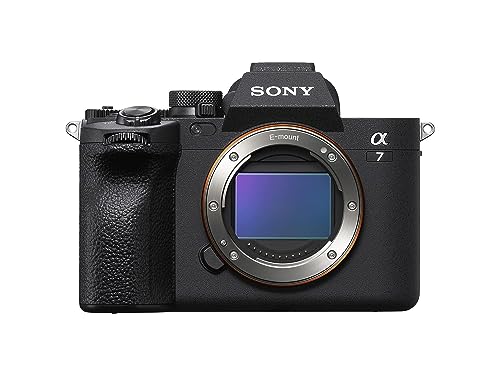
The Alpha 7 IV is the camera night street photographers recommend when they are tired of caveats. Its full-frame sensor produces files at high sensitivities that hold together with grain-like grace, its autofocus finds eyes in light that feels, to the human standing there, barely adequate, and the E-mount’s lens catalogue offers a fast prime at every focal length and nearly every budget a walker could carry. As a night system, it simply has no weak leg.
In the street its manners are professional: a quiet electronic shutter for the scenes that should not hear a camera, custom buttons that owners configure into a one-touch night mode, and a body size that reads as serious rather than alarming. The files reward the genre’s working method — expose for the lit face, let the shadows go — because its dynamic range keeps a surprising amount of recoverable detail in those shadows when a frame deserves rescue.
Lens strategy writes itself. A fast 35mm or 50mm prime is the classic night pairing, small enough to keep the whole outfit discreet, bright enough to hold shutter speeds that freeze a gesture. Sony’s own affordable primes and a legion of third-party glass mean the a7 IV’s owner chooses by handling and rendering rather than by scarcity — a freedom the genre’s older generations, locked into one mount’s economics, would envy.
Its honest costs are presence and price: it is visibly a real camera, and in the most sensitive situations — the quiet carriage, the intimate café — it announces the photograph in a way the X100VI never would. And the body plus a fast prime is a considered purchase. But as the single camera for a photographer whose nights range from protests to jazz bars to empty stations, the a7 IV’s completeness is the argument, and it is a strong one.
Cold-night practicality rounds out the case: battery endurance that survives an evening’s walking without a pocketful of spares, weather sealing for the drizzle that makes pavements shine, and a viewfinder bright enough to compose in scenes the rear screen would bleach. Night street work is an endurance event disguised as an art form, and this Sony is built like it knows.
One more virtue, easily missed: its video. The same night walk that yields stills often yields a thirty-second clip — rain on a crossing, a busker’s last song — and the a7 IV’s footage shares the stills’ colour and sensitivity, so a photographer’s night archive holds together across media. For the modern street storyteller, that continuity is worth real money.
Studio photographers crossing into street work find the a7 IV a reassuring bridge: the same body that shoots their daylight commissions walks the night without a second system to learn, and its files sit together across both bodies of work. That continuity — one colour language, one set of lenses, one muscle memory — is a professional economy the specification table never mentions and working photographers never stop valuing.
- Type: full-frame mirrorless system
- Night strength: clean high-sensitivity files
- Focus: eye detection in deep gloom
- Lenses: fast primes at every level
- Role: the complete night system
Strengths
- Focus finds faces in near-dark.
- Files forgive aggressive sensitivity.
- Lens freedom other systems envy.
Trade-offs
- Visibly a serious camera.
- Body plus prime is an investment.
- Menus reward a setup evening.
Best for: dedicated night street photographers wanting one system for every scene.
Not suited for: the most discretion-critical situations or the lightest pockets.

Canon EOS R6 Mark II — Best Colour After Dark
Night streets are colour exams, and the R6 Mark II passes them with the genre’s most forgiving palette. Skin under a sodium lamp stays skin rather than turning theatrical orange; neon keeps its electric edge without poisoning the faces beneath it; the mixed white-and-amber chaos of a night market renders as the rich confusion it actually was. Photographers who publish largely unedited — and street work honours that discipline — will find Canon’s night colour the kindest in this guide.
Sensitivity and stabilisation share the second paragraph because on the street they are one virtue: the R6 II’s clean high-ISO files pair with in-body stabilisation that lets its owner handhold at speeds slow enough to keep sensitivity civilised. A subject seated under a café awning, a vendor at rest between customers — the Canon holds those frames at shutter speeds that would smear on a lesser body, while the street’s motion blurs around the still point exactly as the genre loves.
Autofocus at night is decisive and sticky, with subject and eye detection that persists as light falls, and its burst speed serves the crossing-crowd moment when twenty possible photographs pass in three seconds. The body is weather-sealed for the wet-pavement nights and its controls stay findable under gloves, two unglamorous virtues that decide real evenings.
Where it concedes: resolution is the modest figure here, so the deep-crop style of night editing belongs to the X-T5, and Canon’s fastest RF primes carry prices that make the Sony ecosystem’s breadth look generous. Judge the R6 II as the colour-and-sensitivity specialist it is — for the photographer whose night work is people, lit by the city’s own lamps, it is arguably the finest tool in these pages.
Its JPEGs deserve a street-specific compliment: many night shooters deliver straight-from-camera files to preserve the evening’s truth, and the Canon’s night JPEGs — colour, contrast, highlight manners — are the ones in this guide most likely to survive that honesty without apology. In a genre built on not intervening, a camera that finishes the photograph at capture is a philosophical match.
Battery and heat across a long night are non-events, which is the compliment endurance equipment earns. The R6 II simply works from dusk to the last train, and its owner’s attention stays where the genre needs it: on the street, its light, and the next corner’s possibilities.
Photojournalists on night assignments value one R6 II trait above the colour: it is boringly dependable in the rain, at 2 a.m., at sensitivities that would end a lesser assignment, with files an editor can move without a colour argument. Street photography’s cousin profession has voted with its budgets, and their verdict — that this Canon is the night body you send when the picture must come back — transfers to the genre whole.
- Type: full-frame mirrorless system
- Night strength: colour under mixed lamps
- Stabilisation: body system for slow shutters
- Focus: persistent eye detection
- Role: the people-of-the-night camera
Strengths
- Night colour needs least rescue.
- Slow handheld speeds stay sharp.
- JPEGs finish frames at capture.
Trade-offs
- Resolution limits deep cropping.
- Fast RF primes are pricey.
- Larger presence than the Fujifilms.
Best for: night portraits, markets, venues and colour-led street storytelling.
Not suited for: crop-heavy editors or minimalists counting grams.

Fujifilm X100VI — Best Classic Street Instrument
The X100VI is less a camera recommendation than a description of how night street photography wants to be practised. A fixed, fast 35mm-equivalent lens; a hybrid viewfinder that can show the scene optically, with the world extending beyond the frame lines; a leaf shutter so quiet that a midnight train carriage does not notice it; and film-simulation colour that gives a night’s work a unified, grain-kissed character straight from the camera. Generations of street photographers have made this series their instrument, and the sixth generation is the most capable night version yet.
Its low-light credentials are subtler than the full-frame pair’s and entirely sufficient. The sensor’s files at high sensitivity carry a grain that suits the genre’s aesthetic, the lens’s f/2 aperture is the classic night compromise between light and depth, and the built-in stabilisation steadies the deliberate frames. What the X100VI trades in raw sensitivity it repays in photographs taken — scenes its owner witnessed because the camera was in a coat pocket, unnoticed, unhurried, allowed.
Discretion is engineered, not accidental. The camera looks like a charming retro object rather than a professional tool, which changes strangers’ arithmetic about being photographed; the tilting screen permits waist-level shooting that reads as a person checking a phone; and the leaf shutter’s whisper removes the sound that turns heads. In the ethics of the night street, those are moral features as much as technical ones.
The constraints are the famous ones: the lens does not change and does not zoom, so the photographer’s feet are the zoom and some frames simply belong to other cameras; demand has made the X100VI famously hard to buy at list price, which this guide notes as a fact of its market rather than a flaw of its design. For the photographer whose focal length is 35mm and whose subject is the unposed night, no other camera in these pages is even the same kind of object.
Its film simulations earn a night-specific paragraph: certain stocks render sodium light as amber atmosphere rather than colour error, and the grain effects built into the camera let a photographer commit to a look at capture, in the genre’s honourable tradition of deciding in the street rather than in the software. A night’s work from the X100VI arrives home already looking like a body of work, and that coherence is a professional asset disguised as nostalgia.
Ownership teaches economy. One lens, one camera, a spare battery, a wrist strap — the X100VI kit fits a coat and a philosophy, and its owners’ famous devotion is partly relief at decisions permanently made. On a night street full of choices, the camera that has already chosen is a genuine creative instrument, and its photographs prove it nightly.
A word about its flash, since the genre forbids the thing: the X100VI carries a small built-in unit that its owners overwhelmingly ignore, and the camera is better judged with it forgotten. What matters is everything around it — the aperture ring’s click, the shutter’s whisper, the way the camera disappears into a hand. Instruments this resolved in purpose are rare in any craft, and the night street, which punishes hesitation and noise alike, is exactly where such resolution pays.
- Type: fixed-lens premium compact
- Lens: fast 35mm equivalent, leaf shutter
- Viewfinder: hybrid optical and electronic
- Colour: film simulations with grain
- Role: the discreet classic
Strengths
- Invisible in sensitive scenes.
- Files arrive with a unified look.
- Leaf shutter is nearly silent.
Trade-offs
- One focal length, forever.
- Hard to find at list price.
- Sensitivity ceiling below full-frame.
Best for: committed 35mm street photographers who value presence over versatility.
Not suited for: zoom-dependent shooters or focal-length explorers.

Panasonic LUMIX S5II — Best Handheld Night Steadiness
The S5II’s night argument is steadiness as a light source. Its in-body stabilisation is among the most effective here, holding handheld frames sharp at shutter speeds that let sensitivity stay a full stop or two lower than a rival body would need for the same scene. On the street, that trade is everywhere: the still subject in a dim arcade, the portrait across a bar table, the station concourse held crisp while commuters blur through it at a quarter of a second.
Around that steadiness sits a full-frame sensor with honest high-sensitivity files and colour that grades willingly — the S5II is a hybrid creator’s camera, and its night video is strong enough that street storytellers increasingly shoot their evening in both media from the same body. Phase-detection autofocus, the generation’s great correction, keeps its night focusing confident rather than contemplative.
L-mount economics deserve a night paragraph: the alliance’s lenses include fast primes from several makers, and Panasonic’s own affordable bright glass means the S5II’s owner can assemble a two-prime night kit without the flagship prices that guard some rival mounts. The body itself is weather-sealed, sensibly laid out, and built with the unshowy competence that working photographers describe as trustworthy.
Its concessions are presence and ecosystem depth: it is a full-sized camera that looks like one, in a guide where discretion is currency, and its lens catalogue, while growing, cannot yet match Sony’s breadth or Canon’s colour legend. But for the photographer whose night style is deliberate — tripod-free long exposures, considered frames, video woven through — the S5II’s stabilisation is not a feature. It is the whole photographic method, and it works beautifully.
A technique this body makes routine: the intentional-motion frame. At a half-second, stabilisation holds the architecture and the seated subject while the crowd streams past as ghosts — the classic night street image that once demanded a tripod and a cable release, now handheld between sips of coffee. Photographers who build a night style around that contrast will find the S5II less a camera than a collaborator.
Battery life across a cold evening is solid, the menus let a night configuration be saved and recalled, and the body’s price leaves room in the budget for the fast prime that completes it — a total-cost honesty the guide wishes every system offered. Steadiness, sensitivity and money left for glass: the S5II’s night case is arithmetic as much as artistry, and the arithmetic is persuasive.
Café photographers — the ones who work the warm interiors while the street freezes — find the S5II’s quiet shutter and stabilisation a matched pair: slow, silent frames of readers and chess players, taken from the next table without a sound or a shake. The genre’s indoor half is as rich as its pavements, and this Panasonic may be its most considerate instrument.
- Type: full-frame hybrid mirrorless
- Night strength: class-leading stabilisation
- Focus: phase-detection, confident
- Lenses: multi-maker L-mount primes
- Role: the deliberate night craftsman
Strengths
- Slow shutters stay sharp handheld.
- Night video matches its stills.
- Total kit cost stays sensible.
Trade-offs
- Full-sized, fully visible camera.
- Lens catalogue still maturing.
- Less discreet than Fujifilm pair.
Best for: deliberate night shooters, long-exposure stylists and hybrid storytellers.
Not suited for: photographers whose first requirement is invisibility.

Fujifilm X-T5 — Best Resolution for Night Cropping
The X-T5 brings a different night weapon: resolution enough to recompose in the dark’s aftermath. Night street moments are grabbed at imperfect framings — the gesture at the edge of the zone, the face half-lost in a crowd — and the X-T5’s dense sensor lets its owner crop hard in the edit and still hold a printable, detailed frame. For photographers whose style is reactive, shooting wide and finding the picture later, that insurance changes what a night walk can yield.
Its controls are the genre’s tactile ideal: aperture on the lens ring, shutter and sensitivity on physical dials, everything adjustable by touch with the camera at the hip and the eyes on the street. At night that tactility is a working method, not nostalgia — settings change without a screen’s glow betraying the photographer or ruining their night vision. Fujifilm’s film simulations, meanwhile, give the cropped night frames the same unified colour as the X100VI’s, the house look that needs no introduction to the genre’s audience.
Sensitivity is the honest negotiation: the APS-C sensor asks roughly a stop more discipline than the full-frame picks, so the X-T5’s owner leans on fast primes — Fujifilm’s small, bright lenses are among the genre’s best value — and on the in-body stabilisation for the stiller scenes. In return the whole outfit stays smaller and lighter than the full-frame systems, a presence advantage that matters across a six-hour walk.
Autofocus has grown across the X line into a capable night tool, though it remains a step behind Sony’s and Canon’s subject tracking in the darkest, fastest moments. The X-T5’s photographer compensates with the genre’s classic techniques — zone focus, anticipation, position — and many would argue the camera’s demand for craft is precisely its charm. It is the thinking photographer’s night camera: dials, resolution and colour, in a body that respects the street’s scale.
Its high-resolution files hold a night-specific secret: downscaled for publication, the dense frames clean up beautifully, their noise averaging into a fine, filmic grain that flatters the genre’s aesthetic. The X-T5’s night pictures, printed at honest sizes, routinely surprise photographers who dismissed the crop sensor on a specification table — the table never walked the night market with a fast prime mounted.
Weather resistance and dual card slots complete a working photographer’s checklist, and the body’s classic styling draws compliments rather than suspicion in cafés and stations. For the street photographer who also shoots the genre’s daylight half, the X-T5 may be the most complete single answer here — the night simply asks it to spend its resolution and its dials wisely.
Beginners graduating from a phone should hear the X-T5’s welcome plainly: its dials teach exposure by touch within a month of nightly walks, its film colours forgive a beginner’s editing, and its resolution forgives a beginner’s framing. Few cameras educate while they serve; the X-T5’s owners consistently describe their first year with it as the year they became photographers, which is the highest praise a tool in this guide can earn.
- Type: high-resolution APS-C mirrorless
- Night strength: cropping resolution
- Controls: full physical dial set
- Colour: film simulations, house look
- Role: the craftsman’s night camera
Strengths
- Crops rescue grabbed framings.
- Dials work blind, by touch.
- Small fast primes keep it discreet.
Trade-offs
- Sensitivity trails full-frame by a step.
- Focus trails the top two in chaos.
- Dense files demand card discipline.
Best for: reactive shooters who edit decisively and love tactile control.
Not suited for: photographers wanting the deepest sensitivity at any size.

Sony RX100 VII — Best Pocket Night Companion
The RX100 VII’s night case begins where the others end: in the pocket of a coat, at a concert’s edge, in the hand of a photographer who is primarily a guest, a traveller, a parent — present at the night rather than assigned to it. Its one-inch sensor is far larger than a phone’s, its zoom covers the walk from wide street scenes to a performer’s portrait, and its autofocus, inherited from Sony’s flagship line, tracks faces in club light with an authority no pocket camera had any right to expect.
Night files respect the format honestly. At the wide end, where its lens is fastest, the little Sony produces night-market and street-festival frames of genuine quality — colour that holds, detail that publishes, grain that behaves. As the zoom lengthens and the aperture narrows, dusk closes in faster than on the system cameras, and the RX100 VII’s owner learns to work wide and close, which street photographers will recognise as the genre’s preferred posture anyway.
Its social physics are unmatched in this guide. Nobody crosses the street to avoid an RX100; nobody performs for it either. It reads as a holiday camera, and under that camouflage it witnesses the night with an innocence the professional bodies cannot buy. For travel — where a big camera changes the traveller’s whole relationship with a place — that invisibility is a photographic feature of the first rank.
Concede the ceiling plainly: the darkest scenes belong to full-frame, the deepest crops to the X-T5, the quietest shutter to the X100VI’s leaf. The RX100 VII wins a different contest — the photograph that exists. A winter of nights out will fill its card with frames its owner would never have attempted with a system camera left at home, and the genre has always known that the best night camera is the one that came along.
Practical night notes: its small battery asks for a spare in the other pocket, its pop-up viewfinder is a genuine composing tool in crowds, and its tilting screen supports the low, discreet framing the genre loves. Set a sensible sensitivity ceiling, shoot wide, and the little Sony’s limitations recede into a style — present, quick, unpretentious.
It also serves as the system owner’s conscience: the camera that proves, on every night it is carried, how many photographs the big kit’s absence would have cost. Many photographers in this guide’s audience will end up owning the RX100 VII alongside a system body, and will quietly admit, years later, which of the two took the night pictures they actually framed.
Hotel-room editing is the RX100 VII’s quiet workflow win: a day of travel and a night of street frames move to a phone or tablet in minutes, the selects post themselves, and the camera returns to the pocket charged by the same cable as everything else a traveller owns. Heavy systems produce better files and slower evenings; on a trip measured in days, the little Sony’s ratio of photographs to effort is the one its owners keep writing home about.
- Type: premium pocket compact
- Sensor: one-inch, fast wide zoom
- Focus: flagship-bred eye tracking
- Carry: coat pocket, unnoticed
- Role: the ever-present night witness
Strengths
- Goes where big cameras cannot.
- Focus embarrasses its class.
- Strangers ignore it completely.
Trade-offs
- Zoom’s far end dims early.
- Small battery, carry a spare.
- Ceiling below every system here.
Best for: travellers, guests, parents and system owners’ second body.
Not suited for: the darkest assignments or the largest prints.
How Do the Six Divide the Night?
Sensitivity, colour, silence, steadiness, resolution, presence — each pick leads on a different axis of the dark.
| Camera | Night strategy | Standout trait | Watch out for |
|---|---|---|---|
| Sony Alpha 7 IV | Sensitivity and lens freedom | Complete night system | Visible professional presence |
| Canon EOS R6 Mark II | Colour and stabilisation | Night people and venues | Modest cropping headroom |
| Fujifilm X100VI | Discretion and the fixed lens | Classic unposed street work | One focal length only |
| Panasonic LUMIX S5II | Steadiness as light | Deliberate handheld long exposures | Full-sized visibility |
| Fujifilm X-T5 | Resolution and dials | Reactive shooting, hard crops | A step less sensitivity |
| Sony RX100 VII | Presence in a pocket | Travel and unplanned nights | Earliest dusk ceiling |
Why Does Wet Pavement Double a Night Photographer’s Light?
Rain is the night street’s lighting director. Wet asphalt mirrors every lamp and sign, bouncing the city’s light back up into faces and turning a modest streetlamp into a two-source studio. Photographers in this genre check forecasts the way sailors do, and the weather-sealed picks here — the Sony, Canon and Panasonic especially — exist for the evenings when the best light of the month arrives with weather that sends other cameras home.
Work the reflections deliberately: lower the camera to let the mirrored signs stretch, expose for the highlights so the wet street glows rather than greys, and protect the lens from the drizzle that the body’s sealing cannot keep off the front element. A single raindrop, lit by neon, can starburst a frame into art or ruin it into soup; the cloth in the pocket decides which, about once every twenty minutes.
How Has the Night Street Changed for Photographers?
LED lighting has rewritten the genre’s colour within a decade: the old sodium monochrome is giving way to whiter, more directional light that flatters faces and challenges white balance in new ways, street by street, lamp by lamp. Modern cameras’ colour science — Canon’s judgement, Fujifilm’s film memory, Sony’s neutrality — are all, in part, answers to a city that no longer agrees on what colour night is.
The crowd has changed too: every stranger now carries a camera and an opinion about being photographed, which raises the value of the discreet instruments in this guide and of the courtesy described in its ethics section. The night street remains the richest free studio in photography. It simply asks its photographers to be quicker, quieter and kinder than the generation that worked it in comfortable anonymity.
How Should You Behave With a Camera on a Night Street?
Move like a citizen first and a photographer second. The night street’s social contract permits a great deal — public places, public light, the city’s theatre — and withdraws its permission from the photographer who loiters at one person’s expense, blocks a pavement for a composition, or treats a stranger’s distress as content. The discreet cameras in this guide support the contract; the photographer’s conduct is what honours it.
Practical courtesy has practical returns. A smile and a shown photograph defuse most objections and occasionally produce a portrait better than the candid; deleting a frame when someone plainly objects costs nothing and buys the whole genre goodwill. Work quickly, work openly at a normal walking pace, and remember that the goal is a body of work built over years of nights — a reputation on your own streets is equipment too.
How Do You Build a Night Kit Around Any of These Bodies?
One fast prime before anything else: it is the night kit. Then a wrist or neck strap that keeps the camera in hand rather than in a bag, a spare battery warmed by a pocket in winter, and shoes you can walk six miles in — the last item has produced more night photographs than any accessory ever sold. Add a small lens cloth for the condensation that blooms when a cold camera meets a warm café.
Configure the camera at home, in daylight, like a pilot’s checklist: sensitivity ceiling set, quiet shutter on, screen brightness down, a custom mode saved for the night’s baseline. The street at midnight is a poor classroom for menu systems, and every pick in this guide rewards the photographer who arrives with decisions already made. The night should be spent looking, not configuring.
How Do You Expose for a Face in a Shop Window’s Light?
Shop windows and café glass are the night street’s free studios — broad, soft sources that flatter faces at a distance of a few steps. The technique is to expose for the lit face and let the street behind fall dark, which usually means metering on the subject or dialling exposure compensation down until the highlights behave. Every camera here can do it; the discipline is remembering that the camera’s meter is averaging the whole glowing scene and will happily turn your portrait into a silhouette to protect a window display.
Position completes the trick: a subject between you and the window is a silhouette, a subject beside it is a portrait, and a subject facing it, shot from the side, is the genre’s classic — half lit, half mystery, the city’s light doing the makeup. Walk the geometry before raising the camera, and a single lit window becomes an evening’s studio with a rotating cast who never know they modelled.
Which Night Errors Do Street Photographers Keep Making?
Reaching for the flash is the beginner’s loudest mistake — it destroys the scene’s light, announces the photographer to the entire street, and produces the flat, startled look the genre exists to avoid. Every camera here was chosen for flash-free work. Learn the triangle, trust the grain, and let the city’s own light direct your photographs; a frame that fails in honest darkness fails better than one murdered by a pop-up flash.
Chimping — reviewing every frame on a bright screen — is the second error, and it is tactical as well as aesthetic. The glowing screen ruins the photographer’s night vision, draws the street’s attention, and anchors attention to the last photograph while the next one walks past. Set the review off or to a dim second, shoot the scene through, and judge the night’s work at home like the photographers whose books taught you the genre.
Over-rescuing shadows in the edit is the third. Night files pushed until every corner glows produce the grey, noisy HDR look that betrays a photographer’s distrust of darkness. The genre’s masters leave their shadows down; the eye completes them. Edit night work with the restraint the scene was shot with, and the grain that remains will read as atmosphere rather than error.
The last mistake is carrying the wrong weight — either a system so heavy the walk shortens, or a minimalism so proud that the night’s best scene defeats the pocket camera’s ceiling. This guide deliberately spans the X100VI’s coat pocket to the full-frame systems, because the honest answer varies by photographer and by night. Match the camera to the evening you are actually taking, and take more evenings.
What Makes a Night Street Photograph Last?
Technique gets a frame noticed; recognition gets it kept. The night photographs that endure — in books, in families, on the walls of the cafés where they were taken — show a moment the viewer has lived: the last train’s tired comedy, the vendor closing up under one lamp, the couple arguing happily in neon. The cameras in this guide differ in how they gather light, but they share the only feature that produces recognition: they were there, in a hand, at the second the city’s theatre played the scene.
So the final advice is embarrassingly uncommercial. Walk more nights than you shop for them. Learn one camera’s behaviour in the dark until it disappears, let your streets teach you their light by season, and spend the money this guide discusses on the fast lens and the comfortable shoes before the second body. The night rewards attendance above equipment, and it always has.
Final Recommendation
Choose by the night you actually walk. The photographer covering everything from vigils to jazz clubs should take the Alpha 7 IV’s completeness or the R6 Mark II’s colour, deciding by lens loyalty. The committed 35mm purist already knows the X100VI is the answer and is really reading for confirmation. Deliberate craftspeople belong with the S5II’s steadiness or the X-T5’s dials and resolution, and the traveller — or the system owner seeking a second body — with the RX100 VII’s pocketable honesty.
Whichever you carry, set it up before dusk, leave the flash down, and walk further than feels reasonable. The night street pays its photographers in moments that daylight never offers, and every camera in this guide is ready to collect. The rest is shoe leather and looking.
Related guides
- Best Digital Cameras for Low Light Photography: Six Bodies for Indoor Evenings and Dark Events
- Best Cameras for Recording Weddings: Quiet, Tireless and Ready for the Dark
Frequently Asked Questions
What lens focal length suits night street work best?
The classic answer is 35mm: wide enough for context, honest about perspective, and paired with fast apertures in every system here. A 50mm serves the photographer who works from further back — across streets, into lit interiors — while 28mm suits the immersive, close-and-wide style. The X100VI’s fixed 35mm equivalent is the genre’s default for a reason, but the honest answer is the focal length at which you stop noticing the framing and start seeing the scene.
How do I focus when it is too dark for autofocus?
First, give the system help: focus on a lit edge — a face’s rim light, a sign’s border — rather than a dark mid-tone. If the system still hunts, switch to the genre’s heritage method: zone focus with a moderate aperture and a pre-set distance, letting depth of field carry the moment. The Fujifilm pair make that switch tactile and fast, and even the full-frame picks offer focus peaking for manual work. Practise both methods on quiet streets before the night you need them.
Is it legal to photograph people on the street at night?
In many places, photographing in public spaces is broadly permitted, but the rules vary by country and city, and commercial use, harassment and certain locations carry their own restrictions. This guide is not legal advice; know your local rules, respect plain objections, and be especially careful with children and with people in distress. The genre’s long-term licence to operate is its practitioners’ courtesy — spend it wisely.
Why do my night photos look orange, and how do I fix them?
Mixed lighting is the cause: your camera’s automatic white balance must choose one truth among sodium lamps, LED signs and twilight, and it often chooses badly. Shooting raw files lets you set the balance in editing without penalty; committing to JPEG, choose a fixed daylight or tungsten balance in camera and let the night keep its colour honestly. Many street photographers deliberately keep the amber — it is what the night looked like — and correct only skin that has gone fully theatrical.
Should I use a tripod for night street photography?
Rarely, for this genre: the street’s subjects move, its permission is fleeting, and a tripod announces a production. The stabilised bodies here — the S5II above all — exist to replace it for the still-subject frames, while high sensitivities handle the rest. Keep a mini tripod or a beanbag in mind for deliberate cityscapes between street sessions, but walk the night itself handheld, the way the genre’s entire history was made.
How do I keep my camera safe on a night walk?
A wrist strap or a cross-body strap worn under a coat, a camera that never leaves the hand or the bag’s closed compartment, and routes chosen with the same sense you’d apply without a camera. Most night street veterans also keep the kit minimal — one body, one lens — because the safest camera is the one nobody can tell is worth taking. Discretion, once again, is a specification, and it protects the photographer as reliably as it protects the photograph.
What shutter speed freezes a walking subject at night?
Around 1/250th of a second freezes a walker’s gesture crisply; 1/125th keeps the body while letting hands and feet smear slightly, which many street photographers prefer for its sense of life. Slower speeds become deliberate motion studies, best paired with the S5II’s stabilisation and a still point in the frame. Choose by intention rather than habit, and let the sensitivity — within your body’s trusted ceiling — pay for the speed the moment demands.
How do I work with mixed neon and tungsten light inside one frame?
Embrace the colour contrast instead of correcting it away, because a cyan shop sign against warm window light describes modern streets more truthfully than neutral balance ever could. Protect the brightest signage from blowing out by exposing for those highlights, letting surrounding shadows fall where they naturally belong. Rain transforms the mixture, doubling every colour across wet pavement and giving a modest corner the richness of a film set. Position yourself where a lit window or doorway creates a pool of brightness, then wait for a passerby to cross it rather than chasing subjects through darkness. Reflections in bus windows and puddles offer compositions that disappear once you move a single step, so check behind you before leaving any corner. Gloves with exposed fingertips keep handling precise on cold nights, preserving the small dial adjustments that mixed scenes demand. Review the histogram sparingly, trusting your eyes for mood while the camera guards the extremes.
Related Guides
Walk further with zone focusing and the classic street techniques, explained plainly, choose glass in fast prime lenses for night photography across every mount, and study the results in editing night photographs without killing the darkness.


