kajuandouglas.com is reader-supported. When you buy through links on our site, we may earn an affiliate commission.
Where to Buy
Let the honesty arrive first, because weddings deserve it: the best cameras weddings under 300 dollars can honestly promise are not the cameras a professional would carry down the aisle as a main body. Three hundred dollars, treated throughout this guide as the budget frame your search named rather than as any product’s price, buys something more specific and, for the right buyer, genuinely valuable — a second camera for a working photographer’s bag, a capable guest or family camera for the day’s unscripted hours, a detail-and-prep camera, or the heart of a used-market wedding kit assembled with patience. Buyers who understand which of those jobs they are hiring for will be delighted. Buyers expecting a full professional main body at this frame will be disappointed by physics, not by this guide.
Weddings punish equipment in specific ways. Light collapses from noon glare to candlelit speeches within one event. Moments refuse to repeat themselves. Batteries, cards, and nerves all drain faster than at any family gathering, and the photographs are expected to survive enlargement, printing, and fifty years of anniversaries. Every pick below was judged against that reality rather than against a spec sheet, and each row’s position relative to the frame — inside it, beside it in the used market, or labelled step-up beyond it — is stated wherever the pick appears.
The strategy that makes this frame work is allocation. A wedding kit is a system of small mercies: the camera, a lens that gathers light, storage that cannot run out, power that cannot die during the speeches, and a backup plan for the one moment that matters most. This guide spends the frame on that system thinking, and reserves its sternest warnings for the seductive error of spending it all on a body and arriving at the day half-equipped.
Key Takeaways
- At this frame, hire a camera for a defined wedding job — second angle, prep, guests, details — rather than for the whole day.
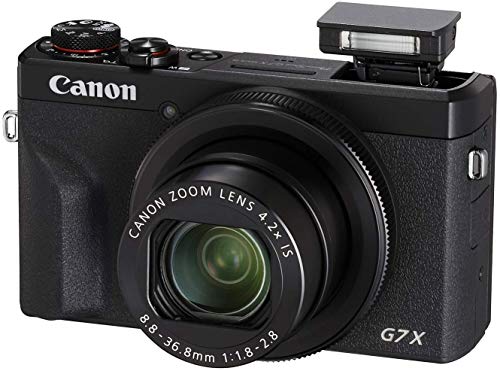
- Canon PowerShot G7 X Mark III is the frame’s strongest guest-and-evening camera, with a bright lens for reception light.
- Sony ZV-1F serves the video side simply: vows clips, messages, and a wedding-day film a family will actually watch.
- Fujifilm Instax Mini 12 owns the reception’s spontaneous print culture like nothing else at any price.
- Nikon Z30 and Canon EOS R50 are labelled step-ups for buyers building toward real second-shooter work.
- GoPro HERO12 Black is the unmanned second angle: mounted, wide, and recording what nobody was free to film.
In this guide
Quick Picks
| Badge | Pick | Why it stands out |
|---|---|---|
| Best Guest and Evening Camera | Canon PowerShot G7 X Mark III | Bright lens and kind colour for receptions, speeches, and table light. |
| Best Simple Wedding Video | Sony ZV-1F | Press-record simplicity for vows, messages, and the day’s moving record. |
| Best for Reception Prints | Fujifilm Instax Mini 12 | Instant prints guests take home and a guest book no phone can imitate. |
| Best Unmanned Second Angle | GoPro HERO12 Black | Mount it wide at the ceremony and let it witness everything unattended. |
| Step-Up: Best Second-Shooter Starter | Nikon Z30 | Step-up platform for prep, details, and long ceremony recording. |
| Step-Up: Best Growth Body | Canon EOS R50 | Step-up eye focus and lens path for the aspiring wedding second. |
How We Chose These Picks
Each candidate was assigned a wedding job before it was allowed a row. Jobs at this frame are real but bounded: filming the ceremony from a fixed wide position, photographing prep and details while the main photographer works elsewhere, covering guests and tables through the evening, producing instant prints, or serving as the learning platform from which a genuine second-shooter career grows. Candidates that could not name their job — however impressive their general specifications — were excluded without regret.
Low light decided more selections than any other test, because weddings are evening events wearing a daytime costume. The ceremony may be bright, but the speeches, the first dance, and every candid that guests actually treasure happen in light that exposes small sensors and slow lenses without mercy. Bright glass and graceful high-sensitivity behaviour therefore outranked resolution, reach, and every burst-mode boast during judging.
Reliability arithmetic closed the selection. A pick had to leave room in the frame — or, for the step-ups, in a realistic total budget — for the unglamorous companions without which wedding photography fails: generous storage, spare power, and for the instant camera, film enough for the whole reception. A brilliant body that consumed its budget entire was treated as a failed kit and demoted, because weddings are precisely the events where the kit, not the camera, is what gets hired.
What Can a $300 Frame Honestly Do at a Wedding?
It can own the day’s second layer beautifully. While a main photographer — hired, or a talented relative with serious equipment — carries the ceremony’s decisive moments, a frame-priced camera covers everything that makes a wedding album feel inhabited: the prep room’s laughter, the rings resting before their moment, grandparents watching from the third row, children discovering the dance floor, the cake before its cutting. Couples consistently treasure that layer out of proportion to its cost, because it is the part of the day they were too busy to see.
It can also carry the video of record for families who would otherwise have none. A simple camera on a small tripod at the ceremony’s edge, recording vows and speeches in full, produces the artefact that anniversaries actually replay. Perfection is not the standard for that artefact; presence is. A steady, audible, complete recording from a modest camera outranks, across fifty years, the cinematic fragments of a phone that stopped for a notification.
What the frame cannot do should be said in the same breath. It cannot make one camera into a professional main body for a dark venue, cannot give a beginner the redundancy a paid booking demands, and cannot substitute for a hired professional at a once-only event where the couple’s expectations are formal. Readers planning to photograph a wedding as its sole photographer, for love or money, should read the step-up rows as the floor of that conversation rather than as extravagance.
Understood that way, the frame stops being a limitation and becomes a brief. Bounded jobs, honestly assigned, in light that has been planned for, with companions funded — that is a recipe for photographs a family will keep. The rest of this guide is the working out of that recipe, pick by pick and hour by hour.
How Does Wedding Light Defeat Cheap Cameras, and How Do You Fight Back?
Wedding venues hoard their light. Churches diffuse it through high windows, barns ration it through doorways, hotel ballrooms tint it amber and dim it for romance precisely when the speeches begin. Cameras respond to scarcity in two ways: by slowing the shutter until hands and dancers blur, or by amplifying the signal until faces grain. Every defence in this section exists to buy back one of those two currencies.
The first defence is lens brightness, which is why it dominates this guide’s rankings. A lens that gathers generous light at the focal lengths where people gather lets the camera keep shutter speeds honest and sensitivity moderate at the same time. When comparing picks, treat the bright-lens rows as evening insurance already paid, and treat slow kit zooms — however versatile at noon — as fair-weather instruments whose evening work will need help.
Position is the second defence, and it costs nothing. Light at a wedding is unevenly distributed: the window seat, the doorway, the pool of brightness beneath a chandelier, the dance floor’s edge where the DJ’s lights sweep. A photographer who herds subjects gently toward the light that exists — the portrait by the window, the speech filmed from the lit side — gains more quality than any setting buried in a menu. Frame-priced cameras in good light embarrass expensive cameras in bad light, every weekend, everywhere.
The third defence is honesty about flash and its manners. Direct on-camera flash flattens faces and announces itself in every frame; bounced or diffused light, where the kit allows it, flatters instead. Where no flash exists, embrace the grain of a candlelit frame as atmosphere rather than apologising for it — guests remember how the room felt, and a slightly grainy photograph that preserves the feeling defeats a sterile one that corrects it away.
Which of the Best Cameras Weddings Under 300 Dollars Can Offer Fits Your Role?

Canon PowerShot G7 X Mark III — Best Guest and Evening Camera
If one camera in this guide will actually be in somebody’s hand at the reception, it is this one. The G7 X Mark III pairs a one-inch sensor with a lens that stays bright where receptions live, and Canon’s colour renders candlelit faces the way the room remembers them — warmly, kindly, without the waxy pallor that cheaper compacts impose on skin after dark. For the designated family photographer covering tables, speeches, and the dance floor’s edge, it is the frame’s most complete answer.
Its size is a social feature, not merely a convenience. A pocket camera does not interrupt a wedding the way a large body does; guests relax, conversations continue, and the candid photographs that couples treasure become possible because nobody performed for the equipment. The flip screen serves the day’s other documentary duty — the couple’s quick video message, the table’s group selfie with the photographer included — without a tripod or a production.
Video exists here as a genuine second skill rather than a bullet point. Short clips of the first dance, the speech’s best minute, the bouquet’s arc record with stabilisation adequate to the moment and a microphone input available if the family assigns a semi-serious filming role. Nobody should mistake it for a cinema camera; everybody should respect it as the device most likely to be present, charged, and pointed at the right second.
Plan its companions with the seriousness the day deserves. A spare battery is compulsory, not optional, because receptions outlast single cells with total reliability. Storage should be generous enough that nobody formats a card mid-event — the cardinal sin of wedding photography at any budget. Carried that way, with its lens kept clean of champagne mist and its strap actually worn, this compact will return more keepers from the evening than cameras three times its position manage from the wrong light.
Its limits draw the boundary of the role honestly. Reach is short, so the ceremony’s distant altar belongs to another camera; there is no weather sealing for a rainy garden; continuous autofocus, while willing, is not a professional body’s. Inside its assigned job — the human, evening, guest-level layer of the day — those limits rarely even appear. Assign it that job, fund its battery, and it will not embarrass the trust.
- Imaging: one-inch sensor, bright lens for reception light
- Colour: flattering skin tones in warm, dim rooms
- Screen: flips for messages and group selfies
- Audio: microphone input for a filming assignment
- Companions: spare battery compulsory at weddings
Strengths
- Evening candids lead the frame’s field
- Pocket size keeps guests unselfconscious
- Stills and clips both serve the album
Trade-offs
- Short reach excludes distant ceremony work
- No weather sealing for wet gardens
- Battery life demands a spare
Best for: designated family photographers covering guests and evenings. Not suited for: sole-photographer duty at a formal wedding.

Sony ZV-1F — Best Simple Wedding Video
Every wedding has a person who should film it and a crowd of people who would film it badly on phones held vertically at arm’s length. The ZV-1F exists to be handed to the first person. Its entire design is a conspiracy toward a successful recording by a non-specialist: a wide fixed lens that fits a small venue’s front row, autofocus that minds the couple without instruction, a screen that shows the operator what the camera sees, and files that look bright and finished without an editor’s intervention.
Assign it the ceremony’s record and the day’s messages, and its simplicity becomes strategy. Set on a small tripod at the aisle’s edge — wide enough to hold both partners, close enough for the built-in microphones to respect the vows — it can run the service while its operator also watches with human eyes, which is the gift a fixed camera gives the person who would otherwise spend the wedding behind a screen. Between formalities, the same device collects the guest messages and table interviews that couples replay most.
Understand its field of view as a staging instruction. The wide lens wants proximity and forgives it: faces at conversational distance stay clear, backgrounds stay legible, and small rooms stop feeling cramped. A large ballroom’s far corner, by contrast, will shrink the couple to figures in a landscape, so position is this pick’s zoom — chosen before the music starts, tested from the seat during rehearsal if the venue allows one.
Sound deserves the family’s one serious conversation. Built-in microphones serve a quiet ceremony from a near position honourably; a windy garden or a distant placement argues for the microphone input this camera thoughtfully includes, with a small external microphone assigned to the lectern or the couple’s vicinity. That single accessory, decided in advance rather than mourned afterwards, is the difference between vows that are seen and vows that are heard at the twenty-fifth anniversary.
Still photographs from it will serve the family chat and the social post without challenging the album’s main body, and that is an acceptable division of labour. This row’s contract is motion and memory: the complete ceremony, the speeches intact, the messages gathered. Delivered at this frame, with no system to build and no settings to master, that contract makes it the easiest yes in the guide for video-minded families.
- Optics: wide fixed lens for small venues and front rows
- Operation: automatic care for non-specialist operators
- Placement: tripod at the aisle edge for the ceremony record
- Audio: microphone input for vows that must be heard
- Files: finished look without editing
Strengths
- Anyone trustworthy can operate it successfully
- Complete ceremony recording without a crew
- Wide framing flatters intimate venues
Trade-offs
- Distant ballroom positions shrink the couple
- Stills serve rather than star
- No headphone monitoring for the operator
Best for: families wanting a complete, simple wedding film. Not suited for: cinematic ambitions or distant ceremony placement.

Fujifilm Instax Mini 12 — Best for Reception Prints
Judge this camera by the evening rather than by the file, because it produces no files at all — it produces objects. The Instax Mini 12 prints small photographs on the spot, into guests’ hands, onto the guest-book table, across the bar’s back shelf as the night accumulates its evidence. At weddings it performs a social function no camera in this guide can imitate at any budget: it turns photography from a later delivery into part of the party itself.
Operation is a gift economy of simplicity. Automatic exposure minds the room, the lens twists between normal and close-up, and a guest who has never seen the device produces a recognisable portrait within one attempt and a good one within three. Assign a cheerful relative as its keeper, station it at the guest book with a pen, and the couple receives by midnight an album of faces and messages assembled by the people who attended — an artefact couples describe, years later, with a warmth they rarely summon for formal portraits.
Film is the honest cost centre and must be budgeted as catering is budgeted: generously, in advance, with surplus. Count the guest list, assume the camera will be discovered by children and by the couple’s most extroverted friends, and buy film for the evening you hope happens rather than the restrained one you planned. Leftover film keeps for the next family event; a camera that runs dry at nine in the evening becomes a small, specific regret.
Light governs its quality as it governs everything at a wedding, with instant film’s particular temperament. Bright rooms and daylight gardens flatter it; dim ballrooms push it toward flash-lit faces against dark backgrounds, which guests generally find charming in the hand even when a technician would not. Position its station near the venue’s best light — the window end of the bar, the doorway to the terrace — and the prints improve out of all proportion to the effort.
Nobody should assign it a documentary duty it cannot carry. It will not record the ceremony, satisfy a couple’s album, or enlarge beyond its own small format. Its row exists because weddings are also parties, and because the photograph a guest takes home in a jacket pocket does a kind of work — memory, gratitude, evidence of joy — that the finest gallery file cannot. At this frame, that work is astonishing value.
- Output: instant prints, handed to guests on the night
- Exposure: automatic, with close-up lens position
- Station: guest book table near the venue’s best light
- Consumable: film budgeted generously in advance
- Role: social photography, not documentation
Strengths
- Creates the guest-book album during the party
- Guests master it within one attempt
- Prints become favours guests actually keep
Trade-offs
- Film is a real, recurring cost
- Dim ballrooms stretch its quality
- No files, no enlargements, no ceremony role
Best for: receptions, guest books, and couples who value the party’s evidence. Not suited for: any documentary responsibility.

GoPro HERO12 Black — Best Unmanned Second Angle
There is a seat at every ceremony that no guest can occupy: the one facing the couple, close, wide, and unattended. The HERO12 Black fills it. Mounted discreetly — on a stand at the front, a clamp at the aisle’s end, a small tripod the venue approves — its very wide view holds both partners, the officiant, and the front rows in a single patient frame, recording the service entire while every human at the wedding watches it with their own eyes. As a second angle beside any main camera, it is the hardest-working row in this guide.
Preparation is its whole skill, and it is learnable in one rehearsal. Frame wider than feels necessary, because its view forgives and cropping later is painless; lock exposure expectations by testing in the venue’s actual light; start recording early and let it run, because storage is cheap and the processional does not repeat. A power plan matters on long days — a generous battery for the ceremony, a fresh one for speeches if it doubles duty — and a discreet position agreed with the venue in advance prevents the day’s only camera argument.
Its footage has a recognisable character that couples should preview before assigning the role. The wide view is immersive and honest, faces at distance stay small, and low light is handled adequately rather than lovingly. Intercut with a main camera’s close work, those traits become strengths — geography, reaction, the whole room breathing — while as a sole record they argue for pairing it with the ZV-1F’s closer position or a photographer’s video. Weddings reward redundancy of viewpoint the way they reward spare batteries: quietly, then completely.
Beyond the ceremony it moonlights happily. Time-lapse of the reception room filling, a mounted view of the first dance’s circle, the bouquet toss from the crowd’s own height — the camera collects the day’s peripheral vision, the footage nobody was assigned to get and everybody ends up watching. Families who already own one for holidays should consider its wedding assignment the best argument in this guide for spending the frame elsewhere entirely.
Respect the venues and the couple in its placement. Some officiants restrict devices at the front; ask early, accept the answer, and remember that a camera nobody notices is worth two that somebody objects to. Discretion is this pick’s professional manner, and observed faithfully it earns the footage that makes it indispensable.
- View: very wide, for unattended ceremony coverage
- Mounting: stands, clamps, and small tripods
- Method: frame wide, start early, let it run
- Power: fresh battery per major segment
- Character: immersive record, small distant faces
Strengths
- Witnesses the whole ceremony unattended
- Reactions and geography no other row captures
- Doubles as the day’s peripheral-vision camera
Trade-offs
- Distant faces stay small in frame
- Evening quality is adequate, not lovely
- Placement needs the venue’s agreement
Best for: second-angle ceremony coverage beside any main camera. Not suited for: sole video duty in a large, dim venue.

Nikon Z30 — Step-Up: Best Second-Shooter Starter
Step-up label, stated before the praise: as a working kit with a lens that suits weddings, this body sits beyond the three-hundred frame, and it is included for the reader whose ambition has already crossed from helping at a wedding to apprenticing for them. The Z30’s long-form recording manners — a tally lamp, a flip screen, patience across a full ceremony — suit the second shooter’s actual assignments: the wide locked shot, the prep room’s video, the speeches in full, while its stills serve details and candids beside a main photographer’s larger body.
Think of it as the platform on which a wedding skill is built rather than as a wedding camera complete at purchase. Nikon’s compact primes give small rooms a wider view and evening work a brighter aperture as budget allows, one lens at a time, and the discipline of growing the kit by assignment — this wedding needs the wide, next season earns the portrait prime — is precisely how working second shooters assemble their bags without debt.
Video is where its value concentrates for the apprentice role. Venues reward the operator who can set a camera, confirm it is recording at a glance, and leave it trustworthy for an hour; the Z30 was designed around that trust. Paired with a microphone at the lectern it produces ceremony audio a main videographer can cut to, and a second angle with proper sound is the single most employable skill a beginner can bring to a wedding team.
Judge the stretch by bookings, not by enthusiasm. A reader already asked to help at two family weddings, already borrowing bodies, already editing other people’s ceremonies has the evidence this step-up answers. A reader imagining that life should start inside the frame — the compact and fixed rows above will teach framing, light, and wedding rhythm — and let a season of real days argue for the platform. The label exists so that distinction survives the moment of temptation.
Its boundaries match its price of admission: the DX lens shelf is narrower than its rivals’, stabilisation depends on the lens, and a serious stills-led wedding practice will eventually want a second body and faster glass. None of that is a flaw in an apprenticeship tool. It is the curriculum, priced honestly, and the Z30 teaches it while earning its keep from the first ceremony it covers.
- Mount: Nikon Z, compact primes for small rooms
- Recording: tally lamp and long-session patience
- Role: second angle, prep video, speeches in full
- Growth: lens by lens, assignment by assignment
- Position: step-up beyond the frame, labelled as such
Strengths
- Trusted unattended ceremony recording
- Platform grows with an apprentice’s bookings
- Sound-ready for employable second-angle work
Trade-offs
- Working kit sits beyond the frame
- Narrower lens shelf than rivals
- Stills practice will outgrow it eventually
Best for: aspiring second shooters with real weddings already asking. Not suited for: one-day guest duty or frame-firm budgets.

Canon EOS R50 — Step-Up: Best Growth Body
The second step-up in this guide answers a different ambition: not video apprenticeship but photographic growth, for the family photographer whose wedding invitations keep arriving with a request attached. The R50’s eye-tracking autofocus minds faces through confetti, choreography, and a dance floor’s chaos; its colour flatters skin under the mixed light weddings specialise in; and the RF mount ahead of it holds the bright primes and versatile zooms that a developing wedding practice buys one honest assignment at a time.
Begin its wedding life where its strengths are decisive. Preparations, portraits of guests in good light, details, the couple’s stolen minutes in the garden — assignments where eye focus and kind colour produce album-worthy frames while the photographer’s judgement matures. Ceremony coverage in dim venues will come later in the platform’s life, with faster glass and a second body; asking the starter kit to carry it immediately is how beginners acquire their most educational regrets.
Handling teaches while it works, which matters on a day with no rehearsal. Guided menus explain rather than merely offer, the body stays comfortable from prep to last dance, and files arrive needing so little correction that a beginner’s first wedding edit finishes in days rather than weeks. Confidence is a deliverable at a wedding — the couple feels it, the guests relax into it — and this body manufactures it steadily for an owner still learning the craft.
Cost the growth honestly before stepping up. The body is the beginning: a spare battery immediately, a bright prime as the first true wedding purchase, storage in depth, and eventually the flash craft that separates evening competence from evening hope. Totalled across two seasons, that is a real investment, justified when weddings recur in the photographer’s life and unjustifiable for a single favour — for which this guide’s in-frame rows remain the correct and honourable answer.
Resale and retention both favour the patient owner. Bodies bought as platforms and grown around tend to serve for years, because each lens added re-commits the owner to the system; bodies bought as trophies get sold when the next invitation disappoints. Buy the R50 as the former — a foundation with a map attached — and its step-up premium becomes the cheapest money in a wedding photographer’s education.
- Mount: Canon RF, bright primes ahead
- Focus: eye tracking through wedding chaos
- Colour: kind skin tones in mixed light
- Handling: guided menus for a learning owner
- Position: step-up beyond the frame, labelled as such
Strengths
- Album-worthy prep and portrait work
- A lens path that builds a real practice
- Confidence-building handling on unrehearsed days
Trade-offs
- Step-up premium plus lens growth to fund
- Dim ceremony work waits for faster glass
- Spare battery needed from day one
Best for: family photographers becoming regular wedding seconds. Not suited for: single-favour duty or firm frame budgets.


