kajuandouglas.com is reader-supported. When you buy through links on our site, we may earn an affiliate commission.
Where to Buy
The best cameras to get for beginners are not the best cameras, full stop, and confusing those two lists is how first purchases go wrong. A beginner does not need the finest sensor money can buy; a beginner needs a camera that teaches while it shoots, forgives while it teaches, and stays interesting long after the first flush of ownership — because the first camera’s real job is not to take great photographs. Its job is to produce a photographer. Ranked by that job, the field rearranges itself: handling outranks resolution, guidance outranks customisation, and the system a camera belongs to outranks the body itself, since the beginner is buying the first step of a staircase whether they know it or not.
This guide covers the whole first-camera territory rather than one corner of it: stills and video together, because modern beginners rarely want only one. Two picks are interchangeable-lens bodies from the two friendliest systems a beginner can join. Two are fixed-lens simplifiers — one a pocket zoom, one a point-and-shoot that has abolished decisions. One is a gimbal camera for the beginner whose subjects move through the world. And one is the growth platform for the beginner who already suspects photography might become the serious hobby, bought now so it does not have to be bought twice.
The standard of judgement was the beginner’s actual first year: the holiday, the family, the evening walk, the first deliberate photo project, the moment — somewhere around month four — when automatic mode starts to feel like a ceiling rather than a kindness. Cameras that carry a beginner through that whole arc without a rebuy, and that make the arc enjoyable rather than dutiful, are the ones ranked here. Cameras that dazzle in week one and strand their owner in month six were marked down without sentimentality.
One reassurance before the picks, aimed at the reader currently drowning in comparison videos: the differences between the cameras below are differences of fit, not of worth. Every one of them will take photographs beyond a beginner’s current ability to imagine taking. Choose by the life the camera must fit into, and the choice will be right in the way that matters — it will be used, daily, for years, which is the only mechanism by which any camera makes anyone better.
Key Takeaways
- For the friendliest full system a beginner can join, the Canon EOS R50 pairs guided menus and kind colour with a lens staircase for years.
- The Nikon Z50 II is the keen photographer’s starter — a body with real photographic bones and an enthusiast’s control layout.
- The Sony ZV-1F abolishes decisions entirely; the beginner who wants photographs without a course should start here.
- The Canon PowerShot G7 X Mark III is the pocket answer: a real zoom camera that travels everywhere the beginner’s life goes.
- The DJI Osmo Pocket 3 serves the moving beginner — walks, trips, and family days — with gimbal-smooth footage from a pocket.
- Buy-once headroom belongs to the Sony ZV-E10 II, the growth platform for the beginner already suspecting a serious hobby is forming.
In this guide
Quick Picks
| Badge | Pick | Why it stands out |
|---|---|---|
| Best All-Round Starter System | Canon EOS R50 | Guided handling and flattering colour on a mount that grows for years. |
| Best for Keen Photographers | Nikon Z50 II | Serious photographic controls and colour in a beginner-priced body. |
| Best Zero-Learning Starter | Sony ZV-1F | Fixed lens, automatic everything — photography without homework. |
| Best Pocket Camera | Canon PowerShot G7 X Mark III | A zoom lens and a proper sensor in a jacket-pocket body. |
| Best for Moving Subjects of Life | DJI Osmo Pocket 3 | Gimbal-smooth walking and travel footage, always in the pocket. |
| Best Buy-Once Platform | Sony ZV-E10 II | The deepest lens shelf and audio path for a hobby that is going somewhere. |
How We Chose These Picks
The first criterion was the quality of the automatic mode, because that is the mode the beginner will actually live in for the first season. We asked what each camera produces when its owner does nothing but compose and press: Are faces found and held? Is the colour kind in the mixed light of real rooms? Does the camera rescue the backlit holiday snap or faithfully record a row of silhouettes? A beginner camera is judged by its floor, and the floors here are the highest in their classes.
The second criterion was the staircase: what the second purchase looks like, and the third. A first camera is a platform decision made by the person least qualified to make it, so this guide made it on their behalf with the expert they will become in mind. Systems whose next steps are affordable, obvious, and habit-preserving ranked above systems that dead-end — and the fixed-lens picks were required to show an honourable second career, as the everyday carry alongside a later system camera.
A fourth criterion ran quietly underneath the others: availability of help. A beginner’s questions are answered by the manual, the maker’s support, the friend with the same system, and the accumulated wisdom of a large owner community — and the picks here all belong to ecosystems where that help is deep, current, and written in plain language. An obscure camera with fine specifications and an empty room where its community should be is a lonelier first purchase than any row of this table, and loneliness, in a beginner’s first year, is a defect that compounds.
The third criterion was teaching value. Some cameras explain themselves — menus in plain language, modes that demonstrate their effects, results legible enough that cause and effect can be learned from them. Others conceal the craft behind automation until the day the automation is out of its depth and the owner is stranded without a map. A first camera is a tutor whether it wants to be or not; we hired the ones that tutor well.
What Should a First Camera Do in the First Ninety Days?
Be present, be forgiving, and produce evidence. Present, because the beginner’s subjects are unrepeatable and unscheduled — the child’s expression, the street’s light, the dog’s one moment of dignity — and a camera that lives in a bag by the door attends more of life than a finer camera that lives in a cupboard. Forgiving, because ninety days of experiments will include every error in the beginner’s repertoire, and a camera whose automatic intelligence rescues most of them keeps morale — the true fuel of learning — unspent. And evidence, because the beginner needs to see the photographs improving, which is the only curriculum that has ever worked.
The ninety days should also establish the two habits that outlast any camera: carrying it, and reviewing the results with curiosity rather than judgement. A first camera supports those habits by being light enough to carry without deliberation and simple enough that reviewing is a pleasure rather than a filing exercise. Notice that neither habit mentions settings. The craft arrives on its own schedule, pulled by the beginner’s growing dissatisfaction with specific photographs; the camera’s job in the first season is to keep the beginner photographing until that dissatisfaction — the real teacher — shows up.
There is a small ritual worth prescribing for day one, because it sets the relationship’s terms. Take the camera out of the box, charge it, and — before any manual is opened — walk once around the block and photograph everything that catches the eye, on full automatic, without reviewing a single frame until the walk is done. The beginner’s first roll, so to speak, should be play, and the first review should be a pleasure rather than an inspection. Every camera in this guide rewards that ritual with a handful of keepers, and a first day that ends with keepers is a first season that tends to happen.
By day ninety, the right first camera has quietly revealed its owner’s direction: the subjects they return to, the light they chase, the lens they wish for. That revelation is the first camera’s most valuable output — more valuable than any single photograph it took — because it converts the second purchase from a guess into a diagnosis. The picks below were chosen to produce clear revelations.
Fixed Lens or Interchangeable: Which Door Should a Beginner Enter?
The fixed-lens door is the door of enough. One lens, chosen by the maker to suit the camera’s purpose, means the beginner’s whole attention goes to seeing — where to stand, what to include, when the light is doing something — which is, not coincidentally, the whole of photography’s permanent curriculum. The fixed picks here are not training wheels; photographers of real accomplishment work their whole lives through one lens. The beginner who enters this door buys simplicity now and, if the hobby deepens, a system camera later, with the fixed camera retiring into the everyday-carry role it remains superb at.
The interchangeable door is the door of becoming. It admits the beginner to a system — lenses for portraits, for travel, for low light, each purchase a new capability on the same body and the same habits. Its cost is decision weight: every future frustration can be answered with money, and the beginner must learn to distinguish the frustrations that deserve a lens from the ones that deserve practice. This guide’s counsel is to enter the interchangeable door when the beginner already feels the pull of specific subjects — the portraits, the birds, the concerts — because a system bought against named desires gets used, while a system bought against vague ambition becomes a shelf.
Neither door locks behind you. The commonest healthy path in modern photography is both: a fixed or pocket camera for the everyday, a system for the deliberate work, each making the other more itself. Beginners paralysed between the doors should simply choose by the next ninety days of their actual life — travel-heavy months favour the pocket and the gimbal; a quiet season of learning favours the system — and trust that the second door can be walked through whenever the first has taught them what they needed to know.
Which of the Best Cameras to Get for Beginners Fits Your First Year?

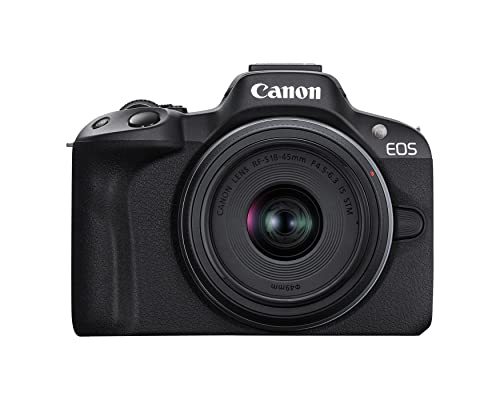
Canon EOS R50 — Best All-Round Starter System
The R50 leads this guide because it is the answer that survives the widest range of beginner futures. Its guided menus translate the craft’s vocabulary into plain intentions — blur the background, freeze the motion — so the beginner learns photography’s ideas in photography’s order, by wanting effects and receiving them, rather than by memorising an exposure triangle before being allowed to begin. Its colour is the kindest in this guide to the subjects beginners actually photograph: faces, in real rooms, under unkind light, rendered the way memory will later claim they looked.
The system’s staircase is the second half of the case. Canon’s RF mount offers the beginner an affordable wide for small rooms, a fast prime for the evening portrait, a telephoto for the school play — each a modest, legible step that builds on the same body and the same learned habits. A first camera whose second and third purchases are obvious protects the beginner from the two classic wastes: the dead-end body re-bought at full price, and the random accessory bought against a frustration a lens would have answered.
Follow it through a plausible first year. Spring: the kit lens, the family, the garden, automatic everything, morale high. Summer: a holiday, the first deliberate project, one frustration named — the dark restaurant — and answered with the fast prime. Autumn: the prime teaches depth of field by delight, and the beginner is, without noticing the moment, a photographer. The R50’s achievement is that nothing in that year required replacing it, apologising for it, or working around it.
Its compromises are the class’s standard ones, stated plainly: a spare battery belongs in the bag for long days, the kit lens is a tutor rather than a treasure, and handheld video leans on lens stabilisation. For the beginner who wants one safe, kind, growing system, they are the right compromises at the right price of admission.
- Mount: Canon RF lenses on an APS-C sensor
- Handling: guided menus that teach by intention
- Colour: warm, flattering faces in home light
- Focus: face and eye detection for people and pets
- Video: capable, with webcam behaviour for calls and streams
Strengths
- The safest first system a beginner can join
- Teaches the craft in the craft’s own order
- Years of growth without a body change
Trade-offs
- Spare battery advised from the start
- Kit lens teaches rather than dazzles
- Video stabilisation leans on the lens
Best for: beginners wanting one friendly system for stills and video alike. Not suited for: buyers who want zero decisions or a pocket-only camera.

Nikon Z50 II — Best for Keen Photographers
The Z50 II is the pick for the beginner who arrives already keen — the one who has read about aperture for pleasure, who wants dials that mean things, who suspects the automatic mode is a place to visit rather than to live. Nikon’s second-generation creator body gives that beginner a photographer’s instrument at a starter’s price: a control layout that rewards growing hands, an electronic viewfinder for composing in bright light the way photographers have for a century, and Nikon’s colour science, whose rendering of landscape and skin has a devoted following for reasons a single autumn walk will explain.
Its subject-detection autofocus is the modern half of the proposition: the body finds eyes — people’s, animals’, the beginner’s uncooperative cat’s — and holds them while the beginner concentrates on the older half of the craft, the framing and the moment. That division of labour is exactly right for the keen beginner, whose attention should be spent on seeing rather than on focusing chores the camera does better.
Video is a full citizen here rather than a bonus — capable recording, a microphone input for the beginner whose projects turn toward film, and handling that serves a one-person production. The Z50 II’s beginner is often the teenager or the returning hobbyist whose first camera must serve a school film, a family archive, and a photography practice simultaneously, and the body was clearly specified by people who understood that triple duty.
The honest limits: Nikon’s DX lens shelf, while growing, is narrower than the Canon and Sony shelves this guide also recommends, and the body’s photographic seriousness means a slightly steeper first week than the R50’s guided kindness. The keen beginner will call that week tuition and pay it gladly. The unkeen should take the R50 and never look back.
- Mount: Nikon’s Z system on an APS-C sensor
- Composition: electronic viewfinder plus tilting screen
- Focus: subject and eye detection for people and animals
- Video: capable recording with a microphone input
- Colour: Nikon’s rendering of land and skin
Strengths
- A photographer’s instrument at a starter’s price
- Controls that grow with the owner’s hands
- Stills and video in equal citizenship
Trade-offs
- A steeper first week than the guided rivals
- DX lens shelf narrower than Canon’s and Sony’s
- Seriousness may exceed a casual beginner’s appetite
Best for: keen beginners who want to learn the craft properly from day one. Not suited for: anyone happier letting the camera make every decision.

Sony ZV-1F — Best Zero-Learning Starter
The ZV-1F is for the beginner who has examined their own heart and found, honestly, that they do not want to learn photography — they want photographs. There are more such people than the camera industry admits, and this camera serves them without a whisper of condescension. Nothing about the lens asks a question — it is fixed, it is wide, and it stays out of the way; focus and exposure are automatic and attentive; its screen faces the user for the self-portrait and the video message; and its entire personality can be summarised as: point it at the moment, press the button, receive the moment back, bright and finished.
The wide lens suits the beginner’s real geography more than specification sheets suggest. Life happens at arm’s length and across small rooms — the kitchen celebration, the café table, the friends crowded on a sofa — and a wide frame takes the context in rather than amputating it, which is what memory does too. Product-showcase focus handles the object held up to the lens, and the files emerge needing no editing, a mercy for a beginner whose computer time is not part of the hobby they signed up for.
Its one concession to the future is a wise one: a microphone input, so that when video becomes part of the beginner’s life — the family messages, the holiday film — the sound can grow up without the camera being replaced. Everything else about the body refuses growth on principle, and the refusal is the product: there is nothing to configure wrongly, nothing to upgrade anxiously, nothing between the owner and the next photograph.
Buy it with its ceiling in view: evenings are handled willingly rather than brilliantly, no lens will ever attach, and the distant stage at the school concert will remain distant. Within its brief — the beginner who wants the moment, not the hobby — it is the most honest camera in this guide.
- Lens: a single fixed wide view of the room
- Handling: automatic focus and exposure throughout
- Screen: faces the user for portraits and messages
- Audio: voice-tuned microphones plus an input
- Files: bright and finished, no editing required
Strengths
- Photography with the homework abolished
- Context-rich framing for family life
- Nothing to configure, break, or outgrow anxiously
Trade-offs
- No zoom and no lens future
- Low light is willing, not brilliant
- Keen beginners will feel the ceiling quickly
Best for: beginners who want photographs and video without learning a craft. Not suited for: anyone who suspects the craft itself is the attraction.

Canon PowerShot G7 X Mark III — Best Pocket Camera
The G7 X Mark III rests on a truth beginners learn slowly: the best camera is the one in the pocket when the moment happens. It is a real camera — a zoom lens spanning the wide room to the distant detail, a sensor a class above phone-era pocket devices, Canon’s flattering colour — compressed into a body that rides in a jacket without negotiation. A beginner’s life is mostly unplanned photography, and this is the pick engineered for the unplanned: present, quick, and far better than its size promises.
The zoom is its teaching instrument. Beginners compose with their feet last and their lens first, and the G7 X lets them discover framing from where they stand — wide for the scene, tight for the face, the whole grammar of shots available before the harder lesson of moving like a photographer has been learned. Those instincts, formed on a pocket zoom, transfer intact to every larger camera the beginner may later own, which makes this little body a tutor disguised as a convenience.
Its modern citizenship extends the case: it shoots video with the same ease, handles vertical formats and live duties for the beginner whose photography lives partly on social platforms, and its tilting screen serves the low garden shot and the high crowd shot with equal grace. A pocket camera that serves stills, video, and the platform age from one jacket is not a compromise purchase; for many beginners it is the complete purchase.
The class’s limits apply: low light concedes to the larger-sensored system bodies, long formal video sessions are not its design centre, and there is no lens mount to climb. It answers by being there — at the market, on the walk, in the coat at the recital — and a beginner’s archive is built overwhelmingly out of being there.
- Lens: zoom from wide scenes to distant details
- Sensor: a class above the phone-era pocket crowd
- Screen: tilts for low and high compositions
- Citizenship: stills, video, vertical and live formats
- Carry: jacket-pocket size, instant readiness
Strengths
- Present for the unplanned majority of life
- Zoom teaches framing from where you stand
- A complete small camera, not a toy
Trade-offs
- Low light concedes to system bodies
- No lens mount to grow on
- Long formal sessions are not its centre
Best for: beginners whose photography is their daily life, carried everywhere. Not suited for: deliberate studio work or a planned lens collection.

DJI Osmo Pocket 3 — Best for Moving Subjects of Life
Some beginners’ lives will not sit still for a photograph: the hiking household, the travelling grandparent, the parent filming a childhood that moves at running speed. The Pocket 3 is their instrument — a camera on a mechanical gimbal, small enough for any pocket, that turns walking footage into gliding footage and keeps a moving subject framed with a face-tracking patience no handheld camera matches. For the beginner whose medium is the moving image of a moving life, it removes the beginner’s most visible amateurism — the shake — on the first day.
Its stills and its talking pieces are better than its size suggests: set it on a table and it becomes a small, attentive cameraman, following the speaker; carry it and the rotating screen serves vertical and horizontal formats from the same outing. The beginner filming a family’s life for relatives near and far gets, in one pocketable object, the walk, the talk, and the portrait — a completeness that explains why so many first “cameras” in this decade are, in fact, this.
The ecosystem path is gentle: DJI’s wireless microphones pair with it directly for the voice-over-the-walk that family films live by, and its files are ordinary, editable anywhere. A beginner can grow an entire moving-image practice on this device without ever meeting a lens mount — and many do, which this guide records as a legitimate photographic life rather than a waiting room for one.
Its physics are its limits: a fixed lens with one framing personality, a small sensor that concedes the darkest rooms, and a gimbal that asks not to be dropped on stone or drowned at the beach. The beginner whose life is a desk should buy a desk camera. The beginner whose life is a route should start walking with this in the pocket.
- Stabilisation: three-axis mechanical gimbal
- Tracking: face follow for moving subjects
- Screen: rotates for vertical and horizontal
- Audio: direct pairing with DJI wireless microphones
- Carry: pocketable, wakes instantly
Strengths
- Movement footage looks deliberate immediately
- A complete moving-image practice in a pocket
- Table-top talking pieces with a tracking cameraman
Trade-offs
- One lens, one framing personality
- Dark interiors exceed the small sensor
- The gimbal mechanism wants care
Best for: beginners whose subjects are travel, family motion, and the walking world. Not suited for: stills-first photographers or studio work.

Sony ZV-E10 II — Best Buy-Once Platform
The ZV-E10 II is the pick for the beginner who has done the arithmetic on themselves and concluded, correctly, that this hobby is going to take. Buying it first is an act of self-knowledge: it is the growth platform of this guide, with the deepest lens shelf in the business attached to a body whose creator engineering — product-showcase autofocus, a presenter-facing screen, background-blur control, a complete audio pathway — serves the beginner’s video ambitions and the photographer’s stills ambitions in one instrument.
The buy-once logic deserves its paragraph. A beginner who starts on a lesser body and upgrades in year two has bought two cameras; the second purchase also strands the first body’s accessories and habits. The ZV-E10 II’s buyer skips that toll: the second purchase becomes a lens, the third a microphone, each compounding the same platform. Over a five-year hobby, the platform bought once is frequently the cheaper biography — provided the self-knowledge was accurate, which is the gamble this pick honestly names.
Its first month is the steepest in this guide, and the guide will not pretend otherwise: menus that reward study, no in-body stabilisation to forgive the walking shot, a compact grip. The beginner who wants the camera to disappear should take the ZV-1F or the R50. The beginner who enjoys mastering an instrument — who reads the manual with pleasure and practises on the cat — will find the ZV-E10 II the body they are still using, grown into and grown fond of, when the hobby turns serious.
Judge it, finally, by trajectory. It is rarely the easiest first camera in this list and very often the last camera its owner needs to buy as a body. For the beginner who knows, that is not a trade-off but the entire point.
- Lenses: the E-mount catalogue on an APS-C body
- Focus: face tracking with product-showcase shifts
- Audio: input, monitoring, and digital shoe
- Screen: fully articulating for solo creators
- Catalogue: the deepest lens shelf in this guide
Strengths
- Buy the platform once; grow by lenses
- Creator engineering for stills and video
- Headroom for a serious hobby’s whole arc
Trade-offs
- The steepest first month in this guide
- Walking footage needs technique or support
- A gamble if the hobby does not take
Best for: beginners confident the hobby is becoming a serious one. Not suited for: casual beginners who want the gentlest possible start.
First Cameras Side by Side: The Table
| Pick | Beginner’s temperament | Growth path | Defining virtue |
|---|---|---|---|
| Canon EOS R50 | Wants a safe, kind system | RF lens staircase | Guided versatility |
| Nikon Z50 II | Keen to learn the craft | Z mount, photographer’s dials | Serious bones, starter price |
| Sony ZV-1F | Wants photographs, not a hobby | Microphone first | Decisions abolished |
| Canon PowerShot G7 X Mark III | Life is the subject | Accessories and habit | Always in the pocket |
| DJI Osmo Pocket 3 | Life is in motion | DJI audio ecosystem | Gliding footage anywhere |
| Sony ZV-E10 II | Knows the hobby will take | E-mount and audio depth | Buy-once headroom |
The temperament column is the table’s method. Beginners do not fail with cameras that are too weak; they fail with cameras that fit someone else — the keen instrument bought for the casual owner, the zero-decision camera bought for the born tinkerer. Read the rows as personalities first and products second, and the right row usually identifies itself before the specifications are even consulted.
The growth column then referees the close calls. Prefer the row whose next purchase is small, obvious, and aimed at a named frustration — a lens for the dark restaurant, a microphone for the video messages — because a beginner’s equipment should grow by diagnosis. Platforms that make the next step legible keep their owners climbing; platforms that make it mysterious keep their owners shopping, which is a different and lesser hobby.
How Much Should a Beginner Spend, and on What Besides the Camera?
Less on the body than instinct suggests, and the remainder with discipline. A first budget divided well lets the camera take the largest share but reserves real money for the supporting cast: a spare battery and a second card, a bag that makes carrying effortless, a small tripod for the group shot and the low-light still, and — for video-leaning beginners — the microphone that audiences will judge before they judge any lens. Beginners who spend everything on the body own an excellent camera and a frustrating practice; the reserves are what convert a purchase into a practice.
Sequence the spending across the first year rather than detonating it on the first day. Camera and the unglamorous consumables first; the tripod when the first group shot demands it; the second lens when a frustration has repeated itself into a diagnosis; the microphone when the first video’s sound embarrasses its picture. Spending sequenced this way means every later purchase answers a question experience has actually asked, and the kit that accumulates fits its owner like a biography rather than a showroom.
Keep a small reserve for the discovery nobody predicts: the strap that suits, the filter the seaside demands, the course or the book that arrives exactly when the beginner is ready for it. The reserve is not indecision; it is the budget’s acknowledgment that a beginner cannot know in advance what their photography will need — which is, in one sentence, the definition of being a beginner.
What Should a Beginner Practise in the First Month?
Seeing, in four small exercises that no camera in this guide can do for you. Photograph the same doorway at three hours of the day and learn what light does to a subject that cannot move. Take one portrait of a willing person in every room of the house and learn which rooms flatter. Walk a familiar street with the camera and return with only photographs of things you had never noticed — proof that the camera’s first gift is attention. And keep one photograph a day, ruthlessly, deleting the rest, because the discipline of choosing is the discipline of photography itself.
Notice what the exercises omit: settings. The automatic mode is the correct classroom for the first month, because the beginner’s eye is the bottleneck and eyes are trained by volume and review, not by exposure theory. When a specific photograph fails in a specific way — the concert too dark, the toddler a blur — that failure is the syllabus for the second month, arriving exactly when the beginner has the experience to understand it. Cameras that tutor well, as the system picks here do, reveal one control at a time against exactly such failures.
Review weekly, kindly, and in company if possible. A beginner who shows the week’s keepers to a friend learns what photographs do to other people, which is the whole point of making them; a beginner who hoards them learns only their own intentions. The first month’s goal is not a portfolio but a habit of finishing — shoot, choose, share, repeat — because every later skill in photography is a refinement of that loop.
What Mistakes Do Beginners Make With a First Camera?
Buying the flagship first is the expensive classic: it spends the lens, microphone, and tripod budget on capability the beginner cannot yet use, while adding a complexity tax at the exact moment confidence is most fragile. Its mirror image is the dead-end bargain — the camera with no system and no second career, re-bought at full price within two years. The ladder in this guide exists to make both mistakes unnecessary: enter at the rung your temperament names, on a platform whose next steps are small.
The second mistake is learning in the wrong order — aperture theory before attention, colour grading before composition, the equipment forum before the evening walk. Forums are particularly seductive because they convert the frightening business of making photographs into the legible business of comparing them. The antidote is a quota: for every hour spent reading about cameras, an hour spent carrying one. Beginners who keep that ratio find the theory starts answering questions they actually have, which is when theory becomes delicious rather than dutiful.
The third is abandoning the camera at the first plateau. Every beginner meets the month where the photographs stop improving and the novelty has worn off — the valley where hobbies are decided. The plateau is not evidence about the camera; it is the normal geography of learning, and it is crossed by projects, not purchases: the alphabet photographed around the neighbourhood, the portrait series of the family’s hands, the one street documented across a season. Buy the project, not the upgrade, and the camera you already own becomes interesting again — it usually was, all along.
How Will You Know This Camera Was the Right First One?
By its absence from your thoughts. The right first camera fades into the practice — carried without deliberation, operated without anxiety, blamed rarely and forgiven quickly — until the beginner realises, somewhere in the second year, that they have opinions about photographs rather than about equipment. That transition is the first camera’s diploma. Cameras that keep demanding attention, through quirks, failures, or a ceiling met too early, announce themselves as wrong in the opposite way: they remain a topic when they should have become a tool.
A third sign is social: the beginner starts being asked. Asked to bring the camera to the family event, asked how a photograph was made, asked — the deepest compliment the craft pays — to take the group picture because theirs come out well. A first camera that leads its owner into that role has done something no specification measures: it has made photography part of who they are in their circle, and identities, unlike novelties, do not get left in cupboards. When the invitations start arriving, the purchase has already justified itself, whatever the second year brings.
The second sign is the second purchase’s clarity. When the time comes, the right first camera has taught its owner exactly what to buy next and why — the lens for the named frustration, the microphone for the named ambition — because the year’s photographs constitute a diagnosis no reviewer could have written. A first camera that leaves its owner more confused about the second purchase than the first has failed at its deepest job, whatever its specifications promised.
How Do Stills-First and Video-First Beginners Differ?
Less than the industry pretends, and in one way that matters. Both need the same foundation — a camera whose automatic judgement is trustworthy, a system whose next steps are legible, handling that keeps the beginner photographing through the plateau. They diverge at the margins: the video-first beginner should weight the screen that faces the presenter, the microphone pathway, and long-recording manners; the stills-first beginner should weight the viewfinder, the control dials, and the lens shelf’s portrait and travel glass. The picks above were chosen to be honest citizens of both countries, with the ZV bodies leaning video, the Z50 II leaning stills, and the R50 standing equitably between.
The divergence also shows in the second purchase. Video-first beginners buy sound — the microphone transforms their work more than any lens — while stills-first beginners buy glass, and each group is routinely baffled by the other’s priority. Both are right, and a beginner household containing one of each should simply alternate. What neither group should buy second is another body: the first year’s growth lives in the accessories and the lenses, and the body bought from this guide is built to receive them.
Hybrid beginners, the modern majority, should buy by the ratio of their actual week. Three evenings of family video and one of stills argues for the video-leaning rows; a photography club membership and a holiday film argues for the equitable ones. The ratio will drift across the first year — that is expected, and it is why the platforms here were chosen for their breadth: a system that serves both crafts tolerates the drift without a rebuy, which is the deepest form of beginner-proofing this guide can offer.
What Does a Beginner Owe Their Future Photographs?
An archive. The first year’s files are the raw material of every future family album, every retrospective, every “look how small they were” — and they are shockingly easy to lose to a single failed card or a laptop’s quiet death. The beginner’s covenant is simple: copy the card the same week, keep the keepers in two places, and name the folders so a stranger could navigate them. It takes ten minutes a week and it is the difference between a photography practice and a photography rumour.
The archive also deserves selection. A beginner who keeps everything keeps, effectively, nothing — ten thousand near-duplicates in which the dozen great frames drown. The weekly review from the practice section is the archive’s editor: keep the best, keep the honest failures that teach, and let the merely-duplicated go. Future you, searching for the photograph of the dog as a puppy, will bless the editor’s ruthlessness far more than the hoarder’s caution.
Print a few. The screen is where photographs are reviewed, but the wall and the album are where they live, and a beginner who prints the year’s best dozen learns more from seeing them large and permanent than from a hundred screen reviews. Printing also completes the loop this guide began with: a camera bought to produce a photographer succeeds when its photographs leave the device and enter the home — as the instant-camera guides elsewhere on this site argue with a whole product category, and as every tradition of photography argued before them.
How Should a Beginner Choose Between This Guide’s Two System Rivals?
The R50 and the Z50 II are the closest call in this guide, and the honest answer is that the choice is about the beginner’s relationship with learning. Canon’s body teaches by intention — tell it the effect, receive the effect, absorb the craft sideways — while Nikon’s teaches by instrument, putting the photographer’s controls under the fingers and letting mastery accumulate through the hands. Beginners who learn by doing-with-guidance flourish on the first; beginners who learn by understanding-the-mechanism flourish on the second. Neither is the “better camera” in the abstract, and any review that crowns one without asking about the learner is answering a question nobody posed.
The shelves referee what temperament leaves tied. Canon’s RF ecosystem and Nikon’s Z ecosystem are both healthy, growing, and committed; the differences that matter are local and specific — a particular lens a beginner already covets, a second-hand market in their city, a friend whose lenses can be borrowed. That last factor deserves its weight: a beginner with a friend inside a system inherits a lending library and a help desk, and should join the friend’s system without a backward glance. Photography is social at every level except the moment of the shutter, and the first camera is partly a membership.
How Does Buying for a Child or Teenager Change the Brief?
The young beginner’s first camera carries one extra duty: it must survive being a young person’s property — knocked, lent, left in a school bag, loved hard. That argues for the simpler and hardier rows of this guide: the pocket cameras whose loss would sting rather than devastate, the fixed-lens bodies with nothing delicate to configure, and, for the very young enthusiast, the honest truth that a family’s retired camera from this list’s own second careers makes a superb first instrument. Durability here is not a specification but a price point and a simplicity: the camera a teenager can afford to be careless with is the camera they will carry everywhere, and everywhere is where photography is learned.
The young beginner also learns faster in company. A camera that joins the parent’s or the club’s system inherits lenses, advice, and an audience, and the social scaffolding matters more at fourteen than at forty. Families choosing together should weight the shared-system rows accordingly — and should expect, with good humour, that within two years the student may be teaching the household. That outcome is not a risk of the purchase; it is the purchase working exactly as intended.
Final Recommendation
For most beginners, start with the Canon EOS R50: it is the kindest complete system here, and its staircase will carry the hobby for years. Take the Nikon Z50 II if you arrive keen and want a photographer’s instrument from the start, and the Sony ZV-E10 II if you already know the hobby will take and prefer to buy the platform once.
Choose the Sony ZV-1F when photographs without homework is the honest brief, the Canon PowerShot G7 X Mark III when the camera must live in a pocket and serve a whole life, and the DJI Osmo Pocket 3 when that life is in motion. Whichever you choose, reserve budget for the unglamorous supporting cast, practise seeing before settings, and cross the first plateau with a project rather than a purchase. The best first camera is the one that produces a photographer; every pick above has produced many.
Frequently Asked Questions
Is a phone not enough for a beginner?
A phone is a fine place to begin, and this guide’s honest advice is to shoot with it until its limits start costing you photographs — the dark rooms, the distant subjects, the controls you wish existed. A dedicated camera earns its place at that moment, and the revelation of which limits annoyed you most is the best guide to which rung of this ladder to enter.
Should a beginner buy mirrorless or a compact camera?
By temperament and trajectory. Compacts — the G7 X, the ZV-1F, the Pocket 3 — serve beginners who want photographs with minimal apparatus and no lens decisions. Mirrorless bodies serve beginners who feel the pull of the craft or of specific subjects that need specific lenses. Both doors stay open; the commonest healthy kit eventually contains one of each.
New or used for a first camera?
A used body from a reputable seller can stretch a budget a full rung, and photography’s used market is mature and honest. Balance that against the beginner’s specific needs: a warranty, a returns window long enough to shoot real life through, and a battery whose health is known. Whichever route you choose, keep the reserve for the supporting cast — a bargain body that consumes the whole budget is no bargain.
How long before a beginner outgrows these cameras?
The system bodies are designed not to be outgrown as bodies at all — growth happens by lens — while the fixed-lens picks retire, when the hobby deepens, into everyday-carry roles they remain excellent at. “Outgrowing” in this guide means a named limitation costing photographs, which for most beginners is a year-two conversation conducted with evidence, not a month-two anxiety conducted with forums.
What is the first accessory to buy?
The unglamorous trio: a spare battery, a second memory card, and a bag or strap that makes carrying the camera effortless. After that, let experience write the list — a tripod when group shots and low light demand it, a microphone when video arrives, a second lens when a frustration has earned its diagnosis.
Do beginners need to learn manual mode?
Eventually, partially, and happily — in that order. Manual control matters when a specific photograph demands it, and the demand teaches faster than any course. Until then, automatic modes on the picks above are not a compromise but a curriculum: they let the beginner train the eye first, which is the part of photography no mode can automate.
Related Guides
When the first year raises its next questions, the companion reading answers them: best cameras for youube for the beginner whose practice turns toward video channels, best cameras for travel for the first camera’s first big trip, and best cameras for portraits for the subject most beginners fall for first.


