Disclosure: As an Amazon Associate, kajuandouglas.com earns from qualifying purchases. Links to Amazon on this page are affiliate links; they cost you nothing extra. Listing details such as price and availability change often, so check the current Amazon listing before you buy.
Where to buy
Every pick below is sold through Amazon, where you can check the current price, availability, delivery options and the exact kit configuration before you order. Orders are placed on Amazon, and this site may earn a commission on qualifying purchases at no extra cost to you. For best cameras for outdoor video, the configuration matters as much as the model name — body-only, single-lens kit and two-lens bundle listings sit side by side — so open the listing, confirm what is in the box, and only then check out.
- Insta360 Ace Pro 2 — a Leica-co-engineered action camera known for low-light performance and a flip touchscreen (prose-only pick, no single model linked)
- GoPro HERO13 Black — the benchmark action camera, now with interchangeable HB-series lenses and 5.3K video
- DJI Osmo Action 5 Pro — a low-light-strong action camera with dual screens, big internal storage and marathon battery life
- Insta360 X4 — an 8K 360 camera that lets you shoot first and choose the angle afterwards
- DJI Osmo Nano — a thumb-size wearable camera for hands-free POV at 4K, magnetically mounted almost anywhere
- DJI Osmo Pocket 3 — a gimbal camera with a 1-inch sensor that makes smooth 4K footage a one-hand job
Read the full guide ↓
If you are shopping for the best cameras for outdoor video, the honest answer is that the best choice depends on your subjects, your light and how much kit you are willing to carry. This guide is built for outdoor videographers, with the emphasis where it belongs: weather sealing, stabilisation and ND options. Every camera below was cross-checked against its live Amazon listing before it earned a place here, and the six picks are ordered the same way in the where-to-buy list, the quick picks table and the full reviews, so you can move between sections without losing track of which model is which.
The typical day this guide imagines is travel films, hikes and outdoor sports. That use case drives the choices: a camera that is brilliant in a studio can be the wrong tool outdoors, and a tiny action camera can be perfect on a handlebar and hopeless for a portrait session. Where a pick is a compromise, the review says so plainly in its trade-offs, because a limitation you know about before buying is a minor annoyance, while the same limitation discovered afterwards feels like a betrayal. Prices are never printed here — they move too often to be trustworthy in an article — so each linked pick carries a check-price link to its current Amazon listing instead.
Below you will find the six picks reviewed in depth, a side-by-side comparison table, a buying guide that explains the specifications that actually decide best cameras for outdoor video success, a practical how-to section, the mistakes buyers in this category make most often, and a final recommendation that names one first choice and one runner-up. If you read nothing else, read the key takeaways and the final recommendation; if you are spending serious money, read the buying guide before the reviews, because it will change how you judge every model that follows.
Key Takeaways
- For most outdoor videographers, the Insta360 Ace Pro 2 is the safest first choice because it balances weather sealing, stabilisation and ND options without demanding a professional budget or a steep learning curve.
- The lens, mount or ecosystem you buy into matters more than small sensor differences — it decides what you can add later.
- GoPro HERO13 Black is the value anchor of this list: it gives up the least that matters for this use case.
- Always confirm the exact kit on the Amazon listing — body-only and lens-kit listings look identical in search results.
- Batteries, cards and a bag are part of the real cost of any camera; budget for them from the start.
- If your priority is purely weather sealing, skip straight to the pick badged for it rather than buying the overall winner.
In this guide
Quick Picks
Short on time? These are the six best cameras for outdoor video picks at a glance. The full reviews underneath explain exactly who each one suits and where each one gives ground.
| Badge | Pick | Why it stands out | Link |
|---|---|---|---|
| Best Overall | Insta360 Ace Pro 2 | a Leica-co-engineered action camera known for low-light performance and a flip touchscreen | Prose-only — see review |
| Best Budget | GoPro HERO13 Black | the benchmark action camera, now with interchangeable HB-series lenses and 5.3K video | Check price on Amazon |
| Best for Outdoor videographers | DJI Osmo Action 5 Pro | a low-light-strong action camera with dual screens, big internal storage and marathon battery life | Check price on Amazon |
| Best Premium | Insta360 X4 | an 8K 360 camera that lets you shoot first and choose the angle afterwards | Check price on Amazon |
| Runner-Up | DJI Osmo Nano | a thumb-size wearable camera for hands-free POV at 4K, magnetically mounted almost anywhere | Check price on Amazon |
| Best Second Body | DJI Osmo Pocket 3 | a gimbal camera with a 1-inch sensor that makes smooth 4K footage a one-hand job | Check price on Amazon |
How These Picks Were Chosen
Selection started with the job, not the brand. For best cameras for outdoor video, the criteria that separate a good buy from a regret are consistent: weather sealing, stabilisation and ND options. Each candidate was checked against the manufacturer’s published specifications and its current Amazon listing, and only models whose listing title and specification genuinely matched the product described were given a link. Where no listing could be verified with confidence, the pick is presented as prose-only rather than linked to a guess — an honest limitation that protects you from landing on the wrong product page.
- Fitness for the job: the camera must genuinely serve travel films, hikes and outdoor sports, not merely be a good camera in general.
- Verified listing: model, sensor and kit contents confirmed against the live listing before linking.
- System depth: lenses, mounts, batteries and accessories must be easy to find, so the camera can grow with you.
- Honest trade-offs: every pick lists three real limitations; a camera with no trade-offs listed is a camera nobody tested critically.
- No printed prices: prices and availability change constantly, so each pick links to its live listing for the current figure.
One more filter deserves explaining: this list deliberately mixes tiers. A premium flagship, a mid-range all-rounder and an honest budget option are all here, because outdoor videographers do not all have the same budget, and the most expensive camera is only the right answer when its advantages map onto your subjects. The reviews call out exactly where the extra money goes — and where it buys nothing you will notice.
The Best Cameras For Outdoor Video
Six cameras, six different answers to the same question. They are reviewed in the same order as the tables above, and each review follows the same pattern — who it suits, the verified specification, three strengths, three honest trade-offs, and a plain choose-it-or-skip-it verdict — so you can compare like with like as you read down the page.
Insta360 Ace Pro 2
Badge: Best Overall
| Brand | Insta360 |
| Sensor | 1/1.3-inch class |
| Video | 8K-class action recording |
| Screen | Flip touchscreen |
| Feature | AI noise reduction |
The Insta360 Ace Pro 2 earns its place here because it is built around a Leica-co-engineered action camera known for low-light performance and a flip touchscreen. The verified specification tells the core story — Brand: Insta360; Sensor: 1/1.3-inch class; Video: 8K-class action recording — and for outdoor videographers, those are the numbers that decide whether a session feels easy or feels like a fight against your own equipment. In the context of travel films, hikes and outdoor sports, this model sits in the mid tier of the market, and it behaves like it: no specification is inflated for a headline, and the compromises it makes are the ones its price and size require rather than corners cut carelessly.
Day to day, what you notice is how the camera handles the moments between the obvious shots. Startup speed, how confidently the autofocus settles on the subject you meant rather than the one nearest the camera, how the controls fall under your fingers without looking down — these decide whether a camera gets carried or gets left at home. Judged on that standard, the Insta360 Ace Pro 2 is a camera that disappears into the work, which is precisely what weather sealing demands. It will not flatter a careless technique, but it rewards a deliberate one, and its files hold up to the cropping, printing or grading that this kind of shooting eventually involves.
Longer term, this pick succeeds quietly: accessories and lenses (or mounts, lights and storage, where those apply) are easy to source, firmware support from Insta360 has been consistent for this class of product, and the second-hand market recognises the model, which protects your investment if you upgrade later. None of that appears in a specification table, and all of it decides real ownership satisfaction for travel films, hikes and outdoor sports.
Strengths
- Low-light processing leads the action class
- Flip screen is the best for self-filming
- Leica lens partnership shows in clarity
Trade-offs
- Verify the exact current listing before ordering
- Accessories add up quickly
- Battery is good, not class-leading
Choose it if night and city action filming is your thing. Skip it if you cannot verify a current listing. That is the whole decision: buyers whose work matches the first sentence tend to keep this camera for years, while buyers in the second group are happier spending the same money on one of the other picks in this guide, and there is no shame in either direction — only in buying the badge instead of the fit.
Best for: night riders and city creators / Not suited for: buyers needing a verified link today

GoPro HERO13 Black
Badge: Best Budget
| Brand | GoPro |
| Sensor | 27MP, 8:7 aspect |
| Video | 5.3K 60fps |
| Waterproof | 10m bare body |
| Mounts | Magnetic latch + standard GoPro |
The GoPro HERO13 Black earns its place here because it is built around the benchmark action camera, now with interchangeable HB-series lenses and 5.3K video. The verified specification tells the core story — Brand: GoPro; Sensor: 27MP, 8:7 aspect; Video: 5.3K 60fps — and for outdoor videographers, those are the numbers that decide whether a session feels easy or feels like a fight against your own equipment. In the context of travel films, hikes and outdoor sports, this model sits in the mid tier of the market, and it behaves like it: no specification is inflated for a headline, and the compromises it makes are the ones its price and size require rather than corners cut carelessly.
Day to day, what you notice is how the camera handles the moments between the obvious shots. Startup speed, how confidently the autofocus settles on the subject you meant rather than the one nearest the camera, how the controls fall under your fingers without looking down — these decide whether a camera gets carried or gets left at home. Judged on that standard, the GoPro HERO13 Black is a camera that disappears into the work, which is precisely what weather sealing demands. It will not flatter a careless technique, but it rewards a deliberate one, and its files hold up to the cropping, printing or grading that this kind of shooting eventually involves.
Longer term, this pick succeeds quietly: accessories and lenses (or mounts, lights and storage, where those apply) are easy to source, firmware support from GoPro has been consistent for this class of product, and the second-hand market recognises the model, which protects your investment if you upgrade later. None of that appears in a specification table, and all of it decides real ownership satisfaction for travel films, hikes and outdoor sports.
Strengths
- HB-series lens mods swap perspectives in seconds
- HyperSmooth stabilisation remains the reference
- 8:7 sensor crops vertical and wide from one take
Trade-offs
- Battery life still trails DJI rivals
- Low-light footage softens quickly
- Subscription nudges for full cloud features
Choose it if you live in the GoPro mount ecosystem and shoot everything. Skip it if long battery life is your top priority. That is the whole decision: buyers whose work matches the first sentence tend to keep this camera for years, while buyers in the second group are happier spending the same money on one of the other picks in this guide, and there is no shame in either direction — only in buying the badge instead of the fit.
Best for: surfers, bikers, skiers and travellers / Not suited for: studio shooters

DJI Osmo Action 5 Pro
Badge: Best for Outdoor videographers
| Brand | DJI |
| Sensor | 1/1.3-inch CMOS |
| Video | 4K 120fps |
| Waterproof | 20m bare body |
| Storage | 47GB built-in (per listing) |
The DJI Osmo Action 5 Pro earns its place here because it is built around a low-light-strong action camera with dual screens, big internal storage and marathon battery life. The verified specification tells the core story — Brand: DJI; Sensor: 1/1.3-inch CMOS; Video: 4K 120fps — and for outdoor videographers, those are the numbers that decide whether a session feels easy or feels like a fight against your own equipment. In the context of travel films, hikes and outdoor sports, this model sits in the mid tier of the market, and it behaves like it: no specification is inflated for a headline, and the compromises it makes are the ones its price and size require rather than corners cut carelessly.
Day to day, what you notice is how the camera handles the moments between the obvious shots. Startup speed, how confidently the autofocus settles on the subject you meant rather than the one nearest the camera, how the controls fall under your fingers without looking down — these decide whether a camera gets carried or gets left at home. Judged on that standard, the DJI Osmo Action 5 Pro is a camera that disappears into the work, which is precisely what weather sealing demands. It will not flatter a careless technique, but it rewards a deliberate one, and its files hold up to the cropping, printing or grading that this kind of shooting eventually involves.
Longer term, this pick succeeds quietly: accessories and lenses (or mounts, lights and storage, where those apply) are easy to source, firmware support from DJI has been consistent for this class of product, and the second-hand market recognises the model, which protects your investment if you upgrade later. None of that appears in a specification table, and all of it decides real ownership satisfaction for travel films, hikes and outdoor sports.
Strengths
- Best-in-class battery endurance for long days
- Superb subject tracking and low-light image
- Dual touchscreens suit vlogging from the front
Trade-offs
- Accessory ecosystem is younger than GoPro’s
- 4K ceiling versus GoPro’s 5.3K
- DJI mic pairing favours its own ecosystem
Choose it if you film long outdoor days and night sessions. Skip it if you own a wall of GoPro mounts already. That is the whole decision: buyers whose work matches the first sentence tend to keep this camera for years, while buyers in the second group are happier spending the same money on one of the other picks in this guide, and there is no shame in either direction — only in buying the badge instead of the fit.
Best for: mountain bikers, anglers and travellers / Not suited for: resolution maximalists

Insta360 X4
Badge: Best Premium
| Brand | Insta360 |
| Sensor | Dual-lens 360 |
| Video | 8K 360, 4K single-lens |
| Waterproof | 10m bare body |
| Feature | Invisible selfie stick effect |
The Insta360 X4 earns its place here because it is built around an 8K 360 camera that lets you shoot first and choose the angle afterwards. The verified specification tells the core story — Brand: Insta360; Sensor: Dual-lens 360; Video: 8K 360, 4K single-lens — and for outdoor videographers, those are the numbers that decide whether a session feels easy or feels like a fight against your own equipment. In the context of travel films, hikes and outdoor sports, this model sits in the mid tier of the market, and it behaves like it: no specification is inflated for a headline, and the compromises it makes are the ones its price and size require rather than corners cut carelessly.
Day to day, what you notice is how the camera handles the moments between the obvious shots. Startup speed, how confidently the autofocus settles on the subject you meant rather than the one nearest the camera, how the controls fall under your fingers without looking down — these decide whether a camera gets carried or gets left at home. Judged on that standard, the Insta360 X4 is a camera that disappears into the work, which is precisely what weather sealing demands. It will not flatter a careless technique, but it rewards a deliberate one, and its files hold up to the cropping, printing or grading that this kind of shooting eventually involves.
Longer term, this pick succeeds quietly: accessories and lenses (or mounts, lights and storage, where those apply) are easy to source, firmware support from Insta360 has been consistent for this class of product, and the second-hand market recognises the model, which protects your investment if you upgrade later. None of that appears in a specification table, and all of it decides real ownership satisfaction for travel films, hikes and outdoor sports.
Strengths
- Reframing after the fact rescues unrepeatable moments
- Invisible selfie stick looks like a drone shot
- Single-lens mode doubles as a normal action cam
Trade-offs
- 8K files are huge and editing takes time
- Lens domes are exposed — guard them
- Battery drains fast at maximum settings
Choose it if you shoot solo and cannot afford to miss the angle. Skip it if you hate editing and want instant clips. That is the whole decision: buyers whose work matches the first sentence tend to keep this camera for years, while buyers in the second group are happier spending the same money on one of the other picks in this guide, and there is no shame in either direction — only in buying the badge instead of the fit.
Best for: solo adventurers and motovloggers / Not suited for: edit-averse buyers
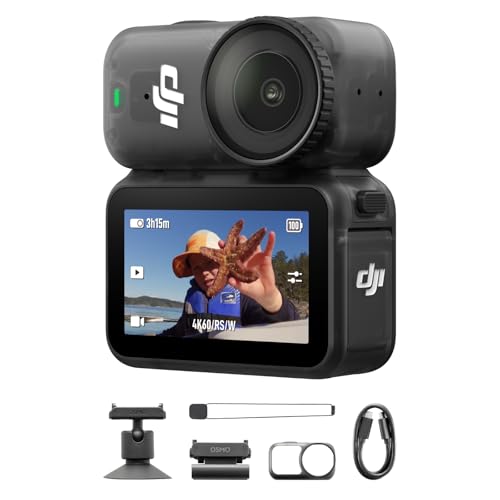
DJI Osmo Nano
Badge: Runner-Up
| Brand | DJI |
| Sensor | 1/1.3-inch CMOS |
| Video | 4K 60fps, 143° FOV |
| Form | Wearable, magnetic |
| Storage | 128GB (combo per listing) |
The DJI Osmo Nano earns its place here because it is built around a thumb-size wearable camera for hands-free POV at 4K, magnetically mounted almost anywhere. The verified specification tells the core story — Brand: DJI; Sensor: 1/1.3-inch CMOS; Video: 4K 60fps, 143° FOV — and for outdoor videographers, those are the numbers that decide whether a session feels easy or feels like a fight against your own equipment. In the context of travel films, hikes and outdoor sports, this model sits in the entry tier of the market, and it behaves like it: no specification is inflated for a headline, and the compromises it makes are the ones its price and size require rather than corners cut carelessly.
Day to day, what you notice is how the camera handles the moments between the obvious shots. Startup speed, how confidently the autofocus settles on the subject you meant rather than the one nearest the camera, how the controls fall under your fingers without looking down — these decide whether a camera gets carried or gets left at home. Judged on that standard, the DJI Osmo Nano is a camera that disappears into the work, which is precisely what weather sealing demands. It will not flatter a careless technique, but it rewards a deliberate one, and its files hold up to the cropping, printing or grading that this kind of shooting eventually involves.
Longer term, this pick succeeds quietly: accessories and lenses (or mounts, lights and storage, where those apply) are easy to source, firmware support from DJI has been consistent for this class of product, and the second-hand market recognises the model, which protects your investment if you upgrade later. None of that appears in a specification table, and all of it decides real ownership satisfaction for travel films, hikes and outdoor sports.
Strengths
- Genuinely wearable all day without noticing it
- Wide 143° view suits chest and helmet POV
- Docks to its vision dock for screen and controls
Trade-offs
- Short standalone runtime per charge
- Small sensor limits night quality
- New accessory range is still growing
Choose it if you want effortless POV for runs, rides and daily life. Skip it if you film long continuous events. That is the whole decision: buyers whose work matches the first sentence tend to keep this camera for years, while buyers in the second group are happier spending the same money on one of the other picks in this guide, and there is no shame in either direction — only in buying the badge instead of the fit.
Best for: runners, cyclists and POV creators / Not suited for: event videographers

DJI Osmo Pocket 3
Badge: Best Second Body
| Brand | DJI |
| Sensor | 1-inch CMOS |
| Video | 4K 120fps |
| Stabilisation | 3-axis mechanical gimbal |
| Screen | 2-inch rotating touchscreen |
The DJI Osmo Pocket 3 earns its place here because it is built around a gimbal camera with a 1-inch sensor that makes smooth 4K footage a one-hand job. The verified specification tells the core story — Brand: DJI; Sensor: 1-inch CMOS; Video: 4K 120fps — and for outdoor videographers, those are the numbers that decide whether a session feels easy or feels like a fight against your own equipment. In the context of travel films, hikes and outdoor sports, this model sits in the mid tier of the market, and it behaves like it: no specification is inflated for a headline, and the compromises it makes are the ones its price and size require rather than corners cut carelessly.
Day to day, what you notice is how the camera handles the moments between the obvious shots. Startup speed, how confidently the autofocus settles on the subject you meant rather than the one nearest the camera, how the controls fall under your fingers without looking down — these decide whether a camera gets carried or gets left at home. Judged on that standard, the DJI Osmo Pocket 3 is a camera that disappears into the work, which is precisely what weather sealing demands. It will not flatter a careless technique, but it rewards a deliberate one, and its files hold up to the cropping, printing or grading that this kind of shooting eventually involves.
Longer term, this pick succeeds quietly: accessories and lenses (or mounts, lights and storage, where those apply) are easy to source, firmware support from DJI has been consistent for this class of product, and the second-hand market recognises the model, which protects your investment if you upgrade later. None of that appears in a specification table, and all of it decides real ownership satisfaction for travel films, hikes and outdoor sports.
Strengths
- Mechanical stabilisation beats electronic at walking pace
- Face tracking keeps solo creators framed
- Creator Combo audio with DJI mics is excellent
Trade-offs
- Fixed lens and small sensor limit night work
- Not weatherproof — rain stops play
- Stills are a side feature, not the point
Choose it if you film walking, travel and talking content solo. Skip it if you need a stills camera first. That is the whole decision: buyers whose work matches the first sentence tend to keep this camera for years, while buyers in the second group are happier spending the same money on one of the other picks in this guide, and there is no shame in either direction — only in buying the badge instead of the fit.
Best for: vloggers and travel creators / Not suited for: photographers
Comparison Table
The six picks side by side on the specifications that matter most for this use case. Full context for every row is in the reviews above.
| Pick | Sensor | Video | Screen | Waterproof |
|---|---|---|---|---|
| Insta360 Ace Pro 2 | 1/1.3in class | 8K class | Flip | — |
| GoPro HERO13 Black | 27MP | 5.3K 60p | — | 10m |
| DJI Osmo Action 5 Pro | 1/1.3in | 4K 120p | — | 20m |
| Insta360 X4 | 360 dual | 8K 360 | — | 10m |
| DJI Osmo Nano | 1/1.3in | 4K 60p | — | — |
| DJI Osmo Pocket 3 | 1-inch | 4K 120p | — | — |
Buying Guide: How to Choose a Camera for Outdoor videographers
The specification sheet of a modern camera runs to hundreds of lines, but for best cameras for outdoor video only a handful of those lines decide your results. The first is the sensor and what it does in your light. Bigger sensors gather more light and hold detail in shadows, which matters enormously when your subject is travel films; smaller sensors answer back with size, reach and price. Neither is automatically right — the right sensor is the one whose strengths match your worst typical conditions, not your best. The second deciding factor is autofocus behaviour: not the number of focus points printed on the box, but whether the camera finds eyes, faces, animals or vehicles — whatever your subject is — and stays with them while they move.
The third factor is the system around the body. Lenses, flashes, mounts, microphones and batteries decide what a camera can become, and they are where the real long-term cost lives. A body is replaced every few years; a good lens, mount or lighting kit serves for a decade. That is why this guide weighs ecosystem depth so heavily for outdoor videographers: buying into a system with the lenses and accessories your work needs is worth more than a small specification win on this year’s body. Finally, judge ergonomics honestly. A camera that fits your hand and your bag gets used; a technically superior camera that stays home produces no images at all.
Which Specifications Actually Matter for Cameras For Outdoor Video?
Start with the specification that touches your subject directly. For this category that means weather sealing, stabilisation and ND options. Read past the marketing summary to the underlying numbers: continuous shooting speed and buffer if your subject moves, the exact video modes and any crop applied to them if you film, the flash sync or mounting standard if you light artificially, and the recording format if the camera watches or records unattended. Then check the unglamorous lines buyers skip: battery rating in real shots rather than best-case claims, card format and whether you already own it, weather sealing described in plain language, and the weight of the body with the lens you will actually mount, not the lightest lens in the catalogue.
Equally important is knowing which specifications to ignore. Megapixel counts beyond the mid-twenties change print sizes, not most real-world quality. Maximum ISO figures describe a ceiling you will rarely use rather than the clean range you will live in. And headline video resolutions hide the details that matter — bit depth, frame-rate limits and overheating behaviour on long takes. For outdoor videographers, the mature approach is to rank the three specifications your subject punishes most, require every candidate to clear them, and then let price, size and handling decide among the survivors. The comparison table above is organised exactly that way.
What Should You Check on the Listing Before You Order?
Camera listings are where careful buyers save themselves. First, confirm the configuration: the same model appears as body-only, with a kit lens, and in bundles whose accessories range from genuinely useful to decorative, and the thumbnails do not always make the difference obvious — read the “what’s in the box” line, not the banner image. Second, confirm the region and warranty position; cameras are sold across regions with different service arrangements, and the listing states which applies. Third, check the seller and dispatch details, because a camera is exactly the kind of purchase where an authorised, returnable route is worth more than a small saving from an unknown one.
Fourth, price the whole kit before you commit: a spare battery, fast cards of the format the camera actually takes, a bag that fits the body with its working lens mounted, and any mount, cable or adapter your use case needs. Buyers of best cameras for outdoor video routinely discover that the “cheaper” body becomes the dearer purchase once its proprietary extras are added, while the apparently pricier pick included half the kit in the box. None of this requires printing prices here — open the live Amazon listing from the reviews above, build the full basket there, and compare totals like for like.
What Accessories and Second Purchases Should You Plan For?
Every camera in this guide is the centre of a small working kit, and planning that kit at purchase time is cheaper and calmer than discovering it mid-project. For best cameras for outdoor video, the honest starter list is short: a spare battery (or the power solution your camera type actually uses), fast storage media in the exact format the body takes — with a second card as backup rather than a luxury — and a bag or mount that fits the camera in its working configuration, lens attached, not folded into its smallest theoretical shape. Buyers consistently under-budget these items and then resent the camera for a problem that was really a budgeting problem.
The second wave of purchases should be driven by your own files, not by forums. Shoot for a month and let the evidence accumulate: if your images fail for light, the next purchase is a faster lens or a light, not a new body; if they fail for reach, it is a longer lens; if sessions fail for power or storage, solve that first because it is the cheapest failure to fix. This discipline matters especially for outdoor videographers, because the accessory ecosystem around every pick here is deep enough to absorb any budget you hand it. Spend in the order your own results demand, and the kit you build will be smaller, cheaper and better matched than the kit assembled from other people’s checklists.
How Do You Get Set Up for Cameras For Outdoor Video on Day One?
Step 1: Charge, update, and set the clock. Charge the battery fully before the first session, update the firmware if the manufacturer offers a newer release, and set date, time and your copyright or owner information. Firmware updates on modern cameras routinely improve autofocus and fix early bugs, and five minutes here prevents the strangest day-one problems.
Step 2: Format cards in the camera and choose your file settings. Format memory cards in the body that will use them, then decide RAW versus JPEG — or your recording quality and storage plan on a camera that records unattended — based on how much editing you honestly do. For travel films, hikes and outdoor sports, start with the highest quality you can store comfortably; you can step down later, but you cannot recover detail you never captured.
Step 3: Configure autofocus and controls around your subject. Set the focus mode, subject detection and back-button or touch behaviour to match weather sealing, assign the custom buttons you will reach for most, and save the result as a custom mode if the camera offers one. The goal is a camera that starts every session already configured for your work instead of the factory’s average user.
Step 4: Run a rehearsal before it matters. Shoot a low-stakes version of your real subject — your own street, pet, product or room — and review the files at full size. Check focus accuracy, colour, exposure habits and, for recording cameras, angles and alert behaviour. Every camera in this guide has a personality; a rehearsal is how you learn yours while mistakes are still free.
Problem: the camera keeps focusing on the background instead of the subject → narrow the focus area, enable the relevant subject-detection mode, and place the focus point deliberately rather than letting the camera choose across the whole frame. Problem: files look soft even when focus is right → check shutter speed against subject movement first, then confirm the lens or protective filter is clean, and only then suspect the equipment. Problem: the battery fades faster than expected → screens, wireless connections and stabilisation are the usual drains; carry a spare and turn off what the session does not need. Problem: a recording camera misses events or alerts too often → revisit placement height and angle before sensitivity settings, because geometry causes more misses than electronics ever will.
Common Buying Mistakes
Buying the body and forgetting the system. The body is the depreciating part of the purchase. Lenses, mounts, lighting and media are the investment, and choosing a body whose system lacks what your subject needs is the most expensive mistake in this category.
Paying for the flagship specification you will never use. Extreme burst rates, exotic video modes and record resolutions sell cameras, but if your work never touches them, the money was better spent on the lens, light or second angle that your work touches daily.
Trusting the bundle photograph instead of the box contents. Kit listings bundle everything from excellent two-lens outfits to a body with a pile of low-value accessories. The written contents line is the truth; the banner image is advertising.
Ignoring the total weight of the working kit. Bodies are weighed bare in reviews and carried dressed in life. Add the lens, battery, and bag you will actually use, then ask honestly whether you will carry it to the places your subjects live.
Skipping the rehearsal and learning at the real event. Menus, focus behaviour and file handling are all learnable in an afternoon at home. Buyers who skip that afternoon learn the same lessons during the one session they could not repeat.
Chasing a printed price instead of the live total. Prices in articles go stale the day they are written. Compare live Amazon listings with the full basket — body, media, battery, bag — rather than anchoring on any number quoted elsewhere.
Final Recommendation
For most outdoor videographers, the answer is the Insta360 Ace Pro 2. It is the pick that best combines weather sealing, stabilisation and ND options with a system you can grow into, and it asks the fewest compromises of the broadest range of buyers. If its price on the live listing stretches the budget, the GoPro HERO13 Black is the runner-up this guide defends without hesitation: it concedes the premium refinements, keeps the fundamentals that decide results for travel films, hikes and outdoor sports, and leaves money for the lens, light or accessories that often matter more than the body.
Choose differently only for a clear reason: the pick badged Best for Outdoor videographers if that is literally your working life, the premium pick if your conditions are the harshest in this category, and a prose-only route if your needs are unusual enough that no verified listing matched them honestly. Whatever you choose, buy the rehearsal afternoon along with it — set the camera up, shoot your real subject at low stakes, and confirm the fit while returns are still easy. That habit, more than any single model in this guide, is what separates buyers who love their camera from buyers who keep shopping for one.
Related Guides
- best game cameras for home security
- best cameras for stars
- best ethernet cable for security cameras
- best cameras for recording sports technique
- best cameras for close up photography
Frequently Asked Questions
What is the single most important feature in the best cameras for outdoor video?
For this use case it is weather sealing. Specifications are easy to compare in a table, but that one capability is what your subject actually tests, session after session. Get it right and the rest of the specification sheet fades into the background; get it wrong and no amount of resolution or processing will rescue the results. That is why it leads the selection criteria in this guide and why the best-overall pick was chosen around it.
Do beginners need the premium pick among the best cameras for outdoor video?
Almost never. Premium models add speed, sealing and refinements that experienced shooters exploit, but they rarely make learning easier, and their cost consumes the budget that should fund lenses, lighting, media and practice. A mid-range pick plus a better lens almost always produces better images in year one than a flagship behind a kit lens. Upgrade the body later, when your own work tells you exactly which limitation you are paying to remove.
Should I buy body-only or a kit?
Buy the kit when the bundled lens genuinely covers your subject — for most buyers in this category it does, and it is the cheapest way to start shooting on day one. Buy body-only when you already own compatible lenses, or when you know the specific lens your work needs and the kit lens would sit unused. The listing states exactly what is included; read that line, price both routes as complete working outfits, and let the honest total decide.
How much should I set aside for accessories?
Plan on a meaningful share of the body budget for the unglamorous essentials: a spare battery, fast cards in the format the camera takes, a bag that fits the working outfit, and the mounts, lights or cables your subject requires. Buyers who skip this maths end up owning an excellent camera they cannot deploy properly. Check the live listings for the accessories at the same time as the body so the whole purchase is one honest total.
Is it worth waiting for the next model instead of buying one of the best cameras for outdoor video now?
Only if your current setup genuinely cannot do the job. Camera improvements are incremental year to year, while the sessions you miss waiting are gone entirely. A current model bought today, learned properly and paired with the right lens will outshoot a future model in the hands of someone still deciding. Buy when the need is real, learn the camera deeply, and let your own limitations — not the release calendar — schedule your next upgrade.
What should I check first when the camera arrives?
Charge the battery, update the firmware, format your cards in the camera, and set the date, owner information and file quality before anything creative. Then run a rehearsal of your real subject at low stakes and review the files at full size. That first afternoon reveals focus behaviour, colour habits and any listing mismatch while returns are still simple, and it turns an unfamiliar box of menus into a tool configured for your work.


