kajuandouglas.com is reader-supported. When you buy through links on our site, we may earn an affiliate commission.
Where to Buy
Anyone who has hitched a trailer alone knows the dance: reverse a hopeful distance, climb out, discover the coupler is four inches left of the ball, climb back in, repeat until patience or daylight runs out. The best cameras for backing to trailer work exist to end that dance. The best cameras for backing to trailer setups give you a live view of the hitch from the driver’s seat — usually on your phone — so the coupler walks onto the ball in one movement instead of six. Buy through the Amazon listings linked in this guide, confirm the model name matches the pick, and think honestly about which kind of camera suits your rig: a magnetic action camera you stick on the tailgate for hitching day, or a battery security camera that lives on the trailer full-time and watches it between trips as well.
Two truths govern every pick below. The first is that the preview must be live and wide: a reversing view needs a wide field of vision that shows the ball, the coupler and enough ground around them to judge distance, and it needs to update without a lag that has you steering against where the trailer was two seconds ago. The second is that mounting decides everything. A camera that cannot be attached quickly, at the right height, pointing at the right patch of gravel, will stay in the glovebox — so magnetic mounts, battery power and weather resistance are not features here, they are the product.
This guide covers hitching and low-speed manoeuvring only. None of these cameras replaces mirrors, a spotter for tight yards, or the walk-around check before you pull away, and a phone preview belongs in a mount on the dash, glanced at while stationary or crawling — not held in a hand at road speed. Used the way they are meant to be used, they turn the worst part of towing into a non-event.
Key Takeaways
- The GoPro HERO13 Black is the easiest hitching camera to live with: magnetic mounting, a wide view, and a phone preview that makes solo coupling a one-shot job.
- The Blink Outdoor 4 suits owners who want a camera that lives on the trailer permanently, running for months on batteries with no wiring at all.
- REOLINK’s Argus PT Ultra adds pan-and-tilt and solar charging, so one camera covers the hitch, the load bed and the yard around the trailer.
- The DJI Osmo Action 5 Pro has the brightest screens here for checking framing at the tailgate before you get back in the cab.
- The Wyze Cam v4 is the budget route for a trailer kept at home, where its need for power and Wi-Fi is no hardship.
- The AKASO Brave 7 LE is the inexpensive action-camera option for occasional towers who hitch a few times a year.
In this guide
Quick Picks
| Badge | Pick | Why it stands out |
|---|---|---|
| Best Overall for Hitching | GoPro HERO13 Black | Magnetic mount, wide view and a dependable phone preview. |
| Best Permanent Fit | Blink Outdoor 4 | Battery power measured in months, zero wiring on the trailer. |
| Best Coverage | REOLINK Argus PT Ultra | Pan and tilt plus solar charging for hitch, load and yard. |
| Best Screens | DJI Osmo Action 5 Pro | Bright front and rear screens for framing at the tailgate. |
| Best Budget at Home | Wyze Cam v4 | Sharp picture and a spotlight for dawn hitching, at a small price. |
| Best Occasional Use | AKASO Brave 7 LE | A cheap, tough action camera for a few hitches a year. |
How We Chose These Picks
We judged these cameras as hitching tools, which rearranged the usual priorities completely. Mounting came first: how fast can the camera be attached at hitch height, how securely does it stay there over gravel and grass, and how easily does it come off again? Magnetic and quick-release systems scored highest because hitching is a job done with impatient hands, often in gloves, often in the rain. Battery power scored next, because a camera that needs a cable run to the trailer is a camera most owners will never install, however good its picture.
The preview experience came third. We looked for a phone app or screen arrangement that shows a genuinely live, wide view with minimal delay, because a reversing aid that lags teaches you to distrust it, and a distrusted aid gets left at home. Night and low-light behaviour mattered more than resolution: hitching happens at dawn before a fishing trip and at dusk coming home, and a built-in light or strong low-light sensor is worth more than extra pixels at those hours. Weather resistance was assumed — any camera that lives outdoors on a trailer must treat rain as routine.
Finally, we favoured cameras that earn their keep beyond hitching day. A camera that also watches the trailer in storage, records the boat launch, or films the trip itself spreads its cost across a dozen jobs, and for most owners that versatility is what justifies buying one at all.
Why Is Hitching Alone So Hard Without a Camera?
The geometry is against you. From the driver’s seat of most tow vehicles, the hitch ball sits in a blind zone hidden by the tailgate or the boot, and the coupler you are aiming at is a small target at the end of a trailer that does not steer the way your instincts expect — it swings opposite, late, and then all at once. Mirrors show you the trailer’s sides beautifully and its coupler not at all. The result is the familiar cycle of reversing, climbing out to look, and climbing back in, which is merely annoying on a flat driveway and genuinely miserable on a slope, in mud, or with an audience of fellow campers offering directions.
A camera at the hitch collapses the whole problem into a single glance. You see the ball, the coupler and the closing distance between them in one frame, and the small steering corrections that are guesswork from the cab become obvious. The first time a coupler drops onto the ball on the first approach, most people decide the camera was the best money they ever spent on towing — and the picks below are ranked by how reliably they deliver that moment. There is a confidence dividend, too: the driver who trusts the coupling stops dreading the solo trip, takes the trailer out more often, and gets better at every other part of towing simply through practice. Equipment that removes a chore from a hobby quietly enlarges the hobby, and few purchases in the towing world do that as cheaply as a camera at the hitch.

GoPro HERO13 Black — Best Overall for Hitching
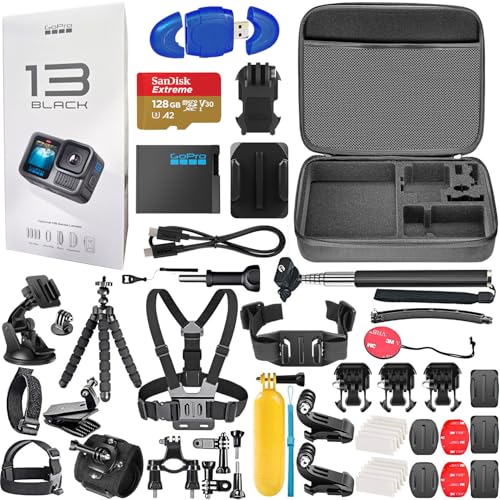
The HERO13 earns the top spot on the strength of one accessory philosophy: magnets. GoPro’s magnetic latch mounting lets the camera snap onto a magnetic surface or mount in a second and pull off just as fast, which is exactly the tempo of hitching — stick it on the tailgate or the trailer’s drawbar, open the phone preview, and reverse. The view is wide in the way this job needs, taking in the ball, the coupler and the ground they meet on, and the preview through GoPro’s app is responsive enough to steer by at crawling speed.
Its second virtue is that hitching is only its weekend job. The same camera films the launch, the trail and the holiday, records the journey in quality no security camera approaches, and shrugs off the weather that trailers live in. Owners who already own a GoPro for other reasons should simply try it at the hitch before buying anything else on this list; owners buying fresh get the most capable all-rounder here.
Set it up thoughtfully: a magnetic mount positioned to look down the drawbar line, the widest field of view selected, and the phone in a dash mount where a glance suffices. Remember to take it off before the highway if it is riding an exposed mount — the camera is tough, but a hitching aid is no use to anyone in a ditch two miles back.
- Mounting: magnetic latch system for instant on and off
- View: very wide field of view suited to hitch framing
- Preview: live phone preview through the GoPro app
- Build: rugged and weatherproof for outdoor life
- Role: hitching aid that doubles as a full action camera
Strengths
- Fastest attach-and-remove routine of any pick here.
- Wide, clear preview makes alignment genuinely easy.
- Earns its price across filming jobs beyond towing.
Trade-offs
- Premium price if hitching is truly its only job.
- Battery life is measured in hours, so charge before trips.
- Must be retrieved from temporary mounts before driving off.
Best for: regular towers who will also film with it, and anyone who wants the slickest solo-hitch routine. Not suited for: permanent, unattended trailer surveillance in storage.

Blink Outdoor 4 — Best Permanent Fit
The Blink Outdoor 4 takes the opposite philosophy from the GoPro: instead of visiting the trailer on hitching day, it moves in. This is a battery-powered outdoor security camera whose batteries are rated in months and years rather than hours, so it can be screwed to the trailer’s frame or a nearby post once and then forgotten. When hitching day comes, its live view is already waiting in the Blink app; when the trailer sits in storage, the same camera is watching it, sending motion alerts if anyone takes an interest in your property.
That dual life is the argument. A dedicated hitching camera is a single-purpose purchase; the Blink is a security camera that hitches. Its view is wide, its night vision covers the drawbar area at the ranges involved, and because it is fixed, its framing never changes — you learn exactly where the coupler appears in its picture and reverse to a known target every time.
It does need Wi-Fi reach to wherever the trailer parks, which suits home driveways, yards and barns better than remote storage lots. Within that condition it is the lowest-effort pick here: fit it, frame it once, and both your hitching and your trailer security are handled by the same small box.
- Power: long-life batteries, no wiring whatsoever
- Mounting: fixed screw mount on trailer or post
- Preview: live view in the Blink app over home Wi-Fi
- Night: infrared night vision for dawn and dusk hitching
- Role: permanent hitching view plus storage security
Strengths
- Battery life removes charging from the routine entirely.
- Fixed framing becomes a known, repeatable target.
- Doubles as a theft deterrent while the trailer is stored.
Trade-offs
- Needs Wi-Fi where the trailer is parked.
- Live view is a security feed, not a zero-lag reversing display.
- Some features sit behind an optional subscription plan.
Best for: trailers stored at home, where one camera can hitch and guard. Not suited for: trailers kept far from any Wi-Fi signal.

REOLINK Argus PT Ultra — Best Coverage
One fixed camera sees one patch of ground. The Argus PT Ultra moves its head, and that changes what a trailer camera can be: pan and tilt let the same unit look down at the coupler while you hitch, swing to watch the load bed while you strap down, and patrol the yard around the trailer the rest of the time. For owners whose trailer lives outdoors and works hard — horse trailers, plant trailers, big boat trailers — that coverage replaces two or three fixed cameras.
Power is its other headline. A battery camera with a solar panel option simply does not need you: mounted high on a post or the trailer itself, it keeps its charge from daylight and removes the ladder-and-battery ritual that kills enthusiasm for lesser cameras. The picture is sharp, the night performance strong, and the app’s live view gives you the hitch picture when the trailer is within your network’s reach.
It is the largest and most deliberate installation on this list, and it makes most sense where the trailer has a permanent home pitch. Fitted there, it is less a hitching accessory than a small watchtower that also happens to make coupling a one-person job.
- Movement: motorised pan and tilt for multi-area coverage
- Power: battery with solar panel charging option
- Preview: live view and playback in the Reolink app
- Night: strong night vision with spotlight assistance
- Role: fixed installation covering hitch, load and yard
Strengths
- One camera covers several jobs around the trailer.
- Solar charging removes battery maintenance.
- Sharp image helps judge the last inches of alignment.
Trade-offs
- Bigger and pricier than the simple picks here.
- Pan-tilt is a convenience, not a need, for hitching alone.
- Needs network reach at the trailer’s pitch.
Best for: working trailers on a home pitch that also need watching. Not suited for: renters or travellers who move the trailer between sites.

DJI Osmo Action 5 Pro — Best Screens
The Osmo Action 5 Pro’s party trick for hitching is on its face — literally. Its bright front and rear touchscreens mean you can frame the hitch shot while standing at the tailgate looking at the camera, rather than walking back to the cab to check the phone, adjusting, and walking again. Set it on its magnetic quick-release mount, glance at the front screen, nudge the angle once, and the job is framed before you sit down. At dawn and dusk, when this work usually happens, those screens stay bright and readable where lesser displays wash out.
The camera behind the screens is formidable: excellent low-light performance for its class, horizon-steady stabilisation that is irrelevant to hitching but wonderful for everything else, and battery endurance that leads the action-camera field. Its phone preview is smooth, and the magnetic mounting system is as quick as the GoPro’s once you own the matching mounts.
Choose it over the HERO13 if you value the framing-at-the-tailgate workflow and low-light quality, or if your other filming already lives in DJI’s ecosystem. For the pure hitching task the two are close; the screens tip it for people who hitch in the dark hours.
- Mounting: magnetic quick-release system
- Screens: bright front and rear touchscreens for framing
- Preview: live phone preview through DJI’s app
- Low light: class-leading for an action camera
- Role: hitching aid with the easiest setup framing
Strengths
- Front screen ends the walk-back-and-forth framing loop.
- Superb at the dawn and dusk hours when hitching happens.
- Long battery life for a full day of towing jobs.
Trade-offs
- Premium pricing alongside the GoPro.
- Mount ecosystem is DJI’s own; adapters may be needed.
- Like all action cameras, it must come off temporary mounts before the road.
Best for: early-morning and late-evening towers, and DJI owners. Not suited for: permanent unattended installation on the trailer.

Wyze Cam v4 — Best Budget at Home
Not every trailer lives a life of adventure. Thousands sit on driveways, beside garages and in back yards, hitched a dozen times a year within range of the house. For those, the Wyze Cam v4 is the thinking person’s bargain: a sharp, colour-capable security camera with a built-in spotlight, mounted under the eaves or on a post aimed at the hitching spot, giving you a live view on your phone whenever you reverse toward the trailer — and a watchful eye on the driveway the rest of the year.
The spotlight deserves its mention. Hitching before dawn is where cheap cameras fail, their infrared turning the scene to grey mush at exactly the moment precision matters; the Wyze’s light and strong low-light sensor keep the ball and coupler readable in colour. Its picture quality punches well above its price, a fact the home-security world has known for several generations of this camera.
The conditions are plain: it needs mains power and your home Wi-Fi, so it is a camera for a pitch, not for the trailer itself. If your trailer tours and stores elsewhere, look at the battery picks. If it lives at home, this little camera solves hitching and driveway security together for remarkably little money.
- Power: mains powered, suited to a fixed home pitch
- Light: built-in spotlight plus strong low-light sensor
- Preview: live view in the Wyze app over home Wi-Fi
- Storage: local card recording plus optional cloud plans
- Role: fixed driveway camera covering the hitching spot
Strengths
- Outstanding picture for the price, day and night.
- Spotlight makes pre-dawn hitching genuinely visible.
- Doubles as everyday driveway security.
Trade-offs
- Tethered to power and home Wi-Fi range.
- Fixed position only helps if the trailer parks in its view.
- App experience is busier than the dedicated picks.
Best for: home-based trailers on a driveway or in a yard. Not suited for: trailers stored away from power and network.

AKASO Brave 7 LE — Best Occasional Use
Some towing is seasonal: the boat goes in the water in spring and comes out in autumn, the camping trailer hitches for three weekends a summer. For that rhythm, a flagship action camera is hard to justify, and the Brave 7 LE exists precisely in that gap. It is an inexpensive, waterproof action camera with front and rear screens, a wide view, and a phone app preview — every ingredient of the hitching workflow, at a price that asks no commitment.
Expect honest compromises. The preview and app are less polished than GoPro’s or DJI’s, low-light quality is a step behind, and the mount ecosystem is the generic action-camera standard rather than a magnetic quick-release — allow an extra minute with the thumbscrew and frame by the rear screen. None of that matters at the hitch, where the job is a wide, clear, live picture for ninety seconds, and the Brave 7 LE delivers exactly that.
It also lowers the stakes of the whole experiment. If you are unsure whether a hitching camera suits your routine, this is the cheap way to find out — and if it does, the same camera will film the kids at the lake all summer while you decide whether to upgrade.
- Mounting: standard action-camera mounts and thumbscrews
- Screens: front and rear displays for framing
- Preview: live view through the companion app
- Build: waterproof body for outdoor jobs
- Role: occasional hitching and general family filming
Strengths
- The lowest-cost route to a live hitch view here.
- Dual screens help framing without the phone.
- Tough enough to live in the tow vehicle’s kit box.
Trade-offs
- App and preview polish trail the premium brands.
- Low-light picture is the weakest of the action cameras here.
- Mounting is slower, with no magnetic quick-release.
Best for: seasonal and occasional towers testing the concept. Not suited for: daily towing work where speed and polish compound.
How Do the Picks Compare at the Hitch?
| Pick | Power | Mounting | Preview | Best situation |
|---|---|---|---|---|
| GoPro HERO13 Black | Battery (hours) | Magnetic, temporary | App, low lag | Solo hitching anywhere |
| Blink Outdoor 4 | Battery (months) | Fixed on trailer | App over Wi-Fi | Home storage + hitching |
| REOLINK Argus PT Ultra | Battery + solar | Fixed, pan-tilt | App over Wi-Fi | Working trailer on a pitch |
| DJI Osmo Action 5 Pro | Battery (long) | Magnetic, temporary | App + dual screens | Dark-hours hitching |
| Wyze Cam v4 | Mains | Fixed at home | App over Wi-Fi | Driveway hitching spot |
| AKASO Brave 7 LE | Battery (hours) | Standard mounts | App + dual screens | Occasional towing |
The table divides cleanly into two philosophies. The action cameras visit the hitch and leave with you; the security cameras take up residence and watch between trips. Neither is better in the abstract — the right column to read first is your trailer’s living arrangement, and the second is how often you actually hitch.
Where Should You Mount the Camera for the Best Hitch View?
Height and angle matter more than the camera you choose. The view you want shows the top of the ball, the underside line of the coupler, and a strip of ground in front of both, so distance can be judged from the overlap as they meet. A camera mounted too low sees the coupler eclipse the ball too early; too high, and you lose the last two inches to perspective. For most rigs, a position on the tailgate, the rear of the tow vehicle, or the trailer’s own drawbar, angled down at roughly the height of the coupler itself, gives the money view.
Do a dry run in daylight before the first real trip. Have someone stand at the hitch and talk you in while you watch only the screen, and learn what the final three inches look like in that camera’s geometry — every lens distorts distance differently, and wide lenses make the last gap look bigger than it is. A strip of tape on the drawbar, or a painted mark on the coupler, gives the eye a reference that survives every lighting condition.
Whatever mount you use, build the removal into the ritual. The pre-departure walk-around — chains, electrics, breakaway cable, coupler latch, camera retrieved — should be one unbroken checklist, because the day the camera rides the drawbar onto the highway is the day it becomes an ex-camera.
How Do You Hitch Solo, Step by Step?
Set the scene before the camera matters: trailer on ground as level as the site allows, coupler latch open, jack raised to leave the coupler a fraction above ball height. Mount the camera, open the preview, and put the phone where a glance reaches it. Reverse slowly in a straight final approach — the camera rewards small, early corrections and punishes the big late swing that jackknifes the drawbar across the frame.
Watch the ball travel toward the coupler’s shadow, then its socket. When the ball disappears under the coupler, stop — that disappearance, learned in your dry run, is the signal, and it is more reliable than any estimate of inches. Lower the jack until the coupler seats, latch it, fit the pin, cross the chains, connect the electrics and the breakaway, and raise the jack fully. Then do the pull test: a gentle tug against the trailer’s brakes or chocks confirms the coupling has taken before the road tests it for you.
Finish with lights. A camera helps you couple; only a walk-around with the indicators and brake lights checked — a helper, a wall behind you at dusk, or a reflection in a window — confirms the trailer’s electrics are alive. The whole solo routine, practised twice, takes less time than one cycle of the old climb-out-and-look dance.
What Mistakes Do People Make With Hitch Cameras?
The commonest is trusting the wide lens’s distances. Wide views stretch the middle of the frame and compress the edges, so a gap that looks like six inches may be two; the cure is the daylight dry run and a physical reference mark, not a more expensive camera. The second is leaving the camera mounted for the journey — vibration, weather at speed and simple loss claim more hitching cameras than any defect — and the third is skipping the manual checks because the coupling “looked right on screen”. A camera shows alignment, not latch engagement; the pin, the tug test and the walk-around remain non-negotiable.
A fourth mistake is subtler: relying on the preview at speeds where lag matters. These systems are for the final crawl, not for reversing down a long lane at pace, and the driver who treats a phone feed like a racing display will eventually meet the post the camera’s wide view pushed to its distorted edge. Crawl, glance, stop, look — the rhythm is the safety system.
Finally, do not let the camera retire your mirrors or your spotter. In a tight yard with children, dogs and other people’s property around, a human watching the trailer’s far corner is worth more than any lens. The camera owns the last three feet to the coupler; everything wider still belongs to eyes and mirrors.
Can These Cameras Help Beyond Hitching?
Yes, and for many owners the side jobs justify the purchase more than the hitching does. The fixed security picks watch the trailer in storage, deter the opportunist theft that trailers are sadly prone to, and keep an eye on covers, tyres and hitches between trips. A camera over the pitch also settles the small anxieties of ownership — did the cover survive the storm, is the boat’s tarp pooling water — without a drive to check.
The action cameras moonlight differently: they film the launch and recovery, the off-road track, the first family trip, and they serve as a reversing view for the boat on the ramp or the caravan onto its pitch, which are the same problem in different scenery. Mounted inside a horse trailer — only where the horses are accustomed and the setup is safe — a camera also lets a driver check on the load at a stop without opening doors and unsettling everyone.
Think of the purchase as buying a set of eyes that can be posted wherever towing makes you blind. The hitch is simply the first place most people point them, and the owners who get the most from these cameras are the ones who keep asking the question the technology invites: where else, around this rig and this yard, have I been guessing when I could have been looking?
What About Wired Trailer Camera Systems?
Dedicated wired and wireless trailer camera kits exist, built around a screen for the cab and a camera for the trailer’s rear, and for full-time towers — commercial hauliers, horse transporters, caravaners on tour for months — they remain the heavy-duty answer, especially for seeing behind a long trailer on the road. This guide’s picks answer a different question: the owner who hitches occasionally or seasonally, parks the trailer at home, and does not want to wire a vehicle or dedicate a cab screen to the job.
The honest dividing line is frequency and length. Hitch weekly, tow long, and the dedicated system’s permanence pays; hitch monthly, tow a modest trailer, and a magnetic action camera or a home-based security camera delivers the crucial view — the coupler meeting the ball — without installation, and then goes on to do other work. Many owners start with a pick from this list and graduate to a wired system years later, already knowing exactly which view they cannot live without.
What Changes on a Slope or Soft Ground?
Level driveways forgive sloppy hitching; slopes and fields do not, and the camera’s role grows rather than shrinks there. On a slope, the trailer wants to roll the moment the jack leaves the ground, so chock first and hitch second, and use the camera view to confirm the coupler is approaching squarely — an angled approach on a slope twists the coupler against the ball and produces the false seat that feels latched and is not. The tug test matters twice as much on ground that hides it.
Soft ground attacks the tow vehicle instead. Wheels that spin dig the rig into a worse position with every attempt, so the one-shot coupling the camera enables is worth real money in a wet field: fewer attempts, less churned mud, no audience of neighbours with a tractor. Position the camera before the first attempt, commit to the line the screen shows you, and keep momentum gentle and continuous rather than stabbing at the throttle.
Soft ground also swallows dropped items — pins, clips, the camera itself if a mount is knocked. A bright lanyard on a temporary camera, and a torch in the kit after dark, are the field-expedient answers, and both cost less than the objects they save.
What Should Horse and Livestock Trailer Owners Know?
Livestock changes the stakes of hitching from convenience to welfare. A horse trailer is heavy, its towing is often done alone at dawn, and a botched coupling is not an embarrassment but an emergency. For these owners the permanent picks — the REOLINK watching the yard, a fixed camera at the pitch — earn their place by making the whole routine observed and unhurried, and the same camera that guides the coupling confirms the yard is clear before the rig moves.
Inside the trailer, cameras carry a second responsibility. A driver who can check the load at a stop, without opening the rear and unsettling the animals, arrives with calmer stock; but any in-trailer camera must be mounted where it cannot be reached, rubbed or chewed, cabled so nothing dangles, and introduced as part of the trailer’s furniture rather than a novelty on travel day. Horses vote against surprises.
The hitching discipline itself should be the most conservative version in this guide: chocks, tug test, a second walk-around, and no reliance on a screen for the latch. When the cargo has a heartbeat, the camera is an assistant, never the authority.
How Do Boat Ramps and Caravan Pitches Differ?
The boat ramp is hitching’s exam hall: a gradient, wet concrete, a queue of witnesses, and a trailer that must be coupled and uncoupled precisely where traction is worst. A magnetic action camera is the ramp professional’s friend because the whole operation — back down, couple, retrieve — happens in one wet environment where fixed cameras cannot follow. Rinse the camera afterwards if the ramp is salt water; every pick here tolerates the dunking, but salt left to dry is a slow tax on seals and mounts.
The caravan pitch is the gentler cousin: the challenge is not the coupling but the placement, reversing a long box between a hedge and a neighbour’s awning with inches to spare. Here the camera’s wide view of the trailer’s rear corner, plus a spotter for the blind side, beats any hitch view — mount the camera to watch the corner that history says you clip, and accept the spotter’s authority over the screen when the two disagree.
Both environments share the moral: the camera is for the specific blind spot the job creates, and repositioning it per job — hitch, ramp, pitch — is a feature of the temporary picks, not a chore.
What Maintenance Do These Cameras Need?
Very little, provided it actually happens. Lenses live outdoors in the dust of yards and the spray of ramps; a weekly wipe with a clean cloth keeps the picture honest, and a smeared lens is the commonest cause of a camera being wrongly condemned as faulty. Check mounts at the same time — magnetic faces collect grit that weakens their grip, and a rinse restores them — and inspect fixed cameras’ seals and cables each season, because the perch that squirrels and weather share with your camera tests both.
Batteries want a calendar rather than a crisis. The long-life security picks should have their levels glanced at in the app monthly, the solar REOLINK’s panel wiped when you pass it, and the action cameras charged the night before a towing day as part of the trip ritual. Firmware updates, applied at home rather than at a campsite, keep apps and previews behaving.
None of this exceeds ten minutes a month, and most of it can ride along with jobs you already do. The cameras that fail their owners are almost never the ones that were maintained; they are the ones discovered dead, dirty or departed on the one morning the trailer absolutely has to move.
Which Tow Vehicles Benefit Most From a Hitch Camera?
Pickup trucks with high tailgates gain the most, because their hitch sits in the deepest blind zone of any common vehicle — the driver of a modern truck can lose sight of the entire drawbar. Long-wheelbase vehicles gain next, since their reversing corrections are slower to show results and the temptation to over-correct is constant; the camera’s continuous view steadies the whole manoeuvre. At the other end, a small car with a low hatch may already see its hitch tolerably well, and for its owner the camera is a luxury rather than a liberation — though even there, the one-shot coupling on a wet night argues its case.
Vehicles with factory reversing cameras deserve a special note. A built-in camera that shows the hitch ball is already doing this job, and many owners simply have never aimed it deliberately. If yours does not frame the ball — some are angled for parking, not coupling — a pick from this list fills the gap rather than duplicating the system, and the temporary action cameras are the natural complement because they go where the factory camera cannot.
Should You Choose a Temporary or a Permanent Camera?
Decide by counting your blind spots, not your budget. If the hitch is the only place towing makes you blind, a temporary action camera is the complete answer, and its second life as a filming camera is pure profit. If the trailer also needs watching — in storage, at the yard, during loading — a permanent camera starts paying rent from the day it is fitted, and the hitching view arrives as a bonus on a purchase already justified.
Some owners end with both, and it is not the extravagance it sounds: the fixed camera guards and guides at home, the action camera travels for ramps, pitches and borrowed trailers. The two philosophies in the comparison table are complements wearing the disguise of rivals. Buy for the blind spot that bothers you most first, and let experience, rather than a catalogue, argue for the second.
What Do Experienced Towers Do Differently?
They slow the whole ritual down. The veteran’s hitching looks boring from outside — chocks placed without being asked, a camera mounted without fuss, one straight approach, a latch checked by hand and then by tug — because every step that experience adds is a step that removes a surprise. They also rehearse the unusual before it happens: the first slope, the first muddy field, the first night arrival are treated as skills to sample in daylight with time in hand, not as auditions in front of an audience.
They keep the kit together. Camera, mounts, torch, gloves and a cloth live in one box in the tow vehicle, because a hitching aid stored in the house is a hitching aid that gets forgotten on the one trip that needed it. And they teach the routine to whoever else tows the trailer, in person, once — the camera makes solo hitching easy, but a shared checklist makes it safe in anyone’s hands.
What About Gooseneck and Fifth-Wheel Coupling?
Bed-mounted couplings move the blind spot rather than removing it. The gooseneck ball sits in the truck bed, invisible behind the cab from the driver’s seat, and the fifth-wheel’s jaws must meet the kingpin at the right height and angle — a taller, heavier version of the same alignment problem. A magnetic action camera earns a second speciality here: stuck to the bed rail, the rear window frame or the trailer’s front, it watches the ball or pin approach in a way no mirror on the truck can, and it comes away again before the load settles.
Height judgement is the extra skill in this class. The screen shows alignment in plan view beautifully, but the vertical question — is the coupler or pin box at the height the ball and jaws expect — still belongs to a glance over the shoulder or a spotter for the final moment. Use the camera to arrive centred, then finish the coupling with the same manual checks as any other hitch, scaled up for the weight involved.
How Should You Store the Kit Between Trips?
A hitching camera’s enemies between trips are flat batteries and being somewhere else. Keep the camera, its mounts, a charging cable and the cloth in one small case that lives in the tow vehicle, and charge the camera as part of the return-home ritual rather than the departure scramble — departures have enough scramble already. If the vehicle changes, move the case, not the individual pieces; kits die by dispersal.
Fixed cameras ask for even less: a line in the calendar to glance at battery levels and wipe the lens when the trailer gets its own seasonal checks. Pair the two routines — camera checked when tyres, lights and bearings are checked — and the system stays as ready as the trailer it serves.
How Wide a View Do You Actually Need?
Wide enough to keep the ball and the coupler in frame together through the whole final approach — and no wider. Excess width is not free: it shrinks the very objects you are trying to align, pushes them toward the distorted edges, and fills the screen with irrelevant yard. The sweet spot for a hitch camera is a view that, from its mounting position, frames roughly the width of the tow vehicle’s rear and a couple of metres of ground behind it. Every pick in this guide can be framed into that window from a sensible mount; the skill is choosing the mount position that puts the hitch in the calm centre of the lens rather than at its warped margin.
Test yours honestly. If the coupler spends the approach sliding toward a corner of the picture, move the camera, not your expectations — a few centimetres of mount position transforms the geometry. And if your camera offers a narrower or linear field-of-view mode, try it for the final feet: many owners hitch wide for the approach and switch narrow for the coupling itself, getting both the context and the precision from the same small box.
Final Recommendation
For most people reading this guide, the GoPro HERO13 Black is the answer: magnetic on, coupler centred, trailer hitched, camera in your pocket. If your trailer lives at home and you would value an eye on it between trips, the Blink Outdoor 4 or the Wyze Cam v4 — battery or mains, according to your pitch — turns the hitching camera into a standing guard, and the REOLINK Argus PT Ultra extends that idea to working trailers that need their yard watched too. Seasonal towers should start with the AKASO Brave 7 LE and upgrade only when its compromises actually bite, while dark-hours regulars will prefer the DJI Osmo Action 5 Pro’s screens and low-light calm. Whichever you choose, do the daylight dry run, learn your lens’s last three inches, and keep the walk-around sacred. The first time the coupler settles onto the ball in a single, unhurried movement — in the rain, at dusk, with nobody shouting directions — you will understand why owners who fit one of these cameras describe it less as an accessory and more as the end of an argument they had been having with their trailer for years.
Frequently Asked Questions
Can I use a camera I already own for hitching?
Very possibly. Any action camera with a phone preview, and any outdoor security camera already covering your driveway, can be tried at the hitch before you spend anything. The test is the dry run: if the view shows the ball and coupler clearly and the preview feels live, you already own a hitching camera.
Will a magnetic mount hold on a rough yard?
On a clean, flat steel surface, the magnetic mounts used by the action-camera picks hold firmly at hitching speeds and over yard bumps. They are not rated for road travel — retrieve the camera before driving — and they need bare or thinly painted metal; thick rust, aluminium tailgates and plastic trim defeat them, in which case use the clamp and adhesive mounts in the box.
How do I judge the final inches on a wide-angle view?
By rehearsal rather than by eye. Wide lenses distort distance, so learn your specific camera’s geometry in a daylight dry run with a helper at the hitch, and add a physical reference — tape or paint on the drawbar — whose overlap with the coupler tells you the truth in any light.
Do these cameras work at night?
The security picks have infrared night vision and, in the Wyze and REOLINK cases, spotlights; the action cameras rely on their low-light sensors and your vehicle’s reversing lights. The DJI Osmo Action 5 Pro is the strongest of the action cameras after dark. A cheap work light aimed at the hitch improves every camera on this list more than an upgrade would.
Can I watch the trailer behind me while driving?
That is a different job with different rules. The picks here are hitching and low-speed manoeuvring aids, and a phone should sit in a dash mount, glanced at while crawling or stationary — never hand-held on the move. Continuous rear-view while towing belongs to dedicated trailer camera systems with cab monitors, discussed in the wired-systems section above.
Does a hitch camera help with weight-distribution bars and accessories?
Indirectly, yes. The camera’s job ends at the coupling, but the same live view lets you confirm the trailer is sitting level and settled before you fit spring bars or a friction sway control, and a fixed camera at the pitch gives you a record of the rig’s stance to compare against on the next trip. The fitting itself remains a hands-and-eyes job at the drawbar — the camera simply makes sure you start it from a properly coupled, properly seated trailer.
What if my trailer parks where there is no Wi-Fi?
Choose from the action cameras, which create their own direct link to your phone at hitching distance and need no network at all. The security-camera picks depend on Wi-Fi reach to the trailer’s pitch; some owners extend a home network outdoors with an access point, but for a remote storage lot the magnetic action camera is simply the right tool.
Related Guides
Towing well is a system, not a single gadget. Our guide to the best cameras for barns covers the fixed-camera side of watching vehicles and animals outdoors, our roundup of the best action cameras for travel explores what the GoPro and DJI picks do when they are not hitching, and our explainer on the best dash cameras for trucks handles the view forward once the trailer is on and rolling.


