kajuandouglas.com is reader-supported. When you buy through links on our site, we may earn an affiliate commission.
Where to Buy
The best cameras for anthropology are fieldwork instruments before they are cameras, and the field is unforgiving in specific ways: months far from repair shops, power that comes from a solar panel or a generator’s evening hours, dust, humidity, altitude, and — the constraint no spec sheet lists — the trust of the people who have agreed to be filmed and photographed. The six cameras below, all available through the Amazon listings linked in this guide, were chosen for ethnographic work in its real forms: participant observation documented in stills, oral histories and interviews on video, material culture recorded in detail, rituals and work processes filmed with respect and minimal intrusion. Match the model name on the listing to the pick before ordering, and order early: fieldwork kit should be boringly familiar long before departure.
Anthropology’s camera needs differ from journalism’s and tourism’s in emphasis. The ethnographic camera stays for months, not days, so reliability and repairability outrank peak performance. It records people who are collaborators rather than subjects, so discretion and consent-friendly operation — quiet shutters, no aggressive lights, the ability to put the camera down and participate — are ethical features, not conveniences. And it works where the light is a cooking fire, a doorway, a forest canopy: low-light grace and honest colour under mixed sources matter more than resolution heroics.
Sound deserves its own sentence in any anthropology guide, because the discipline’s core data is speech: genealogies, myths, explanations of technique, the interview that becomes the archive’s treasure. Every pick here accepts external microphones or records respectable audio, and the reviews treat audio as a first-class criterion — an ethnographic camera with poor sound is a notebook with half its pages glued shut.
Key Takeaways
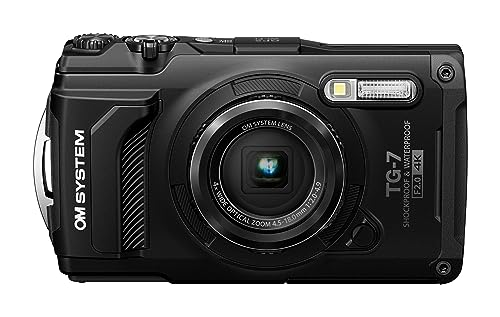
- The OM SYSTEM Tough TG-7 is the field survivor: waterproof, crush-resistant, and at home in rainforest, desert, and fishing-boat field sites where other cameras die.
- The Sony RX100 VII is the discreet documentarian — pocket-sized, quiet, and long-reaching, for candid process and ceremony coverage without a conspicuous rig.
- The DJI Osmo Pocket 3 films movement and walk-throughs of sites and settlements with a gimbal’s grace while looking like a gadget, not a production.
- The Canon EOS R50 is the interview and portrait body: kind colour for skin under mixed light, reliable autofocus, and a system a department can own several of.
- The GoPro HERO13 Black records process from the participant’s viewpoint — weaving, paddling, building — mounted where hands and eyes actually work.
- The Insta360 X4 captures whole spaces and events as archival spheres, letting researchers re-examine a scene’s every direction after the fact.
- Whatever you choose, redundancy is the method: two bodies, cards in rotation, and a nightly backup ritual will save more data than any specification.
In this guide
Quick Picks
| Badge | Pick | Why it stands out |
|---|---|---|
| Best Field Survivor | OM SYSTEM Tough TG-7 | Sealed against water, dust, and crushing, with macro modes for material culture and field notes in any weather. |
| Best Discreet Documentarian | Sony RX100 VII | A quiet pocket camera with a long zoom for candid documentation at a respectful distance. |
| Best for Ethnographic Film | DJI Osmo Pocket 3 | Gimbal-smooth filming of tours, processes, and movement in a device nobody reads as a film crew. |
| Best Interview Body | Canon EOS R50 | Flattering colour, dependable autofocus, and easy audio for the interviews that anchor fieldwork. |
| Best Participant Viewpoint | GoPro HERO13 Black | Mounts to chest, head, or tool to record skilled work from inside the action. |
| Best Archival Space Capture | Insta360 X4 | Records entire scenes in 360 degrees for later re-examination by the whole research team. |
How We Chose These Picks
We weighted the criteria the way fieldworkers do after their first lost camera or corrupted card. Survivability first: a camera that cannot take the site’s water, dust, knocks, and humidity is not a fieldwork camera whatever its sensor, which is why the sealed TG-7 leads and why every other pick was assessed for the environments it can honestly enter. Power practicality second: USB charging, swappable batteries, and modest appetites matter where electricity is an evening event, and the reviews note each pick’s charging character.
Third came the ethics of presence. Anthropological photography’s history includes extractive imagery the discipline is still answering for, and modern practice demands cameras that support consent: unobtrusive size, quiet operation, screens that let a participant see and approve their image immediately, and no design that turns a conversation into a shoot. The discreet picks — RX100 VII, Pocket 3, X4 used thoughtfully — scored heavily here, and the guide’s technique sections return to consent as a working method, not a disclaimer.
Finally, archival value. Fieldwork media outlives the project: it becomes theses, museum deposits, community archives, and the record a village asks copies of in twenty years. We favoured cameras producing standard, durable file formats with honest colour and enough resolution to remain useful, and we treated metadata — time, place, the TG-7’s field sensors — as the scholarly feature it is.
What Does Ethnographic Fieldwork Actually Ask of a Camera?
It asks for stamina in every sense. A field season compresses thousands of photographs and hundreds of hours of potential footage into conditions that punish equipment and operator alike, and the camera’s job is to be ready at the unscripted second — the elder’s aside, the technique demonstrated once, the storm light on the settlement — without demanding the researcher’s attention as the price. Cameras that need coddling pull the ethnographer out of participation and into technicianhood, and the data thins accordingly. The best fieldwork camera is the one whose operation becomes reflex within a fortnight.
It asks for honesty of rendering. Material culture — the weave, the tool marks, the pigment — is data, and colour that flatters or distorts is a quiet corruption of the record. The picks here were chosen for colour that can be trusted or corrected predictably, and the technique sections below include the field habits (a grey card in the kit, consistent white balance practice) that keep a season’s images comparable with each other and with the next researcher’s.
And it asks for humility of form. The ethnographer is a guest. A camera that looks like a weapon sight or a television studio changes the room it enters; a camera that looks like a notebook invites the room to continue. Much of this list’s shape — compacts, pockets, the unobtrusive — follows from that single anthropological fact, and researchers planning conspicuous rigs should have a methodological reason for the conspicuousness.
Stills, Film, or Both: What Is the Ethnographic Record Made Of?
Stills remain the discipline’s workhorse for material culture, portraiture, and the documentary record: cheap to store, easy to annotate, printable for return to the community — a point of real ethical weight, since printed photographs given back are among the few research products a village can hold. Film carries what stills cannot: process, sequence, gesture, the sound of work and speech, the tempo of a ritual. The contemporary fieldworker’s honest answer is both, weighted by the research question, and this list is built to be weighted either way.
The practical division many researchers adopt: a stills-led body that also films competently for the daily record (the R50’s role here), a dedicated motion tool for process and place (Pocket 3 or GoPro), and the 360 camera for the set-piece events whose full context the archive will want. Audio threads through all of it — interviews recorded on whatever body is present, with the microphone treated as seriously as any lens. Choose the weighting your questions demand, but do not let the kit’s convenience quietly choose it for you.

OM SYSTEM Tough TG-7 — Best Field Survivor
Fieldwork’s first law is that the environment does not care about your equipment. The TG-7 is the camera built as if it knew: sealed against immersion, rated for drops and crushing, resistant to dust and freezing, it works in the rainforest downpour, the desert site, the open fishing boat, and the high-altitude village without a housing, a rain cover, or a prayer. For the researcher whose site is wet, dusty, or vertical, it is not the rugged option — it is the only option on this list that treats those conditions as a normal Tuesday.
Its scholarly tricks run deeper than survival. The macro modes document material culture at a level fieldworkers usually need a bench setup for — weave structure, tool wear, insects, seeds, inscriptions — in situ, in the hand, in the rain. The field sensor system logs GPS, altitude, and temperature into the record, metadata that future researchers will bless. Video is competent, the lens is bright for canopy shade, and the whole instrument asks so little protection that it becomes the camera that is simply always there. In fieldwork, always there beats excellent-but-absent every season of the year.
- Build: waterproof, drop-proof, dustproof, freeze-proof
- Macro: exceptional close-up modes for artefacts and specimens
- Data: GPS and environmental sensors logged to files
- Charging: USB charging suits solar and generator power
Strengths
- Survives the sites that kill ordinary cameras, without housings or rituals.
- Macro documentation of material culture at genuine research quality.
- Automatic location and environment metadata strengthens the archive.
Trade-offs
- Image quality is rugged-compact class — fine for the record, short of gallery ambitions.
- Short zoom limits distant candid and wildlife documentation.
- Menus reward an evening’s study before departure, not improvisation on site.
Best for: wet, dusty, remote, and mobile field sites; material culture documentation; researchers who can carry one camera only.
Not suited for: low-light interview filming as a main tool, or distant-subject documentation.

Sony RX100 VII — Best Discreet Documentarian
Participant observation has a photographic problem at its heart: the camera must witness without directing. The RX100 VII is the finest solution in this guide — a camera that rides in a shirt pocket, wakes instantly, focuses silently and accurately, and zooms far enough to document a process across a courtyard without the researcher leaving the conversation. Its photographs are sharp and its video strong, yet it reads to participants as a holiday compact, which in ethnographic terms is a methodological feature of the first order.
The long zoom deserves emphasis, because respectful distance is an ethical technique: ceremonies, work, and children’s play can be documented at a remove that does not perform for the lens. The pop-up viewfinder serves in glare where screens fail. Its limits are the compact class’s own — battery appetite on film-heavy days, low-light files a step behind the larger sensors, a body too small for gloves. As the camera of daily presence across a long season, it earns its place in more field kits than any other pick here.
- Zoom: long reach in a pocket body, for distance with discretion
- Focus: fast, silent, reliable for candid moments
- Size: shirt-pocket presence, zero production footprint
- Video: strong 4K for process and interview backup
Strengths
- Documents at respectful distances without a conspicuous rig.
- Always-carried size means the unscripted moment gets recorded.
- Image quality far beyond its tourist-camera disguise.
Trade-offs
- Battery life demands spares and a nightly charging ritual.
- Low-light performance trails the interchangeable-lens picks.
- Small controls are fiddly with cold or gloved hands.
Best for: participant observation, candid process documentation, and researchers who prize discretion.
Not suited for: primary low-light filming, or sites where its delicacy meets truly rough handling daily.

DJI Osmo Pocket 3 — Best for Ethnographic Film
Ethnographic film’s practical revolution is small enough to hold in one hand. The Pocket 3’s gimbal turns a walk through a settlement, a guided tour of a site, a procession route, into smooth, watchable footage without a rig, a crew, or the social disturbance of either. Its sensor is large for its size, its low-light work respectable, and its subject tracking lets a researcher film a demonstration while participating in the conversation around it. Participants consistently read it as a gadget rather than a production, and behave accordingly — which is to say, naturally.
Its audio story matters for this discipline: the built-in microphones are good, and DJI’s wireless microphone pairing makes interview-grade sound a pocketable affair. The honest limits are the fixed wide lens — everything is environmental, nothing is a close portrait — and battery endurance that plans the day’s filming into sessions. As the motion instrument in a field kit led by a stills body, it has no equal at its size; several ethnographic films’ worth of B-roll and walk-throughs now live on cards from this little gimbal.
- Type: gimbal-stabilised pocket camera, large sensor for its class
- Movement: smooth walk-throughs and tours without rigs
- Audio: quality built-ins plus wireless mic pairing for interviews
- Presence: reads as a gadget, not a film production
Strengths
- Professional-looking movement footage with zero social footprint.
- Interview-capable audio in a fully pocketable kit.
- Tracking frees the researcher to participate while filming.
Trade-offs
- Fixed wide view only — no telephoto, no intimate framing.
- Battery life requires session planning on heavy filming days.
- Not a stills camera for the documentary record.
Best for: walk-throughs, process films, site tours, and motion documentation in living communities.
Not suited for: primary stills work or long continuous event recording without a power plan.

Canon EOS R50 — Best Interview Body
The interview is anthropology’s core scene, and the R50 is built for it with unusual sympathy. Canon’s colour renders skin — all skin, under the mixed light of verandas, doorways, and single bulbs — with a fidelity that respects the person in the frame; the autofocus holds an eye while a narrator gestures through a genealogy; the flip screen lets a lone researcher frame and monitor; and the microphone input takes the interview seriously as audio. For departments equipping several fieldworkers, its price-to-dignity ratio makes it the standard issue that this guide would sign.
As a stills body it covers the daily record completely: portraits, material culture with an appropriate lens, landscapes of the research site. Its limits are the enthusiast class’s usual ones — no weather sealing for the wettest sites, no in-body stabilisation — and its lens ecosystem, while growing, asks the macro-minded to plan. None of that diminishes its role: the camera of the conversation, the portrait, and the considered record, at a price that lets a project own two and fear neither’s loss.
- Sensor: APS-C with notably faithful skin-tone colour
- Focus: reliable eye tracking for seated interviews
- Audio: microphone input for proper interview sound
- System: interchangeable lenses for portraits and detail
Strengths
- Interview footage and portraits that treat people with visual respect.
- Friendly operation for researchers whose first craft is not photography.
- Affordable enough for departments and projects to standardise on.
Trade-offs
- No weather sealing — wet sites need the TG-7 alongside.
- No in-body stabilisation; interviews belong on a tripod or monopod.
- Advanced video tools are thinner than dedicated film bodies’.
Best for: interview-led fieldwork, portraiture, and team projects equipping multiple researchers.
Not suited for: the harshest environments as a sole camera, or gimbal-style motion work.

GoPro HERO13 Black — Best Participant Viewpoint
Some ethnographic data lives exactly where the researcher’s hands and eyes are: the weaver’s shuttle path, the paddler’s stroke, the mason’s trowel work. The HERO13, chest- or head-mounted, records skilled practice from the practitioner’s own viewpoint — footage that has become central to the anthropology of craft, sport, and embodied knowledge — while surviving the water, dust, and impacts of the work itself. Its stabilisation keeps that viewpoint watchable, and its smallness lets participants wear it and forget it, which is when the footage becomes honest.
Handed to participants themselves, it becomes a method: the auto-ethnographic diary, the youth’s-eye tour, the fisher’s own account of the grounds. No other pick here transfers to a collaborator’s hands so safely. Its limits are the action camera’s signature — a fixed ultra-wide view that distorts close faces, modest low-light grace, and audio that wants an external solution for speech. Within its methodological niche, it is irreplaceable; outside it, it is a specialist, and the guide treats it as one.
- Type: waterproof action camera for mounted, first-person recording
- Mounts: chest, head, and tool mounts for skilled-practice documentation
- Stabilisation: strong, for watchable participant-viewpoint footage
- Method: safe to hand to participants for self-documentation
Strengths
- Records embodied skill from inside the action like nothing else.
- Tough and waterproof for boats, fields, workshops, and weather.
- A participatory method in a box — collaborators can author their own footage.
Trade-offs
- Ultra-wide distortion makes it wrong for portraits and interviews.
- Interview audio needs external help; speech is not its strength.
- Low-light footage is its weakest suit.
Best for: craft, subsistence, sport, and ritual-action documentation from the participant’s view.
Not suited for: interview-led projects or formal portraiture.

Insta360 X4 — Best Archival Space Capture
The X4 answers a question ethnographers ask after every great event: what was happening behind the camera? Its 360-degree recording captures the whole scene — the ceremony’s full circle, the market’s simultaneous life, the house’s geography of activity — as a spherical archive that researchers can re-enter and re-frame for years, noticing in year three what nobody saw in the moment. For spatial anthropology, event documentation, and site recording, that completeness is a new kind of field data, and its waterproof, pocketable body brings it to sites a tripod rig could never enter.
The costs are workflow and deliberation. Files are large, the archive demands storage discipline, and the ethical questions sharpen: a camera that records everything records bystanders too, and consent conversations must cover the sphere, not the frame. Stills are an afterthought. Used for the set pieces it suits — the festival day, the building of the house, the full market morning — with consent negotiated for the whole space, it gives the archive a dimension no other pick here can offer.
- Type: 360-degree camera for complete spatial records
- Archive: scenes re-frameable and re-examinable indefinitely
- Build: waterproof and pocket-sized for real field sites
- Workflow: app-based reframing; large files demand storage planning
Strengths
- Nothing in the scene is missed — the archive keeps the whole event.
- Spatial relationships, the ethnographer’s hardest data, are recorded natively.
- Small and unobtrusive despite its total view.
Trade-offs
- Consent must cover everyone in the sphere, not just the framed subject.
- Large files and an editing step are unavoidable parts of the method.
- Weak as a stills camera; the record it makes is motion and space.
Best for: events, ceremonies, markets, and site documentation where total context is the data.
Not suited for: discreet one-to-one documentation or stills-led projects.
Field Kit Comparison: Which Body for Which Research Job?
| Pick | Survivability | Presence | Best research job | Main limit |
|---|---|---|---|---|
| OM SYSTEM Tough TG-7 | Highest — sealed and crush-resistant | Compact and plain | Harsh sites, material culture | Modest zoom and video |
| Sony RX100 VII | Moderate — handle with care | Invisible in a pocket | Candid daily documentation | Battery appetite |
| DJI Osmo Pocket 3 | Moderate — gimbal is delicate | Gadget-small | Tours, process, movement | Fixed wide lens |
| Canon EOS R50 | Moderate — no sealing | Honest camera presence | Interviews and portraits | Wet sites need a partner body |
| GoPro HERO13 Black | Very high — waterproof | Mounted and forgotten | Participant viewpoint | Distortion, speech audio |
| Insta360 X4 | High — waterproof | Small but total-seeing | Whole-event archives | Consent scope, file size |
How Should a Fieldworker Handle Consent, Review, and Giving Images Back?
The camera’s screen is an ethical instrument: show participants their images, immediately, as a matter of routine. Every pick here has a screen that serves that review, and the practice does triple duty — it is consent renewed in the moment, it builds the trust the next month’s access depends on, and it teaches the researcher what the community itself finds worth photographing, which is data. Images a participant dislikes should be deleted in front of them without argument; the archive’s completeness is never worth the relationship, and the discipline’s history says so at length.
Giving back is the second half of the method. Budget for prints — the R50’s and TG-7’s files print beautifully at family sizes — or for a village screening of the Pocket 3’s and X4’s footage, and treat that return as a deliverable of the research, not a favour after it. Consent for the archive is the third half: agree, explicitly, what may be published, what stays in the community, and what the 360 camera’s sphere means for bystanders, before the set-piece day rather than during it. Cameras chosen for discretion make these conversations easier, but the conversations themselves are the ethics; the equipment merely refuses to obstruct them.
What Mistakes Do Researchers Make With Cameras in the Field?
Taking one camera is the first, and it is a planning failure, not bad luck: bodies fail, get stolen, fall in rivers, and a season’s data should never ride on a single device. The kit logic of this guide — a stills body plus a specialist, or the TG-7 plus anything — exists so that the second camera is a method, not a luxury. The second mistake is neglecting the backup ritual until the first card fails: nightly copies to two destinations, cards never formatted until the copies verify, and the copies stored in different bags. Field data is irreplaceable in a way studio data never is; the dead do not repeat the genealogy for a reshoot.
Third is arriving unfamiliar. A camera learned at the field site taxes every interaction for a month; the same camera learned at home for a fortnight is a reflex by the first interview. Fourth is treating audio as the camera’s problem rather than the researcher’s: no microphone plan, no headphones, interviews recorded across a windy courtyard on a built-in mic. The discipline’s archives are full of beautiful, unusable footage of people saying important things inaudibly. Do not add to it.
How Do You Run Power, Storage, and Backups Where Infrastructure Is Thin?
Power is a rota, not a hope. Count the kit’s batteries as a fleet — camera bodies, the recorder, lights — and charge them in a fixed evening order from whatever the site offers: the generator’s hours, the solar panel’s afternoon, the one reliable socket in the mission house. USB-charging bodies like the TG-7 simplify the fleet by drinking from power banks; the interchangeable-lens bodies want their spare batteries bought before departure, in threes. The fieldworker who treats electricity as a scheduled resource never misses the ceremony for a dead battery; the one who treats it as weather eventually does.
Storage follows the three-copy rule scaled to reality: the card in the camera, the nightly copy on a laptop or rugged drive, and a second copy on a drive that sleeps in a different building. Where connectivity exists, a compressed selection — the day’s key interviews and images — can trickle to cloud storage as a fourth, catastrophe-grade copy, but no field plan should depend on bandwidth that a rainy season can erase. Cards are formatted only after both local copies verify, and the verification is a ritual with a checklist, because at month four, tired, everyone believes they copied the card they merely intended to.
What Does a Sensible Field Kit Weigh, and What Gets Left Behind?
The honest field kit for this guide’s approach — a stills body or the TG-7, one specialist motion tool, a recorder, microphones, a small tripod, batteries, cards, and a cleaning kit — fits a single daypack and can be carried up the mountain, across the river, and through the market without becoming the expedition’s subject. That portability is methodological: the kit that stays at the house documents the house. Every addition should be interrogated by the question researchers learn to ask of all gear — what data, exactly, will this earn that the current kit cannot?
Left behind, usually: the long telephoto that serves one hypothetical afternoon, the lighting kit beyond one small panel, the third body. Brought without exception: the grey card, the lens cloths in sealed bags against dust, the blower, spare cables — cables fail more than cameras — and a paper notebook, because the camera log, the consent notes, and the day’s metadata cross-references live there when batteries and screens do not. The notebook is not nostalgia; it is the archive’s index.
How Should Researchers Document Material Culture to a Reproducible Standard?
Consistency is the standard’s whole content. Photograph each artefact the same way: a scale and a colour reference in one frame, then clean frames from fixed angles — front, profile, detail of manufacture, detail of wear — under the most even light available, with the TG-7’s macro for the small and the R50’s lens options for the large. Record the object’s context before its portrait: in the hand, in the house, in use, because an artefact divorced from its life is half the data. The metadata habits matter as much as the pixels — catalogue numbers in the notebook keyed to file names the same evening, while the objects can still be re-asked about.
Light deserves its protocol too. Open shade and overcast are the field studio’s softbox; direct equatorial sun is its enemy, blowing highlights off metal and skin alike. Where an object can be moved, move it to the shade of the veranda; where it cannot — the shrine, the boat, the wall painting — return at the hour the light is kind, a discipline the field season’s length makes possible and the day-trip never allows. That patience, more than any camera in this guide, is what separates the archive from the album.
How Do the Seasons and Sites Change the Choice?
The rainforest site votes for the TG-7 with its whole climate: humidity that fogs lesser cameras’ internals, rain that arrives vertically and horizontally in the same hour, and light so dim under canopy that bright lenses earn their keep. The desert site votes differently — dust is the assassin there, and the sealed TG-7 still leads, but the RX100 VII in a sealed bag between uses survives seasons that folklore says should kill it, because desert damage is about discipline more than specification. Maritime fieldwork — fishing communities, island sites — returns the vote to waterproofing and to the GoPro, which can document the work from inside the spray and even beneath the surface where the nets are mended.
Urban anthropology inverts several assumptions: power and repair are near, discretion is at its premium, and the archive’s enemy is not the environment but the crowd and the bag-snatcher. The pocket picks rule there — RX100 VII for stills, Pocket 3 for the walking city — and the conspicuous body stays home. Altitude and cold argue for battery discipline and for the TG-7’s freeze resistance. The meta-lesson is that “anthropology” names a hundred environments, and this list is a kit of answers to be combined per site, not a single crowned camera — which is why the guide insists on pairs and roles rather than a winner.
What Should a Researcher Practise Before Departure?
The fortnight rule from our filmmaking colleagues applies with interest: operate the kit blind. Change cards and batteries in the dark, by touch, because the ceremony will not pause for your fumbling and the generator hour will not extend for your charging. Practise the interview setup — tripod, microphone, levels, headphones — until it assembles in three minutes of quiet competence that does not make the narrator feel like a patient. Photograph a market at home with the TG-7’s macro and the RX100’s zoom until both are reflexes.
Practise also the social techniques: asking consent with the camera visible, showing the screen, deleting gracefully, handing the GoPro to a collaborator and reviewing what they chose to film. These are learnable at home with family and neighbours, and learning them there — where mistakes are cheap — is a courtesy to the community that will host the real ones. The field rewards the prepared with access; access is the currency everything else is bought with.
How Should Field Media Be Organised So the Archive Survives the Thesis?
Name files by a system decided before the first shutter — date, site code, sequence — and never rename by whim mid-season, because the archive’s findability in year five depends on the discipline of month one. The notebook index, the consent log, and the file system must reference each other: this interview, that card, this permission, that restriction. Photographs of people carry sensitivities that outlive the project, and an archive that cannot tell which images are restricted is an archive that cannot be ethically used. The cameras’ metadata helps — dates are automatic, the TG-7 adds place — but the human index is the scholarly instrument.
Deposit is the end of the method: the university archive, the museum, and — increasingly and rightly — the community itself should hold copies under the terms agreed in the field. Plan the deposit formats from the start, favouring the standard, durable file types these cameras produce, and keep the raw or original files where the project’s means allow. An ethnographic record is a promise to the future on behalf of the present; the camera choices in this guide were made so that nothing in the technology embarrasses that promise.
What About Filming Ritual and Performance?
Ritual is where the kit’s discretion and the researcher’s preparation meet their examination. The working pattern: negotiate positions and permissions in advance, arrive early, let the Pocket 3 or the RX100 VII work from the agreed place without roaming, and let the X4 — if its sphere was consented to — hold the whole space from a fixed point so no operator intrudes at all. Sound, again, is half the rite: a recorder placed with permission near the musicians or the officiant will matter more in the archive than any lens choice.
Afterwards, the review screening is both ethics and method — participants see the record, correct its interpretation, and sometimes restrict it, and each of those outcomes improves the research. Performance traditions also frequently want copies for themselves, and the researcher who arrives at the next season with prints and films from the last is practising the reciprocity the discipline preaches. Choose cameras that make that return easy — standard files, printable stills, shareable clips — as every pick here does.
How Do Language, Transcription, and the Camera Work Together?
Anthropology’s camera work is inseparable from its language work. The interview filmed on the R50 becomes data through transcription and translation, and the camera habits that serve that pipeline are unglamorous: a slate or spoken header naming speaker, place, and date at the head of each session; levels checked on headphones so the transcript is made from words, not guesses; and the recorder running as backup so a camera failure never costs the narrative. Time-coded, well-labelled media halves the transcription burden, which is to say it halves the distance between the field and the analysis.
Photographs enter the language work too, as elicitation: the printed portrait or artefact image, shown in a later session, draws out names, histories, and corrections that direct questioning misses. This is another argument for the field printer or the print budget — the image returned is not only reciprocity but method, a prompt that talks. The cameras here, producing printable files on the spot via phone transfer, serve elicitation the same evening; the season’s best data often arrives in front of yesterday’s photographs.
What Should Grant Budgets and Ethics Applications Say About the Camera?
Funders and ethics boards increasingly ask, and the answers this guide supports are straightforward. Name the kit by role — primary stills body, motion tool, audio recorder — and cost the unglamorous lines honestly: batteries, cards, drives, the print budget for return of images, and secure storage for sensitive media. Ethics sections should describe consent as a process the equipment supports: on-screen review, deletion on request, restricted-image logging, and the 360 camera’s sphere consent where one is used. Reviewers who have done fieldwork recognise this language instantly, because it is the language of projects whose archives they would trust.
Budget also for loss. One body in the kit should be assumed, in the risk register’s cold print, to be losable without ending the season — which is precisely the pair logic of this list, and a more persuasive sentence in a proposal than any specification. The camera plan that survives contact with the field is the one that expected the contact.
A Note on Drones, Phones, and Other Temptations in the Field
Researchers ask about drones for settlement mapping and site overviews, and the honest answer is: sometimes, with permissions stacked like cordwood — aviation rules, community consent, and the recognition that a drone announces the researcher’s gaze from the sky in a way no handheld camera does. Where it is welcomed, aerial context is genuinely valuable data; where it is merely tolerated, its cost in trust exceeds its cartographic worth. None of this guide’s picks is a drone, deliberately: the handheld, eye-level, consented record remains the discipline’s core, and the X4’s sphere covers more of the contextual hunger than beginners expect.
The phone, as the FAQ notes, is the third string — invaluable as notebook, translator, and emergency backup, disqualified as the primary instrument by fragility, storage, and social meaning. Researchers who build the season on the six roles in this guide find the phone returning to its proper place: in the pocket, occasionally useful, never load-bearing.
How Do You Photograph Children, Elders, and the Camera-Shy With Dignity?
Slowly, and mostly by not photographing at first. The ethnographer’s early weeks in a community are famously camera-light by design: relationships precede records, and the first images are usually made at the community’s invitation — the event they want documented, the elder who asks for a portrait for the family. The discreet picks here support that tempo; a pocket camera produced occasionally and put away readily teaches people that the researcher is a person who sometimes photographs, not a photographer who sometimes talks, and the distinction governs the season’s access.
With elders, the portrait sitting can be a gift economy in itself: dress, setting, and the printed result returned with ceremony. With children, guardians’ consent and the child’s own assent both matter, and the GoPro handed over — the world filmed by the community’s youngest ethnographers — has produced some of the most joyful and revealing footage in recent fieldwork. With the camera-shy of any age, the answer is the notebook. A season is long; trust compounds; the camera that waits is the camera that eventually sees everything.
What Does the Return Visit Ask of Your Archive?
Anthropologists return — after a year, after a decade — and the return visit is where the first season’s camera discipline is audited by its most important reviewers. The photographs printed and carried back open doors that memory alone cannot: people find their younger selves, their parents, their houses as they were, and the researcher’s standing is rebuilt in an afternoon of looking. The files that make that possible are the well-labelled, well-backed-up, consent-logged ones; the season shot on a whim and stored in chaos returns with nothing to give. Every habit in this guide — the index, the backups, the print budget — is finally aimed at that afternoon.
It is also aimed at the researcher’s own future questions, which are never the questions the first season asked. The archive’s breadth — the X4’s whole scenes, the GoPro’s processes, the TG-7’s artefacts, the interviews’ unhurried length — is what lets a later project find data it did not know it was collecting. Record generously, label honestly, restrict carefully, and give back lavishly: that is the whole method, and these six cameras are simply its current best instruments.
Final Recommendation
Build the kit by site and question. Harsh or wet site, one camera only: the Tough TG-7, and let it be the season’s witness. Interview-led research in a settled community: the Canon EOS R50 with a microphone, plus the Pocket 3 for the walk-throughs and process films that give the interviews their world. Participant-observation discretion above all: the RX100 VII as the daily camera, with the GoPro for the embodied work and the X4 reserved — with sphere-wide consent — for the great event days.
Whatever the combination, buy it early, learn it at home, back it up nightly, and show the pictures to the people in them. Anthropology’s camera is finally a relationship tool; the six here were chosen because each, in its niche, strengthens the relationship instead of taxing it.
Frequently Asked Questions
What is the single best camera for a first fieldwork season?
If the site is demanding, the TG-7, because it removes survival from the worry list entirely. If the site is gentle and the work is interview-led, the R50, because its portraits and conversations will anchor the record. The commonest professional answer is the pair — they insure each other, cover stills, macro, interviews, and weather between them, and together cost less than many single bodies researchers romanticise.
How important is a dedicated audio recorder alongside the camera?
Very. The camera’s microphone input covers filmed interviews, but the long oral histories, ambient soundscapes, and backup recordings of filmed sessions belong on a dedicated recorder with its own batteries and card. Treat the camera as the image instrument and the recorder as the archive’s spine; the picks here were all chosen to cooperate with that division rather than replace it.
Can I rely on a phone instead of these cameras for fieldwork?
A phone is a fine notebook and a poor archive: its images are serviceable, but its storage, battery, fragility, and — above all — its social meaning work against it. A phone in a participant’s face is a phone, with all its associations; a camera is a declared, consentable instrument. Phones also concentrate the entire record in the device most likely to be lost or stolen. Use it as the third backup, never the plan.
How much storage should a field season budget for?
More than the estimate, always — 360 footage and process films expand to fill whatever exists. A workable pattern: cards enough for two days’ shooting in rotation, a laptop or drive pair for the nightly copies, and a third copy that leaves the site periodically with a colleague or by post. The X4 and GoPro kits should budget storage as a line item beside the camera itself.
What about photographing sacred or restricted subjects?
The camera does not decide; the community does, in advance, explicitly, and the answer is binding whether or not a photograph results. Every pick here supports the discreet end of practice, but no feature overrides a refusal — including the 360 camera’s sphere, which must never become a way of capturing what a framed camera was forbidden to. Researchers who honour restrictions visibly are the ones invited back for the next season’s greater access.
What lenses should accompany the R50 into the field?
Keep the expedition short: the standard zoom for the daily record, a fast prime for portraits and low light, and — if material culture is central — a macro-capable option or close-up solution for artefacts. Every additional lens is weight, dust exposure during changes, and one more object to lose; field veterans converge on two lenses carried and a third left at base only when the research question truly demands it. The TG-7’s built-in macro is precisely why it so often travels instead of the third lens.
How do I keep cameras working in extreme humidity?
Store the kit with desiccant in sealed cases overnight, let cold equipment warm inside a sealed bag before exposing it to humid air — the same condensation discipline as glacier work, reversed — and favour the TG-7 on the worst days while the interchangeable-lens bodies rest in the dry box. Fungus is the tropics’ slow assassin; a dry cabinet improvised from a sealed box and rechargeable desiccant is standard field furniture, and an hour of sun for the kit on dry mornings is an old and honoured practice.
Should fieldwork cameras be insured or registered anywhere?
Register serial numbers with your institution and photograph the kit before departure; field equipment is frequently covered under university or production insurance only if it was declared. Carry the list separately from the kit itself. For independent researchers, a rider on an existing policy is usually inexpensive against the alternative — a season ended by a single theft. The pair logic of this guide is the deeper insurance, but paperwork is the kind that pays out.
What should a researcher do when a camera fails mid-season?
Fall back to the pair: the second body in the kit becomes the primary, the phone becomes the emergency notebook, and the season’s plan re-weights toward what the surviving kit does best — interviews toward the body with the microphone input, documentation toward the survivor’s strengths. Then repair the logistics, not just the camera: a colleague travelling to the city, a courier to the capital, a borrowed body from a sister project. The deeper lesson is the one this guide opened with — the failure was survivable precisely because the kit was planned as roles with overlap, never as a single irreplaceable instrument.
How should I approach consent and privacy when photographing people during fieldwork?
Treat consent as an ongoing conversation rather than a signature collected once at the start of a season. Explain, in plain local language where possible, who you are, why the camera is present, where images might eventually appear, and that anyone can decline or ask for the camera to be lowered without giving a reason. Distinguish between public events, private domestic moments and sensitive activities, raising your standard of care sharply as scenes become more intimate, and check again when children, illness, conflict or ritual are involved. Keep a written log beside the image files noting who agreed to what, any limits they set, and any later change of mind, so future publication decisions rest on a record rather than memory. Store identifiable material securely, share it only within the terms agreed, and return prints or copies to the community when that was promised. Local collaborators and research assistants often understand the social signals around refusal better than a visitor does, so listen when they advise waiting. A smaller archive gathered with trust will support stronger, more honest work than a larger one shadowed by doubt about whether it should exist at all.
Related Guides
Equipping the rest of the expedition? See our guides to rugged cameras for remote travel and expeditions, pocket cameras for documentary and street work, and cameras for filming interviews and oral histories.


