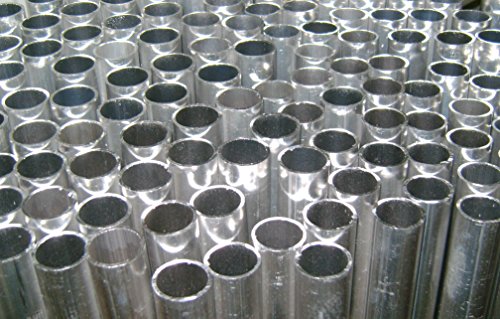
The best aluminum tubing for antennas is the material that lets a home-built or repaired antenna actually work: light enough to mount high, stiff enough to hold its shape in wind, and corrosion-resistant enough to stay conductive season after season. Aluminum earns its place in antenna building because it conducts well, weighs far less than steel, and does not rust the way a galvanized pipe eventually does. Whether the job is replacing a bent element on a Yagi, building a dipole or a vertical from scratch, or raising a lightweight mast for a small antenna, the right tube starts with the right diameter, wall thickness, and alloy. The six picks below were verified as new listings with their full titles checked, and the sizes, walls, and alloys named are the ones stated in those listings, so a builder can order with confidence that the tube arriving matches the tube described.
This guide covers both sides of that job. The first five picks are raw aluminum round tubing in the sizes antenna builders reach for most, from thin 6063 stock for small elements to a heavy 1-1/8-inch tube for booms and masts. The last pick is a finished telescoping aluminum mast for anyone who wants height without cutting and joining tube. Every size, wall thickness, and alloy named below comes from the product listing itself, so the dimensions here are the dimensions that arrive in the box.
In this guide
Quick picks: best aluminum tubing for antennas
| # | Product | Where to buy |
|---|---|---|
| 1 | Aluminum Round Tubing 7/8-Inch OD | Check on Amazon |
| 2 | 6063 Aluminum Round Tube 1/4-Inch OD | Check on Amazon |
| 3 | 6063 Aluminum Round Tube 3/8-Inch OD | Check on Amazon |
| 4 | Aluminum Round Tubing 1-1/8-Inch OD | Check on Amazon |
| 5 | Aluminum Round Tubing 1/2-Inch OD | Check on Amazon |
| 6 | Yescom EZ GO 30ft Telescoping Antenna Mast | Check on Amazon |
How the picks were chosen
The picks were chosen on four points. First, material: every pick is aluminum, not galvanized steel and not fiberglass, because the article is about aluminum tubing and steel changes the weight, the cutting, and the corrosion behavior. Second, size range: the set spans 1/4-inch element stock up to a 1-1/8-inch boom tube and a 30-foot telescoping mast, so a builder can match tube to job instead of forcing one size to do everything. Third, verifiable dimensions: each listing states outside diameter, wall thickness, and length, which is what a builder actually needs to cut and join. Fourth, form: raw seamless or round tube for DIY elements, plus one finished mast for the common case where buying a mast beats building one.
Quick comparison
| Product | Key detail | Best for |
|---|---|---|
| Aluminum Round Tubing, 7/8-Inch OD x 48 Inches | 7/8-inch OD, 0.050-inch wall, 48 inches long | A first tube purchase for a DIY antenna build or repair |
| 6063 Aluminum Round Tube, 1/4-Inch OD, 6 Pieces | 6063 alloy, 1/4-inch OD, six 36-inch pieces | Small antenna elements and experimental builds |
| 6063 Aluminum Round Tube, 3/8-Inch OD, 4 Pieces | 6063 alloy, 3/8-inch OD, four 36-inch pieces | VHF elements and longer UHF elements |
| Aluminum Round Tubing, 1-1/8-Inch OD x 72 Inches | 1-1/8-inch OD, 0.065-inch wall, 72 inches long | Booms, crossarms, and mast sections |
| Aluminum Round Tubing, 1/2-Inch OD x 48 Inches | 1/2-inch OD, 0.050-inch wall, 48 inches long | VHF elements and mid-size antenna directors and reflectors |
| Yescom EZ GO 30ft Telescoping Antenna Mast | 30-foot telescoping aluminum mast, thumb-lock, 1.5-inch top OD | Portable height for antennas, dishes, and weather stations |
Best aluminum tubing for antennas: what matters most
Three numbers decide whether a tube works as an antenna part. Outside diameter sets stiffness and the clamp or element holder it fits; a 1/4-inch tube makes a fine small element but a poor boom, while a 1-1/8-inch tube is overkill for a whisker element and heavy for a handheld build. Wall thickness sets strength and weight: a 0.050-inch wall is a good middle ground for elements and short booms, a 0.065-inch wall suits longer booms, and a 0.04-inch wall keeps thin elements light. Length decides how many cuts the stock yields and whether joints are needed at all. Alloy matters too: 6063 aluminum is the common architectural and tubing alloy, easy to cut and bend slightly, and it solders poorly but bolts and clamps well, which is how antenna elements are normally joined. For masts, telescoping sections with a positive lock beat a stack of loose pipe, and a stated top diameter tells you which antenna mount fits. Length is the last number to check, because a tube that is too short needs a joint and a tube that is too long needs a saw: 36-inch pieces suit elements, 48-inch pieces suit elements and short booms, and 72-inch pieces suit a full boom with no joint at all.
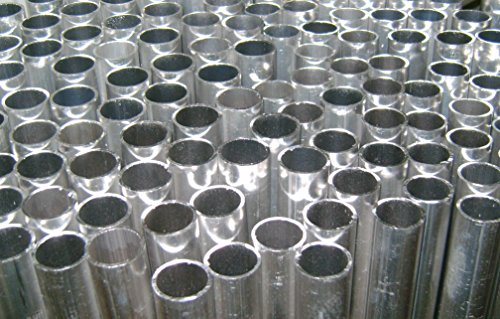
Aluminum Round Tubing, 7/8-Inch OD x 48 Inches
This is the general-purpose tube of the set, and the one most antenna builders should start with. At 7/8 inch outside diameter with a 0.050-inch wall, it is stiff enough to serve as a short boom or a mast section for a light antenna, yet light enough to handle and cut with ordinary tools. The 48-inch length yields two 24-inch elements, four 12-inch elements, or a single boom for a compact Yagi, and the round profile fits standard element holders, U-bolts, and hose clamps without special hardware. The 0.050-inch wall is the detail that makes this tube the general-purpose choice: it is thick enough to resist denting when a clamp is tightened properly, yet light enough that a 48-inch length is easy to carry up a ladder and hold in position while the hardware is fitted.
Key specs: 7/8-inch outside diameter; 0.050-inch wall; 48 inches long; round aluminum tube. A 48-inch length is easy to transport and store, and the round profile fits standard element holders and U-bolts.
Strengths:
- Stiff enough for short booms and mast sections, not just elements
- Standard round profile fits common clamps, holders, and U-bolts
- 48-inch length cuts efficiently into common element sizes with little waste
Trade-offs:
- No alloy grade stated in the listing, so builders wanting a named alloy should check the other picks
- One 48-inch length means longer booms need a joint or a second tube
- Round tube needs a flat or a clamp to stop it rotating in a holder
Anyone building or repairing a small to medium antenna who wants one versatile tube size for elements, booms, and short mast sections. It is the safe default when the exact element lengths are not yet decided. It is also a good spare to keep on hand, because a 48-inch length of versatile tube covers most repair jobs.
Best for: A first tube purchase for a DIY antenna build or repair
Not suited for: Long booms over four feet, where a heavier wall or a larger diameter is the better choice
Check price on Amazon: Aluminum Round Tubing 7/8-Inch OD

6063 Aluminum Round Tube, 1/4-Inch OD, 6 Pieces
Thin element stock is where small antennas live, and this six-piece set of 6063 tube is cut for exactly that work. A 1/4-inch outside diameter with a 0.04-inch wall is light and easy to bend to shape, which suits dipole arms, whisker elements, small loops, and the directors of a compact UHF antenna. The 6063 alloy is the detail that matters: it is a named, consistent alloy rather than mystery metal, so its conductivity and corrosion behavior are predictable, and six 36-inch pieces give enough stock for a multi-element build or for spares when a cut goes wrong. Six pieces matter more than they first appear, because a multi-element antenna needs several identical elements and a single miscut should not stop the build; with six pieces on hand, a builder can cut, test, and recut without ordering more stock.
Key specs: 6063 aluminum alloy; 1/4-inch outside diameter; 0.04-inch wall; 36 inches long; seamless; six pieces. Six pieces give enough stock for a multi-element build plus spares, and the seamless construction keeps the wall uniform along the whole length.
Strengths:
- Named 6063 alloy with predictable conductivity and corrosion resistance
- Six pieces cover a multi-element build plus spares in one order
- Thin and light, so small elements stay light and easy to support
Trade-offs:
- Too thin for booms, masts, or any load-bearing part of an antenna
- A 0.04-inch wall dents easily if the tube is clamped hard or dropped
- Seamless thin tube is harder to tap or thread than thicker stock
Builders making small UHF elements, dipoles, or experimental antennas who want light, consistent, named-alloy stock in a useful quantity. It suits a first antenna project, because six pieces leave room for a miscut without stopping the build.
Best for: Small antenna elements and experimental builds
Not suited for: Booms, masts, or large VHF elements that need stiffness
Check price on Amazon: 6063 Aluminum Round Tube 1/4-Inch OD

6063 Aluminum Round Tube, 3/8-Inch OD, 4 Pieces
The 3/8-inch tube is the step up from the 1/4-inch stock: still light, still easy to cut, but noticeably stiffer, which makes it the better choice for longer elements and for VHF work where a thin element can flex and detune. Four 36-inch pieces of 6063 alloy give enough material for a two- or three-element build with a spare, and the seamless construction keeps the wall uniform along the whole length, so there is no weld bead to interfere with a clamp or an insulator. It is a good middle size for builders who found 1/4-inch stock too whippy. The 3/8-inch diameter is the size that experienced builders reach for when a 1/4-inch element proves too flexible, and the seamless wall keeps the tube straight and uniform along its whole length, which is what holds an element's tuning steady.
Key specs: 6063 aluminum alloy; 3/8-inch outside diameter; 0.04-inch wall; 36 inches long; seamless; four pieces. Four pieces suit a small multi-element antenna with a spare in hand, and the 6063 alloy is consistent from piece to piece.
Strengths:
- Stiffer than 1/4-inch stock, so longer elements hold their shape
- Named 6063 alloy, consistent from piece to piece
- Four pieces suit a small multi-element antenna with a spare in hand
Trade-offs:
- Still too light for booms or mast sections
- A 0.04-inch wall can crush under an over-tightened clamp
- 36-inch pieces need joining for any element longer than three feet
Builders moving from small UHF elements to VHF or longer UHF elements who want a stiffer tube without jumping to heavy stock. It suits a builder who has already tried 1/4-inch stock and found it too flexible for the elements planned.
Best for: VHF elements and longer UHF elements
Not suited for: Structural parts of an antenna, such as booms and masts
Check price on Amazon: 6063 Aluminum Round Tube 3/8-Inch OD

Aluminum Round Tubing, 1-1/8-Inch OD x 72 Inches
When the job is a boom or a mast rather than an element, diameter and wall thickness do the work, and this tube brings both. At 1-1/8 inches outside diameter with a 0.065-inch wall, it is the heaviest tube in this guide, and that weight buys rigidity: a six-foot boom that does not sag, a mast section that holds a small antenna steady, a crossarm that stays straight under load. The 72-inch length is the other advantage, because a single six-foot piece spans the full boom of many home-built Yagis with no joint in the middle, and joints are where booms flex and fail. A 72-inch length is the longest single piece in this guide, and it is the reason this tube suits a boom: a boom with no joint in the middle is stiffer and simpler than a boom made from two joined pieces, and the 0.065-inch wall keeps it rigid under the weight of the elements.
Key specs: 1-1/8-inch outside diameter; 0.065-inch wall; 72 inches long; round aluminum tube. The 72-inch length spans a full six-foot boom with no joint in the middle, and the 0.065-inch wall is the thickest in this guide.
Strengths:
- Large diameter and thick wall give real rigidity for booms and masts
- 72-inch length spans a full boom with no mid-span joint
- Heavy enough to hold a small antenna steady in wind
Trade-offs:
- Overkill in weight and cost for simple elements
- Six feet long, so it needs a long vehicle or delivery planning
- Thick wall and large diameter need bigger clamps and a saw that handles the size
Builders making a Yagi boom, a crossarm, or a mast section who want one rigid piece instead of a stack of joined tubes. It suits a builder who wants one rigid piece for a boom rather than a stack of joined tubes.
Best for: Booms, crossarms, and mast sections
Not suited for: Small elements, where the size and weight are wasted
Check price on Amazon: Aluminum Round Tubing 1-1/8-Inch OD

Aluminum Round Tubing, 1/2-Inch OD x 48 Inches
Half-inch tube is the workhorse diameter for VHF elements and for the directors and reflectors of a mid-size antenna. It is stiff enough to hold a straight line over two or three feet, light enough to keep a hand-built antenna manageable, and common enough that element holders, insulators, and clamps in this size are easy to find. The 0.050-inch wall matches the 7/8-inch tube in this guide, which keeps the feel consistent across sizes, and the 48-inch length cuts into two 24-inch elements or a pair of shorter directors with little waste. Half-inch tube is the size that antenna parts suppliers stock in the widest range of holders and insulators, so a builder using this diameter will find compatible hardware without hunting, and the 48-inch length is easy to transport and store.
Key specs: 1/2-inch outside diameter; 0.050-inch wall; 48 inches long; round aluminum tube. The 0.050-inch wall resists denting better than thin-wall stock, and the half-inch diameter is the most common size for element holders and insulators.
Strengths:
- A versatile middle diameter for VHF elements and mid-size directors
- 0.050-inch wall resists denting better than thin-wall stock
- Common size, so holders, insulators, and clamps are easy to source
Trade-offs:
- Not stiff enough for booms longer than about three feet
- 48-inch stock needs joining for elements longer than four feet
- No alloy grade stated in the listing
Builders working on VHF antennas or mid-size UHF builds who want one diameter that covers most element work. It suits a VHF build in particular, because half-inch tube is the standard diameter for VHF elements and directors.
Best for: VHF elements and mid-size antenna directors and reflectors
Not suited for: Booms and mast sections, where a larger diameter is the right call
Check price on Amazon: Aluminum Round Tubing 1/2-Inch OD

Yescom EZ GO 30ft Telescoping Antenna Mast
Not every antenna job starts with raw tube. Sometimes the job is height, and this 30-foot telescoping mast delivers it in a form that collapses for transport and locks section by section with a thumb lock. The pole is aluminum, so it stays light for its height, and the 1.5-inch top diameter fits common antenna mounts and clamps. The included carry bag matters more than it sounds: a 30-foot mast that cannot be carried and stored neatly is a mast that stays in the garage. It is listed for WiFi, ham radio, Starlink dishes, and weather stations, which covers the usual reasons a home antenna needs to get above the roofline. The thumb-lock extension is the feature that separates this mast from a stack of loose pipe: each section locks positively, so the mast stays at the height it is set to, and the carry bag keeps the collapsed sections together for transport and storage.
Key specs: 30-foot telescoping aluminum pole; quick thumb-lock extension; 1.5-inch top outside diameter; carry bag included; for WiFi, ham radio, Starlink Gen 3, Mini, and V5, and weather stations. The 1.5-inch top outside diameter fits common antenna mounts and clamps, and the carry bag keeps the collapsed sections together for transport.
Strengths:
- 30 feet of height without cutting, joining, or guying a DIY mast
- Thumb-lock sections extend and collapse in about a minute
- Aluminum construction keeps a tall mast light enough to raise by hand
Trade-offs:
- A telescoping mast flexes more than a fixed tube mast of the same height
- Needs a base or mount, which is a separate purchase
- Not a source of element stock; it is a mast, not tubing to cut up
Anyone who needs an antenna above the roofline for ham radio, WiFi, a Starlink dish, or a weather station and wants a portable mast rather than a permanent install. It suits a ham radio operator or a Starlink owner who needs height quickly and portably rather than a permanent tower.
Best for: Portable height for antennas, dishes, and weather stations
Not suited for: Cutting into element stock, or a permanent tower install
Check price on Amazon: Yescom EZ GO 30ft Telescoping Antenna Mast
Buying guide: choosing aluminum tubing for antennas
Start from the job, not the tube. For elements, pick the smallest diameter that stays straight at the element length: 1/4-inch stock for short UHF elements, 3/8-inch for longer UHF and small VHF work, 1/2-inch for VHF elements and directors. For booms, go bigger: 7/8-inch tube for a short boom, 1-1/8-inch tube for a six-foot boom, and never trust a thin-wall tube to carry a boom load. Wall thickness is the second decision. A 0.04-inch wall is fine for elements that are supported along their length, a 0.050-inch wall is the all-round choice, and a 0.065-inch wall is for booms and masts. Alloy is the third decision: named 6063 stock is the safe choice for elements because its properties are consistent, while ungraded round tube is fine for booms and masts where the exact alloy matters less. Measure twice and cut once, and remember that aluminum work-hardens: score and snap thin tube, saw thicker tube with a fine blade, and deburr every cut so a sharp edge does not cut a wire or a hand. Join tube with clamps, bolts, or sleeves rather than welding unless the welding is done properly, and keep dissimilar metals apart or use an isolating washer so galvanic corrosion does not eat the joint. For a mast, decide first whether it is permanent or portable: a permanent mast wants a fixed mount and a proper ground, while a telescoping mast wants a stable base and a clear raising path.
Using and caring for your aluminum tubing for antennas
Aluminum does not rust, but it does oxidize, and a dull grey oxide layer is normal and mostly harmless. What damages an aluminum antenna is a joint that loosens, a clamp that crushes thin-wall tube, or a dissimilar-metal connection that corrodes. Check mounts and clamps once a season, tighten what has worked loose, and replace any steel hardware that has started to rust against the aluminum. Keep cut ends deburred and, for elements exposed to weather, a dab of dielectric grease on the joint keeps moisture out without insulating the connection. Store spare tube flat and dry, out of direct sun if it is bundled with anything plastic, and keep a telescoping mast collapsed and bagged when it is not in use so grit does not score the sections. Before raising any mast, check overhead lines and keep the mast well clear of them; a 30-foot pole and a power line are a combination that should never meet.
Common mistakes to avoid
The most common mistake is picking tube by length alone and ignoring diameter and wall, which produces elements that flex and detune or booms that sag. The second is over-tightening clamps on thin-wall tube, which crushes the tube and creates a weak point exactly where the load is highest. The third is joining aluminum directly to bare steel hardware without isolation, which invites galvanic corrosion at the joint. The fourth is treating a telescoping mast as a permanent tower: it is a portable mast, and it needs a base, a calm day, and a clear path to raise safely. The fifth is forgetting the ground: an outdoor mast and antenna should be grounded properly, and a mast raised near overhead lines is a hazard. Measure the element lengths the antenna design calls for before ordering, and order one spare piece of the size used most, because a miscut is cheaper than a second delivery.
Building with aluminum tubing: cutting, joining, and mounting
Cutting aluminum tube well is a skill that takes an afternoon to learn and pays off on every build after. A fine-tooth hacksaw or a tubing cutter both work, but they work differently: a hacksaw cuts fast and leaves a burr that must be filed off, while a tubing cutter leaves a clean edge but can crush thin-wall tube if it is tightened too hard. Support the tube close to the cut on both sides, mark the cut with a pencil line all the way around the tube, and rotate the tube as the cut deepens so the saw stays square. After cutting, deburr the inside edge with a round file and the outside edge with a flat file, because a sharp edge will cut a wire, a hand, or the insulation on a feed line. Measure the finished piece against the plan before cutting the next one, because a tube cut short cannot be stretched and a tube cut long can always be trimmed. For elements, cut a fraction long and trim to the final length after a test fit, because the element holders and insulators take up a small amount of length that the plan may not show. Joining is the next skill. The common joints in antenna building are the clamp, the bolted saddle, and the sleeve. A hose clamp or a U-bolt holds an element to a boom, a saddle with two bolts holds a boom to a mast, and a sleeve joins two tube sections end to end. Each joint needs the right hardware: a clamp that matches the tube diameter, a bolt that is long enough to grip without bottoming out, and a sleeve that fits snugly without play. Where the design needs the element insulated from the boom, use a plastic or fiberglass insulator rather than a bare metal clamp, and where the design needs a solid electrical connection, clean the aluminum bright with a wire brush and use a stainless steel bolt with a star washer that bites through the oxide layer. Dissimilar metals need care: aluminum against bare steel will corrode where water sits, so use stainless hardware or an isolating washer, and keep the joint dry with a dab of dielectric grease. Mounting is the last step and the one most often rushed. A mast needs a base that holds it vertical and a ground that protects the house, and a telescoping mast needs a clear path to raise, with no overhead lines anywhere near it. Guy wires are not optional on a tall mast with a real antenna on top: three guys at 120 degrees, anchored well away from the base, keep the mast standing in wind that would bend an unguyed pole. Raise the mast with a helper, check it with a level, and tighten the guys evenly so the mast stays straight rather than pulled to one side. A small antenna on a well-built mast will outperform a big antenna on a mast that flexes and sways, because a swaying antenna changes its aim with every gust.
Aluminum vs steel vs fiberglass: choosing a mast material
Aluminum is the right material for most home antenna tubing, but it is worth knowing what the alternatives offer and where they win. Galvanized steel is stronger and stiffer than aluminum at the same diameter, and it is the material of choice for a tall permanent mast carrying a heavy antenna, because wind load grows with the square of the wind speed and a steel mast bends less under that load. Steel is also heavier, harder to cut, and it rusts: a galvanized coating protects it for years, but once the coating is scratched or worn, rust starts, and a rusted mast is weaker and uglier than the day it went up. Steel is also a worse conductor than aluminum for an element, though that matters less for a mast than for an antenna element. Fiberglass is the opposite trade: it is light, it does not conduct, and it never corrodes, which makes it ideal for an insulated mast or a support pole that must not interact with the antenna electrically. A fiberglass mast is the right choice for a vertical antenna that needs an insulating support, or for a mast near power lines where a non-conductive pole is safer. But fiberglass is flexible, it degrades in ultraviolet light over years, and it is not a good material for an antenna element, because an element must conduct. Aluminum sits between the two: lighter than steel, stiffer than fiberglass, a good conductor, and corrosion-resistant enough for outdoor use without paint. For elements, aluminum is the only sensible choice of the three, because an element must conduct and must hold its shape. For booms, aluminum is the standard choice, because a boom must be stiff and light, and steel would make the antenna nose-heavy. For masts, the choice depends on height and load: aluminum suits a portable or short mast, steel suits a tall permanent mast with a heavy antenna, and fiberglass suits an insulating support. The telescoping aluminum mast in this guide is the portable answer, and the heavy aluminum tube is the boom answer, and both are aluminum for the same reasons: weight, conductivity, and corrosion resistance. A builder who understands the trade will not waste money on steel where aluminum is better, and will not trust aluminum where steel is needed.
Final recommendation
For most builders, the 7/8-inch 48-inch tube is the best single purchase: it covers elements, short booms, and mast sections in one size. Pair it with the 1/4-inch and 3/8-inch 6063 stock when the build is a real multi-element antenna, and add the 1-1/8-inch 72-inch tube when the design calls for a proper boom. The Yescom 30-foot telescoping mast is the right answer when the problem is height rather than elements. Buy the tube that matches the job, cut it carefully, and the antenna will hold its shape and its tuning for years.
Frequently asked questions
What size aluminum tubing do I need for an antenna element?
It depends on the element length and the band. Short UHF elements work well in 1/4-inch tube, longer UHF and small VHF elements suit 3/8-inch or 1/2-inch tube, and anything structural such as a boom wants 7/8-inch or larger. Match the diameter to the length so the element stays straight. When in doubt, go one size up rather than one size down, because a slightly stiff element is a small penalty while a flexing element detunes the antenna.
Is 6063 aluminum good for antennas?
Yes. 6063 is a common aluminum alloy with good corrosion resistance and consistent properties, and it is widely used for tubing. It cuts and clamps well, which is how antenna elements are normally joined. It is not the strongest alloy, so it is best for elements rather than heavy structural parts. 6063 is the common choice for antenna tube because it is consistent, corrosion-resistant, and easy to cut and clamp, while stronger alloys such as 6061 are stiffer but harder to work.
Can I use aluminum tubing for a TV antenna mast?
Yes, for light antennas and short masts. A 1-1/8-inch tube with a 0.065-inch wall makes a reasonable short mast, and a telescoping aluminum mast suits portable or temporary height. A heavy outdoor TV antenna on a tall permanent mast needs a proper mast mount, and often a steel mast, because wind load grows quickly with height and antenna size. A short mast of 1-1/8-inch tube with a 0.065-inch wall can hold a small TV antenna, but a large outdoor antenna on a tall mast needs a proper mast mount and often a steel mast for wind load.
How do I cut aluminum tubing without crushing it?
Use a fine-tooth saw or a tubing cutter, support the tube close to the cut, and do not over-tighten the cutter. Deburr the inside and outside edges after cutting so the tube fits its holder cleanly and no sharp edge cuts a wire. A tubing cutter gives the cleanest edge on thin-wall tube if it is tightened gently, while a fine-tooth saw is better for thick-wall tube; either way, deburr the cut before fitting.
Does aluminum tubing need painting or coating?
Usually not. Aluminum forms a protective oxide layer on its own. Paint is cosmetic and can help in salty coastal air, but it must not be relied on to insulate a joint, and it should be kept off any surface that needs to make electrical contact. Paint is cosmetic on aluminum and is not needed for protection, though it can help in salty coastal air; keep paint off any joint that needs to make electrical contact.
Can I weld aluminum antenna tubing?
It can be welded, but it needs the right equipment and skill, and most home builders should not. Clamps, bolts, and sleeves are the normal way to join antenna tube, and they are stronger in practice because a poor weld is weaker than a good clamp.
What is the difference between 6063 and 6061 aluminum?
6063 is the common tubing alloy, easy to cut and bend, with good corrosion resistance. 6061 is stronger and stiffer but harder to work and harder to bend. For antenna elements, 6063 is the usual choice; for a heavily loaded boom, 6061 is worth considering.
How high can I raise a telescoping aluminum mast?
A 30-foot telescoping mast is the practical limit for a portable mast raised by hand. Taller masts need guy wires, a proper base, and preferably a helper, and anything above 30 feet should be treated as a permanent install with proper grounding.
Do I need a special saw to cut aluminum tubing?
No. A fine-tooth hacksaw or a tubing cutter both work, and the key is supporting the tube close to the cut and deburring the edges afterward so the tube fits its holder cleanly.
More guides from KajuanDouglas
If this guide helped, these related roundups go deeper on the same topics: the best TV antennas the best 150 mile outdoor antennas the best TV antennas for RV.