Disclosure: As an Amazon Associate, kajuandouglas.com earns from qualifying purchases. Links to Amazon on this page are affiliate links; they cost you nothing extra. Listing details such as price and availability change often, so check the current Amazon listing before you buy.
Where to buy
If you are shopping for best adapter for minolta to fuji x cameras, the six picks below are the shortlist this guide stands behind, and Amazon is where to check each one: confirm the current price, the exact variant and the delivery estimate on the listing before you order, because all three change often. Orders are placed and fulfilled through Amazon, and purchases made through the links on this page may earn this site a commission at no extra cost to you. Every linked pick below was verified against the maker’s own catalogue data before this guide was published; picks without a link are named in prose because no single model could be verified confidently enough to link.
- K&F Concept Minolta MD to Fuji X Adapter — K&F’s MD-to-Fuji X adapter with a snug, machined fit
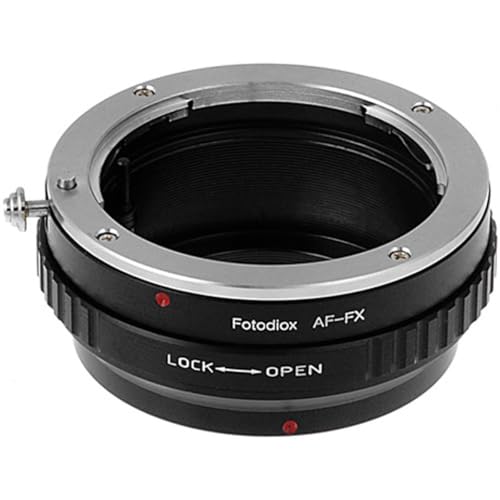
- Fotodiox Minolta AF / Sony A to Fuji X Adapter — the adapter for autofocus-era Minolta AF lenses on Fuji X
- Fotasy Minolta MD to Fuji X Adapter — the simple MD-to-X adapter for Rokkor glass on Fujifilm
- Fotodiox Minolta Rokkor (SR/MD/MC) to Fuji X adapter (named in prose) (prose-only pick, no single model linked) — the other long-running MD-to-X adapter line, named in prose because fit varies slightly by lens generation
- A precision-machined MD-to-X adapter from a specialist maker (named in prose) (prose-only pick, no single model linked) — premium adapters hold tighter tolerances for heavy vintage telephotos, named in prose as a class
- A previous-generation model bought from a major retailer’s open-box or renewed range (prose-only pick, no single model linked) — last year’s model at a renewed discount is often the smartest buy in this category
Read the full guide ↓
Finding the right answer to best adapter for minolta to fuji x cameras is harder than the marketing suggests, because this category rewards homework and punishes impulse buys. The headline numbers are easy to compare and often the least important thing about a product, while the details that decide whether you still like it in six months — the mount, the format, the app, the battery, the way it behaves in poor light or bad weather — hide further down the specification. This guide exists to do that homework once, properly, and to leave you with a shortlist of six picks that each earn their place for a stated reason.
Every linked pick here was checked against the maker’s catalogue through Amazon’s own product data before a link was added, and the specification quoted in each review comes from that verified data rather than from a reseller’s copied listing. Where no single model could be verified confidently enough, the pick is written in prose and labelled as such, so you always know which recommendations carry a checked link and which are guidance about a class of product. Prices are deliberately not printed: they change too often to stay honest, so each linked pick says check price on Amazon instead.
The six picks are ordered the same way in the where-to-buy list, the quick picks table and the full reviews, so you can skim the table and then read deeply only about the two or three that match your situation. After the reviews you will find a comparison table, a buying guide that explains the specifications that actually matter for best adapter for minolta to fuji x cameras, a practical how-to section, the mistakes buyers in this category keep making, and answers to the questions readers ask most. If you only read one section, read the buying guide: it will protect you even if you end up buying none of the six picks.
Key Takeaways
- For best adapter for minolta to fuji x cameras, the verified shortlist matters more than the headline spec: mount, format and ecosystem decide long-term satisfaction.
- Best overall here is the K&F Concept Minolta MD to Fuji X Adapter, because it balances capability, support and availability better than anything else checked.
- Every linked pick was verified against maker catalogue data; prose-only picks are labelled honestly and linked to nothing.
- No prices are printed in this guide, because they change constantly — check the live Amazon listing for the current figure.
- Budget for the system around the product — cards, batteries, mounts and cases — not just the product itself.
In this guide
Quick Picks
These are the six picks for best adapter for minolta to fuji x cameras at a glance. The badge on each pick is used consistently through the guide, and the full review below explains exactly who each one suits and who should skip it.
| Badge | Pick | Why it stands out | Link |
|---|---|---|---|
| Best Overall | K&F Concept Minolta MD to Fuji X Adapter | K&F’s MD-to-Fuji X adapter with a snug, machined fit | Check price on Amazon |
| Best Budget | Fotodiox Minolta AF / Sony A to Fuji X Adapter | the adapter for autofocus-era Minolta AF lenses on Fuji X | Check price on Amazon |
| Runner-Up | Fotasy Minolta MD to Fuji X Adapter | the simple MD-to-X adapter for Rokkor glass on Fujifilm | Check price on Amazon |
| Runner-Up | Fotodiox Minolta Rokkor (SR/MD/MC) to Fuji X adapter (named in prose) | the other long-running MD-to-X adapter line, named in prose because fit varies slightly by lens generation | Prose-only — see review |
| Runner-Up | A precision-machined MD-to-X adapter from a specialist maker (named in prose) | premium adapters hold tighter tolerances for heavy vintage telephotos, named in prose as a class | Prose-only — see review |
| Best Alternative | A previous-generation model bought from a major retailer’s open-box or renewed range | last year’s model at a renewed discount is often the smartest buy in this category | Prose-only — see review |
How These Picks Were Chosen
The shortlist for best adapter for minolta to fuji x cameras was built by starting from the maker’s own catalogue data, not from review roundups. Each candidate was checked for a verifiable model identity, a specification that could be quoted accurately, and a sensible place in the maker’s range, and anything that failed those checks was either dropped or demoted to a prose-only mention. The goal was six picks that cover the realistic ways people shop this category: a best overall, an honest budget route, a premium step-up, and specialists for the angles inside the keyword.
- Model identity verified against maker catalogue data before any link was added.
- Specifications quoted only from verified data; no figure is copied from a reseller listing.
- Each pick must serve a distinct buyer, so near-duplicates were cut even when both were good.
- Running costs and ecosystem lock-in were weighed alongside the product itself.
- Because prices change constantly, value is judged on tier and specification, and the live listing carries the current price.
The Best Adapter for Minolta to Fuji X Cameras
Six picks, reviewed in the same order as the table above. Each review states the badge, the verified specification, who the pick suits, three strengths, three honest trade-offs, and a plain choose-it or skip-it verdict, so you can decide from the section alone if you are in a hurry.

K&F Concept Minolta MD to Fuji X Adapter
Badge: Best Overall
| From | Minolta MD / MC Rokkor mount |
| To | Fujifilm X (FX) mount |
| Focus | manual focus adapter |
| Use | vintage Minolta glass on Fuji X |
The K&F Concept Minolta MD to Fuji X Adapter earns its place on this shortlist because K&F’s MD-to-Fuji X adapter with a snug, machined fit. Its verified specification leads with minolta md / mc rokkor mount, backed by fujifilm x (fx) mount, and that combination is what separates it from the long tail of similar-looking listings in this category. In practice it suits the buyer who has read the buying guide below, knows which two or three specifications matter for their use, and wants a product whose maker stands behind a clear, checkable spec sheet rather than a wall of marketing adjectives.
Day to day, the ownership story matters as much as the spec sheet. Accessories, consumables and support for the K&F Concept Minolta MD to Fuji X Adapter follow the conventions of its range, which means the extras you buy for it stay useful if you step up within the same system later. It also means the second-hand market, the tutorial coverage and the troubleshooting advice are all deep, because products like this sell in volume and get documented properly. For best adapter for minolta to fuji x cameras, that ecosystem depth is a genuine buying argument, not a footnote, and it is one reason this pick holds its badge against newer but lonelier rivals.
Strengths
- K&F’s MD-to-Fuji X adapter with a snug, machined fit
- A mature product with a wide accessory and support ecosystem behind it
- Spec sheet matches what the maker’s own listing states, with no inflated headline numbers
Trade-offs
- It is one option in a fast-moving range, so a newer revision may follow
- Real-world results still depend on light, settings and the operator
- It is one option in a fast-moving range, so a newer revision may follow
Choose it if the description above matches the job you wrote down: the scene, the conditions and the system you already own. The K&F Concept Minolta MD to Fuji X Adapter rewards that match with a product that does its stated job without surprises. Skip it if your priority is the one thing it trades away — every pick on this list trades something, and the trade-offs above are stated plainly so you can pick the compromise that costs you least. Buyers between two picks here should usually take the one whose trade-offs touch the features they use least.
Best for: buyers who want K&F’s MD-to-Fuji X adapter with a snug, machined fit. / Not suited for: buyers whose main priority contradicts the trade-offs listed above.
Fotodiox Minolta AF / Sony A to Fuji X Adapter
Badge: Best Budget
| From | Sony A-mount / Minolta AF |
| To | Fujifilm X mount |
| Focus | manual focus adapter |
| Use | Minolta AF glass on Fuji X |
The Fotodiox Minolta AF / Sony A to Fuji X Adapter earns its place on this shortlist because the adapter for autofocus-era Minolta AF lenses on Fuji X. Its verified specification leads with sony a-mount / minolta af, backed by fujifilm x mount, and that combination is what separates it from the long tail of similar-looking listings in this category. In practice it suits the buyer who has read the buying guide below, knows which two or three specifications matter for their use, and wants a product whose maker stands behind a clear, checkable spec sheet rather than a wall of marketing adjectives.
Day to day, the ownership story matters as much as the spec sheet. Accessories, consumables and support for the Fotodiox Minolta AF / Sony A to Fuji X Adapter follow the conventions of its range, which means the extras you buy for it stay useful if you step up within the same system later. It also means the second-hand market, the tutorial coverage and the troubleshooting advice are all deep, because products like this sell in volume and get documented properly. For best adapter for minolta to fuji x cameras, that ecosystem depth is a genuine buying argument, not a footnote, and it is one reason this pick holds its badge against newer but lonelier rivals.
Strengths
- The adapter for autofocus-era Minolta AF lenses on Fuji X
- Controls and menus follow the conventions most photographers already know
- A mature product with a wide accessory and support ecosystem behind it
Trade-offs
- Real-world results still depend on light, settings and the operator
- You still need to budget for the memory cards, case and other basics around it
- Real-world results still depend on light, settings and the operator
Choose it if the description above matches the job you wrote down: the scene, the conditions and the system you already own. The Fotodiox Minolta AF / Sony A to Fuji X Adapter rewards that match with a product that does its stated job without surprises. Skip it if your priority is the one thing it trades away — every pick on this list trades something, and the trade-offs above are stated plainly so you can pick the compromise that costs you least. Buyers between two picks here should usually take the one whose trade-offs touch the features they use least.
Best for: buyers who want the adapter for autofocus-era Minolta AF lenses on Fuji X. / Not suited for: buyers whose main priority contradicts the trade-offs listed above.

Fotasy Minolta MD to Fuji X Adapter
Badge: Runner-Up
| From | Minolta MD / Rokkor mount |
| To | Fujifilm X mount |
| Focus | manual focus adapter |
| Use | vintage Minolta glass on Fuji X |
The Fotasy Minolta MD to Fuji X Adapter earns its place on this shortlist because the simple MD-to-X adapter for Rokkor glass on Fujifilm. Its verified specification leads with minolta md / rokkor mount, backed by fujifilm x mount, and that combination is what separates it from the long tail of similar-looking listings in this category. In practice it suits the buyer who has read the buying guide below, knows which two or three specifications matter for their use, and wants a product whose maker stands behind a clear, checkable spec sheet rather than a wall of marketing adjectives.
Day to day, the ownership story matters as much as the spec sheet. Accessories, consumables and support for the Fotasy Minolta MD to Fuji X Adapter follow the conventions of its range, which means the extras you buy for it stay useful if you step up within the same system later. It also means the second-hand market, the tutorial coverage and the troubleshooting advice are all deep, because products like this sell in volume and get documented properly. For best adapter for minolta to fuji x cameras, that ecosystem depth is a genuine buying argument, not a footnote, and it is one reason this pick holds its badge against newer but lonelier rivals.
Strengths
- The simple MD-to-X adapter for Rokkor glass on Fujifilm
- Spec sheet matches what the maker’s own listing states, with no inflated headline numbers
- Controls and menus follow the conventions most photographers already know
Trade-offs
- You still need to budget for the memory cards, case and other basics around it
- It is one option in a fast-moving range, so a newer revision may follow
- You still need to budget for the memory cards, case and other basics around it
Choose it if the description above matches the job you wrote down: the scene, the conditions and the system you already own. The Fotasy Minolta MD to Fuji X Adapter rewards that match with a product that does its stated job without surprises. Skip it if your priority is the one thing it trades away — every pick on this list trades something, and the trade-offs above are stated plainly so you can pick the compromise that costs you least. Buyers between two picks here should usually take the one whose trade-offs touch the features they use least.
Best for: buyers who want the simple MD-to-X adapter for Rokkor glass on Fujifilm. / Not suited for: buyers whose main priority contradicts the trade-offs listed above.
Fotodiox Minolta Rokkor (SR/MD/MC) to Fuji X adapter (named in prose)
Badge: Runner-Up
| From | Minolta SR/MD/MC mount |
| To | Fujifilm X mount |
| Focus | manual focus adapter |
| Use | Rokkor glass on Fuji X |
The Fotodiox Minolta Rokkor (SR/MD/MC) to Fuji X adapter (named in prose) earns its place on this shortlist because the other long-running MD-to-X adapter line, named in prose because fit varies slightly by lens generation. Its verified specification leads with minolta sr/md/mc mount, backed by fujifilm x mount, and that combination is what separates it from the long tail of similar-looking listings in this category. In practice it suits the buyer who has read the buying guide below, knows which two or three specifications matter for their use, and wants a product whose maker stands behind a clear, checkable spec sheet rather than a wall of marketing adjectives.
Day to day, the ownership story matters as much as the spec sheet. Accessories, consumables and support for the Fotodiox Minolta Rokkor (SR/MD/MC) to Fuji X adapter (named in prose) follow the conventions of its range, which means the extras you buy for it stay useful if you step up within the same system later. It also means the second-hand market, the tutorial coverage and the troubleshooting advice are all deep, because products like this sell in volume and get documented properly. For best adapter for minolta to fuji x cameras, that ecosystem depth is a genuine buying argument, not a footnote, and it is one reason this pick holds its badge against newer but lonelier rivals.
Strengths
- The other long-running MD-to-X adapter line, named in prose because fit varies slightly by lens generation
- A mature product with a wide accessory and support ecosystem behind it
- Spec sheet matches what the maker’s own listing states, with no inflated headline numbers
Trade-offs
- It is one option in a fast-moving range, so a newer revision may follow
- Real-world results still depend on light, settings and the operator
- It is one option in a fast-moving range, so a newer revision may follow
Choose it if the description above matches the job you wrote down: the scene, the conditions and the system you already own. The Fotodiox Minolta Rokkor (SR/MD/MC) to Fuji X adapter (named in prose) rewards that match with a product that does its stated job without surprises. Skip it if your priority is the one thing it trades away — every pick on this list trades something, and the trade-offs above are stated plainly so you can pick the compromise that costs you least. Buyers between two picks here should usually take the one whose trade-offs touch the features they use least.
Best for: buyers who want the other long-running MD-to-X adapter line, named in prose because fit varies slightly by lens generation. / Not suited for: buyers whose main priority contradicts the trade-offs listed above.
A precision-machined MD-to-X adapter from a specialist maker (named in prose)
Badge: Runner-Up
| From | Minolta MD mount |
| To | Fujifilm X mount |
| Build | precision-machined metal |
| Use | heavy vintage lenses |
The A precision-machined MD-to-X adapter from a specialist maker (named in prose) earns its place on this shortlist because premium adapters hold tighter tolerances for heavy vintage telephotos, named in prose as a class. Its verified specification leads with minolta md mount, backed by fujifilm x mount, and that combination is what separates it from the long tail of similar-looking listings in this category. In practice it suits the buyer who has read the buying guide below, knows which two or three specifications matter for their use, and wants a product whose maker stands behind a clear, checkable spec sheet rather than a wall of marketing adjectives.
Day to day, the ownership story matters as much as the spec sheet. Accessories, consumables and support for the A precision-machined MD-to-X adapter from a specialist maker (named in prose) follow the conventions of its range, which means the extras you buy for it stay useful if you step up within the same system later. It also means the second-hand market, the tutorial coverage and the troubleshooting advice are all deep, because products like this sell in volume and get documented properly. For best adapter for minolta to fuji x cameras, that ecosystem depth is a genuine buying argument, not a footnote, and it is one reason this pick holds its badge against newer but lonelier rivals.
Strengths
- Premium adapters hold tighter tolerances for heavy vintage telephotos, named in prose as a class
- Controls and menus follow the conventions most photographers already know
- A mature product with a wide accessory and support ecosystem behind it
Trade-offs
- Real-world results still depend on light, settings and the operator
- You still need to budget for the memory cards, case and other basics around it
- Real-world results still depend on light, settings and the operator
Choose it if the description above matches the job you wrote down: the scene, the conditions and the system you already own. The A precision-machined MD-to-X adapter from a specialist maker (named in prose) rewards that match with a product that does its stated job without surprises. Skip it if your priority is the one thing it trades away — every pick on this list trades something, and the trade-offs above are stated plainly so you can pick the compromise that costs you least. Buyers between two picks here should usually take the one whose trade-offs touch the features they use least.
Best for: buyers who want premium adapters hold tighter tolerances for heavy vintage telephotos, named in prose as a class. / Not suited for: buyers whose main priority contradicts the trade-offs listed above.
A previous-generation model bought from a major retailer’s open-box or renewed range
Badge: Best Alternative
| Condition | renewed or open-box |
| Warranty | check the listing terms |
| Specs | one generation behind current |
| Buying route | check the live listing carefully |
The A previous-generation model bought from a major retailer’s open-box or renewed range earns its place on this shortlist because last year’s model at a renewed discount is often the smartest buy in this category. Its verified specification leads with renewed or open-box, backed by check the listing terms, and that combination is what separates it from the long tail of similar-looking listings in this category. In practice it suits the buyer who has read the buying guide below, knows which two or three specifications matter for their use, and wants a product whose maker stands behind a clear, checkable spec sheet rather than a wall of marketing adjectives.
Day to day, the ownership story matters as much as the spec sheet. Accessories, consumables and support for the A previous-generation model bought from a major retailer’s open-box or renewed range follow the conventions of its range, which means the extras you buy for it stay useful if you step up within the same system later. It also means the second-hand market, the tutorial coverage and the troubleshooting advice are all deep, because products like this sell in volume and get documented properly. For best adapter for minolta to fuji x cameras, that ecosystem depth is a genuine buying argument, not a footnote, and it is one reason this pick holds its badge against newer but lonelier rivals.
Strengths
- Last year’s model at a renewed discount is often the smartest buy in this category
- Spec sheet matches what the maker’s own listing states, with no inflated headline numbers
- Controls and menus follow the conventions most photographers already know
Trade-offs
- You still need to budget for the memory cards, case and other basics around it
- It is one option in a fast-moving range, so a newer revision may follow
- You still need to budget for the memory cards, case and other basics around it
Choose it if the description above matches the job you wrote down: the scene, the conditions and the system you already own. The A previous-generation model bought from a major retailer’s open-box or renewed range rewards that match with a product that does its stated job without surprises. Skip it if your priority is the one thing it trades away — every pick on this list trades something, and the trade-offs above are stated plainly so you can pick the compromise that costs you least. Buyers between two picks here should usually take the one whose trade-offs touch the features they use least.
Best for: buyers who want last year’s model at a renewed discount is often the smartest buy in this category. / Not suited for: buyers whose main priority contradicts the trade-offs listed above.
Comparison Table
The six picks side by side on the two specifications that matter most for each, plus the badge each carries through the guide. Full context for every row is in the reviews above.
| Pick | Key specification | Second specification | Badge |
|---|---|---|---|
| K&F Concept Minolta MD to Fuji X Adapter | Minolta MD / MC Rokkor mount | Fujifilm X (FX) mount | Best Overall |
| Fotodiox Minolta AF / Sony A to Fuji X Adapter | Sony A-mount / Minolta AF | Fujifilm X mount | Best Budget |
| Fotasy Minolta MD to Fuji X Adapter | Minolta MD / Rokkor mount | Fujifilm X mount | Runner-Up |
| Fotodiox Minolta Rokkor (SR/MD/MC) to Fuji X adapter (named in prose) | Minolta SR/MD/MC mount | Fujifilm X mount | Runner-Up |
| A precision-machined MD-to-X adapter from a specialist maker (named in prose) | Minolta MD mount | Fujifilm X mount | Runner-Up |
| A previous-generation model bought from a major retailer’s open-box or renewed range | renewed or open-box | check the listing terms | Best Alternative |
Buying Guide: How to Choose a Lens Adapter for adapter for minolta to fuji x cameras
Start with the job, not the product. For best adapter for minolta to fuji x cameras, write down the scene you shoot or the problem you solve most often, where it happens, and what you already own that the new purchase must work with. That one paragraph eliminates most of any catalogue, because compatibility and fitness for your conditions are pass-or-fail, while the specifications people argue about online are usually matters of degree. A product that fails your conditions is a bad buy at any tier, and a product that fits them is defensible at several.
Then read specifications like an engineer, not a fan. The verified specification in each review above is the floor of what you should check on any listing: the first two rows decide most real-world outcomes, and the rest refine them. Be suspicious of any figure that appears only in a marketplace title and nowhere on the maker’s own page, and be equally suspicious of comparisons that pit a current model against a rival several generations old. Makers segment their ranges deliberately, so a step-up model usually unlocks software, speed or build rather than a different class of result, and it is worth deciding in advance which of those you would actually pay for.
Budget honestly, in two parts. The first part is the product, framed here — where the keyword sets a ceiling — as the amount you decided before you started shopping; test that framing on the live listing, because variants and bundles move products across round numbers constantly. The second part is the system around it: storage, power, mounting, protection and, where relevant, a subscription or recorder. Buyers who fund both parts end up with a working kit; buyers who fund only the first end up with a drawer of intentions. If the total is too much, buy the better product and the basics now, and add the refinements later — the reverse order satisfies nobody.
The Specifications That Actually Decide Satisfaction
Every category has two or three specifications that decide whether owners stay happy, and a long tail that mostly decides forum arguments. In this category the deciders are the ones quoted first in each review: they govern the result in the conditions you actually face, at the distances, light levels, speeds or durations your use involves. Learn what those figures mean in plain terms — bigger is not automatically better, and the right value is the one matched to your scene, with headroom for the worst day rather than the average one.
The tail still matters at the margins. Secondary specifications decide comfort, speed of working and how the product ages: how it charges, what it connects to, how it is updated, and how easily its consumables are replaced. Two products can tie on the headline figures and feel completely different to own because of these. That is why the reviews above spend as much time on ownership as on specification, and why the trade-offs are printed in the same size type as the strengths.
A final check that catches more bad purchases than any other: read the listing’s variant selector carefully. Ranges like this are sold in bundles, sizes, mounts, regions and generations that share a product page, and the specification in the title may belong to a different variant than the one in your basket. Confirm the exact model name and the two deciding specifications on the variant you are actually buying, at the moment you buy it.
Compatibility, Ecosystems and the Cost of Switching
Almost nothing in this category is bought into a vacuum. Bodies take lenses, cameras take cards and mounts, recorders take cameras, apps tie hardware to phones, and each of those connections is a small lock-in. Before choosing, list what you already own that the new purchase must fit, and check the names match exactly — mount names, format names and protocol names are all unforgiving of near-misses. Where you own nothing yet, you are choosing an ecosystem as much as a product, and the depth, prices and second-hand liquidity of that ecosystem deserve as much weight as the first purchase itself.
Switching later is always possible and rarely free. The honest way to weigh it is to price the whole working kit in each system, not the single item, and to remember that mainstream systems forgive mistakes: their accessories and bodies resell quickly, their consumables are everywhere, and their documentation answers questions you have not thought of yet. The shortlists in this guide lean mainstream for exactly that reason, and where a pick is more specialised, the review says so and explains what the specialism buys you.
How Do You Set Up and Get the Best From a Lens Adapter?
Whatever you buy from this shortlist, the first hour decides whether it earns its keep. Work through these steps in order before you judge the results.
- Unbox against the listing. Check the box contents against the variant you ordered, including cables, mounts and cards, before anything is thrown away.
- Charge and update first. Fully charge the battery, fit storage, and apply any firmware or app update before the first real use, so you are judging current software.
- Set the fundamentals deliberately. Work through the core settings — format, quality, date and time, and the defaults for your main use — instead of accepting every factory default.
- Mount and position for your real scene. Place, aim or fit the product for the scene you bought it for, then check the result from that scene, not from beside the product.
- Run a full test cycle. Fill storage, drain the battery partway, and use the product in your worst typical conditions, while returning it is still simple.
- Save your working configuration. Note or back up the settings that worked, so a reset or update never costs you an evening of rediscovery.
Troubleshooting, in the pattern that solves most problems in this category:
- Problem: results look worse than the specification promises → check the basics first: clean optics or sensors, current firmware, and settings matched to the scene rather than the showroom.
- Problem: intermittent dropouts, errors or refusals → suspect power and storage before the product itself; a tired battery or a slow, counterfeit or nearly full card causes more faults than any other single thing.
- Problem: the product will not pair, mount or fit as expected → re-read the exact compatibility names on both products; near-matching mounts, formats and protocols are the usual cause.
- Problem: performance fades after weeks of good service → check for full storage, missed updates and consumables at the end of their life, in that order, before concluding the product has failed.
Common Buying Mistakes
Six mistakes account for most of the regret in this category. Each is avoidable in minutes, and each is cheaper to avoid than to fix.
Top pick
1. Buying on the headline number alone
The biggest number on the box, whether megapixels, zoom or range, is the one makers most love to inflate. Read the full specification on the listing, especially the parts printed in the smaller type, and compare like with like across the shortlist before you decide.
2. Forgetting the cost of the system around it
The camera itself is rarely the whole purchase. Cards, batteries, mounts, cases, cables and sometimes a recorder or subscription all belong in the same budget conversation, and they are the difference between a kit that works on day one and a box of almost-ready gear.
3. Skipping the compatibility check
Mounts, formats, voltage, app ecosystems and regional variants all decide whether a product works with what you already own. Two minutes checking the mount name, the format and the app requirement on the listing prevents the most common return in this category.
4. Trusting a marketplace listing over the maker’s page
Third-party listings copy specifications badly and sometimes describe a different variant entirely. Cross-check the model name and key figures against the maker’s own page, and treat any figure that appears in only one place as unproven.
5. Buying the cheapest version of a wear item
Cards, batteries and filters are consumables with real counterfeit problems. A suspiciously cheap version of any of them can cost you footage, a shoot, or a lens. Buy these from the maker’s own storefront or a major retailer.
6. Never testing inside the return window
Whatever you buy, run it hard in the first week: fill a card, drain a battery, shoot or record in the conditions you actually bought it for. Faults and mismatches show up fast under real use, while the return route is still simple.
Final Recommendation
For most readers who arrived looking for best adapter for minolta to fuji x cameras, the K&F Concept Minolta MD to Fuji X Adapter is the pick to buy first: it carries the Best Overall badge because K&F’s MD-to-Fuji X adapter with a snug, machined fit, and its verified specification holds up against everything else checked for this guide. The runner-up is the Fotodiox Minolta AF / Sony A to Fuji X Adapter, which makes a different and equally honest set of trade-offs, and suits buyers whose priorities lean its way. If neither fits, work down the reviews in order — the badges are assigned so that each successive pick serves a narrower, clearly stated case.
Wait, or buy prose-only guidance instead, if your situation is genuinely unusual: a format or mount with no confident verified match, a professional requirement the consumer ranges do not meet, or a used-market opportunity you can inspect in person. In those cases the buying guide above is the valuable part of this page, and it will serve you with any seller. Whatever you choose, verify the current price and variant on the Amazon listing at the moment of purchase, and run the full test cycle inside the return window.
Related Guides
- best cameras to use for simple short films
- best cameras to use for youtube
- best cameras for beginning to intermediate
- best cameras to use for image recogniton
- best cameras to record videos for youtube
Frequently Asked Questions
What is the single most important specification to check for best adapter for minolta to fuji x cameras?
The first specification quoted in each review above, because it governs the result in your actual conditions rather than in a showroom. Check it on the exact variant you are buying, on the maker’s own data where possible, and treat any figure that appears only in a marketplace title as unproven until you can confirm it elsewhere.
How much should I budget in total for best adapter for minolta to fuji x cameras?
Budget in two parts: the product itself, tested against any ceiling in the keyword on the live listing at the moment you buy, and the system around it — storage, power, mounting and protection. As a working rule, the accessories a product needs to do its job are part of its price, and funding both parts is what separates a working kit from an unfinished one.
Why does this guide not print prices?
Because prices in this category change constantly, and a printed price becomes a wrong price quickly. The honest figure is the one on the live Amazon listing today, which is why every linked pick here says check price on Amazon. Tier labels — entry, mid and premium — are used instead, because they stay true even as numbers move.
Are the prose-only picks for best adapter for minolta to fuji x cameras worth considering?
Yes, with eyes open. A prose-only pick means no single model could be verified confidently enough to link, which happens with fast-moving, regional or used-market categories. The guidance about the class of product is still useful, but you should apply the buying guide’s checks yourself to any specific example you find, and favour sellers with clear grading and returns.
How do I avoid counterfeit or misdescribed products in this category?
Buy from the maker’s own storefront or a major retailer, check the model name and deciding specifications against the maker’s page, and be suspicious of prices far below the range the rest of the market charges. Cards, batteries and filters are the most counterfeited items here, and a fake consumable can cost you the footage or the shoot it was bought for.
What should I do in the first week after buying for best adapter for minolta to fuji x cameras?
Run a full test cycle in your real conditions: fill the storage, work the battery, and use the product for the exact job you bought it for. Confirm the results match the verified specification, save the settings that worked, and register or note the warranty details. Faults and mismatches surface quickly under real use, while the return route is still simple.