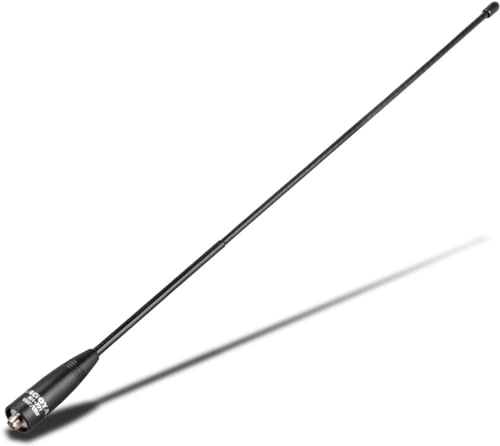
The best 2mm 70 cm portable antennas are the dual-band whips that handheld radio owners screw onto their radios: the "2m" is the 2-meter band and "70 cm" is the 70-centimeter band, the two VHF and UHF bands that most portable radios use, at 144 and 430 MHz. A stock handheld antenna is short and convenient, but it is also the weakest part of the radio, and a longer dual-band whip is the cheapest way to hear more stations and reach further on both bands. This guide covers six portable dual-band antennas from Nagoya, Diamond, Signal Stick, ABBREE, HYS, and TIDRADIO, each one checked against current listings with verified product details.
Every antenna here covers both the 2-meter and 70-centimeter bands, and each one serves a different buyer: a classic whip for a first upgrade, a high-gain Diamond for daily use, a super-elastic whip for rough field work, a two-pack for two radios, a rated whip for full-power handhelds, and a long-range two-pack for new owners. The six antennas cover a range of lengths, connectors, and prices, so you can choose by the radio you own and the way you carry it rather than by the specification sheet alone.
In this guide
Quick picks: best 2mm 70 cm portable antennas
| # | Product | Where to buy |
|---|---|---|
| 1 | Nagoya NA-771 | Check on Amazon |
| 2 | Diamond SRJ77CA | Check on Amazon |
| 3 | Signal Stick (ST-BNC-SMA-F) | Check on Amazon |
| 4 | ABBREE AR-771 (2-Pack) | Check on Amazon |
| 5 | HYS 2m/70cm Whip (15.6 in) | Check on Amazon |
| 6 | TIDRADIO TD-771 (2-Pack) | Check on Amazon |
How the picks were chosen
We started with antennas that cover both the 2-meter and 70-centimeter bands, because dual-band coverage is the whole point of this guide. An antenna that covers only one band does not belong here, even if it looks similar on the outside, and we excluded those even when they appeared in the same search results. We also excluded renewed and used listings, since a used antenna is a different purchase from a new one, with a different condition.
Portability came next. A good portable antenna should be light enough to carry on a handheld radio all day, flexible enough to survive a bag or a belt, and simple enough to screw on without tools. We favored whips that bend rather than snap, since a portable antenna that breaks in the field is worse than a shorter one that survives, and we favored standard SMA connectors, since they fit the most common handheld radios directly.
Finally, we balanced the list by maker, length, and price. The six antennas cover premium and budget makers, with a mix of single whips and two-packs, 15-inch and shorter lengths, and different strengths in gain, toughness, and value, so a buyer can choose by the radio they own, the use they have in mind, and the budget they have, rather than settling for whatever is available.
Quick comparison
| Product | Standout feature | Best for |
|---|---|---|
| Nagoya NA-771 | The classic 15.6-inch dual-band whip | handheld radio owners who want the classic dual-band upgrade |
| Diamond SRJ77CA | High-gain Diamond whip for handheld radios | regular handheld users who want high-gain portable performance |
| Signal Stick (ST-BNC-SMA-F) | Super-elastic whip that bends without breaking | field operators who need a tough, packable antenna |
| ABBREE AR-771 (2-Pack) | Two soft whips for the price of one | owners upgrading two radios or wanting a spare whip |
| HYS 2m/70cm Whip (15.6 in) | 15.6-inch whip rated to 20 watts | Baofeng and AnyTone owners who want a rated 15.6-inch whip |
| TIDRADIO TD-771 (2-Pack) | Long-range 15.15-inch whips, two included | new handheld owners and two-radio households |

Nagoya NA-771 Ham Antenna (15.6 in, 144/430 MHz, SMA-Female)
The Nagoya NA-771 is the best-known dual-band whip in this guide, and its reputation comes from doing one job well: replacing the short stock antenna on a handheld radio with a longer whip that hears and reaches further on both the 2-meter and 70-centimeter bands. At 15.6 inches long, with an SMA-female connector, it fits the most common handheld radios directly, and its 144/430 MHz coverage matches the two bands that most portable operators use every day. It is the antenna to buy first when a handheld radio needs more range without any other change.
The whip is flexible enough to survive being carried in a bag or worn on a belt, and it folds out of the way when the radio is not in use. Because it is a simple passive antenna with no electronics, there is nothing to charge, nothing to configure, and nothing to fail: screw it on, and the radio works better. For a new handheld owner, it is the cheapest meaningful upgrade available, and for an experienced operator it is a reliable spare that lives in the kit.
Key specifications: 15.6 in whip, 144/430 MHz, SMA-female connector, dual-band VHF/UHF
The antenna story here is the classic upgrade: a longer whip that replaces a stock antenna and improves range on both bands.
Strengths
- Fits most handheld radios with an SMA-female connector
- Longer whip improves range on 2m and 70cm
- Simple, passive, nothing to charge or configure
Trade-offs
- 15.6 inches is long for pocket carry
- No gain figure stated in the listing
- SMA-female only, so other connectors need an adapter
A handheld radio owner who wants more range on the 2-meter and 70-centimeter bands with a single screw-on upgrade will suit this antenna well.
Best for: handheld radio owners who want the classic dual-band upgrade / Not suited for: buyers who need a base station or mobile antenna
Check price on Amazon: Nagoya NA-771
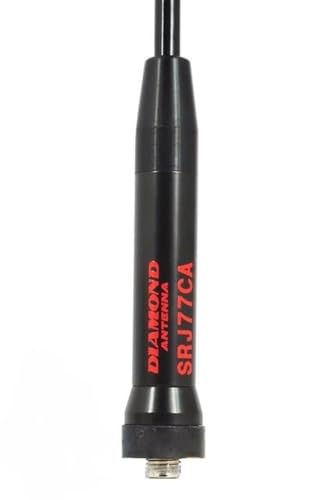
Diamond Antenna SRJ77CA Dual-Band 144/430 MHz HT Antenna
The Diamond SRJ77CA is the high-gain handheld antenna in this guide, built by a maker known for antennas that last. Its dual-band design covers 144 and 430 MHz, and its high-gain construction is meant to pull in weaker signals and push a handheld signal further than a stock whip, which matters when the other station is distant or behind a hill. The compact, lightweight build keeps the radio balanced in the hand, so the extra length does not make the radio awkward to carry or use.
Diamond antennas have a reputation for consistent build quality, and the SRJ77CA is no exception: the whip is flexible, the connector is solid, and the antenna is designed for daily portable use rather than occasional display. It suits an operator who uses a handheld radio often and wants the best portable performance without moving to a larger mobile or base antenna. Paired with a good handheld, it is the closest a pocket radio gets to a proper outdoor antenna.
Key specifications: Dual-band 144/430 MHz, high-gain VHF/UHF portable antenna, compact, lightweight, black, for handheld radios
The antenna story here is high gain in a handheld size: a Diamond whip that hears weaker signals and reaches further.
Strengths
- High-gain design for better range
- Compact and lightweight for portable use
- Diamond build quality and flexible whip
Trade-offs
- Costs more than budget whips
- Still limited by handheld radio power
- No gain figure stated in the listing
An operator who uses a handheld radio daily and wants the best portable reception will get the most from this antenna.
Best for: regular handheld users who want high-gain portable performance / Not suited for: buyers who need a base antenna for a fixed station
Check price on Amazon: Diamond SRJ77CA

Original Super-Elastic Signal Stick Antenna, Dual-Band 2m/70cm (ST-BNC-SMA-F)
The Signal Stick is the toughest antenna in this guide, made from a super-elastic material that bends, folds, and springs back instead of snapping. That matters for a portable antenna, because whips get caught on branches, bent in bags, and knocked against door frames, and a rigid whip that survives one knock may not survive the next. The dual-band design covers the 2-meter and 70-centimeter bands, and the ST-BNC-SMA-F fitting in the listing matches handheld radios with the common SMA-female connector.
The elastic build also makes the antenna easy to carry: it can be rolled or folded for storage and returns to shape when it is needed, which suits a go-kit or a backpack that gets packed and unpacked often. It is not the longest whip here, so its range gain is modest next to a 15-inch antenna, but it is the antenna that is still working after a season of hard use, and for a portable operator that reliability is worth more than a small gain difference.
Key specifications: Dual-band 2m/70cm, super-elastic, ST-BNC-SMA-F fitting
The antenna story here is toughness: a whip that bends instead of breaking, built for bags, belts, and field use.
Strengths
- Super-elastic build survives bends and knocks
- Folds for easy storage in a go-kit
- Dual-band coverage for 2m and 70cm
Trade-offs
- Shorter than 15-inch whips, so less gain
- Elastic look is plain next to branded whips
- Fitting must match the radio connector
A portable operator who carries a radio in the field and needs an antenna that survives rough handling will suit this one well.
Best for: field operators who need a tough, packable antenna / Not suited for: buyers who want the longest whip for maximum range
Check price on Amazon: Signal Stick (ST-BNC-SMA-F)
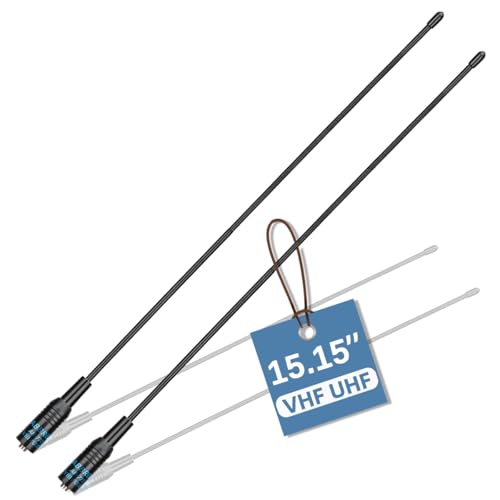
ABBREE AR-771 Ham Radio Antenna 15.15 Inch Dual Band VHF/UHF SMA-Female Soft Whip (2-Pack)
The ABBREE AR-771 comes as a two-pack, which makes it the practical choice for an owner with two radios, or for someone who wants a spare in the bag. Each whip is 15.15 inches long, covers the VHF and UHF dual bands, and uses an SMA-female soft whip design that bends rather than snapping, so it survives the same knocks that break rigid antennas. The listing names Baofeng and similar handheld radios, which are the most common radios this antenna is bought for, and the soft whip keeps the radio comfortable to carry.
A two-pack also suits a club, a family, or a pair of radios used together, since both radios can be upgraded at once for the cost of one premium whip. The performance is in the same class as the other 15-inch whips here: better range than a stock antenna on both bands, with a flexible build that forgives rough handling. For a buyer who wants value and a spare, it is the most sensible purchase in this guide.
Key specifications: 15.15 inch, dual band VHF/UHF, SMA-female, soft whip antenna, 2-pack
The antenna story here is value and a spare: two 15-inch soft whips for two radios, or one radio and a backup.
Strengths
- Two whips included, so one is always a spare
- 15.15-inch length improves range on both bands
- Soft whip bends instead of snapping
Trade-offs
- Budget brand, so build varies more than premium makers
- No gain figure stated in the listing
- Two-pack may be more than a single-radio owner needs
An owner with two handheld radios, or one radio and a need for a spare, will get the most from this two-pack.
Best for: owners upgrading two radios or wanting a spare whip / Not suited for: buyers who want a single premium-brand antenna
Check price on Amazon: ABBREE AR-771 (2-Pack)

HYS SMA-Female 2m/70cm 15.6-Inch Whip VHF/UHF (144/430MHz) Antenna
The HYS whip is the workhorse of this guide: a 15.6-inch dual-band antenna covering 136-174 and 400-470 MHz, with an SMA-female connector and a 20-watt maximum power rating in the listing. That power rating matters, because it means the antenna can handle a handheld radio running at full power without worry, and the wide frequency coverage means it works across the whole 2-meter and 70-centimeter bands rather than just the middle of them. The listing names Baofeng UV-5R and AnyTone radios, which are the handhelds most buyers will pair it with.
At 15.6 inches, it is the same length as the classic whips here, so its range is in the same class, and its flexible build survives daily carry. It is a straightforward replacement antenna: unscrew the stock whip, screw this one on, and the radio hears more and reaches further. For a buyer who wants a no-nonsense upgrade with a stated power rating, it is the clearest choice in this guide.
Key specifications: 15.6 inch whip, dual band 136-174/400-470 MHz, VHF/UHF, 20W max, SMA-female
The antenna story here is the stated rating: a 15.6-inch whip with a 20-watt maximum, covering the full 2m and 70cm bands.
Strengths
- 20-watt rating suits handheld radios at full power
- Wide frequency coverage across both bands
- 15.6-inch length improves range
Trade-offs
- Budget brand with plain styling
- No gain figure stated in the listing
- SMA-female only, so other connectors need an adapter
A handheld owner who wants a rated, full-band whip for a Baofeng or AnyTone radio will suit this antenna well.
Best for: Baofeng and AnyTone owners who want a rated 15.6-inch whip / Not suited for: buyers who need a base station or mobile antenna
Check price on Amazon: HYS 2m/70cm Whip (15.6 in)
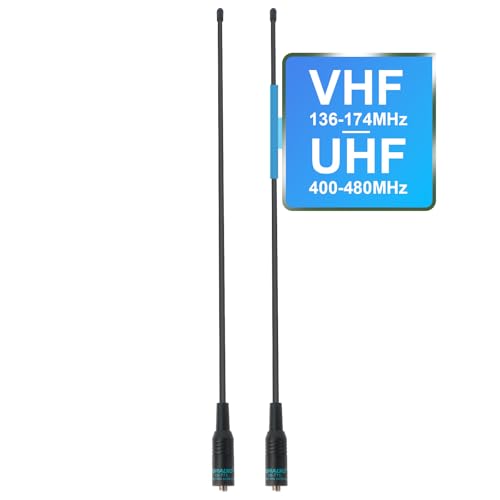
TIDRADIO TD-771 Ham Radio Long Range Antenna 15.15 inch Dual Band (VHF/UHF, 144/430Mhz), SMA-F (2 Pack)
The TIDRADIO TD-771 is a long-range dual-band whip sold as a two-pack, covering VHF and UHF at 144 and 430 MHz in a 15.15-inch length. The listing names Baofeng, TIDRADIO, and similar handheld radios, which are the radios most buyers will use it with, and the SMA-F connector fits those radios directly. Two whips in the pack mean both radios in a pair can be upgraded, or one can live in the bag as a spare, which is useful when an antenna gets bent or lost in the field.
The 15.15-inch length puts it in the same performance class as the other long whips here, with noticeably better range than a short stock antenna on both bands. The build is a flexible whip rather than a rigid rod, so it survives being packed and unpacked, and the two-pack price makes it one of the best values in this guide. For a buyer starting out with a handheld radio, it is a low-cost way to hear more and reach further on the bands that matter.
Key specifications: 15.15 inch, dual band VHF/UHF 144/430 MHz, SMA-F, 2-pack
The antenna story here is long range for less: two 15-inch dual-band whips that upgrade a pair of handheld radios.
Strengths
- Two whips included for two radios or a spare
- 15.15-inch length for better range
- Fits Baofeng, TIDRADIO, and similar handhelds
Trade-offs
- Budget brand, so build varies more than premium makers
- No gain figure stated in the listing
- Two-pack may be more than a single-radio owner needs
A new handheld owner, or an owner with two radios, who wants long-range whips at a low cost will suit this two-pack well.
Best for: new handheld owners and two-radio households / Not suited for: buyers who want a single premium-brand antenna
Check price on Amazon: TIDRADIO TD-771 (2-Pack)
Best 2mm 70 cm portable antennas: what matters most
The connector is the first thing to confirm, because it decides whether the antenna fits your radio at all. Most handheld radios in this guide use an SMA-female connector, which means the antenna needs an SMA-female fitting, and a radio with a different connector will need an adapter. Check the connector on your radio before buying, since an antenna with the wrong fitting cannot be screwed on, no matter how good its length or gain. A listing that names your exact radio model is the safe choice.
Length decides how the antenna performs. A longer whip generally hears weaker signals and reaches further than a short one, which is why the 15-inch whips in this guide outperform the short stock antennas that come with most handheld radios. But length has a cost: a long whip is harder to carry, catches on branches, and can make the radio top-heavy. If you carry the radio in a pocket or a bag, a shorter or more flexible whip may serve you better than the longest one available.
Frequency coverage is the next check. A dual-band antenna for this guide should cover 144 MHz on the 2-meter band and 430 MHz on the 70-centimeter band, and the best ones cover the full bands rather than just the middle. Check the frequency range in the listing, since an antenna tuned for a different band will perform poorly on the bands you use. A whip that lists 136-174 and 400-470 MHz covers the full bands with room to spare.
Toughness matters for a portable antenna. A whip that bends and springs back will survive a season of field use, while a rigid whip that snaps at the base will leave you with a stub and no antenna. Check whether the whip is described as flexible, soft, or super-elastic, and favor those descriptions for field use, since they mean the antenna can take a knock. A two-pack is also worth considering, since a spare in the bag costs little and saves a trip.
The radio itself rounds out the decision. A better antenna helps any handheld radio, but it cannot fix a radio with a poor receiver or a weak battery, and a handheld running at low power will not reach as far as one running at full power, whatever the antenna. Check the power rating of the antenna against the radio output, since an antenna rated below the radio power can be damaged. Match the antenna to the radio you own, not to the radio you wish you owned.
Buying guide: choosing 2mm 70 cm portable antennas
Start with the radio, because the antenna you need depends on the connector and the bands it uses. A Baofeng UV-5R, a TIDRADIO, or an AnyTone handheld uses an SMA-female connector and the 2-meter and 70-centimeter bands, which is what the antennas in this guide are built for. Check the connector and the bands on your exact radio model before buying, since a different connector or a single-band radio needs a different antenna.
Check the length against the way you carry the radio. A 15-inch whip improves range, but it sticks out of a pocket and catches on branches, while a shorter whip is easier to carry but hears less. Decide by the use: a field operator who needs range will take the long whip, while a buyer who carries the radio on a belt all day may prefer a shorter or more flexible one. Try the length in a shop if you can, since a whip that is too long to carry comfortably will spend more time in a bag than on the radio.
The two-pack question is the next check. A two-pack costs little more than a single whip and gives you a spare, or upgrades two radios at once, which suits a household, a club, or a pair of radios used together. A single premium whip costs more but offers better build quality and consistency, which suits an operator who uses one radio every day. Decide by how many radios you own and how hard you are on antennas.
Compatibility with accessories is easy to overlook. A long whip may not fit in the radio case or the bag you use, and a thick whip may not fit through a car window mount or a speaker microphone clip. Check the case and the accessories you use, and favor a whip that fits the kit you already own. A flexible whip is more forgiving here, since it bends around obstacles rather than snapping.
Finally, check the seller and the listing details before paying. Confirm the exact model name, including the length and the connector, since one letter can mean a different antenna: the Nagoya NA-771 and NA-771G are different models for different bands. A listing that says renewed or used is a different purchase from a new antenna, and the condition is different too. Buy from a listing that names the exact model you want, and keep the box and receipt in case the antenna needs warranty service.
Using and caring for your 2mm 70 cm portable antennas
Fit the antenna carefully on the first day. Screw it onto the radio by hand, snug but not forced, and check that it sits straight and does not wobble, since a loose antenna will perform poorly and can damage the connector. Test the radio on a known station or repeater to confirm the improvement, and note the difference against the stock antenna, so you know what the upgrade bought you. Keep the stock antenna as a spare, since it is better than no antenna at all.
Keep the antenna in good condition by storing it properly. A flexible whip can be coiled loosely or left on the radio, while a rigid whip should be removed before the radio goes in a bag, since a bent whip is a broken whip. Check the connector for dirt or damage before fitting, and clean it gently if it is dirty, since a dirty connector can cause poor reception and intermittent contact.
Look after the radio and the antenna together. Avoid leaving the radio in a hot car, since heat ages the battery and can soften the antenna material, and keep the radio dry, since water in the connector will corrode it. Check the antenna for cracks or kinks regularly, and replace it if the whip is bent permanently or the base is loose, since a damaged antenna can harm the radio output stage.
Use the antenna correctly in the field. Hold the radio upright with the antenna vertical, since a whip antenna radiates best when it is vertical, and keep it clear of your body and metal objects, which can block the signal. If the signal is weak, move to higher ground or an open area rather than forcing more power, since a better position helps more than a longer antenna. A portable antenna is a tool, and it works best when it is used as one.
Common mistakes to avoid
The most common mistake is buying an antenna with the wrong connector. A handheld radio with an SMA-female connector needs an SMA-female antenna, and a radio with a different connector needs a different antenna or an adapter. Check the connector on your exact radio model before buying, and do not assume that all handheld radios use the same fitting, since they do not.
Another common mistake is buying a single-band antenna for a dual-band radio. An antenna tuned for the 2-meter band only will perform poorly on the 70-centimeter band, and vice versa, so a buyer who uses both bands needs a dual-band antenna. Check the frequency range in the listing, and confirm it covers both 144 and 430 MHz before paying.
A third mistake is confusing similar model numbers. The Nagoya NA-771, NA-771G, and NA-771C are different antennas for different bands: the NA-771 is the dual-band 144/430 MHz model, the NA-771G is a GMRS antenna, and the NA-771C is a commercial antenna. One letter changes the band, so check the full model name and the frequency range, not just the first characters.
Finally, do not expect a handheld antenna to perform like a base antenna. A 15-inch whip improves a handheld radio, but it cannot match a rooftop antenna with a clear view, and a handheld running at low power will not reach as far as a mobile radio, whatever the whip. Set expectations by the radio and the antenna together, and choose a base or mobile antenna when the job needs one.
Budget and value
A budget whip makes the most sense when the buyer wants a first upgrade for a handheld radio without spending much. Pair it with a second whip as a spare, and the result is better range on both bands for far less than a premium antenna. The money saved can go to a better radio battery or a speaker microphone, which affect daily use more than a small gain difference.
Spending more on a premium whip buys better build quality, more consistent performance, and a longer life, which is worth it if the radio is used every day in the field. The jump from a budget whip to a Diamond is the best value step for a regular operator, since it brings the toughness and consistency most owners actually notice. Spending more than that buys refinements rather than big changes, so choose by the radio you own, the connector, and the way you carry it, not by the specification sheet alone.
Final recommendation
For most handheld radio owners, the Nagoya NA-771 is the best all-round choice among the best 2mm 70 cm portable antennas: a classic 15.6-inch dual-band whip that fits most radios and improves range on both bands. If toughness matters most, the Signal Stick bends instead of breaking. If the budget is tight, the ABBREE AR-771 two-pack upgrades two radios for less. Any of the six antennas here will serve its buyer well, so choose by the connector, the length, and the way you carry the radio, and check the model number before you buy.
Frequently asked questions
What does 2m/70cm mean for a portable antenna?
2m is the 2-meter band, around 144 MHz, and 70cm is the 70-centimeter band, around 430 MHz. A dual-band 2m/70cm antenna covers both bands, so one whip works for the two bands most handheld radios use every day.
Will a longer antenna improve my handheld radio range?
In general, yes. A longer whip hears weaker signals and radiates better than the short stock antenna that comes with most handheld radios, so a 15-inch whip usually reaches further than a short one on both bands. The gain is real but modest, and the radio power and the terrain matter too.
What connector do I need for a handheld antenna?
Most handheld radios in this guide use an SMA-female connector, so the antenna needs an SMA-female fitting. Check the connector on your exact radio model before buying, since a different connector needs a different antenna or an adapter.
Can I use a 2m/70cm antenna on a GMRS radio?
Not always. GMRS uses frequencies around 462 MHz, which is close to the 70-centimeter band but not the same, and an antenna tuned for 144/430 MHz may perform poorly there. The Nagoya NA-771G is a GMRS version of the same whip, so check the frequency range and buy the model tuned for your service.
How do I look after a portable antenna?
Store it loosely coiled or on the radio, keep the connector clean, and replace it if the whip is bent permanently or the base is loose. A flexible whip survives more knocks than a rigid one, and a spare in the bag costs little and saves a trip when one fails.
Dual-band vs single-band whips
A dual-band whip covers both the 2-meter and 70-centimeter bands, so one antenna serves a radio that works on both. That is the normal choice for a handheld owner, since most portable radios are dual-band and most repeaters and contacts are split across the two bands. A single whip that does both is simpler to carry and to keep track of than two separate antennas, and it costs less than buying both.
A single-band whip covers one band only, and it can be better on that band than a dual-band whip, because it is tuned for one frequency range rather than two. It suits an operator who uses one band almost exclusively, such as a 2-meter-only net, or a specialist who wants the best performance on a single band. The trade-off is flexibility: a single-band whip is the wrong antenna the moment you switch bands, so it is a specialist tool rather than a general one.
For most buyers, dual-band is the right choice, because it covers the bands a handheld radio actually uses without any swapping. A single-band whip is worth considering only when one band dominates your use and the extra performance on that band matters more than the convenience of one antenna. Check the bands you use before deciding, and favor the antenna that matches your real use.
Matching an antenna to your radio and your use
An antenna should match the radio and the way it is used, because the best antenna for a field operator is not the best antenna for a casual user. A field operator who carries a radio all day needs a tough, flexible whip that survives knocks and fits in a bag, while a casual user who keeps the radio at home can choose the longest whip for the best range. A buyer with two radios needs a two-pack, while a buyer with one radio needs a single premium whip.
Length is a good example. A buyer who works from a hilltop with a clear view will notice the extra range of a 15-inch whip, since the signal has a clear path, while a buyer who works in a city with buildings in the way may notice less difference, since the obstacles matter more than the antenna. Choose by the terrain you work in, not by the specification sheet.
Connector and power add another layer. A radio running at full power needs an antenna rated for that power, and a radio with an unusual connector needs an adapter or a different antenna. Check the connector, the frequency range, and the power rating for the exact radio you own, and favor the antenna that matches all three, even if a longer or cheaper whip looks tempting. The right antenna is the one that fits and works, not the one with the longest specification.
More guides from KajuanDouglas
Best Police Scanner App for Android Phones Best Scanner App for Android Phones Best Scanner for Android Phones