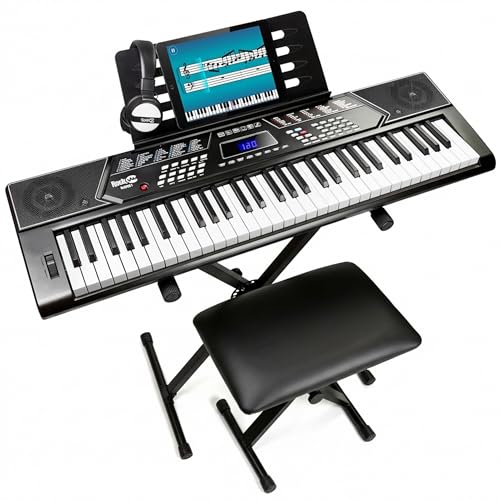
A first keyboard should make learning feel like play, not homework. The best keyboards for kids to learn piano use light-up keys, teaching modes and fun sounds to guide a beginner to their first song, and the six keyboards in this guide all do that job well. Each one has 61 keys, which is the standard beginner size, and each one was checked against the site own product listings for the features that help a child learn: guided keys, teaching modes, demo songs and a microphone for singing along. This guide compares them for parents buying a first instrument, and explains which one suits each kind of child, from the easily bored to the seriously keen. Read the buying guide before ordering, because the right keyboard is the one the child will actually play every day. The sections below also cover how to set up a practice routine, how to keep the keyboard working well, and the mistakes that make children give up, so the instrument you buy becomes the start of a musical habit rather than another forgotten toy.
In this guide
Quick picks: best keyboards for kis to learn
| # | Product | Where to buy |
|---|---|---|
| 1 | Kids Keyboard Piano 61 Light-up Key Electric Piano Blue | Check on Amazon |
| 2 | Hricane Keyboard Piano Lighted Keys 61 Key | Check on Amazon |
| 3 | Kids Piano Keyboard 61 Key Portable Electronic Piano with Teaching Mode | Check on Amazon |
| 4 | MUSTAR 61 Key Piano Keyboard with Lighted Up Keys | Check on Amazon |
| 5 | 61 Key Piano Keyboard Beginner Electronic Keyboard for Kids with Teaching Mode | Check on Amazon |
| 6 | 61 Keys Kid Piano Keyboard with Light-up Keys Teaching Mode Dual Speaker | Check on Amazon |
How the picks were chosen
We started with the site own product listings for keyboards for kids to learn and kept only models that are genuinely built for young beginners: 61 keys, a teaching mode or light-up keys, and a design a child can use without help. That filter removed lesson books, sticker sets and accessories, which are not keyboards, and it removed full-size digital pianos, which are the wrong tool for a first instrument. We then ranked the survivors on four things: how well the teaching features guide a beginner, meaning light-up keys, teaching modes and demo songs; sound quality, because a child who likes the sound practises more; portability and battery options, since a keyboard that moves gets played more; and value for a first instrument that may be outgrown. We also weighed build quality and simplicity, because a first keyboard has to survive daily use by an enthusiastic child and be usable without adult help. No keyboard here was chosen for its looks alone, and the order below reflects what helps a child learn fastest and enjoy it most.
The picks at a glance
| Keyboard | Keys | Light-up keys | Teaching mode | Best for |
|---|---|---|---|---|
| Kids Keyboard Piano, Blue | 61 | Yes | Yes | First keyboard |
| Hricane Keyboard Piano | 61 | Yes | Yes | Whole family |
| Kids Piano Keyboard, Portable | 61 | No | Yes | Travel and portability |
| MUSTAR 61 Key Piano | 61 | Yes | Yes | Daily practice |
| 61 Key Piano Keyboard, 16 tones | 61 | No | Yes | Variety and fun |
| 61 Keys Kid Piano, Dual Speaker | 61 | Yes | Yes | Sound quality |

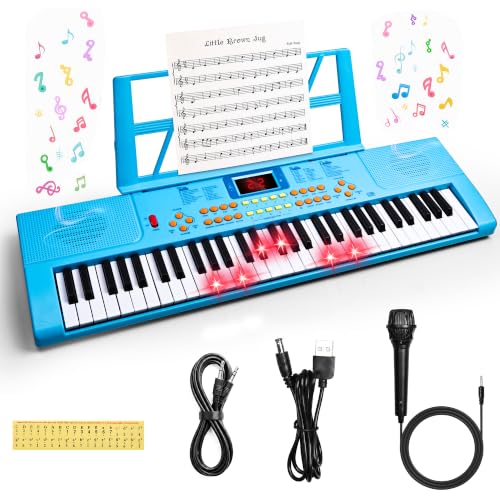
Kids Keyboard Piano, 61 Light-up Key Electric Piano, Blue
Key specs: 61 light-up keys | Electric piano for beginners | Built-in microphone | Musical learning toy | Blue finish
The Kids Keyboard Piano with 61 light-up keys in blue is the top pick in this guide, and it earns that place because the light-up keys solve the hardest part of learning piano: knowing which key to press next. Each key lights up to guide the child through a song, so a beginner can play a recognisable tune on the first day instead of struggling with sheet music. The 61-key layout covers five octaves, which is enough for beginner pieces and for the first years of lessons, and the built-in microphone lets a child sing along or record a performance. The blue finish looks cheerful in a bedroom or playroom, and the keyboard is light enough to move between rooms. For a parent buying a first keyboard for a child, this is the easiest recommendation in the guide.
The light-up keys are the feature that matters most in practice. Children learn by copying what they see, and a key that lights up is a clearer instruction than a note on a page. The keyboard also works as a normal electric piano, so as the child improves, the lights can be switched off and the same instrument supports real practice. The microphone adds a playful element that keeps younger children engaged, and the built-in sounds and rhythms give variety without needing extra equipment. It is a learning toy in the best sense: it teaches real keyboard skills while feeling like play, and it is sturdy enough to survive daily use by an enthusiastic beginner.
The blue Kids Keyboard Piano also works well as a shared family instrument. A younger sibling can use the light-up keys to follow along, an older child can switch the lights off and practise properly, and a parent can use the microphone to sing along. The keyboard is light enough for a child to carry to the living room for a family performance, and the sound is pleasant enough for a small audience. It is the kind of first instrument that creates memories as well as skills, and many families keep it long after the child has moved on to a larger keyboard, because it still works for fun and for younger siblings.
Strengths
- Light-up keys guide beginners to the right notes
- 61 keys cover five octaves for beginner pieces
- Built-in microphone adds singing and recording fun
Trade-offs
- Light-up keys are a learning aid, not a substitute for lessons
- Sound quality is basic compared with larger digital pianos
- Blue finish may not suit every room
Who it fits: Parents buying a first keyboard for a young beginner who learns best by seeing and copying.
Best for: Young beginners who need visual guidance to start playing / Not suited for: Older children ready for graded lessons on a full-size piano
Check price on Amazon: Kids Keyboard Piano 61 Light-up Key Electric Piano Blue

Hricane Keyboard Piano Lighted Keys for Beginner Adults Teens Kids, 61 Key
Key specs: 61 lighted keys | Teaching modes | For beginners, adults, teens and kids | Electronic music keyboard | Portable design
The Hricane Keyboard Piano with 61 lighted keys is the family pick in this guide, built for beginners of every age, from young children to adults and teens. The lighted keys and teaching modes guide a new player through songs step by step, and the 61-key layout is the standard beginner size, large enough for real pieces and small enough to fit on a desk or a table. The teaching modes let a learner practise one hand at a time or follow along at a slower pace, which is how most beginners actually improve. Because it suits adults as well as children, it is the keyboard to buy when a parent wants to learn alongside a child, or when an older child wants an instrument that does not feel like a toy. For a household where more than one person will play, this is the best choice here.
The teaching modes are what set the Hricane apart. A beginner can start with the guide mode, where the lights show each note, then move to a practice mode that waits for the right key, and finally play without guidance as confidence grows. That progression mirrors how a good teacher works, and it keeps the keyboard useful for longer than a toy that only plays demo songs. The keyboard is portable and light, so it can move from a bedroom to a living room, and it runs on batteries or mains power, which suits lessons, travel and holidays. It is a genuine learning instrument for the whole family, not just a child toy, and that versatility is why it ranks so highly here.
The Hricane also suits a parent who wants to learn piano as an adult but has never played. The teaching modes work just as well for an adult beginner as for a child, and the lighted keys remove the embarrassment of not knowing where to start. An adult can practise after the children are in bed, using headphones if the keyboard supports them, and progress at their own pace without a teacher. Sharing the learning journey with a child is one of the best ways to keep both motivated, and the Hricane is the only keyboard in this guide that genuinely serves both generations at once.
Strengths
- Teaching modes guide learners step by step
- Suits beginners of all ages, from kids to adults
- Portable design works in any room and on the move
Trade-offs
- Lighted keys are less useful once a player reads music
- Sound is basic compared with larger digital pianos
- No weighted keys, so the feel differs from a real piano
Who it fits: Families where a child and a parent, or several children, will share one keyboard.
Best for: Families learning piano together at home / Not suited for: Advanced players who need weighted keys and realistic piano action
Check price on Amazon: Hricane Keyboard Piano Lighted Keys 61 Key

Kids Piano Keyboard, 61 Key Portable Electronic Piano with Teaching Mode
Key specs: 61 keys | Teaching mode | Rechargeable | Microphone and recording | Portable electronic piano
The Kids Piano Keyboard with 61 keys and a teaching mode is the portable pick in this guide, and it stands out because it is rechargeable, so it works anywhere without hunting for batteries or a power socket. The teaching mode guides a beginner through songs, the microphone and recording functions let a child hear their own playing back, and the 61-key layout is the right size for a first instrument. Portability matters more than most parents expect: a keyboard that can move to the garden, to a grandparent house or on holiday gets played far more than one that stays in one room. For a child who will practise in different places, or a family that travels, this is the keyboard to buy.
The rechargeable battery is the feature that makes this keyboard practical. There are no batteries to buy and no cable to trip over, and a full charge lasts through several practice sessions. The recording function is a quiet star: hearing their own playing back helps children notice timing and wrong notes far better than being told, and it gives them something to be proud of when they play a song correctly. The microphone adds singing and performance play, which keeps younger children engaged. The keyboard is light and compact, the keys are sized for small hands, and the whole instrument is built to be carried, dropped and used daily, which is exactly what a child first keyboard needs to survive.
The portable keyboard also suits families who split time between two homes. A child can carry the same instrument between houses without a second purchase, and practice stays consistent instead of stopping every time the child changes location. The rechargeable battery means there is no scramble for batteries at the other house, and the teaching mode means the child can practise independently wherever they are. It is the keyboard for real family life, where music happens in different rooms and different houses, and it keeps the learning going through all of it.
Strengths
- Rechargeable battery means no batteries to buy and no cable needed
- Teaching mode plus microphone and recording for real learning
- Light and portable, so it gets played in more places
Trade-offs
- Rechargeable battery needs regular charging
- Sound quality is basic compared with larger instruments
- 61 keys are enough for beginners but not for advanced pieces
Who it fits: Children who will practise in different rooms, at relatives houses, or on holiday.
Best for: Portable learning for children who play in many places / Not suited for: Children ready for graded exams on a full-size piano
Check price on Amazon: Kids Piano Keyboard 61 Key Portable Electronic Piano with Teaching Mode

MUSTAR 61 Key Piano Keyboard, Electric Piano Keyboard with Lighted Up Keys
Key specs: 61 keys | Lighted up keys | Electric piano for beginners | Learning keyboard | Built-in demo songs
The MUSTAR 61 Key Piano Keyboard with lighted up keys is the practice pick in this guide, built around the simple idea that a child practises more when the instrument shows them what to do. The lighted keys guide the player through songs, the built-in demo songs give examples to copy, and the 61-key layout covers the range a beginner needs. The keyboard is straightforward to use, with clear controls that a child can learn in minutes, and it is sturdy enough for daily practice. For a parent who wants a no-fuss first keyboard that a child can use without help, this is the most practical choice here.
The MUSTAR works best as a daily practice instrument. The lighted keys reduce the frustration that makes many children give up in the first weeks, because the child can always see the next note instead of guessing. The demo songs give a target to aim for, and the keyboard sounds are pleasant enough for home practice without annoying the rest of the household. It is not a performance instrument, and it does not pretend to be: it is a learning tool that does one job well, which is to get a child playing real songs quickly and to keep them playing. For the price, it is one of the most effective first keyboards in this guide.
The MUSTAR is also a good choice for a child who takes lessons with a teacher. The teacher can set pieces for the child to practise at home, and the lighted keys help the child find the notes between lessons, so the lesson time can be spent on technique and musicality rather than on note-finding. The keyboard is simple enough that a child can set it up alone, and sturdy enough to survive being carried to a lesson or a practice room. It is not a flashy instrument, but it is a dependable one, and for a family that values steady progress over features, it is the most sensible buy in this guide.
Strengths
- Lighted keys reduce beginner frustration and keep children playing
- Simple controls a child can learn without help
- Demo songs give clear examples to copy and aim for
Trade-offs
- Basic sound compared with larger digital pianos
- No weighted keys, so the touch differs from a real piano
- Light-up guidance becomes less useful as reading improves
Who it fits: Parents who want a simple, sturdy first keyboard a child can use independently.
Best for: Independent daily practice for young beginners / Not suited for: Children who already read music and need a more advanced instrument
Check price on Amazon: MUSTAR 61 Key Piano Keyboard with Lighted Up Keys

61 Key Piano Keyboard, Beginner Electronic Keyboard for Kids with Teaching Mode
Key specs: 61 keys | Teaching mode | 6 demo songs | 16 tones | Microphone included
The 61 Key Piano Keyboard for kids with teaching mode, six demo songs and sixteen tones is the variety pick in this guide, and it earns that title because the sixteen tones keep practice interesting. A child can play the same song as a piano, an organ, a violin or a flute, which turns repetition into exploration and keeps a beginner engaged far longer than a single sound would. The teaching mode guides the player through songs, the six demo songs give examples to follow, and the included microphone adds singing and performance play. The 61-key layout is the standard beginner size, and the keyboard is light enough for a child to carry. For a child who gets bored easily and needs variety to stay interested, this is the keyboard to buy.
Variety is the reason this keyboard works for children who struggle to practise. Sixteen tones mean a scale can be played as a trumpet, a guitar or a music box, and each tone makes the same exercise feel new. The demo songs are simple enough for a beginner to follow and satisfying enough to show off to family, which matters more than adults often realise: a child who can play a song for grandparents will practise far more than one who cannot. The microphone and teaching mode round out a package that is designed around keeping a child engaged, and the keyboard is sturdy enough for daily use. It is the best choice here for a child who needs fun to stay motivated.
The 16-tone keyboard also helps a child discover which sounds they like, which is the first step toward choosing an instrument to study seriously. A child who loves the violin tone may want violin lessons, one who loves the organ tone may enjoy church music, and one who loves the piano tone is ready for piano lessons. The keyboard becomes a sampler of musical sounds, and the teaching mode and demo songs give the child the skills to explore them. It is the most creative keyboard in this guide, and the one most likely to spark a lasting interest in music beyond the piano itself.
Strengths
- 16 tones keep practice varied and interesting
- Teaching mode and demo songs guide beginners clearly
- Microphone included for singing and performance
Trade-offs
- Sound quality varies by tone and is basic overall
- No weighted keys, so the touch differs from a real piano
- Six demo songs may feel limited after months of use
Who it fits: Children who get bored easily and need variety and fun to keep practising.
Best for: Keeping young beginners motivated with varied sounds / Not suited for: Serious students who need realistic piano sound and touch

61 Keys Kid Piano Keyboard with Light-up Keys Teaching Mode Dual Speaker
Key specs: 61 keys | Light-up keys | Teaching mode | Dual speakers | Kid-sized design
The 61 Keys Kid Piano Keyboard with light-up keys, teaching mode and dual speakers is the sound pick in this guide, and the dual speakers are the reason: two speakers give a fuller, clearer sound than the single-speaker keyboards in this price range, so a child hears their playing properly and enjoys it more. The light-up keys guide beginners to the right notes, the teaching mode walks them through songs, and the 61-key layout covers five octaves for beginner pieces. The kid-sized design fits small hands and small rooms, and the keyboard is light enough to move around the house. For a parent who wants a first keyboard that sounds good as well as teaches well, this is the best choice here.
Sound quality matters more than most buyers expect in a first keyboard, because a child who likes what they hear will play more. The dual speakers give the sound body and clarity that a single small speaker cannot, and the difference is obvious in a quiet room. The light-up keys and teaching mode handle the learning side, guiding the child through songs until the notes become familiar, and the keyboard is simple enough for a child to switch on and start playing without help. It is a well-balanced first instrument: good sound, clear guidance and a size that suits a child, at a price that suits a parent who is not yet sure the interest will last.
The dual-speaker keyboard is also the best choice for a child who will perform for family and friends. The fuller sound carries across a room, so a small audience can hear the playing properly, and the child feels like a real performer rather than someone playing a toy. The light-up keys give confidence before a performance, because the child can follow the lights even if nerves make the notes hard to remember. It is a small thing, but it makes the difference between a child who enjoys performing and one who dreads it, and that confidence is worth as much as any feature on the specification sheet.
Strengths
- Dual speakers give fuller, clearer sound than single-speaker models
- Light-up keys and teaching mode guide beginners step by step
- Kid-sized design suits small hands and small rooms
Trade-offs
- No weighted keys, so the touch differs from a real piano
- Dual speakers use more power than a single speaker
- 61 keys are enough for beginners but not for advanced pieces
Who it fits: Parents who want a first keyboard that sounds good and teaches well.
Best for: Young beginners who need good sound and clear guidance / Not suited for: Advanced students who need weighted keys and a full 88-key range
Check price on Amazon: 61 Keys Kid Piano Keyboard with Light-up Keys Teaching Mode Dual Speaker
Buying guide: best keyboards for kids to learn
Start with the keys. Sixty-one keys is the right size for a first keyboard: it covers five octaves, which is enough for beginner pieces and the first years of lessons, while staying light and portable. Eighty-eight keys is the full piano range, but it makes the keyboard heavy, expensive and harder for small hands to manage, so save it for later. Next, look at the teaching features. Light-up keys are the single most useful feature for a young beginner, because they show the child which key to press next without needing to read music. A teaching mode that waits for the right note is the next best thing, and demo songs give the child a tune to aim for. Then consider sound. More tones mean more variety, and dual speakers sound fuller than a single speaker, which matters because a child who enjoys the sound practises longer. Portability is the next question. A rechargeable keyboard or one that runs on batteries can be played anywhere, while a mains-only keyboard stays in one room, and the portable one usually gets played more. Check the size and weight too: a keyboard a child can carry is a keyboard that gets used, while one that needs an adult to move it often stays in a corner. Finally, think about the future. A first keyboard should last two or three years of learning, and by then the child will know whether to move to a larger instrument with weighted keys.
A final buying note concerns expectations. A beginner keyboard is a learning tool, not a performance piano, and it will not sound or feel like a real piano. That is fine: the goal is to teach notes, rhythm and the habit of practice, and these keyboards do that well. Avoid buying the most expensive first keyboard in the hope that it will make a child practise; motivation comes from fun, variety and early success, not from price. Also check the listing carefully before ordering, because similar keyboards share names and the exact model matters: confirm the key count, the teaching mode and the light-up keys in the listing. And if you are torn between two keyboards, choose the one with light-up keys, because visual guidance is the feature that helps a young beginner most in the first weeks.
How to use and care for your pick
A child keyboard needs little maintenance, but a few habits keep it working well. Keep it in a dry room away from direct sunlight, since heat and damp can damage the electronics and fade the finish. Wipe the keys with a dry or slightly damp cloth now and then, and keep food and drinks away from the keyboard, because crumbs and spills find their way between keys faster than most parents expect. If the keyboard is rechargeable, charge it on a schedule rather than waiting for it to die mid-practice, and if it uses batteries, remove them when the keyboard will not be used for weeks, since leaking batteries damage the contacts. Store the keyboard flat or on a stand rather than leaning against a wall, where it can fall, and keep the microphone and any cables in a pouch so they do not get lost. Check the keys now and then for sticking or silence, and clean gently around a sticky key with a dry cloth before assuming the keyboard is broken. With that care, a good beginner keyboard will last through the first years of learning.
The learning side deserves as much attention as the hardware. Set a short daily practice time, even ten minutes, rather than a long session once a week, because regular short practice builds skill far faster. Let the child play the demo songs and explore the tones, since play is how children learn, and celebrate the first full song, because early success is what keeps a child going. If the child loses interest, try a new tone, a new song or a duet with a parent, rather than insisting on the same exercise. And when the child outgrows the keyboard, pass it on to another beginner rather than throwing it away, since a first keyboard that taught one child can teach another.
Common mistakes to avoid
The most common mistake is buying a full-size 88-key piano as a first instrument. It is heavy, expensive and intimidating for a small child, and most beginners never use the extra keys in their first years. Start with 61 keys and upgrade later if the interest lasts. The second mistake is buying a keyboard without light-up keys or a teaching mode, and then wondering why the child cannot work out which key to press. Guidance is the whole point of a beginner keyboard. The third mistake is expecting a beginner keyboard to sound like a real piano. It will not, and judging it by that standard misses the point: it is a learning tool, and its job is to teach notes and rhythm. The fourth mistake is practising in long, infrequent sessions instead of short, daily ones, which is slower and more frustrating for the child. The fifth mistake is buying batteries or a charger as an afterthought, and then finding the keyboard cannot be used on the day it arrives. Finally, many parents forget to check the key count in the listing, and end up with a 37-key toy that is too small for real learning.
Another common error is treating the keyboard as a toy rather than an instrument. A child who is allowed to explore the sounds, play along with demo songs and perform for family will learn faster than one who is only allowed to do exercises. Parents also underestimate how much the microphone matters: singing along helps a child learn pitch and rhythm, and it makes practice feel like a performance rather than a chore. And many buyers forget the stand: a keyboard played on the floor or on a bed is uncomfortable and discourages practice, while a small table or stand at the right height makes a real difference.
Our final recommendation
For most parents, the Kids Keyboard Piano with 61 light-up keys in blue is the right buy. It combines visual guidance, a 61-key layout, a microphone and a cheerful design at a fair price, and it is the keyboard most likely to get a young beginner playing a real song on the first day. If the whole family will play, buy the Hricane, which suits adults and teens as well as children. For travel and portability, buy the rechargeable Kids Piano Keyboard, and for variety, buy the 16-tone model, which keeps easily bored children engaged. The MUSTAR is the pick for simple daily practice, and the dual-speaker model is the pick when sound quality matters most. Whichever keyboard you choose, confirm the listing names the exact model with 61 keys and a teaching mode before ordering.
Frequently asked questions
How many keys should a beginner keyboard for kids have?
61 keys is the right size for a first keyboard. It covers five octaves, which is enough for beginner pieces and the first years of lessons, while staying light and portable for a child.
Do light-up keys really help children learn piano?
Yes. Light-up keys show the child which key to press next, so a beginner can play a recognisable song on the first day without reading music. As the child improves, the lights can be switched off.
What is the difference between a teaching mode and demo songs?
A teaching mode guides the player note by note and often waits for the right key, while demo songs play a tune for the child to listen to and copy. Both help, and the best beginner keyboards have both.
Should I buy a keyboard with a microphone?
A microphone adds singing and performance play, which keeps younger children engaged and helps them learn pitch and rhythm. It is a useful feature, though not essential for learning notes.
When should a child move to a full-size piano?
When the child reads music confidently, practises regularly and needs more than 61 keys or weighted keys for graded lessons. For most children that is after two or three years on a beginner keyboard.
Are rechargeable keyboards better than battery ones?
Rechargeable keyboards save money on batteries and work anywhere without a cable, which suits travel and different rooms. Battery models are simpler but need regular battery changes.
Can adults learn on a kids keyboard?
Yes, and models like the Hricane are designed for beginners of all ages. A 61-key keyboard with teaching modes works well for an adult beginner, though an adult may outgrow it faster than a child.
What should I check before ordering a keyboard for kids?
Check three things in the listing: the key count should be 61, the keyboard should have a teaching mode or light-up keys, and the model name should match exactly. Similar keyboards share names, so the exact listing matters.