kajuandouglas.com is reader-supported. When you buy through links on our site, we may earn an affiliate commission.
Where to Buy
Seven hundred dollars is the most interesting neighbourhood in the camera market, because it is where compromise stops being a personality trait. The best cameras under 700 dollars, as this guide assembles them, include genuine interchangeable-lens platforms, premium compacts with serious glass, and action cameras of professional stamina — while the step-up options, clearly labelled wherever they appear, show exactly what a modest stretch buys and whether your photography would ever notice. No individual product prices are printed here, in line with this site’s practice; the $700 figure is treated as the budget frame your search named, and each pick is positioned honestly inside it or flagged as a step-up beyond it.
Read the frame as a system budget, not a body budget, and the guide’s advice sharpens. A platform bought at the frame’s edge with nothing left for a card, a spare battery, or the lens the work actually needs is a poorer purchase than a slightly humbler body with its companions funded. Several picks below were ranked partly on how gracefully they leave room for those companions, because a camera’s first month teaches more about value than any specification comparison.
Street prices move with seasons and sales, so treat the frame as a discipline rather than a guarantee: verify the current figure at purchase, count the whole kit, and let the step-up labels do their honest work. A pick labelled step-up is not a trick to spend your money; it is information, offered so the decision to stretch — or to refuse — is made with eyes open and priorities named.
Key Takeaways
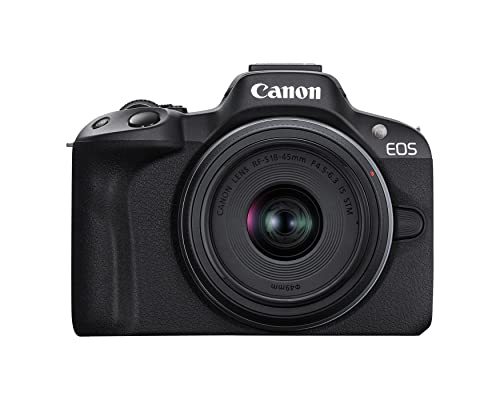
- Canon EOS R50 is the balanced platform pick: kind colour, guided handling, and a lens path ahead.
- Nikon Z30 serves long-form video and calm desk work while leaving budget for sound and light.
- Sony ZV-1F keeps the whole purchase simple for creators who want one finished, pocketable tool.
- Canon PowerShot G7 X Mark III suits solo filming and low-light social photography inside a compact body.
- GoPro HERO12 Black covers the active, wet, mounted side of life no other pick here attempts.
- Sony ZV-E10 II is the labelled step-up: the growth platform for buyers whose ambitions justify stretching.
In this guide
Quick Picks
| Badge | Pick | Why it stands out |
|---|---|---|
| Best Balanced Platform | Canon EOS R50 | A growing mirrorless system with forgiving handling and flattering colour. |
| Best for Long-Form Video | Nikon Z30 | Patient recording manners and value that leaves room for audio. |
| Best Simple Creator Compact | Sony ZV-1F | Fixed-lens ease for frequent filming without a system to build. |
| Best Premium Compact | Canon PowerShot G7 X Mark III | Bright lens, flip screen, and friendly faces in ordinary light. |
| Best for Action and Travel Abuse | GoPro HERO12 Black | Waterproof, mountable, and steady under genuinely rough use. |
| Step-Up: Best Growth Platform | Sony ZV-E10 II | Step-up choice for product focus, lens depth, and monitored audio. |
How We Chose These Picks
Whole-kit arithmetic governed the selection. Each candidate was costed in the mind as a working outfit — body, the lens it actually ships with or needs, a card, a spare battery where experience demands one — and ranked on what that outfit delivers inside the $700 frame rather than on a bare body’s promise. Outfits that consumed the frame and still lacked the means to work were demoted, however glamorous their headline specifications.
Versatility across a first serious year was the second test. A camera at this level should survive its owner’s education: the portrait phase, the travel phase, the video experiment, the evening where light fails and the camera must not. Picks were favoured for forgiving autofocus, honest colour without a grading apprenticeship, and at least one clear direction of growth — a lens, a microphone, a mount — that does not require starting again.
The step-up discipline was applied last and labelled plainly. One pick sits beyond the frame because its platform value is the strongest argument in the guide for stretching, and hiding it would have served tidiness at the reader’s expense. It is flagged in the table, in its heading section, and in the recommendation, so no reader can mistake its position relative to the $700 line.
What Should a $700 Frame Actually Buy You?
It should buy the end of apology. Cameras in this territory focus reliably on eyes, record video a family can watch on a television without wincing, handle an ordinary room’s light without collapsing into noise, and arrive with colour that flatters people before any editing. A purchase here is not a toy, a stopgap, or a lottery ticket; it is a tool a beginner can grow on for years and a returning photographer can respect immediately.
It should also buy a future. The interchangeable picks open lens catalogues in which a wider view for small rooms, a faster prime for evenings, and a longer reach for distance all wait at sane intervals of saving. The fixed-lens picks buy a different future — mastery without expenditure, a single viewpoint learned deeply — which suits some photographers better than any catalogue. Either way, the frame’s real product is trajectory: what the second year looks like from here.
What it should not buy is a bare flagship fantasy. Stretching the entire frame onto a body alone, then borrowing a lens and rationing a single small card, produces a miserable first season and a camera that gets sold rather than grown into. The guide’s rankings quietly punish that pattern wherever it appears, and reward the outfits whose owners will be photographing happily in month two instead of shopping again in it.
Finally, the frame should buy honesty about specialisation. At this level, the action camera, the premium compact, and the mirrorless platforms are all genuinely excellent — at different jobs. The remaining sections keep returning to the job question, because at $700 the costliest mistake is not overpaying; it is buying a superb answer to a question your life never asks.
How Do You Divide the Frame Between Body, Lens, and Companions?
Reserve the companions first, in the mind if not yet in the basket: storage enough for a full day, a spare battery for any interchangeable body, a strap and a simple case, and — for anyone filming spoken work — the first real microphone, which audiences will appreciate sooner than any lens. A kit list written before the body is chosen disciplines the body choice automatically, because the frame’s remainder, honestly computed, is the true body budget.
Between body and lens, follow the work. Portrait and family photographers gain more from a faster prime than from a grander body behind a slow kit zoom; travellers gain more from a versatile zoom range than from either; video-led creators gain most from the body whose focus, screen, and audio pathway serve the filming day. There is no universal split, and any guide offering one is selling arithmetic instead of judgement — name your dominant job and the split names itself.
Leave a small reserve unallocated on purpose. The first month of real use always discovers one missing item — the reader for an older card format, the step-up ring, the second battery the manual understated — and a reserve converts that discovery from a crisis into a errand. Photographers who spend the frame to its last unit in week one spend week three annoyed; photographers who keep the reserve spend week three photographing.
Revisit the division at the season’s end with evidence in hand. The frames you actually made, the light that actually defeated you, and the accessory you actually borrowed three times together compose the only trustworthy brief for the next purchase. That habit — budget as a living document rather than a single event — is worth more than any individual pick in this guide, and it begins with the honest whole-kit counting this section describes.
Which of the Best Cameras Under 700 Dollars Fits Your Work?

Canon EOS R50 — Best Balanced Platform
Balance, at this frame, means a camera that refuses to punish any of the jobs a first serious year contains, and the R50 is the guide’s clearest example. Its guided handling teaches while it works, its autofocus minds faces through family chaos and filmed monologues alike, and its colour — warm, kind, recognisably human under household light — means the photographs a beginner shares in month one already look like the photographer intended them to. Confidence is a technical resource in a learning year, and this body manufactures it steadily.
The platform beneath the kindness is the purchase’s long argument. Canon’s RF mount offers an affordable wide for small rooms, a fast prime for evening portraits, and a telephoto future for the school-play and wildlife phases, each climbable without changing bodies or relearning a system. A buyer inside the $700 frame today is therefore also buying the map of their next three years, drawn by a maker whose lens shelf keeps widening.
Video creators are served as first-class citizens rather than as an afterthought: a flip screen for solo framing, vertical options for the short clips that advertise longer work, webcam behaviour for live sessions, and files that need so little correction that a weekly publishing rhythm survives contact with a day job. Families who film as much as they photograph will find no awkwardness in the double duty.
Keep the honest caveats in view. A spare battery belongs in the kit budget from day one, the kit lens is a capable teacher rather than a low-light hero, and stabilisation leans on lens and technique for walking footage. None of these dents the verdict for the frame’s typical buyer — a person or family wanting one growing camera for faces, places, and films — for whom the R50 is the most defensible single answer in this guide.
Long-session behaviour seals the recommendation. Settings stay where they were left, focus remains honest through repeated takes, and the body stays comfortable across a content day or a long celebration. Equipment that behaves identically on the fiftieth frame and the first is what turns a purchase into an instrument, and instruments, unlike gadgets, get picked up daily — which is where all photographic improvement actually lives.
- Sensor: APS-C, Canon RF mount
- Colour: flattering skin tones in home light
- Handling: guided menus for learning owners
- Video: flip screen, vertical, webcam behaviour
- Growth: affordable lens staircase in RF mount
Strengths
- Balanced excellence across stills and video
- Colour and guidance build a beginner’s confidence
- A platform that grows for years inside the system
Trade-offs
- Spare battery should be budgeted immediately
- Kit lens is a teacher, not an evening hero
- Walking stabilisation needs technique
Best for: families and growing creators wanting one balanced platform. Not suited for: action specialists or fixed-lens minimalists.

Nikon Z30 — Best for Long-Form Video
Duration is a genre, and the Z30 is its citizen. Built with extended recording in its brief — a tally lamp that confirms the session is alive, a flip screen for the solo presenter, webcam fluency for the live cousin of the recorded lesson — it serves the video podcast, the calm tutorial, the study session, and the two-person conversation with a patience the flashier bodies rarely match. At this frame, its value arithmetic is the other half of the appeal: money not spent on spectacle remains available for the microphone and the light by which long-form work is actually judged.
Nikon’s colour flatters faces across long conversations without drifting into cosmetics, and the Z mount’s compact primes suit the small rooms where most long-form work is filmed. A creator can begin sensibly, add the wider lens a cramped desk demands, and keep the same body at the centre for years, because the format’s demands — stamina, sound, consistency — were the design’s starting point rather than its stretch goal.
Desk ergonomics reward the one-person production company. The grip suits the handheld introduction filmed standing, the controls behave as experience expects, and the body occupies a desk without annexing it, leaving room for the notes, the product, and the second coffee that long sessions run on. Batch days of conversations proceed with the camera as the least demanding participant in the room, which is precisely the temperament the genre pays for.
State the boundaries as plainly as the virtues. The DX lens shelf is narrower than its Sony and Canon rivals’, stabilisation depends on the lens, and fast-moving or cinematic briefs will find the body’s ceiling sooner than its rivals’. For the patient formats — the ones whose audiences arrive with tea and stay for the argument — the Z30 inside this frame is not a compromise but a correct answer, with budget left over for the sound that makes it sing.
That leftover is worth dwelling on, because it is this pick’s quiet superpower. Long-form channels live or die by voice clarity and room tone, and a body that funds its own microphone and a soft light out of the same frame will sound more professional in week one than a costlier body recording through its built-in microphones in a bare room. Buyers who understand that arithmetic tend to keep their first body for a very long time.
- Sensor: APS-C, Nikon Z mount
- Design: tally lamp and flip screen for creators
- Recording: long-form and webcam-friendly manners
- Audio: microphone input for the essential upgrade
- Value: leaves frame room for sound and light
Strengths
- Long sessions handled with unusual calm
- Natural colour across extended conversations
- Budget headroom funds microphone and light
Trade-offs
- Narrower lens catalogue than its rivals
- Stabilisation is lens-dependent
- Not aimed at fast or cinematic formats
Best for: podcasters, tutors, and long-form video creators. Not suited for: action, travel-action, or lens collectors.

Sony ZV-1F — Best Simple Creator Compact
Simplicity is a feature with a price, and inside this frame the ZV-1F spends nothing on anything else. A fixed wide lens composed for a face at arm’s length and the life around it, automatic focus care, a screen that faces the speaker, and footage that arrives bright and finished — the camera removes the entire category of equipment decisions from a creator’s week, and for a certain kind of frequent, personal channel that removal is worth more than any lens mount.
Its wide framing suits the geography of everyday filming: kitchens, market lanes, campus corners, the passenger seat’s travel update. Backgrounds stay legible, which serves location and story; faces stay clear, which serves the audience’s attachment; and the whole apparatus fits a pocket, which serves the only metric that ultimately decides a personal channel’s fate — whether filming happened today.
A microphone socket keeps the simplicity honest rather than terminal. Begin on the built-in microphones, tuned for a clear voice at vlogging distance, and graduate to a first external microphone when busy locations start taxing the built-in pair — the single upgrade audiences notice most, available without replacing the camera. Inside the $700 frame, that staircase means the purchase keeps improving after the box is recycled.
Know the ceiling without resentment: no lens growth, no monitoring, evenings handled willingly rather than brilliantly, and a stills performance that serves the feed without challenging the platforms. A buyer whose life matches the brief — frequent, personal, filmed on the move — gets a tool of rare completeness for its simplicity. A buyer planning a studio should read on to the platforms and step-up rows, where their ambitions are properly housed.
There is a budgeting elegance here that deserves explicit praise. One purchase, no lens queue, no system anxiety, and the frame’s remainder free for the microphone, the small light, and the trips themselves. For creators whose content is their life rather than their studio, that elegance is not a lesser allocation of the $700 — it is arguably its wisest.
- Optics: one wide fixed lens framed for arm’s-length work
- Handling: minimal decisions, automatic care
- Files: bright, finished look with little editing
- Audio: microphone input for the first upgrade
- Budget: one purchase, remainder free for sound
Strengths
- Filming friction close to zero, daily
- Wide framing suits travel and lifestyle work
- Sound improves later without a new camera
Trade-offs
- No growth path within the body
- Low light is willing, not brilliant
- No headphone monitoring
Best for: frequent personal creators filming life on the move. Not suited for: studio builders or lens-based growth plans.

Canon PowerShot G7 X Mark III — Best Premium Compact
The premium compact’s argument is that a serious sensor and a bright lens can live in a coat pocket, and the G7 X Mark III makes that argument with unusual charm. Its lens gathers generous light at the wide end where social photography lives — the restaurant table, the evening street, the friend’s kitchen — and Canon’s colour renders the faces in those places the way memory wishes they looked, warmly and clearly, with so little editing that same-night sharing stays a habit rather than a project.
Solo filmmakers adopted this line for reasons that remain sound: the flip screen for self-framing, the microphone input for a proper voice, and handling simple enough to operate while the other hand holds the story together. A travel or lifestyle creator whose studio is wherever they are standing gets a complete filming companion that never once asks for a camera bag, and that absence of luggage quietly doubles the footage a trip produces.
Stills photographers receive the larger share of the sensor’s gifts. Detailed landscapes, lively interiors, and burst shooting for street moments all sit comfortably inside its brief, and the files reward printing at the sizes family walls actually use. Reach, admittedly, is modest, and a distant tower will stay a distant tower; the compensation is low-light character at social distances that leads this guide’s compact class.
Inside the $700 frame, its proposition is completeness without system: one purchase, no lens decisions, the remainder available for the microphone and the small tripod that solo work rewards. Carry a spare battery, treat it kindly in rain, and it becomes the camera its owners actually have with them — the oldest and most reliable predictor of whose album wins the year.
Compare it honestly with its Sony neighbour in this guide before choosing. The ZV-1F is simpler and wider in spirit; this Canon is the more photographic instrument, with the brighter lens and the richer stills. Creators who film constantly and photograph seriously will feel the difference in the evening files; creators who film casually and photograph rarely should save the difference and take the simpler tool with a clear conscience.
- Imaging: one-inch sensor behind a fast, bright lens
- Screen: flips upward for self-filming
- Colour: flattering faces across mixed light
- Audio: microphone input for clearer narration
- Carry: pocketable, no system to build
Strengths
- Evening social photography of real quality
- Complete solo filming in a pocket body
- Files need almost no correction
Trade-offs
- Shorter zoom reach than some rivals
- No weather sealing for wet itineraries
- Battery life rewards a spare
Best for: solo creators and social photographers wanting pocket quality. Not suited for: distant wildlife or interchangeable-lens ambitions.

GoPro HERO12 Black — Best for Action and Travel Abuse
Every guide needs one pick that laughs at the others’ care instructions, and here it is. The HERO12 Black is waterproof without a housing, mountable to helmets, handlebars, boards, and boats, and stabilised so effectively that rough trails and choppy water return as watchable, detailed footage. Inside the $700 frame it buys something no mirrorless body at any price in this guide can offer: the participant’s own viewpoint, recorded from inside the activity rather than from the safety of its edge.
Its wide field of view forgives the aiming that active filming makes impossible, and its simple, glove-tolerant operation — voice control included — respects the fact that its owner’s hands are busy surviving the content. Families mount it on a child’s bicycle helmet, travellers fix it to a kayak’s bow, and creators wear it through the obstacle course, and in each case the resulting footage has an immediacy that staged cameras imitate without ever quite achieving.
Use its stills and its evenings with realistic expectations. Grabbed frames and bright scenic shots serve the album well, but low light and quiet interior photography belong to the compacts and platforms in this guide, and no honest review should pretend the action brief secretly includes them. The HERO12’s excellence is specialised, and specialisation at this frame is a virtue when the buyer’s life actually contains the speciality.
Budget its companions with the same honesty: mounts for the activities you truly do, spare batteries for cold and altitude, and protection for the lens that lives dangerously by design. So equipped, it becomes the second camera of photographers and the only camera of adventurers, and in either role it earns the frame’s money in footage nothing else in the household could have captured.
Longevity deserves a closing note, because action gear lives hard. This line’s ecosystem of mounts, cases, and replacement parts is deep and widely stocked, which means the camera bought inside this frame can be maintained, re-mounted, and re-purposed for years of changing hobbies. A tool that survives its owner’s enthusiasms — from cycling phase to surf phase to family phase — repays its budget in a currency specification tables never list.
- Body: waterproof action design, widely mountable
- View: very wide, forgiving of rough aiming
- Stabilisation: strong smoothing for motion
- Control: voice commands for busy hands
- Ecosystem: deep mount and accessory support
Strengths
- Footage from inside sports and water
- Survives handling that ends other cameras
- Mounts for nearly every activity imaginable
Trade-offs
- Evenings and interiors are not its brief
- Stills serve rather than star
- Cold long days demand spare batteries
Best for: active travellers, sports families, and adventure creators. Not suited for: portrait, evening, or studio-led photography.

Sony ZV-E10 II — Step-Up: Best Growth Platform
Step-up label, stated without decoration: this pick sits beyond the $700 frame as a body, and it is included because it is the strongest argument in the guide for the buyer whose ambitions have already outgrown a first camera’s brief. Its creator engineering is the most complete here — focus that holds a face and glides to a presented product, a screen that faces the solo presenter, background control for instant production value, and an audio pathway with input, monitoring, and a cable-free digital shoe that no in-frame rival matches whole.
The growth case is the E-mount catalogue, the deepest lens shelf available to any pick in this article. A channel or a portrait practice can climb from kit lens to room-sized wide to evening prime to rented speciality glass without ever changing bodies or relearning a system, and that continuity compounds: every habit, accessory, and saved configuration survives each upgrade. Buyers paying the step-up premium are purchasing that compounding, and for a working creator it can be the cheapest money in the whole decision.
Judge the stretch by evidence, not by appetite. The buyer who already films products weekly, already borrows lenses, already monitors audio and finds the current tool wanting has a diagnosis the step-up answers. The buyer imagining those activities has a hope, and hopes are better funded inside the frame — the R50 will teach the same lessons, and its platform can be sold onward when the diagnosis becomes real. This guide labels the step-up precisely so that distinction stays visible at the moment of temptation.
Concede the platform’s familiar costs alongside its premium: no in-body stabilisation, menus that reward an evening’s study, a compact grip, and a lens appetite that will visit the budget again. None of that diminishes the body; it defines the owner it suits. That owner — producing, presenting, and planning a second year before the first has ended — will find the ZV-E10 II the least likely purchase in this guide to be replaced for any reason short of triumph.
Everyone else should take the label as permission rather than pressure. A step-up pick in a budget guide exists to mark the horizon honestly, so the in-frame choice can be made without the nagging suspicion that something better was hidden. It was not hidden; it is here, priced beyond the line, labelled at every mention, and recommended only to the readers whose evidence calls for it. The rest of the guide — five complete answers inside the frame — is where most readers’ money belongs, and it belongs there proudly.
- Sensor: APS-C, Sony E-mount — step-up beyond frame
- Focus: face tracking with product showcase shifts
- Audio: input, monitoring, and digital shoe
- Catalogue: the deepest lens shelf in this guide
- Label: step-up pick — verify current pricing carefully
Strengths
- Growth in every direction from one body
- Product presentation focus leads the guide
- Audio pathway matures with a working channel
Trade-offs
- Sits beyond the $700 frame as labelled
- Walking footage needs technique or support
- Lens catalogue invites future spending
Best for: working creators with evidence their current tool limits them. Not suited for: buyers whose $700 frame is firm or whose needs are still forming.


