kajuandouglas.com is reader-supported. When you buy through links on our site, we may earn an affiliate commission.
Where to Buy a Porch Camera, and What Actually Stops a Package Thief
The best cameras for porch pirates start from an uncomfortable finding that honest security advice has repeated for years: a camera alone rarely stops a determined thief, but a camera in the right system changes the odds at every stage. It deters the opportunist who glances up and keeps walking. It captures the face, the clothing and the vehicle of the one who does not glance up. And it gives you a timestamped clip that a delivery company, a neighbour group or a police report can actually use. Six cameras are ranked below by how well they serve those three jobs on a real porch — not by spec-sheet drama.
Porch piracy is a crime of seconds and habits. The thief follows a delivery van’s rhythm, walks a practised casual line to your door, and is gone before your phone buzzes. Beating that rhythm is a placement and settings game as much as a hardware game: the camera must see faces rather than the tops of heads, it must notice a person approaching rather than a lorry passing, and it must alert you while the event is still an event rather than archaeology. Every pick below was judged against that ten-second window.
There is also a defensive layer no camera provides, and a trustworthy guide should name it: give parcels somewhere to go. A delivery box, instructions to leave packages behind the side gate, collection points for the expensive orders — these unglamorous arrangements remove the prize, while the camera removes the anonymity. The households that stop losing parcels almost always run both layers. Buy the camera for evidence and deterrence; arrange the deliveries so the evidence is rarely needed.
One expectation to set before the picks: the camera pool for this guide is a consumer pool of home cameras, not professional surveillance kit, and none of these models reads number plates at distance or sees through a disguise. What they do — reliably, cheaply, and with footage you control — is watch a porch properly. For the ordinary residential street where porch piracy actually happens, watched properly is what wins.
Key Takeaways
- Deterrence, face-level footage and fast alerts matter more than raw resolution on a porch.
- The Wyze Cam v4 leads for continuous local recording of the doorstep around the clock.
- The Blink Outdoor 4 watches a porch for months on one set of batteries.
- The REOLINK Argus PT Ultra covers wide driveways and corner lots with a panning eye.
- Mount at face height near the door — a camera above the door films hats, not faces.
- Pair any camera with a delivery plan: a box, a side gate, or collection for valuables.
In this guide
Quick Picks
| Camera | Badge | Why it works against porch piracy |
|---|---|---|
| Wyze Cam v4 | Best overall doorstep watch | Continuous local recording and colour night vision at the door that matters most. |
| Blink Outdoor 4 | Best battery porch camera | Months of wire-free watching with a local storage option through its hub. |
| REOLINK Argus PT Ultra | Best for wide approaches | A 4K pan-tilt eye that follows movement across a drive or corner plot. |
| eufy 4K Indoor Camera E30 | Best through-the-window view | 4K detail from inside, aimed through glass at the step where parcels land. |
| TP-Link Tapo C210 | Best indoor backup angle | Pan-tilt coverage of the hall and door interior for a second viewpoint. |
| Blink Mini 2 | Best budget window camera | A small plug-in camera that watches the porch from a front window sill. |
How Did We Choose These Cameras for Porch Protection?
We began where the crime begins: the approach. A porch camera earns its place by what it captures between the pavement and the door, so we weighted field of view, mounting flexibility and the ability to keep a walking person framed and recognisable. Cameras that only shine in a showroom sense — enormous resolution pointed at the wrong height — fell behind cameras that simply see the right things.
Alert speed was the second filter. A notification that arrives after the thief has turned the corner is a history lesson; one that arrives as they reach the step is a tool, because a voice through a camera speaker or a shout from an upstairs window ends most attempts on the spot. We favoured cameras with person detection that trims the flood of car-and-tree alerts, since an owner who mutes a noisy camera has no camera at all.
Recording reliability came third, and it is where local storage quietly matters. A camera that records to its own card keeps the evidence even if the Wi-Fi stumbles at the wrong moment, and footage that lives in your house cannot expire on a cloud plan’s rolling window the week you finally file the report. Every pick here has a local recording path; where a brand’s best detection features sit in an optional plan, we say so in its review.
Finally we considered the porch as architecture. Renters cannot drill; owners of stone cottages should not. Heritage doors, uPVC frames, flats with a shared hallway — the six picks span battery, plug-in, indoor-through-glass and pan-tilt shapes precisely so that one of them fits the building you actually live in, because the best porch camera is the one your porch allows you to mount.
Where Exactly Should a Porch Camera Point?
Face height is the whole secret, and most porches get it wrong. The instinct to mount high — out of reach, wide view — produces footage of caps, hoods and the tops of heads, which identifies nobody. A camera mounted roughly at the height of a face, near the door or angled across the step, trades a little panorama for a great deal of identity. Thieves know this, which is why the visible camera at face height is also the strongest deterrent on this page.
Angle across the approach rather than straight down it. A camera looking along the path — from a side wall, a porch post, the frame of a bay window — keeps a walker in frame for the full approach and catches the profile and the face as they turn toward the door. The straight-on view from above the door compresses that same walk into three seconds of forehead. Ten extra seconds of recognisable footage is the difference between a clip neighbours can act on and a clip everyone shrugs at.
Mind the light you already have. A porch light left on or on a sensor transforms night footage, especially for the cameras here with colour night modes; backlight is the enemy, so avoid aiming a camera from a dark porch into a bright street if a side angle exists. Then test like an adversary: walk your own path at a thief’s pace, in a hood, at dusk, and watch the footage with a stranger’s eyes. If you could not describe the walker, move the camera — not the expectations.
Cover the parcel’s resting place, not just the door. Packages land on steps, beside planters, behind bins where drivers think they are hiding them. Your camera’s frame should include the two or three spots your regular drivers actually use, because the snatch happens at the resting place, and a frame that ends at the doorbell misses the hand that matters.
What Else Actually Reduces Package Theft?
Visibility is a strategy, not an accident. A camera the thief sees while still on the pavement works before any crime occurs, which is why this guide is relaxed about discreetness on a porch — save hidden cameras for other problems. A small sign noting recording, a camera at obvious face height, a porch light that answers movement: each one raises the effort-and-risk calculation, and porch piracy is a business run on low effort and low risk.
Delivery instructions are free security. Every major carrier lets you specify a location, and “behind the side gate”, “inside the porch box” or “to the neighbour at number twelve” each remove the visible prize that draws the follower of delivery vans. For the genuinely valuable order, collection points and lockers end the game entirely — no parcel on a porch has ever been stolen from one. The camera then guards the ordinary flow, which is a fight it can win.
Neighbourhood signal matters more than any single gadget. A street where clips get shared, where the same coat gets recognised across three porches, where reports actually get filed with footage attached, becomes a street the van-followers learn to skip. Your camera’s footage has a second life in that network — which is another reason to prefer cameras whose clips are easy to export and share rather than trapped in an expiring cloud window.
And keep the response proportionate and legal. Cameras on your own porch filming the approach to your own door are ordinary home security in most places, but point them at your property rather than into a neighbour’s windows, and let the footage do the talking with carriers and police rather than confronting anyone yourself. The goal is a boring porch where nothing happens — the camera’s job is to keep it boring.

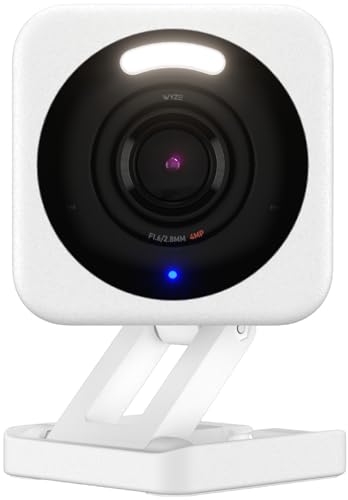
Wyze Cam v4 — Best overall doorstep watch
The Wyze Cam v4 takes the lead because the porch is where continuous recording stops being a luxury. Motion-triggered cameras clip the world into events, and events have edges — the walk-up misjudged, the trigger late, the crucial first seconds missing. The v4 can simply record, around the clock, to its own microSD card, in sharp 2.5K with colour night vision that keeps a coat’s colour and a car’s colour truthful after dark. When something happens at your door, the whole story is there, not a trailer for it.
Its practical porch manners are strong. The body is compact and weather-resistant enough for a sheltered porch or eaves mount, the spotlight and siren features give the alert moment some teeth — a light and a voice challenge end many attempts mid-stride — and person detection keeps notifications meaningful. Wyze offers an optional plan with richer detection, and the app will suggest it, but the local recording foundation does not depend on it.
The compromises are wiring and ecosystem. It needs mains power, so its home is within a cable’s reach of a socket or a drilled route, and it is a Wi-Fi device whose good behaviour depends on your signal at the door — test before you mount. Its footage is reviewed in Wyze’s app rather than a general recorder, the standard shape of this consumer class.
Deployed at face height beside the door, angled across the step, the v4 is the closest thing in this guide to a complete answer: deterrence by visibility, evidence by continuity, and a night picture in colour. For the main door of a house that receives parcels daily, it is where the money should go first.
- Recording: continuous to microSD, plus motion events
- Video: 2.5K with colour night vision and spotlight
- Deterrents: spotlight and siren on board
- Power: wired — plan the cable route
Strengths
- Nothing at the door goes unrecorded.
- Colour night footage keeps descriptions accurate.
- Visible deterrents built into a small body.
Trade-offs
- Needs mains power at the porch.
- Best detection extras sit in an optional plan.
- Performance follows your door’s Wi-Fi strength.
Best for: the main front door of a parcel-receiving household. Not suited for: renters who cannot run a cable to the porch.

Blink Outdoor 4 — Best battery porch camera
Plenty of porches have no socket, no drill rights and no patience for cables, and for those porches the Blink Outdoor 4 is the realistic guardian. It runs on AA lithium batteries for a remarkably long stretch — long enough that battery changes become a seasonal chore rather than a monthly anxiety — and its small weatherproof body mounts with a couple of screws or even adhesive solutions a landlord can forgive.
Its watching style is the sentinel’s: asleep until motion, then a clip, an alert, and back to sleep. Person detection helps sort the postman from the passer-by, and two-way talk gives you the decisive porch weapon — a voice. “Can I help you?” delivered to a stranger crouching over your parcel ends the story more often than any siren, and it works from a train carriage as well as from the kitchen.
Blink’s storage story runs two ways: a cloud plan for those who want it, or local clips held on USB storage through its sync module for those who prefer footage in the house. For porch duty the honest limitations are its event-only recording — no continuous record — and HD footage that identifies a face at doorstep range well but will not read a plate across the street. Aim it at the step, keep the range short, and those limits stop mattering.
Where it shines is the second porch problem: the side door, the flat’s balcony, the holiday-let entrance, the gate at the end of a long garden path. Anywhere a cable would be a project, the Outdoor 4 is up in ten minutes and on duty for the season. Porch protection that actually gets installed beats perfect protection that stays in its box, and no camera here gets installed faster.
- Power: AA lithium batteries, very long life
- Recording: motion clips, cloud or local via hub
- Interaction: two-way talk for challenging callers
- Mounting: compact, renter-tolerant
Strengths
- Installs anywhere in minutes, no cable at all.
- Battery endurance measured in seasons.
- Voice challenge from anywhere via the app.
Trade-offs
- Event clips only — no continuous record.
- Detail is doorstep-range, not street-range.
- Some features are fuller with the cloud plan.
Best for: cable-free porches, side doors and rented homes. Not suited for: a busy main door needing a continuous archive.

REOLINK Argus PT Ultra — Best for wide approaches
Some porches command territory: the corner lot with two approaches, the farmhouse with a long drive, the house whose parcels land at a gate twenty metres from the door. A fixed camera watches a slice of that and misses the rest. The REOLINK Argus PT Ultra answers with a motorised pan-and-tilt head on a 4K battery camera — it can sweep the whole approach, follow movement across it, and do so without a single cable, especially when paired with a solar panel that keeps its battery topped up through the year.
Reolink builds cameras as its main trade, and the Argus shows it: weather sealing meant for real exposure rather than sheltered eaves, person and vehicle detection that suits driveways, and colour night capability that keeps a vehicle’s colour honest in a report. Its footage records to a local card, keeping the evidence in your hands and out of a subscription’s expiry window.
The physics of battery life still govern it. A panning camera on a busy drive works harder and charges more often than a sleeper on a quiet gate; solar pairing is close to mandatory for a high-traffic post. Its event-based recording means it captures the visit, not the whole afternoon, and retrieving clips is a card-or-app affair rather than a live archive.
Judge it as a perimeter instrument and it has no rival in this list. The delivery at the gate, the car that slows twice, the figure crossing the drive at midnight — the Argus sees the approach as a whole and follows what moves through it. For wide, wired-hostile frontage, it turns a blind territory into a watched one.
- Video: 4K with motorised pan and tilt
- Power: battery, solar-panel compatible
- Detection: people and vehicles
- Build: fully weather-exposed rated
Strengths
- Covers approaches too wide for fixed cameras.
- Sharp 4K evidence of vehicles and callers.
- No cables to the far end of the property.
Trade-offs
- Busy posts need the solar panel to stay carefree.
- Event recording, not continuous.
- Larger body is conspicuous — fine for deterrence, not for hiding.
Best for: driveways, gates and corner lots with wide approaches. Not suited for: a small porch where a fixed camera already sees everything.
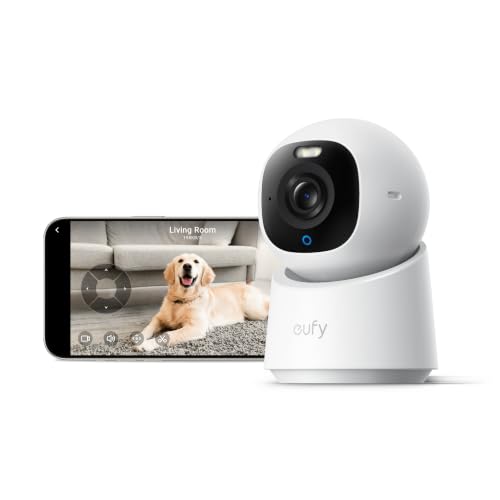
eufy 4K Indoor Camera E30 — Best through-the-window view
A large group of porch owners share a constraint nobody designs for: they cannot or will not mount anything outside. Flats above shops, listed facades, rented terraces, houses where the porch is a glass door and a prayer. The eufy 4K Indoor Camera E30 is their pick — an indoor pan-and-tilt camera with a 4K eye, placed inside the front window or glass door, watching the step where parcels land with the sharpest detail in this guide.
The 4K resolution earns itself through glass. Window views lose a little contrast to reflections and distance, and detail is the currency that buys it back: a face at the step, a logo on a jacket, the colour of the car beyond. The pan-tilt head lets one camera cover both the door and the path, and eufy’s on-device detection keeps the alerts about people rather than weather. Local card recording means the evidence stays in the flat, not on a plan.
Glass imposes two honest disciplines. At night, infrared reflects off windows and blinds the camera, so through-glass setups should rely on the porch light and the camera’s colour modes rather than its IR — test your exact window after dark before trusting it. And the view is fixed by the window’s position: if your glass does not see the step, no resolution rescues the angle.
Within those disciplines, the E30 solves the un-mountable porch elegantly. It also moonlights: turned inward, the same camera covers the hall when you travel. For the household whose security has to happen from inside the glass, it is the strongest eye available in this pool.
- Video: 4K with pan-and-tilt coverage
- Placement: indoors, through window or glass door
- Detection: on-device people and pet awareness
- Storage: local card recording
Strengths
- Sharpest available detail for evidence frames.
- No outdoor mounting, drilling or weather worries.
- Doubles as a hallway camera when needed.
Trade-offs
- Night infrared reflects off glass — needs porch light.
- The window’s position dictates the view.
- Mains lead must reach the window sill.
Best for: flats and facades where outside mounting is impossible. Not suited for: homes with no window view of the doorstep.

TP-Link Tapo C210 — Best indoor backup angle
Professional security thinks in overlapping views, and the humble version of that wisdom improves a porch setup more than any single upgrade: a second angle. The TP-Link Tapo C210 is the affordable way to add it. Placed inside — on a hall shelf, a window ledge, a bookcase aimed through glass — its pan-and-tilt head covers the door from within, catching what the outside camera cannot: the moment a door is tried, the hallway behind it, the caller who came through the side passage instead.
The C210’s own credentials are solid. It records to a roomy local card, tracks motion smoothly across its wide sweep, and TP-Link’s networking heritage gives it unusually stable Wi-Fi manners for its price. In porch service its night infrared is best used indoors — through glass it shares the reflection problem described above — so think of it as the interior layer: the camera that watches the door itself rather than the street beyond.
Why does the interior layer matter against porch piracy specifically? Because the crime’s variants route around a single outdoor camera: the knock-and-distract at the front while a partner lifts from the side, the parcel moved from step to car in two hands and two cameras’ blind spots. A household with an inside angle and an outside angle holds the whole short story. The C210 makes that completeness cheap enough to be unremarkable.
It also serves the house beyond the porch brief — the same pan-tilt coverage watches a hallway, a back door interior, a garage from inside. Buy it as the porch’s second angle and it will quietly become the house’s utility camera, which is the highest compliment this category offers.
- Coverage: wide pan-and-tilt with tracking
- Storage: local card, generous capacity support
- Role: interior angle on door and hall
- Networking: stable, router-friendly behaviour
Strengths
- Completes the porch picture with an inside view.
- Excellent value for a tracking pan-tilt camera.
- Useful everywhere indoors after porch duty.
Trade-offs
- Infrared through glass reflects — porch light needed.
- Detail a step below the 4K and 2.5K leads.
- Indoor only; not a street-facing instrument.
Best for: households adding a second, interior angle on the door. Not suited for: serving as the only camera on an exposed porch.

Blink Mini 2 — Best budget window camera
Not every porch justifies a flagship, and not every budget survives one. The Blink Mini 2 is the small, plug-in answer for the front window: a compact indoor camera that sits on a sill, plugs into the nearest socket, and keeps a plain, honest watch over the step outside. Its footage is clear HD, its app is the same Blink ecosystem as its outdoor sibling, and its price of entry is the lowest in this guide — which means it gets bought, installed and used, the three virtues that precede all others.
In porch service its job description is narrow and it fills it well: notice a person at the door, record the clip, send the alert, let you speak through it if you wish. A porch light transforms its night view, as with every through-glass arrangement, and keeping the camera close to the glass — nearly touching it — cuts the reflections that plague sill cameras set back on furniture.
The compromises are the expected ones at its level. The view is fixed where you point it, with no pan to forgive a bad guess, so the test-walk ritual matters: place, record yourself approaching, adjust, then trust it. Its cleverness is modest — motion alerts rather than rich person analysis — and Blink’s fuller feature set leans toward its subscription, though the camera’s basic watch works without one and pairs with the sync module’s local storage used by its outdoor sibling.
Treat it as the porch camera for the real world of limited budgets and rented windowsills. Students in flats, first homes, a grandmother’s bungalow that has started receiving parcels — the Mini 2 puts a watched door within reach of all of them, and a watched door is the entire thesis of this guide.
- Video: HD, plug-in indoor camera
- Placement: window sill, close to the glass
- Features: motion alerts and two-way talk
- Ecosystem: Blink app and hub local storage
Strengths
- Lowest cost of a genuinely watched doorstep.
- Tiny, tidy and renter-friendly.
- Shares an app with Blink outdoor cameras.
Trade-offs
- Fixed view — placement must be right first time.
- Night through glass needs a porch light.
- Smart detection is basic without the plan.
Best for: budget window coverage of a doorstep. Not suited for: wide approaches or detail-critical evidence.
How Do You Protect the Porch Itself — Lighting, Sightlines and Habits?
The camera is one layer of a porch that defends itself in several small ways at once. Light is the oldest: a porch that answers movement with brightness removes the darkness porch piracy schedules itself around, and it flatters every camera in this guide, turning infrared guesswork into colour evidence. Fit the light before the camera if the budget forces an order — a lit porch with no camera deters more than a dark porch with a brilliant one, and the two together are the finished article.
Sightlines are the second layer, and they belong to gardening as much as to security. The hedge that swallows the step from the street’s view also swallows it from your camera’s deterrence — a thief who cannot be seen from the pavement works unhurried. Trim for the triangle between street, step and camera, keeping the planting’s charm while opening the corridor of visibility. Delivery drivers will thank you too; a step that can be seen is a step that gets used correctly.
The third layer is the household’s own rhythm. Parcels collected promptly, a doorstep that does not advertise absence with a day’s accumulation, the neighbour arrangement for the holiday fortnight — these habits are unglamorous and decisive. Porch piracy reads houses the way weather reads roofs, looking for the loose tile. A house whose parcels vanish indoors within the hour, whose light answers, whose camera watches at face height, presents no loose tiles at all.
None of these layers requires the others to justify itself, and that is their strength: each works on the days the others are imperfect. The lightbulb dies the week the camera’s battery does, and the habit of prompt collection carries the porch through both. Build the layers in any order, but build more than one — the single-layer porch is the one this guide’s readers are here to stop owning.
What Does the Footage Need to Show to Be Useful?
Evidence has a grammar, and porch footage that satisfies it gets acted on while footage that does not gets sympathised with. The first element is sequence: the approach, the act, the departure, unbroken. A clip that begins with a stranger already holding your parcel proves less than one that shows the walk up the path, because sequence is what separates a thief from a delivery driver in a busy person’s judgement. This is the practical soul of the continuous-recording argument — sequence is a property of cameras that were already rolling.
The second element is identity at conversational quality: a face at the range where you would recognise a neighbour, clothing with its colours truthful, a build and gait that a street can match to a person. Night footage in honest colour serves identity twice over, because “a grey figure in a grey hood” describes half the population while “a red jacket with a white stripe” describes one person on the route. When you grade your own test-walk footage, grade it against that standard: could a stranger pick this person out of a description?
The third element is context the clip cannot supply itself, which the household adds: the delivery scan time from the carrier, the note of what the parcel contained, the second camera’s angle if one exists. Evidence assembled that way — clip, times, contents, second view — is a finished product that a carrier’s fraud team or a police officer can use in one reading. Households that prepare it get refunds and visits; households that forward a lone blurry clip get a reference number.
The fourth element is restraint about what footage is for. Its audience is the carrier, the police and the neighbours who share your street’s safety — not the internet. Posting a suspect’s face to a large audience invites misidentification and legal trouble that a quiet report avoids, and it can compromise the very investigation the footage was gathered for. Let the clip work through the channels built for it. The porch camera’s triumph is a boring street and a refunded parcel, not a viral afternoon.
Hold those four elements against any camera in this guide and the ranking reads itself: the continuous recorder for sequence, the face-height mount for identity, the local storage for context you control, and the household’s own discipline for restraint. The hardware is half the evidence. The other half is a family that knows what its camera is for.
How Do Different Homes — Flats, Terraces, Detached Houses — Change the Answer?
The flat’s porch problem is really a corridor problem: parcels land outside a door that opens onto shared space, under rules set by a building rather than a household. The indoor picks in this guide earn their keep here — the camera inside your own glass or on your own sill watches your door without touching the building’s fabric or its regulations. Pair it with the building-level answers that flats make easy: parcel lockers in the lobby where they exist, collection points for anything valuable, and the neighbour network that a corridor creates naturally, where the person opposite your door is the best security system ever installed.
The terraced house has the classic porch in miniature: a step, a path of three strides, a street close enough to read a newspaper through the window. Here the face-height rule is effortless — the door frame itself is the mount — and the main-door wired picks shine, because the socket in the hall is a metre from the camera that needs it. The terraced street also has the densest natural surveillance of any housing type: windows everywhere, neighbours close, a stranger’s loitering visible to six households. A camera on such a street is joining an existing network, and its footage completes pictures the street already half-sees.
The detached house trades that density for territory. Approaches multiply — front, side, the drive that curves — and no single camera pretends to cover them, which is why this guide’s wide-territory and battery picks exist. The detached plan layers: continuous record at the main door, the panning eye over the drive, patient batteries at the gates and outbuildings. It costs more than the terrace’s single camera and should; the territory is the reason for the house, and watching it is part of keeping it.
The rural property extends the same logic to its limit: deliveries left at a gatehouse, a barn door, a box at the lane’s end. Wire-free range and solar patience matter more than facial detail at that scale, and the delivery plan matters most of all — a locked box at the gate converts the camera’s job from evidence to confirmation. Whatever the housing type, the pattern holds: the camera watches the handover point, the handover point is made unrewarding to steal from, and the two decisions are made together.
What Should You Do in the First Week After Installing?
Day one is for the test-walk, already preached in this guide and worth repeating as a schedule item: approach your own door at a stranger’s pace, at noon and at dusk, hooded and bare-headed, and grade the footage as evidence. Adjust the angle before the first parcel depends on it. Most porch systems are ninety percent right at installation; the test-walk finds the ten percent while finding it is still free.
Days two and three are for alert calibration. Live with the notifications, count the false ones, and tune the zone and sensitivity until a day’s alerts can be read in a minute. The goal is a camera whose buzz you still respect on day thirty. Note which passers-by trigger it — the school-run surge, the neighbour’s dog-walker — and carve the zone around the pattern rather than muting the camera into decorative status.
By the first weekend, write the delivery instructions everywhere they can live: the retailer accounts, the carrier apps, the note the regular driver will actually see. “Parcels behind the side gate, please” is a security feature with a measurable effect, and the camera’s footage will show you within a fortnight whether it is being followed — and give you the friendly evidence to raise it if it is not.
At the week’s end, do the retrieval rehearsal nobody does until it is urgent: find a specific five minutes from two days ago, export it, and send it to your own email. If that takes more than a few calm minutes, practise until it does not. The household that has rehearsed retrieval owns a security system; the household that has not owns a camera and a hope, and the difference only ever becomes visible on the one day it matters.
How Do You Handle the Conversation With Neighbours and Carriers?
A porch camera films a small piece of the public world, and the households that get the most from one treat that fact socially rather than pretending it away. Tell the neighbours the camera exists and what it covers — your step and your path — and two things happen: the neighbourly anxiety that cameras can cause never starts, and your camera joins the street’s informal network, the one where a clip from number nine names the coat that number fourteen only glimpsed. Streets that talk about their cameras get more deterrence from each one.
Carriers are the other relationship worth cultivating. A driver who knows the house — knows the box behind the gate, knows the instruction is real because the resident set it — delivers differently from a driver meeting a bare doorstep. The camera supports that relationship with evidence when a delivery goes wrong: the timestamped absence of a visit settles the “left on porch” dispute faster than any phone queue, and the clip of the correct delivery followed by the wrong visitor turns a refund argument into a police report with attachments.
There is a rhythm to filing that evidence well. Save the clip the same day, before rolling storage can overwrite it. Note the window in ordinary language — “between the 14:05 delivery scan and 14:20” — and attach the wide shot and the face-height shot if your setup has both. Reports written that way get action, because they hand a busy person a finished piece of work rather than a complaint to investigate.
And keep the street’s goodwill as the long game. Share the warning, not just the footage: when the van-followers work your road, a message to the street chat with the time and the description protects six porches at once. Porch piracy is a route-based business; a street that behaves like a network is a route that stops paying, and your camera is worth more as a node in that network than as a lonely eye.
What Changes in Winter, at Night and in Bad Weather?
Porch piracy has seasons, and the camera that cruised through summer meets its examinations in the dark months. Deliveries peak exactly when daylight is shortest, which moves more of the crime into the hours where infrared and porch light decide what the footage is worth. This is the practical argument for the colour-night picks at the top of this guide, and for treating the porch light as camera equipment: a bulb that answers motion is worth a resolution upgrade it costs a tenth of.
Cold tests the battery picks honestly. Lithium cells dislike deep winter, and a camera rated for seasons of life in spring may ask for fresh batteries before the holiday rush ends in a cold climate. The discipline is simple: change or charge on the autumn clock-change weekend, before the delivery peak, and let the busiest, darkest month meet a fresh battery rather than a tired one. Wired picks skip this examination entirely, which is part of their main-door argument.
Weather writes on lenses. Rain beads on an exposed lens and turns night footage into impressionism; a small hood, an eaves mount, or simply the sheltered side of the porch post keeps the view honest. Condensation visits the through-glass indoor picks when warm room air meets cold window — a camera placed close to the glass and a room kept at an even temperature will mostly avoid the fog that blinds the sill camera at dawn.
None of this is a reason to delay; it is a reason to install with the calendar in mind. A porch system commissioned in autumn, light checked, batteries fresh, lens sheltered, meets the peak season as a finished defence. The same system installed in a December panic performs like one. Porch pirates plan around the delivery calendar — the households that stop them plan around it too.
How Do the Six Compare Side by Side?
| Camera | Mounting | Recording | Best porch role |
|---|---|---|---|
| Wyze Cam v4 | Outdoor, wired | Continuous local | Main door, full record |
| Blink Outdoor 4 | Outdoor, battery | Motion clips | Cable-free doors |
| REOLINK Argus PT Ultra | Outdoor, battery/solar | Motion clips, 4K | Wide drives and gates |
| eufy 4K Indoor Camera E30 | Indoor window | Local card, 4K | Un-mountable facades |
| TP-Link Tapo C210 | Indoor, pan-tilt | Local card | Interior second angle |
| Blink Mini 2 | Indoor window | Motion clips | Budget doorstep watch |
How Should Renters and Flat-Dwellers Protect a Door They Cannot Modify?
The rented door forbids the drill, and the porch still deserves its camera — the constraint simply moves the ingenuity indoors and onto adhesives. The through-glass picks in this guide exist for exactly this tenancy: a camera on the inside of the window modifies nothing, leaves nothing, and watches the step with a landlord’s blessing. Where the window’s geography fails, the battery camera on a removable mount — the kind that peels away at the tenancy’s end without a mark — covers the door from a porch post or a plant stand, and its lack of cables is a renter’s feature before it is anyone else’s.
Renters also hold a card owners forget: the building itself. A word with the landlord about a shared interest in a watched entrance often produces permission for more than the lease imagines, and in blocks of flats, one resident’s camera at their own door quietly serves the corridor’s whole community. Ask, in writing, with the camera’s view described — landlords refuse abstractions and approve specifics.
And when the tenancy ends, the whole system leaves in a shoebox: camera, mount, the delivery instructions deleted from the accounts. That portability is worth weighing at purchase for anyone whose housing is temporary by design — students, contract workers, the newly arrived. The porch changes; the watched doorstep, rebuilt in an afternoon at the next address, does not have to.
What Mistakes Do Porch Owners Make?
Mounting high and filming hats is the champion mistake, covered above and worth repeating because half the porches on any street commit it. The camera feels safer up there; the footage is useless down here. Face height, across the approach, tested with your own hooded walk at dusk — that ritual prevents more failed evidence than any purchase.
The second mistake is alert fatigue by neglect. A camera that pings for every passing car trains its owner to ignore it within a fortnight, and the one alert that mattered scrolls past unread. Set the detection zone to the path and step, turn on person detection where offered, and accept fewer, better alerts. A quiet camera that is believed beats a loud one that is muted, every single week of the year.
The third mistake is buying the camera and skipping the delivery plan. The parcel still lands in plain view of the street, the van-follower still sees the prize before your camera sees him, and the footage documents a theft that a delivery box would have prevented outright. Camera plus instructions plus a hiding place for parcels: the three together are the actual product this guide is recommending.
Final Recommendation
For most houses, begin with the Wyze Cam v4 at face height by the main door, recording continuously, with delivery instructions sending parcels out of street view. That pairing — evidence and prize-removal — resolves the ordinary porch-piracy problem on an ordinary street. Where cables cannot go, the Blink Outdoor 4 takes the same post on batteries; where the approach is wide, the Reolink takes the territory view.
Households that cannot mount outside should start through the glass with the eufy E30, add the Tapo C210 as the interior angle when budget allows, and keep the Blink Mini 2 in mind for the flat, the rental and the relative whose porch needs watching by Friday. Whichever combination you choose, do the dusk test-walk before you trust it. A porch that is visibly watched, intelligently alarmed and empty of visible prizes is a porch the van-followers learn to pass by — and passing by is the outcome all of this is for.
Frequently Asked Questions
Do porch cameras actually deter theft?
They deter the opportunist, who is most of the problem: a visible camera at face height changes the risk calculation before the doorstep is reached. Against the rare determined thief, the camera’s role shifts to evidence — a recognisable face, a timeline, a vehicle — which is why placement for identity matters as much as presence.
Is it legal to film my porch and the street beyond?
Filming your own property and the public approach to it is ordinary home security in most jurisdictions, but rules vary by place, and audio recording is regulated more strictly in some. Keep the view aimed at your own approach, avoid a neighbour’s windows, and check local guidance if you are unsure.
Continuous recording or motion clips — which is better here?
For the main door, continuous recording wins because the crucial seconds often precede any trigger. For secondary doors and wide territory, motion clips on battery cameras give months of coverage where continuous recording is physically impossible. Most strong setups use both, layered.
How do I stop alert fatigue?
Draw the detection zone tightly around the path and step, enable person detection where the camera offers it, and lower sensitivity until passing traffic disappears from your notifications. Review the settings after the first week with real footage in hand — calibration is a normal stage, not a failure.
What should I do with footage of an actual theft?
Save the clip before it can be overwritten, note the time window, and give it to the carrier and the police with your report. Share it with neighbours through whatever channel your street uses — the same caller often works a whole route, and one street’s footage frequently completes another’s.
Can a camera help if the parcel never arrives?
Yes — the negative evidence matters. Continuous or well-triggered footage showing no delivery at the claimed time is exactly what resolves “delivered” disputes with carriers, and it is one of the quiet weekly uses porch cameras earn their keep with.
Should my porch camera be visible or hidden?
Visible, for this job. Deterrence is half the product, and a camera a thief notices from the pavement works before any parcel is touched. Hidden cameras serve other problems; on a porch, the seen camera at face height — with footage to back its promise — is the stronger play.
What if my porch has no power and no Wi-Fi strength?
Start with the battery picks and test the signal at the exact mounting spot before committing — a mesh node inside the front room often rescues a weak porch position. If the signal truly cannot reach, a camera recording locally to its own card still gathers evidence; you will simply review it at the camera rather than from the sofa.
Related Guides
Round out the front of the house with our guides to the best cameras for home security without a subscription, driveway and gate cameras for wide properties, and the best indoor cameras for hallways and entrances.


