kajuandouglas.com is reader-supported. When you buy through links on our site, we may earn an affiliate commission.
Where to Buy a Wildlife Camera, and Why the Animal Sets the Specification
Wildlife refuses every convenience studio photography takes for granted. The best cameras for photographing wildlife must find a small, camouflaged, moving subject at distance, in dawn light or woodland gloom, focus on its eye rather than the twig in front of it, and do all of this silently enough that the subject stays. Miss by a second or a decibel and the photograph — sometimes the encounter of a season — is simply gone.
That brutality defines the shortlist’s priorities. Autofocus that recognises animals and holds their eyes outranks headline resolution. Burst speed matters because behaviour peaks in unrepeatable half-seconds. Weather sealing matters because wildlife keeps its own schedule in rain, frost and sea spray, and the photographer who packs up photographs nothing.
Reach is the honest complication. No camera body creates reach; lenses do, and the reviews below are candid about which systems offer telephoto glass a mortal can afford and carry. A body is a promise about an ecosystem, and wildlife photographers marry ecosystems for a decade at a time.
The list spans that reality deliberately: a flagship-grade full-frame body for the committed, two APS-C options whose crop factor turns modest telephotos into long ones, a Micro Four Thirds field camera built for weather and walking, a rugged compact for hides and nest boxes, and a superzoom-feeling pocket option for travellers who meet wildlife by luck rather than by itinerary.
Ethics run underneath every recommendation here. No photograph justifies stressing an animal, baiting a predator into traffic, or trampling a nesting site for a closer frame. The technique sections treat distance and patience as photographic tools, because in this genre they quite literally are.
One more promise before the shortlist itself. Nothing in this guide will make an animal appear; that remains the province of seasons, tides and luck. What the right camera does is guarantee that when the encounter finally happens — cold, early and unrepeatable — the equipment’s side of the bargain is already kept.
Key Takeaways
- Eye-recognition autofocus you can trust is worth more than extra megapixels at dawn.
- The Canon EOS R6 Mark II is the low-light and autofocus benchmark of this six.
- APS-C and Micro Four Thirds crops turn affordable telephotos into serious reach.
- The OM SYSTEM Tough TG-7 covers hides, nest boxes and shoreline work nothing else survives.
- Silence is a feature: electronic shutters keep wary subjects in front of you longer.
- Spend on the telephoto lens before the body; reach decides wildlife photographs.
In this guide
Quick Picks
| Camera | Badge | Why it made the list |
|---|---|---|
| Canon EOS R6 Mark II | Best wildlife all-rounder | Animal eye autofocus, superb high-ISO files and fast bursts in a body that handles like a trusted tool. |
| Nikon Z50 II | Best value for bird photography | An APS-C body with subject detection and a crop that stretches telephoto lenses for hide and garden birds. |
| OM SYSTEM OM-5 Mark II | Best for walking and weather | A tiny sealed system whose lenses stay small, making long telephoto reach genuinely portable. |
| Sony Alpha 7 IV | Best for resolution and cropping | A high-resolution full-frame body whose files tolerate the heavy crops distant subjects demand. |
| Fujifilm X-T5 | Best for patient fieldcraft | High-resolution APS-C files, tactile dials and colour that renders habitats beautifully for deliberate photographers. |
| OM SYSTEM Tough TG-7 | Best for hides, nests and shorelines | A waterproof rugged compact that can live at a nest box, in a rock pool or under a feeder gathering behaviour. |
How Did We Judge Cameras for Subjects That Never Pose?
We imagined each camera at the moments wildlife photography is actually decided: a kingfisher arriving at a perch in green half-light, a hare bolting across a field at dusk, a seabird colony in horizontal rain. Bodies scored first on autofocus behaviour with animals — detection reliability, eye priority, and composure when the subject passes behind grass, branches or other birds.
Burst depth and buffer behaviour formed the second test. A spectacular frame rate is marketing; a frame rate sustained through a full behavioural sequence, writing to cards without locking the camera, is photography. Picks earned credit for buffers that survive the strike, the pounce and the shake-off afterwards.
Low-light files were weighed without sentimentality. Wildlife keeps dawn and dusk appointments, so clean high-ISO texture and colour that survives lifting shadows mattered more than studio resolution charts. Two picks here are chosen largely for their behaviour in that gloom.
Finally, field practicality: sealing, weight with a real telephoto mounted, battery life in cold hides, and controls operable through gloves. A camera that wins on paper and loses at five in the morning in February is a paperweight with a strap.
Ergonomics during long waits closed the assessment. A wildlife camera is held at readiness for hours and raised in a heartbeat, so grip shape with a long lens, button placement for gloved fingers and the balance point of the whole rig were weighed as seriously as any sensor figure in the final ordering of this six.
Which Wildlife Cameras Earn Their Place in the Hide?

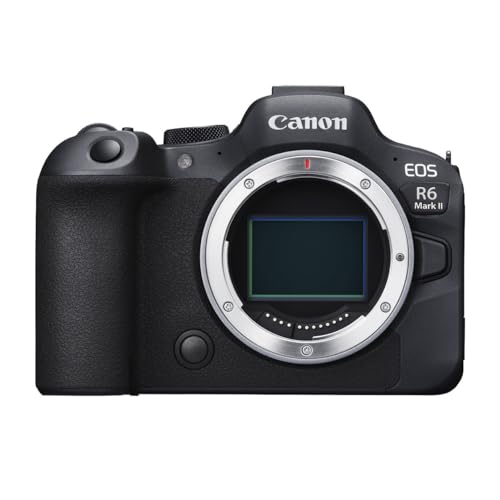
Canon EOS R6 Mark II — Best wildlife all-rounder
Trust is the currency of wildlife autofocus, and this Canon has earned more of it than any rival in this guide. Its animal detection finds the bird in the reeds, chooses the eye, and holds on through head turns and partial occlusion with a calm that lets the photographer think about composition instead of focus points. When a subject is rare and the light is leaving, that calm is the entire purchase justified.
High-ISO performance writes the second half of the case. Dawn in woodland is not a lighting condition so much as an absence, and files from this body keep feather texture and fur detail at sensitivities that would reduce lesser cameras to watercolour. You will shoot at the edges of the day because that is where the animals are; this camera meets you there.
Now place it on a seawatch headland, the second theatre where it proves itself. Seabirds stream past at speed in filthy weather, and the R6 Mark II’s sealing, burst rate and tracking turn a chaotic hour into a card full of identified, sharp passages. Its electronic shutter keeps the shutter count — and the noise beside other watchers — mercifully low.
The RF telephoto range completes the system argument, from a remarkably affordable long zoom that has democratised bird photography to professional primes for those whose obsession deepens. Start modest, grow serious: the mount accommodates both without a change of body philosophy.
Battery life in the cold is honest rather than heroic, so hide discipline includes warm spares in an inside pocket. It is the one operational footnote in an otherwise complete field tool, and experienced owners treat it as routine rather than complaint.
Resale and rental depth round out ownership: this is a body you can hire a twin of for a safari, sell in a week if priorities change, and find serviced on most continents. Wildlife careers are long; infrastructure matters.
Ownership over years, not weekends, completes the Canon’s portrait. Its control layout becomes invisible with familiarity, freeing attention for the animal — the true professional feature. Photographers describe the second year with a trusted body as the moment their wildlife work deepens, because the tool stopped asking questions and started answering them.
A final word on growth: the photographer who starts with this body and the affordable long zoom owns a ceiling so high that most will retire before reaching it. Equipment that never becomes the excuse is equipment that has done its job completely.
Workshop leaders reach for this body when teaching flight photography for a practical reason: students succeed with it quickly, and early success is what converts a course attendee into a lifelong bird photographer. A camera that teaches well multiplies its owner’s community, which is a return no specification table lists.
Choose it, finally, if you intend to be out in the half-light where reputations in this genre are quietly built. The dawn chorus does not wait for better equipment, and neither do the animals.
There is a final, practical ecosystem point: hides, boats and reserves run on shared knowledge, and Canon’s wildlife user base is so large that any odd behaviour of this body has been diagnosed in a forum before you finish your coffee. Owning the popular professional tool means never troubleshooting alone at dawn.
- Type: full-frame mirrorless
- Strength in brief: animal eye autofocus at dawn
- Workflow fit: birds, mammals, seawatching
- Lens note: RF telephotos at every budget
Strengths
- Eye autofocus that survives reeds and branches
- Feather detail holds at high sensitivities
- Deep, fast buffer for behavioural sequences
Trade-offs
- Cold-weather battery needs warm spares
- Full-frame telephotos grow heavy
- Electronic shutter can band under odd lighting
Best for: Bird and mammal photographers who live at dawn and dusk.
Not suited for: Travellers counting every gram on long mountain walks.

Nikon Z50 II — Best value for bird photography
The crop factor is the Z50 II’s founding argument. Mount a mid-priced telephoto zoom and the smaller sensor frames it like a far longer, far more expensive lens on full-frame — the arithmetic that has launched a thousand bird photographers. Nikon understood the assignment and gave this compact body subject-detection autofocus that punches well above its price class.
Garden and hide photography is its home ground. From a kitchen window hide or a small pop-up in a nature reserve, the Z50 II’s size keeps movements discreet, its screen tilts for low perches, and its files carry enough resolution to crop a finch from a feeder scene without the result dissolving.
Follow it to a reservoir at first light, the second scene in its portrait. Waders work the far mud, herons patrol the margins, and the crop-framed telephoto reach turns distant specks into identifiable, publishable frames. Photographers upgrading from a phone or a bridge camera describe this class of body as the moment wildlife photography became real, and the Z50 II is a polished representative.
Video deserves its line: clean 4K footage of behaviour — a courtship display, a chick being fed — increasingly accompanies the stills in portfolios and competition entries, and this body records it without the overheating anxiety of some rivals during a long hide session.
Limits sit where expected. Low-light files trail the full-frame Canon, and Nikon’s DX telephoto line, while growing, asks some users to adapt or choose carefully. Neither flaw dents its role as the value doorway into serious bird work.
For the photographer whose budget must cover lens, hide, tripod and bus fares to the reserve, the Z50 II leaves money for the things that actually produce photographs. That arithmetic is a feature, and this guide refuses to apologise for it.
There is a community dividend to this little Nikon. Budget bird photography has a vast, generous online culture of hide plans, settings files and location etiquette, and this body sits near its centre. A beginner buying into that culture inherits a thousand mentors along with the camera.
Keep the receipt for the lens, not the body, in your long-term planning: glass bought for this Nikon serves its successors, and the Z mount’s roadmap means today’s value body is tomorrow’s backup to a serious sibling. Systems thinking turns a modest purchase into the first chapter of a decade-long kit.
Portability deserves one more sentence in its ledger. The whole Z50 II birding kit — body, telephoto zoom, spare battery — fits a small shoulder bag that travels under a bus seat and through a turnstile, which means it attends the after-work hour at the local gravel pit where the season’s best hobby photographs are actually made.
Its highest praise is the simplest: photographers who buy it stop reading camera reviews and start reading field guides. Any tool that redirects attention from gear to animals has performed the genre’s essential service.
Giftability is a real consideration in this hobby’s demographics. The Z50 II is the camera experienced photographers buy for a spouse, a parent or a teenager showing the first signs of the obsession, because it is capable enough to respect the recipient and simple enough to be mastered by spring.
- Type: APS-C mirrorless
- Strength in brief: crop reach with smart detection
- Workflow fit: hides, gardens, local reserves
- Lens note: DX telephotos plus adapted glass
Strengths
- Crop framing multiplies affordable lenses
- Subject detection far above its class
- Compact body suits discreet hide work
Trade-offs
- Dusk files noisier than full-frame picks
- Native DX telephoto choice still maturing
- Smaller grip with the longest zooms
Best for: New bird photographers and hide regulars on real budgets.
Not suited for: Professionals whose commissions live in near-darkness.

OM SYSTEM OM-5 Mark II — Best for walking and weather
Every wildlife system eventually confronts the walk. The OM-5 Mark II system confronts it and wins: Micro Four Thirds telephotos deliver full-frame-equivalent reach at half the weight and bulk, so the photographer actually carries the long lens up the hill, along the estuary path, through the airport in hand luggage. Reach that stays home is not reach.
Weather sealing is the second pillar. This system’s reputation was built by photographers who work in rain forests, on boats and in Scottish winters, and the little body continues that tradition. Wildlife does not reschedule for weather; a camera that treats rain as a working condition rather than an emergency doubles a photographer’s usable days.
Picture it on a multi-day trek, the assignment that defines it here. A naturalist documenting mountain species carries shelter, food and water alongside the camera, and the OM-5 kit’s modest total weight is the difference between a photographic trek and a survival exercise. Its computational high-resolution modes even serve the botanical and habitat record at camp each evening.
Autofocus honesty is required: animal detection here is capable and improving, yet a notch below the Canon’s sorcery in the worst tangles of branches. In open habitats — shore, moor, savanna, garden — the gap narrows to irrelevance for most subjects.
Battery frugality suits the trail, and small cells are cheap to multiply. Cold mornings still ask for the warm-pocket ritual, but the system’s overall appetite respects expedition logistics.
Buy this system when your wildlife lives at the end of paths. It is the connoisseur’s answer to the oldest problem in the genre: the best lens is the one you brought.
Insurance and repair economics quietly favour the small system. A dropped OM-5 kit hurts a wallet a fraction as much as a full-frame telephoto disaster, and field photographers who work from boats and cliffs price that risk honestly. Courage, it turns out, can be an equipment specification.
For photographers whose wildlife work funds itself through prints and workshops, the small system’s economics compound beautifully: lower travel costs, lower insurance, lower replacement anxiety, and files that print far larger than the sensor’s size suggests to clients who judge with their eyes rather than with spec sheets.
Boat work is its unadvertised speciality. On whale-watching trips and seabird crossings, spray is constant, space is nil and subjects appear on every side at once; the little sealed system, kept on a short strap, simply keeps working while larger kits shelter under jackets. Several pelagic photographers regard it as the only sane primary system.
Judge it by the photographs that exist because the kit was light enough to be present. That archive — hill, boat, forest, shore — is the argument, and it grows longer every season its owners keep walking.
Expedition medics and field scientists, who photograph wildlife as documentation rather than art, have standardised on systems like this for reasons of pure logistics: spares are light, batteries are small, and a failed body does not end a season’s data collection. Science’s verdict on field gear is worth a photographer’s attention.
- Type: Micro Four Thirds mirrorless
- Strength in brief: portable reach, real sealing
- Workflow fit: trekking, travel, boat work
- Lens note: compact telephotos are the point
Strengths
- Long-lens kit light enough to carry daily
- Weather sealing that invites bad forecasts
- High-resolution modes serve habitat records
Trade-offs
- Small sensor trails at deepest dusk
- Autofocus a step behind the class leader
- Tiny controls in thick gloves
Best for: Walking, travelling and expedition wildlife photographers.
Not suited for: Hide specialists who never carry kit beyond the car.

Sony Alpha 7 IV — Best for resolution and cropping
Wildlife photographers crop. The bird was further than the lens, the mammal smaller in the frame than pride admits, and the published image is the centre third of the captured one. The Alpha 7 IV’s resolution exists for exactly this confession: its files surrender a serious crop and still print, still publish, still hold feather detail at sensible sizes.
Bird-in-flight autofocus is the second argument, and Sony’s tracking pedigree needs little introduction. The camera acquires fast subjects against messy skies and holds them through the frame with a tenacity that turns a gull stream or a hirundine feeding frenzy into a selection problem rather than a salvage operation.
Take it to a safari vehicle, the environment where its versatility compounds. One body covers the elephant at twenty metres and the lilac-breasted roller at two hundred crop-equivalents, records the interview with the guide at camp, and tethers to a laptop for the evening’s client preview. Safari operators value that breadth because vehicle space punishes duplication.
Its lens ecosystem includes the telephoto zooms that have become safari standards, plus third-party options that keep a second body affordable. A two-body Sony kit — one wide, one long — is the professional safari pattern, and this body anchors either role.
Heat and dust behaviour are respectable rather than legendary; a shade habit for the body at midday stops and a blower ritual each evening keep it sweet. Professionals treat that as housekeeping, not hardship.
Choose the Alpha 7 IV when cropping is your second lens and when one body must serve wildlife, landscape and client video across a working year. It is the generalist’s flagship, and wildlife is its favourite department.
Second bodies are where systems prove their manners, and the Sony ecosystem lets a wildlife photographer add a dedicated wide or video body sharing batteries, cards and menus. Safari teams standardise on such coherence because a vehicle at dawn is no place to remember which dial does what on which camera.
Video of behaviour is becoming a deliverable alongside stills in competition and conservation work, and this body’s footage grades and cuts with its photographs seamlessly. A hybrid record of a rare behaviour — the strike filmed, the moment frozen — is increasingly what editors and researchers ask a modern wildlife photographer to bring home.
Print size is where its resolution cashes out for exhibition photographers. A wall-sized print of a cropped raptor, holding together at viewing distance, changes a photographer’s local reputation and their print income. The Alpha 7 IV is the cheapest seat in this guide at that particular table.
For the photographer building a portfolio to professional standard across habitats and continents, this is the body that asks the fewest apologies in the most places. Versatility at this level is not blandness; it is range.
Agency and stock libraries add a commercial footnote: its files pass technical inspection at sizes and crops that keep images licensable across campaigns, not merely across social feeds. For the photographer hoping wildlife work might one day pay its own way, that headroom is a business asset.
- Type: full-frame mirrorless
- Strength in brief: crops that survive publication
- Workflow fit: safari, birds in flight, mixed work
- Lens note: deep native and third-party tele range
Strengths
- Resolution forgives distance and ambition
- Flight tracking among the very best
- One body covers an entire safari brief
Trade-offs
- Files are large; cards and storage follow
- Dust discipline required on safari
- Not the low-light champion here
Best for: Safari photographers and croppers who publish large.
Not suited for: Minimalists who never crop and travel ultralight.

Fujifilm X-T5 — Best for patient fieldcraft
Not all wildlife photography is reactive. The X-T5 suits the stalk-and-wait school: the photographer who finds the territory, learns the routine, sets up before dawn and composes a habitat portrait into which the animal will eventually walk. Its high-resolution APS-C files reward that patience with detail that prints large and crops gracefully.
Physical dials serve cold hands and glove-wearing better than menu-diving, and exposure settings can be confirmed by touch without lowering the camera from a hide slit. In the choreography of a hide morning, where every movement risks the shot, that tactility is a genuine fieldcraft feature.
Imagine it on a moorland project, the second portrait this review paints. A photographer documenting grouse and hares across a season needs files whose colour renders heather, bracken and lichen truthfully, because habitat is half the story. Fujifilm’s colour science, so praised by landscape photographers, earns its keep exactly here.
Its subject-detection autofocus is honest mid-pack: dependable for perched birds, mammals and larger subjects, less magical for the smallest birds exploding through cover. The deliberate photographer, pre-focused on the perch and waiting, routes around that limitation by technique — which is this camera’s whole philosophy.
Weather resistance is present and respectable, sealing the case for a body that lives outdoors across seasons. Pair it with the system’s long telephoto zoom and the kit stays carryable for moorland miles.
Buy the X-T5 if your wildlife photography is a branch of landscape photography with a heartbeat. It will make you slower, more deliberate and — on the evidence of its devoted users — quietly happier.
Long projects reveal this camera’s deepest virtue: consistency of colour across years. A multi-season study of one moor or marsh must render heather and water identically in year three as in year one, or the visual record wobbles. Fujifilm’s restrained, film-rooted rendering gives long projects that archival steadiness.
There is also pleasure, which this guide refuses to treat as frivolous. A camera whose dials and rendering make a cold hide morning feel like a craft rather than an endurance test gets carried out more often, and frequency of attendance is the statistic that governs every wildlife portfolio ever assembled.
Its files also serve the book-makers. Photographers assembling a season-long photo essay find the Fujifilm’s rendering needs so little inter-frame correction that a coherent visual chapter assembles itself. In long-form storytelling, that consistency is a narrative feature, not merely a convenience.
Patience is a renewable resource, and this camera is built for the photographers who hold it in abundance. Their reward is a body of work with a recognisable, unhurried signature — the rarest asset in a genre flooded with identical flight frames.
Second-hand, this body holds a devoted market among photographers who value exactly its deliberate character, so an owner who eventually migrates to a faster system will find the X-T5 easy to place with a grateful next keeper. Deliberate tools pass from hand to hand like good binoculars.
- Type: APS-C mirrorless, retro dials
- Strength in brief: resolution with fieldcraft manners
- Workflow fit: hides, habitat portraits, seasons-long projects
- Lens note: long XF telephoto zoom available
Strengths
- Habitat colour that flatters truthfully
- Dials operable through hide slits and gloves
- Resolution supports cropping and large prints
Trade-offs
- Detection autofocus not the class best
- No bird-specific magic for chaos moments
- Dial layout suits deliberate, not frantic, work
Best for: Patient hide and habitat photographers with a landscape eye.
Not suited for: Reaction shooters living on split-second chaos.

OM SYSTEM Tough TG-7 — Best for hides, nests and shorelines
The TG-7 practices a different wildlife discipline: proximity by placement rather than by stalking. Left at a nest box entrance, a badger sett entrance at dusk, a tide pool or beneath a feeder, its small, silent, weatherproof body records behaviour that a photographer’s presence would suppress. Interval and remote possibilities turn it into a patient mechanical watcher.
Macro capability opens the miniature savanna. Beetles, frogs, dragonflies and the whole invertebrate majority of wildlife live at distances where its close-focus talents and accessory lighting produce images the big systems need specialist lenses to attempt. For many naturalists, this is not the backup camera; it is the primary instrument of their actual subject.
Now set it on a shoreline, the second of its natural homes. Rock-pool photography destroys ordinary cameras through spray, sand and the occasional wave, while the TG-7 treats the same afternoon as a spa day. Underwater, it documents fish and crustaceans in their own medium, at a price that does not require a housing mortgage.
Expectations must stay calibrated: distant birds are beyond it, and dusk files are modest. The TG-7’s wildlife is the near, the small and the wet — a kingdom the telephoto systems cannot enter, which is precisely why it completes this six rather than competing with it.
Battery and card discipline for remote placement is the one skill to learn: fresh cells, generous intervals, a test night before the real deployment. Teams that rehearse placement lose fewer once-a-season behaviours to a flat battery.
Every serious wildlife kit has a gap shaped exactly like this camera. It costs less than a telephoto’s lens hood on some systems and returns images no other pick here can make.
Conservation programmes have adopted this category of camera for volunteer monitoring because it survives enthusiastic handling by rotating helpers. A nest record kept by twelve different volunteers on one indestructible camera is a dataset; the same project on fragile kit is a repair bill. Institutions have done that arithmetic carefully.
And when the tide pool season ends, the same camera becomes the family’s beach and snorkel companion, which is how specialist tools justify their cupboard space in real households. Versatility across the calendar is the final, unglamorous reason this little rugged box appears in so many serious naturalists’ bags.
Schools and youth programmes complete its constituency. A class set of rugged cameras survives a pond-dipping field trip intact, and the macro photographs children bring back — a caddis larva in its case, a frog at eye level — have started more young naturalists on their way than any textbook chapter.
Small, wet and overlooked is a kingdom, and this is its rightful camera. The naturalists who work there speak of it the way telephoto owners speak of their long glass: as the instrument that made their subject visible at all.
And do not overlook its role as the loaner. Every wildlife group has a newcomer whose phone cannot attempt the pond, the pool or the nest record; the TG-7 is the camera you hand them without a waiver and a prayer. Communities grow through such loans, and this camera survives them.
- Type: rugged waterproof compact
- Strength in brief: placement photography and macro
- Workflow fit: nest boxes, pools, invertebrates
- Lens note: fixed zoom with macro modes
Strengths
- Lives where wildlife actually happens
- Macro opens the invertebrate kingdom
- Survives spray, sand and submersion
Trade-offs
- No use for distant birds or mammals
- Modest files after dark
- Placement work demands rehearsal
Best for: Naturalists focused on small, near or aquatic wildlife.
Not suited for: Anyone whose subject is a distant raptor.
How Do the Six Wildlife Picks Compare in the Field?
Reach, trust and weather divide this six more than price does. Use the grid to place yourself on those three axes before reading the fieldcraft sections.
| Camera | Badge | Standout trait | Watch out for |
|---|---|---|---|
| Canon EOS R6 Mark II | Best wildlife all-rounder | Focus trust when light abandons you | Carry batteries against your body in winter |
| Nikon Z50 II | Best value for bird photography | Serious birding without flagship money | Learn its detection modes before the hide |
| OM SYSTEM OM-5 Mark II | Best for walking and weather | Reach that actually reaches the hill | Practise the small dials with gloves on |
| Sony Alpha 7 IV | Best for resolution and cropping | The second lens is the crop | Budget storage for the big files |
| Fujifilm X-T5 | Best for patient fieldcraft | Fieldcraft rewarded with detail | Pre-focus the perch and wait |
| OM SYSTEM Tough TG-7 | Best for hides, nests and shorelines | The watcher that never blinks | Rehearse placements before the season |
How Close Should You Get, and How Do You Get There Ethically?
The professional answer is that the animal decides. Fieldcraft — knowing a species’ routine, its feeding grounds, its tolerance — closes distance without pressure, while approaching a wary subject directly usually subtracts distance from the encounter’s remainder. The best wildlife photographs are mostly made by arriving early and being boring.
Camouflage and hides are patience made visible. A hide converts your conspicuous human outline into landscape, and time inside it converts alarm into indifference. Several picks here are sized and silenced for hide work precisely because the hide, not the lens, is the genre’s true close-up device.
Legal and welfare boundaries are not fine print. Protected species, nesting sites and reserves carry rules that override any photograph, and disturbing an animal for an image is both an ethical failure and, increasingly, a reputational one in a community that recognises locations from backgrounds. Shoot the encounter the animal offers, and leave it richer than you found it — undisturbed.
Which Lens Lengths Cover Which Animals Honestly?
Birds ask the most: small, distant and quick, they consume focal length without gratitude, which is why crop-sensor picks in this guide punch so far above their price. Mammals forgive more; a moderate telephoto and good fieldcraft cover deer, foxes and most safari subjects from respectful distances.
Wide lenses have a wildlife role that beginners overlook: the habitat portrait, where a small animal in a large landscape tells the ecological truth. Two picks here, the Fujifilm and the Sony, were chosen partly because their files and colour honour that wider storytelling.
Whatever the length, learn its honest limit. A frame that needs a five-times crop is a sighting record, not a photograph, and no body in this guide — not even the resolution champion — repeals that arithmetic. Move the hide, not the crop slider.
What Settings Survive the First Ten Seconds of an Encounter?
Encounters open faster than menus. Professionals walk with the camera pre-set for the expected subject: shutter fast enough for movement, aperture near the lens’s sweet spot, auto ISO with a sane ceiling, animal detection engaged and the drive mode ready. The first ten seconds then belong to composition rather than configuration.
Pre-focus rituals matter at known sites. Focus on the perch, the sett entrance, the gap in the hedge where the animal habitually appears, and half the focusing battle is won before the subject arrives. The Fujifilm section of this guide praises exactly that discipline; every body here supports it.
Review discipline closes the loop: glance at the first frames’ sharpness at full magnification during a lull, because a systematically soft hour discovered at home is a tragedy, while the same discovery in the field is a correction.
How Do You Handle Dawn, Dusk and the Noise They Bring?
Accept the trade consciously. A slightly noisy sharp photograph of behaviour beats a clean photograph of an empty perch, so raise ISO with intent, keep the shutter honest, and expose to protect the subject’s texture rather than the sky’s prettiness. Modern files from the full-frame picks here forgive remarkable lifting in post.
Stabilisation buys shutter speed only for still subjects. A sleeping owl tolerates slow speeds; a hunting owl does not, and no stabiliser in this guide freezes motion. Match the shutter to the animal’s behaviour first and let ISO absorb the consequences.
Shoot the sequence, not the frame. Behaviour at low light unfolds in bursts, and the statistical truth of wildlife photography is that one frame in twenty carries the gesture, the catchlight and the focus together. Buffers and burst depth, praised throughout the picks, exist for this arithmetic.
Why Does Silence Change What Animals Allow You to See?
Mechanical shutters announce a large animal with a mirrorless camera’s best intentions. Electronic shutters, offered by every interchangeable-lens pick here, remove that announcement, and wary species — deer in cover, herons at a pool, nesting birds where photography is permitted — visibly relax their vigilance sooner.
Silence also changes the photographer’s manners. Without the clatter rewarding each press, shooting becomes more deliberate, sequences more considered, and the encounter longer. Several professionals credit silent shooting with improving their fieldcraft more than any lens purchase.
Respect the electronic shutter’s own physics: fast panning can skew wings and verticals, and some artificial light bands badly. The craft lies in choosing the shutter per situation, which is why this guide keeps mentioning both rather than crowning one.
How Should a Beginner Build a Wildlife Kit Without Wasting Money?
Buy in the order the photographs demand: a competent body from this list, the longest respectable telephoto the system offers at your budget, then support — a monopod or gimbal head — then the hide, clothing and field guides that produce encounters. Beginners reverse this order constantly, purchasing bodies whose lenses they cannot afford to feed.
Rent before marrying a system. A weekend with each finalist at a local reserve teaches more about grip, menus and autofocus trust than a month of reviews, this one included. Wildlife photography is a decade-long relationship with an ecosystem of glass; choose it with your hands, in weather, at dawn.
Grow into the system you chose rather than churning between them. Every pick here belongs to a mount with a growth path, and the photographer who learns one system’s behaviour deeply will out-photograph the perpetual switcher with theoretically better gear.
What Should You Do With a Photograph Once the Animal Has Gone?
Field discipline extends to the evening: back up cards before dinner, because the only copy of a dawn encounter should never sleep in a tent or a car. Tag locations privately and precisely for your own records, and think twice before publishing exact sites of sensitive species — the community’s trust is a shared resource.
Edit with restraint. Wildlife photography’s credibility rests on the animal having actually done the thing in the place shown; heavy compositing and baited setups passed off as wild encounters corrode the genre for everyone. Crop, lift shadows, honour the moment.
Enter the community properly: local clubs, reserve volunteering and citizen-science platforms turn photographs into records that outlive portfolios. Several picks in this guide are favourites of survey photographers precisely because their files — timestamped, geotagged, honest — serve science as happily as art.
How Do You Keep a Hide Session Productive for Six Hours?
Comfort is a photographic variable. A hide session fails through cold feet, a numb back and a flask finished by hour two far more often than through camera settings. Dress for immobility rather than for the walk in, bring more warmth and water than pride suggests, and arrange the seat, the tripod height and the snack access before the light arrives.
Rhythm helps the mind stay observant. Work in cycles: scan the whole scene, rest the eyes on the middle distance, check the camera’s settings by touch, then scan again. Photographers who stare through a viewfinder for six hours miss the animal that arrives beside the hide, which is a rite of passage best completed only once.
Keep a notebook open. Arrival times, species behaviour, light direction and the frames you missed are the data that make the next session better, and they compound across a season into the local knowledge this guide keeps praising. The notebook, in the long run, outperforms any single equipment upgrade.
What Should You Check in the First Week With a New Wildlife Body?
Run the unglamorous tests at home: how the animal detection behaves on the cat, the garden birds, the neighbour’s dog through a fence. Learn where the mode switches live, how the buffer sounds when it fills, and how the files look at the ISO ceiling you intend to permit. The field is no place to meet these behaviours for the first time.
Calibrate your expectations of sharpness with your actual lens at your actual distances. A target on a fence post at measured ranges teaches what your combination resolves, so that later disappointment is correctly attributed to distance and air shimmer rather than to the camera.
Finally, set the boring infrastructure: file naming by date, copyright information, a card rotation, a backup habit. Wildlife archives span decades and tens of thousands of frames; the photographer who starts organised stays organised, and the one who does not is still renaming files from three summers ago.
How Does Weather Change the Plan Rather Than Cancel It?
Rain is a photographic gift wearing a disguise. Wet feathers saturate colour, soft overcast extends the shooting day beyond the harsh midday hours, and many species feed actively in light rain because insects and worms oblige them. The sealed picks in this guide exist to convert other photographers’ cancelled mornings into your private reserve.
Wind sorts species by behaviour: raptors hang in it, seabirds revel in it, small passerines vanish into cover. A windy forecast is not a cancelled session but a different one, planned around the subjects the weather promotes. The naturalist’s calendar has very few blank days once this reframing takes hold.
Cold, finally, is a battery and clothing problem wearing the mask of a camera problem. The warm-spare ritual, chemical hand warmers taped near battery grips in extremis, and layers chosen for stillness solve it completely. Winter light, low and golden for hours, repays every one of those small preparations.
Which Wildlife Photography Mistakes Empty More Memory Cards Than Any Other?
Chasing is the original sin. The photographer who walks at an animal photographs its retreat, at increasing distance, in worsening light, while the photographer who sat down twenty minutes ago is photographing it approaching. Almost every technique in this guide is a sophisticated way of not chasing.
Kit greed runs second: the flagship body bought instead of the lens, leaving a magnificent sensor staring through inadequate glass. Wildlife photographs are made by reach and light long before they are made by bodies, and the picks above were sequenced to keep that truth in front of every budget.
Finally, the empty diary. Wildlife photography rewards local knowledge compounded over seasons — the perch, the tide, the week the migrants arrive — and no purchase substitutes for it. The camera is the recording instrument of a naturalist’s education; buy a good one from this list, then go and earn the encounters it deserves.
Underrated and unforgivable in equal measure: arriving without checking the basics — a formatted card, a charged battery, the lens cap actually removed before the hide settles. Professionals build a tactile pre-flight ritual, running hands over the kit in the dark, because the animal will not wait while you discover an empty battery bay.
Final Recommendation
Start where your animals are. Dawn-and-dusk bird and mammal work belongs to the Canon EOS R6 Mark II until further notice; budget birding finds its champion in the Nikon Z50 II; walkers and travellers should build around the OM SYSTEM OM-5 Mark II; safari generalists and heavy croppers take the Sony Alpha 7 IV; the patient habitat school will love the Fujifilm X-T5; and every kit deserves the TG-7’s near-and-wet kingdom eventually.
Then go outside and be boring in the right place at the right hour, repeatedly, for a season. That sentence has made more wildlife photographers than any product launch in history, and the cameras above are simply the best current instruments for serving the apprenticeship.
A closing thought on ambition. Start with the wildlife within an hour of your door and photograph it until your archive surprises you; that local mastery, recorded on any body in this guide, is the foundation every famous wildlife portfolio quietly stands on. The expeditions come later, and they come to the prepared.
Frequently Asked Questions
What is the best camera here for birds in flight?
The Sony Alpha 7 IV and Canon EOS R6 Mark II share that honour, the Sony for tracking tenacity against messy skies, the Canon for eye priority through clutter. On a budget, the Nikon Z50 II’s detection makes it the value answer for flight work at a local reserve.
Do I need full-frame for wildlife?
No. Crop formats multiply lens reach and dominate the value end of this guide for good reason. Full-frame earns its place when your subjects keep dawn appointments in dark habitats and when heavy cropping is your working method.
How important is weather sealing really?
In wildlife, it is close to decisive. Animals are active in rain, frost and spray, and a sealed system converts those hours from risk into opportunity. Two picks here — the OM-5 Mark II and the TG-7 — are chosen almost entirely on this axis.
What lens should a beginner buy first?
The longest respectable telephoto zoom your chosen system offers at a price that leaves change for a hide and a monopod. Reach plus fieldcraft produces photographs; a short lens produces intentions.
Can I photograph wildlife with a compact camera?
Near, small and aquatic wildlife, absolutely — that is the TG-7’s entire thesis. Distant birds and mammals, no: physics reserves those for telephoto systems, and honesty about that boundary will save you a disappointing purchase.
Is silent shooting always better?
For the animal, usually; for the photograph, it depends. Electronic shutters can skew very fast movement and band under artificial light, so learn both shutters on your body and choose per encounter, as the guide section on silence explains.
How do I practise without travelling to a reserve?
Gardens, parks and local ponds hold more wildlife than pride admits: feeder birds, squirrels, dragonflies, herons on municipal lakes. A season of local practice builds the fieldcraft and camera fluency that make the eventual safari or expedition pay off.
What matters more, burst speed or buffer depth?
Buffer depth, for behaviour. A headline frame rate that stalls after one second misses the strike’s aftermath, while a slightly slower rate sustained through the whole sequence captures the story. The picks here were judged on sustained behaviour, not brochure bursts.
Should I buy a camouflage cover for my lens?
For hide and stalk work with wary species, yes — breaking the lens’s outline and sheen genuinely changes animal behaviour, and it protects the barrel from hide knocks. Choose one that leaves controls accessible; a cover you fight with costs more photographs than it wins.
Related Guides
Wildlife work grows outward into fieldcraft, travel and conservation, and these guides follow those paths: our fieldcraft guide to hides and approach technique a telephoto lens buying guide for every mount the beginner’s guide to bird photography ethics and law


