kajuandouglas.com is reader-supported. When you buy through links on our site, we may earn an affiliate commission.
Where to Buy a Camera for Oral History, and Why the Picture Serves the Voice
Oral history reverses the usual camera-buying logic. In most filming, the picture leads and the sound follows; in an interview recorded for an archive, a family or a community project, the voice is the artefact and the camera is its witness. The best cameras for oral history are therefore the ones that record a face faithfully for an hour or more without heat warnings, battery drama or a single distracting whirr — while accepting the external microphones that do the real historical work.
The stakes are unlike any other kind of filming. A wedding can be restaged in spirit; a product review can be reshot by lunch. The ninety-year-old describing the street she grew up on, in the kitchen she has cooked in for sixty years, will tell that story this way exactly once. Equipment failure in oral history is not an inconvenience. It is a small, permanent loss to the record, and this guide treats reliability as a moral quality for that reason.
Six cameras follow, chosen for long-form interviewing rather than cinematic swagger: two mirrorless bodies that anchor serious archive projects, two creator cameras that make solo interviewing practical, a gimbal camera for walk-and-talk testimony in meaningful places, and an action camera that survives the fieldwork conditions oral historians actually meet — farmyards, fishing boats, allotments, building sites and the front steps of houses about to be demolished.
Notice what is not prioritised: shallow depth of field for its own sake, frame rates for sport, resolutions beyond what an archive can store and a grandchild can play. Oral history footage must remain watchable and listenable for fifty years, which favours honest colour, stable exposure, standard formats and files that future software will still open.
The guide sections after the picks cover the disciplines that surround the camera: microphone strategy, interviewing in real homes, session length and consent, and the archiving habits that decide whether today’s recording becomes history or becomes a lost file on a dead drive.
If you are recording one person’s story — a parent, a veteran, a retiring craftsman, the last speaker of a local trade’s vocabulary — you are in the right place. Choose calmly, test thoroughly, and then go and sit at that kitchen table while the sitting is still possible.
Key Takeaways
- In oral history the voice is the artefact: every camera here accepts proper external microphones.
- Long, uninterrupted recording without overheating outranks every cinematic specification.
- The Panasonic LUMIX S5II is the archive-grade anchor; the Canon EOS R50 is the people’s choice for family projects.
- Unobtrusive cameras make interviewees forget the lens, and forgotten lenses produce honest testimony.
- Budget for microphones, headphones and storage before upgrading any camera on this list.
- Back up the recording the same day, in two places, or the archive exists only in theory.
In this guide
Quick Picks
| Camera | Badge | Why it made the list |
|---|---|---|
| Panasonic LUMIX S5II | Best for serious archive projects | Full-frame quality, active cooling for unlimited-feeling sessions and audio provisions that respect the work. |
| Canon EOS R50 | Best for family oral history | A friendly, compact creator camera with trustworthy autofocus and video long enough for real conversations. |
| Sony ZV-E10 II | Best solo interviewer’s camera | Creator-focused autofocus, product-style focus tricks and a flip screen built for one-person crews. |
| Sony ZV-1F | Best unobtrusive tabletop camera | A palm-sized fixed-lens camera that sits on a table like a teacup and records a conversation like a professional. |
| DJI Osmo Pocket 3 | Best for testimony in meaningful places | A stabilised pocket camera that walks the narrator’s street, garden and workshop while keeping their face framed. |
| GoPro HERO13 Black | Best for fieldwork conditions | A waterproof, mount-anywhere action camera for interviews in boats, barns, workshops and weather. |
How Did We Choose Cameras for Work That Cannot Be Reshot?
We scored endurance first. Each candidate was judged on its ability to record a full interview session — realistically one to two hours with breaks — without thermal shutdowns, recording limits that chop testimony mid-sentence, or battery behaviour that turns the interviewer into a nervous clock-watcher. A camera that interrupts an elder’s train of thought to announce a hot sensor has failed at the only job that matters.
Audio architecture came second. Every pick either offers a microphone input and headphone monitoring, or pairs gracefully with recorders and wireless systems that provide them. Interviewers must hear what the archive will hear: the refrigerator hum, the clock ticking through a pause, the voice dropping at the difficult memory. Cameras that keep the interviewer deaf to the recording were marked down without sympathy.
Third, we weighed presence. Oral history happens in small rooms with people who did not volunteer to be filmed by a film crew. Compact bodies, quiet operation and screens that let the interviewer sit beside the camera rather than behind a rig all help the equipment recede. The best oral history camera is the one the narrator mentions least.
Finally, file sanity: standard codecs, sensible file sizes, timecode or at least reliable timestamps, and naming that survives being copied across decades of drives. Archives are built from boring virtues, and we chose accordingly.
We also considered the interviewer’s solitude. Most oral history is recorded by one person who is simultaneously host, technician and listener, so cameras earned marks for automation that can be trusted — face autofocus that holds an elder who rocks in her chair, exposure that survives a cloud crossing the window — freeing the human to do the irreducibly human work of listening well.
Which Cameras Should Record the Stories?

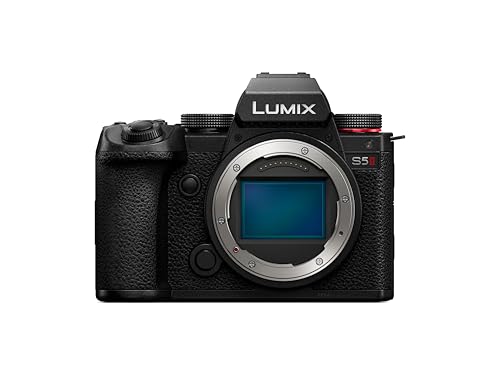
Panasonic LUMIX S5II — Best for serious archive projects
Serious oral history projects — the kind libraries commission and universities archive — need a camera that behaves like infrastructure, and the S5II is built in that spirit. Its active cooling is the headline feature for this discipline: where lesser bodies ration recording time against heat, the Panasonic simply continues, session after session, which is precisely the temperament you want when a narrator finds her rhythm in minute seventy and the story finally turns toward the part she has never told anyone.
The full-frame sensor earns its place in real homes rather than studios. Oral history kitchens are lit by one window and a warm bulb, and the S5II renders faces in that mixed, meagre light with a gentleness that flatters age rather than interrogating it. Wrinkles read as biography, not noise. Interviewees who watch themselves back — and projects should always offer that — meet a kind face, and they agree to the second session.
Audio provision is professional in conception: proper microphone input, headphone monitoring, and compatibility with multi-channel audio accessories for the projects that grow to two narrators or a narrator plus room tone. The interviewer can wear headphones without looking like a broadcast crew, hearing exactly what posterity will hear and catching the passing siren before it swallows a sentence.
Stabilisation matters in this discipline more than outsiders expect. Not every interview happens at a table; narrators walk their gardens, their workshops, the streets of their childhood, and the S5II’s stabilisation keeps those walking testimonies smooth without a gimbal’s fuss. The camera follows the story’s geography instead of confining the story to a chair.
Its size is the honest counterweight. This is a real camera body that announces itself in a small room, and for narrators intimidated by equipment, the smaller picks below may coax better testimony. Skilled interviewers manage the presence with unhurried setup and conversation before recording; the camera’s calm competence then becomes reassuring rather than imposing.
Colour and format choices suit archival thinking: natural colour profiles that will not look dated in twenty years, standard codecs that future archivists can open, and recording media that any institution’s workflow accepts. Projects are remembered by their files long after their cameras retire, and the S5II produces files with a long, boring, honourable future.
Choose it as the anchor of a funded project, a community archive, or a family undertaking ambitious enough to interview a generation systematically. It is the camera here that a librarian would buy, and librarians are the correct constituency for oral history equipment.
One practical ritual it rewards: build a fixed interview preset — frame, exposure approach, audio levels, file naming — and load it for every session. Consistency across dozens of interviews is what turns a pile of recordings into a collection, and this body holds a preset the way a good archive holds a catalogue.
If your project has a budget line and a deadline, this is where the camera money goes. Spend the remainder on microphones and storage, in that order, and the archive will outlive everyone who made it — which is, after all, the point.
Institutions should also weigh its serviceability: a project that will run for years needs a body its local technicians know, with accessories that can be replaced mid-project without redesigning the workflow. The S5II sits in that professional mainstream, and a community archive can hand it from volunteer to volunteer with a one-page settings card and expect identical footage from every pair of hands.
- Format: full-frame mirrorless with active cooling
- Strength in brief: long sessions and pro audio provision
- Audio: mic input and headphone monitoring
- Use: anchor camera for archive projects
Strengths
- Records long sessions without thermal anxiety
- Beautiful rendering of faces in poor light
- Audio monitoring fit for archival standards
Trade-offs
- Physically imposing for shy narrators
- The most serious investment on this list
- Full kit grows with lenses and accessories
Best for: Funded archives, libraries and systematic family-history projects.
Not suited for: A single informal interview where smaller kit would relax the room.

Canon EOS R50 — Best for family oral history
Most oral history is not institutional. It is a grandchild with a free Sunday, a kitchen table, and a grandfather who has finally agreed to talk about the war, the migration, the business he built and lost. The EOS R50 is the camera for that Sunday: small enough to be unremarkable, capable enough to honour the occasion, and priced so that the project does not need a grant committee’s permission to exist.
Its autofocus performs the interviewer’s favourite trick — disappearing. Face and eye detection hold a narrator who leans, rocks, gestures and wipes an eye, without the hunting that would draw attention to the machinery. The interviewer can sit beside the camera, maintain eye contact like a human being rather than a technician, and trust the frame to stay honest. That trust is the entire user experience of this camera in this discipline.
Video quality sits comfortably above the archival threshold: clean, naturally coloured footage that will look respectable on a family television in thirty years, in files small enough that a household can actually store a whole project without a storage strategy meeting. Canon’s colour science has a long reputation for kindness to skin, and elderly narrators benefit from that kindness more than any other subjects in photography.
Audio is where the R50 asks the interviewer to complete the design. It provides a microphone input, and oral history demands that it be used: a modest lapel microphone on the narrator transforms the recording from a document into a presence. The camera’s part is to accept that microphone gracefully and to keep levels visible; the project’s part is never to rely on sound gathered from across a room.
Session endurance suits real conversations. Interviews breathe — tea is made, photographs are fetched, a neighbour knocks — and the R50’s power and recording behaviour across a typical two-hour visit, with natural pauses, simply does not become a topic of conversation. Equipment that never becomes the topic is the highest praise oral history can give.
There are limits to respect. Very long unbroken recordings in warm rooms deserve a test before the day itself, and the body’s compact controls reward a preset configured in calm conditions. Neither limit survives contact with an afternoon of preparation, and both are fair prices for the camera’s size and cost.
The R50 also grows with the project. The second interview adds a tripod and a lapel mic; the tenth adds a light; the fiftieth — because narrators recommend each other — still runs on the same body, now surrounded by a small, sensible kit. Many lasting community archives began exactly this way, with one approachable camera and one person who kept showing up.
Buy it for the interviews you can start this month rather than the archive you might fund someday. In oral history, someday is the enemy; narrators are mortal, and the perfect project that begins too late records silence beautifully.
Set it up once with a grandparent-proof simplicity — one mode, one button, a frame you have already composed — and even a narrator who insists on operating it themselves for a message to descendants will succeed. Tools that welcome the whole family into the project multiply the stories a family keeps.
A note for the family’s future archivist: label the R50’s memory cards with the project name from day one, and keep a simple paper log beside the camera — date, narrator, topics — in the same handwriting you would use for the back of a photograph. The camera makes recording easy; the log makes the recordings findable in thirty years, and findability is what separates an archive from a shoebox.
- Format: APS-C mirrorless, compact body
- Strength in brief: trustworthy face autofocus and friendly handling
- Audio: microphone input for lapel or shotgun mics
- Use: family and community interview projects
Strengths
- Approachable for narrators and interviewers alike
- Autofocus that frees the interviewer to listen
- Gentle, natural colour for faces
Trade-offs
- Test long unbroken sessions before the day
- Needs an external mic to fulfil its promise
- Compact controls reward pre-set configuration
Best for: Family historians and community volunteers starting now.
Not suited for: Institutions needing multi-channel audio and maximum endurance.

Sony ZV-E10 II — Best solo interviewer’s camera
The solo oral historian is interviewer, camera operator, sound recordist and tea-maker in one body, and the ZV-E10 II was designed by people who understand one-person production. Its vari-angle screen lets you compose and confirm framing from the interviewer’s chair beside the camera; its face autofocus holds the narrator while your attention is where it belongs — on the story, and on the follow-up question forming inside it.
One feature earns special mention in this discipline: the camera’s willingness to shift focus to an object presented to the lens. Narrators constantly hold things toward the camera — a medal, a photograph, a letter, the tools of a vanished trade — and a camera that focuses on the object, then returns to the face when it is lowered, records those moments the way memory itself presents them. In lesser setups those moments are a blur and an apology.
Sony’s autofocus depth is the deeper reassurance. Elders move unpredictably — leaning close to confide, turning to point at a photograph on the wall, rocking with laughter — and the tracking absorbs all of it without visible searching. The interviewer can promise the narrator, truthfully, that the machine will not interrupt, and then keep that promise for two hours.
The lens ecosystem lets a project dress the camera for its setting: a fast prime for a dim parlour, a modest zoom for a narrator who wants distance, a wide lens for the cramped kitchen where the whole story happened. Oral history settings are found, not built, and interchangeable lenses are how a camera adapts to rooms it has never seen.
Audio provision respects the work — microphone input and monitoring options that pair naturally with lapel and wireless systems — and the body’s creator heritage shows in small mercies like a recording tally that a narrator can understand at a glance. People deserve to know when they are on the record; this camera makes the state of recording legible, which is an ethical feature as much as a technical one.
Endurance for typical interview sessions is strong, with the standard mirrorless advice applying: mains power or a power solution for the longest sittings, a rehearsal recording in the actual room, and settings locked before the narrator arrives. Prepared, the ZV-E10 II simply vanishes into the furniture of the conversation.
Its personality is the one caveat. This is visibly a modern creator’s camera, all screens and minimalism, and a minority of elderly narrators find such objects alien where a traditionally shaped camera feels familiar. Read your narrator: the technologically comfortable will love it, and the interviewer’s job is to match the tool to the person, not to the catalogue.
For the growing number of oral historians who also publish — a local-history channel, a podcast with video, a community archive with a public face — the ZV-E10 II doubles as the publishing camera without compromise. The archive master and the public edit can come from the same body, which keeps small projects affordable and consistent.
Choose it when you work alone, publish as well as preserve, and want automation you can genuinely lean on. It is the most capable pair of hands a one-person archive can hire.
Solo interviewers should rehearse one specific manoeuvre with this camera: the mid-interview glance. Position the screen where a natural glance toward the narrator’s hands or the window passes across it, and you can verify framing and recording without ever breaking the conversation’s spell by visibly checking equipment. It sounds theatrical; in practice it is the difference between an interview and an appointment.
- Format: APS-C mirrorless, creator-oriented
- Strength in brief: autofocus and object-focus for artefacts
- Screen: vari-angle for solo operation
- Audio: mic input with monitoring workflows
Strengths
- Focus shifts gracefully to objects narrators present
- Solo-friendly screen and controls
- Deep lens choice for found locations
Trade-offs
- Modern styling may alienate some elders
- Long sessions want a power solution
- Menu depth rewards pre-session setup
Best for: Solo interviewers who also publish their projects.
Not suited for: Narrators most comfortable with traditional-looking cameras.

Sony ZV-1F — Best unobtrusive tabletop camera
There are narrators who will not perform for a camera, and the ZV-1F is the diplomatic answer: a device so small and unassuming that it registers as an object on the table rather than an audience in the room. Oral historians working with shy, private or camera-wary narrators report a consistent phenomenon — the smaller the camera, the longer and deeper the testimony. This is the smallest serious camera on the list, and its size is its scholarship.
The fixed wide lens suits the geography of conversation. Across a kitchen table it frames a narrator’s face and hands — and hands matter in testimony, turning a wedding ring, smoothing a photograph, demonstrating the grip of a tool last held fifty years ago. The framing feels like sitting with someone, because optically, it is.
Simplicity is engineered rather than accidental. The ZV-1F offers a defocus mode for a gentler background, face-priority exposure that protects the narrator’s features against bright windows, and operation simple enough that setup takes minutes and the interviewer’s attention returns to the human being. For volunteers and family historians intimidated by interchangeable-lens cameras, that simplicity is the difference between a project that happens and a project that remains a good intention.
Its video is clean and its colour honest, well matched to the archival virtues this guide keeps preaching: nothing fashionable, nothing processed into a look that will embarrass the record in twenty years. The footage simply shows a person, in a room, telling the truth as they remember it — which is the whole assignment.
Audio follows the pattern of the list: the built-in microphones are better than most for capturing the room, and the camera accepts external solutions for the projects that grow. Begin with the camera close and the room quiet, and even the internal audio of a ZV-1F across a table will preserve a voice intelligibly; add a lapel microphone and the recording becomes intimate.
Limits are the price of the diplomacy. The fixed lens cannot tighten the frame from across a large room, low light tests the small sensor sooner than the mirrorless picks, and long sessions want attention to power. These are manageable within the camera’s intended theatre — the table, the armchair, the garden bench — and unreasonable only outside it.
There is a second career for this camera within a project: the B camera. Paired with a main body, the ZV-1F sits unnoticed capturing the wide two-shot or the interviewer’s reactions, and its footage cuts in without colour arguments. Archives that can afford two angles rarely regret the modest one.
Buy it for the narrators who flinch at equipment, for the volunteers who need simplicity, and for the interviews where the best camera is the one nobody remembers was there. Some of the most valuable testimony ever recorded was given to machines the narrator had forgotten.
Charge it, clear its card, set it on the table with a small tripod, and spend your preparation time where it belongs: on the questions, the photographs to prompt memory, and the relationship that makes a person willing to remember out loud.
Grandparents recording grandchildren deserve a mention, because the exchange runs both ways: this is the camera to leave with an elder who wants to record messages, memories and instructions in their own time, alone, without a technician grandchild present. Its simplicity respects their independence, and the resulting self-recorded pieces often carry an intimacy no interviewer could have drawn out.
- Format: fixed-lens compact, ultra-wide view
- Strength in brief: near-invisibility and simplicity
- Screen: vari-angle, touch operation
- Audio: capable internal mics, external options
Strengths
- Narrators forget it is there
- Frames face and hands across a table
- Genuinely simple to operate well
Trade-offs
- Fixed lens limits distant framing
- Small sensor in dim rooms
- Power planning for long sittings
Best for: Shy narrators, volunteers and tabletop interviews.
Not suited for: Large rooms or cinematic ambitions.

DJI Osmo Pocket 3 — Best for testimony in meaningful places
Some testimony lives in places, not chairs. The veteran wants to walk the harbour he sailed from; the retiring shopkeeper tells the business’s story shelf by shelf; the farmer narrates the fields in order of the seasons he worked them. The Osmo Pocket 3 is the camera for those interviews: a gimbal-stabilised, face-tracking device that turns a walk through a meaningful landscape into smooth, watchable testimony without a crew, a rig or a rehearsal.
Face tracking does the camera operating. clipped to a small grip or held at arm’s length, the Pocket keeps the narrator framed while they walk and gesture, and its stabilisation irons the footsteps out of the picture so completely that the footage feels observed rather than pursued. The narrator leads; the camera attends. That relationship — the storyteller guiding, the machine following — produces testimony of a different emotional register from the seated interview, and archives increasingly prize it.
The 1-inch sensor gives these outdoor and indoor walks a picture quality that respects their importance: dusk in a farmyard, lamplight in a workshop, the grey even light of a northern street all record cleanly. The rotating screen flips between the narrator filming themselves — a genuine option for tech-comfortable elders recording messages and memories alone — and the interviewer filming them.
Audio is where planning matters. DJI’s wireless microphone pairing is this camera’s archival superpower: the narrator wears a small transmitter, and their voice stays close and clear whether they are at the far end of the allotment or turning away to point out the boundary their grandfather fenced. Walking testimony dies by wind and distance on lesser setups; here the voice survives the geography.
As a seated interview camera it moonlights competently — parked on a mini tripod it tracks a narrator’s movements within its gimbal range and records a fine picture — but buying it solely for tabletops wastes its genius. Its place in an oral history kit is as the expedition division: the camera for the return visit, the site tour, the last walk around the house before the sale.
Practical cautions are brief: the internal battery wants a power bank on long field days, the gimbal appreciates its case between locations, and the wide lens keeps the world in frame whether the world is photogenic or not — choose your walking route with the background in mind. None of these diminish the central fact that no other device here can do what it does.
Projects with any ambition toward place-based storytelling should consider it essential rather than exotic. A seated archive tells what people remember; a walking archive shows where the remembering lives, and the combination is greater than either.
Buy it when your narrators’ stories have addresses. Then charge it the night before, clip the microphone on with a joke to break the ice, and let an old person lead you through the geography of their life at their own pace.
The footage you bring home from those walks has a quality archivists describe with a specific word: presence. Future viewers will not just hear about the street. They will travel it, at walking pace, beside the person who knew it best.
Heritage organisations have begun using the Pocket for a specific archival genre: the narrator-led tour, in which the elder holds the camera’s leash entirely — choosing the route, the stops and the stories — while the historian walks alongside asking nothing but ‘what happened here?’. The footage’s authority comes from that surrender of control, and no tripod-bound camera can produce it.
- Format: gimbal camera, 1-inch sensor
- Strength in brief: stabilised walking testimony
- Audio: direct pairing with DJI wireless mics
- Use: place-based interviews and site tours
Strengths
- Walking footage without a crew
- Wireless voice stays close at any distance
- Self-recording option for independent narrators
Trade-offs
- Battery planning for field days
- Wide fixed lens only
- Gimbal needs basic protection
Best for: Walking interviews in homes, streets, farms and workshops.
Not suited for: Purely seated projects that never leave the table.

GoPro HERO13 Black — Best for fieldwork conditions
Oral history fieldwork does not always happen in kitchens. It happens on fishing boats at dawn, in lambing sheds, on demolition sites and hill farms, interviewing people whose stories are inseparable from work that no mirrorless camera should be asked to witness at close quarters. The HERO13 Black is the camera that goes there anyway: waterproof, shrugging off knocks, mountable on a beam or a boat rail, and utterly unbothered by the conditions that carry the stories.
Its interview method is distinctive. Mounted at conversational distance, its very wide view captures the narrator within their working environment — hands, tools, weather and all — producing testimony that is as much documentary as interview. A fisherman mending nets while he talks about the old fleet is a richer historical record than the same man seated against a wall, and the GoPro’s environmental framing is how a solo historian captures that richness without a camera operator.
The wide lens imposes a discipline: distance is everything. Placed across a table it distorts faces unkindly, so the GoPro interviewer learns to position it as an observer of a scene rather than a portraitist — a little further back, at the narrator’s eye level, with the environment allowed to speak. Used with that understanding, its footage has an immersive honesty that archivists increasingly collect deliberately.
Audio requires the most planning of any pick here. The camera’s own microphones fight wind and machinery bravely but cannot win; the professional pattern is an external recorder or wireless microphone on the narrator, synced in editing, or GoPro’s media accessories where conditions allow. Treat the GoPro as the picture department and give sound its own department, and the combination survives conditions that would end other cameras’ days.
Endurance in the field is a system: swappable batteries are this camera’s great archival virtue, letting a historian rotate power through a long day of site interviews without mains electricity, and the recording media and mounts all follow the same rugged logic. Everything about the kit assumes the outdoors is the office.
There is a democratising angle too. Working narrators — farmers, builders, lifeboat crew — often relax around a GoPro because it belongs to their world of gear rather than the media’s world of cameras. It reads as a tool, not an audience. Oral historians learn to value that reading; testimony given to a tool is frequently franker than testimony given to a television.
Limits, plainly: it is the weakest portrait camera here, its low-light picture trails the larger sensors, and its footage demands the most post-production care to sync and grade. An archive consisting solely of GoPro interviews would look strange. An archive with no way to record a boat, a barn or a building site would be poorer, and that is the gap this camera fills.
Buy it as the field division of a serious project, or as the only camera for oral history gathered where the work happens. Pair it with a proper microphone plan and a pocketful of batteries.
Then go where the stories are, in the weather they happened in, and let the little camera do the thing it was born to do: be present, be tough, and bring the testimony home dry.
One archival habit this camera rewards disproportionately: slate your sessions aloud. State the narrator’s name, the place and the date into the recording at the start, because GoPro footage from a dozen sites and seasons looks deceptively alike in an editing timeline, and the spoken slate — an old documentary tradition — saves future archivists from detective work that a ten-second sentence prevents entirely.
- Format: waterproof action camera
- Strength in brief: survives the workplaces where stories live
- Mounts: extensive system for beams, rails and gear
- Power: swappable batteries for long field days
Strengths
- Records where other cameras cannot go
- Environmental framing rich with context
- Working narrators treat it as a tool, not media
Trade-offs
- Weakest portrait lens on the list
- Audio needs a separate plan
- Footage needs sync and grading care
Best for: Field interviews in farms, boats, workshops and weather.
Not suited for: Formal seated portrait interviews.
How Do the Six Oral History Cameras Compare?
| Camera | Badge | Standout trait | Watch out for |
|---|---|---|---|
| Panasonic LUMIX S5II | Best for serious archive projects | Infrastructure-grade calm | Manage its presence with unhurried setup |
| Canon EOS R50 | Best for family oral history | The interview you will actually record | The microphone input is not optional equipment |
| Sony ZV-E10 II | Best solo interviewer’s camera | Built for the one-person archive | Match its modern feel to your narrator |
| Sony ZV-1F | Best unobtrusive tabletop camera | Diplomacy through smallness | Keep it close; the lens is wide by design |
| DJI Osmo Pocket 3 | Best for testimony in meaningful places | Testimony with an address | Wind and distance demand the wireless mic |
| GoPro HERO13 Black | Best for fieldwork conditions | The expedition camera | Sound gets its own department, always |
What Microphone Strategy Does Oral History Actually Require?
One rule governs everything: the microphone belongs near the narrator’s mouth, not on the camera across the room. A lapel microphone clipped a hand’s breadth below the chin captures the voice with an intimacy no camera-top microphone can match, and it keeps doing so when the narrator turns to fetch a photograph or drops their voice at the hard part. Every camera in this guide was chosen to cooperate with that rule.
Monitor what you are recording. Headphones — even modest ones, worn for a minute at the start and periodically through the session — reveal the refrigerator, the traffic and the clock that your ears had edited out of the room. Future listeners cannot edit them out at all. The two minutes spent listening before the first question are the highest-value minutes of the entire session.
How Do You Set Up an Interview in a Real Home?
Arrive with the camera work already decided: a frame that includes the narrator’s hands, light from a window to one side rather than behind, and a chair arrangement that lets you sit close enough for conversation rather than shouting across a production. Set up slowly and narrate what you are doing; narrators relax when the equipment is explained, and the unhurried setup conversation often surfaces the stories the interview then pursues.
Photographs and objects are the interviewer’s secret technology. Ask the narrator to have a few ready — the wedding picture, the union card, the shop keys — and let the camera be running when they handle them. Memory lives in the hands as much as in the mind, and the best oral history sessions are built around things that can be held.
How Long Should a Session Run, and Who Owns the Recording?
Ninety minutes of recording is a long day for an elderly narrator, whatever their enthusiasm at minute ten. Plan sessions in chapters — childhood, work, family, reflections — with genuine breaks, and prefer a second visit to an exhausted marathon. Tired testimony flattens; rested testimony deepens, and the camera choice matters less than the narrator’s stamina management.
Consent and ownership deserve the same clarity as the audio. Agree, in plain language and preferably in writing the narrator keeps a copy of, who may listen, where the recording will live, and what happens to it in the future. Archives built on vague permissions become archives nobody may open. The cameras here all make copies easily; the ethics are the interviewer’s own equipment, and they must be carried to every session.
How Should You Archive the Files So They Survive?
The rule of three applies from the day of recording: the original card, a copy on your computer, and a copy somewhere else — an external drive at another address or a reputable cloud store. Drives fail, houses flood, and an oral history recording is by definition irreplaceable. Back up before you edit anything, and never let the only copy ride home in the same bag as the camera.
Name files like an archivist, not a camera: narrator, date, place, session number, in a scheme you write down and follow for the whole project. Add a one-page session note — who, where, topics covered, spellings of names — while memory is fresh. Future researchers will bless those notes more than any camera decision in this guide, and future researchers include your own family in thirty years.
What Questions Make Recorded Testimony Come Alive?
Open questions with sensory hooks outperform the chronological interview. Ask what the kitchen smelled like, what the foreman’s voice sounded like, what the walk to work passed — and then practise the hardest skill in the discipline, which is silence. Narrators fill a respectful pause with the memory they were deciding whether to share. Interviewers who rush to fill it themselves record their own voices where history should be.
Prepare your topics, hold them loosely, and follow the energy: the digression about the neighbour’s dog may be the doorway to the street’s whole social history. The camera’s job during all this is to be forgotten. Choose it, set it, trust it — which is the argument of this entire guide in one sentence.
Should Oral History Be Video at All, or Is Audio Enough?
Audio-only recording has a distinguished history and remains the right choice for narrators who cannot relax on camera, for projects with transcription at their heart, and for the most sensitive testimony. Nothing in this guide should shame a historian out of a good audio recorder and a quiet room.
Video earns its place when place, gesture and objects carry meaning — the hands demonstrating the craft, the walk down the street, the medal held to the light — and when descendants, who will watch rather than read, are the archive’s first audience. Most projects thrive with both: video for the sessions that welcome it, audio for the rest, and a catalogue that treats them as one collection.
Which Mistakes Ruin Oral History Recordings?
Relying on the camera’s built-in microphone from across the room is the unforgivable one. The resulting recording — thin voice, loud room, every cough and clock competing with testimony — cannot be repaired by any software, and the narrator cannot be asked to live the afternoon again. Microphone placement is not an accessory decision. It is the recording.
Interrupting the narrator with the equipment runs second: stopping a story to adjust a setting, letting a battery die at the emotional summit, allowing a recording limit to amputate a sentence. Every one of these is prevented by the rehearsal session — record an hour of anything, in the actual room, before the day — and by the power and media discipline this guide keeps repeating because repetition is what discipline is.
Asking only closed questions produces archives of yes and no. The camera records what the interviewer invites, and an interviewer who asks for facts gets a census; one who asks for scenes gets a life. Prepare questions that begin with ‘tell me about the day’ rather than ‘what year was’, and let the narrator’s memory choose its own roads.
Neglecting consent paperwork because the narrator is family is a mistake that matures with time. Families change, recordings travel, and a grandchild’s upload can carry a grandfather’s confidences further than he ever imagined. Five minutes of plain agreement at the start protects everyone’s dignity for decades.
Filming against a bright window deserves its dishonourable mention: the narrator becomes a silhouette, the camera hunts exposure with every cloud, and the face — the entire point — is lost. Turn the chair. It takes thirty seconds and saves the archive.
Finally, the saddest mistake: the interview postponed. Equipment research can become a respectable disguise for delay, and this guide refuses to serve as one. If a narrator is willing and your current camera is merely imperfect, record with it this week and upgrade for the second session. An imperfect recording of a voice is history. A perfect camera bought after the funeral is furniture.
Final Recommendation
For a funded or systematic project, build around the Panasonic LUMIX S5II and spend the rest of the budget on microphones, headphones and storage. For the family project that constitutes most oral history, the Canon EOS R50 plus a lapel microphone is the combination we would hand to any grandchild with a willing grandparent and a free Sunday.
The ZV-E10 II serves the solo publisher, the ZV-1F the shy narrator, the Pocket 3 the stories with addresses, and the HERO13 the stories with weather. Between them there is no honest oral history situation this list cannot record — only situations it cannot record twice, which is why the choosing matters less than the starting.
Close this guide, charge a battery, and make the appointment. The archive you begin imperfectly this month will matter more, to more people, for longer, than almost anything else you ever record.
And a gentle instruction to end on, addressed to whoever holds this guide with a living narrator in mind: the interview you record this season will be quoted at family gatherings, cited in local histories and played at anniversaries long after every camera here is obsolete. Equipment is the smallest part of that legacy. The appointment is the largest. Make it.
Related guides
- Best Cinematic Cameras for Arma 3: The In-Game Camera Tools and the Desk Cameras That Present Them
- Best Cameras for Recording Weddings: Quiet, Tireless and Ready for the Dark
- Best Cameras for Photographing Wildlife: Six Tools for Subjects That Never Pose
Frequently Asked Questions
What is the single most important accessory for oral history filming?
A lapel microphone for the narrator, without close competition. It transforms every camera in this guide more than an upgrade to the next model would, costs a fraction of any of them, and its absence is the one flaw no editing can repair.
How long can these cameras record in one session?
All six handle typical interview sessions comfortably when power and media are planned, and the actively cooled S5II is the choice for the longest unbroken sittings. Whatever you choose, rehearse a full-length dummy session in the real room before the narrator’s day.
Should I record in 4K for an archive?
It offers future-proofing and cropping room at the cost of storage that multiplies across a whole project. Many archives standardise on high-quality 1080p for volume and reserve 4K for flagship interviews. Decide once, document the decision, and stay consistent across the collection.
Can I use my phone instead of these cameras?
A modern phone records a respectable picture and is infinitely better than postponing the interview. Its weaknesses for this work are interruption by calls, limited audio options and session endurance. Use it gladly for a first session; adopt a dedicated camera when the project becomes a project.
How do I help a nervous narrator relax on camera?
Choose the smallest camera the project allows, set it up before they sit down, start with easy sensory questions, and offer to stop or delete anything at any time. Most nervousness evaporates within ten minutes of genuine conversation — the interviewer’s calm matters more than the camera’s size.
What should I do immediately after each session?
Back the recording up twice before anything else, write the one-page session note with names spelled correctly, and send the narrator a thank-you with a copy or a promise of one. Archives are built as much on these courtesies as on the recordings; narrators who feel honoured recommend their friends.
Is it better to interview one person or a couple together?
Both have value: solo interviews go deeper and stay on one memory’s track, while couples correct, prompt and tease out stories neither would tell alone — at the cost of crosstalk that challenges microphones. Many projects record the couple first for breadth, then each partner solo for depth.
How should I handle it when a narrator becomes emotional?
Keep the camera running only with sensitivity to the moment: lower your own energy, offer a pause and water, and let the narrator choose whether to continue. Some of the most valuable testimony in any archive arrives through tears, given freely. Your job is to make continuing their decision, never your momentum’s.
Should interviews be transcribed, and does the camera choice affect that?
Yes — a transcript multiplies an archive’s usefulness for researchers, descendants and search. Camera choice matters indirectly: clean, close-miked audio transcribes accurately whether by human or machine, while roomy camera-microphone audio defeats both. Transcribe early, while the narrator can still correct names and places.
Related Guides
Oral history touches several neighbouring crafts, and these guides carry the work further: our guide to lapel microphones for interviews how to digitise and preserve family photographs the best external drives for long-term photo and video archives


