kajuandouglas.com is reader-supported. When you buy through links on our site, we may earn an affiliate commission.
Where to Buy and How This Guide Is Organized
Travel vlogging is a negotiation between two thieves: weight and regret. Carry the full kit and the trip becomes a porter’s job, the camera a reason to skip the dawn market and the unplanned detour where the real story was waiting. Carry too little and the footage comes home shaky, wind-blasted, and thin — a souvenir of a journey the audience cannot feel. The best affordable cameras for vlogging and travel are the ones that settle that negotiation: small enough to be present for everything, capable enough that presence is worth something, and priced so that losing one to a rickshaw, a wave, or a moment of carelessness would sting rather than end the channel.
The six below were chosen by itinerary, not by laboratory. Between them they cover the walking tour, the hostel-table monologue, the motorbike day, the surf morning, the food market at night, and the mountain viewpoint where a still photograph still matters. Each is a specialist in at least one of those scenes and competent in the others, because travel punishes the one-trick camera and the five-kilo camera with equal enthusiasm.
Where to buy: each linked name leads to its Amazon listing, and travel buyers should compare bundles like packers — by what the kit adds to the bag. Creator bundles for these models often include the extra battery, the small tripod-grip, or the protective case that travel consumes anyway; priced honestly, they are frequently the cheapest way to assemble a road-ready kit. Buy before the trip, not during it, and let the camera learn your hands at home.
Affordable, for the road, has a second meaning beyond the receipt: replaceable. Every camera here sits at a price where a working creator can insure it, a hobbyist can risk it, and a channel can own two angles without a sponsor. The flagship travel camera exists, and it is magnificent, and it changes how its owner moves through a crowd. These six change nothing about how you travel, which is precisely their virtue.
One more framing note before the picks: stills matter on the road more than vlogging culture admits. The thumbnail, the community post, the photograph that outlives the video — several picks below were chosen partly for their stills manners, and the verdicts mark which cameras treat photography as a citizen and which treat it as a passenger.
Skim the verdict lines first if the flight is boarding. They assign each camera to its journey in one sentence, and the long reviews that follow exist to defend those sentences — with the trade-offs printed as plainly as the praises, because a camera bought for the wrong trip is expensive at any price.
Key Takeaways
- On the road, the carried camera beats the better camera — weight is a creative decision.
- Stabilization you do not have to think about is the whole game for walking footage.
- Wind is the enemy of travel audio; microphone options and windscreens are buying criteria.
- One camera should serve the vlog, the thumbnail, and the still photograph without a bag change.
- Affordable also means replaceable — insure it, risk it, and keep filming.
- Vertical framing is a native language now; rotating screens and twist-to-vertical bodies save edits.
In this guide
Quick Picks
Six road cameras for six kinds of journey: the all-round creator body, the walking gimbal, the budget presenter, the stills-leaning compact, the indestructible action camera, and the 360 storyteller.
| Pick | Badge | Why It Earns Its Place |
|---|---|---|
| Sony ZV-E10 II | Best Overall for Vlogging and Travel | Interchangeable lenses, showcase autofocus, and real audio — the base camp from which a travel channel grows. |
| DJI Osmo Pocket 3 | Best for Walking Tours and City Days | A pocket gimbal that makes every walking shot look crewed — the highest footage-per-gram ratio in travel. |
| Sony ZV-1F | Best Budget Vlogging Traveller | The friendly fixed-lens presenter camera: wide, simple, and cheap enough to insure against the road. |
| Canon PowerShot G7 X Mark III | Best for Travellers Who Still Photograph | A one-inch compact with real stills pedigree, close focus for food and detail, and vlogging manners in a pocket body. |
| GoPro HERO13 Black | Best for Adventure Travel | Waterproof, mountable, and unbothered by drops — the camera for the days the itinerary gets wet, fast, or airborne. |
| Insta360 X4 | Best for Immersive and Second-Angle Travel | Records in every direction at once — the travel camera that never misses the moment behind you. |
How Did We Choose the Best Affordable Cameras for Vlogging and Travel?
We packed them, mentally, a hundred times. Every candidate was judged as luggage first: does it earn its grams on a one-bag trip, does it charge from the same cable as everything else, does it survive the bottom of a daypack and the top of a mountain in the same week? Cameras that demanded their own case, their own charger brick, and a daily decision about whether to bring them were marked down, because on real itineraries those cameras are brought on day one and abandoned by day four.
Stabilization and autofocus formed the working test, because travel footage is shot while moving, talking, and looking at something else. We favoured cameras that hold a face in frame and focus while the operator walks backward through a market, that smooth footsteps mechanically or electronically without turning the world to jelly, and that forgive the operator for being a tourist first and a cinematographer second. Perfection was not required; forgiveness was.
Audio decided more places than image quality did. Travel sound is wind, traffic, café crockery, and a presenter competing with all three, so microphone inputs, accessory audio ecosystems, and honest wind handling counted heavily. A camera that can only hear through its own body in a gale is a camera whose best footage will be published muted, under music, and that is a creative tax this guide refused to recommend.
Finally, verification and value: every pick is a confirmed pool model for this site, linked under its exact name, and every one sits at a price where the road’s risks — theft, water, gravity — are insurable facts rather than existential threats to the channel.
We also screened for the thumbnail test and the grandmother test together: could this camera produce the still that sells the video, and could a non-technical travelling companion be handed it at a viewpoint and return a usable clip? Travel crews are whoever is standing nearby, and cameras that only their owner can operate fail journeys in ways spec sheets never record.
Repairability and resale closed the selection. Travel is hard on equipment, and the models here sit inside deep service and second-hand ecosystems, so a body can be repaired in a capital city, replaced from a local listing, or sold at the journey’s end to fund the next one — the circular economy that keeps affordable travel gear honestly affordable.
What Makes a Camera a True Travel Vlogging Camera?
It begins with the deploy time: the seconds between seeing the moment and recording it. Travel moments — the street performer’s peak, the light breaking on the square, the joke at the hostel table — are perishable in a way studio moments are not. Cameras that wake fast, frame from a flipped screen instantly, and focus without being asked dominate this genre out of proportion to their specifications, and several picks below are here because their deploy time is effectively zero.
The second trait is self-sufficiency. A travel vlogger is presenter, operator, sound recordist, and editor, usually before breakfast, in a language environment that may not be their own. Tools that collapse those jobs — gimbals that level themselves, tracking that reframes, autofocus that glides to a held-up dish or souvenir — are not conveniences on the road; they are the difference between a daily video and a weekly apology. Judge every feature by whether it replaces a crew member, and the right camera selects itself.
Third is the unglamorous matter of power and files. USB charging from the same bank that feeds the phone, files that a modest laptop or a phone can edit in a hostel bunk, and storage that does not require a ritual — these decide whether the publishing rhythm survives the trip. The cameras here were all chosen to live inside an ordinary traveller’s electronics ecosystem rather than demanding a production office at home.
Fourth, discretion. A small camera films the market as it is; a large rig films the market performing for a camera. Several picks below are valued by travel creators precisely for their unremarkableness — they read as a tourist’s toy to the crowd and as a production tool to the audience, and that double identity is the most valuable specification in the entire genre.
And fifth, the stills clause. Travel creates photographs that outlive videos — the portrait of a guide, the mountain at dawn, the frame that becomes the channel’s banner and the traveller’s wall. A travel camera that treats stills as an afterthought taxes every one of those moments, which is why the compact and mirrorless picks below were audited for their photography as sternly as for their footage.
There is a sixth trait, and it is financial psychology: a camera at these prices gets lent, risked, mounted, and handed around, and travel footage improves in direct proportion to the owner’s willingness to do those things. The expensive camera is filmed with; the affordable camera is lived with — and audiences can tell the difference in the first ten seconds.
Consider, finally, the arc of a trip’s energy. Day two tolerates a rig; day twelve does not. Cameras earn their place in week two of a journey, when novelty has faded and only the frictionless tools are still leaving the hotel. Every pick in this guide was chosen with day twelve in mind — the true test of travel equipment is not the departure lounge, it is the second Tuesday.
One more test, applied at the packing table: can the camera be operated one-handed, half-asleep, in a crowd, by its owner who is also holding the tickets? Travel’s decisive footage is shot under exactly those conditions, and the pocket tools in this guide exist because the honest answer for a system camera, however magnificent, is so often no.
Which Six Affordable Cameras Earn Their Place in the Bag?
Ordered along the journey: the base-camp creator body, the walking specialist, the budget presenter, the photographer’s compact, the adventure instrument, and the camera that sees in every direction at once.

Sony ZV-E10 II — Best Overall for Vlogging and Travel
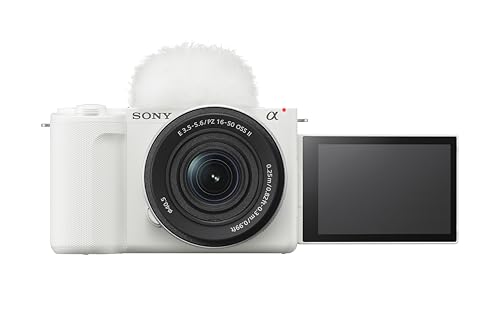
The ZV-E10 II is the base camp of this list: the camera a travel channel buys when it intends to grow. Its Product Showcase autofocus — gliding from the presenter’s face to the street food, the handicraft, the train ticket held toward the lens — performs the defining shot of travel vlogging so reliably that solo creators stop planning around focus entirely. Around that trick sits a proper system: an APS-C sensor with real low-light manners for night markets and cave temples, a microphone path for the audio the road demands, and the E-mount lens shelf, where a fast prime turns hostel monologues cinematic and a wide zoom turns old-town streets generous.
Travel handling is thoroughly considered. The flip screen serves the walking selfie-frame and the overhead food shot alike; the body runs from USB power in cafés and night trains; the colour can be set to publish-ready for creators editing on phones, or kept neutral for those grading at home. Stills are fully respectable — thumbnails, community posts, and the occasional frame worth printing all come from the same body, which is the consolidation a one-bag traveller prays for.
Its honest frictions are a system’s frictions. The lens wardrobe must be chosen and carried — two lenses is the travel discipline this camera rewards — and stabilization leans on lenses and technique rather than a floating sensor, so walking footage asks for the gimbal pick below or a steady hand and a wide lens. Neither friction is hidden in this review, because both are the price of the one thing no fixed-lens camera can offer: a system that grows with the channel.
Buy it as the deliberate centre of a travel kit and it repays the deliberation for years: lenses accumulate, the body teaches its operator, and the footage library stays in one colour family from the first trip to the fiftieth. For the creator whose travel is a practice rather than a holiday, it is the strongest affordable foundation in this guide.
A route-planning habit completes the picture: creators who thrive with this body scout with the kit lens, then return at the good light with the prime — the two-lens discipline turns a holiday into a production without ever feeling like one.
And when the channel matures, this body does not retire — it becomes the second angle, the rental, the camera the collaborator uses, still speaking the same colour language as its successor.
- Format: APS-C mirrorless, Sony E mount
- Signature: Product Showcase autofocus for held-up subjects
- Audio: microphone input and accessory audio options
- Power: USB charging and power for café-and-train workflows
- Covers: monologues, food, markets, interviews, stills
Strengths
- The travel vlog’s signature shot is automated
- Lens shelf adapts the kit from city to safari
- One body serves video, thumbnails, and photographs
Trade-offs
- Lens choices add weight and decisions
- Stabilization is lens-and-technique based
- Kit zoom alone undersells the sensor
Best for: travel creators building a channel meant to last and grow.
Not suited for: one-bag minimalists who refuse interchangeable lenses.

DJI Osmo Pocket 3 — Best for Walking Tours and City Days
City travel is walking, and walking is where travel footage goes to die — unless the camera is the Osmo Pocket 3. Its mechanical gimbal erases the footstep bob that makes viewers seasick, so the old-town wander, the riverside promenade, and the night-market drift come home looking like dolly work. It does this from a coat pocket, waking with a twist of its rotating screen, already level, already tracking its presenter’s face as they walk backward through a square narrating to an audience of thousands from a device the crowd reads as a toy.
That discretion is a production asset. Guards, vendors, and fellow travellers relax around the Pocket in a way they never do around a rigged mirrorless body, and the footage keeps the city’s real behaviour instead of its performed version. Face tracking frees the solo creator entirely: no operator, no second takes for framing, the camera holding its subject while the subject holds a map, a coffee, and a thought at the same time. Vertical framing is a twist, not an edit, which the platforms reward daily.
The boundaries are physical and honest. The sensor is small, so the darkest interiors ask for the city’s lights to help; the fixed wide view flatters streets more than faces at distance; and stills are a courtesy, not a calling. Creators whose travel is photography-led should take the compact or mirrorless picks and let this one be what it is — the finest walking-video instrument that has ever fit in a pocket.
Battery discipline is the ownership tax: a spare or a power bank on long city days, and the habit of charging at the café stop. Pay it gladly. Measured in finished, publishable walking footage per gram carried, nothing else in this guide — or, frankly, in the market this guide surveys — comes close.
Solo women travellers and older creators mention an underrated trait: it reads as a toy to onlookers while performing like a tool, and that social camouflage is worth real footage in conservative or crowded places.
There is a discipline it teaches in return: because the framing never moves, its owners learn to move themselves — closer, lower, around the light — and their footage improves in ways no stabilization can imitate.
- Format: pocket camera on a three-axis gimbal
- Signature: rotating screen, instant wake, face tracking
- Framing: vertical or horizontal by twisting the screen
- Audio: pairs with wireless microphones for narration
- Covers: walking tours, city days, guided social clips
Strengths
- Walking footage gains an impossible, crewed smoothness
- Discretion keeps real places behaving naturally
- Solo operation is total — presenter and crew in one pocket
Trade-offs
- Small sensor leans on available light indoors
- Fixed wide view is a street lens, not a portrait lens
- Stills serve thumbnails, not walls
Best for: city travellers, walking-tour creators, and solo vloggers.
Not suited for: photography-led trips, or telephoto storytellers.

Sony ZV-1F — Best Budget Vlogging Traveller
The ZV-1F is the camera this guide recommends to the traveller who vlogs people-first: the gap-year storyteller, the language teacher abroad, the founder documenting a sourcing trip. Its wide fixed lens frames a presenter at arm’s length with the place visible around them — the hostel common room, the night train window, the market stall — and context is the soul of travel storytelling. A single control softens the background when the place is a dormitory wall rather than a vista, and the autofocus minds faces so the presenter can mind the story.
Everything that could slow a beginner has been sanded off. No lenses to choose or change, no rig to assemble, a directional microphone that behaves at desk and café distance, and a screen that flips for the selfie frame. The camera’s cheapness is itself a travel feature: it can be insured without paperwork theatre, handed to a new friend for the group shot, and carried into the crowd without the owner’s shoulders rising. Liberated equipment makes liberated footage.
Its limits draw a clear map. Without zoom, distant stages, wildlife, and architectural detail are beyond its parish; without interchangeable lenses, there is no growth path except replacement. Travellers whose stories are landscapes and animals should climb to the mirrorless or action picks. Travellers whose stories are encounters, food, and first impressions will find the ZV-1F’s parish is exactly the size of their channel.
Months into a trip, owners report the same arithmetic that budget gear keeps teaching: the camera that cost least gets risked most, and the riskiest footage — the boat deck, the festival crowd, the scooter day — is the footage audiences remember. The ZV-1F is built, priced, and simplified to be risked beautifully.
Language learners make a case nobody markets: a presenter camera this friendly gets used for daily speaking practice on the road, and the travel diary improves in two languages at once.
Its screen-time economics close the argument: filming a daily diary entry takes four minutes from pocket to published, and habits that cheap are the ones still alive in month three of a trip.
- Format: fixed-lens compact, wide presenter lens
- Signature: one-touch background defocus
- Audio: directional built-in microphone
- Screen: fully articulating for self-framing
- Covers: monologues, encounters, food, daily travel diaries
Strengths
- Arm’s-length framing shows the traveller and the place together
- Nothing to configure, swap, or assemble — just film
- Low cost makes it the most risk-able camera here
Trade-offs
- No zoom for stages, wildlife, or detail
- No interchangeable-lens future
- Built-in audio still prefers calm air and close range
Best for: people-first travel storytellers and first-channel creators.
Not suited for: landscape, wildlife, or stage filming of any kind.

Canon PowerShot G7 X Mark III — Best for Travellers Who Still Photograph
Some travellers film their journeys and photograph them, in that order on Monday and the reverse on Tuesday, and the G7 X Mark III is the pocket camera that honours both callings. Its one-inch sensor and bright lens produce stills with genuine texture — dawn harbours, cathedral interiors, the crumb structure of the pastry the vlog is about — and its lens focuses closely enough to make food and detail a speciality rather than an accident. A generation of food and travel creators built audiences on this camera family because the close, bright, appetizing frame is its native language.
Video credentials are real, if a step behind the newest Sony bodies in autofocus theatre: capable recording, a microphone input for the presenter who has learned the audio lesson, streaming-friendly connectivity for the hotel-room live session, and a tilting screen that frames both the selfie monologue and the low tabletop shot. It is the vlogging camera for the traveller whose channel grew out of a photography habit and refuses to amputate it.
Handling rewards the photographer specifically — a control ring at the lens, exposure compensation at a fingertip, Canon colour that flatters skin and food with equal kindness. In a mixed group of travellers it is also the camera most likely to be borrowed for the stills nobody else can make, which is a social role worth planning batteries around.
The fixed lens is the fence, as with every compact here: no true macro, no telephoto reach, no system to grow. What the G7 X offers instead is completion — a finished photographic instrument that slips into the same pocket as the phone and asks for nothing. For the photography-led traveller, that completion is not a compromise. It is the entire argument.
Its night-market manners deserve emphasis — the bright lens and forgiving colour make evening food streets look the way they felt, which is the entire promise of food travel content.
Borrowers should be warned once: hand it over for the group photograph and you will be asked, at every stop thereafter, to take everyone’s — the tax on owning the trip’s best pocket stills camera.
- Format: 1-inch sensor premium compact
- Lens: bright fixed zoom, close focus at the wide end
- Screen: tilts for selfies and low tabletop angles
- Extras: microphone input, streaming-friendly features
- Covers: travel stills, food, detail, vlogs, live sessions
Strengths
- Stills quality that keeps photographers honest
- Food and close detail are native subjects
- Pocketable completion — nothing else to carry or buy
Trade-offs
- Fixed lens ends the growth conversation
- Video autofocus trails the newest creator bodies
- Small battery — travel with spares
Best for: photography-led travellers, food creators, and one-pocket minimalists.
Not suited for: telephoto needs, or autofocus perfectionists.

GoPro HERO13 Black — Best for Adventure Travel
Every adventure itinerary has a day the other cameras stay in the dry bag: the surf lesson, the canyon descent, the motorbike pass in the rain, the boat that ships water over the bow. The HERO13 Black is the camera for that day — a waterproof, impact-tolerant brick that mounts to helmets, boards, handlebars, and chests, and returns stabilized footage of experiences a handheld camera cannot attend. Travel channels are remembered for those days, and this is the affordable instrument that attends them all.
The ecosystem is the moat. Magnetic mounts move the camera between a backpack strap and a helmet in seconds; lens mods widen or correct the view for particular sports; media mods add microphone and light for the evenings when the action camera must double as the interview camera. Travellers accumulate the system across trips, and the camera at its centre keeps refreshing while the mounts endure — a rare piece of travel economics that actually favours the owner.
Its temperament is action, and the review should not pretend otherwise. The fixed wide lens flattens faces at conversational range, low light is handled competently rather than beautifully, and the tiny screen is a framing aid, not a monitor. Pair it with any other pick in this guide — the gimbal for cities, the compact for stills — and the partnership covers a journey end to end; ask it to be the only camera on a people-and-places trip and its specialism becomes a limitation.
Durability closes the case. This is the camera that gets lent to the guide, strapped to the dog, and mounted where a fall is a filming plan rather than an insurance claim. Adventure travel is the genre where equipment fear visibly shrinks footage, and the HERO13 is, more than anything else in this guide, an absence of fear in a small black box.
Expedition travellers add the cold footnote: it works with gloves on, in wind that grounds drones, and at altitudes where bigger plans get simplified by weather — the camera of the summit day, not the basecamp.
Winter travellers close its case: batteries rotated through an inside pocket, the camera itself indifferent to the cold that stops phones, filming the descent while the group is still adjusting goggles.
- Form: waterproof action camera, mount-ready
- Stabilization: advanced electronic smoothing for speed and impact
- Mounts: magnetic latch plus the full GoPro ecosystem
- Extras: lens mods and media mods for production duties
- Covers: surf, ride, dive, descent — the wet and fast days
Strengths
- Attends the days every other camera must sit out
- Mount ecosystem turns any vehicle or body into a camera platform
- Stabilization holds at speeds that end handheld footage
Trade-offs
- Wide view flatters landscapes, not conversations
- Low light is serviceable, never the selling point
- The accessory habit grows across seasons
Best for: adventure travellers, riders, surfers, and multi-sport channels.
Not suited for: monologue-led channels, or low-light city storytellers.

Insta360 X4 — Best for Immersive and Second-Angle Travel
Travel’s cruelest geometry is that the wonder is so often behind the camera: the presenter gasps at the waterfall while the rainbow forms over their shoulder, unrecorded. The Insta360 X4 abolishes the geometry. It records in every direction simultaneously, and the framing decision moves to the edit, where the traveller — tired, home, unhurried — can direct the same moment wide for the film and vertical for the feed, with the selfie stick invisibly erased so the camera floats like a drone that fits in a hip pocket.
For group travel it is quietly revolutionary: the person filming finally appears in the film. Mounted on a boat rail, a rucksack, or a raised stick in a festival crowd, it gathers the whole company’s experience rather than the operator’s view of it, and travel channels built on friendship and family feel the difference in every comment thread. Its reframed exports also serve as the perfect second angle beside any other pick here, insuring the primary camera’s blind spots.
The costs are workflow costs, and they are real. Every clip invites a reframing session — enjoyable, closer to directing than editing, but a session nonetheless — and the exposed dual lenses want their covers in any bag that also holds keys and grit. Battery and card appetites on long days are those of a camera recording several videos at once, because that is precisely what it is doing.
Buy it with eyes open about the edit and it returns a category of footage no other affordable camera can produce at any skill level: the moment, complete, from inside. For travellers whose regret is always the missed angle, the X4 is not an eccentricity. It is the answer.
Families travelling together report the social dividend: because the camera sees everyone, the family archive finally includes the parent who used to film, and that alone justifies the reframing habit.
And its exports make the family group chat, not just the channel — the reframed clip of everyone, laughing, in the boat, is the artefact relatives actually keep.
- Form: dual-lens 360 action camera
- Capture: full-sphere video, reframed in the app afterward
- Signature: selfie stick erased automatically in the stitch
- Mounting: action-camera ecosystem mounts
- Covers: group travel, festivals, boats, rides, second angles
Strengths
- The moment behind the camera is never lost again
- One recording becomes the film and the vertical clips
- Floating third-person views without a drone
Trade-offs
- Every clip asks for reframing time
- Exposed lenses need guarding in the bag
- Power and storage appetites are generous
Best for: group travellers, festival-goers, and creators who direct in the edit.
Not suited for: publish-straight-from-camera workflows, or editing-averse creators.
How Do the Six Travel Cameras Compare?
Compare by day type. Every journey is a rotation of walking days, talking days, water days, and wonder days — the table assigns each camera to the days it owns.
| Pick | Type | Standout Trait | Watch Out For |
|---|---|---|---|
| Sony ZV-E10 II | APS-C mirrorless, video-first (Sony E) | Product Showcase focus plus a lens shelf for every itinerary | Needs a lens plan; kit zoom is the beginning |
| DJI Osmo Pocket 3 | Pocket gimbal camera | Mechanical stabilization and face tracking in a pocket body | Small sensor; stills are a courtesy feature |
| Sony ZV-1F | Fixed-lens vlogging compact | Wide presenter framing with one-touch background blur | No zoom, no lens future — a presenter specialist |
| Canon PowerShot G7 X Mark III | Premium compact, 1-inch sensor | Serious stills and close focus alongside creator video features | Fixed lens; video autofocus a step behind the Sony bodies |
| GoPro HERO13 Black | Action camera | Rugged waterproof body with the deepest mount ecosystem in travel | Wide fixed view; not a monologue camera by temperament |
| Insta360 X4 | 360 action camera | Full-sphere capture with reframing after the fact | Reframing is an edit you must enjoy making |
The partnerships matter more than the ranking. The gimbal plus the action camera covers cities and adventures between two pockets; the mirrorless body plus the 360 covers narrative and insurance; the compact alone covers the photography-led trip with the least luggage ever committed to a channel. Most mature travel kits in this price world are one of those partnerships, not a single hero.
And note the column the table cannot print: deploy time. On real itineraries the fastest camera wins the most moments, which is why the pocket tools hold their own against the system body despite its deeper capability. Buy the camera your hand will reach for at the unplanned moment, and the planned moments will take care of themselves.
If the table leaves you between two rows, decide by the day type you photograph most in your own archive — not the trip of your dreams, the trips of your camera roll. The honest archive, scrolled for sixty seconds, is a better buying guide than any aspiration, including the ones in this paragraph.
A word for the traveller torn between the compact and the gimbal, the commonest dilemma this guide creates: choose by what you will do at the viewpoint. If the answer is stand still and make a photograph, take the compact. If the answer is walk through it talking, take the gimbal. The viewpoint knows, even when the shopper pretends not to.
How Do You Build a Travel Vlogging Kit That Survives the Trip?
Pack by failure, not by hope. For every item in the kit ask what ends the filming day if it dies — then carry the spare battery, the second card, the backup cable, or the phone-based plan B for exactly those items and no others. Travel kits bloat when everything is doubled and fail when the wrong thing is singled; the discipline is choosing the three failures that would actually stop you and insuring only those.
Establish the charging parish. One power bank, one multi-port charger, cables that serve camera, phone, and microphone alike, and a nightly ritual — batteries in, cards copied, tomorrow’s bag packed — performed at the same hour in every time zone. Travel vlogging collapses not on mountain passes but in hotel rooms, in the small hours, when an uncharged camera meets an early departure. The ritual is the equipment.
Edit on the road in miniature. Ten minutes each evening — selecting the day’s three clips, noting the story they tell, deleting with a light heart — keeps the trip’s narrative editable and the final film possible. Creators who defer all editing to the return home discover that forty hours of undifferentiated footage is not an asset but a sentence, and the cameras in this guide, with their phone-friendly files and apps, are all built to support the evening habit.
Finally, film the traveller, not just the travel. Audiences subscribe to a person moving through places, and the cameras here were chosen for their presenter manners — tracking, flip screens, showcase focus — as much as for their landscapes. One honest minute to camera each day, however tired, is the thread the whole journey strings itself on.
Insure the kit in an afternoon and forget it for a year: a policy or rider that covers travel loss costs little at these price levels and buys the risk-taking the footage needs. Pair it with the cloud habit — the day’s selects uploaded whenever the café Wi-Fi allows — and even a total loss becomes a story rather than a catastrophe.
Learn three phrases in the local language — may I film, thank you, would you like to see — and keep the camera’s small screen ready to show people themselves. Travel filming is a social negotiation before it is a technical act, and the creators whose footage glows with welcome are the ones who treat the camera as an introduction rather than an extraction.
Keep a tiny repair and comfort kit in the same pouch: a lens cloth, a blower, spare earplugs for the presenter mic checks, tape, and the cable that experience says will fail first. It weighs nothing, and on the road its contents are the difference between a filming day and a shopping day in a strange city’s electronics district.
What Mistakes Ruin Travel Vlogging Purchases?
Buying the camera for the trip you wish you were taking is the founding error. The safari body bought for a city break, the cinema rig bought for a hostel channel — mismatched ambition is the heaviest item in any bag. Audit last year’s actual travel, the way this guide’s picks were audited, and buy for the rotation of days you genuinely live: walking, talking, eating, marvelling, and occasionally falling off a surfboard.
The second mistake is travelling heavy at the start and light by necessity. Kits shrink mid-trip as unused items are posted home or abandoned in lockers, and the abandoned item is always the one that needed a decision each morning. Every camera in this guide was chosen to be decisionless — pocketed by default, charged by the common cable, ready without assembly — because the road edits every kit down to what its owner actually reaches for.
Third, neglecting wind. More travel footage is ruined by audio than by any optical failing, and the fix is chosen at purchase time: a microphone path, a windscreen that lives on the camera, a gimbal whose narration mic pairs wirelessly. Test the kit on a breezy street at home, at full volume on headphones, before the ticket is bought — the road will not offer a quieter day for the lesson.
Fourth, forgetting the stills until the thumbnail is due. Channels discover weekly that the video needs a photograph — for the thumbnail, the post, the press kit — and creators whose camera treats stills as a passenger end up photographing their video camera with a phone. The compact and mirrorless picks exist in this guide precisely to close that humiliating loop.
A fifth mistake is buying duplicates of the same day type: two walking cameras and nothing for the water, two monologue tools and no stills worth printing. Read the comparison table as a rota and staff every day type once before doubling any of them — partnerships, in this guide’s recurring word, are the whole strategy.
And the mistake that hides inside all the others: filming everything and experiencing the trip through a screen. The cameras in this guide were chosen partly for how little attention they demand — set, track, pocket, done — because the traveller’s first job is the journey. Footage made by a present traveller outshines footage made by an absent one, every time, on every platform.
Last, the souvenir-shop mistake: buying the camera at the destination, unresearched, at traveller prices, and spending the trip learning it. Every pick here rewards a week of home practice, and the destination’s electronics shops are for replacing cables — not for founding channels.
Final Recommendation
A sentence of perspective before the verdicts: the most-watched travel footage in the world is shot on cameras at exactly this level, by people whose advantage was never equipment. It was presence — being there, camera ready, when the place did something unforgettable. Every pick below is engineered, above all, for presence.
Match the camera to the journey you actually take. The growing channel takes the Sony ZV-E10 II and builds around it. The city walker takes the DJI Osmo Pocket 3 and never apologizes for a footstep again. The people-first storyteller takes the Sony ZV-1F and spends the savings on the road itself. The photographer-traveller takes the Canon G7 X Mark III. The adventurer takes the GoPro HERO13 Black, the group traveller the Insta360 X4 — and the wise among them take two, in partnership, and call it a kit.
Whichever you choose, give it a week at home before the journey: learn its wake, its screen, its audio, its appetite. Travel will supply the wonders on schedule. The camera’s job — and the whole point of buying an affordable, forgiving, pocketable one — is to be ready, unnoticed, and already rolling when they arrive.
Pack light, charge nightly, film the people, and let the place do the spectacle. The road has never once rewarded the heaviest bag — and with any of these six riding in a pocket, it will not need to.
Related guides
- Best Cameras for Adventure Travel: 6 Picks for Mountains, Water and Rough Roads
- Best Cameras for a Mission Trip: 6 Picks for Service, Story and Respect
Frequently Asked Questions
Can I vlog a whole trip on just a phone instead?
You can, and many channels begin exactly there. These cameras earn their luggage when the phone’s limits start costing footage: wind-ruined audio, shaky walking shots, no real second angle, and stills that will not print. The upgrade is about the failures, not the successes.
Which pick is best for a one-bag, carry-on-only trip?
The DJI Osmo Pocket 3 for video-led trips and the Canon G7 X Mark III for photography-led ones — both are complete instruments that share the phone’s charging ecosystem and disappear into a personal item. The mirrorless body joins when a small camera bag is acceptable.
How do I handle audio in windy destinations?
Choose a camera with a microphone path, keep a windscreen permanently fitted, and film narration in the lee of buildings and vehicles whenever the story allows. The gimbal and mirrorless picks pair with wireless microphones, which is the professional answer and increasingly an affordable one.
Is a 360 camera practical for a beginner?
Shooting with it is the easiest in this guide — press record and be in the moment. The learning curve lives in the reframing edit, which most beginners find playful rather than technical. If editing time is your scarcest resource, the gimbal camera is the safer first purchase.
Which of these is best for night markets and evening cities?
The mirrorless ZV-E10 II with a fast prime, thanks to its larger sensor, followed by the G7 X Mark III among the compacts. The action and 360 cameras handle lit streets acceptably and should be chosen for their daytime superpowers instead.
Should I buy one great camera or two affordable ones?
For travel, two complementary affordable cameras — a partnership from this list — usually outproduce one flagship: they cover more day types, insure each other against loss and failure, and let a companion film the second angle. The flagship’s turn comes when one format dominates your channel.
How do I keep gear safe in hostels and transit?
Keep the kit small enough to stay on your person, sleep with the camera bag as a pillow-side companion on night trains, and upload selects whenever Wi-Fi allows so the footage survives even if the hardware does not. Insurance at these price levels is cheap; use it and relax.
What is the best single accessory for travel vlogging?
A small tripod-grip that fits the camera you chose: it steadies the monologue, becomes a table tripod for the hostel film, and weighs less than the guidebook it replaces. After that, a windscreen for the microphone — the cheapest professional sound there is.
How much camera gear can you realistically carry through a full day of travel?
Less than you pack on the first morning — every travel vlogger learns this by day three, usually somewhere up a long flight of stairs. A realistic ceiling for a kit you will still be carrying happily at hour ten is roughly the weight of a full water bottle split between camera, microphone and a small support; past that, the gear starts choosing your itinerary, ruling out the detour, the climb and the spontaneous extra hour that produce the footage people actually watch. Build the day kit around one body that covers wide scenes and faces without a lens change, because travel moments rarely wait for a swap, and keep the second lens or action camera in the bag only if it answers a shot you know is coming that day — the boat trip, the market at night. Everything else earns its rest at the hotel. Charge discipline travels with the kit: batteries rotate through a single evening charging routine, and the camera that cannot survive a full day on two batteries is a camera you will stop trusting by the second week. The travellers whose channels grow are not the ones with the most capable luggage; they are the ones whose camera was in hand, charged and unresented, when the unexpected thing happened.
Related Guides
Keep planning with our companion guides to packing a one-bag creator kit, travel audio without the wind, and editing a trip into a series your audience finishes: The One-Bag Creator Kit: Cameras, Audio, and Power That Share Cables Travel Audio Without the Wind: Microphones and Habits for the Road From Footage to Series: Editing a Trip Your Audience Finishes