Disclosure: As an Amazon Associate, kajuandouglas.com earns from qualifying purchases. Links on this page are affiliate links; they cost you nothing extra. Prices and availability change often, so check the current Amazon listing before you buy.
Finding the top 5 best tactile switches for your mechanical keyboard means answering a question linears never ask: what should a bump feel like? A tactile switch’s bump is its whole personality — a rise in resistance partway down the press that tells your finger, without sound or sight, that the keystroke has registered. But bumps differ as much as handwriting. Some are sharp and immediate, a crisp event at the top of the stroke. Some are rounded and long, a rolling hill the finger climbs and descends. Some arrive with a heavy spring behind them, some with a feather’s. The five switches ranked here — plus one accessible bonus — were chosen because each expresses a distinct, excellent answer to that question, and because every one is verified with an official listing image rather than a rumour.
The ranking reflects all-round merit for the typical buyer: bump character, smoothness, sound, pack practicality and the breadth of typists each switch serves. Your own ranking may differ — tactility is the most personal category in the switch world — so the reviews dwell on character more than verdicts, and the buying sections translate character into the working styles each bump suits. Holy Panda X takes the crown for its refined, quiet-leaning tactility; the Boba U4T and Zealio V2 contest the purist vote; Durock’s T1 is the value heavyweight; Akko’s Lavender Purple Pro is the friendly modern option; and Glorious Panda waits at the end as the easiest panda-style bump to buy. Read the whole guide before ordering if this is your first tactile purchase: the sections on bump anatomy, trial protocol and listing literacy will save you from the two classic outcomes — the right switch in the wrong weight, and the wrong switch bought twice.
Key Takeaways
- Tactile switches are ranked here by bump character first — sharp, rounded, long or snappy — because the bump is what you are actually buying.
- Drop Holy Panda X leads for its polished, quieter tactility; Gazzew Boba U4T offers the thocky, rounded alternative; Zealio V2 is the purist’s crisp classic.
- Durock T1 delivers heavy tactility in a 90-piece pack; Akko Lavender Purple Pro is the approachable, pre-lubed modern pick.
- Spring weight shapes a tactile as much as its bump: the same bump on a light spring feels eager, on a heavy spring feels authoritative.
- Sample before a full conversion if you can — tactile preference is the most personal judgement in the hobby.
How were these tactile switches ranked?
Four criteria, in order. Bump character: is it distinct, well-shaped and free of the scratchy, leafy artefacts that cheap tactiles betray? Smoothness: does the stroke around the bump feel finished, whether by factory lubrication or by clean moulding? Sound: does the switch’s voice match its feel — deep where it should be deep, never hollow or pingy? And practicality: pack size, pin format and the breadth of boards and budgets the purchase serves. A switch that won on character but failed on practicality could still rank — character leads — but no switch ranked on practicality alone. The result is a list where every entry is somebody’s endgame and nobody’s mistake.
In this guide
Quick picks: the tactile five at a glance
| Rank | Switch | Bump character | Choose it for |
|---|---|---|---|
| 1 | Drop Holy Panda X | Refined, rounded, quiet-leaning | The polished all-round tactile experience |
| 2 | Gazzew Boba U4T | Rounded and thocky | Deep sound with a satisfying roll |
| 3 | Zealio V2 (62g listing) | Crisp and classic | The purist’s defined bump |
| 4 | Durock T1 | Strong and heavy | Authority in a 90-piece pack |
| 5 | Akko V3 Lavender Purple Pro | Friendly and modern | An easy, pre-lubed first tactile |
| Bonus | Glorious Panda (lubed) | Snappy panda-style | The accessible panda experience |

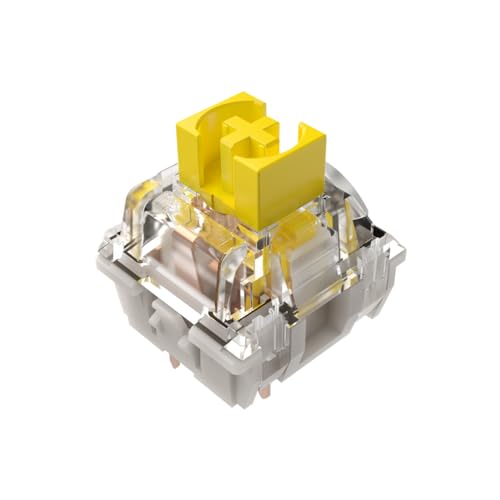
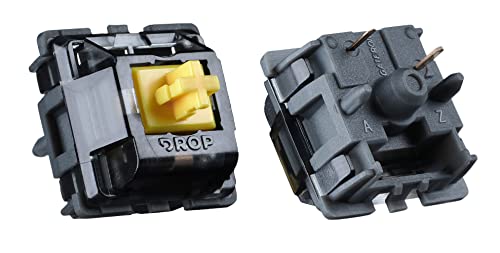
1. Drop Holy Panda X — the refined flagship tactile
Badge: Best overall tactile switch.
- Type: tactile, described in the listing as quiet and tactile
- Weight: 65g as stated in the listing
- Mount: PCB mount, 5-pin
- Pack: 35 switches
- Stem system: Cherry MX style cross
- Character: a rounded, polished bump with a civilised voice
The Holy Panda name carries a decade of tactile mythology, and the X is its modern, civilised heir — the full story is told in what are holy panda switches. What earns it first place here is balance executed at a high level: the bump is unmistakably present, rounded rather than sharp, arriving early enough in the stroke to feel decisive; the surrounding travel is smooth; and the switch’s voice is deeper and quieter than the original panda recipe, suiting the shared rooms most keyboards now live in. At 65g the spring gives the bump authority without taxing the fingers across a working day.
Thirty-five switches is a compact-board quantity, and the X’s tier positioning is flagship — this is the switch you buy when the bump is the point of the keyboard. Typists who compose, code and correspond all day will find it the most complete tactile in this ranking: informative without being noisy, characterful without being tiring, and finished in a way that makes lesser tactiles feel like drafts.
Strengths
- The most polished all-round bump in the ranking
- Quieter, deeper voice suits offices and homes
- 65g weighting balances authority and endurance
Trade-offs
- Flagship tier — the bump is bought at a premium
- 35-piece pack leaves larger boards needing two
- Its refinement softens the raw edge some panda purists love
Best for: typists who want the definitive modern tactile. Not suited for: budget conversions or fans of a sharp, aggressive bump.

2. Gazzew Boba U4T — the thocky, rounded crowd favourite
Badge: Best for sound chasers who type.
- Type: tactile, described in the listing as thocky
- Variant in listing: U4T 62g
- Pins: 5-pin
- Pack: 70 switches
- Family note: the U4 sibling is the silent version of the same idea
- Character: a long, rolling bump with a deep voice
If the Panda X is a tailored suit, the Boba U4T is the beloved sweater — less formal, arguably more comfortable, and possessed of the deepest voice in this ranking. Gazzew’s bump rolls rather than snaps: resistance builds in a long, rounded event that many typists find addictive, and the housing returns a low thock that has made “Boba” a byword for a certain kind of keyboard sound. The 62g variant in this listing sits in the weight class most typists settle into, present without punishment.
Seventy switches per pack is the practical crown: one purchase converts most boards with spares for the inevitable experiment. Players of games sit this one out — the long bump is a typing instrument — but for the writing desk, the U4T’s combination of character, sound and pack generosity is very hard to argue with, and its silent sibling means a household can share the bump philosophy at two volumes.
Strengths
- Deeply satisfying rolling bump and thocky voice
- 70-piece pack is genuinely practical
- A design with a devoted, knowledgeable community
Trade-offs
- The long bump is wrong for fast gaming inputs
- Sound-chasing is subjective — sample if your board differs
- Variants (U4 silent, U4T thocky) require careful listing reading
Best for: writers, sound-conscious typists, full-board conversions. Not suited for: gamers or fans of a short, sharp bump.

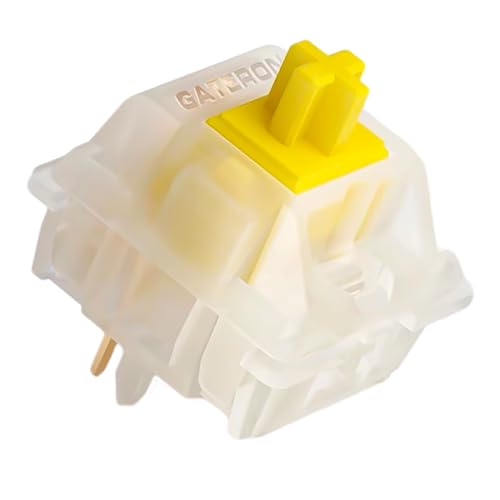
3. Zealio V2 — the purist’s crisp classic
Badge: Best for typists who want a defined, classic bump.
- Type: tactile, purple colourway
- Variant in listing: Zealio 62g, from a range spanning several weights
- Pins: 5-pin, SMD RGB compatible
- Pack: 70 switches
- Maker note: ZealPC design, Gateron-manufactured, via KPREPUBLIC
- Character: a crisp bump with minimal pre-travel fuss
Zealio is the tactile that tactile people argue from. Its bump is the classic shape — a clear, defined event with a clean top and a decisive drop — executed with the materials and moulding quality that made ZealPC’s name, and manufactured by Gateron, whose production the enthusiast world trusts. Where the Boba rolls and the Panda polishes, the Zealio simply states: here is the press, registered, exactly where you expected it. Typists who learned the category on Zealios measure other bumps against it for years.
The weight range is the connoisseur’s detail: the listing’s family spans from the low sixties to a genuinely heavy option, and the 62g variant here is the connoisseur’s starting point — enough spring to make the bump authoritative, not so much that a day’s typing becomes exercise. Buy the Zealio when you want the reference, and expect it to recalibrate what you ask of every tactile afterwards.
Strengths
- The reference bump shape for the whole category
- Weight variants let you tune the same character to your hands
- Premium materials and consistent manufacture
Trade-offs
- Enthusiast tier positioning
- Crispness can feel stark next to the rounded competition
- Variant selection demands attention at ordering
Best for: tactile purists, experienced typists, reference seekers. Not suited for: first-time buyers who want the friendliest possible bump.

4. Durock T1 — heavy tactility, honestly priced in a big pack
Badge: Best value heavy tactile.
- Type: tactile, pre-lubed
- Weight: 67g, gold-plated spring per the listing
- Variant in listing: DUROCK Clear T1
- Pins: 5-pin
- Pack: 90 switches
- Character: a strong bump with a heavyweight’s confidence
The T1 is the ranking’s muscle. Its bump is strong — the kind you cannot type through absent-mindedly — and its 67g spring backs the bump with authority, producing the switch that heavy-handed typists describe with the word “finally.” Durock ships it pre-lubed, so the strength arrives without scratch, and the clear housing keeps backlighting honest. For deliberate typists, programmers who punch keys like they mean it, and anyone whose complaint about tactiles is that they are all too polite, the T1 is the answer in this list.
Ninety switches seals the value argument: a full-size board converts from a single pack with a rotation stock left over. The cautions are the strength itself — light typists will tire, and fast gamers should look anywhere else — but a switch is allowed to be for somebody, and the T1 knows exactly who it is for.
Strengths
- The strongest, most deliberate bump in the ranking
- 90-piece pack converts full-size boards at once
- Pre-lubed smoothness behind the strength
Trade-offs
- 67g will fatigue light typists over long days
- Far too deliberate for gaming
- Its authority is a specialisation, not an all-round virtue
Best for: heavy-handed typists and full-size conversions. Not suited for: light-touch writers or any gaming use.

5. Akko V3 Lavender Purple Pro — the friendly modern tactile
Badge: Best first tactile for newcomers.
- Type: tactile, pre-lubed
- Stem: dustproof design
- Pins: 5-pin
- Pack: 45 switches
- Character: a clear, approachable bump with modern polish
- Family: Akko’s V3 Pro generation
Every ranking needs its door-opener, and the Lavender Purple Pro is this one’s: a tactile whose bump is clear enough to teach a newcomer what tactility is, gentle enough to never punish them for learning, and finished — pre-lubed, dustproof-stemmed, consistent — to a standard that means the first tactile a buyer tries is a good one. Akko’s V3 generation has quietly become the default recommendation for exactly this role, and the Lavender is its tactile standard-bearer.
Forty-five switches suit the compact boards newcomers actually buy. Veterans will find the bump polite next to the Zealio or T1, and that politeness is the design brief, not a flaw: this is the switch that converts linear users and membrane refugees, some of whom will graduate to the stronger personalities above and some of whom will simply stay, happily, for years.
Strengths
- The most approachable bump in the ranking
- Modern dustproof stem and factory lubrication
- 45-piece pack matches compact first boards
Trade-offs
- Bump is polite — purists will want more event
- Pack size leaves full-size boards short
- Less distinctive character than the top three
Best for: first-time tactile buyers and mixed-use boards. Not suited for: bump maximalists.

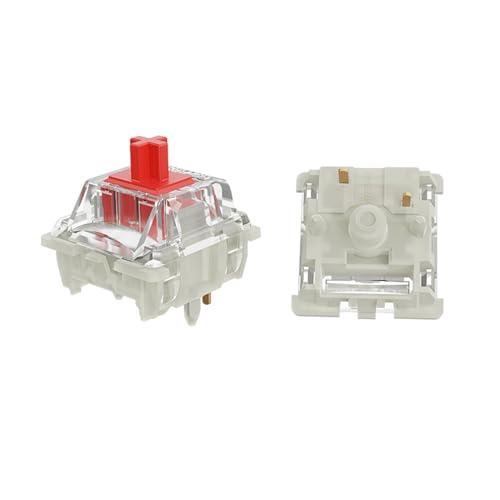
Bonus: Glorious Panda (lubed) — the accessible panda
Badge: Best for sampling the panda style without the flagship commitment.
- Type: tactile, factory-lubed version
- Spring: 67g bottom-out as stated in the listing
- Pins: 3-pin, hot-swappable
- Pack: 36 switches
- Materials per listing: polycarbonate and nylon construction
- Character: a snappy bump in the panda tradition
The panda style — a snappy, pronounced bump born from a famous community frankenswitch — reaches its most accessible form in Glorious’s version, and this listing is the factory-lubed one, sparing the buyer the panda tradition’s original homework. The bump is eager and distinct, the 3-pin format fits the widest range of boards, and the pack is sized for a compact conversion or a thorough trial. It sits outside the ranked five because its character is a tribute act — an excellent one — beside the originals above; it earns its bonus place because for many buyers it is the most sensible first panda of all, a point the comparison in the Holy Panda guide develops further.
Strengths
- Panda-style snap with factory lubrication applied
- 3-pin format fits nearly every hot-swap board
- An easy, lower-commitment route into the style
Trade-offs
- A tribute to the panda idea rather than the original
- 36-piece pack is trial-sized for larger boards
- Snappy bump will not suit fans of a rolling tactile
Best for: panda-curious buyers and compact boards. Not suited for: purists who want the original Drop recipe.
How do the five bumps actually differ?
Line the ranking up by bump shape and the category’s map appears. At one pole sits the Zealio: a defined, almost architectural bump, short and crisp, the press as a clean event. The Panda X rounds that event — same decisiveness, softer edges, quieter manners. The Boba U4T stretches the event into a roll, the longest bump here, felt as a journey rather than a moment. The T1 takes the Panda family’s snappiness and adds mass, so the event arrives with a heavyweight’s follow-through. And the Lavender shortens and softens everything into friendliness, the bump as a helpful nudge. Spring weight overlays the map: the ranking’s springs cluster in the low-to-high sixties, the weight class where a bump has enough resistance behind it to feel like information rather than decoration. If you remember one sentence from this guide, make it that one — a tactile bump is only as good as the spring that presents it.
How should you choose a tactile switch?
Start with your typing weight. Heavy pressers should begin at the strong end — T1, Panda X — because a light bump under a heavy hand disappears into the bottom-out and the switch becomes an expensive linear. Light pressers should begin at the friendly end — Lavender, Boba — because a heavy bump under a light hand becomes a toll on every key. Then consider your room: the Panda X and the Boba’s silent sibling respect shared spaces; the Zealio and T1 make no apology and should be bought by people whose rooms are their own. Then your other life: any gaming beyond the deliberate kind argues for keeping a linear board beside the tactile one rather than compromising either, a two-board honesty this site’s the best switches for gaming supports from the other direction. Finally, sample if you possibly can — a tester or a partial conversion of the alpha cluster — because no paragraph, including every paragraph here, can press a key for you.
How do you install and tune tactile switches?
Step 1: Convert the home row first
Tactility is judged by the fingers that type most, so install your candidate under the home row and the spacebar’s neighbours first, and write real sentences for a day. A bump that charms in a tester can tire in prose; a bump that feels plain in a tester can disappear into perfect service.
Step 2: Keep the spacebar’s switch deliberate
The thumb strikes differently from the fingers — harder, flatter, less precise. Many typists run a slightly stronger switch under the spacebar than under the alphas, and a tactile board is where that asymmetry feels most natural.
Step 3: Lube with the bump protected
If you lube, keep grease off the tactile legs unless softening the bump is the deliberate goal. The full technique, including the leg rule and the spring oil pairing, is laid out in the ultimate guide lube your mechanical keyboard switches.
Step 4: Live with the board for two weeks
Tactile preference recalibrates slowly — longer than linear preference — because your fingers are learning a new signal, not just a new resistance. Judge at two weeks, in real work, and expect the verdict to be firmer than any first impression.
What mistakes do tactile buyers make?
Buying the strongest bump as a first tactile is the classic — the T1 is a magnificent switch and a punishing introduction. Ignoring spring weight is the second: two switches with similar bumps and different springs are different switches, and listings lead with the bump because it is easier to describe. The third is expecting a tactile to game like a linear because a chart said “medium” — bumps interrupt repetition by design, and fast games notice. The fourth is lubing the legs in a first enthusiastic session and mourning the bump that the whole purchase was for. And the fifth is ranking by other people’s hands: tactile preference is the closest thing this hobby has to a fingerprint, and the correct response to a friend’s endgame switch may be a polite, informed disagreement.
Final recommendation
Buy the Drop Holy Panda X if you want the ranking’s answer without further deliberation — it is the most complete tactile here, and its balance of bump, smoothness and manners serves the widest range of typists. Buy the Boba U4T if sound and a rolling bump are your love language, the Zealio V2 if you want the reference crispness the category is measured by, the Durock T1 if your hands are strong and your board is large, and the Akko Lavender Purple Pro if this is your first tactile and you want it to be a kind one. Keep the Glorious Panda in mind as the accessible panda trial. Whichever arrives, convert the home row first, protect the bump when you lube, and give your fingers two weeks — tactile love is a slow-growing plant, and every switch in this ranking rewards the patience.
A tactile switch is, in the end, a small argument about how a keystroke should feel, made physical. The five arguments ranked here are the strongest currently being made, and the bonus is the most accessible. Your hands will agree with one of them in a way they have never agreed with a product description, and discovering which one is among the genuine pleasures of this hobby — unhurried, inexpensive to test, and repaid on every sentence you type afterwards. Choose the bump that sounds like your typing feels on its best days, and let the board disappear into the work.
What is a tactile bump, physically?
Inside every tactile switch, the stem carries two small legs that must pass the switch’s metal leaves on their way down. The leaves resist, the resistance builds — that building is the first half of the bump — and then the legs slip past, the resistance releases, and the press completes. That slip is the event your finger reads as tactility. Everything that distinguishes this ranking’s switches is a variation on that encounter: the legs’ shape decides whether the build is gradual or abrupt, the leaves’ tension decides how much force the event carries, the stem’s length decides where in the travel the encounter happens, and the spring decides how the whole press feels around the event. A sharp bump has legs shaped for a sudden release; a rolling bump stretches the encounter over more travel; a heavy bump pairs either shape with leaves and a spring that make you mean it.
This anatomy explains two otherwise mysterious facts. The first is why lubing the legs changes the switch so profoundly: grease on the legs lubricates the encounter itself, smoothing the build and softening the release — literally sanding the bump down from inside. The second is why tactiles age characterfully: the encounter is a physical negotiation repeated millions of times, and a well-made switch — the Zealio’s materials, the Panda family’s moulding — holds its bump’s shape across years of negotiation, while a cheap tactile’s bump quietly rounds into a rumour of itself. When you buy from this ranking, you are buying encounters engineered to stay themselves.
A short history of the tactile switch
Tactility is older than the gaming era that rediscovered it. The classic Alps and early Cherry designs included tactile variants for typists who wanted confirmation without a click mechanism’s noise, and for years the humble brown switch — a gentle bump in an office board — was the category’s entire mainstream. The enthusiast era radicalised it: modders discovered that combining one switch’s stem with another’s housing produced a bump far stronger than anything sold complete, and the frankenswitch was born. The most famous of those combinations became the Holy Panda, whose story anchors its own guide on this site. Manufacturers then did what manufacturers do — they productised the discovery — and the current generation in this ranking, from the Panda X’s refinement to the Boba’s rolling redesign to Glorious’s accessible tribute, is the frankenswitch idea grown up into a shelf of deliberate, purchasable personalities. Knowing the history clarifies the present: every strong tactile you can buy today descends from a hobbyist’s refusal to accept the bump they were sold.
How do these tactiles sound?
A tactile’s voice is its bump made audible — the slip past the leaves produces a soft internal event, and the housing decides how much of it the room hears. The Panda X is the ranking’s diplomat: a muted, deeper note that reads as quality in an office. The Boba U4T is the bassist, its thock the deepest here, a sound people build whole boards around. The Zealio speaks crisply and a fraction brighter, the sound of its defined event. The T1’s strength gives it a solid, weighty note — never loud, never apologetic. The Lavender is the quietest of the five in character, a soft confirmation. And the Glorious Panda snaps a little more brightly than its Drop cousins, in keeping with its eager bump. None of these switches is loud — the category’s whole premise is feedback without a click — but in a silent room at midnight their ordering will matter to you, and it runs: Lavender, Panda X, Boba, Zealio, T1, Glorious, softest to most present. Readers for whom even the softest is too much belong to the neighbouring discipline of top 5 most quiet mechanical keyboard switches, where several of these families reappear in silenced form.
Three typists, three rankings
The novelist types in long, rhythmic sessions and ranks by what her fingers feel at hour three. Her order inverts the official one: the Boba’s roll first, because it never asks her hands a sharp question; the Panda X second; the Lavender third; and the T1 last, its authority wasted on a touch as light as hers. The programmer types in bursts — code, pause, code — and reads the bump as a debugging signal for his own hands. His ranking crowns the Zealio, whose crisp event confirms each burst’s keystrokes unambiguously, with the Panda X behind it and the Boba’s roll dismissed, affectionately, as “a bump that takes too long to say anything.” The data-entry professional types at volume, all day, against a clock, with a heavy hand that lighter switches cannot survive. Her ranking is the T1’s coronation and everyone else’s footnote. Three experts, three contradictory orders, zero errors among them: the ranking in this guide is a starting map, and your hands will redraw it. That is not a failure of the list — it is the list working as intended.
How do you lube a tactile switch without killing its bump?
The tactile lube job is the linear job with one commandment added, and the commandment deserves its own section because it is broken so often. Lube the rails of the stem and the rail channels of the housing exactly as you would a linear — the stroke around the bump should glide. Oil the spring exactly as you would a linear’s, because spring ping respects no category. Film the housing if it has play. And then stop, with the brush deliberately kept away from the stem’s two legs and the leaves they engage. Those surfaces are the bump; grease there is not lubrication, it is editing. The one sanctioned exception is intentional: a typist who loves everything about a switch except a bump they find slightly too sharp may paint the barest film on the legs of a single test switch and evaluate — a tuning decision, documented and reversible, rather than an accident repeated ninety times. Work in the batch rhythm the lube guide teaches, audit each batch’s first switch against an unlubed reference, and your tactiles will come off the desk smoother in every way except the one way that matters.
Which tactile suits which working life?
The writer’s desk is covered — Boba for the rollers, Panda X for the polishers, Lavender for the gentle. The legal and administrative professions, where typing is voluminous and offices are shared, split between the Panda X’s diplomacy and the Lavender’s quiet friendliness, with the deciding vote cast by typing weight. Programmers, as the profiles suggested, gravitate to definition — Zealio first, Panda X second — because their keystrokes are commands and confirmation is a feature of the language. Gamers who type — the hybrid majority — face the two-board question honestly: many keep a tactile board for the day and a linear board for the match, and this ranking’s role in their lives is to make the day board magnificent. Students, finally, should start where the Lavender starts: kindly, affordably in tier terms, and with a bump that teaches the category without taxing the hand that is also writing examinations. Every profession’s answer differs, and every answer is in the five — which is what a ranking is for.
Frankenswitching: the tactile endgame
For readers who finish this ranking and still feel the itch, the hobby’s deepest tactile rabbit hole awaits: combining stems, housings and springs across switches to compose a bump no manufacturer sells. The Holy Panda itself began exactly there. Frankenswitching is beyond this guide’s shopping remit — its ingredients are bought as donors, not as products with verdicts — but its existence explains the ranking’s philosophy. Every switch here was judged partly by how completely it satisfies, because a fully satisfying switch is the only known cure for the donor-buying that follows an almost-right one. Buy the tactile whose bump is your bump, at the weight your hands choose, and the endgame is simply typing on it for years while other people take their keyboards apart. There are worse fates in a hobby, and few better ones.
Do tactile switches actually improve typing accuracy?
The honest answer is: for most typists, measurably in their own experience, and the mechanism is not mysterious. A typist’s errors divide into presses that never registered and presses that registered twice in the mind — the half-press uncertainty that sends a finger back to check. The bump attacks the second class directly: it gives the nervous system a confirmation signal that arrives before the bottom-out, so the finger can move on with confidence and the typist stops spending presses on verification. Typists who switch from linears commonly report the same sequence — a slower first week while the signal is learned, then a settled accuracy they describe as the keyboard “keeping up with their thoughts.” None of this is a laboratory claim, and a minority of typists — usually the lightest-touch ones — find the bump a distraction from a flow they had already perfected on linears. The guide’s advice stands: the effect is real enough to test and personal enough that the test must be yours, on your home row, in your real work, across the two weeks the installation section prescribes.
How do tactile switches age?
A tactile switch has two ageing curves running at once. The spring tires slowly and evenly, softening the whole press by degrees so gradual the owner rarely notices until a new switch sits beside an old one. The bump ages by negotiation: the legs and leaves polish each other across millions of encounters, and a well-made switch’s bump rounds very slightly into maturity — many owners describe a beloved tactile board as “broken in,” the way leather is. Poorly made tactiles age worse, their bumps dissolving toward linearity, which is one more argument for this ranking’s insistence on materials and manufacture. Rotation helps: the home row ages years ahead of the number row, and a board whose owner periodically rotates fresh switches into the high-wear positions keeps a consistent bump across the whole instrument. When a tactile board finally feels tired everywhere, it is usually the springs speaking, and a spring refresh — the deep lever the lube sections describe — can return a veteran board to something very close to its youth.
Tactile or silent tactile: which family should you join?
This ranking’s switches all speak at conversational volume — present in the room, absent beyond it — but a neighbouring family silences the bump itself with dampers, and several of this cluster’s guides live there. The choice is environmental before it is tactile. If your typing is heard only by you, the unsilenced tactiles here offer the purest bump: no damper shares the stroke, and the event arrives undiluted. If your typing shares a room, an office or a sleeping household, the silenced versions of these ideas — the silent sibling of the Boba line, Durock’s ring-silenced tactiles, TTC’s silent tactile in its own guide at ttc switches complete guide — trade a measure of bump purity for peace, and for many households that trade is not a compromise but the entire point. Decide by the room, then by the bump, then by the spring — the same order this guide has used throughout, because it is the order your life will present the questions in.
A glossary of bump shapes, in plain language
Enthusiast vocabulary for bumps is vivid and worth translating. A sharp bump concentrates its event into a small slice of travel — the Zealio’s territory — and typists describe it as crisp, snappy or, when they dislike it, abrupt. A rounded bump spreads the same event across more travel — the Boba’s roll, the Panda X’s polish — and is described as smooth, long or, by its detractors, vague. A bump can also sit high or low in the stroke: a high bump arrives almost as the press begins, giving immediate confirmation and a long free fall afterwards, while a low bump lets the finger travel first and confirms late, which some typists find more natural and others find pointless. Pre-travel is the distance before the bump begins; post-travel is what remains after it. Neither is good or bad in isolation — they are the coordinates of a bump’s address, and this ranking was chosen so its five addresses are genuinely different streets. When you read any tactile review after this one, translate its adjectives into these coordinates and the fog of the category lifts considerably.
A tactile trial protocol that actually works
Day one to three: the candidate lives under your home row only, and you type your real work without judging — first impressions of tactiles are notoriously unreliable, because the bump is a signal your fingers have not yet learned to read. Days four to ten: full working days, with one deliberate exercise each morning — a page of transcription typed as fast as accuracy allows — while you note error patterns rather than feelings. Specifically, count your corrections: the bump’s promise is fewer of them, and a notebook tally across ten days is better evidence than any vibe. Days eleven to fourteen: the verdict sessions. Type the same passage on the candidate board and on your previous switches, back to back, and ask which board your fingers trusted. Trust, measured in un-corrected keystrokes, is the tactile metric that predicts the next five years. A candidate that wins the tally and the trust test earns the full conversion; a candidate that wins only the first-hour charm offensive does not, and the protocol exists because those two winners are so often different switches.
The hybrid board: tactiles where they help, linears where they fly
Nothing in this ranking obliges a whole board to share one switch, and the hybrid arrangement deserves its paragraph because so many experienced owners quietly live there. Tactiles under the alphas, where confirmation pays its accuracy dividend all day; linears under the movement cluster and gaming keys, where repetition must flow uninterrupted; perhaps a single deliberate switch — heavier, or tactile where its neighbours are not — under a key with consequences. The hybrid board is not indecision; it is the recognition that a keyboard is several instruments sharing a case, and each deserves its own tuning. The cautions are consistency within each zone and honest notes about what you installed where. Owners who build a hybrid from this ranking most often pair the Panda X or Lavender alphas with a gaming linear cluster, and report the same discovery: the board stops being a compromise between their two lives and becomes a specialist at both, one zone at a time.
What should you do with the switches you replace?
A conversion leaves a board’s worth of perfectly good switches in a bag, and their fate is worth a decision rather than a drawer. Keep a working set as the board’s emergency stock — a handful of the old switches answers any future failure in minutes. Offer the rest to the hobby’s circulation: switches sell, trade and gift readily among enthusiasts, and a friend’s first build has been founded on exactly such a bag more times than anyone can count. Keep, above all, one unlubed, unmodified example of every switch you have ever seriously used, labelled with its name and the year. That small archive becomes your calibration library — the physical reference against which every future candidate, including future editions of this ranking, gets judged by the only instrument that matters, which is your own remembered touch.
How do you read a tactile switch listing without being misled?
Tactile listings reward the same scepticism as every listing in this cluster, applied to this category’s specific fog. First, the variant: many tactile families sell several weights and two bump styles under one name, and the listing’s variant selector — not its headline — is the product you are buying; the Boba family’s silent and thocky siblings sharing a listing is this ranking’s own example. Second, the weight’s meaning: some listings quote operating force, others bottom-out force, and the two numbers describe different moments of the same press, so compare like with like or not at all. Third, the pack count against your board’s key count, the arithmetic that decides whether a purchase is a conversion or a down payment. Fourth, the seller: enthusiast switches travel through specialist storefronts and marketplaces of varying care, and an exact product title — like the verified titles behind every pick in this ranking — is the minimum evidence that the switch in the box is the switch in the review. Read those four things and the category’s fog burns off; the bump itself you must still judge with your own fingers, which was always going to be the final step, and is the one this guide has been preparing you for throughout.
Where does the value sit in this ranking?
Value in tactiles is not the lowest price per switch; it is the lowest cost per year of satisfied typing, and the ranking reads differently through that lens. The T1’s big pack and durable strength make it the value giant for heavy typists — one purchase, years of authority. The Lavender is the value entry point, the least expensive way in tier terms to learn the category from a good teacher. The Boba’s 70-pack splits the difference between generosity and character. The Panda X and Zealio ask flagship money and repay it in the currency of never needing to wonder whether a better bump exists — a real saving, measured in unbought alternatives. Judge value by the years a switch will spend under your fingers, and every entry here defends its tier; judge it by the box alone, and you will buy the wrong switch twice, which is the most expensive outcome of all.
A tactile buyer’s pocket checklist
Everything this guide argues, compressed for the moment of purchase. Name your bump position first — top-weighted and early, or classic and mid-travel — because it decides your shortlist before any brand does. Name your weight second, and distrust any choice made without a week on a tester. Decide your sound allegiance third: Panda-family depth, Zealio’s cleaner note, or Akko’s liveliness. Then buy the smallest honest quantity, type for the prescribed week, and let the ranking in this guide argue with your own fingers — fingers that, by then, will be qualified to win the argument. Tactile switches reward that patience more than any other family, because their whole product is a shaped sensation, and sensations cannot be returned once a whole board wears them. Choose slowly, press deliberately, and the bump you pick will still be teaching your hands something true in year three.
Frequently asked questions
Are tactile switches better for typing than linears?
For most typists, yes: the bump confirms registration without a click, which reduces bottoming-out and the errors that come from uncertain presses. The advantage is personal rather than universal — some typists type fastest on linears — which is why this guide ranks by character and urges sampling.
What spring weight should a first tactile have?
The low-to-mid sixties are the category’s centre of gravity, represented here by the Boba’s 62g and the Panda X’s 65g. Lighter hands should start at the Lavender’s friendlier end; heavier hands can begin with the T1’s 67g without fear. Weight and bump together make the switch — never shop for one alone.
Can you game on tactile switches?
Deliberate and slower-paced gaming, yes — strategy, MMO and single-player titles all have happy tactile players. Fast, repetitive gaming is the bump’s weakness, because the interruption that informs a typist taxes a strafing finger. Most serious players keep tactiles for the desk and linears for the match. The hybrid arrangement described earlier — tactiles for the alphas, linears for the movement cluster — is the single-board answer for players whose desk must do both, and it is more common among experienced owners than any purist layout.
Do tactile switches need lubrication?
Most picks here arrive pre-lubed or well-finished, so lubing is refinement rather than rescue. Where you do lube, the tactile legs stay dry — grease on the legs is the one application that changes the product you bought into a different, softer one.
Why are there six switches in a top 5 list?
Five are ranked; the Glorious Panda is an unranked bonus because it offers the panda style in its most accessible, factory-lubed form, and a guide that omitted it would fail the buyers it suits best. The ranking is the five; the bonus is a service.
Do tactile switches wear out faster than linears?
No — they age differently rather than faster. The bump’s legs and leaves polish each other over millions of presses, which in a well-made switch reads as breaking in rather than wearing out, and the springs tire at the same rate as any family’s. The switches in this ranking are built to hold their character across that process; when a board does eventually feel tired, rotation and a spring refresh restore most of what time took, as the ageing section describes.
How many tactile switches does a keyboard need?
One per key: around 61 for a 60 percent board, 87 for tenkeyless, 104 for full-size, plus a few spares. Compare those numbers with the pack sizes in the reviews — the T1’s 90 and the Boba’s 70 are the ranking’s practical giants.