Disclosure: As an Amazon Associate, kajuandouglas.com earns from qualifying purchases. Links on this page are affiliate links; they cost you nothing extra. Prices and availability change often, so check the current Amazon listing before you buy.
What are holy panda switches? Begin with the short answer: they are a tactile mechanical switch famous for a strong, rounded bump and a deep, snappy sound — and they began not as a product but as a community experiment, a “frankenswitch” built by combining parts from two different switches until the result felt so good that the hobby demanded it become real. The original recipe paired the stem of a Halo switch with the housing of an Invyr Panda, and the combination produced a tactility unlike anything sold complete at the time: a big, smooth bump with a distinctive voice. Drop eventually manufactured the combination as a proper switch, and the panda idea has since multiplied into a family — the original Drop + Invyr Holy Panda, the refined Holy Panda X, Glorious’s accessible Panda in lubed and unlubed forms, and relatives like Tecsee’s Purple Panda, all reviewed below with verified listings and official images.
If you have arrived here from a forum argument, a sound test or a friend’s keyboard, know that the panda’s reputation survives contact with reality unusually well — this is not a switch whose fame depends on scarcity or story alone. The story is genuinely remarkable and the scarcity is genuinely over; what remains, and what this guide keeps returning to, is a bump that a decade of typists has chosen daily over every alternative the market could invent. Read the biography for pleasure, the family reviews for the purchase, and the setup sections before your first conversion, and you will own not just a famous switch but an understood one.
This guide tells the whole story: what the switch is, how the frankenswitch happened, why the bump feels the way it does, how the family members differ, who should buy which, and how to lube and live with a panda without ruining the thing you bought it for. If the tactile ranking elsewhere in this cluster is the shopping list, this is the biography — of the switch that taught an entire hobby what a bump could be.
Key Takeaways
- Holy Panda switches began as a frankenswitch — a Halo stem inside an Invyr Panda housing — before Drop manufactured the combination as a complete switch.
- The signature is a strong, rounded tactile bump with a deep, snappy sound, on a spring around the mid-to-high sixties in the original.
- The family now includes the original Drop + Invyr Holy Panda, the quieter, refined Holy Panda X, Glorious Panda (lubed and unlubed) and Tecsee’s Purple Panda relative.
- Pandas are typing switches: their bump taxes fast, repetitive gaming, and rewards deliberate, accuracy-focused keystrokes.
- Lube a panda with its bump protected — grease on the tactile legs edits the very feature the switch exists for.
How did a homemade switch combination become famous?
The frankenswitch era was the enthusiast hobby’s mad-scientist period: owners discovered that switch parts were broadly interchangeable, and began cross-breeding stems, housings and springs in search of feels no manufacturer sold. Most combinations were curiosities. One was not. Putting a Halo stem — long, with a pronounced tactile profile — into an Invyr Panda housing produced a bump that was both stronger and rounder than either parent, with a sound the community immediately started describing in reverent vocabulary. The name followed the reaction: the combination was, in the slang of its moment, a holy grail wearing a panda’s housing, and “Holy Panda” stuck.
Demand outgrew the donor supply — every Holy Panda consumed a Halo switch and a Panda switch, neither made for the purpose — and Drop’s manufactured version resolved the scarcity by producing the combination as a designed product. That arc, from kitchen-table experiment to catalogue item, is why the switch matters beyond its feel: it proved the community could invent a product category’s flagship, and the tactile market’s subsequent decade — the strong, characterful bumps ranked elsewhere in this cluster — is substantially its descendants arguing with their ancestor.
In this guide
The panda family at a glance
| Switch | Character | Pack | Choose it for |
|---|---|---|---|
| Drop + Invyr Holy Panda | The original recipe, 67g | 70 | The authentic frankenswitch feel, manufactured |
| Drop Holy Panda X | Refined, quieter, 65g | 35 | The modern, civilised panda |
| Glorious Panda (unlubed) | Snappy, DIY-ready | 36 | Tuning the panda yourself |
| Glorious Panda (lubed) | Snappy, factory-finished | 36 | The accessible panda, ready to type |
| Tecsee Purple Panda | A panda-style relative | 90 | The style in a generous pack |

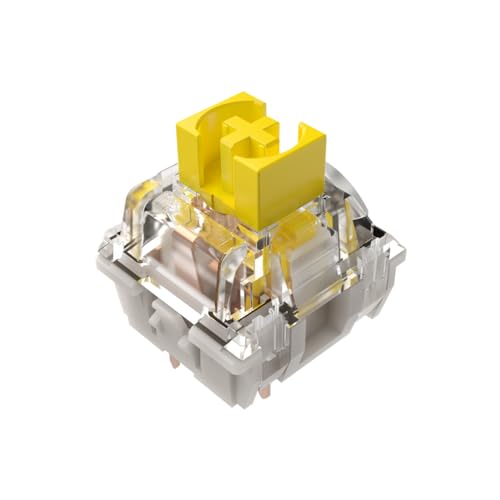
Drop + Invyr Holy Panda — the original, manufactured
Badge: Best for the authentic Holy Panda experience.
- Type: tactile, Cherry MX style
- Spring: 67g as stated in the listing
- Mount: plate mounted, per the listing
- Pack: 70 switches
- Maker note in the listing: by Kailh
- Character: the big, rounded bump and deep snap of the legend
This is the switch the story is about: Drop’s production version of the frankenswitch, carrying the Invyr name it descends from. The bump is the reference — large, rounded, arriving with a confidence that lesser tactiles gesture at — and the sound is the other half of the signature, a deep, full-bodied snap that typists either fall for immediately or respect from a distance. At 67g the spring gives the bump its authority; this is a switch for fingers that type like they mean it.
Seventy switches convert most boards, and owning the original has a satisfaction beyond specification: it is the hobby’s most famous switch, in the form closest to the experiment that started it. Buy it for the feel first — the feel is genuinely the point — and let the history be the bonus it deserves to be.
Strengths
- The authentic bump and voice of the original recipe
- 70-piece pack is a practical conversion size
- A piece of keyboard history that also happens to be excellent
Trade-offs
- Strong bump and 67g will tire light typists
- Its voice is present — shared rooms should consider the X
- Plate-mount format should be checked against your board
Best for: tactile enthusiasts and deliberate typists wanting the original. Not suited for: light-touch typists or fast gamers.

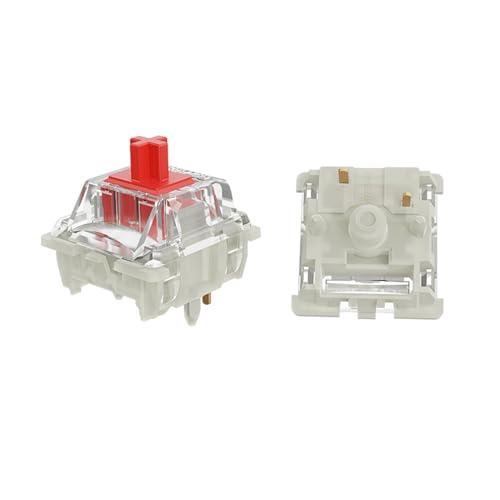
Drop Holy Panda X — the panda, civilised
Badge: Best panda for modern shared-room life.
- Type: tactile, described in the listing as quiet and tactile
- Weight: 65g as stated in the listing
- Mount: PCB mount, 5-pin
- Pack: 35 switches
- Character: the rounded bump with polished manners
The X is what the panda grew up to be: the same rounded, confident bump, re-engineered for the rooms keyboards now live in — smoother around the event, quieter in its voice, a fraction lighter at 65g, and finished to a consistency the frankenswitch era could only envy. It topped this cluster’s tactile ranking on exactly those virtues, and within its own family guide it stands as the recommendation for buyers who want the panda idea without the panda volume. The trade is a degree of rawness: purists of the original occasionally describe the X as the legend with its edges sanded, which its owners tend to receive as a compliment.
Strengths
- The panda bump refined for offices and homes
- Smoother, quieter and more consistent than the original
- 65g suits full working days better than 67g
Trade-offs
- 35-piece pack is compact-board sized
- Flagship tier positioning
- A degree less raw character than the original
Best for: modern typists who want the definitive panda. Not suited for: purists chasing the unfiltered original.
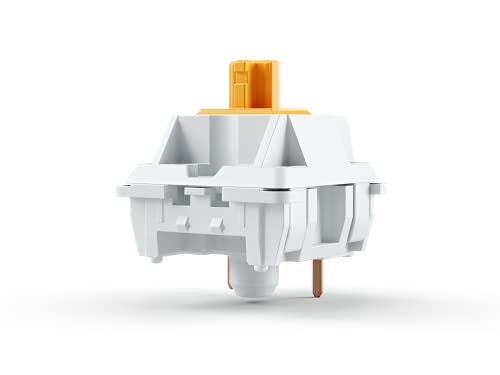
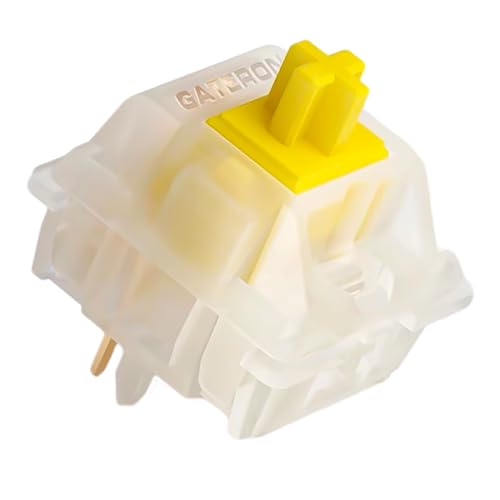
Glorious Panda (unlubed) — the panda as a project
Badge: Best for lubers who want to finish the switch themselves.
- Type: tactile, unlubed
- Spring: 67g bottom-out as stated in the listing
- Pins: 3-pin, hot-swappable
- Pack: 36 switches
- Materials per listing: polycarbonate and nylon construction
- Character: a snappy bump awaiting your brush
Glorious’s Panda brought the style to a mainstream audience, and the unlubed version is the honest hobbyist’s format: the bump is all there — snappy, pronounced, unmistakably panda-lineage — and the finishing is left to you. For lubers, that is not a missing feature but the correct starting point, because a panda’s lube job is a personal signature: how thin, where exactly, whether the legs stay bone dry. Buy this version if your workbench is set up and your opinions are formed; its lubed sibling below exists for everyone else. The full technique, leg rule included, is in the ultimate guide lube your mechanical keyboard switches.
Strengths
- The panda style ready for your own tuning
- 3-pin format fits nearly every hot-swap board
- An accessible entry to the family
Trade-offs
- Unlubed means the finishing work is yours
- Stock sound is brighter than the Drop originals
- 36-piece pack is trial-sized for big boards
Best for: experienced lubers and tuners. Not suited for: buyers who want a finished switch from the box.

Glorious Panda (lubed) — the panda, ready to type
Badge: Best accessible panda for most buyers.
- Type: tactile, factory-lubed
- Spring: 67g bottom-out as stated in the listing
- Pins: 3-pin, hot-swappable
- Pack: 36 switches
- Character: the snappy bump, smoothed and settled
The lubed Glorious Panda is the family’s front door for the majority: the panda-style bump with the factory’s lubrication already applied, so the switch that arrives is the switch the reviews describe — snappy, deep enough, and consistent. It lacks the Drop original’s last degree of gravitas and the X’s refinement, and it compensates with the two virtues most buyers actually spend: accessibility and readiness. As the tactile ranking in this cluster concluded, it is the sensible first panda — the one that teaches the style honestly before its owner decides whether the originals are worth pursuing.
Strengths
- Factory-lubed and ready — the panda without homework
- Widest board compatibility in the family
- The gentlest commitment to a strong style
Trade-offs
- A tribute’s character beside the originals
- 36-piece pack suits compact boards
- Factory lube is good, not personal
Best for: first-time panda buyers. Not suited for: collectors of the original recipe.

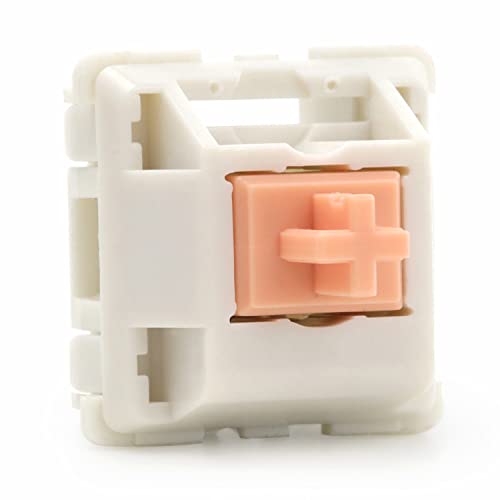
Tecsee Purple Panda — the panda-style relative
Badge: Best for the panda style in a generous pack.
- Type: tactile, long stem per the listing
- Material note in the listing: PME material
- Mount: plate mounted, 5-pin SMD RGB per the listing
- Pack: 90 switches (Purple Panda 90 variant)
- Character: a pronounced bump in the family style, with its own voice
Every famous switch acquires relatives, and Tecsee’s Purple Panda is the panda family’s most respectable cousin: a long-stem tactile in the style — pronounced bump, eager character — built with Tecsee’s own materials and sold in a 90-piece pack that dwarfs the rest of this guide’s quantities. It is not a Holy Panda and does not claim to be; it is what a good maker produces when a style becomes a genre. Buy it when the pack arithmetic matters, when Tecsee’s other switches have earned your trust, or when your curiosity about the wider panda diaspora is genuine — and expect a switch with its own merits rather than a copy with its own compromises.
Strengths
- 90-piece pack — the family’s best coverage
- Long-stem tactility with a distinct character
- Tecsee’s materials and manufacture
Trade-offs
- A relative, not the original — set expectations by its own name
- Long-stem feel differs from the Drop recipe
- Less community documentation than the headline pandas
Best for: full-board panda-style conversions. Not suited for: buyers seeking the authentic Holy Panda specifically.
Why does the Holy Panda bump feel the way it does?
The frankenswitch recipe worked because of a happy mechanical marriage. The Halo stem’s long pole and pronounced tactile profile created a large bump; the Panda housing’s geometry and leaves presented that bump early and decisively, with a short, eager travel around it. The result violates the usual tactile compromise — normally a bigger bump means a harsher one — by being simultaneously strong and rounded, an event you feel as a smooth hill with a cliff’s confidence. The long stem also shortens the effective travel and sharpens the bottom-out, contributing the deep, immediate sound that completed the signature. Modern pandas reproduce that geometry deliberately rather than by donor luck, which is why the family’s members, for all their differences in polish and price tier, share a recognisable handshake. Once your fingers know it, you can identify a panda-style switch blind, the way a musician identifies a familiar instrument from another room.
Who should buy a Holy Panda — and who should not?
The panda buyer is a typist first: someone whose keystrokes are deliberate events, who values confirmation over speed, and who types enough for a switch’s character to be a daily pleasure rather than a specification. Writers, programmers and correspondents dominate the family’s faithful, and the X has widened the congregation to anyone whose room is shared. The panda sceptic is equally well defined: fast gamers, whose repeated inputs the bump taxes; light typists, for whom the family’s springs are a toll; and quiet-seekers, who belong to the silent branch of tactility instead — several of which appear in top 5 most quiet mechanical keyboard switches. Neither camp is wrong, and the family’s strong character is precisely what sorts people so cleanly. Weak switches offend nobody and delight nobody; the Holy Panda was never going to be one of those.
How do you lube and set up a panda board?
Step 1: Decide whether to lube at all
The Drop originals and the X arrive with their character complete; the Glorious unlubed is the family’s designated project. Lube a finished panda only to correct a specific complaint — a scratchy unit, a spring’s voice — never from habit.
Step 2: Protect the bump
Grease the rails and housing channels thinly, oil the spring, and keep every trace of lubricant off the tactile legs. On a panda, the legs are not a detail; they are the product. A lubed-leg panda is a softer, lesser switch wearing a famous name.
Step 3: Convert the home row and write something real
Pandas are judged in prose, not in testers. Install the home row, write a long email or a page of anything, and let the bump make its case across sentences. Then complete the board, keeping the spacebar’s switch as deliberate as the alphas.
Step 4: Keep the family’s spares together
Panda variants look alike on a desk and feel distinct under a finger. Label by exact product when packs open — the original, the X and the Glorious pair are four different switches that share a surname and a silhouette.
What mistakes do Holy Panda buyers make?
Expecting a gaming switch is the first: the bump that informs a typist interrupts a strafing finger, and no panda belongs under a movement cluster. Buying the strongest panda as a first tactile is the second — the family is the deep end of tactility, and the Lavender-style shallows exist for a reason. Lubing the legs is the third, and the most quietly tragic, because it converts the purchase into its own imitation. Confusing the family members is the fourth: an unlubed Glorious judged as though it were a finished Drop, or a Purple Panda reviewed as though it claimed to be holy, are errors of reading rather than of product. And the fifth is judging in the first hour — pandas recalibrate a typist’s hands over about two weeks, and the verdict that matters is the one your fingers deliver at the end of them, in real work, which is the standard this cluster’s tactile ranking at top 5 best tactile switches for your mechanical keyboard applied to the whole category.
Final recommendation
Buy the Drop + Invyr original for the authentic article — the bump, the voice and the history in one 70-piece pack. Buy the Holy Panda X for the same idea civilised for modern rooms, and accept its smaller pack as the flagship’s terms. Buy the Glorious Panda lubed for the accessible front door, or its unlubed twin if your workbench is ready and your opinions are formed. Take the Purple Panda when pack size and a distinct cousin’s character appeal. Whichever panda arrives, protect its bump, type real prose for two weeks before judging, and expect what the family’s decade of fame actually consists of: not a specification, but a keystroke you will recognise, and probably love, for years.
There is a fitting symmetry in how the panda story ends for each new owner. The switch began as one person’s refusal to accept the tactile switches the market offered, assembled from parts on a desk not unlike yours. It became a product, then a family, then a genre — and it arrives now as a choice you make with full information, in a guide that could describe its bump, its voice, its generations and its relatives because a community spent years learning them in public. Choose the member that matches your room and your hands, and the experiment continues — this time with your fingers casting the vote that the whole history has been collecting.
Can you still build the original frankenswitch yourself?
You can, and a complete guide should explain both the method and why most people should admire it rather than attempt it. The recipe is the history in reverse: obtain Halo switches for their stems and Invyr Panda switches for their housings, open every unit, marry each Halo stem to a Panda housing over a spring of your choosing, and close a new switch that is, part for part, the original accident. The result is as authentic as authenticity gets — and the arithmetic is sobering, because every finished switch consumes two donor switches, the donors themselves have become scarcer and more collectible than they were in the experiment’s era, and a full board demands a small mountain of both. The manufactured Drop + Invyr switch exists precisely because the community ran that arithmetic at scale. Build a handful of frankenswitches as a pilgrimage, by all means — hobbyists do, and the tactile education is real — but build a board from the manufactured original, and let the donors live. The wider modding landscape that frankenswitching belongs to is surveyed in advanced keyboard modding techniques.
The panda sound, examined
Ask owners to describe the panda’s voice and the vocabulary turns physical: deep, full, snappy, a sound with a body to it. The physics underneath the poetry is the long stem and the decisive bump conspiring — the stem’s length sharpens the bottom-out into a compact, low event rather than a hollow clack, and the bump’s release adds its own note inside the stroke, so a panda keystroke is really two coordinated sounds that the ear merges into one satisfying thock-snap. Board and caps steer the result as always: a panda in a heavy, damped case sounds like a cellar door in the best way, while the same switch in a thin plastic case speaks brighter and cheaper than it deserves. The X’s redesign is audible here most of all — its voice is the family’s with the edges composed, the snap present but seated — and the Glorious pair speak a fraction brighter than the Drop originals, in keeping with their tribute status. None of the family is quiet, and none pretends to be; the panda’s sound is a feature its buyers name among their reasons, which is why the guide treats it as a specification rather than a side effect.
How do pandas compare with the other strong tactiles?
The panda does not hold the strong-tactile field alone, and its guide should say where the rivals press it. Zealio’s bump is crisper and more architectural, where the panda’s is rounder and more enveloping — a difference typists feel as statement versus embrace. The Boba family’s roll stretches the event longer than any panda does, trading the panda’s decisiveness for a journey some writers prefer. Durock’s T1 matches the panda’s strength with a heavier, more utilitarian character and a pack size the pandas cannot touch. What the panda retains against all of them is the completeness of its signature: bump, voice, spring and story arriving as one designed impression, refined now across two Drop generations. Rivals beat it on single axes — crispness, length, weight, coverage — and the family’s faithful keep answering that the panda was never an axis. It is a chord, and chords are judged whole.
Living with a panda board: the two-week adjustment
Day one with a panda board is a performance: every keystroke announces the bump, and new owners type unnecessary sentences for the pleasure of the event. This is the honeymoon, and it is not the verdict. Days three to five bring the recalibration — the fingers, accustomed to lesser feedback, learn they can stop pressing at the bump rather than through it, and typing lightens in a way owners describe as the board teaching them manners. Somewhere in the second week the switch disappears: the bump stops being an event and becomes information, delivered without attention, and the typist’s speed and accuracy settle at their new level — which, for the family’s faithful, is higher than the level they arrived with. Owners who abandon a panda inside the first week have usually judged the honeymoon or the recalibration, never the marriage. The guide’s two-week rule is not patience for its own sake; it is the time the nervous system needs to promote a new signal from novelty to infrastructure, and every strong tactile — the panda most of all — deserves to be judged at the infrastructure stage.
Which boards and keycaps suit a panda?
A panda’s signature survives best in a board that does not argue with it. Heavier, well-damped cases flatter the deep voice; a hollow case lends the bump a cheap echo it never asked for. Plate choice steers the landing: firmer plates keep the panda’s decisiveness crisp, softer and flexier builds round it further, and neither is wrong — they are the same switch in two rooms. Keycaps matter through weight and profile: a substantial cap deepens the family’s voice and steadies the long stem’s travel, while very light caps can make the switch feel top-heavy and eager. The panda’s standard cross stem accepts the mainstream keycap world without complaint, which matters for a switch people build boards around. And the spacebar deserves its own sentence, as it does in every guide in this cluster: a panda under the spacebar, on a properly greased stabiliser, is the single most satisfying key on the board, and owners arrange their conversions so that key is fitted early and judged often.
Which professions live on panda boards?
The novelist is the family’s emblematic user — long sessions, deliberate keystrokes, a bump that turns typing into a rhythm section for thought. Programmers form the second parish: code is a sequence of confirmed intentions, and the panda’s decisiveness matches the mental act of committing a line. Legal and academic writers, whose documents are long and whose typing is heavy with meaning per keystroke, adopt the X for its manners in shared offices. The family’s absentees are as telling: data-entry speedsters find the bump a tax, gamers a hindrance, and the light-fingered a fatigue. A switch with a profession-shaped following is a switch with a real character, and the panda’s following is the strongest evidence in this guide — stronger than its history, stronger than its fame — that the frankenswitch found something true about how a certain kind of hand wants to type.
How do Holy Pandas age?
A panda board ages the way a good instrument does: gradually, audibly, and mostly in the owner’s favour. The bump’s mating surfaces polish each other across the first months, and many owners describe a breaking-in after which the switch feels less like a product and more like a possession — the event rounds by a degree, the voice settles, the board becomes theirs. Springs tire on the standard schedule, home-row years ahead of the function row, and the family’s pack sizes anticipate the rotation habit this cluster’s guides prescribe. What pandas do not do is dissolve: the bump’s geometry is robust, the housings hold their fit, and a five-year-old panda board still announces its identity in the first keystroke. When a veteran board finally asks for attention, it is usually a spring refresh or a single tired switch at a high-wear position — answered from the labelled spares the setup section told you to keep — rather than any failure of the family’s famous event.
Buying a panda without buying a confusion
Fame attracts fog, and the panda shelf has its share: listings that borrow the name for switches with no lineage, family members photographed to resemble each other, variants whose differences live in a selector menu rather than a headline. The defences are the cluster’s standard four, applied with panda-specific care. Read the exact title — every pick in this guide was verified by one, and the maker’s name (Drop, Glorious, Tecsee) plus the exact model (original, X, Purple) is the product’s identity. Check the variant and mount before the price comparison, because a plate-mount original and a PCB-mount X are not interchangeable purchases merely because both say panda. Count the pack against your board. And be suspicious of any listing whose panda is dramatically cheaper than its family’s tier without a reason stated — the genuine articles occupy known tiers, and a miracle price usually names a different switch in the small print. Buyers who run those four checks will receive the switch this guide described, which is the only outcome any of its recommendations intend.
The panda’s legacy in the wider switch world
Measure the Holy Panda’s influence and the unit is other switches. The modern tactile shelf — strong bumps with personalities, switches marketed on the shape of their event, a whole vocabulary of round and sharp and long — exists in its current form because one frankenswitch proved the demand was real and large. Manufacturers learned to design tactiles as characters rather than as the quiet sibling of clickies; reviewers learned to write about bump geometry; buyers learned to have preferences worth the name. Even the switches that displaced pandas on some desks did so using the panda’s own criteria. That is the complete answer to this guide’s title question, the one beneath the specifications: Holy Panda switches are the switches that taught the mechanical keyboard world what a tactile bump could be — and the five products above are how that lesson is bought today, in its original form, its refined form, its accessible forms and its diaspora. Few components in any hobby earn a biography. This one earned it one keystroke at a time.
Original or X: the head-to-head that decides most purchases
Most panda buyers are really choosing between two switches, so the guide owes them a direct comparison. On bump: the original’s event is the rawer and marginally larger; the X’s is the same shape composed — smoother entry, cleaner exit, nothing about it accidental. On voice: the original speaks at full volume with the deep snap intact; the X lowers the voice by a register that matters in shared rooms and is inaudible as a loss in solo ones. On spring: 67g against 65g is a small number with a long day’s difference, the X asking slightly less of the last hour. On format: the original’s 70-piece plate-mount pack is the practical conversion; the X’s 35-piece PCB-mount pack is the boutique purchase, sized for the compact boards its buyers favour. On meaning: the original is the artefact, the X is the instrument. Buy the original to own the story and its unfiltered feel; buy the X to type on the idea’s best current expression. The family’s other members exist for the buyers those two sentences do not describe — the tuner, the newcomer, the full-board economist — and a complete guide’s last service is to say that no member of this family is the wrong door, only doors into different rooms of the same house.
Pandas and the hands that type all day
A comfort note, offered as feel rather than medicine: the panda’s bump, properly used, changes how a typist presses. Because the confirmation arrives before the bottom-out, experienced panda typists learn to release their effort at the bump — the finger fires, confirms, and moves on without driving the key into its floor. Owners describe the result as typing that feels lighter than the spring’s number suggests, because so few presses spend their full force. That technique is learnable on any tactile, but the panda’s unmistakable event teaches it fastest, which is a genuine part of the family’s appeal for high-volume typists. The counterweight is honest: a typist who never learns the release — who hammers through the bump to the floor on every key — gets the family’s strength as pure cost, and for those hands the gentler tactiles in this cluster’s guides, or the silent branch at silent switches guide, will serve better. Persistent discomfort of any kind deserves proper advice rather than a switch change; but as a matter of feel, the panda rewards the typist who meets it halfway, and meeting it halfway is a skill of one fortnight.
“Panda” as a genre word: how to read the wider shelf
Success made “panda” a genre term, and the wider shelf now holds switches that borrow the word with varying degrees of kinship — some engineered honestly in the style, like the Tecsee in this guide; some merely wearing the vocabulary. The reader’s defence is the distinction this guide has maintained throughout: a panda-style switch is a legitimate product judged by its own bump, materials and manufacture, while the Holy Panda is a specific lineage with specific products — the Drop original and its X descendant. When a listing says panda, ask whose: a maker’s name you can verify, a recipe you can trace, a pack and mount you can check. When it says Holy Panda, the answer should be Drop’s, in one of its two generations, or the listing is borrowing holiness it has not earned. Genre words are how hobbies grow; precision about them is how buyers stay happy inside the growth, and the family’s own members — each labelled by maker and model in this guide — are the standard the wider shelf should be held to.
What a panda board teaches you about your own typing
Owners consistently report a side effect that no listing mentions: a panda board is diagnostic. Because its feedback is unmissable, it exposes the typist’s habits with unusual clarity — the finger that under-presses, the hand that favours one side, the keys struck from habit rather than intention. Typists who spend a season on pandas often emerge with cleaner technique on every board they touch afterwards, the way practising on a demanding instrument improves a musician’s playing on all instruments. This is not a reason to buy the switch by itself, but it is a reason the family’s veterans defend it with an intensity that puzzles outsiders: the panda did not merely serve their typing, it educated it. A component that teaches is rare in any marketplace, and the lesson — delivered through the bump, at the speed of thought, for years — may be the deepest answer to the question this guide’s title asks.
Starting from zero: a first panda board, planned
For the reader who owns nothing and wants the panda life, the plan is short enough to fit here. Choose a hot-swap board with a solid case in the layout your desk needs — the board is the panda’s room, and the pairing section above explains what flatters it. Choose your panda by the head-to-head: the X for shared rooms and modern manners, the original for the unfiltered artefact, the Glorious lubed for the accessible trial. Order one pack matched to the board’s key count with spares to spare, plus the stabiliser grease the lube guide prescribes, because the spacebar’s rattle is the only sound allowed to compete with the bump. Convert the home row the evening the pack arrives, write something long, and resist the reviewer’s verdict until the second week has spoken. Then finish the board, label the spares, and join the family’s oldest tradition: answering the question this guide’s title asks, for the next curious typist, with the confidence of a person whose keyboard makes the argument for them every time they type.
The frankenswitch family album: why the panda was the breakout
The panda was not the era’s only combination, and its breakout is more instructive with the siblings in frame. Hobbyists cross-bred everything the era offered — stems into housings for stronger bumps, softer landings, stranger sounds — and most combinations remained inside jokes with part numbers: interesting to their makers, unintelligible to everyone else. The panda escaped because its improvement was not subtle. A combination that is ten percent better is a hobbyist’s delight; a combination that feels like a new category is a market event, and the panda was the second kind — strong where tactiles were mild, round where they were sharp, voiced where they were mute. It also had the luck of a perfect name in a hobby that runs on word of mouth. Remembering the siblings matters for a buyer’s expectations today: frankenswitching remains a living practice, its modern combinations circulate in the community constantly, and the manufactured panda in this guide is best understood as the practice’s greatest hit — the one combination that a decade of fingers voted, with their wallets and their words, into permanence.
A panda glossary for new readers
Four terms unlock every panda conversation. Frankenswitch: a switch assembled from other switches’ parts, the panda’s origin and the hobby’s great creative era. Donor: a switch bought to be taken apart, the Halo and the Invyr Panda in the original recipe. Long pole: the extended stem design behind the panda’s short, sharp bottom-out and deep voice, now a feature other tactiles advertise in their own right. Bottom-out force: the weight at the end of the press, the figure several panda listings quote, not to be confused with the force at actuation. With those four words, the family’s listings, reviews and arguments all become legible — and the new reader becomes what every panda owner once was: a person one conversion away from having opinions about bump geometry at parties.
The Panda as a teaching switch
However a reader’s own purchase resolves, the Holy Panda earns one more recommendation: as the switch to learn tactility on. Its bump is so legible — so early, so round, so unmistakable — that a week on Pandas calibrates a typist’s hands the way a reference recording calibrates a listener’s ears. After it, every other tactile’s subtler argument becomes readable: the Zealio’s cleanliness reads as restraint, the Brown’s whisper reads as absence, the budget bumps read as approximations of a shape you now know in its fullest form. That is why Pandas persist in testers and meetup trays years after their fashion peaked, passed hand to hand like a standard tuning fork. Buy one switch if you buy nothing else from this guide, press it a hundred times across a week, and you will understand both the legend and your own taste better than any review — including this one — can arrange for you.
Frequently asked questions
What makes Holy Panda switches different from other tactiles?
Their origin and their geometry. They began as a frankenswitch combining a Halo stem with an Invyr Panda housing, and the manufactured versions preserve that recipe’s signature: an unusually strong yet rounded bump, a deep snappy voice, and a spring in the mid-to-high sixties that gives the event authority.
Are Holy Panda switches good for gaming?
For deliberate, slower-paced games they can be enjoyable, but the strong bump works against the fast, repeated inputs competitive gaming depends on. The family is a typing instrument; gamers are better served by the linears in this site’s gaming guide, keeping a panda board for the desk’s other hours if they love the feel. Many owners do exactly that — panda by day, linear by night — and report that the contrast keeps both boards feeling fresh, which is as good an argument for the two-board household as this hobby produces.
What is the difference between Holy Panda and Holy Panda X?
The X is the modernised descendant: a fraction lighter at 65g, smoother around the bump, quieter in voice, and mounted as a 5-pin PCB switch in a 35-piece pack. The original is the rawer, louder, more historical article in a 70-piece plate-mount pack. Same idea, different decade’s manners.
Are Glorious Panda switches the same as Holy Pandas?
They are a panda-style switch from another maker — a snappy, pronounced tactile in the tradition the Holy Panda created, sold lubed and unlubed in 36-piece 3-pin packs. They are the family’s accessible front door, not the original recipe, and this guide presents them exactly that way. Judged on their own terms they are a good switch; judged as an impersonation they would be a misunderstanding — which is why the guide insists on makers’ names, because in this family the name is the recipe.
What spring weight do Holy Panda switches use?
The original Drop + Invyr switch is listed with a 67g spring and the Holy Panda X with 65g, while the Glorious pair are described by a 67g bottom-out figure — note that operating force and bottom-out force describe different moments of the press, so compare the numbers only within the same definition. In the hand, the whole family sits in the authoritative band: present, deliberate, and unmistakably not a light switch.
Should I lube Holy Panda switches?
Only with the bump protected: rails and housing thinly, spring oiled, legs dry. The Glorious unlubed version is the one that expects the treatment; the Drop switches arrive with their character finished, and lubing them is a correction to make for a reason, not a ritual to perform from habit. If you do open a Drop panda, photograph its interior first and work on one switch completely before the batch — the family’s housings reward the same test-switch discipline as every switch in this cluster, and a panda is an expensive place to learn that lesson at scale.
Are Holy Panda switches worth it for a first mechanical keyboard?
For a deliberate typist, they can be a magnificent first board — the feedback teaches clean technique from the first week. For a buyer unsure whether they even like tactility, the family’s strength is a bold first commitment, and the gentler tactiles in this site’s ranking make a kinder introduction. The Glorious lubed Panda is the family’s own compromise: the style, accessibly, without the original’s full commitment.
How long do Holy Panda switches last?
They are long-life components whose character holds across years of daily typing: the bump’s geometry is robust, the housings keep their fit, and wear concentrates in the springs at high-use positions, where rotation and labelled spares answer it. A panda board maintained with the ordinary habits this guide describes should outlast several computers it is plugged into.
Why are Holy Panda switches so popular?
Because they deliver the strongest tactile character in the mainstream market without harshness, because their origin story is the hobby’s favourite — a community invention too good for manufacturers to ignore — and because a decade of typists has verified the feel in daily use. Fame in this hobby is usually earned one keystroke at a time, and the panda has earned millions of them. Its popularity also feeds itself in the healthiest way: a large owner community means every question a new buyer can ask — about lubing, pairing, ageing, variants — has been asked and answered in public, so joining the family means inheriting its library as well as its bump.
How do I read a current listing against the original Drop production run?
Start by separating history from inventory, because the original community combination paired a Halo stem with an Invyr Panda housing, while the manufactured switch that followed was sold as a complete, ready-made product under the Drop and Invyr names. A trustworthy current listing should state the maker, housing construction, spring figure, pin count, and pack quantity plainly, without leaning only on the famous name or on photographs borrowed from older sales pages. Mentions of a frankenswitch recipe describe ancestry, not proof that loose donor parts are included in the box. If the seller cannot clarify which complete switch you will receive, treat that uncertainty as a reason to pause, however evocative the product title sounds to experienced enthusiasts. Keeping screenshots or saved copies of the exact listing you ordered also helps if a later delivery needs to be compared against what was actually promised.
How can I lube a Holy Panda without dulling its defining bump?
Keep lubricant away from the stem legs and the leaf contact area where the tactile event is created, because even a thin film in that interface can round off the sharp rise that makes a Panda feel distinctive. Use only a light coating on the stem rails, the housing sliders, and the spring, and consider bag-lubing or lightly oiling the spring separately to control ping without flooding the interior. Assemble one treated switch and compare it directly against an untreated neighbour through slow presses and normal typing, listening as much as feeling for any softened edge. If the bump seems muted, clean that test switch and reduce the amount elsewhere rather than completing the board and hoping the character returns with use. Patience matters more than product choice here, because careful placement preserves character while generous application quietly turns an assertive tactile into something far more ordinary.