Disclosure: As an Amazon Associate, kajuandouglas.com earns from qualifying purchases. Links on this page are affiliate links; they cost you nothing extra. Prices and availability change often, so check the current Amazon listing before you buy.
Anyone who sets out to learn kailh switches a comprehensive guide is the right ambition, because Kailh is not one switch maker among many — it is the company that turned the mechanical switch from a patented heirloom into an open, competitive marketplace. Kailh, formally Kaihua Electronics, spent years manufacturing switches inside other brands’ keyboards before stepping into the spotlight with families of its own: the sealed Box line, the hurried Speed line, the low-profile Choc line, the workhorse Pro line, and a long tail of standard switches that quietly populate a significant share of the world’s boards. This guide maps the whole territory.
The map matters because Kailh’s breadth confuses its own customers. A buyer searching the name meets click bars and chocolate switches, speed silvers and box navies, all wearing the same logo and none explaining the others. The families are answers to different questions — protection, pace, profile, price — and choosing well means knowing which question your desk is asking. What follows is organised exactly that way: family by family, question by question, with verified examples linked where the family’s story needs a face.
Key Takeaways
- Kailh’s range divides into clear families: Box for sealed durability and the famous click bar, Speed for shorter travel and faster actuation, Choc for low-profile boards, and Pro plus standard lines for conventional MX duty.
- The Box family is the flagship and gets its own complete guide; this survey treats it as one province of a larger country.
- Speed switches shorten the actuation journey for gaming, trading a little typing forgiveness for pace.
- Choc switches are a separate ecosystem — they do not fit MX boards, and MX switches do not fit Choc boards.
- Kailh’s manufacturing scale makes its switches the hobby’s value backbone: enormous variety, honest quality, accessible tiers.
In this guide
Kailh Switches a Comprehensive Guide: The Company in One Section
Kaihua Electronics built its name the slow way, as an original equipment manufacturer whose switches lived inside keyboards sold under other logos. That apprenticeship taught the company the two skills its own brands now trade on: manufacturing consistency at scale, and an engineer’s sense of which details of a switch users actually feel. When the mechanical keyboard renaissance arrived and Cherry’s patents receded into history, Kailh was positioned as the alternative with factories already warm. Its switches powered the budget boards that introduced a generation to mechanical typing, and its premium families then climbed the market the budget boards had created.
The company’s defining contribution is arguably the Box design, treated at length in the kailh box switches complete guide: a sealed contact chamber and, on the clicky models, a click bar that out-clicks the click jacket orthodoxy. But the comprehensive view should resist letting the flagship annex the whole story. Kailh’s Speed switches reshaped budget gaming boards, its Choc switches enabled an entire category of slim custom keyboards, and its ordinary switches — Reds, Browns, Blues in their millions — are the hobby’s connective tissue. A comprehensive guide honours all of it, in proportion.

Box Red — the Family’s Diplomat
Badge: Sealed linear smoothness
- Configuration per its listing: linear, 45g actuation, IP56, 3-pin
- Listing format: a 120-piece Glorious pack
- Represents: the Box philosophy in its calmest form
- Best desk: any real room with real dust
Strengths
- Proves the sealed design’s smoothness argument without the clickies’ volume.
- Its weight and manners suit the broadest range of hands in the Box line.
- A generous pack makes it the family’s easiest full-board purchase.
Trade-offs
- Linear anonymity — the seal cannot donate a bump.
- Three-pin seating wants a cooperative plate.
- It is the diplomat, and diplomats rarely inspire devotion.
Best for: a first Box set and mixed-use boards. Not suited for: tactile loyalists or click seekers.

Box Brown — the Sealed Tactile
Badge: Feedback with a bodyguard
- Configuration per its listing: tactile, medium force, IP56, 3-pin
- Listing format: a 120-piece Glorious pack
- Represents: tactility inside the protected design
- Best desk: shared offices and careful homes
Strengths
- Keeps a genuine bump while the mechanism lives behind the seal.
- Its manners pass in rooms where stronger tactiles would perform.
- Stem discipline flatters tall keycap profiles.
Trade-offs
- The bump is a diplomat’s bump, not a maximalist’s.
- Shares the 3-pin seating considerations of its generation.
- It competes with Kailh’s own cheaper open tactiles on price of admission.
Best for: office tactility with environmental insurance. Not suited for: panda-class bump hunters.

Box White — the Click Bar’s Ambassador
Badge: The crispest click in the catalogue
- Configuration per its listing: 3-pin, 45gf, clicky, sealed design
- Listing format: 108 switches to a pack
- Represents: the click bar mechanism at its friendliest weight
- Best desk: solo rooms that enjoy percussion
Strengths
- The click is pitched, consistent, and double — down and return.
- Its light spring keeps the performance sustainable across a day.
- It converts more click-sceptics than any switch in this guide.
Trade-offs
- The click carries through doors, walls, and friendships.
- No lube may touch the bar, limiting tuning to springs.
- Clicky ownership is a household negotiation, not a purchase.
Best for: click lovers with a room of their own. Not suited for: any shared acoustic space.

Speed Silver — the Family’s Sprinter
Badge: Shorter travel, earlier actuation
- Configuration per its listing: linear, fast actuation, SMD LED compatible, 3-pin
- Listing format: a 120-piece Glorious pack
- Represents: the Speed family’s shorter-stroke philosophy
- Best desk: gaming rigs that also type
Strengths
- The shortened actuation genuinely quickens repeated inputs in fast games.
- Linear smoothness keeps the speed from feeling frantic.
- It is the Speed idea at its most balanced — pace without fragility.
Trade-offs
- Typists pay for the pace in typos until their fingers recalibrate.
- It cannot match Hall effect boards’ rapid reset behaviour.
- The shorter stroke feels abrupt to bottom-out romantics.
Best for: gamers who want mechanical pace without magnetic ecosystems. Not suited for: deliberate typists or the heavy-handed.

Choc Brown 1350 — the Low-Profile Envoy
Badge: Kailh, at half height
- Configuration per its listing: low profile 1350, tactile Choc Brown, RGB SMD
- Sold via: Kailh’s official store listing
- Represents: the Choc ecosystem — separate sockets, slimmer boards
- Best desk: slim custom builds and travel boards
Strengths
- Enables genuinely slim mechanical boards that MX switches cannot build.
- Its tactile event survives the compression to low-profile geometry.
- The Choc ecosystem includes a devoted custom scene of its own.
Trade-offs
- Choc switches and keycaps live apart from the MX world entirely.
- The shorter travel is an acquired taste for MX veterans.
- Choice, while growing, remains a village beside the MX metropolis.
Best for: slim-board builders and travellers. Not suited for: owners of MX boards shopping by logo alone.
The Families, One by One
Box: protection as a personality
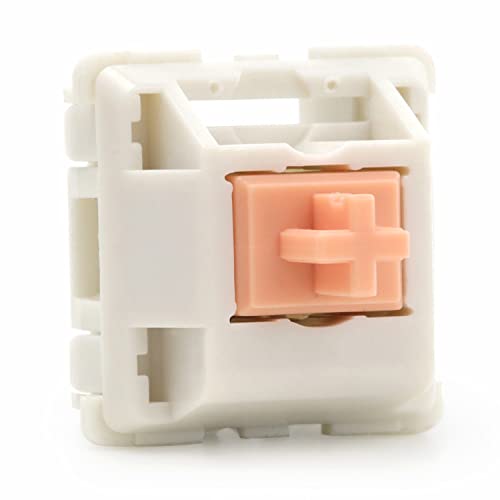
The Box province has its own complete guide on this site, so this survey confines itself to the traveller’s summary. Every Box switch seals its contacts inside the stem’s chamber, gaining dust and splash resistance and a guided, low-wobble travel. The clicky members add the click bar, the mechanism that made the family famous. Linears Red and V2 Red, tactile Brown, and clickies White, Jade, and Navy cover the personality spectrum at weights from feather to foghorn. If your desk’s enemies are environmental, or your heart belongs to the click bar, this is your province.
Speed: the shorter journey
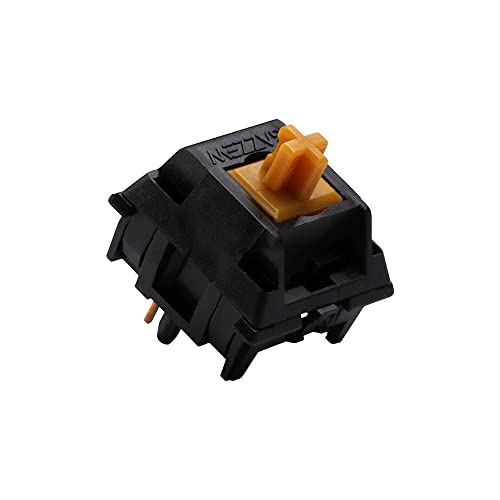
Speed switches compress the switch’s geography: actuation arrives earlier in the travel, so inputs register sooner and reset sooner. Silver is the linear flagship, joined in the wider line by Gold variants with tactile or clicky characters and a Copper tactile. The philosophy deserves a fair hearing and a fair limit. Earlier actuation is a real advantage in games built on rapid inputs, and a real tax on typing accuracy until hands adapt — the same trade examined head-to-head in are cherry and kailh speed switches worth it. Speed switches are best understood as a genre choice rather than an upgrade: they suit players the way racing tyres suit drivers, completely and conditionally.
Choc: the low-profile country
The Choc line — the 1350 series and its relatives — halves the switch’s height and changes everything downstream: sockets, keycaps, cases, and the typing geometry itself, which sits closer to a laptop’s posture while keeping mechanical soul. Choc Browns, Whites, and Reds mirror the MX personality trio at low altitude, and the ecosystem has grown a custom scene of split boards, travel decks, and minimalist customs. The comprehensive point is jurisdictional: Choc is not a variant of MX but a neighbouring country with its own parts, and shoppers must check which country their board belongs to before ordering anything.
Pro and the standard lines: the connective tissue
Kailh’s Pro switches and its standard MX-style lines rarely headline guides, and they hold up the market anyway. The Pro family — including the Pro Red that searches for this guide returned only in low-profile company, and so is discussed here in prose rather than linked — offers conventional open-stem switches in familiar personalities at honest tiers, the default choice inside countless prebuilt boards. The standard lines beneath them power the budget segment where most of the world’s mechanical typing actually happens. A comprehensive guide should say plainly what the flagship coverage implies: these switches are good. Not boutique, not sealed, not hurried — good, in the way that matters at scale, which is consistently, affordably, and without drama.
How Kailh Compares With the Other Houses
Against Cherry, Kailh is the insurgent that became an establishment: broader in experimental families, friendlier in tier, and — in the Box clickies — owner of a mechanism many consider superior to the incumbent’s click. Against Gateron, whose complete works are surveyed in the gateron switches complete guide, Kailh trades blows family by family: Gateron’s smoothness culture and boutique linears against Kailh’s sealing and click bar. Against Outemu, examined in outemu switches are they good, Kailh occupies the tier above, with the manufacturing depth to show for it. The five-house comparison in cherry gateron kailh outemu and razer switches compared stages the full parliament; this guide’s narrower claim is that Kailh is the house with the widest range of answers, which makes it the hardest to summarise and the most rewarding to map.
Buying Guide: Finding Your Kailh
Ask the desk’s questions in order. Is the room dusty, humid, pet-rich, or beverage-adjacent? Box. Is the board’s main job fast gaming on mechanical principles? Speed Silver, with its typing tax understood. Is the board slim, or destined to become slim? Choc — after confirming the board lives in that country. Is the job ordinary excellent typing at a sane tier? The Pro and standard lines, or the Box Brown if the room argues for armour. Each answer is a family, and within each family the weight choice follows the universal rule: lighter for speed and gentle hands, heavier for deliberation and strong ones.
Pin format follows the board, as always: the family’s 3-pin members seat happily in plate-mount designs, its 5-pin members reward PCB-mount sockets, and the clipping of plastic legs remains the standard, harmless visa between the two. Pack arithmetic rounds up to spares. And the switch fundamentals — what linear, tactile, and clicky actually mean at the leaf — are laid out in keyboard switches explained for readers building their vocabulary from the ground.
How to Evaluate a Kailh Switch Before Committing
Step one: test in the family’s tester
Kailh’s breadth makes testers unusually valuable: a single block can hold the Box trio, a Speed, and a standard switch, and an afternoon of typing on it teaches more than a week of reviews. Buy or borrow the tester before the set.
Step two: judge the switch in your board’s orientation
Seat the finalist in your actual board, under your actual keycaps, because plate grip, socket family, and cap leverage all vote. A switch auditioned only on a block has been interviewed, not employed.
Step three: give Speed switches a typing week
The Speed family’s tax is front-loaded: day one’s typos are the tuition, and the verdict that matters is day seven’s accuracy at your real workload. Judge any other family in a day; judge Speed in a week or not at all.
Step four: record and commit
Write the verdict down with the switch’s full name — family, member, weight — because Kailh’s catalogue is large enough that future you will thank present you for the precision. Then order the full count with spares, from the family’s own listings where possible.
Common Mistakes in Kailh Shopping
Ordering Choc switches for an MX board is the catalogue’s classic heartbreak, committed by logo rather than by socket. Buying Speed switches for a typing-first life is the second. The third is assuming all Box switches are loud, when the family’s linears and its tactile are among the quieter citizens of their classes. The fourth is overlooking the standard lines for a workhorse board, paying flagship prices for armour a clean desk never needed. The fifth is judging the whole house by its budget boards — the same factories make the Box line, and the range between Kailh’s floor and its ceiling is the widest in the industry, which is the comprehensive point this entire guide exists to make.
Final Recommendation
For most readers, the Box family is Kailh’s front door: start with the Red for calm, the Brown for manners, the White for joy. Gamers should audition the Speed Silver with a week’s patience, slim-board builders should emigrate to Choc deliberately, and value hunters should respect the standard lines that carry the world’s typing. Kailh rewards the shopper who shops by family and question rather than by logo — and now, with the map in hand, that shopper is you.
Decoding Kailh Names: A Field Guide to the Catalogue’s Logic
Kailh’s naming rewards decoding because the catalogue is too large for memorisation. The first word is the family — Box, Speed, Choc, Pro — and it tells you the architecture. The second word is the personality, usually a colour, and the colour code is the industry’s shared shorthand: Red for linear, Brown for tactile, Blue or White for clicky in most lines, with Black marking the heavier linear and Silver or Gold marking the Speed family’s metals. Weights hide in the listings rather than the names, which is why this guide keeps repeating the discipline of reading the exact listing title before ordering: two switches can share a name across generations and differ in spring, pins, and pack. The name gets you to the right shelf; the listing puts the right box in the cart.
Generational suffixes deserve their own sentence. A V2 in Kailh’s usage signals a revision of the same idea — refined tolerances, often a pin-format promotion — rather than a new personality, and owners of the earlier generation are not holding an obsolete switch, merely an earlier edition of a continuing book. Retail packagings add one more layer of naming, since partners like Glorious repackage Kailh switches under their own storefronts; the switch inside is Kailh’s, the box is the partner’s, and the listings in this guide name both so the trail stays honest.
Kailh Inside Other Brands’ Keyboards
A comprehensive guide should acknowledge how much of Kailh’s output wears other logos. Board makers across every tier specify Kailh switches — standard lines in budget decks, Box switches in mid-tier gaming boards, Speed switches wherever a spec sheet wants a shorter actuation to boast about. This OEM presence cuts both ways for the shopper. It means a Kailh switch bought retail has usually already served inside somebody’s product line, with the quality control that implies. It also means the switch inside a branded board may be a Kailh in everything but the housing’s printing, which matters when the time comes to replace one: the family guides and the housing markings, read together, identify the citizen regardless of the uniform it wears.
The Razer chapter of this story is instructive. Major gaming brands have historically sourced switch manufacturing from partners including Kailh while branding the switches as their own — a practice that taught the market to read spec sheets sceptically and taught Kailh the value of its own name. The company’s modern catalogue, with its families and its flagship, is the result: a manufacturer that decided the name on the housing should be its own, and built switches worth signing.
Lubing and Tuning Kailh Switches
Kailh’s families respond to the standard crafts with family accents. The Box line, as its own guide insists, takes a light hand and keeps grease far from the click bar. Speed switches lube like the standard switches they are built from, with the caution that their shorter travel leaves less room for a gummy film to hide in — a heavy hand shows up sooner at speed. Standard and Pro switches are the hobby’s classroom: forgiving, open, and improved by exactly the protocol in how to lube keyboard switches, rails painted, springs treated, tactile legs respected. Choc switches compress the lesson into half the height and reward the thinnest films of all, with many owners preferring the in-place approach of lubing switches without desoldering for boards whose slim switches discourage disassembly.
Filming follows housing looseness rather than family pride: test one switch’s top for play and let the result decide. Spring swaps are the universal solvent of almost-right switches across every Kailh line, and the family’s springs interchange with the wider MX world’s, which makes a Kailh switch a citizen of the whole tuning economy rather than a walled garden.
Kailh and the Clone Wars: A Necessary Clarification
Newcomers meet a confusing piece of vocabulary early: Kailh switches are sometimes called clones, in articles written as if the word were an insult with a date on it. The history deserves thirty seconds. When Cherry’s foundational patents expired, an ecosystem of MX-compatible switches bloomed, and every maker in it — Kailh and Gateron most prominently — was called a clone maker by the incumbent’s loyalists. Two decades on, the word has lost its charge, because the so-called clones out-innovated the template: sealed chambers, click bars, speed geometries, and low-profile ecosystems are not copies of anything Cherry sold. Kailh’s trajectory from that label to a flagship catalogue is the market’s verdict, and a comprehensive guide should retire the slur to the history section where it belongs. Compatibility is not imitation; it is a standard, and standards are how industries grow up.
The Long Tail: Switches This Guide Did Not Link, and Why They Still Matter
No set of listings can carry a catalogue this size, and the unlinked remainder deserves its paragraph of honour. Kailh’s silent variants serve boards specced for quiet rooms. Its heavy linears serve strong hands. Its novelty and artisan-adjacent runs serve the hobby’s appetite for the new. The Pro line’s standard-profile members, discussed in prose in this guide because the verified listings available to it surfaced in low-profile form, equip a generation of respectable boards. A comprehensive guide’s honesty consists partly in this admission: the map is complete at the level of families and questions, and deliberately representative at the level of individual switches, because the individual catalogue renews itself faster than any guide’s links should pretend to chase.
Where Kailh Goes Next
The industry’s weather is visible in Kailh’s recent behaviour: revisions that polish rather than replace, low-profile lines that grow as slim boards multiply, and a flagship family maintained like a platform. The magnetic era poses every mechanical maker the same question, and Kailh’s answer so far has been to deepen its mechanical virtues — sealing, consistency, range — while the Hall effect specialists fight over the competitive gaming crown. For the buyer, the implication is reassuring: Kailh switches bought today join a catalogue with a future, parts and folklore included, rather than a fad with a clearance sale scheduled. Comprehensive guides age; the family structure this one maps has already survived several product generations, and it is the structure, more than any single switch, that a buyer is really investing in.
Three Kailh Boards, Imagined Honestly
Abstractions settle better with examples, so consider three builds this catalogue makes possible. The first is the all-weather workhorse: a full-size board in Box Browns, living on a workshop-adjacent desk, typing invoices and code between projects, its sealed tactiles ageing slowly in air that would retire lesser switches. The second is the competitor’s spare-no-expense mechanical rig: Speed Silvers in a tenkeyless deck, chosen by a player who wants mechanical feel with a shorter journey, accepting the typing tax as the price of pace and paying it gladly. The third is the traveller’s slim custom: a Choc board in a laptop sleeve, Browns at half height, turning trains and hotel desks into offices. None of these builds is exotic. All three are Kailh answering three different questions with three different families, which is the comprehensive thesis in work clothes: the logo is the least important word on the listing, and the family is the most.
Caring for a Kailh Board Across Years
The maintenance story follows the families. Box boards ask for the least, their seals doing the preventive work continuously. Standard and Speed boards follow the ordinary calendar of blowing out, occasional spring attention, and the five-year indifference of switches that were never asked to be precious. Choc boards reward gentleness in handling, their slim mechanisms being the family’s most delicate citizens. Across all of them, the universal practices hold: spares in a labelled box, a journal entry per change, and the discipline of replacing one failed switch faithfully rather than reimagining the board at every fault — the repair liturgy detailed in how to replace mechanical switches. A Kailh board maintained this way is not an appliance with a lifespan but a possession with a biography, and the catalogue’s scale means its parts will be findable for as long as the biography runs.
Kailh for Beginners: A Sensible First Year
A newcomer seduced by this catalogue’s size deserves a route through it that does not require a spreadsheet. Term one: type on whatever Kailh switches your first board arrives with, and learn their names and family from the housing and the listing — most first boards are already a Kailh education in disguise. Term two: buy a tester spanning the families, Box beside Speed beside standard, and let your hands hold the parliament this guide describes in prose. Term three: change one zone of your board toward the tester’s winner, using the swap craft, and live with the comparison on a single deck. Term four: commit the full board, with spares, and write the journal entry that future purchases will consult. That year produces something no single purchase can: a Kailh opinion that is actually yours, grounded in families rather than in folklore, and a board whose every switch can be explained by its owner in one sentence each.
Weights Across the Kailh Range: A Hand’s Guide
Kailh’s springs span the full human range, from the V2 Red’s featherweight invitation to the Box Navy’s demand for commitment, and the comprehensive view should give the shopper a hand-based map rather than a gram table. Featherweights — the forties and below — serve speed and gentle hands, and punish resting fingers. The middle band, where the Box Red, the standard lines, and the Speed Silver live, is the population centre: heavy enough to forgive, light enough for all-day work, and the correct default for any buyer who has not yet formed a grievance. The heavy band — the Navy’s territory and the standard Black linears’ — serves deliberate typists, heavy hands, and anyone whose accidental presses outnumber their fatigue complaints. Kailh’s virtue is that every band exists inside every major family, so a weight preference never exiles a buyer from a mechanism they love; the seal, the bar, and the speed geometry are all available at the weight your hands choose, which is a deeper kind of comprehensiveness than any single flagship provides.
The Economics of the Catalogue: Why the Tiers Hold
Kailh’s pricing structure is a lesson in manufacturing honesty. The standard lines cost what mature, high-volume switches should cost. The Box line’s premium buys a mechanism — a chamber, a bar, tighter tolerances — that can be pointed to and explained. The Speed premium buys a geometry. Nowhere in the catalogue is a buyer paying primarily for a name, which distinguishes Kailh from houses whose flagship tiers monetise reputation. For the shopper this produces a rare comfort: moving up the catalogue buys engineering that can be felt, and moving down it buys competence that can be trusted. The comprehensive guide’s buying advice can therefore stay simple in a way few brands permit — choose the family by question and the member by weight, and let the tier be whatever that choice costs, because in this catalogue the tier is the honest shadow of the mechanism.
Sound and Feel, Family by Family, in Plain Words
Since a comprehensive guide owes the reader a sensory summary as well as a structural one, here is the catalogue translated into the language of rooms. The standard lines sound like competent typing anywhere on earth — the acoustic of offices and libraries where mechanical boards are welcome. The Pro line polishes that voice slightly, the way a better case polishes any switch. Speed switches sound brisker because they are brisker; their shorter travel clips each note, and typists hear their own pace in the result. The Choc family speaks in a smaller voice entirely, a low, close sound suited to the slim boards’ laptop-adjacent posture. And the Box family contains the catalogue’s whole dynamic range, from the Reds’ hush to the Navy’s declaration, with the click bar’s double note as its signature. A reader who can hear their room in one of those descriptions has located their family more surely than any specification could locate it for them.
Feel follows a parallel map. Standard and Pro switches feel like the MX idea in its Sunday clothes — familiar, unshowy, correct. Speed feels like the same idea late for a train. Choc feels like typing brought closer to the desk, a shallower, quicker gesture that slim-board devotees describe as honesty and MX veterans describe, at first, as absence. Box feels guided — the word owners reach for is composed — because the chamber chaperones every millimetre of the journey. None of these is the correct feel. All of them are somebody’s, which is the entire reason a catalogue this size deserves a comprehensive guide rather than a podium.
Resale, Spares, and the Catalogue’s Liquidity
A switch’s second life is part of its value, and Kailh’s scale gives its switches the hobby’s most liquid second-hand market: everyone knows the names, testers exist everywhere, and a used set of Box Whites or Speed Silvers finds its next board quickly. Spares follow the same logic — a Kailh switch is replaceable in kind years later, from stock that the catalogue’s size keeps flowing. For the comprehensive buyer this liquidity quietly de-risks experimentation. A family auditioned and declined is a set that can be rehomed; a family adopted is a set whose spares will never become an archaeology project. Few purchasing virtues matter across a decade of ownership as much as that one, and few catalogues offer it as completely as the one this guide has mapped.
The One-Paragraph Version, For the Reader in a Hurry
Kailh makes switches for every question a desk can ask. If the room is the enemy, buy Box. If the clock is the enemy, buy Speed. If thickness is the enemy, buy Choc. If the budget is the enemy, buy the standard lines and type happily for years. Within each family, choose the colour by feel — linear for smoothness, tactile for confirmation, clicky for joy — and the weight by hand, lighter for speed and heavier for deliberation. Everything else in this guide is the working-out of those five sentences, and everything in the catalogue is their elaboration. A comprehensive guide could ask for no cleaner summary, and a comprehensive catalogue could offer no better one.
What a Comprehensive Guide Cannot Do
A map is not the territory, and this guide’s last honesty is about its own limits. It cannot press a switch for you. It cannot hear your room, weigh your hands, or know that your desk shares a wall with a nursery. What it can do — what it has tried to do — is organise a bewildering catalogue into families with clear questions, so that the testing you do is aimed rather than random. One tester, honestly typed on for a week, will finish the education this page begins, and the journal habit will preserve its lessons. The catalogue will keep growing in the meantime; Kailh sees to that. But its structure — protection, pace, profile, and the honest standard lines beneath them all — is stable enough to navigate by for years, and a reader who has internalised the structure owns the catalogue in the only sense that matters: they can find their switch in it, by question, every time their desk asks a new one.
A Note on Generations of Buyers
Kailh’s catalogue now serves three generations of mechanical typists simultaneously: the veterans who met the name when it was an underdog, the middle cohort who built the renaissance on its budget boards, and the newcomers for whom the Box line is simply what premium looks like. Each generation reads the catalogue differently — as vindication, as foundation, as furniture — and the range’s ability to hold all three readings is a measure of how completely the company grew into its market. A comprehensive guide is, in the end, a letter to all three at once: the veteran finds the history honoured, the builder finds the map current, and the newcomer finds a door marked clearly enough to walk through. The switches, indifferent to their readers, go on doing the one thing they were made for, in more desks than any guide will ever count.
The Catalogue as a Teaching Tool
There is a final, unexpected use for a range this size: it teaches the hobby itself. A student who works through Kailh’s families encounters, in one maker’s output, nearly every idea the switch world has had in twenty years — sealing, speed geometry, low-profile compression, click mechanisms old and new, spring philosophy from feather to anvil. The families become a syllabus, and the tester that holds them becomes the laboratory. Teachers of the hobby — the friends who lend boards and explain bumps at kitchen tables — reach for Kailh examples instinctively, because the catalogue contains a demonstration of everything. A comprehensive guide is proud to serve as the syllabus’s written form, and it leaves the laboratory work, as all good syllabi do, to the student’s own hands.
Closing the Map
Every comprehensive guide ends with the same temptation — to keep adding provinces until the map outweighs the journey. Resist it here. The families are mapped, the questions are ordered, the verified citizens are linked, and the prose-only provinces are acknowledged with their reasons. What remains is the reader’s part, which no guide can perform: a tester on the desk, a week of honest typing, and a journal entry that turns this catalogue from a stranger’s organisation into a personal geography. Kailh built the country. This page drew its borders. The travelling, as ever in this hobby, is the reward itself — and it begins, fittingly, with a single switch pressed slowly, in a quiet room, by a reader who now knows exactly which family that switch belongs to and precisely what questions its cousins answer.
One Desk, Revisited a Year Later
Return, finally, to the three imagined builds from earlier in this guide, a year on. The workshop board’s Box Browns have typed through a season of dust and show it only in the keycaps’ shine. The competitor’s Speed Silvers have survived two game launches and one change of main title, their owner long past the typing tax and fluent in the shorter journey. The traveller’s Choc board has crossed borders in a sleeve and typed in four time zones, its slim switches none the worse for the mileage. Three families, three questions, three quiet successes — and a catalogue still holding answers for the questions those desks have not asked yet — a new game, a new room, a new pair of hands growing into the hobby at the same desk, reaching first, as hands do, for the loudest switch in the drawer. That is what comprehensive means when a guide uses the word carefully: not that everything was listed, but that everything the reader will need has a place, and the place can be found without a map seller’s markup.
Frequently Asked Questions
Is the Kailh catalogue still growing?
Yes, in the directions this guide’s structure predicts: revisions of the flagship families, new members at the weights and in the formats the market is asking for, and a low-profile line that expands as slim boards move from curiosity to category. Growth inside a stable structure is the healthiest kind, because it means the map in this guide gains detail without losing its borders — and a reader who learned the families once can place each new arrival in seconds, by its name alone, the way a naturalist places a new bird by its family marks before its species is even checked. That fluency, more than any single recommendation in these pages, is the comprehensive guide’s intended gift, and it keeps giving every time a new switch is announced, reviewed, or dropped into a tester by a curious friend at exactly the moment your own curiosity needed a new province to explore, a new weight to test, or a new click to argue about, happily, knowledgeably, and at satisfying length.
Does Kailh make switches for ergonomic and split keyboards?
The Choc family is the split community’s mainstay, its low profile suiting the tilted, tented geometries ergonomic boards favour, and slim Choc builds dominate the travel-friendly end of that scene. Standard MX-pattern Kailh switches serve the larger ergonomic boards built around full-height switches. Either way, the family’s presence in that world follows the same logic as everywhere else in this guide: the question the board asks — slim or standard, sealed or simple — already has a Kailh family shaped like its answer.
Where should I buy Kailh switches to be sure they are genuine?
From the maker’s own storefront channels, established keyboard vendors, and the verified listings linked throughout this guide. The family’s popularity attracts vague marketplace listings whose photographs borrow the catalogue’s fame; the defences are the usual ones — a title that names the family and member precisely, a seller with a history, and a price that does not undercut every legitimate source by a margin that itself constitutes the warning. When a listing and this guide disagree about a switch’s family or weight, believe the guide’s structure and interrogate the listing, because catalogues change more slowly than storefronts do, and because a switch bought correctly the first time is the only bargain this hobby reliably offers, in any family, at any tier, on any continent where switches are sold.
What is the single most popular Kailh switch?
Popularity depends on the parish. In enthusiast circles the Box White’s click bar gives it the loudest fame, in gaming the Speed Silver’s shorter journey is the name players trade, and in the wider world the standard Red and Brown switches inside millions of prebuilt boards outnumber everything while attracting no attention at all — the fate of infrastructure. A comprehensive answer names all three, because the catalogue’s popularity, like the catalogue itself, is a federation rather than a monarchy.
Should a first mechanical keyboard be a Kailh board?
It is one of the safest first doors in the hobby, precisely because the catalogue continues upward from wherever the first board lands. A beginner whose board types on standard Kailh switches owns a baseline the whole industry respects, and every later curiosity — a sealed set, a speed set, a slim second board — has a family waiting with the same logo and a new answer. Starting where the map is largest makes the hobby’s geography easier to learn, and this guide exists to be the legend on that map.
Are Kailh switches a good choice for a quiet office build?
Choose from the catalogue’s quiet districts and yes, emphatically. The Box linears keep their counsel, the Box Brown murmurs, and the standard linears type at office volume without any special measures. Add the usual accomplices — a solid case, a desk mat, civilised keycaps — and a Kailh build can be the quietest citizen on its floor while remaining unmistakably mechanical. The only families to keep out of the office are the clickies, whose opinions on silence are a matter of public record.
How do I identify the Kailh switches in a second-hand board?
Pull one switch or one keycap and read the housing: Kailh prints its name on the top housing of its retail switches, and OEM variants carry the family’s unmistakable architecture — the Box chamber, the Choc’s low stature, the Speed stem’s proportions. Match what you find against the family descriptions in this guide, and photograph the housing before ordering replacements, because a single clear picture settles questions that three paragraphs of description cannot.
How do Kailh switches compare with Gateron for a custom build?
Both houses serve custom builders superbly, along different axes. Gateron’s catalogue leans into smoothness culture and boutique linears with a devoted modding folklore. Kailh’s leans into mechanism variety — the seal, the bar, the speed geometry, the low-profile country. Builders who know their question choose easily; builders still forming one should let a tester spanning both houses arbitrate, because the families’ best members are close enough in quality that preference, honestly tested, is the correct decision procedure.
What does the 1350 in Choc 1350 mean?
It is the series designation for Kailh’s mainstream low-profile switch line — the number names the family of Choc switches built around that compact footprint and stem. Treat it the way you treat a shoe last’s number: it identifies the ecosystem your keycaps and sockets must belong to, and it is the first thing to match when ordering replacements or companions for a Choc board.
Are Kailh switches good quality?
Across an enormous range, yes — with the honesty that the range has a floor and a ceiling. The budget standard lines are good switches at their tier, consistent and durable. The Box and Speed families compete with any mainstream maker’s best. Kailh’s manufacturing scale, built over years of supplying other brands, shows in unit consistency that boutique runs sometimes envy. Judge each family at its tier rather than the logo at its extremes.
What is the difference between Kailh Box and regular Kailh switches?
The Box design seals the contact mechanism inside a chamber around the stem, adding dust and splash resistance and a guided travel; regular Kailh switches use the conventional open-stem architecture shared with most MX-style switches. The Box clickies additionally use the click bar, which regular clickies — Kailh’s included — replace with the standard click jacket. Feel, sound, and price all follow from those two engineering choices.
Do Kailh switches fit Cherry MX keyboards?
The MX-pattern Kailh families — Box, Speed, Pro, and the standard lines — fit boards built for MX-style switches, with the usual 3-pin and 5-pin etiquette. The Choc family does not: it is a low-profile ecosystem with its own sockets and keycaps. The single question that prevents every compatibility heartbreak is which pattern your board’s sockets follow, and it is answerable by looking at one switch or the board’s specification.
Which Kailh switch is best for gaming?
Within mechanical principles, the Speed Silver is the gaming specialist, its shortened actuation built for rapid inputs. The Box Red serves players who want smoothness with environmental armour, and the V2 Red’s light spring flatters fast hands. Players whose priority is rapid-reset technology itself should look across the aisle at Hall effect boards, where the reset behaviour is a different physics rather than a shorter journey.
Are Kailh switches loud?
The catalogue contains every volume. The Box clickies are among the loudest switches made, proudly. The standard clickies are conventionally loud. The tactiles are moderate, the linears quiet, and the family’s silent offerings — where a board maker specifies them — quieter still. Loudness in this catalogue is a choice the buyer makes by family, which is exactly how a comprehensive range should behave.
Why do so many budget keyboards use Kailh switches?
Scale and consistency. Kailh manufactures at volumes that make its standard switches inexpensive without making them unreliable, and board makers building to a price have learned the switches will not embarrass them. The budget boards then serve as the family’s ambassadors — many a Box devotee’s first mechanical board typed on standard Kailh switches that simply did their job, season after season, until curiosity climbed the catalogue.