Disclosure: As an Amazon Associate, kajuandouglas.com earns from qualifying purchases. Links on this page are affiliate links; they cost you nothing extra. Prices and availability change often, so check the current Amazon listing before you buy.
Ask a forum whether outemu switches are they good and you will collect two answers in the same thread: the budget board they arrived in was the best value its owner ever bought, and the switches were replaced within the month. Both witnesses are telling the truth. Outemu — the switch arm of the Gaote manufacturing family — built its name supplying the affordable end of the mechanical market, where its switches power countless budget boards and sell loose by the tray to owners whose entire switch budget would not cover a single boutique set. This evaluation asks the question properly: good at what, good compared to whom, and good for which owner — with the range’s own verified listings as the evidence.
The short answer, for readers in a hurry: Outemu switches are honestly made, occasionally excellent for their tier, and priced so far below the hobby’s prestige names that the comparison itself needs adjusting. The long answer occupies the rest of this page, because “good” in a switch means feel, consistency, sound, durability, and value in proportions that change with every reader.
Key Takeaways
- Outemu’s core line — Red, Blue, Brown, Black — delivers the classic switch archetypes at budget prices, with feel that surprises owners expecting worse.
- The Silent White shows the brand reaching beyond the basics into the quiet category.
- Consistency across a full tray is the tier’s honest weakness; a few citizens in every set will feel like cousins rather than twins.
- Outemu switches are fully MX-compatible in stem and, in the standard housing, in most hot-swap boards — check socket fit on narrow-socket boards.
- As first switches, experiment stock, and budget-board originals, they earn their reputation; as endgame switches for a tuned build, the hobby’s mid-tier outclasses them.
In this guide
Outemu Switches Are They Good: Meet the Lineup

Outemu Red — the Budget Linear Standard
Badge: The people’s linear
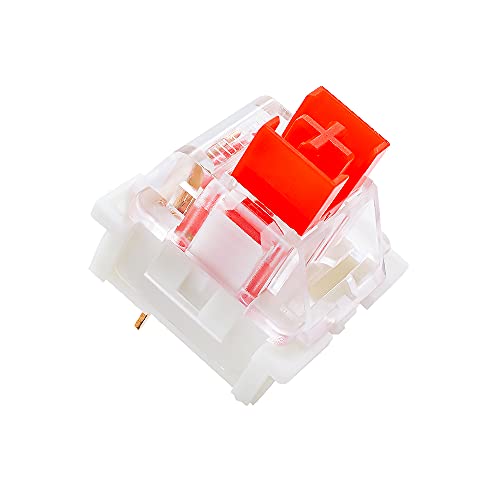
- Configuration per its listing: linear, 3-pin, 45gf, dustproof, 65-pack
- Format: Cherry MX equivalent DIY replaceable switches
- Positioning: the range’s light gaming-and-typing linear
- Represents: Outemu’s volume archetype
Strengths
- A smooth-enough light linear at a per-switch price that makes experimentation free of consequence.
- Its dustproof housing shrugs off the crumbs and dust of real desks.
- Its lightness suits fast gaming and gentle typing hands alike.
Trade-offs
- A faint spring voice rides along on quiet desks.
- Stem wobble is present in the way of its tier.
- Consistency varies gently across the tray’s citizens.
Best for: budget builds, first linears, and board-fillers for macro pads. Not suited for: sound-tuned endgame builds.

Outemu Blue — the Click That Announces Itself
Badge: Maximum character per penny
- Configuration per its listing: clicky and tactile, 3-pin, dustproof, 65-pack
- Character: jacket-click design with a pronounced bump
- Positioning: the range’s loud traditionalist
- Represents: the classic clicky archetype, undiluted
Strengths
- Delivers the full vintage clicky ceremony at the range’s usual generosity.
- The bump-and-click pairing gives beginners an unmistakable tactile education.
- Crisp actuation feedback suits deliberate, typewriter-minded typists.
Trade-offs
- The click is assertive enough to end shared-room treaties.
- Click jackets add their own rattle to the sound signature.
- Its weight and ceremony tire fast-gaming fingers quickly.
Best for: solo typists who love the ceremony and beginners learning tactility. Not suited for: offices, libraries, or stealth builds.

Outemu Brown — the Quiet Bump on a Budget
Badge: The middle road, priced low
- Configuration per its listing: tactile, 3-pin, dustproof, pack of 109
- Character: a modest, early bump over a medium spring
- Positioning: the range’s all-rounder
- Represents: the classic brown archetype
Strengths
- The bump is honest and present — more defined than the archetype’s shyest versions.
- A safe recommendation for owners who cannot audition switches in person.
- Its tier pricing makes a full board’s worth a painless experiment.
Trade-offs
- The bump’s gentleness will not satisfy seekers of strong tactility.
- Scratch and spring voice sit at the tier’s usual levels.
- It inspires competence more than devotion.
Best for: first tactile sets and mixed gaming-typing desks. Not suited for: tactile connoisseurs chasing a dramatic bump.

Outemu Black — the Heavy Hand’s Linear
Badge: Weight as a feature
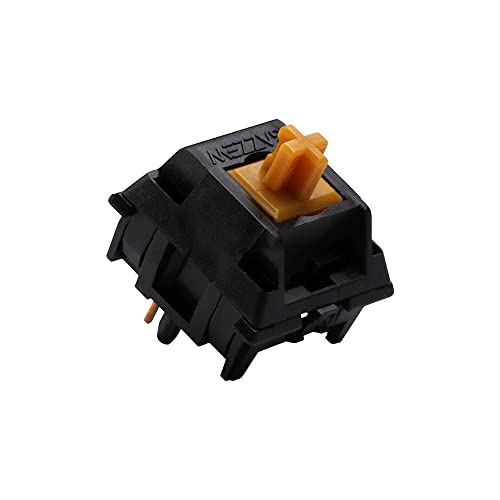
- Configuration per its listing: linear, 3-pin, heavy 65gf, dustproof, 20-pack
- Character: the heavy spring of the classic four
- Positioning: deliberate presses, fewer accidents
- Represents: the traditional heavy linear
Strengths
- The weight forgives resting fingers and brushing palms completely.
- A deep, steady travel suits heavy-handed typists who bottom out everything.
- Shares the range’s value and compatibility virtues.
Trade-offs
- Long sessions on a heavy spring are a forearm’s negotiation.
- Fast repetitive gaming inputs fight the weight rather than ride it.
- Niche by design — most owners should start lighter.
Best for: heavy-handed typists and accidental-press sufferers. Not suited for: speed gaming or light-touch hands.

Outemu Silent White — the Range Reaches for Quiet
Badge: The ambition pick
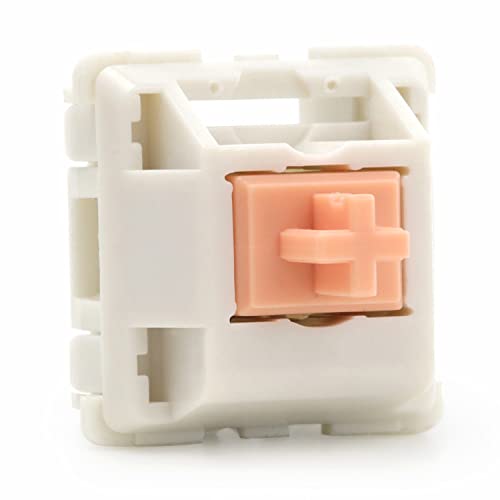
- Configuration per its listing: silent linear, quiet 45gf, 3-pin, 20-pack
- Character: damped travel on a smooth linear stroke
- Positioning: shared-room quiet at budget reach
- Represents: Outemu beyond the classic four
Strengths
- Brings genuine quiet linearity to a price tier that rarely offers it.
- The dampers soften both directions of travel, not just the landing.
- Proof the brand’s ambitions extend past the volume basics.
Trade-offs
- The damped landing carries the softness all silent switches negotiate.
- Its stroke gives no tactile landmark beneath the damping’s cushion.
- Availability wanders more than the classic four’s.
Best for: shared-room owners who want quiet without ceremony. Not suited for: crispness absolutists.
The Evidence: Five Tests of “Good”
Feel
Judged blind against the hobby’s mid-tier, Outemu’s classics land closer than their price predicts: the Red is a respectable light linear, the Brown’s bump is genuinely present, the Blue’s ceremony is complete. Judged against the boutique end, the gap reappears in the details — a whisper more scratch, a shade more wobble, a spring voice a careful ear can find. Feel, in other words, is where the brand most exceeds its tier and where its tier most honestly shows, sometimes in the same keystroke.
Consistency
Here the budget tells its plainest truth. Across a tray of thirty-two, most citizens feel like siblings and a few feel like cousins — a slightly heavier spring here, a touch more scratch there. Owners of prestige sets notice; owners filling a first board mostly do not, and the wise budget practice is the tester-first habit from keyboard switches explained: audition the tray’s range before committing the board, and put the best-feeling citizens under the home row.
Sound
Stock Outemu sound is the sound of honest plastics at factory tolerances: present, unembarrassed, and improvable. The same tuning crafts that civilise any switch — the lube discipline in how to lube keyboard switches and the spring care in the guides — lift Outemu sets noticeably, which is why the hobby’s budget-build culture treats them as raw material with pride rather than as compromises with shame.
Durability
The mechanism is the standard leaf-and-stem design built by a manufacturer whose volumes are industrial, and field reports across the budget-board world describe service lives that outlast the boards’ other components. Durability horror stories attach to the category generally — cheap boards, cheap everything — more than to Outemu’s switches specifically. Treat them as durable within their design’s ordinary envelope and they will not make a liar of you.
Value
The round that is not close. Per switch, the classics cost a fraction of the prestige names, and the fraction buys most of the function — which reframes the whole question. A switch that delivers the large majority of the experience at a small minority of the price is not a cheap switch; it is a value instrument, and the hobby’s vocabulary should say so more often than it does.
Buying Guide: When Outemu Is the Right Answer
Buy Outemu without hesitation in four situations. The first board: a learner’s hands cannot yet spend prestige money wisely, and Outemu lets the education happen at tray prices. The experiment: an owner curious about heavies, clickies, or silents can audition an archetype for the cost of a sandwich rather than a commitment. The utility board: macro pads, test benches, loaner boards, and the keyboard that lives in a workshop all deserve honest switches and none deserve boutique ones. And the tuned budget build: an owner willing to lube and film a tray can close much of the gap to the mid-tier with labour instead of money, which is the hobby’s oldest and most honourable trade. Hesitate in two situations: the sound-tuned endgame, where the tier’s wobble and spring voice become the build’s ceiling, and the strong-tactile quest, where the bump Outemu offers is a foothill beside the hobby’s famous mountains — the territory of Holy Pandas versus Glorious Pandas compared.
How to Get the Best From an Outemu Set
Step one: sort the tray
Press every switch before installing any. Set aside the scratchiest and the oddest-weighted citizens for the board’s least-typed keys, and seat the smoothest under the home row and spacebar’s neighbours, where your hands keep their diary.
Step two: lube lightly
A thin film on rails and spring ends transforms the tier’s sound more than any other single act. Follow the full method in the lubing guide, keep the leaf dry, and resist the urge to drown budget tolerances in grease — the goal is polish, not pudding.
Step three: film the loose ones
Switch films cost pennies and cure the housing play that budget tolerances leave behind. Not every citizen needs one; the sorting in step one tells you which do.
Step four: let the board help
A desk mat, a solid case, and decent keycaps lift an Outemu board’s sound and feel further than a switch upgrade at twice the tray’s price. Budget wisdom is system wisdom: spend where the whole board hears it.
Common Mistakes When Judging Budget Switches
The first is judging a tray by its worst citizen — sort before you sentence. The second is comparing a stock budget switch against a tuned prestige switch and calling the difference manufacturing rather than labour. The third is buying the Blue for a shared room on the strength of its price, an economy measured in goodwill rather than money. The fourth is assuming 3-pin means limited: Outemu’s pins clip for 5-pin boards like any other’s, per the fitting crafts in how to replace mechanical switches. The fifth is snobbery’s mirror — insisting the budget tray must secretly equal the boutique set, and feeling betrayed by a gap that honest pricing disclosed in advance.
Final Recommendation
Are Outemu switches good? They are good the way a well-made hand tool is good: honestly specified, durably built, priced for the many, and short of the master’s instruments in refinements that most hands, most days, will never invoice. For first boards, experiments, utility builds, and tuned budget projects, they are not merely acceptable — they are the rational purchase. For endgame builds chasing a specific feel or voice, spend upward with this page’s blessing and its evidence in hand. The brand’s real achievement is democratic: it put a genuine mechanical feel within reach of every desk, and the hobby is larger and better for it.
Who Outemu Is: A Short Company Sketch
Outemu’s switches come from Gaote, a Chinese manufacturer whose business is switches and input components at serious volume, and whose name most owners meet only when they flip a budget board over or open a tray. That anonymity is the brand’s biography: it grew as the supplier behind other people’s products, the engine room rather than the bridge. The consequence for buyers is a particular kind of quality — manufacturing competence without marketing varnish. The listings make modest claims, the trays arrive without ceremony, and the switches themselves carry the virtues and the tolerances of a production line optimised for honest millions rather than for review samples. Understanding that biography calibrates every judgement on this page: Outemu is not a boutique that failed to be fancy; it is an industrial maker that succeeded at being sufficient, and then, with lines like the Silent White, began reaching past sufficiency on its own terms.
The Hot-Swap Socket Story: Where Outemu Quietly Shaped the Market
One of the least-told stories in the switch world has Outemu near its centre. Early budget hot-swap boards used sockets sized closely around Outemu housings, and for a generation of owners the compatibility lesson ran in a direction that surprised them: the affordable switch fit everywhere, while some wider boutique housings would not enter those early sockets at all. The episode left a permanent residue in buying advice — check your socket before you order the exotic set — and it flatters the subject of this page in a way its marketing never claimed. The switch designed to a budget became, for a whole class of boards, the reference dimension. Markets occasionally reward the standard-setter who never asked for the honour, and Outemu’s socket era is the switch world’s favourite example.
Each Classic, Taken Slowly
The Red deserves its volume crown examined rather than assumed. A light linear is the easiest archetype to make acceptably and the hardest to make beautifully, and Outemu’s sits at the acceptable-plus mark: the travel is clean, the spring is honest, and the stroke stays clean deep into the travel, where lesser budget linears begin to feel their tolerances. In a gasket-mounted budget case, a sorted tray of Reds produces a board that embarrasses keyboards three times its price in any blind test conducted by hands rather than by brand lists. The Blue, examined slowly, is a museum piece that still works the floor: its click jacket delivers the full mechanical ceremony the nineteen-eighties promised, and beginners who learn tactility on it acquire a reference point no description can substitute. The Brown is the diplomat — never the favourite, rarely the complaint — and its bump, a shade more present than the archetype’s most famous version, makes it the safest blind recommendation in the whole budget world. The Black is the specialist: a heavy spring in an era of light ones, serving the heavy-handed minority with a loyalty the market rarely rewards and its owners never forget. Together the four form a complete classical education at a price that makes the education nearly free, and any verdict on the brand that skips that fact has not understood the assignment.
The Silent White and the Brand’s Direction
The Silent White matters out of proportion to its sales because it is evidence of intent. A volume maker content with the volume tier does not develop a damped silent linear for shared rooms; a maker watching the hobby’s centre of gravity — toward quiet, toward boards that behave in modern open spaces — builds exactly that. The switch itself executes the brief creditably: the dampers hush both ends of the journey, the stroke stays smooth beneath them, and the whole arrives at a tier price that makes silent typing an impulse rather than a project. Set beside the silent specialists elsewhere on this site — the Boba line’s deep hush, the Durock family’s polish — the Silent White is outclassed in refinement and unanswerable in value, which is the brand’s whole story told by a single switch. Where Outemu goes next is genuinely interesting, and owners who buy the tray today are buying a small share in finding out.
Three Owners, Three Verdicts
The student first: a first mechanical board, a budget counted in coins, a dorm room’s thin walls. For this owner the question answers itself nightly — the Brown tray in a budget board is not a compromise but a revelation, mechanical feel discovered at a price that leaves money for textbooks, and the Silent White waits as the roommate-era upgrade. The office professional next: a home desk shared with a household, a preference for tactility, a reluctance to spend prestige money on a tool. A sorted, lightly lubed set — or the Silent White stock — serves this owner for years, and the savings against the boutique route buy the monitor arm the back actually needed. The hobbyist last: three boards deep, a sound target in mind, a drawer of prestige switches already. For this owner Outemu is the utility drawer — test sets, macro pads, the board lent to friends — valued precisely and without illusion. Three owners, three verdicts, and not one of them is “bad switches”: the phrase survives only in the mouths of people comparing across purposes, which this page exists to retire.
What “Good” Costs: The Honest Upgrade Ladder
Owners wondering what more money buys, rung by rung, deserve the ladder stated plainly. The first rung above Outemu buys consistency: trays whose citizens feel like twins, sorted by the factory rather than by your evening. The second buys stock smoothness: rails and lubing executed to a standard that makes the tuning bench optional. The third buys design: stems, housings, and springs engineered toward a named feel — a famous bump, a signature sound — rather than toward an archetype. The fourth buys theatre: materials, collaborations, and scarcity, priced as collectibles are. Outemu stands at the ladder’s foot offering the archetypes themselves, unadorned and functional, and the ladder’s existence does not shame the ground floor — it explains it. Most owners climb one rung in their lives, some climb two, and the hobby’s health depends on the foot of the ladder being exactly as good as Outemu has made it.
The Counterargument, Given Its Due
The case against Outemu, stated by its fairest critics, runs like this: a switch is a decade-long companion bought once, the price difference amortises to pennies a week, and the refinements of the mid-tier — consistency, smoothness, sound — are the very substance of daily satisfaction rather than luxuries sprinkled on top. On that arithmetic, buying the value tier is the false economy, and the hobby’s graveyards of replaced budget trays are the evidence. The argument deserves its due: for an owner who already knows their archetype, their weight, and their sound, it is largely correct, and this page’s buying guide concedes the endgame to it. Where it fails is at the beginning — for the owner who does not yet know those things, the prestige purchase is a guess at boutique prices, and the budget tray is the tuition that makes the later purchase wise. Both arguments are true at different chapters of the same ownership story, and a review that honours only one of them has reviewed half a switch.
Buying the Tray Itself: Practical Notes
A few unglamorous details separate a good Outemu purchase from a confusing one. Pack sizes in this range vary widely — the listings in this evaluation run from twenty-switch packs to a hundred and nine — so do the arithmetic for your layout before ordering: a full-size board may need one large pack or several small ones, and the spares either way are welcome as the tuning bench’s stock. Pin count matters in the other direction than buyers expect: the classics here are 3-pin, which fit 3-pin boards natively and 5-pin boards after the standard clipping craft. Listings vary in their lube state and packaging across sellers of the same switch, so read the exact listing’s configuration lines — the ones this page’s pick cards quote — rather than assuming the last tray’s terms. And keep the tray itself: a sorted Outemu tray, labelled with its citizens’ grades from your sorting session, becomes a small library your future builds will borrow from constantly.
A Blind Test You Can Run at Home
Sceptics and believers alike can settle their own version of this page’s question with an hour and a friend’s help. Take three switches — an Outemu classic, a mid-tier equivalent of the same archetype, and the boutique option if one is within reach — mount them under identical unmarked keycaps in a row, and press them blind across an evening’s real typing rather than in a ceremonial minute. Note which differences you can name and which you can only feel, and then, the honest step, note which of the felt differences you would pay for at each rung’s actual price. Most owners discover the pattern this page has argued: the gaps are real, they are smaller than the discourse claims, and their personal value depends on chapters of ownership the discourse never asks about. Run the test before the big purchase, whichever tier it lands in, and the switch question stops being a forum argument and becomes a measurement.
The Resale Drawer and the Spares Economy
Budget switches enjoy a second life that prestige switches, oddly, often do not. A prestige set is bought for a build and stays in it; an Outemu tray circulates — into the macro pad, the friend’s first board, the workshop keyboard, the tester’s row — accumulating usefulness at every stop because its replacement cost never makes an owner protective. Spares from a sorted tray end arguments about a single tired switch: the drawer holds a citizen of the same archetype, graded by your own hands, ready in two minutes. There is an economics of enough at work here, and it is the deepest answer to the page’s title question. A good switch is partly one that performs and partly one that fits the economy of a real desk, and on the second measure the budget tray is not the ladder’s foot but a different and complete philosophy of ownership.
Sound, Once More, With a Budget Ear
Because sound decides so many modern purchases, the Outemu acoustic deserves one more honest pass. In a hollow budget case, stock Outemu switches sound like their surroundings — bright, busy, unrefined — and reviewers who test them there are reviewing the case as much as the switch. Move the same sorted tray into a solid case with a mat under it and the voice drops a register and gains its manners, because most of what a switch contributes to sound is its landing and its spring, and both are governable. This is the budget system’s central lesson, and it generalises across this site’s guides: at the value tier, the board around the switch is the sound, and money spent on the room the switch lives in outperforms money spent replacing the switch. Owners who learn that lesson on an Outemu tray carry it profitably to every tier above.
The Verdict’s Final Shape
Every long evaluation should be able to compress itself without lying, so here is this one in a breath. Outemu switches are the honest baseline of the mechanical world: archetypes executed competently, priced democratically, limited in consistency and refinement, and improvable by craft to a degree that embarrasses their price. Owners at the beginning of the hobby, owners furnishing utility boards, and owners who tune for pleasure should buy them without a flicker of doubt. Owners deep in a specific pursuit — a sound, a bump, a tournament’s sensing — should buy past them with equal confidence and no condescension, because the ladder they are climbing stands on the ground this brand holds. Good is not a tier. Good is a fit between a switch and a chapter, and by that measure Outemu is, for more chapters than any other maker, simply good.
What to Read Next, Depending on Your Verdict
If this page persuaded you that the value tier is your chapter, the craft guides are your next investment — an hour with the lubing method and the swap technique will return more feel per penny than any purchase could. If it persuaded you to climb, climb with a map: the Kailh family guide for the respected middle’s boxed designs, the Panda comparison for tactility’s famous names, and the sensing comparisons for the technologies waiting above the contact entirely. And if it persuaded you that the question itself needed reframing — that good was always about chapters and fits — then the page has done its best work, and your next switch purchase, at whatever tier, will be the first one you have made with your eyes fully open. That, more than any tray, is what a review is for.
A Note on Reviewing the Affordable Without Contempt
Review culture has a failure mode this page has tried to refuse: the affordable product reviewed as a failed version of the expensive one, every paragraph a measurement of distance from a flagship. The method produces accurate measurements and useless verdicts, because almost nobody’s actual question is “how far is this from the best” — it is “will this serve my desk, my budget, and my chapter of the hobby well”. Outemu’s switches, reviewed by the second question, pass with the particular honours this page has documented; reviewed by the first, they fail in ways that tell the reader nothing except the reviewer’s address. The distinction matters beyond one brand. A hobby that can only praise its summits will eventually have no base camps, and base camps — affordable, honest, improvable — are where every summit party in this hobby actually started. This page counts itself on the base camps’ side, and it suspects most of its readers live there too, happily and without apology.
The Classroom Board: Outemu in Education and Work
One more habitat deserves naming, because it quietly accounts for a mountain of trays: institutions. School labs, training rooms, small offices, and makerspaces buy keyboards the way they buy chairs — in dozens, to a budget, with an expectation of survival — and a mechanical board at Outemu economics is the first mechanical option those budgets have ever been able to say yes to. The switches’ virtues read differently there: replaceable citizens instead of disposable boards, archetypes a technician can stock in a drawer, a feel that teaches typing students what a key event is supposed to feel like. Consumer reviews rarely visit this habitat, but it may be the brand’s most consequential one — the place where the next generation of typists forms its expectations, one honest, affordable keystroke at a time.
Environmental Honesty: The Switch You Replace Versus the Board You Bin
A brief word in the brand’s favour that its marketing never makes. The cheapest keyboard in the world is the disposable membrane board, replaced whole at every failure; the Outemu pattern — a repairable board, switches by the tray, citizens replaced one at a time — is structurally the greener technology, and its affordability is what smuggles that repairability into budgets that could never justify the boutique version of the same virtue. Durability arguments usually belong to the expensive tiers. Here, unusually, the value tier can make one too, and a complete evaluation should let it.
Closing: The Tray on the Desk
Somewhere tonight a tray of Outemu switches is sitting on a first-time builder’s desk, thirty-two small citizens in a plastic grid, worth less than the pizza cooling beside them. By midnight they will be a keyboard — sorted, seated, perhaps filmed and filmed again, glowing through a budget case — and their owner will be typing on a genuine mechanical board with the particular pride of having built it within a student’s means. Every grander board in this hobby’s photographs began, for somebody, exactly there. That is the context in which this page’s verdict should be read, and it is why the verdict is warm. Outemu switches are good — good enough to start a hobby on, good enough to run a classroom on, good enough that the burden of proof belongs to the tiers above them. Buy the tray. Sort it well. The hobby will take it from there — through the first lube session, the first filmed tray, the first prestige set bought with knowledge instead of hope — and it will owe the starting tray a debt it rarely remembers to acknowledge.
One Last Calibration: Reading Other Reviews of This Brand
Armed with this page’s framework, the reader can now decode the internet’s Outemu discourse in seconds. A review that benchmarks the tray against a tuned boutique set and sneers is measuring distance, not fitness. A review that praises the tray as secretly identical to the boutique set is selling the mirror-image fantasy. The reviews worth trusting do what this one has attempted: they name the archetype, test the tray’s citizens rather than its reputation, state the tier’s real debits — consistency, scratch, spring voice — beside its real credits, and then aim the verdict at a chapter of ownership rather than at a price. When you find those reviewers, keep them; they are reviewing the hobby as it is actually lived, at desks where budgets are facts and chapters are real, and their Outemu verdicts will match this page’s because the evidence, honestly arranged, only supports the one conclusion.
The Tray Test, Summarised for the Impatient
For the reader who scrolled: sort the tray, seat the best under the letters, lube lightly if the sound bothers you, and judge the set after a week of real work rather than an evening of pressing. That protocol, applied to the five listings in this evaluation, converts the internet’s loudest argument into a quiet personal measurement — and it works because Outemu switches, uniquely among controversial products, cost less than the argument about them. The evaluation above exists to explain why that protocol is fair; the protocol itself is the review’s shortest honest form.
Frequently Asked Questions
Final answer in one line?
Outemu switches are good — honestly made, democratically priced, and limited exactly where their price says they will be — and for the chapters of ownership most readers are actually in, they are not the compromise but the correct, chapter-appropriate, budget-respecting, honestly specified, durably built, democratically priced, craft-improvable, classroom-proven, hobby-starting, desk-worthy, argument-ending purchase.
Do Outemu switches come pre-lubed?
It varies across the range’s many listings and sellers, so read the exact listing’s configuration lines before assuming — the verified titles quoted in this evaluation do not promise it. Where a tray does arrive with a factory coat, expect a light, functional film rather than a tuner’s finish, treat it as a head start rather than a destination, and remember that any tray can be lubed properly later when the tuning chapter of your ownership arrives.
What is the difference between Outemu’s 3-pin switches and 5-pin ones?
Two stabilising plastic legs, nothing electrical: the contacts and the feel are the same design’s. Five-pin switches grip a compatible PCB more firmly, which matters on plateless builds; three-pin switches fit everything after the standard clipping when a board demands five. Outemu’s classics ship as 3-pin, which is the flexible form — a tray that can become either — and buyers should read that as the range’s usual practicality rather than as a missing feature.
Is Outemu a good brand overall?
By the measures that survive scrutiny — honest specifications, industrial durability, archetype coverage, and pricing that treats buyers as adults — yes, with the tier’s debits recorded on this page rather than hidden from it. Brand loyalty is a poor instrument in the switch world, where every maker has tiers and every tier has chapters, but respect is earned, and Outemu has earned the specific respect this evaluation gives it: the respect due to the maker who made the hobby affordable.
How do Outemu switches handle heavy daily use?
Like the industrial components they are. The design carries no exotic wear points, the trays include their own spares, and the failure that eventually visits any switch — a tired leaf, a relaxed spring — announces itself as a single key’s changed manners rather than a board’s death. Heavy users should simply keep the sorted spares labelled and the puller in the drawer, and the board’s service becomes a rhythm instead of an event.
Are there Outemu switches for low-profile boards?
The range’s fame rests on its standard-height classics, and low-profile is a separate ecosystem with its own makers and sockets; buyers in that world should shop its natives rather than assume the tray’s compatibility travels downward. The standard Outemu line’s promise is deliberately narrow — the classic archetypes, in the classic housing, at the classic-defying price — and it keeps that promise completely.
What do Outemu switches sound like in a good case?
Settled, middling, and better than their reputation: a clear landing note without the hollow amplification, a spring kept mostly to itself after light oiling, and a general impression of a board doing its job without commentary. Owners chasing a specific recorded voice will still shop upward, but owners who simply want their board to stop sounding cheap usually discover the case and the mat were the upgrade they were looking for.
Do Outemu switches feel cheap?
The honest answer distinguishes the senses. To the eye, the housings are plain and the branding minimal — the money went elsewhere. To the finger, the classics feel like their archetypes with a tier’s worth of texture on top, which is to say they feel like working switches rather than like jewellery. Owners who need their tools to feel expensive should buy accordingly; owners who need them to work well have their answer in this page.
Should I replace the Outemu switches in my budget board right away?
Almost never. Live with them through the sorting and seating this page describes, learn what your hands actually want — weight, bump, voice — and let that knowledge, rather than the internet’s reflexes, author the upgrade list. A surprising number of owners discover the stock tray, sorted and settled, was the board they wanted; the rest upgrade with a precision that saves them the second and third purchases the hasty make.
What is the single best Outemu switch?
For the largest number of owners, the Brown — the archetype that teaches the most, offends the least, and fits the widest range of desks without audition. Gamers should answer Red, heavy hands should answer Black, and shared rooms should answer Silent White. A range whose best switch depends that cleanly on the asker is a range that has its lineup in order.
Where should I not use Outemu switches?
In a build whose entire purpose is a recorded sound target, where the tier’s tolerances become the ceiling on the result; in a strong-tactile quest, where the bump is a foothill; and in any board whose owner has already graduated past archetypes into named designs with named feels. Everywhere else — and everywhere else is most desks — the trays in this evaluation are the rational stock.
Are Outemu switches good for typing speed?
Typing speed lives in the typist, the layout, and the spring weight’s match to the hands — a light Red suits some speedsters, a medium Brown others — and within the archetypes the brand imposes no ceiling a learner will meet before their technique does. Owners chasing records eventually specialise their whole board, switches included, but the road to fast runs through practice hours that an Outemu board hosts exactly as willingly as any other.
Can I mix Outemu switches with other brands on one board?
Yes, and mixed boards are a budget tradition: Outemu citizens under the letters, a prestige set under the gaming cluster, a heavy switch under the spacebar’s thumb. The only disciplines are electrical and dimensional — standard footprints and compatible housings — plus the aesthetic one of noticing that different makers’ voices blend on a board the way instruments blend in an ensemble, sometimes gloriously and sometimes merely loudly.
Is the Outemu Silent White really silent?
Really quieter, honestly — the dampers remove the landing and return reports that make up most of a switch’s noise, leaving the soft residue every silent design negotiates: a cushioned bottom-out, a faint spring voice on a still night, the board’s own furniture sounds. In a shared room at ordinary hours it passes the only test that matters, which is that nobody looks up. Absolute silence belongs to no mechanical switch yet made, at any price.
Do Outemu switches ping?
Their springs can sing faintly on a quiet desk, in the manner of most standard springs asked to work in light housings, and the cure is the spring care this site teaches everywhere — a whisper of oil on the coils, bag-lubed for a tray at a time. It is worth repeating that ping is a system sound: the case and plate decide how much of the spring’s song the room hears, and a mat under the board settles more arguments than any switch swap.
Are Outemu switches a good choice for a first hot-swap board?
They are the natural choice, and the pairing is historical as much as practical — the budget hot-swap era grew up around these housings. A first board filled with Outemu switches teaches swapping, sorting, and tuning at prices that forgive every beginner’s mistake, including the bent pins and over-lubed stems that the learning curve guarantees. The board that teaches you the hobby should not also be the board that punishes you for learning it.
Which Outemu switch should a beginner start with?
The Brown, for the reasons its card gives: a present bump, a medium spring, and no volume to apologise for — the archetype that teaches the most per press while offending no household. Beginners who know they game more than they type should take the Red instead and learn linearity’s clean grammar first. The only wrong first answer is the Blue in a shared room, and even that error is educational.
Do Outemu switches work with RGB lighting?
The clear and light-pipe housings in the range are designed to pass board lighting through, and the budget boards that made the brand famous are typically lit boards where the switches perform that duty nightly. When a specific board’s glow matters, match the housing style in the listing to the board’s LED position — north-facing and underglow boards ask slightly different things of a housing — and the tray will oblige.
Are Outemu switches scratchy?
Stock, a little, in the manner of their tier — a faint texture on the travel that careful ears and slow fingers can find, and that the mid-tier reduces and the boutique tier nearly erases. The important context is trajectory: scratch is the single flaw that lubing addresses most completely, and a lubed Outemu set gives up most of its scratch in an evening. Judged as raw material, the scratch is a chore; judged as a finished product at the tray’s price, it is a disclosed and proportionate trade.
Are Outemu switches compatible with my keyboard?
Their stems are MX-style crosses, so keycaps fit universally, and their housings fit most hot-swap boards. Two checks matter: some boards use narrow Outemu-style sockets that accept these housings happily while resisting wider boutique ones — the compatibility cuts in Outemu’s favour there — and 3-pin trays need their pins clipped for 5-pin-only PCBs, a ten-second craft per switch. Soldered boards accept them like any switch of the standard footprint.
How long do Outemu switches last?
They use the same contact design as the rest of the standard switch world and are built at industrial volumes, and in ordinary service they outlast keycaps, cables, and their owners’ curiosity. No switch is immortal — leaves tire and springs relax across years of heavy use — but lifespan is not the ground on which Outemu loses arguments, and a tray’s spares make the rare failure a two-minute replacement.
Outemu vs Gateron vs Kailh — where do they rank?
In the hobby’s informal order, Kailh and Gateron occupy the respected middle — Kailh with its boxed designs in Kailh box switches complete guide, Gateron with its smoothness reputation — while Outemu holds the value tier below them. The gaps are real but narrower than the price gaps, and they show most in consistency and stock smoothness rather than in fundamental feel. An owner choosing between a tuned Outemu set and a stock mid-tier set faces a genuinely interesting decision, which is the nicest thing a value brand can cause.
Are Outemu switches good for gaming?
The Red and the Black serve gaming exactly as their archetypes promise — light and fast, heavy and deliberate — and their actuation behaviour is the standard design’s, which the entire gaming world used for decades. Competitive players chasing the newest sensing technologies will shop elsewhere, as the comparisons on this site describe, but a casual or aspiring player’s bottleneck is never an Outemu Red. It is a fine gaming switch wearing a budget badge.
Can Outemu switches be lubed and modded?
Enthusiastically yes, and they reward it disproportionately: lube, films, and spring care close much of the refinement gap at labour’s price rather than money’s. The housings open with the standard tools, the parts follow the standard anatomy from the explained guide, and the budget-build community’s entire tuning literature applies. A modded Outemu set is the hobby’s best argument that craft can substitute for budget.
Why do budget keyboards so often use Outemu switches?
Because the arithmetic is irresistible to board makers: a genuine mechanical feel, in every classic archetype, at a per-switch cost that lets a complete board sell at prices membrane boards once owned. The makers are not deceiving their buyers — they are passing along the same value this page has been measuring. A budget board’s Outemu set is a feature to verify, certainly, but it is not a warning to flee.