Affiliate disclosure: this article contains affiliate links. If you buy through a link on kajuandouglas.com, the site may earn a commission at no extra cost to you.
Learning how to fix keyboard spring ping noise starts with recognising the sound precisely: a faint metallic ringing, like a tiny tuning fork, that hangs in the air for a fraction of a second after certain keystrokes — most noticeable on the upstroke, in quiet rooms, on some keys more than others. That ring is the switch’s metal spring vibrating after it has been compressed and released, and resonating through the switch housing, the plate and sometimes the whole case. It is the single most common sound complaint in the mechanical keyboard hobby, and the good news is that it is also one of the most fixable, usually without buying a single new switch.
This guide works through the problem in the order a troubleshooter should: confirming the diagnosis and ruling out the sounds that imitate spring ping, localising which switches and which part of the board are responsible, and then the fixes ranked from free and reversible to thorough and permanent — lubricating the springs, treating the case’s role in the resonance, and knowing the point at which replacing the switches is the honest answer. The products verified for the job are reviewed in the middle, and the closing sections cover the full procedure step by step, the mistakes that make ping worse, and the questions that follow every successful silencing.
Key takeaways
Spring ping is a spring resonating, not a defect: it varies by key, by board and by room. The definitive fix is a whisper of lubricant on the spring itself — applied by bag-lubing or brush during a switch service — which damps the vibration at its source. Case foam and desk mats reduce how much of the ring the room hears. If only a few switches ping, service or swap just those; if every switch pings identically, suspect the case and plate before blaming the springs.
In this guide
Diagnosing the Ring: Spring Ping and Its Impostors
Before treating anything, confirm that what you hear is spring ping and not one of its three common impostors. The first is stabiliser rattle — a loose, ticking clatter confined to the large keys (spacebar, Enter, Shift, Backspace) — which has entirely different causes and cures. The second is case ping, a hollower, more uniform resonance that colours every key alike because the case itself is ringing like a bell; aluminium boards with empty internal volume are the usual suspects. The third is switch scratch or leaf noise, a gritty or chirping quality during the press itself rather than a ring after it. Spring ping proper has a signature: a clean metallic tone, pitched differently on different keys, most audible just after release.
Localise it methodically. Type slowly through the board in a quiet room, one key at a time, and mark the offenders with sticky notes — ping is rarely uniform, because springs vary microscopically and their seating varies with them. Then remove a keycap from the worst offender and press the bare switch: if the ring persists, the spring is convicted; if it vanishes, the keycap or its fit was amplifying the sound. Swap that switch, if your board is hot-swappable, into a distant position and test again — a ping that follows the switch belongs to the switch, while a ping that stays at the position belongs to the board’s structure at that spot. Five minutes of this detective work prevents the classic wasted afternoon of treating the wrong component.
The room itself deserves one line in the diagnosis. Ping lives in a frequency band that hard, bare rooms advertise and soft rooms swallow; the same board can seem cured at a carpeted home desk and afflicted at a bare office bench. Judge your fixes in the room where the board actually works, and remember that a desk mat — the humblest item in the keyboard accessories guide — is legitimately part of the treatment, because it changes what the case can resonate against.
Why Springs Sing: the Physics in One Section
A switch spring is a coil of steel wire compressed between the switch’s stem and its housing floor. On the press it stores energy; on release it returns that energy, and like any struck or released spring it vibrates at its natural frequency — a high, pure tone. In a perfectly damped world the vibration would die instantly, absorbed by the plastic around it. In a real switch the spring’s ends sit against hard surfaces with microscopic freedom to move, the coil’s turns can brush each other, and the housing acts as a small echo chamber that hands the tone to the plate and case. The result is the ring, pitched by the spring’s length and tension, which is why heavier and lighter switches ping at different notes and why two switches from the same batch can differ.
This physics explains every fix in the guide. Lubricant on the spring works because a viscous film between the coil and its seats converts vibration into heat — damping at the source. Bag-lubing, where springs are tumbled in a bag with a few drops of oil, coats them evenly with almost no labour. Foam in the case works downstream, absorbing the tone before the case can broadcast it. And the reason a few switches ping while their neighbours stay silent is that resonance is a threshold phenomenon: tiny variations in spring seating decide which side of audibility each switch lands on. You are not fixing broken parts; you are nudging sixty small instruments out of tune with the room.
One more consequence follows for buyers: spring ping is a property of individual switches and builds, not a reliable brand verdict. Reviews that declare a switch model ping-free describe the samples on one desk; your batch, your plate and your room compose a different instrument. This is why the hobby’s experienced hands treat ping as a maintenance topic rather than a purchasing one — and why the keyboard sound test guide in this cluster teaches scepticism toward any recording that promises silence.
The Fixes, Ranked From Free to Definitive
Start with the free experiments, because a meaningful share of ping complaints die here. Seat check first: on a hot-swap board, pull the offending switch and reseat it firmly — a switch sitting fractionally unseated gives its spring room to perform. Keycap check second: a loose or warped cap amplifies ring, and swapping caps between a quiet key and a loud one separates cap guilt from switch guilt in seconds. Desk check third: slide a desk mat or even a folded cloth under the board and retest; if the ring halves, the case was broadcasting through the desk, and part of your fix is permanently soft furnishings.
The definitive fix is lubricating the springs, and it requires opening the switches — a calm, learnable procedure detailed in the how-to section below. Two schools exist: brush-lubing each spring with a thin grease during a full switch service, which also lets you lube stems and leaves while you are inside; and bag-lubing the springs alone in oil, which is dramatically faster and addresses ping specifically. Either damps the coil’s vibration at its source, and either is effectively permanent. The advanced keyboard modding techniques guide on this site treats full switch servicing as part of its curriculum for readers who catch the bug.
Case treatment is the third tier, aimed at boards where every key rings a little — the signature of structural resonance rather than individual springs. Case foam, the subject of this cluster’s keyboard foam types guide, fills the cavity that amplifies the tone; the tape mod described in the how to tempest tape mod your keyboard article changes the PCB’s own resonance. And the honest final tier is replacement: a switch model whose springs ping in your board despite lubrication is a switch your board does not suit, and swapping the set — painless on a hot-swap board — ends the argument. Knowing that tier exists keeps the earlier tiers in proportion: try them in order, spend an evening, and escalate without resentment.
How to Fix Keyboard Spring Ping Noise: The Shortlist
The verified kit for this repair is short: a proper spring lubricant, a lube kit with the opener and brushes the job wants, and a replacement switch set for the escalation case. The products below were each located in the site’s verified Amazon catalogue data prior to inclusion.

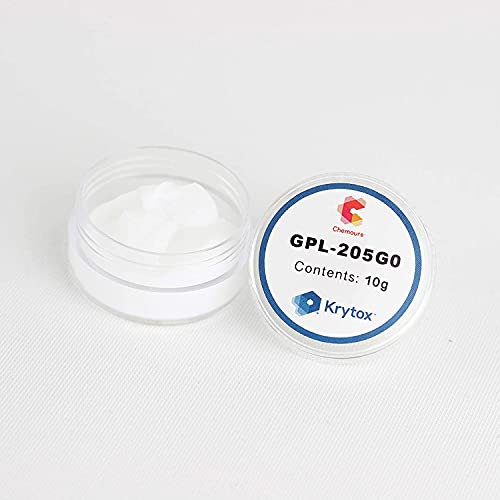
Krytox GPL 205 G0 Switch Lubricant
The spring silencer
- PTFE grease, grade 0 consistency
- Standard lubricant for switch springs and stems
- Small tub services many full switch sets
- Apply thinly with a fine brush
Krytox 205g0 is the hobby’s reference lubricant for a reason: its consistency — a soft grease that stays where a brush puts it — suits springs perfectly, because a spring needs a film that clings to the coil rather than oil that migrates. A genuinely thin application to the spring’s ends and outer coil damps the vibration that becomes ping, and the same tub serves stem rails and stabiliser wires across a whole modding career. The quantity discipline is the entire skill: springs want a whisper of grease, and overlubed switches feel sluggish in a way that sends beginners back in with cotton buds.
Buy the size honestly matched to your intentions — a small tub services several full boards’ worth of springs, and the product keeps indefinitely. Sellers vary, and counterfeit-adjacent repackaging exists in this market, so the verified listing in the sources file is the one this article stands behind. Paired with the bag-lube method for springs specifically, a tub of 205g0 is the closest thing the ping problem has to a permanent, purchasable answer.
Strengths
- Damps spring vibration at the source
- One tub lasts through many projects
- The community’s best-documented lubricant
Trade-offs
- Requires opening switches to apply
- Over-application dulls switch feel
- Premium price for a small tub
Best for: Builders servicing switches who want ping gone for good.
Not suited for: Anyone hoping for a fix that never opens a switch.

RUNJRX Keyboard Lube Kit
The tool kit for the job
- Switch opener for MX-style housings
- Lube and brushes included
- Keycap and switch pullers in the bundle
- Stem holder for servicing
Opening sixty switches with improvised tools is how housings get scarred and patience gets spent; a lube kit exists to make the service boring in the best way. The opener in this bundle parts switch housings cleanly, the stem holder keeps the small parts organised and off the floor, and the included lubricant and brushes cover a first full service without a second order. For a ping fix specifically, the kit converts an intimidating procedure into an evening’s methodical work — open, spring out, lube, reassemble, test — with the tooling friction removed.
Judge the bundle as tooling rather than as a supply of premium lubricant: serious modders graduate to specific greases like the Krytox above, but the kit’s own lube is entirely serviceable for a first pass at springs. The pullers earn their place immediately, since the board must be stripped of caps and switches before the service begins — the technique for which lives in the how to remove mechanical keyboard keys walkthrough in this cluster.
Strengths
- Everything the service needs in one box
- Opener prevents housing damage
- Pullers and holder included
Trade-offs
- Included lube is starter-grade
- Opener fits standard MX housings only
- A kit to store after the job
Best for: First-time switch servicers tackling a ping fix.
Not suited for: Owners of a single soldered board with two pinging keys.
Gateron Milky Yellow Pro Switches
The replacement-set answer
- Linear switches, factory pre-lubed
- Milky housings, medium spring weight
- Hot-swap compatible MX pins
- Multi-switch packs for full boards
Replacement is the right answer in two situations: when a board’s switches ping as a population despite servicing, and when the board’s switches were never to the owner’s taste anyway, making the ping merely the last straw. The Milky Yellow Pro is the set this guide reaches for in both cases — factory-lubed linears with a reputation for smoothness and a deep, quiet voice, whose springs leave the factory with their lubrication already applied. Swapping a hot-swap board’s full set takes under an hour and resets the board’s sound entirely.
The honesty clause: replacement treats the symptom by changing the instrument, and a structurally resonant case can make even quiet switches audible at low level — which is why this pick sits third in the guide’s order rather than first. Run the diagnosis, try the mat and the reseat, and let this set be the decisive end of the ladder rather than its expensive beginning. Buyers whose boards are soldered should read the FAQ before ordering; their ladder is shorter and ends at a different tool.
Strengths
- Factory lube minimises ping from day one
- Deep, quiet sound profile
- Full-set swap is fast on hot-swap boards
Trade-offs
- Costs more than lubricant and time
- Linear only — a feel change, not just a fix
- A resonant case can still colour the sound
Best for: Owners escalating from a pinging set they never loved.
Not suited for: Anyone whose ping is confined to three keys.
Bag-Lubing Springs: the Fast Lane Through the Fix
Bag-lubing deserves its own section because it changes the economics of the definitive fix. Instead of brushing each spring individually — the meticulous route, appropriate during a full switch service — the builder places all the springs in a small plastic bag with a few drops of switch oil, seals it, and tumbles the bag gently until every coil carries an even sheen. The springs emerge uniformly coated in minutes, ready to drop back into their housings. For a ping-focused service, where the stems and leaves were never the problem, bag-lubing cuts the job’s duration by more than half and its tedium by more.
The method’s disciplines are small but real. Oil quantity is measured in drops, not glugs — the springs should gleam, not drip — and excess oil migrates to places it can dull the switch’s feel. Work springs back into their housings over a tray, because a lubed spring is a spring with escape ambitions, and keep a magnet or a shallow dish at hand for the inevitable escapee. Purists note, correctly, that brush application gives finer control; the correct reply is that ping damping is a threshold effect, and an even light coat crosses the threshold. Save the brush for the full services; let the bag carry the ping fixes.
After the Fix: Verifying Silence and Keeping It
Verification is a procedure, not a vibe. Return to the quiet room, type the sticky-note keys first, then run a slow pass across the whole board, then type at working speed for ten minutes — ping that hides at slow presses sometimes announces itself at speed, when springs are struck harder. Compare against the pre-fix state key by key. A successful spring service reduces the ring below the room’s notice on effectively every treated switch; a partial success — most keys cured, two still faint — usually means two springs were under-coated, and the targeted re-service of two switches is a fifteen-minute epilogue rather than a defeat.
Keeping the silence requires almost nothing, which is the fix’s quiet virtue. Lubricant on springs does not wear on any human timescale relevant to a keyboard’s life; the treatment survives keycap changes, switch reseating and years of typing. What can reintroduce ring is component change — new switches arrive with their own springs and their own opinions — and case change, which alters the resonance the whole system speaks through. File the knowledge rather than the worry: if ping ever returns, you own the diagnosis ladder and the fix, and an evening restores the quiet. That permanence, more than the silence itself, is what the service buys.
The Physics of a Pinging Spring, Slowed Down
A spring pings because it is a bell shaped like a coil. When a switch’s stem travels, the spring compresses along a path that is never perfectly axial — it leans, it scrubs against the stem’s post and the housing’s floor, and at the extremes of travel it releases stored energy sideways, into vibration. That vibration has a pitch set by the spring’s wire gauge, coil count and length, and an amplifier in the switch housing, and a second amplifier in the board. Understanding the ping as energy looking for an exit explains every cure in this guide’s ladder: lubrication works by damping the vibration at its source and by preventing the scrub that excites it; foam works by absorbing the energy after it escapes; a spring swap works by changing the bell. Cures that do not address energy — hoping, pressing softer — fail for physical reasons, and the ping’s indifference to them is not malice but mechanics.
The physics also explains the ping’s maddening variability. One switch in a set sings because its spring sits fractionally rotated, its coil’s end turned toward the housing wall where the scrub is worst; its neighbour, assembled identically, is silent because its spring’s rotation happens to be innocent. Temperature moves the pitch as the metal’s stiffness breathes. Even the keycap matters: a tall cap is a longer lever and a larger sounding board for the same vibration. This is why the diagnostic ladder in the main guide isolates one variable at a time — the ping is a system behaving physically, and systems are only readable one change at a time.
And the physics delivers the good news: the energy involved is tiny. A ping is not a structural fault or a switch failing; it is an acoustic side-effect of a healthy mechanism, which is why the cures are lubricants and foams rather than replacements, and why a pinging board is an afternoon’s project rather than a warranty claim. The keyboard sound thock clack guide places ping on the sound spectrum as the register’s flaw rather than a register of its own — an impurity to be filtered, which is precisely what the ladder does, rung by rung, from the cheapest filter upward.
Lubrication Technique for Springs, in Detail
Since lubrication is the ladder’s decisive rung, its technique deserves the slow treatment. The spring must be coated completely and thinly — every coil, both ends — because the ping’s favourite excitation points are the ends, where the coil meets the stem post and the housing floor. The bag method serves this best for a full set: springs and a measured drop of oil in a sealed bag, worked until every coil carries a film, then rested on a lint-free surface so the excess leaves. Brush application serves a single switch better, with the ends receiving deliberate attention. In both methods the governing error is quantity: a film damps; a bath migrates, and migrated lubricant on a switch’s contact leaves or a PCB’s sockets is a new problem wearing the cure’s clothes.
Oil choice is the technique’s second variable, and the honest summary is that thin oils suit springs precisely because the coating must be complete and light; thick greases belong on stabiliser wires and switch rails, where the film’s body is the point. The keyboard foam types guide makes the parallel argument for materials — each position in the board has a correct substance, and the craft is in the matching, not the brand. Whatever the product, the test is uniform: a treated spring, dropped on a hard surface beside an untreated one, should land with a duller voice. The ear can grade lubrication before the board ever hears it.
The third variable is patience at reassembly. A lubed spring wants to be seated with its rotation considered — ends aligned as they were, the coil un-stretched — and the switch closed without trapping the film where fingers will spread it. Builders who rush this stage smear their careful coating into the housing and conclude, wrongly, that lubrication does not work. It works at the rate the physics promises; it simply insists on being applied like a technique rather than like a hope. The fix guides across this cluster repeat the same moral in different materials, because it is the hobby’s universal one: the method is the product.
Which Switches Ping, and What That Predicts
Not all switches are equally musical, and the pattern is predictable enough to shop by. Long springs — the slow, progressive coils marketed for their cushioned bottom-out — carry more coil length to vibrate and are the ping population’s aristocracy. Light springs ring at higher pitches that ears find more objectionable than the low hum of a heavy spring’s vibration. Factory-dry switches of any design ping more than their pre-lubed siblings, for the obvious reason that the cure was never applied. And switches with tight housing tolerances transmit the vibration to the board more faithfully than loose ones — an irony in which quality construction makes the flaw more audible, and one more reason the ping is not a verdict on the switch’s worth.
The shopping consequence belongs in this fix guide because many readers arrive mid-purchase rather than mid-repair: a buyer who knows their ears are ping-sensitive should weight pre-lubed switches and moderate spring lengths in the selection the how to choose first mechanical keyboard guide stages, and should treat a switch’s sound test — read the way the keyboard sound test guide teaches — as evidence about the whole set’s character, since springs from one production run sing in chorus. The fix ladder remains available for whatever arrives; but the cheapest rung is always the one climbed before the money moves.
For owners, the population pattern has a diagnostic use: a ping that afflicts a whole board uniformly is the switch family’s character, addressed by the lubrication rung at set scale; a ping that afflicts one or two keys is those springs’ individual rotation or seating, addressed at single-switch scale in minutes. Confusing the two scales is the commonest inefficiency in ping repair — a weekend spent lubing seventy switches for a fault that two of them owned, or an hour spent swapping two switches against a chorus. Listen for the distribution before choosing the rung; the board is telling you its scale, in the only language it has.
The Desk’s Role in Your Ping Problem
Before the board is opened, the room deserves cross-examination, because the desk is an amplifier with opinions. A hollow desk is a drum: it receives the board’s vibration through the case’s feet and returns it at the desk’s own resonance, and a spring ping that is modest at the switch can be theatrical by the time the drum has spoken. The test is free and takes ten seconds — type the offending key with the board on a folded towel. If the ping collapses, the board was never the main problem, and the cure is the mat and the surface chapter of the how to hide your keyboard and mice cables guide’s desk discipline rather than anything involving a switch opener. Glass desks are the extreme case; thin laminate over a hollow core is the common one; solid wood is the hobby’s quiet accomplice.
Room acoustics continue the theme. A bare-walled room returns high frequencies to the ear with interest, and ping lives at exactly those frequencies; the same board in a furnished room is measurably tamer without a single modification. This is not an argument for redecorating around a keyboard. It is an argument for diagnosing in the room where the board will live, and for grading cures there too — a fix validated in a carpeted bedroom and deployed in a tiled study will be graded twice, differently, and the second grade is the one that counts.
The desk’s role also reframes the goal. A ping that is inaudible at the typing position, in the working room, over the working day’s other sounds, is a ping that has been cured for every purpose except the microphone’s — and owners who record or stream should hold the keyboard sound test guide’s microphone standard instead, explicitly, rather than chasing a silence no ear required. Know which judge you are satisfying. The ladder’s rungs are cheap, but the weekends spent climbing past the audible are the hobby’s purest waste.
Ping Versus Its Impostors
Three other sounds are routinely misdiagnosed as spring ping, and each has a different cure, so the distinctions are worth a section. Case ping — the metallic ring of an undamped aluminium case — answers a keystroke with a tone that belongs to the whole board rather than to one switch; it survives switch swaps and yields to case foam, which is the tell. Stabiliser rattle is a looser, rattlier event confined to the wide keys, timed to the key’s return rather than its press, and it yields to the stabiliser tuning the how to build a keyboard guide details. Plate resonance sits between: a hollowness under clusters of keys, cured by plate foam or by the tape layer that changes the PCB’s own voice. The diagnostic instrument for all three is the same — isolation. Press one key slowly, then quickly; listen for which keys share the sound; tap the empty case. Five minutes of listening sorts the impostors from the spring, and the ladder climbed afterwards is the right one.
The impostors matter beyond efficiency. A board treated for spring ping — its switches lubed across a weekend — whose fault was case resonance emerges from the weekend unchanged, and its owner files a verdict against lubrication that the next board will suffer for. Misdiagnosis is how good techniques get bad reputations. The fix guides in this cluster share a structure for this reason: isolate, then treat, then verify — the order is the method, and the method is transferable to every sound a keyboard makes, including the ones not yet named in any guide.
There is also a temporal impostor: the new board’s first-week brightness, in which every sound is vivid because the ear is attending, and which fades as attention normalises. Owners who open boards in week one are sometimes treating their own novelty. The standing counsel — type for a fortnight before modifying — applies to ping with full force: the ping that survives a fortnight of inattention is real, located, and worth the ladder. The one that fades was the listener, and the listener’s cure is time, which is free.
Prevention: Building and Buying Ping-Resistant Boards
The fix guide’s final expansion looks upstream, because most ping is decided before the owner hears it. In a build, the prevention points are the spring choice itself — moderate lengths, reputable tolerances — the lubrication applied during assembly rather than after complaint, and the case foam fitted while the board is already open. The how to tempest tape mod your keyboard layer, fitted at build time for sound reasons, doubles as ping insurance by damping the PCB’s participation. Builders who treat assembly as the cheapest maintenance window they will ever get — which it is — rarely meet this guide’s ladder at all, and their boards’ silence is not luck but scheduling.
In a purchase, prevention is the selection criteria again: pre-lubed switches, foam stacks listed in the specification, gasket mounting that isolates the assembly from the case’s amplification, and a sound test consulted for the chorus character of the switch family. None of these guarantees silence — the individual rotated spring respects no specification — but together they move the buyer from the ping population’s centre to its edge, where the remaining risk is a single switch’s ten-minute cure rather than a set’s weekend. Prevention and cure are the same knowledge at different timestamps, and this guide’s ladder, read backwards, is a buying checklist.
And if the ping arrives anyway, in a bought or built board, the perspective of this whole article applies: it is a small, physical, well-understood sound, with a ladder of cures ordered by cost, in a hobby whose entire literature exists to help you climb it. Owners of membrane boards hear their keyboards’ flaws too; they simply have no ladder. The ping is the price of a mechanism honest enough to be tuned — and on the evidence of the community’s decade with it, a price its owners consider, on balance, a feature.
Springs as Consumables: Replacement, Rotation and Spares
A spring is a consumable with a long life, and treating it as one reorganises the ping problem from a fault into a maintenance category. Springs tire — their coils take a set, their ends wear bright where they scrub — and a switch whose spring has lived a decade of heavy typing may ping, feel uneven or return lazily for reasons no lubricant can fully answer, because the lubricant treats the surface and the fatigue lives in the metal. The replacement spring is the cure of last resort on the ladder, and it is a kind one: springs are sold by the pack, graded by weight and length, and a re-sprung switch is, mechanically, most of a new switch at a fraction of the price. The owner who re-springs a beloved, discontinued switch has performed the hobby’s version of an engine rebuild, and the skill — opener, tweezers, patience — is the build guide’s ordinary craft, not an exotic one.
Rotation is the consumable’s second doctrine, borrowed from tyre management: the switches on the home row and the spacebar live harder lives than the switches on the function row, and a board whose owner rotates its switch positions annually — the tired alphas swapped with the fresh F-row residents — ages its whole set evenly instead of retiring its hardest workers early. On a hot-swap board the rotation is an hour’s pleasant maintenance; it also equalises feel across the board, because a set ageing uniformly never develops the one tired key that owners otherwise chase through the fix guides. Rotation pairs naturally with the cleaning calendar — the caps are off anyway — and the build notebook should record it, because a set’s rotation history is its service history, and service histories are what make the next diagnosis short.
Spares complete the doctrine. Every switch purchase should end with its extras kept — the handful of switches beyond the board’s count — labelled by set and date, because they are the replacements the ladder’s top rung reaches for, and a spare that matches the set’s production run will feel and sound like its siblings in a way a later purchase may not. The drawer of spares is the difference between a ping cured on the evening it is diagnosed and a ping endured for a shipping week, and in a hobby where the parts cost pennies, the only excuse for not keeping them is not having been told. You have now been told, by the guide whose whole subject is the sound those spares exist to prevent.
Servicing a Pinging Switch, Step by Step
The full procedure for one switch; multiply by the number of offenders your diagnosis marked. Hot-swap boards only for the removal steps — soldered boards are addressed in the FAQ.
- Remove the keycap with a wire puller and extract the switch with a switch puller, gripping the housing’s release tabs and rocking gently. Place the switch on a clean tray; photograph its orientation if it is your first.
- Open the housing with the switch opener: seat the switch, press, and the top housing lifts free. Tip the parts — top housing, stem, spring, bottom housing — onto the tray in a row, in order, so reassembly is a reverse reading of the row.
- Take the spring only. Either brush a whisper of 205g0 onto its ends and outer coil, or add it to the bag-lube batch if you are servicing the full set. The coating should gleam faintly; visible clumps are too much.
- Optionally, while the switch is open, add the thinnest film of lubricant to the stem’s side rails — this addresses scratch, not ping, and is worth doing only if the switch also felt gritty. Keep lubricant away from the tactile leaf’s contact area on tactile switches.
- Reassemble in reverse: spring onto the bottom housing’s post, stem over it with its legs oriented as photographed, top housing pressed down until all four clips click. Squeeze the housing seams once to confirm the clips are home.
- Press the bare switch a dozen times by finger before reinstalling. The ring should be gone or reduced to a memory; a still-ringing switch gets one more look at its spring’s coating before it earns suspicion of a bent coil.
- Reinstall the switch, refit the keycap, and test the position in the board alongside its neighbours. Repeat for each marked switch, then run the verification pass described in the section above.
Ping-Fix Mistakes That Make Things Worse
Lubricating everything in sight.
Grease on the wrong surfaces — the switch’s electrical contacts, the tactile leaf’s working face — creates new problems (dead keys, vanished tactility) that are harder than the ping was. The spring is the patient; the brush stays on the spring and, sparingly, the stem rails. Restraint is the difference between a service and a spill.
Servicing all sixty switches when four were pinging.
Ping is local until proven structural. The diagnosis ladder exists to save you from the full-board teardown that a local problem never required — and every unnecessary opening is a small chance to lose a spring, scar a housing or introduce the inconsistency you were trying to remove.
Judging the fix in a different room.
The board that seems cured in a carpeted bedroom may ring happily in the bare office where it works. Verify where the board lives, at the hours it works — late-night quiet is the strictest acoustic environment most boards ever meet, and it is the honest test.
Blaming the springs for a stabiliser’s noise.
A ticking spacebar sent a generation of beginners into switch services that could not help, because the noise was the stabiliser wire all along. The impostor check at this guide’s start — which keys, what character of sound — takes two minutes and routes each noise to its own cure.
Expecting absolute silence from a mechanical keyboard.
The goal is a ring reduced below notice, not a board that types in a vacuum. Mechanical switches make sounds; springs, properly damped, make only the sounds of the press itself. Chasing the last audible whisper past the point of damping leads to overlubed, lifeless switches — a cure with its own complaint thread.
Lubing the whole set for two switches’ fault.
The distribution question — chorus or soloists — decides the job’s scale, and skipping it converts a ten-minute repair into a weekend. Test the board key by key first, mark the singers, and treat at the scale the evidence names. Full-set lubrication is a legitimate project with its own rewards; it is a poor answer to a duo.
Frequently asked questions
Can I fix spring ping without opening the switches?
Partially, sometimes. Reseating switches, swapping keycaps, adding a desk mat and treating the case with foam all reduce how much ring reaches your ears, and mild cases end there. The spring itself, though, sits inside a closed housing, and damping it directly requires opening the switch. The free tiers are worth their twenty minutes; just know which tier the definitive fix lives on.
My board is soldered. What are my options?
The case-level fixes — mat, foam, tape — remain fully available and help more than most owners expect. Switch-level service requires desoldering, which is a real skill with real equipment; for a few pinging keys, most soldered-board owners reasonably decide the ring is cheaper than the iron. If the board is due a switch change anyway, that is the moment to lube springs during the swap.
Does spring ping mean my switches are low quality?
No. Ping correlates weakly with price and strongly with individual variation, board construction and room acoustics; premium switches ping in resonant cases and budget switches stay silent in damped ones. Treat it as a setup characteristic to be tuned — like stabiliser rattle — rather than a verdict on the purchase.
Will lubing the springs change how the switch feels?
At correct quantities, imperceptibly — the film damps vibration without adding meaningful resistance. Over-application is what changes feel, adding a sluggishness that owners describe as gummy. The margin is comfortable rather than hair-thin: a faint, even gleam is the target, and it is easy to hit with either brush or bag.
Only my spacebar area pings. Is it still the springs?
Possibly, but check the impostors first: the spacebar’s noise is statistically a stabiliser complaint, and its switch sits amid the case’s largest resonant span. Test the bare spacebar switch away from its position if your board is hot-swappable; a ring that stays with the position points at structure, and foam under that section of the PCB is the likelier cure.
How long does a spring-lube fix last?
Effectively the life of the switch. The lubricant is not consumed by typing and does not dry on relevant timescales. Owners who serviced switches years ago report the quiet persists; if a treated switch ever rings again, suspect that it was swapped or that its spring was replaced during another mod, not that the treatment expired.
Does spring ping damage the switch?
No. The ping is an acoustic side-effect of a healthy mechanism doing its ordinary work — the spring vibrating as it compresses and returns. It does not indicate wear, a failing contact or a shortening life, and switches ping cheerfully for their full rated lifespan if left untreated. Treat it because it annoys you, at the pace annoyance deserves, and not out of any fear for the hardware.
Will lubing springs change how the switch feels?
Slightly, and mostly for the better: a properly thin film removes the faint scratchiness that dry coil scrub contributes, and the stroke feels marginally smoother without its weight or character changing. The exception is over-application — a heavy coat can make a switch feel muted and sluggish, which is why the technique section insists on films over baths. If a lubed switch feels wrong, the diagnosis is quantity, and the cure is a solvent-free wipe and a lighter second attempt.
Can I fix ping by swapping in a heavier spring?
Often, yes — a heavier spring’s vibration sits lower and its coils scrub with more authority, which can move a ping below the annoyance threshold or out of audibility altogether. It is a legitimate rung, with a cost the ladder should state: the switch’s feel changes with its spring, so the cure is also a retune, and a whole set re-sprung heavier is a different keyboard that happens to share a case with the old one. Try the heavier spring in the offending switch first; if the feel’s change pleases you, the set can follow with evidence rather than hope.
Do factory pre-lubed switches ping less?
As a population, yes — the film is present from the first press, applied at a consistency home lubrication rarely matches across a whole set. Individual pre-lubed switches still ping when a spring sits rotated or a coil end is proud, because lubrication is one term of the physics and seating is another. Buy pre-lubed for the population’s odds, keep the ladder for the individuals, and the combination is the closest thing to a ping-free guarantee the hobby offers.
Spring ping survives as a complaint because it sits at the exact intersection of noticeable and mysterious: a sound with no visible source, on a device with no obvious user-serviceable parts. Demystified, it is a coil of wire singing against plastic, and the remedies follow the physics with unusual tidiness — damp the coil, quiet the chamber, soften the surface the chamber speaks through. An evening with a puller, an opener and a whisper of grease converts the most irritating sound in the hobby into a story about the evening you fixed it.
Work the ladder in order, verify in the room where the board earns its living, and stop when the ring drops below notice rather than chasing it into overlubing. The board on the other side of the fix is not silent — no mechanical keyboard is, or should be — but its voice becomes the one you chose: the press, the bottom-out, the return, and nothing ringing after them like a struck glass. That is the whole ambition, and it is entirely within a beginner’s reach.