Affiliate disclosure: this article contains affiliate links. If you buy through a link on kajuandouglas.com, the site may earn a commission at no extra cost to you.
This how to buy keyboard group buy guide explains the strangest purchasing ritual in the keyboard hobby: paying in full for a keyboard, keycap set or switch that does not exist yet, then waiting months — occasionally much longer — while it is manufactured to order. The group buy model exists because custom keyboard production runs are too small for factories to finance on speculation; the community pre-pays, the run happens, and designs that could never survive retail economics get made. For buyers it offers access to genuinely distinctive hardware. It also offers, to the unprepared, a masterclass in delayed gratification and its failure modes.
What follows is the complete buyer-side picture: how a group buy is structured from interest check to delivery, where they are announced and sold, how regional vendors and proxies work, what the payment and refund realities are, how to evaluate a runner’s track record before trusting them with money, and the specific red flags that have preceded the hobby’s famous collapses. A short section of verified in-stock alternatives closes the guide for readers who conclude — reasonably — that they would rather have a keyboard this month. Group buys reward the informed and the patient in roughly equal measure; this guide is about becoming the first so the second is survivable.
Key takeaways
A group buy is a pre-paid production run: you pay during a fixed sales window, manufacturing happens after the window closes, and delivery follows months later. Interest checks gauge demand before any money moves. Regional vendors (proxies) handle local sales, taxes and shipping. Extras — leftover units sold after fulfilment — are the lower-risk way to buy the same designs. The runner’s delivery history is the single best predictor of your experience, and no design is beautiful enough to outrun a bad one.
In this guide
The Lifecycle: Interest Check to Front Door
Nearly every group buy begins as an interest check: a designer’s post, usually on a community forum or Discord server, presenting renders, specifications and a proposed price, and asking the blunt question of whether enough people would pay for it. Interest checks are free to browse and worth reading even for buyers who never join, because the comment threads surface design flaws, layout gaps and pricing arguments months before money is involved. A healthy interest check changes in response to criticism — a key added here, a colour corrected there — and that responsiveness is the first data point about the runner you will later be trusting.
If the interest check succeeds, the buy opens: a sales window, typically two to four weeks, during which orders are taken through the runner’s storefront and regional vendors. Some buys are unlimited — every order placed in the window gets manufactured — while others cap quantities or sell out of specific variants. When the window closes, the money moves to manufacturing: keycap tooling and dyeing, case machining, PCB fabrication. Production updates, when the runner is diligent, arrive as factory photographs and revised timelines; silence during this phase is common enough to be unremarkable and worrying enough to be worth one polite enquiry.
Fulfilment is the final act: units ship to vendors, vendors ship to buyers, and the community’s attention immediately turns to the extras sale, where units produced beyond the order count — factories overproduce to cover defects — are sold at a markup to buyers who missed or avoided the window. The full lifecycle, interest check to extras, commonly spans the better part of a year. Readers who find that timeline absurd are in good company and have correctly identified that group buys are not for them; readers who find it intriguing should read the risk sections twice.
Where Group Buys Live: Vendors, Proxies and Announcements
Group buys are sold through a two-tier system that confuses every newcomer once. The runner designs the product and organises production; vendors — established regional keyboard shops — sell it in their territories, collecting local taxes, handling customs and shipping the final units. A buyer’s region decides their vendor: North American buyers order from the North American vendor, European buyers from the European one, and so on. This proxy system is why the same keycap set appears on six storefronts simultaneously at six slightly different prices, each denominated and taxed for its region.
Announcements concentrate in predictable places: the major community forums’ group buy sections, vendor newsletters and Discord servers, aggregator sites that track running and upcoming buys, and the social accounts of designers with followings. The practical habit to build is a small one — subscribe to two or three vendor newsletters for your region and check one aggregator weekly — because buys are rarely advertised beyond the hobby’s own channels and the windows are short. Our keyboard accessories guide points at the same vendor ecosystem from the accessories side, since the shops that proxy group buys also stock the cables, deskmats and cases that ship immediately.
One structural warning belongs in this section: the vendor is your counterparty, not the runner. If a buy collapses, your refund claim runs against the shop that took your money, under your region’s consumer law, which is a strong argument for buying through the established vendor for your region rather than a cheaper grey channel. Vendor longevity is itself a signal — shops that have fulfilled a hundred buys have reputations they visibly protect, and in a hobby built on pre-payment, reputation is the closest thing to a guarantee that exists.
The Money: Payment Timing, Chargebacks and the Refund Reality
Group buys charge at order time, not at shipment — the entire model depends on it, since your payment is quite literally the factory’s deposit. This inverts normal retail expectations and creates the model’s central risk: for months, you hold nothing but a receipt and the runner’s goodwill. Credit cards are the prudent payment method, not for points but for the chargeback mechanism, which is the buyer’s only real leverage if a runner vanishes. Note the mechanism’s limit, though: chargeback windows are measured in months, and a buy that collapses in month nine may sit beyond your card issuer’s standard window, which is why vendor reputation outranks payment mechanics as protection.
Refunds and cancellations follow the runner’s terms, which are set at purchase and vary: many vendors allow cancellation before the window closes, fewer after production begins, and some treat all sales as final from the start. Read those terms before ordering, not after a life change makes them relevant. Transfers are the community’s informal pressure valve — most buys let you transfer your order slot to another buyer, and a healthy secondary market in slots exists for popular designs. Selling a slot you no longer want is normal, sanctioned and usually painless; scalping extras at multiples of the buy price is legal, common and perennially argued about.
Budget framing helps keep the model sane. Group buy money should be money whose absence you will not feel — the hobby’s own rueful joke is that you are buying a present for a future self whose tastes may have changed. Buyers who treat buys as investments fare worst of all: a minority of sets appreciate, most do not, and the ones that do are unpredictable. Buy the design you want to type on in eight months, at a price you would accept for the object alone, and let every other consideration go.
Evaluating a Runner Before You Trust One
Due diligence on a group buy is genuinely possible, because the hobby keeps its own records in public. Start with history: search the runner’s name alongside the names of their previous buys and read the delivery threads. Did the last buy ship? How late, against the original estimate? How did the runner communicate during the delay — monthly factory photographs, or silence broken by irritation? A runner whose previous buy delivered three months late with excellent communication is a safer bet than a first-time runner promising an aggressive timeline, and both are safer than a runner whose last buy is a locked thread and a chargeback discussion.
Design maturity is the second check. Renders are not products; ask whether a physical prototype exists and has been photographed, typed on and — for keycaps — colour-matched against physical samples. Keycap buys live or die on colour fidelity between render and plastic, and serious runners show sample chips and revise legends across the interest check. For keyboard kits, ask about the factory: established runners name their manufacturers and their quality-control arrangements, because they know the question is coming from buyers who have been burned before.
Finally, read the specifications for the traps that recur: keycap sets whose compatibility omits your layout’s keys (the keycap profiles explained article lists the sizes to verify), kits whose plate or PCB choices lock you into one layout, switch buys quoting forces without tolerances. None of these make a buy fraudulent; all of them make a buy wrong for specific buyers who did not check. The group buy model’s unforgiving feature is that discovery after delivery has no returns desk — the checking has to happen at the render stage, which is exactly what the interest check period is for.
How to Buy Keyboard Group Buy Guide: The Shortlist
A group buy guide needs an honesty section, and this is it: the verified, in-stock boards below exist, can be ordered today, and will arrive on a retail timeline. They are what the group buy buyer is declining — immediacy — in exchange for distinctiveness. For many readers they are simply the correct purchase, and the hobby’s healthiest members hold both thoughts at once: a board on the desk, and perhaps one design on order.
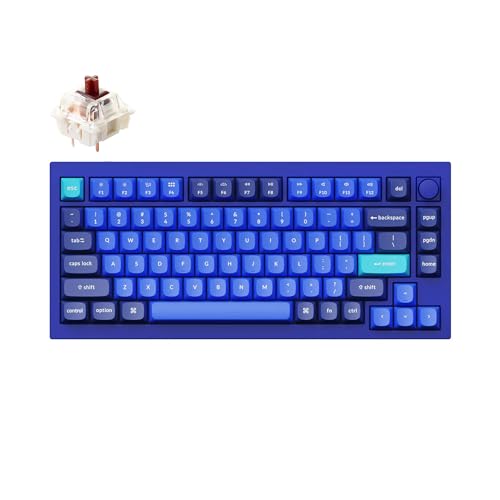
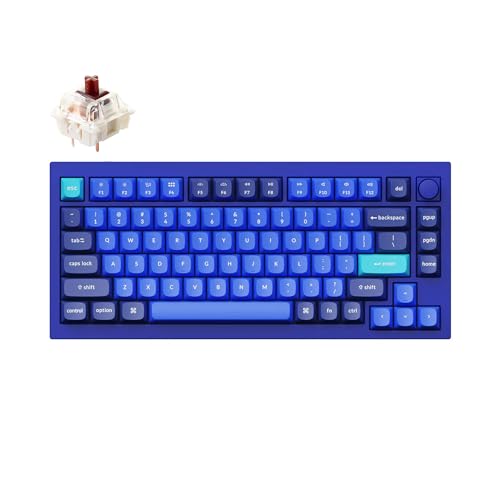
Keychron Q1
In stock, endlessly modifiable
- 75 percent aluminium board
- Hot-swap, gasket-mounted
- QMK/VIA firmware
- Assembled and barebones versions
The Q1 is the standing rebuttal to the claim that interesting keyboards require a pre-order. It is a machined aluminium, gasket-mounted 75 percent board with open firmware, available assembled or barebones, from a company with warehouses and a returns policy. Builders who catch the custom bug can modify it for years — foam, plates, switches, keycaps — and the group buy world’s keycap sets fit it as happily as they fit any exotic kit, because the custom ecosystem standardised around exactly this kind of board.
What it cannot offer is scarcity or a designer’s singular vision; it is a product, not an event. For the reader whose group buy curiosity is really a desire for a better keyboard, that distinction settles the matter. For the reader who wants the event — the thread, the wait, the unboxing of something a few hundred people own — the Q1 makes an excellent desk board to type on while waiting.
Strengths
- Available now with normal consumer protections
- Full custom-platform features
- Huge modification headroom
Trade-offs
- A product, not a limited design
- Stock sound rewards simple tuning
- No group-buy exclusivity, if that matters to you
Best for: Buyers who want custom quality on a retail timeline.
Not suited for: Collectors for whom rarity is the point of the exercise.

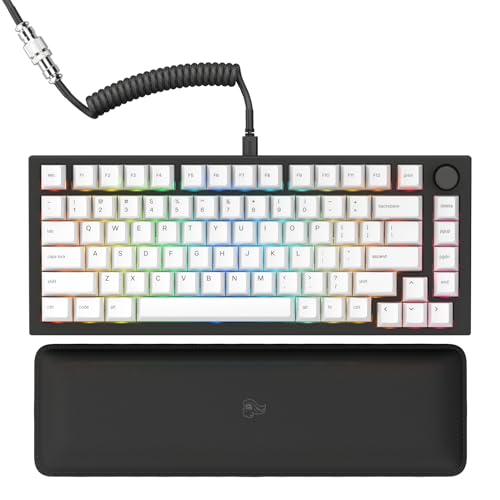
Glorious GMMK Pro
The other retail answer
- 75 percent aluminium barebones kit
- Hot-swap PCB, rotary knob
- Gasket mounting
- Deep accessory ecosystem
Where the Q1 arrives ready, the GMMK Pro arrives as a kit — case, PCB, plate and stabilisers, awaiting your switches and keycaps — which makes it the closest retail approximation of the group buy kit experience, minus the wait and the risk. Its accessory ecosystem (plates in multiple materials, knobs, coiled cables from the same brand) lets a buyer rehearse the custom world’s decisions with a returns policy underneath them.
It also demonstrates, usefully, what group buy money actually buys beyond this level: not function, which is fully present here, but design authorship and production rarity. Holding that thought clearly — paying for authorship and rarity knowingly, rather than imagining a functional leap — is the mark of the group buy buyer who stays happy. The how to build a keyboard guide assembles this kit step by step in spirit, if the kit route appeals.
Strengths
- Kit experience without pre-order risk
- Knob and gasket mount included
- Accessories available from stock
Trade-offs
- Switches and keycaps cost extra
- Stabilisers benefit from tuning
- Design is widely owned
Best for: Would-be group buyers who want the build, not the wait.
Not suited for: Buyers seeking a limited-run design.
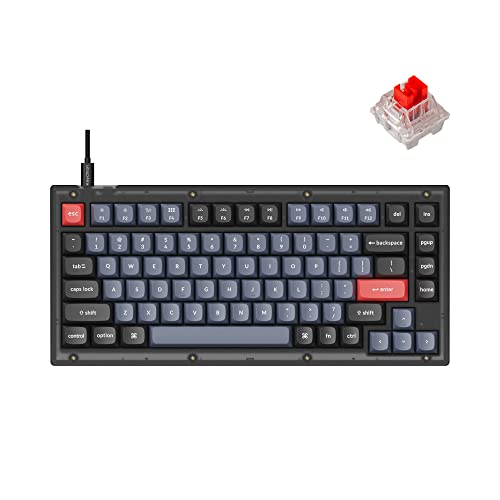
Keychron V1
The patience-free budget board
- 75 percent layout in a light case
- Hot-swap PCB
- QMK/VIA support
- Assembled with switches and keycaps
The V1 is included as the group’s control sample: a complete, remappable, hot-swappable 75 percent board at the hobby’s entry price, delivered in days. Set beside a group buy kit at several times the price and an eight-month horizon, it forces the honest question every buyer should ask at the render stage — what, exactly, am I getting for the difference? Sometimes the answer is a great deal: materials, design, a layout nobody stocks. Sometimes the thread goes quiet, and that quiet is information too.
As a keyboard it is entirely respectable — the firmware is the same open system the flagships run, the switches swap freely, and it types far above its price. Many group buy veterans keep a board like this as their travel and loaner unit, which is perhaps the most telling endorsement available: even the hobby’s most committed pre-payers maintain a relationship with the buy-it-now world.
Strengths
- Complete board at an entry price
- Open firmware, hot-swap sockets
- Ships immediately, returns normally
Trade-offs
- Plastic case, lighter feel
- Stock sound is unremarkable
- No limited-design character
Best for: Newcomers and pragmatists anchoring a desk while they learn the hobby.
Not suited for: Buyers whose goal is a statement piece.
Extras, Raffles and the Second-Chance Economy
Missing a group buy window is not the end of a design’s availability, and knowing the second-chance routes changes how urgently buyers need to treat any single window. Extras are the main route: vendors sell the overproduced units after fulfilment completes, typically at a markup over the group buy price, announced in advance and gone in minutes for popular designs. Extras invert the risk profile entirely — the product exists, its quality is documented by the first owners’ photographs and reviews, and delivery is a normal retail event. The markup is, in effect, an insurance premium, and for risk-averse buyers it is frequently worth paying.
Raffles govern the hobby’s other scarcity tier: artisan keycaps and ultra-limited kits, where demand so exceeds supply that sellers allocate by lottery. Raffle culture has its own etiquette — enter once, with your own account, for items you actually want — enforced socially and by vendor blacklists. Below both tiers sits the ordinary second-hand market, where group buy items trade at prices that track reputation rather than original cost. The buyer’s takeaway is calming: almost nothing in this hobby is truly now-or-never. Windows close, but extras, raffles and resale reopen most doors, and the fear of missing out is a marketing force to be recognised, not obeyed.
A Realistic Timeline, and How to Stay Sane Inside One
Set expectations with the hobby’s actuarial table rather than the runner’s estimate. Keycap buys commonly deliver six to twelve months after the window closes; machined keyboard kits run similar or longer when finishes multiply; switches, being simpler, move faster. The estimate on the sales page is best read as the runner’s hope under a cooperative factory, and experienced buyers mentally add a season. Delays are announced, when they are announced, as production photographs and revised quarters — a rhythm of communication that becomes familiar: long quiet, a burst of factory images, another quiet.
Sanity inside the wait is a set of small disciplines. Keep a simple list of open orders with dates and amounts, because memory flatters and spreadsheets do not. Unsubscribe from the buy’s social channels if checking them has become a daily anxiety rather than a pleasure; the keyboard will arrive on the factory’s schedule regardless of your vigilance. And keep typing on something you enjoy in the meantime — the surest way to sour on a group buy is to let it stand between you and a good keyboard for the better part of a year. The wait is the price of the design. It should never also cost you the hobby.
The Anatomy of a Group Buy, Month by Month
A group buy has a life cycle, and knowing its phases converts anxiety into calendar entries. It opens with the interest check — a form, a render thread, a designer’s attempt to measure demand — which costs nothing and commits no one, and which savvy buyers treat as a subscription: the IC is where colourways are voted on and kits are shaped, the one phase where a buyer’s voice can still change the product. Then the buy window itself, typically two to four weeks, when money is collected against a minimum order quantity the vendor must reach. Then the long production silence, punctuated — in well-run buys — by factory photographs and freight updates. Then fulfilment: regional vendors receive pallets, quality-check, pack, and ship in waves ordered by region and order date, so two buyers of the same board can receive it a month apart without anything being wrong.
Each phase has its own failure mode, and the guide’s earlier advice maps onto them. Interest checks die quietly when demand is thin — the design you loved simply never opens, which is a disappointment, not a loss. Buy windows fail to reach their minimum and refund in full, which is the system’s design working. Production is where delays breed: a colour-match rejection can add a season, a factory queue can add two, and the difference between a delayed buy and a doomed one is communication — vendors who post photographs of pallets are delayed; vendors who post apologies without evidence are a different category of worry. Fulfilment failures are the rarest and the most mundane: wrong kit in the box, a missing add-on, solved by the ticket discipline this guide teaches.
The buyer’s calendar discipline follows from the anatomy: money committed at the window is money spent — budgeted as gone, so its absence for a year is painless; delivery estimates are read as quarters, not dates; and the board the buy will produce is planned as an addition to a working desk, never as a replacement the desk is waiting for. The how to build a keyboard guide’s parts discipline completes the picture: switches and caps for a group-buy board are themselves often group-bought, and the experienced buyer sequences the three purchases so their arrivals converge within a season of each other rather than stranding a built board capless for a year.
Kits, Colourways and the Add-On Economy
The group buy’s pricing illusion lives in its kits. A keycap buy advertises a base kit price, and the base kit covers a standard full-size board — but the hobby’s boards are not standard, and the alphas-only minimalist, the 40 percent user, the split-spacebar builder and the ISO typist each need their add-on kits: novelties, spacebars, international, 40s. The honest price of a colourway is the sum of the kits your board requires, computed from the kit diagrams with the census discipline the how to remove replace keyboard keys guide teaches, and it routinely exceeds the headline by half. This is not deception — the diagrams are published, the kits are itemised — but it is a literacy test, and first-time buyers fail it in the checkout’s favour.
Keyboard kits have their own add-on economy: extra plates in alternate materials, spare PCBs, daughterboards, case foam sets, and the brass weight upgrades that photograph beautifully and change the typing hardly at all. The discipline this guide recommends is asymmetric: buy the consumable and compatibility add-ons now (the spare PCB, the extra plate in the material you are curious about), because the aftermarket for them is thin and the buy will not reopen; skip the cosmetic upgrades, because they are the first thing the second-hand market discounts and the last thing your fingers will grade. A group buy is a one-time manufacturing event, and the correct question for every add-on is not ‘do I want it’ but ‘can I ever get it again’.
Colourway psychology deserves its own paragraph, because it is where rational buyers go to be fleeced by their own taste. Renders are lit like perfume advertisements; production plastic is lit like your desk. The community’s defence is the photographed prototype — demand one, in daylight, beside known colours — and the veteran’s rule that a colourway must survive being imagined on your actual desk, under your actual light, beside your actual monitor. The sets that survive that test age into the ones still on boards five years later; the sets bought for the render become the aftermarket’s perpetual inventory.
Vendor Quality: Reading a Track Record
Group buys are run by vendors of wildly varying substance, and the buyer’s due diligence is a learnable routine. The first check is history: a vendor who has fulfilled buys before, on roughly their stated timelines, with public post-mortems when things slipped, is a categorically different risk from a first-time organiser however beautiful their renders. Community memory is the database — the hobby’s forums and servers remember every fulfilled and failed buy in detail, and an hour of searching a vendor’s name before the window closes is the cheapest insurance in the entire purchase. The second check is structure: regional proxy vendors, a named factory or a designer’s prior manufactured work, and payment rails that carry buyer protection all move a buy from the faith category toward the commerce category.
The third check is communication quality during the window itself. Serious vendors publish the minimum quantities, the per-kit thresholds (some kits within a buy must individually reach production numbers, and the ones that fail are refunded or absorbed — the terms are stated, so read them), and the refund policy for failed kits versus failed buys. Vague answers to specific questions during the window — when money is being collected — predict the silence of the production phase with depressing accuracy. The how to choose a mechanical keyboard the buyers guide makes the parallel point for retail purchases: the seller’s behaviour before the sale is the product’s first review.
None of this diligence eliminates the group buy’s essential nature, and the guide will not pretend otherwise: you are funding production of an object that does not exist, by parties you cannot audit, on a timeline no one controls. The diligence sorts the buys into those where the residual risk is the honest kind — manufacturing is slow and hard — and those where it is not. Experienced buyers accept the first kind cheerfully for years without a loss. Their secret is not luck; it is that they only ever took the first kind.
Extras, Leftovers and the Aftermarket Ladder
When a buy fulfils, a shadow market opens in stages, and knowing the stages saves real money. First come the extras: vendors order overage to cover defects and sell the surplus at a modest premium shortly after fulfilment — the best-priced second chance, gone in hours, announced on vendor channels that prepared buyers monitor. Then leftovers and B-stock: kits with minor flaws, boards with cosmetic notes, sold honestly described at honest discounts. Then the peer aftermarket proper, where prices follow the object’s reputation: colourways that photographed better than they typed sink below retail, while the ones the community anoints climb to multiples of it, and the difference between the two fates is usually knowable within a month of the first owner photographs.
The aftermarket has its own literacy. Verify the kit census against the diagrams, because used sets are sold incomplete with innocent and less innocent omissions; price the missing add-ons before bidding, not after. Boards carry their build history with them — a soldered board’s switches are its biography, and a hot-swap board’s sockets have a swap count that matters. And the ladder has a direction of travel worth exploiting: the patient buyer of last year’s anointed set pays the hype premium, while the patient buyer of last year’s merely good set pays below retail to a seller upgrading to this year’s. Group-buy culture manufactures both opportunities continuously; it only requires the buyer to want a keyboard more than they want the moment.
For sellers, the same ladder argues for keeping everything: every add-on kit, the original box, the spare screws. Completeness is the used market’s currency, and the extras you nearly threw away are routinely the difference between a listing that sells in a day and one that lingers. The group buy’s object is a kit of parts in perpetuity; treat its archive accordingly, and the hobby’s economics will treat you noticeably better than they treat the tidy.
Interest Checks and the Ethics of the Hype Cycle
A word about the culture the buyer is joining, because group buys run on attention and attention has pathologies. The interest check phase rewards spectacle: renders grow more cinematic, collaborations more baroque, and the designs that survive to production are the ones that marketed best in a two-week window, which is not the same as the ones that type best for a decade. The mature buyer’s counterweight is boredom as a filter — the design that still appeals on the fifth viewing, in a plain photograph, described in plain words, is likelier to be on the desk in five years than the one that detonated a feed for a weekend. The keyboard cases guide materials types guide makes the same argument for materials: the registers that age well are the ones that were never shouting.
There is also a commons problem the guide should name: every buyer who joins a buy ‘just to flip’ the extras, or who panic-buys three colourways to decide later, distorts the demand signal the whole system runs on — minimums get met for the wrong reasons, extras get scalped rather than sold, and vendors learn to manufacture scarcity theatre instead of keyboards. No individual buyer owes the hobby restraint, and this paragraph is not a sermon. It is a market observation: the group-buy ecosystem is unusually literal about giving its participants the culture they collectively purchase, and the buyers who treat it as a manufacturing cooperative rather than a casino are the ones still enjoying it a decade in.
Practically, the hype cycle’s tell is urgency language attached to unlimited-window buys, and its antidote is the calendar: a buy open for three weeks cannot sell out from under a considered decision, and the designs worth owning will be worth owning on day nineteen of the window exactly as on day one. Decide at the window’s pace, not the feed’s. The board will be on your desk for years; the afternoon of excitement about it is the smallest part of its life, and purchases made to extend that afternoon are the aftermarket’s inventory in embryo.
When a Buy Goes Wrong: The Playbook
Buys fail in recognisable ways, and each has a correct response that panic is not part of. The first failure is silence: updates stop, deadlines pass unremarked. The correct move is documentation, not outrage — save the vendor’s promises, the window’s terms and your receipts, and watch the community channels, where a failing vendor’s other buyers are assembling the same file. Chargeback windows and buyer-protection deadlines are the calendar that matters now, and they are counted from the purchase date, so the documentation phase has a clock the production phase never did. The second failure is the defective arrival: wrong kit, flawed board, missing parts. Photograph before assembly, ticket within days, and be specific — vendors solve itemised problems and stall on vibes, exactly as the fix keyboard not working troubleshooting guide teaches for faults.
The third failure is the quietest: the buy fulfils, the object is fine, and it is simply not the board the renders promised your imagination. Colour off by a register, feel ordinary, the magic absent. This failure has no villain and no remedy except the aftermarket ladder — sell it complete, quickly, while the buy’s attention lasts, and let the loss be the tuition it is. The buyers who thrive in this ecosystem are not the ones who never take this loss; they are the ones who take it at the extras stage’s prices rather than defending the purchase for a year out of pride. A group buy is a portfolio of small, survivable bets on future objects, and treating any single bet as an identity is the only genuinely expensive mistake available.
And the playbook’s last page is perspective. The overwhelming majority of buys from established vendors fulfil, late by months and right by specification, and the ecosystem’s memory of its disasters is vivid precisely because they are exceptional. Due diligence at the window, documentation through the silence, and a working board on the desk throughout: with those three, the group buy is what its veterans know it as — not a gamble, but the hobby’s manufacturing wing, with a waiting room. This guide’s whole purpose is to get you a seat in it with your eyes open.
Reading Renders: A Skeptic’s Field Guide
The group buy begins as pictures, and the pictures are renders — computer-generated images of an object that does not exist — whose relationship to the eventual product deserves a literacy of its own. A render’s lighting is a studio that physics never built: colours glow with an evenness no desk lamp provides, materials reflect like ideals of themselves, and the colourway’s plastic is shown at a saturation that the production polymer, under your room’s light, will approximate in the way a photograph of the sea approximates swimming. The experienced buyer’s corrections are systematic. Colours are read against the designer’s stated references — the Pantone or RAL codes serious buys publish — because a code is a commitment a render is not. Materials are read against the maker’s previous manufactured work, photographed by owners, because a factory’s texture is a habit that renders conceal and production repeats. And scale is read against the keycap profiles and board dimensions in the specification, because renders, unmoored from photography, drift toward the heroic proportions that make a 65 percent board look like a monument.
The render’s most honest companion is the prototype photograph, and the guide’s standing demand — daylight, beside known colours, in a hand — is the difference between a buy informed by evidence and a buy informed by advertising. Vendors who publish prototypes early are making a claim about their manufacturing that no render can make, and the claim should be weighted accordingly in the vendor’s track record. Vendors who sell a year of production on renders alone are asking for faith, and faith, in this guide’s economy, is priced: it is available, in small amounts, to vendors whose fulfilled history has earned it, and it is rationed strictly for everyone else.
None of this makes renders useless — they are the design’s own statement of intent, and a colourway must first survive being imagined, which is the render’s legitimate job. The literacy is in the sequence: render for the imagination, codes for the colour, prototypes for the truth, track record for the risk. A buyer who runs the sequence owns the same information the vendor has, which is the definition of a fair market — and the group buy, for all its romance, works best when it is one.
Joining a Group Buy Without Getting Burned: A Working Checklist
The sequence below compresses the guide into the order of operations for an actual purchase, from first sight of a design to the delivery day.
- Find the buy early, during its interest check if possible, and read the whole thread — the criticisms in it are the cheapest research you will ever do.
- Identify your regional vendor from the buy’s official list, and confirm the vendor is the established shop for your territory rather than an unfamiliar name trading on similarity.
- Verify compatibility in writing: for keycaps, every key your layout needs at the sizes your board uses; for kits, the layout, plate and PCB options you intend; for switches, the count including spares.
- Read the runner’s history: previous buys, delivery record, communication pattern during delays. One prior delivered buy is a meaningful credential; a pattern of delivered buys is a strong one.
- Check the terms before paying: cancellation policy, transfer policy, the estimated timeline stated as the runner’s own words. Screenshot them; pages change.
- Pay by credit card through the vendor’s normal storefront, keep the receipt and the order confirmation outside your inbox’s search function — a folder, a note, a spreadsheet.
- Then deliberately stop monitoring. Check the vendor’s updates page monthly at most. When the shipping notice eventually arrives, inspect the delivery within days, because defect claims have windows too.
Group Buy Mistakes That Cost Real Money
Paying a stranger for a slot transfer outside the vendor’s system.
Slot transfers are legitimate only when the vendor processes them. A private payment against a promise to email the runner asks you to trust two strangers in sequence, and the hobby’s scam reports follow this exact shape with metronome regularity. If the vendor will not transfer it, the slot is not for sale, whatever the seller says.
Ordering keycaps without a compatibility audit.
The base kit photograph is seductive and incomplete: spacebar sizes, right Shift lengths, and the extra keys compact layouts need live in the kit diagrams, not the beauty shots. The how to remove replace keyboard keys article’s sizing discussion will help you read those diagrams. Five minutes with the diagram prevents the classic outcome — a gorgeous set missing exactly two keys your board requires.
Joining on renders alone, with no prototype evidence.
Colour is the chronic failure: dye-sublimation and doubleshot plastics render faithfully on screens and arrive a half-shade off often enough that serious runners publish physical sample photographs. A buy with no prototype, no samples and an aggressive timeline is asking for faith it has not earned.
Treating the estimated date as a plan.
Workstations get reorganised and travel gets booked around delivery estimates that were always decorative. Treat every group buy delivery as a pleasant surprise scheduled for an unknown quarter, and the hobby stays a hobby; build a plan on one, and you have manufactured your own disappointment.
Panic-buying extras at any price.
The extras drop converts patience into a bidding emotion. Set your ceiling before the drop opens — the group buy price plus a premium you have decided the certainty is worth — and let units go when they pass it. There is always another design; the aggregator you subscribed to is already filling with them.
Joining a buy as your only keyboard plan.
Every failure mode in this guide — the year of production, the quiet cancellation, the colourway that arrives wrong — is survivable from a desk that already has a board on it and catastrophic from a desk that is waiting. The group buy must always be an addition in your planning, never the plan; the buyers who curse the format loudest are reliably the ones who needed it to be a shop.
Frequently asked questions
How long do group buys usually take to deliver?
Keycap sets most often land six to twelve months after the sales window closes; aluminium keyboard kits run in the same band or beyond when multiple finishes are offered; switches and simpler accessories move faster. Runner estimates skew optimistic, so experienced buyers add a season mentally and are occasionally pleasantly surprised.
What happens if a group buy never delivers?
Your practical remedies run through the vendor who took payment and your card issuer’s dispute process, both of which weaken with time. This is why the guide stresses vendor reputation and runner history over design appeal: they are the only protections that operate before the money moves. Joining buys through established regional vendors, in your own region, is the strongest position available.
Are extras a rip-off?
Extras cost more than the window price because they are a different product in economic terms: existing, photographed, reviewed and immediately shippable. Whether the premium is fair depends on the design’s aftermarket and your own valuation of certainty. For first-time buyers especially, extras are often the wisest route into a design — the community has already absorbed the risk for you.
Can I cancel a group buy order?
Sometimes, and the window matters: cancellations are most commonly allowed before the sales window closes or before production begins, and many runners treat orders as final thereafter. The terms are stated on the sales page — read them at purchase time. Order transfers through the vendor are the usual exit once cancellation closes.
Why do group buys exist at all when retail boards are good now?
Because factories require minimum runs and designers cannot finance them speculatively; pre-payment is the bridge. Retail has absorbed the hobby’s mainstream — the boards reviewed above prove it — but the long tail of unusual layouts, materials and colourways still cannot survive a retail buyer’s spreadsheet. Group buys are the long tail’s funding mechanism, with all the friction that implies.
Is it safe to buy a group buy slot or item second-hand?
Through the vendor’s transfer system or a marketplace with buyer protection, reasonably so; through private payment to a stranger, no. Second-hand items themselves are ordinary used goods — inspect photographs, confirm the variant and contents, and price against extras and current listings. The mechanism of payment, not the item, is where the risk concentrates.
What does MOQ mean and why should I care?
Minimum order quantity — the number of units a factory requires before production is viable, applied per buy and often per kit within the buy. It matters because a buy or a kit that misses its number is cancelled and refunded, and because late-window orders genuinely change outcomes: the add-on kit you are debating may be three orders from existing at all. Vendors publish the numbers for serious buys; watching a kit you need hover below its threshold is the one time the group-buy calendar rewards an early decision.
Can I cancel a group buy order?
Usually not after the window closes — your money has been committed to production, and the vendor’s terms, which you should read before ordering, typically make orders final once manufacturing begins. Some vendors allow cancellations during the window itself, minus fees. The practical consequence is the discipline this guide teaches throughout: the decision is made at the window, with the kit census computed and the timeline accepted, because the exit doors mostly close behind you. The aftermarket, not the vendor, is the way out of a fulfilled buy.
Why do group buys take so long compared to retail?
Because the product is manufactured after it is sold: the window collects the demand, the factory schedules a production run among its other customers, the parts — keycap moulding especially, with its per-colourway setup — are produced in sequence, and the finished goods cross oceans by freight economics rather than by air. Retail’s speed is the same pipeline with the risk pre-paid by the retailer and the waiting done in a warehouse instead of in your inbox. The group buy’s wait is not inefficiency; it is the visible form of manufacturing’s actual timeline, with the warehouse removed.
The group buy is best understood as a trade the hobby makes openly: certainty and immediacy, surrendered in exchange for designs that could not otherwise exist. Buyers who make that trade knowingly — who have read the thread, checked the runner, audited the compatibility and paid through the proper vendor with money they will not miss — report an experience closer to anticipation than anxiety, and a delivery day with a small ceremony to it. Buyers who stumble in on a render and a countdown timer meet the same system as a slot machine. The system does not change; the preparation does.
So prepare, and then participate at whatever depth suits you: an extras purchase for a first design, a window order once a runner has earned your confidence, perhaps a raffle entry for something small and beautiful. Keep a good board on the desk throughout — the hobby’s centre of gravity is typing, not waiting — and let the group buy be what it was designed to be: a way for a few hundred strangers to agree, months in advance, that a particular object deserves to exist, and then to make it exist together.