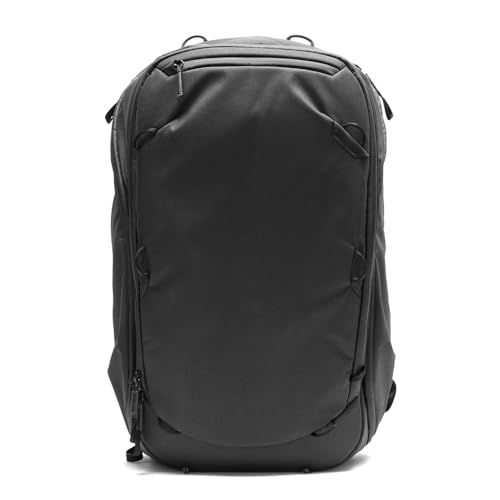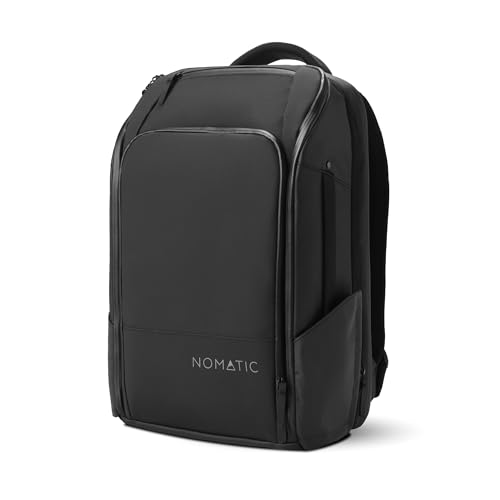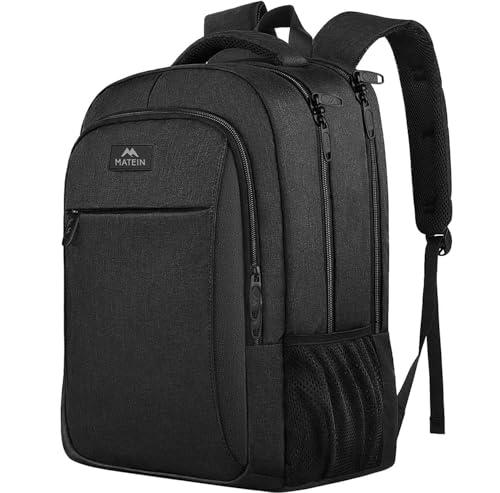
The hard shell vs soft laptop backpack question looks like a style choice and behaves like an engineering one. A hard shell pack wraps your gear in a molded rigid exterior — usually polycarbonate or ABS-style plastic, sometimes a stiff composite — that shrugs off knocks, rain, and the crush of overhead bins. A soft pack uses fabric construction: flexible, expandable, lighter, and kinder to odd-shaped loads, protected by padding rather than armor. They solve different problems, and choosing by looks alone is how a cyclist ends up with a rigid sail and a traveling photographer with a squashed lens.
This comparison walks the real trade-offs — protection type, weight, capacity honesty, comfort, weather, and price logic — and ends with the hybrid designs that now occupy the sensible middle. Match the shell to your hazards, not your aesthetic, and the decision makes itself.
Disclosure: As an Amazon Associate, kajuandouglas.com earns from qualifying purchases. Links to Amazon on this page are affiliate links; they cost you nothing extra. Listing details such as price and availability change often, so check the current Amazon listing before you buy.
Quick verdict: choose hard shell if your laptop faces crush and impact hazards — crowded transit, overhead bins, cycling through traffic, checked-baggage roulette — and your load is consistent in size. Choose soft if you value light weight, flexible capacity that adapts to varying loads, comfort on long carries, and lower cost. Most daily commuters are best served by the hybrid: a soft bag with a structured, protective laptop compartment.
Gear for This Guide
Verified structured-soft and hybrid designs — the middle ground most commuters should start from.

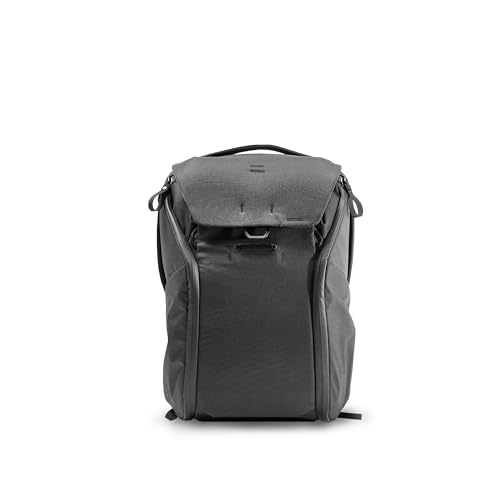
Peak Design Everyday Backpack 20L, Black, Fits 15″ Laptop — A structured soft design with a formed body and serious internal organization — the hybrid philosophy in production: shape and protection without a rigid shell full weight. Check price on Amazon.

Thule Paramount Backpack 24L, Black — A firm, structured commuter pack whose padded sleeve does the protective work — evidence that soft construction, engineered well, covers ordinary hazards completely. Check price on Amazon.

Samsonite Xenon 3.0 Laptop Backpack, 1680D Ballistic Poly, Fits 15.6” Laptop, TSA Compatible, Air Mesh Back Padding, Tablet Pocket, Smart Sleeve, Quick Stash Pocket, Durable & Lightweight – Large — Ballistic fabric is the soft world armor: this business pack shows how far abrasion resistance and structure go without a single rigid panel. Check price on Amazon.
In this guide
Side-by-Side: Hard Shell vs Soft Laptop Backpack
The pattern: hard shell trades flexibility for armor. Whether that trade profits you depends entirely on your hazards.
| Aspect | Hard shell | Soft (fabric) |
|---|---|---|
| Impact and crush protection | Excellent — rigid exterior deflects knocks and stacking weight | Good with padding; vulnerable to direct crush |
| Weight | Heavier shell adds noticeable base weight | Lighter for the same capacity |
| Capacity flexibility | Fixed volume — what fits, fits; what does not, stays home | Expands, compresses, and swallows odd shapes graciously |
| Weather resistance | Shell sheds rain inherently; seams and zips still the weak point | Depends on fabric coating; rain covers often needed |
| Comfort on long carries | Rigid back can feel unforgiving; fit is critical | Conforms to the body; generally the long-walk winner |
| Appearance | Technical, modern, polarizing | Every style from boardroom to trail |
| Durability pattern | Shell resists abrasion; cracks possible under extreme impact | Fabric scuffs and fades; seams and zippers are the lifespan |
| Price logic | Premium pricing for the molding and materials | Every tier from budget to luxury |
Protection: Armor vs Padding
Hard shell protection is structural: a rigid panel spreads an impact across its surface instead of letting it concentrate on your laptop corner, and it resists the slow crush of a bag stacked under luggage or squeezed in a packed train. For riders, frequent flyers, and anyone whose bag lives in contested space, that is protection of a different category than foam. The shell also stands the bag upright and keeps its shape under a desk — a small daily grace owners mention constantly.
Soft construction protects by absorption: foam around the laptop, fabric that gives rather than transmits. For the ordinary hazards — bumps, set-downs, the occasional drop from hand height, especially with a suspended sleeve inside — good padding is genuinely sufficient, which is why most of the world uses it. Its weakness is the concentrated crush: a heavy object resting on the bag, a corner impact with nowhere for the energy to go. Judge by your hazard list. Armor answers impacts you can name; padding answers the generic day, and for many carriers the generic day is the whole risk profile.
Weight, Capacity, and the Honesty of Volume
The shell itself weighs, and it weighs before you have packed a single cable. On a long walking commute, that base weight is a daily tax paid for protection you may rarely invoke. Soft bags spend their weight budget on capacity instead. There is also a subtler cost: a hard shell stated volume is a hard limit with hard walls. The odd-shaped extra — the bulky sweater, the boxed purchase, the helmet — simply does not come home with you, and the bag that cannot flex teaches its owner a strict, sometimes inconvenient discipline.
Soft capacity is elastic in both directions: the same bag compresses slim on light days and bulges to swallow the farmers-market stop on heavy ones. For people whose loads vary — students, parents, anyone with a gym-and-groceries life — that elasticity is not a compromise but the main feature. The hard shell suits the consistent load: the professional whose kit is identical every day, who values the bag as a fitted case. Know which life is yours; the liters printed on the tags assume a rigidity your Tuesdays may not share.
Comfort, Weather, and Daily Living
A rigid back panel does not conform, so fit is everything: the right hard shell, adjusted well, carries fine; the wrong one announces every step. Ventilation is harder to engineer against a shell, and warm-climate walkers feel it. Soft bags mold to the carrier, breathe better with mesh panels, and disappear on the back in the way commuters mean when they praise a bag. On hour-long carries, this section usually outvotes the protection section — a bag that hurts gets left at home, where its armor protects nothing.
Weather splits interestingly. The shell itself is waterproof in the way a helmet is — rain simply runs off — but water still hunts the zippers and seams, so hard shell is rain-resistant, not rain-proof. A quality soft bag with coated fabric and covered zippers reaches a similar practical level, and a rain cover beats both. In genuinely wet commutes, the winner is whichever bag you pair with a cover or a waterproof laptop liner; the shell debate is a drizzle-level argument, and monsoon commuters should plan past it.
Who Each Option Suits
Choose hard shell if…
Your bag gets crushed, stacked, knocked, or ridden with: transit crowds, overhead bins, bike commutes, event work, or a laptop whose replacement would hurt. Your load is consistent, your carry distances are moderate, and you like a bag that stands up, wipes clean, and keeps its silhouette. Photographers and techs carrying fragile kit in fitted foam belong here too.
Choose soft if…
Your load varies, your walks are long, your climate is warm, your budget is sane, or your style runs classic. Which is to say: most people, most days — especially with a well-padded or suspended laptop sleeve inside, which recovers much of the protection gap for ordinary hazards and is where the smart money in soft bags goes.
Final Recommendation: Hard Shell vs Soft Laptop Backpack
The industry verdict is visible in the market: pure hard shells remain a niche, pure soft bags dominate, and the growth is in hybrids — soft bags with structured frames, molded back panels, or rigid laptop vaults — because most carriers hazards are ordinary and their loads are not. If you are torn, buy the hybrid profile: fabric flexibility outside, engineered protection exactly where the laptop lives.
Whichever side you land on, run the same final checks from our choosing guide — measured sleeve fit, zipper quality, strap anchors, warranty. A shell cannot save a bad zipper, and padding cannot redeem a lying spec sheet. Construction quality is the axis underneath this entire comparison.
Scenario Head-to-Heads: Crush, Crowds, and Checked Plans
Protection claims become concrete when you run both constructions through the same bad days. The scenarios below are the ones owners actually describe when they explain why they switched — or why they would never switch back.
The crowded train and the bag on the floor
A soft backpack on a crowded train floor flexes with every kick and compression, and its protection depends entirely on the padding between the laptop and the outside world. A hard shell keeps its shape under the same treatment, so the laptop’s space is never invaded — but the shell transmits sharp impacts differently, and a hard knock that a padded soft bag would absorb over a few centimetres arrives at the shell’s inner surface more abruptly unless the interior suspension is well designed. In crowds, the shell’s real advantage is not impact but indifference: it does not care about being squeezed, leaned on, or wedged between seats, and neither, after a while, do you.
The overhead bin and the under-seat squeeze
Airlines reward predictability. A hard shell’s fixed dimensions either fit the personal-item sizer or they do not, and if they do, the bag slides under the seat without negotiation and emerges the same shape. A soft bag can be persuaded into smaller spaces — a genuine advantage on full flights — but the persuading is done partly by your laptop, which becomes part of the structure being compressed. Experienced travellers with soft bags learn to leave deliberate slack around the compartment; travellers with shells learn to check the sizer dimensions before buying, because a shell that is two centimetres too deep has no plan B.
The bicycle crash and the dropped bag
In a genuine fall, a hard shell offers the laptop a crumple-resistant cage, and for cyclists and motorcyclists that argument carries real weight. But most laptop damage does not happen in crashes; it happens in waist-height drops onto hard floors, in bags falling off chairs, and in slow crushes inside car boots. A well-padded soft bag handles the everyday drop superbly, because foam absorbs energy progressively. The honest conclusion is that both constructions protect well against the accidents they were designed for, and the better choice is the one whose design accident matches your life’s likely accident.
The rainy platform and the wet week
A smooth hard shell sheds rain almost completely and wipes dry in seconds, which makes it the calmer companion in wet climates — no soaked fabric, no damp straps against your shirt at the office. Soft bags have closed much of this gap with coated fabrics and water-resistant zips, but a soft bag rained on daily still needs drying discipline, and its seams remain paths for water in a true downpour. Neither replaces a rain cover in sustained heavy rain if the contents truly cannot get wet, but the shell starts that negotiation from a much drier position.
Materials and Construction: What the Shell and the Fabric Really Are
Hard shell in this category usually means a moulded panel — often polycarbonate, ABS, or a composite — forming the front or the full body of the pack, while soft construction means woven fabric over foam padding. The details inside those descriptions decide durability more than the category label does.
Shell materials and their failure modes
Polycarbonate flexes under impact and tends to spring back, which is why it is favoured for luggage; ABS is stiffer and lighter on cost but can crack under a sharp, cold impact rather than denting. Either can scuff, and glossy shells show scuffs honestly and early — a cosmetic issue that bothers some owners daily and others never. The structural question to ask of any shell bag is how the shell attaches to the rest of the pack: stitching, rivets, and the fabric hinge at the shell’s edge all flex thousands of times, and that junction, not the shell itself, is where hard bags most often age first.
Soft fabrics, foams, and quiet quality
In soft bags the equivalents are fabric denier, foam density, and stitch quality. High-density foam that springs back slowly in the hand protects better over years than thick, airy foam that feels plush in the shop and flattens within a season. Ballistic-weave and high-denier fabrics resist the abrasion of floors and platforms, while lighter fabrics trade that toughness for weight savings. Because a soft bag has no single rigid hero component, its protection is a system — fabric, foam, compartment suspension, and your packing discipline — and it rewards owners who inspect it occasionally and retire it when the foam gives up.
Zips, access, and living with each shape
Shell bags often open like a suitcase, flat and fully, which makes packing and security checks orderly and satisfying. Soft bags open from the top or front panel and forgive being opened one-handed, half-zipped, and stuffed in a hurry. Daily life contains more hurried moments than orderly ones for most people, which is why some shell owners quietly miss soft-bag access even while praising shell protection. Try the opening style with the same seriousness as the protection claims: you will perform that motion thousands of times.
Long-Term Ownership: Repairs, Cleaning, and Resale Reality
The two constructions age on different schedules and fail in different currencies — one in cracks and delamination, the other in flattened foam and fraying — and their repairability differs enough to matter over a five-year horizon.
What can be repaired, and what cannot
A soft bag’s failures are mostly textile, and textile failures are repairable: seams restitched, zips replaced, patches applied, straps renewed by any competent repairer. A cracked shell is effectively terminal, because moulded panels are not stocked as spares and cannot be stitched back to strength. Shell bags therefore tend to live in a state of near-perfection until a single event ends them, while soft bags decline gradually and visibly, giving fair warning. Owners who value repairability and long service lean soft; owners who value the bag being fully protective until the day it is not lean shell.
Cleaning and cosmetic ageing
The shell wipes clean in a minute and never needs the full wash-and-dry ritual a soft bag periodically demands, which is a real advantage for owners whose bags live on public floors. Against that, scratches and scuffs on a shell are permanent records, while a soft bag’s fabric often hides wear gracefully and can be refreshed by washing. Dark, matte shells age most discreetly; pale, glossy shells announce every journey. Choose the finish with your actual tolerance in mind, because you will look at it every day.
Weight carried and weight added
The shell itself adds weight before anything is packed, and that fixed cost is paid on every journey including the light ones. A soft bag’s structure weighs less, leaving more of your comfortable carrying budget for contents. For strong carriers on short routes this barely registers; for smaller-framed owners, long walks, or anyone already near their comfortable limit, the shell’s entry fee deserves honest counting. Weigh the empty bags if you can — the difference is sometimes larger than the listings suggest, because shells are often quoted without their full harness and interior fittings.
Who Should Not Buy Each Type: The Honest Exclusions
Comparison guides are reluctant to say a product is wrong for someone, but both constructions have clear poor-fit profiles, and naming them saves more money than any positive recommendation.
Skip the hard shell if…
Your loads vary wildly in shape, because a fixed cavity punishes irregular cargo. You regularly need to squeeze the bag into tight, unofficial spaces — under café tables, into full lockers, between car seats — because the shell will simply decline. You carry delicate items loose alongside the laptop, because a rigid interior with hard surfaces is less forgiving of unpadded neighbours than a soft, padded one. And skip it if you are hard on bags in ways that involve flexing and stuffing rather than impact: the shell’s strengths are irrelevant to your failure modes, while its inflexibility will annoy you daily.
Skip the soft bag if…
Your bag is routinely crushed — in luggage piles, under other people’s gear, in the boot beneath shopping and tools — because fabric and foam, however good, eventually yield space to sustained force. You work in environments where the bag will be wiped down constantly, such as clinical or food settings, where a smooth shell’s hygiene and speed win easily. And skip the very soft, unstructured end of the category entirely if laptop protection is the priority: a fashion-soft bag with token padding is not the soft construction this comparison has been defending, and its existence should not be allowed to blur the distinction.
The middle path, examined
Many modern bags are hybrids: soft bodies with a moulded or heavily reinforced laptop compartment, or shells only on the front panel. These designs genuinely capture much of both arguments — crush resistance where the laptop lives, flexibility everywhere else — and for the undecided they are often the wisest purchase. Judge a hybrid by whether its rigid element actually surrounds the laptop on the sides that face danger, or merely decorates the front. A reinforced compartment that protects the machine’s faces but leaves its edges to fabric is a reasonable compromise; a hard front panel over a floppy compartment is styling wearing protection’s clothes.
Testing Protection Claims in the Shop
You cannot drop a shop’s bags, but you can learn a great deal with your hands in two minutes, and hands are better judges of construction than brochures.
The squeeze, flex, and corner tests
Press the laptop compartment’s walls: good padding resists, then yields gradually, and recovers when released. Flex a shell gently at its edges and listen — creaking at the attachment seam tells you where its life will end. Push on the compartment’s corners specifically, because corners are what meet the floor, and compare the two constructions on this point honestly: shells distribute a corner impact across the panel, while soft corners depend on local foam that varies enormously between makers. Set the bag down firmly on a hard floor from a few centimetres, as you will do a thousand times, and notice which one lands with a thud that travels and which absorbs it locally.
Loading it with your real laptop
Bring the machine. In a shell, check that the laptop does not rattle — movement inside a rigid cavity is its own hazard — and that any internal strap or sleeve holds it still. In a soft bag, check that the compartment does not bow the machine when the main section is loaded with a few shop items. Protection that only exists when the bag is empty is a showroom property, not an ownership property, and the loaded test is the closest you will get to the truth before your money leaves.
Comfort Revisited: Harnesses, Heat, and the Shape Against Your Back
The main comparison covers comfort in general terms, but the two constructions interact with your body differently enough to deserve a closer look, because the shell’s rigidity changes the harness problem itself.
How each construction meets your back
A soft bag conforms: its back panel moulds around your shape and the load settles as you move, which most people experience as comfort and a few experience as shapelessness. A shell bag presents a fixed geometry, so the fit is binary — if its back panel shape suits your spine, it feels superbly stable, and if it does not, no adjustment will persuade it. This makes the loaded try-on even more decisive for shells than for soft bags. Walk, climb stairs if the shop allows, and twist as if checking traffic: the shell should move with you as a unit, not pivot against you as a board.
Ventilation and the summer back
Rigid panels cannot flex air channels open and closed the way soft foam does, so shell designs depend on sculpted channels and mesh overlays for airflow. The best are genuinely cool; the worst are a flat, warm plate. Soft bags vary just as widely, but their failure mode is gradual sogginess rather than a hard hot surface. Commuters in warm climates or who arrive already warm from a cycle should treat back-panel ventilation as a first-order feature in both categories, because it is the comfort factor most likely to be felt every single day and least likely to be mentioned in marketing.
Straps and load lifters under real weight
However the body of the bag is built, your shoulders meet the straps, and strap design remains the strongest predictor of comfort at weight. Wide, gently curved straps with firm foam suit both constructions. Load-lifter straps, which pull the top of the bag toward your shoulders, help a tall soft bag and a shell bag alike, but they only work if the bag’s frame or panel gives them something rigid to pull against — one quiet structural advantage a shell provides automatically, and a good soft bag provides with an internal frame sheet. Judge the whole harness as a system rather than admiring any single strap.
Security, Access Speed, and Life in Public Places
Beyond protection from accidents, the two designs differ in how they behave against opportunistic theft and in how quickly they surrender their contents to their owner — two properties that pull in opposite directions and must be balanced per person.
Resistance to casual intrusion
A closed shell with its zips tucked or lockable presents a harder casual target than a soft bag, simply because it cannot be quietly pressed, flexed, or slit as easily, and many shell designs place the laptop compartment’s opening against the wearer’s back. Soft bags counter with hidden back pockets on better models, which achieve similar protection for documents and valuables by placement rather than by armour. Neither design survives a determined thief, and neither should be asked to; the goal is to be a harder target than the next bag in the crowd, which both constructions can achieve in their good examples.
Your own access, under time pressure
The owner opens the bag far more often than any thief attempts to, so access friction is paid thousands of times. Shell bags that open fully are magnificent at a desk and awkward on a standing train; soft top-loaders are the reverse. Think about where you most often need your laptop or your headphones — at a desk, at security, on a platform — and weight that scene heavily. A bag whose access suits your most frequent scene will feel effortless; a bag optimised for a scene you rarely inhabit will feel mysteriously annoying in a way owners often blame on themselves.
The Environmental and Practical Footprint of Each Choice
A brief but honest word on impact and practicality beyond personal use, because these factors increasingly — and reasonably — enter buying decisions.
Longevity as the main environmental variable
The greenest bag is overwhelmingly the one that stays in service longest, which returns the argument to repairability and honest construction. A soft bag repaired twice and carried for a decade will almost always beat a shell bag discarded after a crack in year three — unless the shell bag is the one still being carried in year ten because its owner never overstuffs or flexes it, in which case its own longevity wins. Materials matter at the margins; service life matters in the main, and your own habits decide which construction delivers it.
Storage, travel, and the bag when empty
Empty soft bags collapse into drawers, hang flat, and pack inside suitcases as spares; empty shells occupy their full volume forever, in cupboards and in luggage. Households short on storage, and travellers who like to carry a spare day bag inside their main luggage, feel this difference concretely. Conversely, a shell bag stored empty keeps its shape and its dignity in a way a collapsed soft bag does not, which matters to owners who keep one good bag visible in a hallway or office. Small facts, daily consequences — the recurring theme of this entire comparison.
Children, Students, and Rough Service: The Durability Extremes
Some bags live harder lives than any commuter’s, and at the extremes of rough service the comparison produces unusually clear answers.
School and university service
School bags are dropped, kicked under desks, overfilled with books never intended for them, and rained on with a teenager’s indifference to forecasts. A soft bag absorbs this chaos flexibly and can be washed back to respectability; a shell shrugs off the kicks and the rain but suffers when the overfilling begins, because books forced against a rigid cavity transfer their pressure straight to the laptop. For younger students the soft bag’s forgiveness usually wins; for older students carrying slim loads on scooters and bikes, the shell’s case strengthens considerably. The deciding variable is not age but load shape and transport, as it is throughout this comparison.
Field work, sites, and industrial settings
Bags that travel to building sites, workshops, and field locations meet dust, grit, sharp edges, and being set down on concrete. Smooth shells wipe clean of dust that embeds permanently in fabric weaves, and their rigidity resists the casual crush of tools and materials loaded around them. Against that, site work also involves squeezing bags into vehicle footwells and lockers of fixed size, where a shell’s refusal to yield is a daily friction. Workers in such settings who have tried both tend to split exactly on that line: cleanability and crush resistance on one side, packability on the other, with the laptop’s survival served adequately by good examples of either.
The borrowed, lent, and household-spare bag
A bag lent to family or kept as the household spare should be the one that tolerates unknown loads and unknown handling. Soft bags forgive borrowers who overfill and stuff; shells forgive borrowers who drop and stack. Since borrowers more often overfill than drop, and since a spare bag spends most of its life stored — where soft bags collapse into a drawer and shells demand their full volume — the household spare is usually better soft, while the bag you would lend a careful cyclist for a single journey might well be the shell.
A Final Decision Framework You Can Run in Five Minutes
Score your own life against five questions, honestly and quickly, and the pattern will usually point clearly one way.
- Is your bag more often crushed and squeezed, or flexed and stuffed? Crush points to shell; stuffing points to soft.
- Is your load’s shape stable day to day, or does it change constantly? Stable suits the shell’s fixed cavity; change suits soft flexibility.
- Do you travel by bike, scooter, or in luggage piles? Those raise the shell’s protection value meaningfully.
- Will you need to squeeze the bag into tight, unofficial spaces weekly? That is the soft bag’s home ground.
- If the bag failed, would you rather repair it gradually or replace it outright? Repair points soft; replace points shell.
Three or more answers in one direction settles the question for most people. A split verdict points to the hybrid designs discussed earlier — a soft body with a genuinely reinforced, suspended laptop compartment — which exist precisely because so many real lives score two and a half each way. Whatever you choose, choose the best-made example your budget allows, because in both constructions the gap between a good bag and a poor one is larger than the gap between the categories themselves.
One More Variable: How You Actually Treat Bags
Honest self-knowledge is the final input, and it is the one buyers most often flatter. If you are gentle with equipment — bags placed, not dropped; zips closed, not forced; loads kept sensible — a soft bag’s padding will protect your laptop superbly for years, and the shell’s extra armour insures against events your habits already prevent. If your honest record involves bags thrown into boots, sat on, stuffed past reason, and left on wet floors, buy for the person you demonstrably are: the shell’s indifference to abuse, or the toughest soft construction you can find, will serve the real you far better than a delicate bag bought for an aspirational one.
This is not a counsel of perfection in either direction. It is the recognition that protection is a partnership between the bag’s construction and the owner’s behaviour, and that the strongest partnerships match the two honestly. The showroom question is which bag is better; the ownership question is which bag is better for the way this particular bag will actually be lived with — and only one of those questions has a useful answer.
A note on gifts
Buying for someone else tilts the balance slightly toward soft construction, because you cannot know the recipient’s loads, spaces, and habits as you know your own, and flexibility forgives uncertainty. The exception is the recipient whose life you know precisely — the cyclist, the site worker, the frequent flyer — where the shell’s specific virtues can be matched to a known pattern with confidence. When in doubt, gift the forgiving option and keep the receipt; a bag is a daily companion, and the recipient’s daily reality outranks the giver’s theory every time.
Resale, Hand-Me-Downs, and the Second Life of Each Bag
A final practical consideration: what each bag is worth and worth to whom when you are done with it. Soft bags from respected makers hold a steady second-hand market because their condition is easy to judge and their common wear is repairable by the next owner. Shell bags sell brilliantly when unmarked and poorly when scuffed, because the buyer cannot tell a cosmetic scuff from the beginning of structural damage. If you rotate bags often, buy accordingly; if you keep bags until they retire, the more relevant second life is the household one — the old bag as car spare, gym bag, or a younger family member’s first serious pack — and there, the soft bag’s collapsible, forgiving nature usually gives it the longer and more useful afterlife.
And if, after all of this, you remain genuinely torn between the two, let the tie be broken by the journey you take most often rather than the accident you fear most. Fear optimises for rare days; habit optimises for all the others. The bag that suits your thousand ordinary journeys, and protects adequately on the extraordinary one, is the bag that will still be pleasing you — and still be protecting your laptop — long after the comparison that produced it has been forgotten.
Whichever construction you carry out of the shop, carry it loaded for a full day before the return window closes, and let that day — its crowds, its weather, its stairs, its desk — cast the final vote. Comparisons inform; only use confirms.
Related Guides
- best laptop backpacks for business
- best laptop backpacks for work
- best laptop backpacks for under 100
- best backpacks for camera
- best laptop backpacks for men
- laptop backpack vs messenger bag
- what size laptop backpack do you need
- how to fix a broken backpack zipper
Frequently Asked Questions
Does a hard shell really protect a laptop better?
Against crush and direct impact, yes — a rigid panel spreads force that padding alone would transmit, and for stacking, squeezing, and knocking hazards the difference is mechanical, not marketing. Against the most common accident — a drop from hand or desk height — a good soft bag with a suspended sleeve performs comparably, because the energy involved is modest and absorption handles it. Match the protection to the hazard: armor for crush, padding for drops, and honesty about which one your life actually schedules.
Are hard shell backpacks comfortable?
They can be, with good strap design and a fit matched to your torso — but they are less forgiving of a wrong fit than soft bags, because the shell does not adapt to you. Ventilation is typically weaker. If your carry is short — car to office, station to desk — comfort differences shrink to trivia. If you walk forty minutes, try before you buy, loaded, and let your back vote; it is the only reviewer whose opinion you will feel daily.
Which lasts longer, hard shell or soft?
They age differently. Quality soft bags fade, scuff, and eventually tire at zippers and seams over years of service — a gradual, predictable decline with repairs possible. Hard shells resist abrasion superbly but can crack under a severe impact that fabric would have survived scuffed, and shell damage is rarely repairable. In ordinary service both outlast their zippers; buy the construction quality first and the shell philosophy second, and either will serve for years.
Can I fly with a hard shell backpack as a personal item?
Yes, provided its external dimensions meet your airline personal-item limits — and the rigidity cuts both ways: it will not squeeze into a slightly-too-small space or sizer, so check dimensions exactly rather than hopefully. The overhead-bin crush protection is a genuine travel perk, and the standing-upright habit makes airport life tidier. Just remember the fixed volume at the souvenir shop: what does not fit, ships or stays.
What is a hybrid backpack in this context?
A soft bag with engineered structure where it counts: a molded or framed back panel, a semi-rigid laptop compartment or removable vault, reinforced base and corners. Hybrids aim to deliver most of the shell crush protection at the laptop, with fabric flexibility and comfort everywhere else. For the majority of commuters they are the rational default, which is why the reference bags in this guide are structured soft designs rather than full shells.
Is a hard shell worth it for students?
Usually not. Student loads vary wildly — laptop today, laptop plus lab kit plus gym clothes tomorrow — and budgets are real. A quality soft bag with a proper sleeve fits the student load pattern and price reality far better. The exception is the student cyclist or the one whose bag lives on bus floors and lecture-hall crush zones; for them, a hybrid with a structured sleeve is the sweet spot, armor exactly where the laptop sits and nowhere it taxes the budget.
Can a hard shell backpack be repaired if the shell cracks?
Realistically, no — not to its original strength. Adhesives and patches can seal a crack against weather, but the panel’s protective rigidity at that point is compromised, and manufacturers do not generally supply replacement shells. Treat a cracked shell as the end of the bag’s protective life, even if it still functions as a container. This is the main durability trade-off against soft bags, whose common failures are usually stitchable.
Is a soft backpack with a laptop sleeve inside as protective as a hard shell?
For everyday drops and knocks, a quality padded sleeve inside a soft bag comes surprisingly close, because the combination gives two layers of foam and fabric to absorb energy. Where the shell still wins is sustained crushing and squeezing, where the sleeve and bag flex together and the compartment space can be invaded. Judge by your real risks: drops favour the sleeve combination; crowds, luggage piles, and cycling favour the shell.
Do hard shell backpacks protect against drops better than thick padding?
Against a single sharp impact or a crush, the shell has the edge; against the common waist-height drop onto a corner, excellent foam padding performs at least as well because it absorbs energy progressively instead of passing the shock through a rigid panel to its inner fittings. In practice, interior suspension matters more than the outer material in both designs: a laptop held still and away from the walls survives drops that rattle a loosely held laptop inside either construction.
Which is better for a laptop backpack that will also carry gym clothes?
The soft bag, usually. Gym clothes are bulky, soft, and variable in volume — exactly the load a rigid cavity handles worst — and they benefit from a bag that can expand on gym days and compress on light days. If you choose a shell design for other reasons, keep gym kit in a separate bag or accept that the shell’s capacity is fixed on the days you need it most.