The laptop backpack vs messenger bag decision is the oldest argument in commuter carry, and it persists because both sides are right — about different bodies, loads, and days. The backpack spreads weight across two shoulders and your back, carries more, and vanishes on a long walk. The messenger hangs on one shoulder, swings to your front for instant access, looks at home in rooms where backpacks feel collegiate, and punishes heavy loads with a slow, personal vendetta against one side of your neck.
This comparison is honest about both: comfort physics, access patterns, capacity, professional appearance, travel behavior, and the hybrid options that now blur the line. By the end you will know which bag your commute — not your taste in product photos — is asking for.
Disclosure: As an Amazon Associate, kajuandouglas.com earns from qualifying purchases. Links to Amazon on this page are affiliate links; they cost you nothing extra. Listing details such as price and availability change often, so check the current Amazon listing before you buy.
Quick verdict: choose a backpack for loads beyond a laptop and basics, walks beyond fifteen minutes, cycling, travel, and any history of shoulder or back complaints — two straps win on physics. Choose a messenger for light loads, short hops, constant access needs, and professional settings where its profile fits the room — and keep its weight ruthlessly small, because one shoulder is doing all the work.
Gear for This Guide
Verified backpacks that answer the messenger strongest arguments — appearance and access.

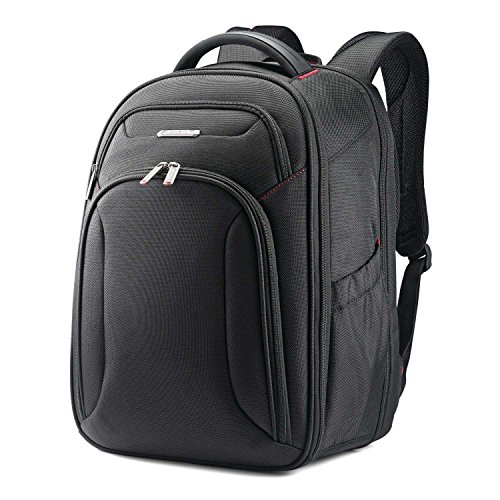
Samsonite Xenon 3.0 Laptop Backpack, 1680D Ballistic Poly, Fits 15.6” Laptop, TSA Compatible, Air Mesh Back Padding, Tablet Pocket, Smart Sleeve, Quick Stash Pocket, Durable & Lightweight – Large — The business backpack at its most boardroom-ready: ballistic fabric and a structured profile that narrows the appearance gap this article describes. Check price on Amazon.

Thule Paramount Backpack 24L, Black — A commuter backpack whose clean lines suit professional settings while keeping two-strap physics — the crossover candidate. Check price on Amazon.

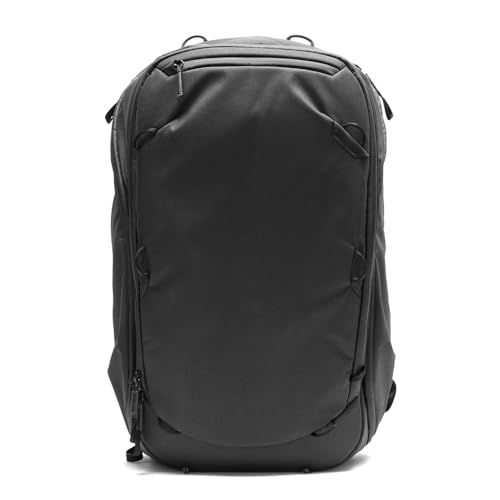
Peak Design Everyday Backpack 20L, Black, Fits 15″ Laptop — A design-led pack for the access-minded: side openings bring some messenger-style reachability into a backpack frame. Check price on Amazon.
In this guide
Side-by-Side: Laptop Backpack vs Messenger Bag
Read the first and last rows together: they are the same fact viewed from two distances.
| Aspect | Laptop backpack | Messenger bag |
|---|---|---|
| Carry comfort, heavy load | Two straps, load close to the back — the clear winner | One shoulder carries everything; fatigue builds fast |
| Carry comfort, light load | Excellent, though more bag than the load needs | Excellent — grab, swing, go |
| Access on the move | Usually requires stopping or a one-strap swing | Superb — swings to the front, everything reachable standing |
| Capacity | Typically 18–30 liters in commuter models | Typically 10–20 liters; overloading is miserable |
| Professional appearance | Modern business packs look sharp; still reads casual in formal rooms | Traditionally the boardroom-safe silhouette |
| Cycling and walking | Stable, balanced, out of the way | Can swing and shift; cross-body strap discipline required |
| Travel | Personal-item friendly, hands free, trolley sleeves common | Good as a personal item; pairs well with a rolling suitcase |
| Body strain pattern | Symmetric load; kind to neck and shoulders | Asymmetric load; a known aggravator of neck and shoulder issues |
Comfort and Your Body: The Physics Section
A backpack loads your skeletal system the way it prefers: symmetrically, close to your center of gravity, spread across two wide straps and your back. With a sternum strap and a sensible total weight, a thirty-minute walk feels like a walk. The design forgives load creep — the extra book, the bigger bottle — because the structure absorbs your optimism.
A messenger concentrates the entire load on one shoulder and one side of your neck, and your body compensates by hiking that shoulder and tilting — a posture that is fine for a laptop and a notebook over ten minutes and genuinely costly as weight and duration climb. Cyclists historically loved messengers because a properly worn one sits stable on the back at riding posture, and couriers still swear by them for access. But for the walking commuter with a real load, the backpack is not a preference; it is ergonomics. If you already manage neck or shoulder trouble, this section is your whole decision.
Access, Workflow, and Daily Rhythm
Here the messenger strikes back, hard. It swings from back to front in one motion, presenting its contents like a tray: laptop out at security, documents at reception, book on the train, all without removing the bag or finding a surface. For people whose day is a sequence of short stops and quick retrievals — site visits, campus hops, café working — that access rhythm is a genuine productivity feature, not a style affectation.
The backpack asks you to stop, set down or swing it by one strap, and work from a less organized opening — mitigated by good quick-access pockets, never fully erased. In exchange it swallows the gym kit, the lunch, the layer, and the groceries on the way home without changing shape or complaining. Ask yourself which day you actually live: the many-stops light day or the carry-everything long day. The bag that matches your rhythm will feel custom-made; the other will feel like a daily argument.
Appearance and Context
The messenger traditional home turf is the professional room: it reads as a briefcase relative, pairs with tailoring, and does not wrinkle a jacket across both shoulders or crush its line. In conservative industries and client-facing roles, that signal still has real currency, and pretending otherwise helps nobody. Modern business backpacks have narrowed the gap enormously — structured, minimal, leather-trimmed designs pass in most offices now — but the most formal rooms still belong to the messenger silhouette.
Context cuts the other way outdoors: on trails, bikes, campuses, and tech campuses, the backpack is the native dress and the messenger the visitor. Neither bag is unprofessional in any absolute sense — a clean, quality version of either beats a shabby version of the other — but rooms have dialects, and fluent carriers dress their laptop in the local one. If your life spans both dialects, the honest answer may be one of each, which is a conclusion this comparison is not too proud to reach.
Who Each Option Suits
Choose the backpack if…
Your load exceeds laptop-plus-notebook, your walk exceeds fifteen minutes, you cycle, you travel with one bag, you carry gym or lunch or groceries, or your neck and shoulders have ever filed a complaint. Also choose it if you are buying one bag for everything: its versatility ceiling is simply higher.
Choose the messenger if…
Your load is disciplined and light, your day is short hops and constant access, your rooms are formal, and your body has no shoulder grievances. Choose it, specifically, as a light-load specialist — the moment its contents creep toward backpack weight, it stops being the elegant answer and becomes the painful one.
Final Recommendation: Laptop Backpack vs Messenger Bag
The tiebreaker question is a scale and a clock: weigh your real daily load, and time your real daily carry. Light and short argues messenger; everything else argues backpack, with the margin growing as either number grows. Most former messenger devotees who switch cite the same sentence — my load grew — and most backpack owners who add a messenger cite its mirror: my meetings multiplied.
Whichever you choose, apply the same quality tests from our choosing guide: sleeve fit measured, zippers reputable, strap anchors reinforced, warranty real. A badly made bag loses this comparison regardless of silhouette, and a well-made one will serve its side of the argument for years.
Scenario Head-to-Heads: Who Wins on Specific Days
General comparisons hide the truth that the better bag changes with the day. Running both options through the same concrete scenarios shows where each design genuinely pulls ahead, and where the difference is smaller than marketing suggests.
The long walking commute
Thirty minutes or more on foot, especially with a train or bus at each end, is the backpack’s strongest scenario. Two straps spread the load symmetrically, the weight sits close to your centre of gravity, and your hands stay free for rails, tickets, and coffee. A messenger carrying the same laptop, charger, and lunch concentrates everything on one shoulder, and the bag swings against your hip with each stride unless you hold it — which quietly defeats the point of carrying it. For walkers, the messenger only competes when the load is genuinely light: laptop, notebook, nothing much else.
The car-based professional day
Drive to the office, walk twenty metres to a desk, drive to a client, repeat — and the calculus flips. Loads are carried for minutes, not miles, so the backpack’s ergonomic advantage barely registers, while the messenger’s quick access and tidier silhouette get used at every stop. Documents slide out at reception without setting the bag down or unzipping a main compartment. If your working life is mostly car, desk, and meeting room, the messenger’s weaknesses may simply never be triggered, and its strengths will be exercised daily.
Cycling and mixed transport
On a bicycle, a messenger worn high and tight across the back, with a stabilising strap, stays put remarkably well and keeps the load off the handlebars and rack — which is, of course, the job it was designed for. A backpack also works well and is the better choice for heavier or bulkier loads, but a low-slung, loosely strapped backpack swings and sags in ways a fitted messenger does not. The deciding factors are load weight and distance: light and fast favours the messenger, heavy or long favours the backpack, and either beats a tote or a briefcase at the first hill.
Airports and travel days
As a personal item, the backpack usually wins on capacity and on how it behaves in queues — it stands or hangs without sliding off a shoulder while you handle documents. The messenger counters with faster access to a passport, laptop, and headphones at security and at the seat. Frequent travellers who prize speed through the airport sometimes choose the messenger for exactly that access, accepting the smaller capacity, while anyone travelling with a change of clothes or a second pair of shoes will find the messenger simply runs out of room.
Capacity, Organisation, and Protection Compared Honestly
Beyond comfort and access, the two designs differ in how they hold, organise, and protect what you carry. These differences are structural — they follow from the shape of each bag — and they matter most to people whose carry list is more than a laptop and a notebook.
How the space is shaped
A backpack’s volume is tall and deep, which suits bulky, irregular loads: gym kit, a jumper, a lunch box, a pair of shoes. A messenger’s volume is wide and flat, which suits documents, folders, a tablet, and a slim laptop — items that are themselves flat. Forcing bulky items into a messenger distorts its shape, ruins its line, and makes it swing and bump; forcing flat documents into a backpack’s deep main compartment lets them slide, fold, and hide. Match the bag’s native shape to your load’s native shape and most other problems shrink.
Organisation and small items
Messengers typically put their organisation on display: open the flap and every pen, cable, and card has a visible slot. That visibility is genuinely useful for people who access small items many times a day. Backpack organisation is usually deeper and more divided — more pockets, but pockets inside pockets, where small items can vanish. Owners who love systems thrive with backpacks; owners who love grabbing thrive with messengers. In both cases, a small pouch for cables and chargers improves matters, because chargers are the item most likely to be loose, heavy, and damaging in either design.
Laptop protection
Protection depends more on the individual bag than the category, but structure helps the backpack’s case: most laptop backpacks suspend the machine in a padded compartment against the back panel, held still by the load around it. Messenger laptop sleeves are often a padded divider in a bag that flexes more, and a messenger set down carelessly tends to land on its base edge with the laptop’s edge close behind it. Either design from a reputable maker protects adequately for office life; the backpack’s advantage grows when the bag is dropped, crowded, or packed alongside hard, heavy items.
Long-Term Ownership: Wear, Care, and Cost Over Years
A bag is a multi-year purchase, and the two designs age differently. Thinking past the first month — to repairs, cleaning, and how each bag’s weak points develop — changes which one looks like the better value.
Where each design wears out
A messenger’s life is governed by its single strap and its flap hardware. The strap bears everything, its attachment points bear it under movement, and they are the first places stitching strains; clasps and magnetic closures also take daily cycles that backpack zips spread across several compartments. A backpack’s weak points are its zips and the base of its shoulder straps, but its load is shared, so each point works less hard. In both cases, metal hardware outlasts plastic, bar-tacked stitching at strap roots outlasts plain stitching, and a bag you can have repaired locally outlasts a marginally better bag you cannot.
Cleaning and daily upkeep
Backpacks, with more compartments and padding, take longer to clean and far longer to dry, as anyone who has washed one knows. A messenger’s simpler construction wipes down faster and dries quicker, and leather messengers can often be maintained with a cloth and conditioner rather than a wash at all. If your commute involves muddy platforms, winter salt, or a bag that lives on floors, the messenger’s easier upkeep is a real, if unglamorous, advantage. Structured backpacks, meanwhile, reward owners who keep them off the floor and empty them weekly.
The true cost comparison
Comparable quality costs comparable money in both categories, so judge value by cost per year of service rather than purchase price. A bag that suits your load and body will be carried daily for years; a bag that almost suits you will be replaced within one, making it the expensive option regardless of its tag. This is also the honest argument for trying both styles loaded, in a shop, before deciding: ten minutes under real weight reveals more than any comparison table, including this one.
Myths and Edge Cases Worth Clearing Up
A few persistent claims distort this decision, and a few unusual situations deserve direct answers rather than general advice.
Myth: a backpack always looks unprofessional
The shapeless, overstuffed school bag does. A structured backpack in a restrained colour, carried at a sensible fill level, reads as professional in most modern workplaces, including many client-facing ones — context has shifted substantially in the last decade. What reads as unprofessional in either category is condition and fit: a scuffed, sagging, overloaded bag of any style undermines the impression, while a clean, proportionate one does not. Genuinely formal environments — some legal, finance, and ceremonial settings — remain messenger or briefcase territory, and knowing your own environment’s real expectations beats any general rule.
Myth: messengers are always quicker
Messengers are quicker for items stored under the flap in organised slots. They are slower for anything buried at the bottom of the main compartment, because you access it one-handed, at an angle, often while the bag is on your shoulder. A backpack set down and opened fully can be the faster bag for a complete unpack — at a desk, in a meeting room, at a security tray. Speed depends on which access pattern your day actually repeats.
Edge cases: injuries, uniforms, and second bags
A shoulder or neck injury on one side can rule out a messenger entirely, or dictate which shoulder it must use; a back problem, conversely, sometimes tolerates a light messenger better than any backpack, and medical advice outranks bag advice in both directions. If you regularly carry a second bag — gym kit, instruments, samples — the backpack keeps both hands and shoulders freer to manage it. And if your employer’s dress code or uniform specifies a carry style, the decision is already made: buy the best example of the permitted style and spend your energy on fit and quality instead.
Switching Costs and the Hybrid Question in Depth
Many readers are not choosing a first bag but escaping a current one. The cost of switching is more than the price of the new bag, and the increasingly popular hybrid designs deserve a more careful look than the quick answer in the main comparison allows.
What switching actually involves
A new bag reorganises your day whether you plan it or not: pockets move, access patterns change, and the muscle memory of a hundred daily reaches must be rebuilt. Expect a week of mild friction and occasional items left in the old bag, which is why a pouch-based essentials kit that transfers whole is so valuable during a change. Judge the new bag after that week, not on the first morning. Owners who abandon a better bag on day two because it felt unfamiliar have paid the switching cost without collecting the benefit.
Convertibles and hybrids, examined honestly
Convertible bags that shift between backpack and messenger carry promise both sets of advantages, and the best of them genuinely deliver flexibility for people whose days vary wildly. The compromises are structural, though: straps that stow and convert add weight and complexity, the messenger mode of a convertible rarely carries as flat or as tidily as a dedicated messenger, and the backpack mode rarely matches a dedicated backpack’s harness comfort. For the traveller who needs both modes weekly, that trade can be worth it. For someone who will use one mode ninety percent of the time, a dedicated bag in that mode plus an inexpensive simple option for the other usually serves better.
Owning both, deliberately
There is no rule that this decision must produce a single winner. A backpack for heavy, walking, and travel days and a messenger for light, smart, car-based days is a combination many professionals settle into happily, and each bag then lasts longer because neither is forced into days it suits poorly. The discipline required is the transfer system: essentials that move as one unit, and a fixed home for each bag so the transfer takes seconds. If your budget stretches to one good bag rather than two adequate ones, though, buy the one that suits your most common day and let the exceptional days be slightly awkward.
Fit, Sizing, and Trying Before You Decide
Whichever style you favour, the individual bag must fit your body and your load. Category advice narrows the field; fit decides within it, and fit can only be judged with the bag loaded and on your body.
Loading the bag in the shop
A bag tested empty tells you almost nothing. Bring your laptop and typical load, or use shop stock to approximate the weight, and wear the bag for several minutes. For a backpack, adjust the straps properly before judging — most bags on shop floors are set loose enough to feel terrible on anyone. For a messenger, wear it on your usual shoulder, loaded, and walk: it should sit stable against your hip without constant hand correction, and the strap should not migrate toward your neck.
Body size and proportion
Smaller-framed carriers often find large messengers overwhelming, because the bag’s width extends well beyond the torso and swings accordingly, while a tall carrier may find a compact backpack’s straps too short to let the bag ride at the right height. Torso length, shoulder width, and hip shape all interact with bag dimensions in ways no specification sheet captures. This is another argument for the loaded try-on, and for treating a bag that fights your proportions as the wrong bag even if every comparison table recommends its category.
The return-window test at home
If you buy online, use the return window deliberately: pack the bag as you truly would, carry it on a real commute, and live with its access patterns for a day. Check the things a shop cannot show you — how it behaves on your train, at your desk, with your coat, in your hallway. A bag that passes a real day will pass a year. A bag that merely looked right on arrival often reveals its one daily irritation within that first honest test, while returning it is still simple.
Making the Final Decision With Confidence
After the scenarios, the ownership questions, and the fit tests, the decision usually comes down to weighting a handful of personal factors. A structured way of weighing them prevents the loudest factor — usually appearance or a single feature — from silently overruling the rest.
Weighting your own priorities
List your five real priorities — for example carrying comfort, quick access, professional appearance, capacity for gym kit, and ease of cleaning — and rank them honestly by how often each one affects your week. The bag style that wins your top two priorities is very likely your answer, even if it loses the other three, because frequency is what turns a feature into satisfaction or an irritation into a grievance. This exercise also exposes imaginary priorities: if quick access matters twice a month and comfort matters twice a day, the ranking should say so.
The one-week diary test
If you remain torn, keep a simple diary for one working week: each day, note your load’s rough weight, how far you carried it, and how many times you needed something quickly from the bag. At the week’s end the pattern is usually unmistakable, and it describes your life rather than a hypothetical one. Heavy loads and long carries point one way; light loads and constant access point the other. Deciding from your own recorded week beats deciding from anyone’s general advice, including this guide’s.
Committing to the choice
Once chosen, commit properly: set the straps once with care, establish the pouch system, and give the bag a full season before reconsidering. Nearly every bag has one quirk, and quirk-swapping is an expensive hobby that never reaches a perfect bag, because the perfect bag for a varied life does not exist. The right outcome of this comparison is not the theoretically superior category — it is the bag you carry happily, correctly, and without thinking about it, on the largest number of your actual days.
Environmental and Practical Realities: Weather, Storage, and Daily Grime
Comparisons usually happen in a showroom, but bags live outdoors, under desks, and on train floors. The practical realities of weather and storage favour each design in different climates and routines, and for some owners these unglamorous factors decide the matter outright.
Rain, and what each design does about it
A backpack’s zips sit on top, where rain lands, so zip quality and any storm flaps matter; a messenger’s flap sheds water over its opening like a roof, which is a genuine structural advantage in a downpour, though wind-driven rain still finds the sides. Neither design is waterproof unless built to be, and both benefit from a rain cover or an internal dry pouch for documents and electronics in serious climates. If your commute is long, walked, and frequently wet, judge candidate bags on their weather details specifically rather than assuming the category protects you.
Storage at home and at work
A backpack stores upright on a hook or floor and keeps its shape empty; a messenger hangs flat on a hook and takes less depth in a cupboard or locker, which matters in small flats and shared offices. Under a desk, a backpack’s height can clash with modesty panels and knees, while a messenger slides into narrower gaps. These are minor points until they are daily points, and daily points are the ones that compound. Picture the bag’s home at both ends of your commute before buying, not after.
Cleaning and the reality of floors
Both bags will live on floors more than their owners admit. A backpack’s base takes the dirt and is usually a wipeable, reinforced panel; a messenger’s base and lower flap edge take it instead, and light-coloured canvas messengers show a season of floors honestly. If your routine involves public transport floors and building sites of any kind, darker colours and wipeable bases in either category will look respectable far longer than pale fashion finishes, and that longevity belongs in the value calculation.
The Decision for Specific Professions and Lifestyles
General advice sharpens when it is applied to recognisable working lives. If one of these portraits resembles yours, its reasoning probably matters more than the averages elsewhere in this guide.
Teachers, medics, and people who carry all day
Professionals who move constantly with their bag — between classrooms, wards, sites, or clients — should weight carrying comfort almost above everything, which points firmly to the backpack unless the load is truly minimal. These are also the users who benefit most from a bag that stands upright, opens wide, and survives being set down on every conceivable surface a dozen times a day.
Lawyers, agents, and the document carriers
Work built on documents, meetings, and impressions — and mostly reached by car — is the messenger’s natural habitat. Flat capacity suits files, access suits reception desks and meeting tables, and the silhouette suits the rooms. The moment the same professional starts walking long distances or carrying kit beyond documents, the balance tips, and many quietly migrate to a structured backpack while keeping a messenger for court or client days.
Students and researchers
Heavy, varied, unpredictable loads carried on foot and by bus, with books one day and lab kit the next, describe a backpack’s design brief almost exactly. Students also set bags on floors, crowd them into lockers, and overload them at term’s end, all of which punish a messenger’s single strap and flat shape. A messenger can serve a light, humanities-style load elegantly, but as an only bag for a heavy course it is the choice most often regretted by October.
Parents and multi-role carriers
Anyone whose bag must absorb a child’s spare layer, a water bottle that is not theirs, and the accumulated objects of family life needs volume, two straps, and hands free — the backpack, decisively. The messenger’s elegance does not survive contact with a toddler’s emergency supplies, and the parent who tries usually ends up carrying a second bag as well, which is the worst of both worlds.
What Frequent Travellers and Commuters Report After a Year
The most useful evidence in this comparison is not specification but hindsight: what owners of each style say once the novelty has worn off and the bag has survived a full year of weather, crowds, and deadlines.
Backpack owners, a year on
The consistent themes are gratitude for comfort on the days that went wrong — the long walk when the train failed, the conference day that never sat down — and mild irritation with access speed and with finding small items in deep pockets. Very few backpack owners cite appearance as a lasting problem, even those who worried about it before buying, because workplaces have largely normalised the style. The regrets that do appear are almost always about the specific bag’s size or quality, not about having chosen two straps.
Messenger owners, a year on
Messenger owners praise access and appearance just as consistently, and their complaints cluster around load creep: the bag that was perfect for a slim laptop gradually accumulated a charger, a book, a bottle, and gym shoes, until the single shoulder began filing daily complaints. The owners who remain happy are those whose loads stayed light and stable. That pattern is the single most practical finding in this whole comparison — the messenger does not fail its owners; their carry outgrows it, which is why honestly forecasting your load matters more than any other step in the decision.
The lesson both groups teach
Both groups, notably, praise owners who bought quality and criticise owners who bought cheaply, regardless of style. Straps, zips, stitching, and hardware decide satisfaction in year two, long after the style question has faded into habit. Choose the category by your load, your distances, and your rooms — then spend your remaining effort and budget on the best-made example of it you can justify, because that is the part of the decision you will still be feeling, literally, years from now.
Second-Hand, Borrowed, and One-Bag Travel Situations
A few remaining situations deserve direct treatment, because they arise constantly and general comparisons ignore them.
Buying second-hand or inheriting a bag
The used market is full of excellent bags in both styles, retired by owners whose lives changed rather than because the bag failed. Judge a used bag by the same weak points named earlier — strap roots and hardware on a messenger, zips and strap bases on a backpack — and by the laptop compartment’s padding, which should still feel resilient rather than papery. A used bag in the right category, well made and sound, serves better than a new bag in the wrong category, so inheriting or buying used is a perfectly respectable way to test a style before committing serious money to it.
One-bag travel and the personal-item test
For travellers determined to fly with a single bag, capacity and structure dominate, and the backpack wins almost by definition: it swallows clothing, toiletries, and tech in a shape that fits overhead bins and under seats, and it carries the resulting weight kindly through terminals. The messenger’s role in travel is as the second, personal bag alongside a suitcase — documents, laptop, headphones, and valuables accessible at the seat — and in that supporting role it is genuinely excellent. Confusing the two roles is the mistake; each style is the right answer to a different travel question.
When the workplace decides for you
Some employers issue a bag, specify a style, or maintain a dress culture strict enough that the choice is effectively made. In that case, spend your decision energy inside the permitted style: fit, compartment quality, strap comfort, and organisation vary enormously within each category, and the best example of the required style will serve you better than resentment toward the absent alternative. If the issued bag is genuinely harming your shoulder or back under a heavy required load, that is a health conversation worth having with your employer, ideally supported by the load and distance facts from your own carrying diary.
Trying a Style Change Without Buying Twice
If this comparison has persuaded you that your current style may be wrong for your life, test the hypothesis cheaply before spending seriously. Borrow the other style for a week if you can, or buy an inexpensive example purely as a trial, load it with your real daily carry, and live your real commute with it. A week exposes the truth about access, comfort, and capacity in a way no amount of reading can, and the trial bag, if the experiment succeeds, becomes your gym or travel spare. If it fails, you have spent a little to avoid spending a lot on the wrong flagship — which is the most economical outcome shopping ever offers.
One last practical filter: count the doors in your day. Every doorway, turnstile, security tray, and crowded carriage is a small negotiation with your bag, and the style that passes through your particular sequence with the least fuss accumulates an advantage no specification can express. Owners rarely articulate this, but when they say a bag just works, this is usually what they mean — it fits their route through the world, not merely their laptop.
Related Guides
- best laptop backpacks for men
- best laptop backpacks for women
- best laptop backpacks for travel
- best laptop backpacks for business
- best laptop backpacks for work
- how to measure a laptop for a laptop backpack
- hard shell vs soft laptop backpack
- what size laptop backpack do you need
Frequently Asked Questions
Is a messenger bag bad for your back?
A light messenger, worn cross-body with the strap adjusted so the bag sits high on your back or hip, is fine for healthy bodies over short durations. The problems arrive with weight and time: asymmetric load tilts posture, loads one trapezius, and aggravates existing neck and shoulder conditions. It is a dosage question, not a poison. Keep a messenger under a sensible load — laptop, notebook, small items — and it is a pleasure; treat it as a cargo vehicle and it will invoice your neck.
Can a backpack look professional enough for client meetings?
In most modern workplaces, yes — the structured business backpack in dark, quality materials is now unremarkable in meeting rooms across tech, consulting, and much of finance. The exceptions are the most traditional rooms: some law, banking, and executive contexts where the briefcase silhouette remains the dialect. Know your rooms. If yours are borderline, a minimal black pack with clean lines and no outdoor branding passes almost everywhere a messenger does.
Which is better for cycling?
For commuting by bike with a laptop, a backpack usually wins on stability and sweat management with a ventilated panel — it cannot swing into the wheel or shift at a stop. Messengers have the courier heritage and, worn correctly with a stabilizing strap, sit beautifully at riding posture for light loads. The deciding factors are load weight and ride length: heavy or long argues backpack; light and short is the messenger ancestral homeland and it performs there.
Which works better as an airline personal item?
Both can, and the backpack generally uses the under-seat space more completely — more liters, better organization for a travel day, and hands free in the terminal. The messenger counters with in-flight access: it lives at your feet and opens like a tray without standing. Frequent flyers often end up with the backpack as the travel carrier and, ironically, a small messenger or sling inside it for the destination days — the two-bag answer at the system level.
What about convertible bags that do both?
Convertibles — backpacks with stowable straps and a shoulder strap, or messengers with backpack straps — genuinely exist and have improved. They serve travelers who need boardroom mode and airport mode in one object. The honest caveat is compromise: the convertible is rarely the best backpack or the best messenger, and its hardware adds weight. If your life truly splits between the two modes weekly, the versatility wins. If one mode dominates, buy the specialist and borrow the other mode from a cheaper second bag.
How much weight is too much for a messenger?
As a working rule, once the total load passes roughly what a laptop, its charger, a notebook, and a bottle weigh together, most people feel a messenger by the end of a fifteen-minute walk — and that feeling compounds daily. Bodies vary, but the principle does not: one shoulder is a small platform, and the messenger elegant use-case is a light one. If your honest pile is heavier, that is the backpack calling, and our sizing guide will help you pick its capacity.
Can I alternate between a backpack and a messenger bag?
Many people do, and it works well if your essentials transfer as a unit — a single tech pouch, wallet, and keys that move between bags in seconds. The risk is leaving something in the other bag, which a fixed pouch system largely prevents. Alternating also spreads wear across two bags and lets each suit the day: backpack for heavy or walking days, messenger for light, car-based, or smarter days.
Which is better for a laptop plus a change of clothes?
The backpack, comfortably. Clothes are bulky and soft, and a messenger’s flat volume handles them poorly — the bag bulges, swings, and loses the tidy profile that justified choosing it. A backpack swallows a change of clothes around the laptop without distortion. If overnight capacity is a regular need rather than an occasional one, size the backpack for that day, not for the average day.
Does the choice matter less if my commute is very short?
Yes, honestly. A five-minute carry forgives almost anything, which is why short-commute owners should weight access, appearance, and organisation more heavily than ergonomics. The comfort differences that dominate this comparison grow with distance and load; if neither applies to your day, choose the bag whose daily interactions please you most, because that is the difference you will actually experience.