The mirrorless vs compact camera choice is really a choice about commitment. A compact camera is a finished product: lens built in, decisions made, pocket-sized, ready in seconds. A mirrorless camera is a platform: a body you pair with lenses you choose, grow and occasionally curse at airport security. Both take photographs far beyond phone quality, but they suit different photographers, different trips and different relationships with the hobby.
This comparison covers image quality, flexibility, size, ease of use and total cost, and it is honest about the compact’s strengths — because for many travellers and families, the compact is not the lesser camera but the correct one. Equally, if you have ever wished you could swap a lens for a portrait or a wide landscape, the mirrorless system’s ceiling is far higher. Read on to find which ceiling — and which floor — matches your photography.
Disclosure: As an Amazon Associate, kajuandouglas.com earns from qualifying purchases. Links to Amazon on this page are affiliate links; they cost you nothing extra. Listing details such as price and availability change often, so check the current Amazon listing before you buy.
Mirrorless vs Compact Camera: The Quick Verdict
Choose a compact if you want one small camera that is always with you, needs no lens decisions, and still beats a phone for zoom, low light and handling. Choose mirrorless if you want to grow: interchangeable lenses, larger sensors, serious video and controls that keep up as your skill develops. Families and travellers often pick compacts; hobbyists who catch the photography bug pick mirrorless — and many photographers own both.
In this guide
Mirrorless vs Compact at a Glance
| Criterion | Mirrorless (interchangeable lens) | Compact (fixed lens) |
|---|---|---|
| Lenses | Interchangeable; primes, zooms, macro, telephoto | Built-in zoom; what you buy is what you get |
| Sensor sizes | Micro Four Thirds, APS-C, full frame | Usually 1-inch or smaller; some premium APS-C fixed-lens models |
| Size | Body plus lens; small bag territory | Jacket-pocket to coat-pocket |
| Image quality ceiling | Highest; fast lenses transform low light and portraits | Very good; limited by the fixed lens’s aperture and range |
| Ease of use | More controls and decisions; guided modes help | Turn on and shoot; minimal setup |
| Video | Advanced options, microphone inputs on many models | Good basic video; fewer audio and control options |
| Cost pattern | Body is the start; lenses add up over years | One purchase, complete |
| Durability of interest | Grows with you for a decade | May be outgrown if the hobby deepens |
Image Quality: Sensors and the Lens You Cannot Change
A compact’s quality is capped by its fixed lens and sensor pairing — which, in premium 1-inch models, is a high cap: sharp images, real optical zoom and low-light results clearly beyond phones. But a mirrorless camera with an APS-C or full-frame sensor and a fast prime lens operates in another league for portraits and darkness, because large sensors and wide apertures gather light no compact can match. The gap shows at night, indoors and in background blur; in daylight landscapes, a good compact and a mirrorless camera produce files most viewers cannot separate.
Zoom range cuts the other way. Travel compacts carry astonishing zooms — wide to long telephoto in a pocket — that would require two or three mirrorless lenses and a bag to replicate. For wildlife on a safari holiday or a child’s stage performance from the back row, the compact’s built-in reach is not a compromise but a superpower. Judge quality by the photographs you actually take: reach you own beats aperture you left at home.
Flexibility and the Growth Question
Mirrorless cameras grow: today a kit zoom, next year a portrait prime, later a macro or a telephoto, each unlocking a genre. That growth is the system’s joy and its expense. Compacts are complete on day one and identical on day one thousand — which is freedom if you dislike gear decisions, and a ceiling if you fall in love with, say, macro photography and discover your compact cannot focus close enough with enough light.
Ask yourself the two-year question honestly. If photography is a tool for documenting a life you are busy living, the compact’s completeness is a feature. If you suspect photography itself is becoming the hobby — you read about it, you plan outings around light — the mirrorless system’s headroom will pay you back. Many photographers answer ‘both’: a compact for everyday carry and a mirrorless kit for deliberate photography. Our best compact cameras for travel and how to choose a mirrorless camera guides cover each side in depth.
Carrying, Handling and Being There
The compact wins the only contest that matters on difficult days: it is there. It fits the jacket pocket on the rainy hike, the small bag at the wedding, the glovebox on the road trip. Mirrorless kits, even small ones, ask for a dedicated bag and a decision. Photographers underestimate this until they review a year of images and notice the compact — or the phone — took most of them. A camera system’s real specification is its attendance record.
Handling splits differently. Compacts offer simplicity but sometimes bury settings in menus and offer small controls; mirrorless bodies provide dials, custom buttons and viewfinders that make deliberate photography faster and more pleasurable. For video, mirrorless models add microphone inputs and flip screens that vloggers need — compare our best cameras for vlogging picks — while compacts counter with models designed purely for creators, with built-in mics and product-showcase modes. There is no universal winner; there is your day, your bag and your subjects.
Cost: One Purchase vs a Platform
A premium compact costs about what an entry mirrorless body with kit lens costs — but the compact’s price is final, while the mirrorless price is an instalment. Budget mirrorless ownership honestly: a second lens, a spare battery, a bag and a fast card follow within a year for most owners. None of this makes mirrorless bad value; the capability per money spent over five years is superb. It makes the comparison unfair unless you compare total system costs over the period you will keep them.
Resale also differs. Mirrorless lenses hold value well and bodies moderately; compacts depreciate like electronics generally. If you might sell up in two years, the mirrorless kit returns more of its cost. If you will keep the camera until it dies — the compact owner’s typical plan — depreciation is irrelevant and the compact’s all-in simplicity wins again.
Ready to Buy? Start Here
Two premium compacts and two compact mirrorless kits frame the choice — notice how the mirrorless bodies invite a second lens purchase, and decide whether that excites or annoys you:

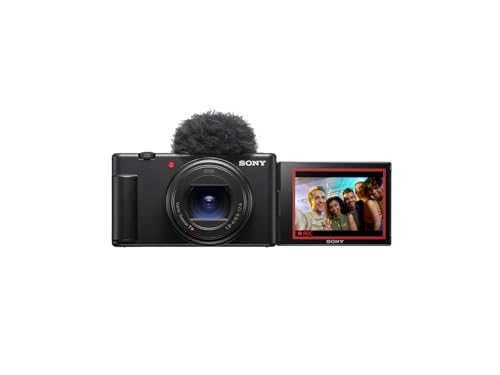
Sony ZV-1 II Premium Compact Digital Camera — Check price on Amazon. A solid, widely available option that fits this guide; confirm the exact kit contents and lens mount on the listing before ordering.

Canon PowerShot G7 X Mark III Digital Camera — Check price on Amazon. A solid, widely available option that fits this guide; confirm the exact kit contents and lens mount on the listing before ordering.
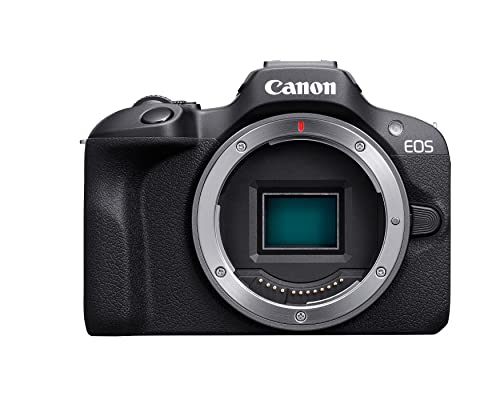
Canon EOS R100 Mirrorless Camera — Check price on Amazon. A solid, widely available option that fits this guide; confirm the exact kit contents and lens mount on the listing before ordering.

Nikon Z 30 Mirrorless Camera with 16-50mm Lens — Check price on Amazon. A solid, widely available option that fits this guide; confirm the exact kit contents and lens mount on the listing before ordering.
Who Each Option Suits
Choose a compact if your photography is travel, family and everyday life; if you want zoom reach without a bag of lenses; if you value being ready in two seconds; or if you know yourself well enough to admit extra gear would stay home. Premium compacts are also the connoisseur’s second camera, bought by professionals for days off.
Choose mirrorless if you want portraits with real background blur, serious low-light ability, a path into new genres via lenses, advanced video with external audio, or a system that can grow toward professional work. Accept the bag, the budget and the learning curve as part of the deal.
Final Recommendation
Buy the camera that matches your behaviour, not your aspirations. If you will carry it daily and shoot everything, the compact returns more photographs per ounce than anything else in this guide. If photography is becoming your craft, mirrorless is the platform that will not cap you. The only wrong answer is the impressive system that lives in a cupboard while a lesser camera — or a phone — takes your actual pictures.
The Premium Compact’s Secret Weapon: The Fixed Routine
Compact cameras cultivate a creative discipline their owners rarely anticipate: with one lens and one sensor, every photographic problem must be solved with position, timing and light rather than equipment. Photographers who spend a year with a fixed-lens compact consistently report improved composition — they zoom with their feet, pre-visualise a single field of view until it becomes instinct, and stop interrupting shoots to change lenses. Several celebrated street photographers built careers on exactly this constraint. A mirrorless system can simulate it by mounting one prime and leaving the bag at home, but the compact enforces it structurally, which is why some system owners keep a compact as their daily training camera.
There is a social dimension too: a compact looks like a tourist’s camera, attracting none of the attention — or suspicion — a large mirrorless kit draws at events, in markets or around children. For documentary and family photography, that invisibility is a working feature. The compact is not merely the smaller choice; in specific human environments it is the more capable tool, because it is allowed to be present.
Hybrid Strategies Real Photographers Use
Look inside working photographers’ bags and the versus framing dissolves: many own a mirrorless system for deliberate work and a premium compact for everything else, assigning each its territory — the compact for daily carry, travel days and family events; the system for portraits, paid work, wildlife and low-light projects. The compact also serves as the system’s backup on trips, insuring the holiday against a body failure. Budgeted over years, the pair costs less than chasing one camera that does everything superbly, because no such camera exists at any price.
If you are choosing your first serious camera, sequence the pair: buy the one matching your dominant photography now, and let a real, recurring limitation — not anticipation — nominate the second. Compact owners add mirrorless when a genre demands lenses; system owners add compacts when they notice their best camera is missing their daily life. Both sequences end at the same well-balanced kit, reached without a single wasted purchase.
Image Quality Across a Whole Day, Not Just at Noon
Comparisons of image quality tend to be made in bright light, where almost every modern camera looks excellent. Follow both cameras through a full day instead. In morning light indoors, the compact’s smaller sensor and slower lens begin to push sensitivity upward, while the mirrorless camera’s larger sensor and brighter lens keep files clean with room to spare. At midday outdoors they are close again, and the compact’s deep depth of field is arguably the more forgiving tool for travel scenes. In the blue hour and into the evening, the gap reopens decisively: the mirrorless camera is still making relaxed, detailed photographs while the compact is leaning on its flash, its stabilisation and its noise reduction. Neither pattern makes one camera good and the other bad. It tells you which hours of the day your photography lives in, and therefore which tool will serve it.
Zoom range is the compact’s counterpunch and deserves respect. A travel zoom compact covers wide interiors and distant details in one pocketable body, a range a mirrorless owner matches only by carrying two or three lenses or accepting a large, slower superzoom of their own. For a traveller whose subjects are unpredictable and whose bag is small, that single-lens reach is not a compromise feature; it is the entire point, and photographs of distant subjects that the mirrorless owner never took at all are infinitely better than theoretical quality left in a hotel room.
Autofocus and responsiveness in candid moments
Candid photography, children, street scenes, family gatherings, rewards responsiveness as much as quality. Mirrorless cameras focus with a sophistication compacts rarely match, tracking eyes and subjects across the frame, and their larger controls make changing settings mid-moment natural. Better compacts are no slouches, starting quickly and focusing well in good light, but their small controls and menu-led settings changes slow the deliberate photographer down. The exception is the fixed-lens premium compact with proper dials, which handles like a small mirrorless camera because, in spirit, it is one that happens to have its lens permanently attached. If handling feel matters to you, that category deserves a place on your shortlist between the two camps.
Learning, Creativity and Growing Into a System
A compact teaches composition, timing and seeing, because it removes equipment decisions and leaves only photographic ones. Many photographers credit a year with a simple compact as the period their eye developed fastest. What a compact cannot teach is the craft of lenses: how focal length shapes perspective, how aperture controls a scene, how one specialised lens transforms a subject. A mirrorless system is an education that continues for years, lens by lens, and for photographers who suspect the hobby will grow, that continuing education is the real product being bought. The question is not whether you will outgrow a compact in the abstract, but whether your curiosity is pulling you toward lens craft. If it is, start with the system. If your curiosity is about places, people and moments, the compact may serve you happily for a decade, and plenty of accomplished photographers prove exactly that.
The economics of one box versus a platform
A compact is a finished purchase: the cost is the cost, plus a case and a card. A mirrorless camera is a platform whose first price is the entry fee, and honest budgeting counts at least one additional lens, a spare battery and a bag that fits the grown kit within the first year or two. Compared fairly, total against total, the mirrorless route costs meaningfully more, and it should, because it delivers more capability and more future. Where buyers go wrong is comparing a compact’s full price against a mirrorless body’s starting price and feeling misled later. Compare the three-year cost of the photography you actually intend to do, and both options can be judged cleanly.
Video, Sound and Sharing Compared
For video, the mirrorless advantage in autofocus, low light and interchangeable lenses is real, and creators who film deliberately will feel it immediately, along with microphone inputs and monitoring options compacts seldom offer. Yet compacts hold two video cards of their own. Their small size makes them unobtrusive for travel and family filming, and their deep focus forgives the casual framing of a parent or a traveller in a way a large-sensor camera at a wide aperture does not. Several compacts are designed squarely for vlogging, with flip screens, good built-in microphones and simple controls, and for that job they compete with mirrorless on merit, not on price. Sharing, meanwhile, is a draw: both camps transfer to a phone competently, and both will fill your social feeds and family chats with equal ease. Choose on the filming you will actually do, not the filming you might do in an imagined future.
Durability, Weather and the Life Each Camera Lives
A compact lives in pockets, handbags and gloveboxes, and its fixed lens means no sensor is ever exposed to the world; for dust and casual knocks, it is a sealed little appliance that asks almost nothing of its owner. Its weaknesses are drops onto hard ground, which its extending lens mechanism tolerates poorly, and the impossibility of replacing a damaged lens, which is part of the camera rather than an accessory. A mirrorless camera exposes its sensor at every lens change and collects accessories the way a platform does, but its lenses can be replaced individually, its bodies at enthusiast tiers are weather-sealed, and a damaged lens is a repair bill rather than a funeral. Over a five-year life of travel, the compact’s risk is concentrated in a single fragile mechanism, while the mirrorless kit’s risk is spread across components that can be serviced, swapped and insured separately.
Weather deserves a specific word because travellers meet rain in both camps. Sealed mirrorless bodies and lenses shrug off drizzle that would send most compacts back into a pocket, and that difference decides whether a wet day in the hills is photographed or merely endured. Adventure compacts built for water and shock are the honourable exception, trading image quality for a toughness neither ordinary category matches. If your photography regularly happens in rain, surf or snow, that rugged compact category, or a sealed mirrorless kit, are the two honest answers, and choosing between them returns you to the familiar ground of size versus capability.
Repairs, lifespan and resale
Compacts are rarely economical to repair beyond warranty, because the labour of opening a sealed, miniaturised device approaches its replacement cost, and makers design them accordingly. Mirrorless bodies and lenses sit in a service ecosystem: shutters, mounts, dials and elements can be repaired, cleaned and calibrated, which extends working life and supports resale values. A well-kept mirrorless lens commonly serves across two or three bodies. A compact’s lifespan is the lifespan of one device, battery included, and replacement batteries for older compacts can become the quiet reason a working camera retires. None of this makes compacts disposable in spirit; it makes them a purchase to enjoy fully during their years, while mirrorless gear rewards the keeper’s mindset.
The Photographer’s Day: Carrying Each Camera for Real
Spend an imagined day with each. The compact is in your jacket when you leave, unnoticed on the train, out in two seconds for the street performer, back in the pocket for the gallery where bags are checked, and present at dinner for the photograph of friends that becomes the day’s favourite. The mirrorless camera shapes the day instead: it is why you chose the photogenic route, it is around your neck or in a dedicated bag, it takes the deliberate photographs at the viewpoint and the portrait at golden hour with a background melted to silk, and it is set down, consciously, at dinner, where the compact owner is still shooting. Neither day is better. They are different relationships with photography itself, one woven into life and one given its own time, and recognising which relationship you want is the deepest form of this comparison.
Children, grandparents and the shared family camera
Families add a voter to this election. A compact can be handed to a child, a grandparent or a friend with one instruction, press the button, and produce good results, because its automation and deep focus forgive everything. A mirrorless camera handed over in a photographer’s configured state produces confusion and, occasionally, a mysteriously changed setting that survives for weeks. Families who share one camera often find the compact is the democratic choice, while the mirrorless belongs to the household’s designated photographer. Many households, sensibly, end up with both, the compact living in a kitchen drawer for everyone and the system camera living in one person’s bag, and the overlap that comparison articles treat as waste turns out to be peace.
Making the Decision With a Borrowed Weekend
If the choice remains open, borrow the decision from experience. Rent or borrow a mirrorless body with a standard zoom and a bright prime for one weekend, and carry a good compact, your own, a friend’s or a rental, on the other day of the same weekend, to the same kinds of places. Review both days’ photographs together and ask three questions. Which camera produced the photographs you keep returning to? Which camera did you reach for without thinking? And which camera’s limitations actually cost you a photograph, as opposed to merely appearing in a specification table? Those answers, from your own hands and your own subjects, outweigh this entire comparison, which exists to frame the questions rather than to answer them for you.
Sensors and Lenses: The Two Halves of the Quality Gap
It is tempting to credit the mirrorless camera’s quality advantage to its sensor alone, but the lens deserves equal billing, and understanding the split helps you shop both categories better. The larger sensor gathers more total light across its area and produces cleaner files as sensitivity rises. The interchangeable lens, meanwhile, can be a fast prime that gathers far more light per photograph than any compact zoom, and renders backgrounds with a separation no compact except the fixed-lens premium models can approach. When a mirrorless camera is fitted with a slow kit zoom and compared with a premium compact in daylight, the real-world gap shrinks to very little, which is why compact owners are often unimpressed by friends’ mirrorless results. The gap they imagine, and that reviews show, usually involves the mirrorless camera wearing the lens it was bought for. Judge systems by the lens you will actually fit, in both directions.
The compact’s lens has one more virtue that deserves naming: it is optimised for its sensor as a single instrument, collapses into the body, and never needs changing in the rain, the dust or the dark. There is no wrong lens for the occasion because there is only the lens, and there is a real creative discipline in that constraint. Photographers raised on fixed choices often compose more decisively than those carrying options, and the compact enforces that decisiveness by design.
Flash, night and the compact’s honest limits
At night the comparison becomes stark and simple. The mirrorless camera, with a fast lens and clean high sensitivities, photographs the evening as it felt: ambient, warm, alive. The compact reaches for its small flash, which flattens the scene within a few metres and leaves the background black, or it leans on computational night modes where fitted, which can be surprisingly effective for static scenes and helpless with moving people. If your photography is substantially nocturnal, family evenings, concerts, city nights, this section outweighs every other in the comparison, and the mirrorless camera, or a premium compact with a large sensor and fast fixed lens, is where your shortlist should live.
Accessories and the Shape of Each Hobby
Follow the accessories and you see two different hobbies. The compact owner’s entire kit fits in a small pouch: camera, spare battery, card, a mini tripod perhaps. The mirrorless owner’s kit grows a bag, then a bigger bag: lenses for occasions, a flash, filters in sizes that must match lenses, a tripod that can hold the heaviest combination. That growth is the hobby for many people, and a pleasure in itself, the building of a system that can answer any photographic question. For others it is the hobby’s tax, paid in weight, money and decision fatigue. Neither relationship with equipment is more authentic. But you should choose yours knowingly, because buying a mirrorless camera while wanting a compact owner’s life is the commonest source of expensive regret in this entire comparison, and buying a compact while craving a system is the second commonest.
Second cameras and the both-answer in practice
Notice how often experienced photographers resolve this comparison by owning both, in a specific order. The system camera comes first, or the compact does, and the second fills the gap the first leaves: the compact that goes where the system cannot, or the system that grows where the compact stops. If you are torn, that pattern suggests a sequencing strategy rather than a compromise: buy the one your current photography needs most, use it fully, and let a real, repeated limitation, not an anticipated one, tell you if and when the other joins it. Limitations experienced are reliable guides. Limitations imagined are how cupboards fill with cameras.
Travel, Family and Work: Three Lives Compared
For travel, the compact’s case rests on presence and simplicity: it is carried all day, every day, including the days when photography was not the plan, and travel’s best photographs are disproportionately unplanned. The mirrorless case rests on the trips where photography is a purpose, the landscape journey, the city break built around light, where its quality and lenses justify structuring the day around them. Most travellers live both kinds of trip across a few years, which is why this comparison refuses to die, and why the sequencing answer, one now, the other when a real limitation appears, serves travellers better than any verdict.
For family life, the deciding scenes are indoors, fast and badly lit: birthdays, kitchens, school halls. The mirrorless camera with a fast prime is the finest family tool ever made, and the compact is the one that was actually in the kitchen drawer when the moment happened in the other room. Families resolve this by geography as much as by quality: whichever camera lives where the family lives gets the photographs. For work, the answer hardens. Anyone paid to photograph needs the mirrorless system’s reliability, lens range, flash system and files, and the compact’s role in professional life is as the personal camera that reminds the professional why they started. Three lives, three different winners, one consistent lesson: context is not a detail in this comparison, it is the comparison.
The environmental footnote
A compact bought once and used for many years is, in material terms, a modest object. A system camera invites a continuing stream of manufactured goods, lenses, bags, bodies in succession. Photographers who care about that ledger can honour it in both camps: buy the compact and keep it until it truly dies, or build the mirrorless system slowly from durable and used components and resist the annual upgrade. The wasteful pattern is identical in both worlds too, the barely used purchase replaced on a whim. Longevity of use is the greenest specification, and it is decided by choosing the camera that fits your life closely enough to be used for years, which returns us, for the last time, to fit rather than to specifications.
Learning to See With Each Tool
There is a photographic education argument for each camera that goes deeper than features. The compact, with its deep focus and single lens, teaches the oldest lessons: position, timing, patience and the decisive moment, because nothing else is adjustable enough to hide behind. Its photographs succeed or fail on seeing alone. The mirrorless camera teaches the technical craft alongside the seeing: what aperture does to a scene, what a focal length does to space, how light can be shaped with flash and modifiers. Photographers who learn on a system sometimes lean on technique when their seeing is unsure, and photographers who learn on a compact sometimes hit a technical ceiling just as their seeing matures. The ideal education arguably runs compact first and system second, which is, not coincidentally, the order in which many people actually buy them when they follow their curiosity instead of a catalogue.
What Owners of Each Say After Two Years
Compact owners two years in tend to speak about photographs they would otherwise never have taken: the camera was simply there, in the coat, at the meal, on the walk that was not a photo walk. Their regrets cluster around evenings and around the wish for one photograph, the portrait, the night scene, to have been better. Mirrorless owners speak about growth: the lens that changed their portraits, the trip taken for photography’s sake, the craft learned. Their regrets cluster around the days the camera stayed home because the bag felt like an expedition. Read those two regret profiles carefully, because you are not really choosing between cameras at all. You are choosing which regret you would rather live with, and for most people one of the two profiles is immediately, recognisably, the acceptable one.
There is a third voice worth hearing: the owner who bought the wrong one first and corrected course. Their consistent report is that the correction, while annoying, was not catastrophic, because cameras resell, compacts become the family camera, and systems find second lives. If you have absorbed this comparison and still feel torn, that report should free you. Choose the camera your current life points to, use it wholeheartedly, and trust that a clear, experienced limitation, if one ever appears, is a fine reason to revisit a decision that was honestly made.
The Rental and Borrowing Test, Done Properly
Borrowing deserves one more paragraph because doing it badly produces false answers. A borrowed mirrorless camera in its owner’s custom configuration, with an unfamiliar lens, teaches you about that owner’s habits, not about the category. Ask the owner to reset it to standard settings, borrow the standard zoom rather than their exotic prime, and carry it for a full ordinary day rather than a special occasion. Likewise, judge a compact on a normal week, in pockets and bags, not on a single scenic outing where any camera shines. Categories reveal themselves in ordinary use: the compact’s presence and the system’s craft both show up on a Tuesday, not on a holiday. Give each a fair Tuesday and the comparison will usually settle itself without further reading.
How the choice feels after the first thousand frames
Ownership washes the specification differences away and leaves two feelings. The compact owner feels the quiet satisfaction of the camera that was simply always there, and a small, specific list of evenings and portraits they wish had been better. The mirrorless owner feels the craft deepening, lens by lens, and a small, specific list of days the bag stayed home. Neither list is an argument; both are diaries. Choose the diary you would rather keep, because after a thousand frames the camera you bought will have become the way you photograph, and the other camera will have become a road not taken that teaches you nothing except that roads exist. Photographers who understand that tend to stop comparing and start shooting, which is the healthiest ending this comparison can offer.
And if, after everything, you buy one and feel the occasional pull of the other, recognise that feeling for what it is: not evidence of a mistake, but the normal condition of photographers in a world with two genuinely good answers. The compact owner glancing at a friend’s portrait lens and the system owner glancing at a traveller’s pocket camera are both experiencing the same truth, that each tool is best at something real. Live with your choice for a full year of photographs before revisiting it. A year is long enough for a camera to become yours, for its strengths to become your style, and for any limitation that remains to be an honest one, the kind worth spending money on. Anything sooner is just shopping wearing the disguise of doubt.
There is one more quiet test, and it may be the most predictive of all. Imagine the camera is sitting on the table by the front door, next to your keys, as you leave for an ordinary day that might contain one photograph worth taking. If your hand reaches for it without a decision, because it weighs nothing and asks nothing, you are a compact photographer in that moment, whatever you aspire to. If you find yourself going back for the bag, choosing a lens, welcoming the small ceremony of preparing to photograph properly, you are a system photographer, and the compact would only ever have been a placeholder. Most people can answer that imagined moment instantly and honestly. Trust the hand by the door; it knows how you actually live, and cameras live or die by exactly that knowledge.
Buy the camera your hand reached for, learn it until its controls disappear, and let a year of real photographs, not a season of comparisons, judge the decision. That is the whole of the advice, and everything else in this guide is simply the evidence for it, laid out so you can check the verdict against your own subjects, your own light and your own life before you spend anything at all.
Related Guides
- best compact cameras for under 500
- best point and shoot cameras for under 200
- best cameras for travel
- best small cameras for travel
- best cameras under 500
Frequently Asked Questions
Is a compact camera better than a phone?
In several concrete ways, yes: a real optical zoom that does not degrade quality, a larger sensor for cleaner low-light images, physical controls and a grip, and no interruptions from notifications or a dying phone battery. Phones counter with computational tricks and instant sharing. For travel and family photography, many people find a premium compact’s images and handling clearly worth carrying; for casual snaps, the phone remains hard to beat.
Can a compact camera blur backgrounds like a mirrorless camera?
Somewhat, with technique: zoom to the long end, open the aperture fully, keep the subject close and the background far. Premium compacts with fast lenses do this respectably. But physics favours the mirrorless camera’s larger sensor and fast prime lenses, which produce stronger blur at normal distances. If creamy portraits are your main goal, mirrorless is the honest recommendation.
Which is better for travel, mirrorless or compact?
It depends on the trip’s purpose. For a sightseeing holiday where photography shares time with everything else, a compact’s pocketability and huge zoom range are ideal. For a photography-led trip — landscapes at dawn, street work, portraits — a small mirrorless kit earns its bag space. Many travellers compromise: mirrorless body with one versatile zoom, which is barely larger than a travel compact’s case.
Do compact cameras shoot good video?
Modern premium compacts shoot excellent 4K video and are popular with vloggers for their size, flip screens and good built-in microphones. Their limits are audio expansion — many lack microphone inputs — and heat or recording limits on long takes. Mirrorless cameras offer more video depth, but for travel films and family video, a good compact is genuinely capable rather than a compromise.
Will I outgrow a compact camera?
If photography stays a supporting part of your life, probably never — compacts keep improving and their convenience is permanent. If you start wanting specific lenses, manual control at your fingertips, or professional low-light quality, you will feel the ceiling. A practical path is to buy the compact, shoot happily, and let a real limitation — not a hypothetical one — tell you when to add a mirrorless system.
Are fixed-lens premium compacts worth it over zoom compacts?
Fixed-lens models with large sensors trade zoom for image quality, low-light ability and a classic shooting experience, and their owners tend to love them fiercely. Zoom compacts trade some quality for enormous flexibility. Choose the fixed lens if you enjoy working at one focal length and value quality and simplicity; choose the zoom if your subjects range from interiors to distant wildlife in a single day.
Which is better for photographing children?
It depends where the children are. Indoors and in the evening, a mirrorless camera with a fast prime is unmatched, because it focuses on eyes in poor light and keeps files clean without flash. Outdoors, at the park, the beach and on holiday, a good compact is fast, tough enough for the bag it lives in, and always present, which is its own kind of quality. Many parents end up valuing presence for the everyday record and quality for occasions, which is why the two-camera household appears so often in this comparison.
Do I need to edit photos from either camera?
No. Both produce finished JPEG photographs straight from the camera that most owners never edit beyond cropping, and compact makers in particular tune their colours to please without work. Editing becomes relevant when you want to rescue difficult light, print large, or develop a personal style, and there the mirrorless camera’s RAW files and lens quality give you more to work with. Treat editing as an optional craft either camera can grow into, not as a tax one of them imposes.
Which camera should a student buy?
A student of photography, as opposed to a student generally, benefits most from the mirrorless route if the budget stretches, because the craft they are studying lives in lenses and controls. A student whose studies are in another field entirely, and who wants a camera for travel, friends and years of low-maintenance service, is often better served by a good compact that asks nothing and is always present. The deciding question is whether photography itself is the subject being studied, or the companion to everything else.


