The full frame vs crop sensor question decides more than image quality — it decides how big your lenses are, what your focal lengths mean, how your camera behaves at night and how much your whole system costs over the next decade. Full frame sensors match the size of a 35mm film frame; crop sensors, most commonly APS-C, are smaller, which changes the field of view of every lens and the physics of light gathering. Neither is simply ‘better’; they are different trade-offs that suit different photographers.
This comparison explains the real differences — field of view and the crop factor, low-light performance, depth of field, lens size and cost, and video behaviour — in practical terms, with the marketing claims stripped out. By the end you will know which sensor size matches your subjects and your bag, and just as importantly, when the difference between them would never show in your photographs at all. For the full family of sensor sizes, from phone to medium format, see camera sensor sizes explained.
Disclosure: As an Amazon Associate, kajuandouglas.com earns from qualifying purchases. Links to Amazon on this page are affiliate links; they cost you nothing extra. Listing details such as price and availability change often, so check the current Amazon listing before you buy.
Full Frame vs Crop Sensor: The Quick Verdict
Choose full frame for low-light work, shallow depth of field, wide-angle landscapes and professional use where its larger lenses and higher costs are acceptable. Choose a crop sensor (APS-C or Micro Four Thirds) for travel, wildlife reach on a budget, smaller kits and better value — modern crop cameras are superb, and most photographers never outgrow them. The lens system you build matters more than the sensor inside the first body.
In this guide
Full Frame vs Crop Sensor at a Glance
| Criterion | Full Frame | Crop Sensor (APS-C) |
|---|---|---|
| Sensor size | About 36 x 24mm | About 23.6 x 15.7mm (varies slightly by brand) |
| Field of view | Lens focal length behaves as labelled | Narrower: multiply focal length by about 1.5x (Canon 1.6x) for equivalent view |
| Low light | Larger pixels gather more light; cleaner high-ISO images | Roughly one stop behind at the same technology level |
| Depth of field | Shallowest at a given aperture; strong subject separation | Deeper at the same aperture and framing; easier group focus |
| Lenses | Larger, heavier, pricier; huge professional catalogue | Smaller, lighter, cheaper lenses designed for the format |
| Wildlife and sports | Needs longer, costlier telephotos for the same reach | Crop factor gives free ‘reach’ with shorter lenses |
| Body cost | Higher; entry models exist but lenses add up | Lower; complete kits cost less than many full-frame bodies |
| Video | Often excellent; some models crop in high frame rates | Often excellent; oversampled 4K common in mid-range models |
The Crop Factor, Explained Without Tears
Mount a 50mm lens on a full-frame camera and you see a classic 50mm field of view. Mount the same lens on an APS-C camera and the smaller sensor records only the central portion of the image — a view matching roughly a 75mm lens on full frame. That multiplier, about 1.5x (1.6x for Canon APS-C), is the crop factor. Nothing about the lens changes; the sensor simply sees less of its picture. Depth of field and exposure behave as the lens dictates, but framing behaves as if the lens were longer.
This is why crop cameras are wildlife bargains: a modest 70-300mm zoom frames like a 105-450mm on full frame, reaching birds and athletes without a professional telephoto budget. It is also why wide-angle shooters lean full frame: getting a truly wide view on crop requires specialised ultra-wide lenses. When comparing lenses across formats, always convert to equivalent field of view first — it prevents the classic mistake of buying a ‘normal’ lens that behaves like a portrait telephoto.
Low Light and Image Quality: The Honest Gap
A full-frame sensor has about 2.3 times the surface area of APS-C, and area is destiny in low light: at the same technology level, full frame delivers roughly one stop cleaner images at high ISO — an APS-C shot at ISO 3200 resembles a full-frame shot nearer ISO 6400 in noise. Full frame also holds a dynamic-range edge in deep shadows. These are real advantages for wedding, concert, astro and indoor photographers who live at high sensitivities.
But context matters. Modern crop sensors are excellent: with a fast lens — and crop systems offer superb fast primes cheaply — an APS-C camera handles dim restaurants, evening streets and stage light confidently. The gap shows at the extremes, not in daylight, where both formats produce files most viewers cannot tell apart. If your photography is mostly outdoors and travel, the full-frame premium buys little; if it is mostly available-darkness work, it buys the thing you need most. See our best cameras for low light under 3000 for models that excel here.
Depth of Field: Blessing and Burden
To match framing between formats, a crop shooter stands in the same place with a shorter lens or accepts a narrower view, and at the same aperture the crop image shows deeper depth of field — roughly one stop’s worth. Portrait photographers chasing melted backgrounds therefore favour full frame with fast lenses. But depth of field is a tool, not a trophy: landscape, macro, product and group photographers fight for more of it, stopping down and focus-stacking to get it. For them the crop format’s natural depth is a quiet advantage, and its smaller lenses make the whole macro rig lighter.
Video shooters should note the same trade: full frame’s shallow focus looks cinematic but demands skilled focus work, while crop formats keep moving subjects acceptably sharp with less effort — one reason many dedicated video cameras use sensors near APS-C size. Judge depth of field by your subjects, not by forum prestige.
Cost, Size and the System You Are Really Buying
The body price gap understates the system gap. Full-frame lenses are bigger, heavier and costlier across the board, and a three-lens full-frame kit can weigh twice its crop equivalent. For travellers, hikers and street photographers, that weight decides whether the camera comes along at all. Crop systems — especially APS-C with their compact primes and Micro Four Thirds beyond them — offer complete, high-quality kits that disappear into a small bag.
There is also an upgrade asymmetry: crop lenses generally do not cover full-frame sensors, so moving up later can mean replacing lenses, while full-frame lenses work on crop bodies (with the crop view) during a transition. Buy the format you expect to keep. Most enthusiasts are best served by crop; most working professionals by full frame; and the overlap between those groups is exactly where careful thought pays. Our camera buying guide helps you cost a whole system, not just a body.
Ready to Buy? Start Here
Two full-frame and two APS-C examples at similar tiers — compare their lens catalogues and kit weights, not just their sensors:

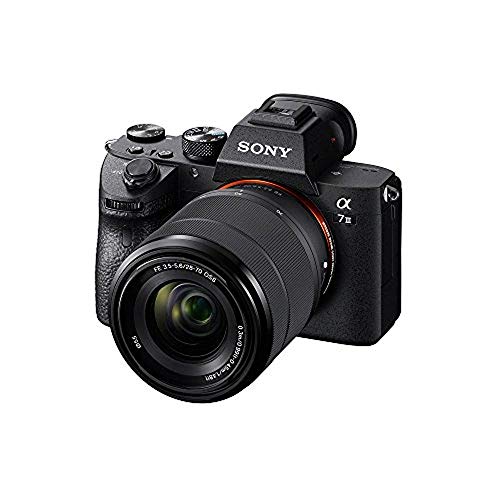
Sony Alpha a7 III Mirrorless Camera with 28-70mm Lens — Check price on Amazon. A solid, widely available option that fits this guide; confirm the exact kit contents and lens mount on the listing before ordering.
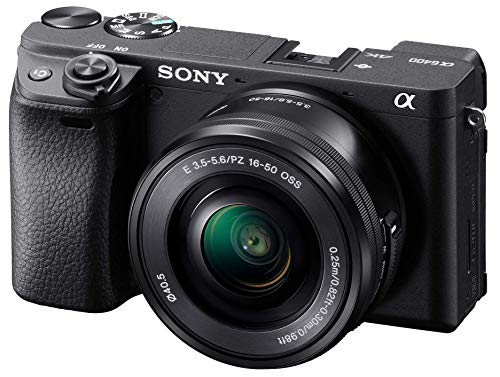
Sony Alpha a6400 Mirrorless Camera — Check price on Amazon. A solid, widely available option that fits this guide; confirm the exact kit contents and lens mount on the listing before ordering.

Fujifilm X-T30 II Mirrorless Camera with XF 18-55mm Kit — Check price on Amazon. A solid, widely available option that fits this guide; confirm the exact kit contents and lens mount on the listing before ordering.

Nikon Z 6II Full-Frame Mirrorless Camera — Check price on Amazon. A solid, widely available option that fits this guide; confirm the exact kit contents and lens mount on the listing before ordering.
Who Each Option Suits
Choose full frame if you shoot weddings, concerts, theatre, astrophotography or professional portraits; if shallow depth of field is your signature; or if clients and print sizes demand the cleanest possible files. Accept the lens costs as part of the decision, because they exceed the body cost over time.
Choose crop if you travel, hike, shoot wildlife or sports on a budget, prefer a small everyday kit, or are building your first serious system. You lose little in daylight, gain reach and portability, and keep thousands available for lenses, trips and tuition — the things that improve photographs most.
Final Recommendation
Sensor size is a system decision disguised as a specification. Full frame wins on physics — light, depth of field, ultimate quality — and crop wins on economics and physics of its own: size, weight, reach and price. Pick by your dominant subjects and your willingness to carry and fund the lenses, and you will be right. Pick by status, and you will own an expensive camera that stays home while a smaller one would have gone everywhere.
Equivalence, Worked Through One Portrait
Equivalence confuses until it is attached to a photograph. Take a portrait framed identically on both formats at the same distance. On full frame you might use an 85mm lens at f/1.8. To match that framing on APS-C you stand in the same place with roughly a 56mm lens; at f/1.8 it shows depth of field like the full-frame shot at about f/2.7 — noticeably deeper, with more background detail surviving. To match the blur exactly, the crop shooter needs roughly f/1.2 — which is why fast APS-C primes exist and why they cost what they do. Exposure, note, does not change: f/1.8 is f/1.8 for light-gathering per unit area on both; it is total light and depth of field that differ.
Run the same exercise for a landscape and the verdict inverts: the crop shooter at f/8 already holds depth of field the full-frame shooter needs f/11 to match, with correspondingly slower shutter speeds or higher ISO on the larger camera. Neither format cheats physics; each simply starts from a different square on the board. Once equivalence is intuitive, lens shopping becomes honest — you compare equivalent apertures and fields of view, and marketing loses its favourite fog machine.
Renting the Other Format: The Decisive Experiment
If your budget allows one experiment before committing, rent the format you do not own for a weekend of your real photography. Shoot your normal subjects, edit the files in your normal way, and print or publish at your normal sizes. Most photographers discover the difference is either smaller than forum wars suggest (daylight, moderate prints) or decisive in exactly the conditions they shoot most (a wedding photographer’s dusk receptions, a birder’s dawn hides). Both discoveries are valuable, and both are cheaper than a system switch.
While renting, weigh the kit — literally. Carry the full-frame bag on your normal route for a day, then the crop bag. The format debate is conducted in stops and millimetres, but it is settled, for many photographers, in kilograms at hour six of a travel day. The best sensor is the one in the camera you brought; format choice is, in the end, a prediction about your own behaviour — make it with data.
Equivalence Without the Arguments: What It Means for Your Shopping List
Equivalence is the idea that to compare formats fairly you must match field of view, depth of field and total light gathered, not just one number at a time. A crop-sensor camera with a 35mm lens at a wide aperture can produce a photograph that looks very much like a full-frame camera with a 50mm-class lens stopped down a little, in framing, depth of field and noise, provided the shutter speeds are adjusted to suit. This is not a trick and it does not make the formats identical in ownership. It means the full-frame advantage is best understood as headroom: the larger sensor can go further in the low-light and shallow-focus directions when it needs to, because its equivalent lenses exist at apertures the crop system cannot match. When photographers argue past each other about this topic, one is usually describing the headroom and the other is describing an ordinary photograph in good light, where the headroom was never used. Both are describing the truth.
For a buyer, equivalence turns into a practical lens question. List the photographs you most want to make, then check that each format has a lens that delivers that look at a size you will carry. A crop system with a fast prime may match a full-frame kit lens for portraits at a fraction of the weight. A full-frame system pulls clear only when you want the extremes: very shallow focus in low light, very clean files at high sensitivities, or the finest detail for large prints. Shopping by photographs rather than by sensor loyalty produces kits people keep.
Video crops, readout and the format inside the format
Video complicates the comparison because many cameras use only part of their sensor for some recording modes. A full-frame body may crop into its sensor for high frame rates or certain resolutions, temporarily behaving like a crop camera, while some crop bodies read out their whole sensor and produce beautifully oversampled footage. If video matters to you, compare the specific modes you will record in, not the badge on the body. Check which modes use the full width, which crop, and how much, because a camera bought for full-frame video that crops heavily in your favourite mode has quietly changed the comparison underneath you.
Printing, Cropping and the End Use of Your Files
Sensor debates often happen at a screen, zoomed in far beyond how any photograph will be seen. Step back to end use. For sharing online, for prints at ordinary sizes on a wall, and for books and magazines, both formats deliver more quality than the medium displays, and the differences that remain are about light and lenses, not format labels. Where full frame earns its keep at the output stage is cropping freedom and large printing in difficult light: a wildlife frame cropped hard from a clean full-frame file, or a big print from a dim wedding reception, holds together longer. Crop shooters answer, correctly, that their longer effective reach often means less cropping in the first place, and that a well-exposed crop file prints beautifully at sizes most homes can accommodate. The deciding question is embarrassingly practical: how large do you actually print, and how often? Answer honestly and the format argument loses most of its heat.
Dynamic range and editing headroom in practice
Modern sensors of both sizes offer generous dynamic range at their base sensitivities, and the gap between formats is smaller than the gap between a well-exposed file and a careless one. Full frame generally keeps cleaner shadows when you lift them in editing, which matters for landscape photographers who balance bright skies against dark foregrounds in a single frame. Crop files edited with the same ambition show their noise sooner, which good exposure discipline largely prevents. In both cases the skill that decides the result is exposing so the highlights survive and the shadows need only modest rescue. Format sets the size of the safety net; technique decides whether you fall into it.
Systems, Not Sensors: The Catalogues Behind the Choice
Nobody photographs with a sensor alone. Behind each format sits a catalogue of lenses, flashes and accessories, and the catalogues are not symmetrical. One maker’s crop line is a complete professional system with fast zooms and bright primes designed for the smaller sensor, while another maker’s crop bodies exist mainly as an entry ramp to a full-frame catalogue, with the best glass designed for the larger format and merely usable on the smaller. That distinction matters enormously. Buying into a committed crop system means lenses that are small because they were designed small. Buying into a transitional crop body means a sensible upgrade path but larger lenses in the meantime. Research the catalogue, not the sensor, and ask the question owners ask: if I stay with this format for five years, is there a lens here for everything I shoot?
Second-hand depth belongs in the same calculation. Full-frame lenses from the DSLR era adapt beautifully to mirrorless bodies and fill used shelves, which can make a full-frame kit cheaper to assemble patiently than headline prices suggest. Dedicated crop lenses, especially for the committed crop systems, hold a loyal following and a healthy used market of their own. Either way, the photographer who buys lenses slowly, used where sensible, ends up with the better kit on either format.
Portraits, Wildlife, Landscape and Video: The Verdict by Genre
Portraits are where full frame’s reputation was built, and the advantage is real but narrower than advertised. The shallower depth of field at a given framing lets a full-frame photographer separate a subject from a busy background more completely, and in low light at receptions and in homes the cleaner files show. Yet a crop camera with a fast prime lens, the combination many crop systems do superbly, produces portraits clients and families love, with background blur that satisfies everyone except photographers comparing at full magnification. The honest portrait verdict is that lenses and light decide first, format decides second, and a crop shooter who invests in one excellent portrait prime will out-shoot a full-frame owner using a slow kit zoom in poor light every single time.
Wildlife reverses the polarity. The crop sensor’s reach means a given telephoto lens frames distant animals tighter, and the smaller, lighter telephoto combinations that crop systems offer can be carried further into the places wildlife lives. Full frame answers with cleaner high-sensitivity files at dawn and dusk, when animals are most active, and with the option to crop into a very detailed file. Professional wildlife photographers work in both formats, often choosing by the specific trip: long hikes and hides favour crop reach and weight; low-light forests and ultimate print quality favour full frame. Any article that declares one format simply better for wildlife has not carried both up a mountain.
Landscape sits closer to a draw than either camp admits. Tripod work at base sensitivity is where sensors perform at their best and the gap is smallest, while dynamic range and resolution give full frame a gentle edge for very large prints and aggressive shadow recovery. Crop landscape kits are dramatically lighter over distance, which is a quality-of-photograph issue in itself, because the camera that reaches the remote viewpoint takes the better picture. Video, as noted elsewhere in this comparison, should be judged model by model and mode by mode rather than by format, with heat, readout speed and lens choice mattering as much as sensor dimensions.
The total kit weight audit
Do the audit most buyers skip. Write down the kit you would actually carry on your most common day out, body, two or three lenses, batteries and bag, in both formats, using real lens weights from the catalogues. The crop version of a typical enthusiast kit commonly saves enough weight to equal an extra lens, a litre of water or a small tripod. Then ask which you would rather have at hour five of a walk. Photographers are not being soft when they choose the lighter kit; they are choosing the kit that will be present for more photographs. Conversely, if your photography happens near a car, a studio or a venue, weight evaporates as a factor and full frame’s headroom can be had for free. Context decides, again.
Upgrading Later: Paths, Traps and Timing
Many photographers start on crop and move to full frame later, and the path is smoother in some systems than others. If your crop body accepts the same lenses as the maker’s full-frame bodies, your lens collection travels with you, and the upgrade becomes a body purchase rather than a system rebuild. Dedicated crop lenses may not cover a full-frame sensor, so a photographer planning an eventual move should favour dual-purpose lenses where the choice exists, accepting slightly larger glass now for continuity later. Photographers with no such plan should ignore this entirely and enjoy the smaller dedicated lenses; buying for a hypothetical future camera is how kits become heavy and expensive without becoming better.
There is also a case for skipping the intermediate step in the other direction. A photographer who knows, from rented experience, that their work needs full-frame headroom, and who buys crop first to save money, often spends more across five years than the photographer who bought once. The reverse trap exists too: the beginner who buys full frame immediately, then discovers the lenses they want are beyond their budget, owns a magnificent sensor behind a slow zoom. The format decision is therefore really a lens-budget decision wearing a sensor costume, and it should be made with the lens list open on the table.
One sensor, two philosophies: a closing comparison
Think of full frame as buying margin and crop as buying efficiency. Margin helps when conditions are hostile: bad light, fast subjects, big prints, heavy cropping. Efficiency helps every ordinary day: lighter bag, longer reach, lower cost, more lenses owned sooner. Most photography, for most people, is ordinary days punctuated by occasional hostile conditions, which is why both formats thrive and why the photographers happiest with their choice are the ones who counted their ordinary days honestly before buying the margin.
Autofocus, Burst and the Working Differences Nobody Puts on the Sensor Chart
Because both formats exist inside the same camera ranges, their working features often differ by model tier rather than by sensor, but a few patterns follow the format. Full-frame bodies at a given generation tend to carry the maker’s fastest processors, deepest buffers and most advanced subject recognition, because they sit at the top of the range. Crop bodies at the enthusiast tier have closed that gap dramatically, and in some ranges the crop body is the newer, faster tool. The lesson is to compare the actual models on your shortlist rather than assuming the format predicts the features. A recent crop body can out-focus and out-shoot an older full-frame body in every working respect except sensor headroom, and it will do so at a lower price with smaller lenses, which is why so many upgraders pause at exactly this point in the catalogue.
Depth of buffer and card speed matter to action shooters in both formats, and here the file sizes work in crop’s favour: smaller files clear faster through the same card and processor, extending effective bursts. Full-frame shooters working at full resolution in fast action lean on the fastest card formats and accept the cost as part of the format. None of this is decisive for most photographers, but sports and wildlife buyers, who live at the extremes of burst shooting, should test the exact bodies with the exact cards they intend to use.
Flash, studio work and tethering
In the studio the format gap nearly vanishes, because light is controlled, sensitivities stay low and apertures sit in the middle range where every modern sensor excels. Product, portrait and still-life photographers choose on other grounds entirely: tethering reliability, screen quality for checking focus, lens choice for their working distances, and the simple economics of the kit. If anything, crop’s deeper depth of field at a given framing is a quiet advantage for product work, where front-to-back sharpness is the goal and stopping down costs light. Studio flash removes even the low-light argument, which is why studio-heavy photographers are among the least format-obsessed people in photography.
Resale, Rental and the Ecosystem Around Each Format
Both formats enjoy deep rental availability in major cities, which matters for the try-before-you-commit advice given elsewhere in this guide: you can rent a full-frame body with your dream lens and a crop body with its equivalent for the same weekend and settle the question with your own photographs. Resale follows demand, and demand currently favours full frame at the top and committed crop systems in the middle, with transitional crop gear, bodies designed mainly as a first step upward, losing value fastest because their owners all sell them for the same reason at the same time. Buy any format at a fair used price and the resale story becomes gentle in both camps. Buy new at launch and you are paying for novelty, not format, and novelty is the fastest-depreciating feature in photography.
A note for film and hybrid shooters
Photographers who also shoot film, or who adapt vintage lenses, meet one more format consideration. Vintage lenses were designed for the full-frame area, and on a crop body they show only their central portion, which is often their sharpest and best-behaved region, a hidden benefit, while their character at the edges, the swirl and falloff many people shoot them for, is cropped away. On full frame you get the lens as its designer saw it, aberrations included. Neither is better; they are different crops of the same classic, and adapter shooters should choose knowing which version of their favourite old lens they actually want to live with.
Real Owners, Real Switches: What People Report a Year Later
Photographers who move from crop to full frame most often report three changes, and notably, image quality in daylight is not the headline. The first is confidence in poor light: evening events, indoor family life and winter afternoons stop being negotiations. The second is depth of field as a creative tool rather than an accident, particularly for portraits. The third, mentioned almost as often, is weight regret on long days, solved by some with a smaller full-frame prime kit and by others by quietly keeping the crop body for travel. Photographers who move the other way, from full frame to a committed crop system, report the mirror image: relief at the size and cost, delight in lens choice designed for the format, and a narrower low-light margin they manage with faster lenses and better technique. Almost nobody in either direction reports that their photographs became unrecognisable. The work looks like their work, because it is.
That last observation is the comparison’s most useful truth. Format changes the boundaries of what is easy, not the identity of what is good. A photographer’s subjects, patience and eye cross the border with them intact. Buy the format whose easy zone contains your most frequent photography, and whose difficult zone contains only your rare photography, and a year later you will report what switchers in both directions report: that the camera stopped being the topic, which is the surest sign the choice was right.
Questions to settle in the shop, format edition
- With the lens you will use most fitted, can you hold each candidate comfortably for a full minute at eye level?
- Does the crop system’s catalogue contain the fast prime and the telephoto you can name wanting, at weights you accept?
- Does the full-frame system’s standard zoom, the lens most owners actually live with, fit your bag and your budget without resentment?
- Have you seen your own test files from both, shot in your kind of light, at full size on your own screen?
- If you plan to upgrade format later, do the lenses you are buying today survive that move?
Five honest answers outweigh fifty specification rows, because they are about your hands, your subjects and your money rather than about sensors in the abstract.
Lenses Designed for One Format, Used on the Other
A final practical topic confuses many buyers: what happens when lenses and formats mix. Full-frame lenses work on crop bodies, projecting a larger image circle than the smaller sensor needs, and using only the central, usually sharpest, part of the lens. The costs are size and price, because you carry glass you do not fully use, and the benefit is a collection that survives a later format change. Crop-designed lenses on full-frame bodies are the restricted direction: many cameras offer a crop mode that uses the central portion of the sensor with such lenses, which works but spends resolution, and some combinations vignette heavily if used at full frame. Adapters and focal reducers exist in some systems to reclaim the wider view, a specialist topic worth researching only if you own the glass already. For a new buyer the rule is simple: buy lenses designed for the format you are committing to, unless a planned migration makes dual-purpose glass the deliberate exception.
The Decision, Compressed Into One Honest Exercise
Take your last two hundred photographs, on any device, and sort them roughly by light: bright daylight, ordinary indoor light, and genuinely dim conditions. Then sort them again by how many were cropped hard or wished-for closer. Those two piles are your format answer in physical form. A library dominated by daylight and reach is a crop library, whatever camera took it. A library full of dim rooms, evenings and portraits asking for separation is asking for full-frame margin. Most people have never looked at their own photography as data, and doing so once is worth more than a month of forum reading, because forums describe other people’s piles. Yours is the only one you are buying a camera for.
If the piles are evenly split, you are the genuinely hybrid photographer both formats court, and the tiebreakers elsewhere in this guide, weight, lens catalogues and budget, should decide without guilt. An even split also suggests the wisest purchase pattern of all: start with the format whose lenses you prefer, since lenses are the long-term commitment, and know that the other format will still be there, better and cheaper, if your piles change in five years. Photography outlasts any single decision, and the photographers who thrive are the ones who keep making photographs while the equipment question settles itself in the background.
A Word on Future-Proofing, Which Both Camps Oversell
Buyers often ask which format is the safer long-term bet, as if one of them were about to be discontinued. Neither is. Crop systems include some of the most successful camera lines ever made, with committed lens development, and full frame is the industry’s flagship format across every major maker. Your lenses in either format will be usable, serviceable and saleable for many years. The realistic future-proofing questions are smaller and more personal: whether your chosen maker’s catalogue is still growing in the direction of your interests, whether third-party support exists for the accessories you like, and whether your own interests are stable enough that any five-year bet makes sense. Answer those, and format longevity stops being a reason to hesitate. Cameras date; photographs do not, and the best hedge against an uncertain equipment future has always been a large body of work you are proud of, taken with whatever you chose.
How the choice feels after the first thousand frames
Specifications fade quickly in ownership; what remains is a set of feelings at particular moments. Full-frame owners feel it at the evening event when the camera simply copes, and at the portrait session when the background melts exactly as imagined. Crop owners feel it on the long walk when the bag is forgotten, and at the distant subject that fills the frame without a heavier lens. If you can, borrow toward the feeling you expect to need more often, because a thousand frames in, you will not remember the comparison table at all. You will remember whether the camera was there, and what it did when the light was unkind, and those two memories are the whole of this comparison wearing everyday clothes.
One last encouragement applies whichever way you decide. Photographers tie themselves in knots over this choice because it feels permanent, and in the ways that matter it is not. Lenses hold value, bodies are replaced, and a photographer who shoots seriously for a decade will very likely own both formats at different times, for different chapters of their work. The only genuinely permanent part of the decision is the photographs you take while you own the camera, and both formats, in competent and enthusiastic hands, take wonderful ones. Decide with the evidence in this guide, decide with your own last two hundred photographs open beside you, and then close the comparison and open the camera box. The light is not waiting for the perfect sensor, and neither should you.
Related Guides
- best cameras for photography under 1000
- best cameras for landscape photography under 1000
- best cameras for night photography under 1000
- best cameras for wildlife photography
- best cameras for travel
Frequently Asked Questions
Does full frame always produce better image quality?
In low light and extreme dynamic range, yes — its larger sensor gathers more light, giving cleaner high-ISO files and deeper shadow detail, roughly a one-stop advantage over APS-C of the same generation. In good light the difference shrinks to near invisibility for most uses, and lens quality, light and technique dominate. Full frame is better at the margins; it is not better in every photograph.
What does a 1.5x crop factor mean for my lenses?
It means the field of view narrows as if the focal length were 1.5 times longer: a 35mm lens on APS-C frames like a 52mm on full frame. The lens’s aperture and depth of field do not change, but your framing does. It is an advantage for telephoto subjects like wildlife and a disadvantage for wide interiors and landscapes, where you need wider lenses to compensate.
Can I use full-frame lenses on a crop camera?
Yes — within the same mount, full-frame lenses mount and work on crop bodies, simply showing their cropped central view. This makes them a sensible buy if you plan to upgrade formats later. The reverse is limited: crop-designed lenses on a full-frame body usually vignette heavily or force a crop mode that discards much of the sensor, so they are a poor long-term pairing.
Is crop sensor better for wildlife photography?
For most budgets, yes. The crop factor turns affordable telephoto zooms into long-reach tools, crop bodies are lighter to hand-hold all day, and the deeper depth of field helps keep animals sharp. Professional wildlife photographers often use full frame with very long, expensive lenses for ultimate low-light quality at dawn and dusk — but the crop route reaches similar framing for a fraction of the cost and weight.
Do professionals use crop sensor cameras?
Many do, deliberately: photojournalists value smaller kits, sports shooters value reach, and Fujifilm’s entire system is APS-C, used professionally worldwide. Micro Four Thirds also has professional adherents in video and travel. The idea that professionals require full frame is marketing residue; professionals require reliability, lenses and results, and several formats deliver all three.
Which format is better for video?
Both produce excellent video. Full frame offers shallower depth of field and superb low-light footage but can demand more focus skill and some models crop the sensor at high frame rates. Crop formats offer deeper natural focus, smaller lenses and oversampled 4K in many mid-range bodies. Choose by the specific model’s video features — resolution, frame rates, stabilisation and overheating behaviour — rather than sensor size alone.
Is crop sensor better for macro photography?
It can be, for two practical reasons. The crop factor makes a given macro lens frame small subjects larger, which helps with insects and details, and the deeper depth of field at a given framing is often an advantage when only a sliver of a subject would otherwise be in focus. Full frame counters with cleaner files for the high sensitivities macro work sometimes demands and more cropping freedom. Specialist macro photographers work happily in both formats; working distance, lighting and patience matter far more than the sensor behind the lens.
Will I notice the difference in everyday family photos?
In good light, honestly, very little. Both formats produce family photographs that print and share beautifully, and the differences hide in the difficult frames: the dim restaurant, the fast child, the backlit group. If your family photography is mostly outdoors and occasions in decent light, choose on size and price with a clear conscience. If your family’s life happens in the evenings and indoors, full frame’s margin will show up in exactly the photographs you care about most.
Does sensor size affect battery life?
Indirectly. Full-frame bodies are often larger, which allows larger batteries, but they also power larger sensors, finders and processors. In practice, battery life follows the camera’s design and how you shoot far more than its format, and both camps contain bodies that last a day and bodies that want a spare by lunch. Check the specific models, carry a spare either way for important days, and treat battery life as a model question wearing a format costume, like several other topics in this comparison.


