If you are asking what is ibis in a mirrorless camera, you are asking about the feature that quietly rewired low-light photography: IBIS — in-body image stabilisation — floats the sensor on a motorised stage and shifts it in real time to cancel your hand shake. Mirrorless cameras are its natural home, because their sensors already sit on precision mounts with electronic control, and the payoff is large: sharp handheld shots at shutter speeds several stops slower than unstabilised technique allows, with any lens you mount, including vintage glass with no electronics at all.
This guide explains how IBIS works specifically in mirrorless bodies, how it cooperates with stabilised lenses, what its stop figures promise in real hands, and its honest limits — subject motion chief among them. It also covers the settings that matter: when to switch it off, how panning modes work, and why video shooters combine IBIS with electronic stabilisation. The general-camera version of this topic lives at what is ibis on a camera; here we go mirrorless-deep.
Disclosure: As an Amazon Associate, kajuandouglas.com earns from qualifying purchases. Links to Amazon on this page are affiliate links; they cost you nothing extra. Listing details such as price and availability change often, so check the current Amazon listing before you buy.
How IBIS Works in a Mirrorless Body
In a mirrorless camera the sensor assembly is not bolted down; it rides on a stage driven by voice-coil motors, suspended so it can shift in plane and rotate slightly. Gyroscopes sample the camera’s movement hundreds of times per second, and the processor commands the stage to move the sensor against your shake, keeping the lens’s image registered on the same photosites throughout the exposure. Because the sensor also supplies the viewfinder image, you see the stabilisation working — the preview steadies visibly when you half-press the shutter on many models.
Five-axis systems correct pitch and yaw (the classic angular shakes), roll (rotation around the lens axis, which no lens-based system can fix), and X/Y shift (most relevant at close focusing distances). The engineering boundary is the lens’s image circle: the sensor can only roam where the lens still projects good image, which is why IBIS effectiveness varies with lens design and why it arrived first in smaller formats, whose sensors need smaller excursions.
In this guide
IBIS Plus Lens Stabilisation: The Coordinated Duet
Many mirrorless lenses carry their own stabilisation (OIS), and modern systems coordinate the two rather than letting them fight: typically the lens handles the large, slow movements it is best placed to correct — especially at telephoto lengths, where its view of shake is magnified — while the body adds roll and shift correction and fine-tuning. Brands market these unions under their own names, and the combined figures exceed either system alone, with the greatest gains exactly where handheld shooting is hardest: long lenses at dusk.
Practical implications follow. A stabilised lens on an IBIS body is the strongest handheld combination; an unstabilised fast prime on an IBIS body is nearly as liberating, because the body covers it completely — this is why IBIS bodies pair so happily with compact primes. When mixing brands via adapters, coordination may not translate, and the lens’s stabilisation may need switching off to avoid conflict; your adapter’s documentation is the authority. One system active and correct beats two systems arguing.
Stop Ratings in Real Hands
Manufacturers quote stabilisation in stops under a standard test (CIPA), with current mirrorless systems claiming from about five to eight stops. Read those numbers as comparisons between systems, not personal guarantees: the standard uses specific lenses and machine-steady ‘hands’. Your real limit depends on focal length, stance, fatigue and wind. The reliable method is a home test — photograph a detailed target at descending shutter speeds, several frames each, and find where your sharpness collapses; most photographers land one to two stops inside the headline figure, still a transformation: a 50mm-equivalent lens that once demanded 1/60s now delivers at 1/8s or slower.
Where IBIS pays rent: dim interiors, museums and churches that ban tripods, blue-hour cityscapes, and any low-light scene whose subject holds still. Where it cannot help: anything that moves during the exposure — children, dancers, athletes, foliage in wind — because the sensor tracks your shake, not the world’s motion. Pair IBIS with subject-appropriate shutter speeds and it feels like a superpower; ask it to freeze motion and it will politely decline.
Settings, Video and Edge Cases
Leave IBIS on for handheld stills; switch it off (or to the tripod mode, where offered) on a solid tripod, where an idle system can drift and soften long exposures — though many recent bodies detect tripods and settle automatically. Use the panning mode for tracking shots: it stabilises vertical shake while permitting horizontal follow-through. For lenses without electronic contacts — vintage and manual glass — enter the focal length in the IBIS menu so the system’s movements are scaled correctly; a wrong focal length under- or over-corrects visibly.
Video adds electronic stabilisation on top: the camera crops slightly and warps the frame digitally to smooth walking motion, with IBIS handling the high-frequency jitter. The combination approaches gimbal smoothness for casual work, at the cost of a small crop and occasional warping at frame edges with wide lenses — visible as ‘jello’ in aggressive modes. Choose the gentlest mode that looks good, keep movements slow, and remember that overheating, not stabilisation, is the usual limit on long takes: see how to fix mirrorless camera overheating.
Gear for This Guide
Four IBIS-equipped mirrorless bodies spanning full frame and crop formats — their coordination with stabilised lenses is the duet described above:

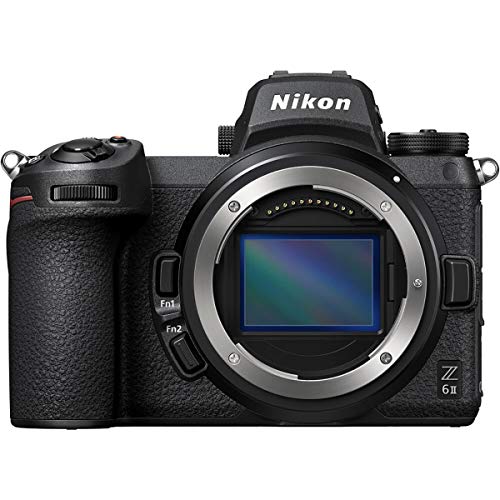
Nikon Z 6II Full-Frame Mirrorless Camera — Check price on Amazon. A solid, widely available option that fits this guide; confirm the exact kit contents and lens mount on the listing before ordering.

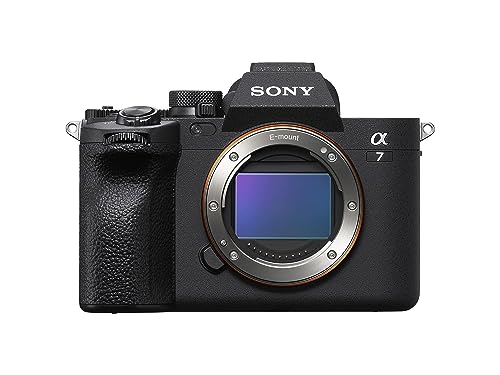
Sony Alpha 7 IV Full-Frame Mirrorless Camera — Check price on Amazon. A solid, widely available option that fits this guide; confirm the exact kit contents and lens mount on the listing before ordering.

Canon EOS R10 Mirrorless Camera with RF-S 18-150mm Lens Kit — Check price on Amazon. A solid, widely available option that fits this guide; confirm the exact kit contents and lens mount on the listing before ordering.

Panasonic LUMIX G100 4K Mirrorless Camera — Check price on Amazon. A solid, widely available option that fits this guide; confirm the exact kit contents and lens mount on the listing before ordering.
Common Misconceptions
Misconception one: IBIS makes tripods obsolete. Long exposures for water, stars and light trails run far beyond stabilisation’s reach, and on a tripod IBIS is usually switched off. What IBIS obsoletes is the tripod for the dusk cityscape and the dim interior — a large, specific territory. Misconception two: IBIS freezes action. It cancels camera shake only; moving subjects blur at slow shutter speeds regardless, and misreading this causes more disappointment than any other stabilisation myth.
Misconception three: the highest stop figure wins every comparison. Ratings are laboratory maxima; lens coordination, focal length and your own technique move real results by more than the gap between rival claims. Misconception four: IBIS harms image quality by moving the sensor to image-circle edges. In practice the excursions are small and lenses are designed with margin; any theoretical edge softening is invisible next to the sharpness IBIS rescues from shake.
What Is IBIS in a Mirrorless Camera When the Lens Has No Stabilisation?
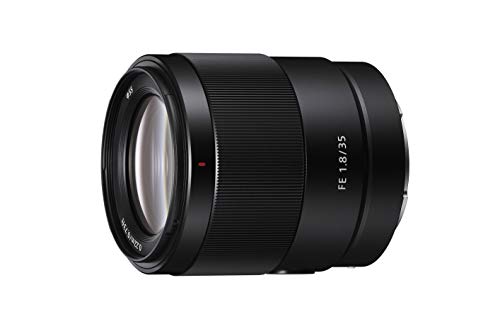
This pairing — IBIS body, unstabilised lens — is where the technology earns its reputation, because it describes the classic fast prime kit: a 35mm or 50mm f/1.8 with no stabilisation of its own, transformed at dusk by the body’s floating sensor. The wide aperture gathers light; IBIS stretches the usable shutter speeds downward; together they produce handheld low-light results that once required a tripod or a much larger sensor. It is also the vintage photographer’s configuration: manual lenses from any era, stabilised as if designed yesterday, provided the focal length is entered in the menu so corrections scale correctly.
The configuration has one discipline: zooms without contacts need their IBIS focal-length setting updated as you zoom, and forgetting leaves the system correcting for the wrong lens — visible as either residual shake or an odd swimming in the preview. Prime shooters set it once per lens change. Treat the focal-length entry as part of mounting the lens, like seating it until the click, and the body-plus-dumb-lens combination behaves like a native system.
Choosing Between IBIS Bodies: What to Compare in the Shop
If IBIS is a deciding feature in a purchase, compare it empirically rather than by brochure. In the shop, mount a standard lens, set a slow shutter speed — a quarter of a second is a fine stress test — and photograph the store’s signage or a printed card at arm’s length, several frames per body, then compare at full magnification on the rear screen. Note also the preview’s behaviour: some systems steady the viewfinder image continuously, others only during exposure, and the continuously steadied preview is a genuine compositional pleasure for macro and telephoto work. Check the IBIS menu’s sophistication too — panning modes, focal-length memory for manual lenses, and coordination options with stabilised lenses all signal how seriously the maker takes the feature.
Finally, weigh IBIS against the rest of the body without letting it veto sense: a superb IBIS in a camera whose lenses you cannot afford helps less than a modest IBIS inside your chosen system. Stabilisation is one criterion among the mount, autofocus and handling decisions in how to choose a mirrorless camera — decisive for low-light handheld shooters, merely welcome for everyone else.
The Five Axes, Explained One by One
Manufacturers describe stabilisation in axes, and the number has meaning worth unpacking, because each axis corrects a distinct kind of movement your hands actually make.
Pitch and yaw: the original two
Pitch is the nodding movement, up and down; yaw is the turning movement, left and right. These are the rotations that lens stabilisation has corrected for decades, and they dominate at longer focal lengths, where a tiny angular tremor moves the image a long way across the sensor. Two-axis correction, whether in lens or body, addresses the shake that matters most to telephoto photographers, which is why lens-based systems remain so effective for that work even in an IBIS era.
Roll: the axis only the body can reach
Roll is rotation around the lens’s own axis — the horizon tilting as your hands twist slightly. A lens element cannot correct roll, because shifting glass sideways does not rotate the image; only moving the sensor itself, rotating it in its mount, can undo it. Roll correction is therefore IBIS’s unique signature, and it shows its value in video, where a slowly tilting horizon is unmistakable, and in careful handheld stills, where it quietly keeps horizons honest at shutter speeds that would otherwise wander.
X and Y shift: the close-range axes
The final two axes are simple sideways and vertical translations of the camera. At ordinary distances their effect is negligible, which is why early systems ignored them, but at macro distances a millimetre of translation is a large fraction of the frame, and shift correction becomes genuinely valuable. Five-axis IBIS earns its name by addressing all of these — the two classic rotations, roll, and the two shifts — and macro photographers are among its most legitimate enthusiasts for exactly this reason.
IBIS Across Subjects: Who Gains What
Stabilisation is not a uniform blessing; its value varies by subject so dramatically that some photographers should pay for the best available and others should barely consider it.
Still life, interiors, and architecture
Static subjects are IBIS’s home ground. Handheld photographs of interiors, museum pieces, buildings at dusk, and products on tables can be taken at shutter speeds that once demanded a tripod, which changes what a walkaround kit can do. Combined with a bright prime lens, a good IBIS system turns a camera into a low-light instrument for everything that holds still — which, in travel and documentary work, is a great deal of the world.
People and events: the honest limit
IBIS steadies the camera, not the subject, and people move. At the slow shutter speeds IBIS makes possible, a sharp room will contain beautifully rendered, gently blurred guests. Event photographers therefore gain less than the ratings promise: their shutter speeds are set by human motion, not by hand shake, and their real low-light tools remain fast lenses and high sensitivities. Knowing this saves event shooters from paying a premium for a specification their subjects render irrelevant.
Video: where IBIS changes character
For video, stabilisation is judged not by sharpness but by the quality of movement it leaves behind. IBIS excels at removing high-frequency jitter from handheld footage and at smoothing static shots into near-tripod calm. Walking footage is its examination question: aggressive correction can introduce a warping, elastic quality at frame edges as the sensor reaches its travel limits, which is why many video-focused bodies offer gentler correction modes. The best video stabilisation is often a partnership — IBIS for the tremor, a gimbal or simply good walking technique for the journey.
Macro and close work
At macro magnifications every movement is amplified, focus depth is measured in millimetres, and the shift axes earn their keep. IBIS does not make handheld macro easy, but it makes it possible in a way it simply was not before, particularly for natural-history subjects where a tripod cannot be placed in time. Combined with focus aids, it has quietly created a genre of handheld close work that a generation ago required a bench, a rail, and a very patient insect.
The Sensor on Its Springs: How the Mechanism Lives and Ages
Understanding that your sensor floats on a powered mechanism explains several behaviours owners notice and occasionally worry about.
The rattle, the clunk, and other honest noises
Many IBIS bodies make a soft rattle or clunk when handled powered off, because the unpowered sensor rests loosely in its travel range. This is normal, documented by makers, and not a defect to be diagnosed at midnight. When powered, the mechanism holds the sensor centred and ready. Treat the sound as the mechanism’s signature; the time to be concerned is a change in the sound after a drop, accompanied by stabilisation errors or visibly shifted images — that combination earns a service visit.
Power, heat, and the working sensor
Holding and moving a sensor costs power and generates a little heat, two currencies mirrorless cameras already budget carefully. This is one reason stabilisation modes matter: a camera stabilising continuously for video is spending more than one waiting for stills, and in hot conditions the stabilisation system is a minor contributor to the thermal story told elsewhere in this guide family. None of this should deter use — the system exists to be used — but it explains battery differences that puzzle owners comparing stills days with video days.
Calibration and care
IBIS needs no user maintenance, no cleaning access, and no adjustment in normal life. It does deserve the same respect as the sensor it carries: hard impacts are its enemy, and a body that has taken a serious fall should have its stabilisation checked by photographing a detailed subject at a slow shutter speed and reviewing at full magnification. Even, effective correction across the frame is health; correction that works in the centre and smears one side is a symptom worth a technician’s opinion.
Testing IBIS Yourself: A Ten-Minute Evaluation
Stabilisation claims are quoted under laboratory conditions with specific lenses and targets. Your hands, your lens, and your subjects produce your number, and measuring it takes ten minutes with any camera you own or are considering.
The shutter-speed ladder
Photograph a detailed, static subject — a bookshelf serves perfectly — at your lens’s ordinary working focal length, taking three frames at each shutter speed as you descend step by step from fast to slow, with stabilisation on. Review at full magnification and find the slowest speed at which most frames are truly sharp. Repeat with stabilisation off. The distance between those two speeds is your stabilisation, in stops that mean something, and it will differ from the brochure in a direction that teaches you how much of the claim your technique collects. Repeat the test at your longest focal length, where the numbers will humble both settings and instruct you most.
Reading the failures
Look at how the unsharp frames fail. Uniform directional smearing suggests the correction was overwhelmed evenly; a sharp centre with smeared edges suggests the sensor reached its travel limits; occasional sharp frames among blurred ones at the same speed reveal the probabilistic nature of the slow end, where technique and luck share the credit. That last pattern matters practically: at borderline speeds, taking three frames and keeping the sharp one is a legitimate, professional use of stabilisation, not a confession of failure.
Testing video stabilisation honestly
Walk a familiar route filming at your usual focal length, then review for the three signatures: high-frequency jitter, which IBIS should remove; slow sway, which it should soften; and edge warping during turns, which reveals the correction working at its limits. Compare correction modes if the body offers them, because the strongest mode is not always the most natural-looking, and video rewards natural over strong more often than stills photographers expect.
IBIS and the Rest of Your Technique
Stabilisation multiplies good technique and cannot substitute for it. The photographers who extract the most from IBIS are, without exception, the ones whose handheld fundamentals were sound before it arrived.
Stance, grip, and breath
Feet placed, elbows anchored against the body, the camera drawn into the face rather than held out at arm’s length, and the shutter pressed during a natural exhale: these unglamorous fundamentals reduce the shake IBIS must correct, which extends its effective range further than any specification difference between rival systems. A stabilised camera held badly at arm’s length on a phone-style grip will lose to an unstabilised camera held classically, and the margin is not small. Learn the hold first; let the mechanism finish the job.
When to turn it off, revisited practically
Beyond the tripod case covered in the main guide, stabilisation earns switching off when it fights intention: deliberate pans, where some bodies offer a panning mode that corrects only the vertical axis, and certain long-exposure and light-trail work where the correction’s tiny movements soften what stillness would keep sharp. The habit to build is not a rule but a question, asked whenever the camera goes on a support or the shutter speed climbs very high or the movement becomes deliberate: what is the stabilisation correcting right now, and do I want it corrected?
IBIS as a teacher
There is a quieter benefit: by reviewing which shutter speeds produce sharp results over months, IBIS teaches you your own shake — its speed, its direction, its worsening with fatigue, coffee, and cold. Photographers who learn that portrait of themselves shoot better with every camera, stabilised or not, because they know when to raise the shutter speed, when to brace against a wall, and when the honest tool is a tripod. The mechanism’s greatest gift may be the self-knowledge it generates as a by-product.
IBIS in the System Wars: How Makers Differ
Every major mirrorless system now offers in-body stabilisation, but the implementations differ in ways that matter to specific photographers, and the differences are more interesting than the headline stop figures.
Travel range and lens communication
Bodies differ in how far the sensor can travel, which decides correction strength at the extremes and the size of the image circle a lens must cover. They differ, too, in how completely they communicate with lenses — the best coordinated systems share focal length, focus distance, and lens correction data continuously, dividing the work between lens and body in real time, while simpler implementations stabilise bravely but blindly. When comparing bodies for stabilisation specifically, the quality of that conversation matters more than the brochure’s stop count, and it is best judged by the ladder test on your own most-used lens.
Video-first versus stills-first tuning
Some makers tune their stabilisation primarily for video smoothness, accepting gentler stills correction; others chase stills ratings and offer video modes as a separate, calmer personality. Neither is wrong, but the hybrid shooter should know which personality a body was raised with, because it predicts where the compromises will appear. Reading owner experience from photographers who share your stills-to-video ratio is worth more here than any laboratory measurement, since the experience of stabilised movement is partly aesthetic and resists pure quantification.
The mount’s image circle and future lenses
A stabilised sensor moves within the lens’s projected image, so the mount’s image circle must exceed the sensor’s size by the travel margin. This quiet fact shapes lens design across every IBIS system: lenses are designed to cover the sensor’s whole journey, not merely its resting position. It is also why extreme correction at the frame’s corners can soften slightly on some combinations — the image at the circle’s edge is the lens’s weakest — and why the effect, when it appears, is a property of physics rather than a fault in your particular body.
Common IBIS Problems and Their Real Causes
Stabilisation generates a small folklore of complaints. Most trace back to a handful of causes that are easy to check once they are named.
Sharp centre, smeared corners in video
Usually the sensor working at its travel limits during walking or panning, with the frame’s edges paying for the centre’s calm. The remedies are gentler correction modes, wider focal lengths for walking shots, and slower, smaller movements from the operator. It is the signature of a system doing its best at the edge of its physics, and it responds to technique more than to settings archaeology.
Blur that arrives only in bursts
If the first frame of a burst is sharp and later frames soften, or the reverse, suspect the interaction between stabilisation and shutter timing — the mechanism still settling, or a mode designed for single frames being asked for sequences. Check the body’s stabilisation options for burst or continuous-shooting variants, and test at your working frame rate rather than assuming the single-frame ladder test told the whole story.
The photograph that is sharp everywhere except the subject
The eternal one: the camera was steadied beautifully and the subject moved. No stabilisation setting addresses it, because nothing was wrong. Keep this diagnosis first in your mental list whenever a slow-shutter photograph disappoints — it is the most common cause, the easiest to confirm from the image itself, and the one whose cure, a faster shutter speed, costs nothing but a little sensitivity. IBIS’s honest biography includes all the photographs it never had the power to save.
IBIS for Specific Cameras in Your Bag: A Photographer’s Field Notes
Beyond systems and specifications, stabilisation has a set of small, practical behaviours that owners discover one shoot at a time. Collecting them here saves you the discovery process.
Focal length settings and zoom lenses
With manual lenses, the focal length you enter in the menu is the one the system believes; with a zoom lens lacking electronics, the honest practice is to set the length you are actually using and update it when you zoom significantly, because correction tuned for a wide setting under-corrects at the long end and can over-correct in reverse. Native electronic zooms report their length continuously and spare you the bookkeeping — one of the invisible conveniences of staying within a system’s own glass.
Stabilisation and flash, filters, and hoods
IBIS works happily with flash, where its contribution is to the ambient portion of the exposure rather than the frozen flash portion. Polarising and neutral-density filters change nothing about the mechanism, though the slower shutter speeds filters invite are exactly where IBIS earns its living in landscape work. Lens hoods, surprisingly, enter the story only through handling: a large hood changes the camera’s balance and your grip, and grip, as established, is half the stabilisation system. Everything about IBIS, pursued far enough, returns to the hands.
The airport, the vehicle, and transport vibrations
Power the camera down for transport, so the sensor rests parked rather than being held or rattling through journeys, and never leave IBIS working against a vehicle’s constant vibration for long periods — photographing from a moving car or boat asks the system to fight a motion larger than its travel, and the results, and occasionally the mechanism’s temper, suffer. On boats and vehicles, the winning combination is usually a fast shutter speed with stabilisation in its gentlest mode or off, judged by the ladder test’s logic applied to a moving platform.
The Short Answer, One Last Time, With Everything Added
IBIS is the camera moving its sensor, on a powered floating mount, in five axes, many times a second, to cancel the movements of your hands. It gives the handheld photographer slower shutter speeds for still subjects, calmer video, steadier horizons, and new life in old lenses. It does not freeze moving subjects, replace fast glass, or excuse poor technique, and it asks in return only that you set it thoughtfully, switch it off when stillness is already perfect, and hold the camera like you mean it.
Judged as a whole, it is one of the defining technologies of the mirrorless era — not because its stop figures are large, but because it quietly changed which photographs are possible without a tripod, for every photographer, with every lens they own. Understand it as this guide has laid it out — mechanism, axes, limits, and habits — and you will extract from it everything its engineers put there, which is considerably more than most owners ever collect.
A Stabilisation Decision Guide for Your Next Lens or Body
When stabilisation is the deciding factor in a purchase, a short sequence of questions cuts through the competing claims more reliably than any comparison of stop figures.
Ask these, in this order
- What do I photograph, and does it hold still? Static subjects collect IBIS’s full value; moving ones collect almost none.
- Which focal lengths dominate my work? Long lenses argue for strong lens-based or coordinated correction; wide and standard lengths are IBIS’s heartland.
- How much of my work is video, and of what kind? Static and slow video adores IBIS; walking video asks for its gentler modes or a partner gimbal.
- Do I own, or dream of, older manual lenses? If so, a body with excellent IBIS and easy focal-length entry multiplies their usefulness overnight.
- What did my own ladder test say? Your measured stops, on your lens, in your hands, outrank every number printed by anyone.
Worked through honestly, those five questions locate stabilisation correctly in your personal hierarchy of features — sometimes at the top, sometimes as a pleasant default — and a feature correctly located is a feature correctly paid for. The photographers who regret stabilisation purchases are rarely those who bought too much or too little correction; they are those who bought it for subjects it could not help, a mistake the first question alone prevents.
The last word on a quiet technology
IBIS rarely appears in the stories photographers tell about their pictures, and that invisibility is its triumph. It works in the margins of a thousand ordinary frames — the interior that stayed sharp, the dusk portrait that held, the video that did not tremble — asking no credit and changing the outcome all the same. Technologies that disappear into the work are the ones worth understanding deeply, because you will use them, unthinkingly and gratefully, for as long as you photograph.
Stabilisation Etiquette: Courtesy, Quiet, and Working Around Others
A lighter but genuine closing topic: stabilisation changes how a camera can be used in company. The silent, tripod-free capability IBIS provides lets photographers work in places where a tripod would obstruct, announce, or be forbidden — galleries, ceremonies, theatres, and crowded streets among them. Used with courtesy, it is nearly invisible; the camera stays at the eye, the photographer stays in one place, and no legs sprawl across anyone’s path. That discretion is part of the technology’s real value in the world, and it pairs naturally with the mirrorless camera’s silent shutter to make a style of photography that disturbs almost nothing it records.
There is a corresponding responsibility: a stabilised camera at slow shutter speeds in dim, sacred, or solemn places should still respect the room’s rules about photography itself, which no technology suspends. IBIS earns photographers access by being unobtrusive; keeping that access, for everyone who follows, means being unobtrusive in conduct as well as in equipment. The mechanism steadies the camera. The photographer’s judgement steadies everything else.
If you remember nothing else from this explainer, remember the division of labour: IBIS moves the sensor to forgive the camera’s movement, and everything it cannot forgive — the subject’s motion, the photographer’s haste, the laws of geometry at long focal lengths — remains the photographer’s own craft to manage. Work with the mechanism on the problems it owns, and it will feel, within a month of shooting, less like a feature you enabled and more like a colleague you would not willingly shoot without. That is the mark of a mature technology, and in-body stabilisation has thoroughly earned the description.
Stabilisation and the Next Decade of Your Photography
Finally, place IBIS in the arc of your own development as a photographer. Beginners lean on it heavily and should, because it converts their early enthusiasm into keepers while technique catches up. Intermediates learn its edges — the subjects it cannot save, the speeds where luck takes over — and begin choosing when to trust it and when to reach for support or speed. Advanced photographers treat it as one instrument among several, sometimes deliberately switching it off to keep a skill honest or a look intact. None of these stages is a failure of the others; they are what mastery of any tool looks like from inside a life spent using it. The sensor will go on floating, correcting, and forgiving at fifty adjustments a second. Your part — the seeing, the timing, the stillness you bring to the partnership — remains gloriously, permanently yours.
Go and test it now, while the ladder test is fresh in your mind: one bookshelf, one descending series of shutter speeds, ten minutes. What you learn about your camera, your lens, and your own hands in those ten minutes will inform more photographs than any other single exercise in this guide — and it begins, fittingly, with holding still.
And if the test surprises you — if your measured stops fall short of the claims, or gloriously exceed them — you have learned the most valuable stabilisation fact of all: the number that governs your photography is the one your own hands produce, and it improves, measurably, with nothing more exotic than practice.
The floating sensor, waiting in its mount for your hands to move so it can answer, is ready when you are. Switch it on, set it honestly, and go and make the photographs it was built to steady.
Steady hands, honest settings, and a sensor that never stops helping: that is the whole recipe, and it is yours now.
Hold the camera well, and let it hold the image for you.
That partnership — photographer and mechanism, each doing what the other cannot — is the real subject of this guide, and it is available in every frame you take from now on.
Related Guides
- best mirrorless cameras for photography
- best mirrorless cameras for travel
- best mirrorless cameras under 1000 for stills
- best mirrorless cameras for professionals
- best mirrorless cameras for landscape photography
Frequently Asked Questions
Do all mirrorless cameras have IBIS?
No. Most mid-range and premium mirrorless bodies include it, but many entry models and some video-focused compacts omit it to save cost and size, relying on lens stabilisation or electronic stabilisation for video instead. Check the specification of the exact model — and if a body lacks IBIS, prioritise stabilised lenses in that system, especially for low-light handheld work.
Can IBIS stabilise old manual lenses?
Yes — this is one of its signature joys. Because correction happens at the sensor, any mounted lens benefits, including decades-old manual primes used via adapters. You usually need to enter the lens’s focal length in the camera’s IBIS menu so corrections are scaled properly, and zooms without contacts need the setting changed as you zoom — a minor chore that vintage-glass shooters accept happily.
Should IBIS be on or off on a tripod?
Follow your manual: many systems advise off, some detect the tripod and idle automatically, and a few are designed to remain on. The risk of leaving it on with a system that expects off is slow drift during long exposures, softening the frame. When in doubt, test both ways at your longest typical exposure and keep the sharper habit.
Why are my photos still blurry with IBIS on?
Diagnose the blur type: if the background is sharp but the subject smears, the subject moved — raise shutter speed, because IBIS cannot help. If everything doubles softly, you exceeded even the stabilised limit for that focal length, or the focal-length setting for a manual lens is wrong. If one plane is sharp and your subject sits outside it, autofocus missed — a different fix entirely, covered in how to fix blurry photos.
Does IBIS help for video walk-and-talk filming?
Yes — IBIS removes the fine jitter that makes handheld footage look nervous, and combined with the electronic stabilisation most mirrorless cameras offer, it produces smooth walking shots for travel and vlogging. It will not match a gimbal for deliberate cinematic moves, and the strongest electronic modes crop and can warp wide-angle edges, so use the mildest effective setting and walk smoothly — the classic ‘ninja walk’ still earns its keep.
Is IBIS or lens stabilisation better for telephoto lenses?
For long telephotos, lens-based stabilisation has the edge because it is tuned to that lens and corrects within the optical path where shake is magnified; IBIS alone works harder for smaller gains at 400mm than at 24mm. Coordinated systems that run both together are best of all. If telephoto work dominates your photography, prioritise excellent stabilised telephoto lenses; if standard and wide lenses dominate, an IBIS body covers everything.
Does IBIS work with adapted and vintage lenses?
Yes, and it is one of the system’s quiet triumphs. Because the stabilisation lives in the body, any lens that can be mounted benefits, including decades-old manual glass with no electronics at all. On most bodies you tell the camera the lens’s focal length through a menu setting so it can calibrate its movements, and the result is stabilised vintage photography that the lens’s designers never imagined. Remember to update that setting when you change lenses.
Why does my IBIS seem less effective at very long focal lengths?
Because the geometry is against it: at long focal lengths, a tiny angular shake moves the image a great distance across the sensor, and the sensor’s physical travel runs out. This is precisely where lens-based stabilisation, which corrects the image optically before it reaches the sensor, retains its advantage, and why coordinated systems let the lens handle the large angular corrections while the body handles roll and shift. The two technologies are complements, not rivals, at the long end.
Can IBIS compensate for a slower, cheaper lens?
Partially, and the boundary matters. IBIS lets a slower lens work at slower shutter speeds for static subjects, which genuinely substitutes for aperture in still scenes, interiors, and landscapes. It does nothing for moving subjects, where only shutter speed and aperture govern, and it does not reproduce a fast lens’s shallow depth of field. For the subjects IBIS serves, it is a real economy; for the subjects it cannot serve, the fast lens remains irreplaceable.
Does IBIS reduce image quality in any situation?
At the extremes of its travel, the sensor samples the very edge of the lens’s image circle, where most lenses are at their weakest, so a heavily corrected frame can show slightly softer corners than an uncorrected one. In ordinary use the effect is negligible beside the sharpness IBIS saves. The one situation purists manage deliberately is tripod work, where correction is unnecessary and the mechanism is better parked — not because IBIS harms the image, but because stillness was already perfect.