Disclosure: As an Amazon Associate, kajuandouglas.com earns from qualifying purchases. Links to Amazon on this page are affiliate links; they cost you nothing extra. Listing details such as price and availability change often, so check the current Amazon listing before you buy.
If you want speaker wattage explained in one sentence, here it is: wattage describes how much electrical power a speaker can handle, or an amplifier can deliver — it does not describe how good the speaker sounds, and only loosely how loud it goes. Yet watt numbers dominate product boxes, usually in their most inflated form, because big numbers sell. Understanding the few honest figures underneath the marketing will make you immune to the most common trick in audio retail.
This explainer separates peak from continuous power, explains sensitivity — the figure that actually predicts loudness — and shows how amplifier and speaker wattages should be matched. It finishes with worked examples: how much power a desk setup, a living room and a party actually need, which turns out to be far less, and occasionally far more, than the boxes suggest.
Speaker wattage explained: The Short Answer
Judge loudness by sensitivity (decibels per watt), not watts. Continuous (RMS) wattage is the honest handling figure; peak wattage is a marketing burst number. Most home listening uses a few watts; extra power buys headroom for peaks, big rooms and insensitive speakers — not everyday volume.
In this guide
Key Terms
- Watt (W): A unit of electrical power. In audio it describes amplifier output or the power a speaker can handle.
- RMS / continuous power: The power a device can sustain continuously — the honest figure for comparing products.
- Peak power: A momentary maximum a device can survive or deliver in a burst. Useful for engineering, misleading for shopping.
- Sensitivity: How loud a speaker plays, in decibels, measured with 1 watt at 1 metre. Higher means louder on less power.
- Impedance (ohms): The electrical load a speaker presents to an amplifier. Lower impedance draws more current and demands more of the amplifier.
- Headroom: Spare power above the average level, used for musical peaks so they play cleanly instead of distorting.
- Clipping: Distortion when an amplifier is driven beyond its power, producing harsh sound that can damage tweeters.
As you work through this guide, keep the bigger picture in mind. Our roundup of best pa speakers for under 500 dollars shows how the main options compare, and the companion piece on soundbar wattage explained covers the neighbouring decision in the same detail.
Peak Watts vs Real Watts
Every wattage figure answers a different question, and sellers choose the largest. Peak (or ‘max’, or ‘dynamic’) power is what a speaker can survive for an instant, or an amplifier can deliver into a burst — numbers that can be four or more times the continuous rating. Continuous power, often labelled RMS, is what the device handles all evening. When a small portable speaker claims a huge wattage, it is quoting a peak figure for a driver that could not sustain a fraction of it; the laws of physics and the size of its battery say so.
The same inflation applies in reverse on amplifiers: a receiver’s per-channel figure may be quoted with only one or two channels driven, at high distortion, rather than all channels at hi-fi quality. The defence is simple: compare only continuous figures, check whether amplifier ratings state all channels driven, and treat any product that hides its continuous rating as having told you something important about itself.
Sensitivity: The Number That Actually Predicts Loudness
Sensitivity measures how loud a speaker plays with one watt of power, in decibels at one metre. Each 3 dB increase needs double the power, so sensitivity differences swamp wattage differences: a speaker with 90 dB sensitivity on a modest amplifier will outplay an 84 dB speaker on an amplifier with several times the power, because that 6 dB gap demands roughly four times the wattage to close. This is why efficient horn speakers fill rooms from small valve amplifiers, and why tiny insensitive speakers sound strained despite impressive watt claims.
Worked example: at a typical listening distance, an average speaker at comfortable volume is using well under a watt on average, with peaks of a few watts for drums and crescendos. Parties, large rooms and film explosions multiply those peaks, which is where reserves of power — headroom — earn their keep. But notice the order of importance: sensitivity first, room and distance second, wattage third. Shopping in that order prevents nearly every wattage mistake.
Matching Amplifier and Speaker Wattage
The folk rule says match the amplifier’s continuous output to the speaker’s continuous handling, and it is a reasonable starting point — but the real-world dangers sit at both extremes. Too little power is the subtle one: a small amplifier driven hard clips, and clipping’s harsh high-frequency energy is the classic tweeter-killer, which is why more speakers die from weak amplifiers played loudly than from strong ones played sensibly. Too much power damages speakers only when actually delivered at abusive volumes; a powerful amplifier played at sane levels is perfectly safe.
Impedance completes the matching picture. An amplifier’s wattage is quoted at a stated impedance, usually 8 ohms; connect a 4-ohm speaker and it will try to deliver more current, which cheap amplifiers may not sustain. Check that your amplifier is rated for your speakers’ impedance, especially with multiple speakers per channel. With sensitivity understood, continuous ratings compared and impedance compatible, wattage stops being a mystery and becomes what it should be: a background specification you verify once and then forget.
Ready to Buy? Start Here
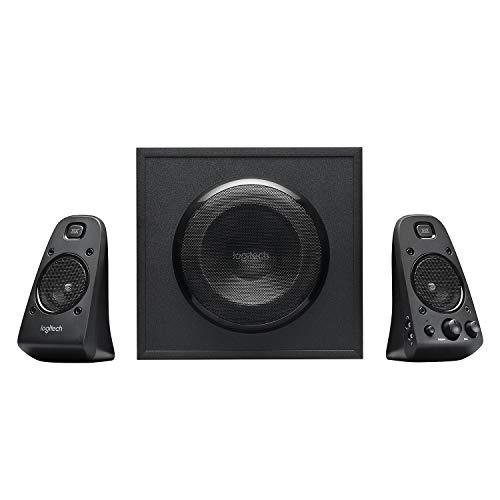
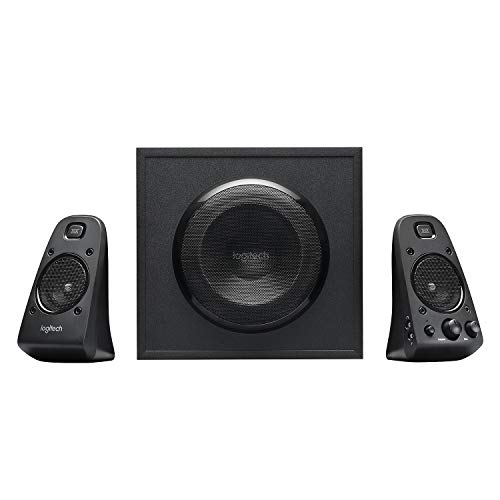
Logitech Z623 2.1 Speaker System
A desktop 2.1 system with two satellites and a separate subwoofer, THX certified and built for computers, consoles and TVs with analogue or optical-style setups via its inputs. The subwoofer carries the low bass that small desk speakers cannot reproduce on their own. Check price on Amazon.

QSC K12.2 Active Loudspeaker
A professional powered PA loudspeaker with a 12-inch woofer, built for events, venues and presenters who need to fill a large space. It illustrates the top end of speaker wattage: high output, active cooling and onboard DSP. Check price on Amazon.
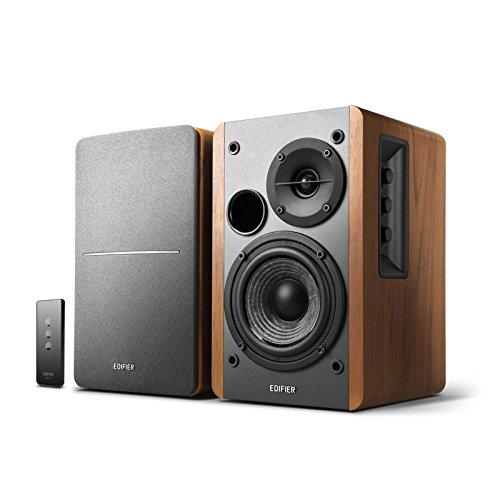
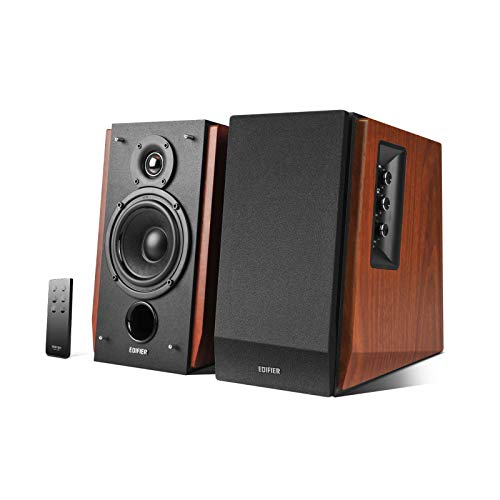
Edifier R1280T Powered Bookshelf Speakers
A compact powered pair with optical, coaxial and dual RCA inputs, which makes it unusually easy to connect to a TV, a turntable or a computer without a separate receiver. Front bass and treble controls let you adjust the balance without digging through menus. Check price on Amazon.

Mackie Thump215XT Powered Loudspeaker
A 15-inch powered PA speaker with Bluetooth system control, made for DJs, events and rehearsal spaces. Like other PA speakers it is voiced for projection and volume rather than close-up home listening. Check price on Amazon.
Common Misconceptions
Believing more watts means better sound
Wattage is capacity, not quality. A well-designed speaker on modest power sounds better than a poor speaker on huge power at any sane volume.
Comparing one brand’s peak watts to another’s RMS watts
That comparison is rigged by definition. Only compare continuous with continuous, and walk away from products that will not state a continuous figure.
Fearing a powerful amplifier will ‘blow’ modest speakers
Volume controls delivery. A strong amplifier at normal volume delivers normal power; damage comes from abusive levels or from small amplifiers clipping, not from capacity itself.
Ignoring sensitivity entirely
Two speakers with identical watt ratings can differ enormously in loudness on the same amplifier. Sensitivity is printed on every serious specification sheet — use it.
Key Takeaways
- Compare RMS to RMS, never peak to RMS.
- Sensitivity first: 3 dB is worth a doubling of watts.
- Leave headroom for peaks; average listening uses very little power.
- Check impedance compatibility before chasing wattage figures.
Going Deeper: Context That Helps
Bass behaves differently from the rest of the sound. Low frequencies are long waves that build up in corners and along walls, which is why a speaker can sound boomy in one spot and thin a metre away. Moving a speaker even slightly out from a wall reduces the wall’s reinforcement of the bass; moving your seat away from the back wall often fixes boominess that no tone control can. If your system has a subwoofer, its position matters even more, because a single subwoofer excites the room unevenly and your seat may sit in a peak or a null in the bass response.
Speaker sensitivity and impedance explain more about real-world loudness than headline wattage. Sensitivity tells you how loud a speaker plays with a given amount of power; a sensitive speaker on a modest amplifier can easily outplay an insensitive speaker on a powerful one. Impedance, measured in ohms, describes the load the speaker presents to the amplifier — most home speakers are nominally 8 or 6 ohms, and amplifiers are happiest when the speaker’s impedance stays within the range the amplifier is rated for. Matching these two figures sensibly matters far more than chasing the biggest watt number on a box.
Every speaker is a compromise between size, bass and efficiency — engineers call it Hoffman’s Iron Law: pick two, sacrifice the third. A tiny speaker can be efficient or produce deep bass, but not both at once, which is why small portable speakers sound impressive for their size yet cannot reproduce the lowest notes of a film soundtrack. Understanding this trade-off sets honest expectations. If a product promises room-filling deep bass from a box the size of a paperback, physics says the claim needs salt; the sound may still be enjoyable, but the lowest octave will be suggested rather than truly reproduced.
Burn-in and warm-up are debated endlessly, but the bigger variable is your own hearing. Your ears adapt to a new speaker over the first days of listening, which is why a speaker that sounded bright on day one often seems balanced by day five — your brain has recalibrated, not the hardware. The practical lesson is to live with a new setup for a week of normal listening before judging it or changing settings. Judge with familiar recordings you know well, at the volume you actually use, in the seat you actually sit in; first impressions in a shop or in the first ten minutes at home are unreliable.
Cables and connections cause more speaker problems than speakers do. A single stray strand of copper touching the neighbouring terminal can short an amplifier; a loose banana plug or a corroded RCA connector adds crackle that sounds like a failing driver. Oxygen-free copper wire of adequate gauge, clean tight connections and strain relief where cables bend will keep a system reliable for years. Expensive exotic cables, by contrast, have never been shown to change sound in controlled listening tests once gauge and connection quality are adequate — spend the difference on placement, room treatment or better recordings instead.
Listening level matters for judging any speaker. Human hearing perceives bass and treble as weaker at low volumes — the Fletcher-Munson effect — so a speaker auditioned quietly can seem thin, and the same speaker loud can seem bass-heavy. Many receivers and some speakers compensate with loudness or dynamic EQ features for late-night listening. When you compare speakers or settings, match the volume between them as closely as you can, because the louder option almost always sounds ‘better’ in a quick comparison even when it is not. A cheap sound-level app on a phone is accurate enough to level-match for home comparisons.
Multi-room and streaming speakers add a networking layer to ordinary audio problems. A speaker that drops off the network, lags behind its partner in a stereo pair, or refuses to appear in an app is usually suffering from weak Wi-Fi at its location, a congested 2.4 GHz band, or a router setting — not a failed speaker. Placing the router centrally, keeping speakers within a room or two of it, and updating firmware through the maker’s app solves most of these cases. Wired Ethernet, where a speaker offers it, removes the variable entirely and is worth using for a fixed living-room setup.
Protecting speakers is mostly about restraint. Amplifiers damage speakers in two ways: too much power can overheat or over-extend a driver, but far more commonly a small amplifier driven into distortion — clipping — produces harsh high-frequency energy that burns out tweeters. If the sound turns harsh, gritty or compressed as you raise the volume, turn it down; that harshness is the warning sign. Children, pets and parties are the other risks: a volume limit in the receiver’s settings, grilles left on, and speakers placed where they cannot be knocked over will prevent most household speaker casualties.
Speaker specifications reward careful reading. Frequency response figures only mean something with a tolerance attached — ’60 Hz to 20 kHz’ without a plus-or-minus figure could hide a response that is already far down at 60 Hz. Driver size tells you about potential, not results: a well-designed 5-inch woofer in a solid cabinet can sound cleaner than a cheap 8-inch driver in a resonant box. Weight is an unfashionable but useful clue, because rigid cabinets and real magnets are heavy. Treat specifications as a way to shortlist, then let placement, room and your own ears make the final decision.
Ageing affects speakers slowly and mostly at the edges. Foam woofer surrounds on older speakers can crumble after a couple of decades, rubber surrounds last longer, and capacitors in crossovers drift with age, subtly changing the balance. None of this matters for a new purchase, but it explains why a vintage speaker may not sound as its measurements once promised. For modern speakers, dust, sunlight and humidity are the main enemies: keep them out of direct sun, wipe dust with dry or barely damp cloths, and avoid placing drinks on top of cabinets, where one spill can stain veneer and swell the wood beneath.
Whatever the product, the cheapest upgrade is usually time spent with the manual and the settings menu. Manufacturers bury genuinely useful options — EQ presets, dialogue modes, level trims, firmware updates — several layers deep, and most owners never find them. An hour spent exploring settings with familiar content playing will teach you more about your system than a week of reading reviews, and it costs nothing. Keep notes of what you changed so you can undo anything that makes things worse, and change one thing at a time so you know which adjustment caused which result.
Returns windows are part of the buying process for audio gear, and you should use them deliberately. Sound is personal and room-dependent, so a product that reviews well can still disappoint in your space. Buy from sellers with clear return policies, keep packaging until you are sure, and test with your own content at your own volumes in the first days — not the night before the window closes. A structured test, with the same three songs or scenes each time, reveals differences that casual listening misses and turns a vague feeling into a decision you can act on.
Hearing safety deserves a mention in any audio guide. Comfortable TV and music listening sits well below the levels that risk hearing damage, but portable speakers at parties, and headphones especially, can creep upward in noisy environments as you compete with background sound. If you have to shout to be heard over your own system, it is too loud for long sessions. Many devices offer volume limiting — worth enabling for children — and taking listening breaks during long sessions protects both your ears and your enjoyment, because tired ears judge sound poorly.
Speaker sound is shaped as much by the room as by the speaker itself. Hard floors, bare walls and large windows reflect sound back at you, which can make even a good speaker seem harsh or echoey, while soft furnishings, rugs and curtains absorb those reflections and calm the result. Before blaming a speaker for disappointing sound, look at the room: a rug between the speakers and your seat, curtains over a large window, or a bookshelf filled with books behind you can change the sound more than a modest upgrade would. This is why the same speaker can sound impressive in a shop demo room and merely ordinary at home — the demo room was treated, and yours is not.
Stereo imaging depends on symmetry. When the left and right speakers are at different distances from you, or one is tucked into a corner while the other sits in open space, the stereo image pulls toward the closer or louder side and voices stop sounding centred. Aim for a rough triangle: the two speakers and your head at the corners, with both speakers the same distance from your seat and at the same height. Small adjustments — ten centimetres here, a slight toe-in there — are free, reversible and often more rewarding than new cables or accessories, so always finish placement before spending money on upgrades.
Frequently Asked Questions
Is a higher-watt speaker louder?
Not necessarily. Loudness depends on sensitivity at least as much as wattage. A high-sensitivity speaker with a modest power rating will play louder on a given amplifier than a low-sensitivity speaker rated for far more power. Wattage tells you the ceiling of what the speaker can handle; sensitivity tells you how much sound you get on the way there. For shopping, sensitivity plus continuous handling is the meaningful pair of numbers.
How many watts do I need for a living room?
For typical speakers and listening distances, everyday listening averages under a watt, with peaks in the tens of watts for loud passages and film effects. A system with a few dozen honest continuous watts per channel covers most living rooms comfortably. Large rooms, insensitive speakers, parties and serious film volumes push the requirement up — which is an argument for sensitive speakers as much as for bigger amplifiers, since sensitivity buys loudness without heat or cost.
What does RMS mean on a speaker?
RMS wattage is the continuous power the speaker can handle over time without damage — the honest rating to compare between products. It is measured with a sustained test signal, unlike peak ratings that describe a split-second burst. When a listing shows only a large peak number and no RMS figure, assume the continuous rating is a small fraction of the headline and judge the product accordingly. Serious manufacturers always publish the continuous figure.
Can an amplifier be too powerful for a speaker?
In practice, rarely. Damage happens when power is actually delivered at destructive levels, and you control that with the volume knob; audible distortion warns you first. The greater everyday risk is the opposite: an underpowered amplifier driven into clipping, whose distortion damages tweeters at volumes that do not even sound that loud. A generously powered amplifier used sensibly is the safer partner for almost any speaker.
Why do small Bluetooth speakers claim huge wattage?
Because peak figures are legal to print and impressive to read. A battery-powered speaker is limited by its battery and small drivers to modest continuous output — physics sets the ceiling regardless of the box copy. Judge portable speakers by size, battery life, driver complement and reviews of their actual sound. The wattage race on small speakers is the purest form of the marketing game this article exists to inoculate you against.
Does wattage affect sound quality at normal volume?
Not directly. At normal volumes most systems use a watt or two, where any competent amplifier is comfortable. Extra power improves quality only indirectly, by keeping peaks clean (headroom) and by indicating a robust power supply. Once an amplifier is adequate for the peaks your listening demands, more watts add nothing audible. Spend beyond adequacy on the speakers, their placement and the room — the parts of the chain that shape sound at every volume.
Worked Examples: Putting Numbers on Real Rooms
Abstract rules become useful when they meet furniture, so consider three honest cases. A desk listener sits about a metre from small speakers of modest sensitivity; the power required for comfortable, clean listening is a sip — a small fraction of what even the humblest amplifier provides — which is why desktop systems should spend their budget on the speakers and their placement, never on wattage. A living-room listener sits three to four metres from typical speakers and listens at the level of a lively conversation and a little above; the average power involved is still small, but the peaks of music and film — the drum hit, the orchestral swell — ask for brief bursts many times larger, and it is those bursts, not the average, that a sensible power budget must cover. A party in a large room inverts everything: distance grows, volume grows, and the power required climbs steeply with each, which is why the same speakers that sounded effortless at the desk can sound strained at the far end of a hall. The lesson the three cases teach together is that wattage questions are really distance-and-volume questions wearing a number’s clothing, and they should be answered from the chair, not from the catalogue.
The doubling rule, and why loudness is stingy
One relationship governs all of this and repays memorising: doubling the power buys a small, definite step in loudness, and making a system sound twice as loud asks for roughly ten times the power. This is why the difference between two similar power figures, which marketing presents as a chasm, is in practice a shrug, and why chasing large wattage numbers to gain loudness is the most expensive way to buy the least improvement. Sensitivity — how much sound a speaker makes from a given sip of power — is the cheaper lever, and room gain, distance and placement are cheaper still. The buyer who understands the doubling rule reads specification sheets with a calm that no advertisement can disturb.
Headroom: The Reserve You Never Hear Until It Is Gone
Headroom is the distance between what an amplifier is doing and what it can do, and it is the true subject of most wattage discussions. Music is not a steady tone; it is a landscape of quiet averages and sudden peaks, and an amplifier with generous headroom reproduces the peaks cleanly, without the hardening and compression that announce an amplifier at its limit. This is why two systems of identical stated power can behave differently at the same loud moment, and why a modest amplifier played within its means sounds better than a powerful one misused — though the honest reason to prefer adequate power is not loudness at all, but cleanliness at the loudness you actually use. Judge power the way you would judge a car’s engine for a hilly commute: not by its top speed, but by whether it climbs your hills without strain, noise or complaint. Strain, in amplifiers, is distortion, and distortion at peaks is both a quality problem and, sustained, a risk to tweeters — the one place where too little power, abused, can genuinely harm a speaker, as the main guide’s safety discussion explains.
Continuous, peak and other honest and dishonest numbers
Power figures arrive wearing several costumes, and the costumes matter more than the figures. A continuous rating describes what an amplifier can sustain; a peak or dynamic figure describes a momentary burst; and some promotional figures describe conditions no music will ever request. Comparing one maker’s continuous number against another’s peak number is comparing a marathon time against a sprint, and it produces exactly the confusion it deserves. The defence is procedural: compare like with like, favour makers who publish conservative figures with their conditions stated, and remember that a smaller honest number usually indicates a more honest company, whose products tend to behave accordingly in the room as well as on the page.
Impedance and Other Reasons the Same Amplifier Changes Its Mind
An amplifier’s power is not a fixed possession; it is a negotiation with the speaker attached to it. Speakers present an electrical load whose difficulty varies with frequency and design, described loosely by their impedance figure, and an amplifier delivers different power, with different composure, into different loads. A speaker whose load dips awkwardly can make a modest amplifier run hot and sound strained at volumes it should manage, while an easy load flatters the same amplifier into apparent power. This is the technical root of the matching advice in the main guide: the question is never how much power an amplifier has in the abstract, but how it behaves with your speakers, in your room, at your volumes. It is also why experienced advice so often sounds evasive — it depends — because it genuinely does, on a relationship between two specific products. The practical shortcut is reputation: pairings that many owners report as happy, from makers who publish honest figures for both halves, rarely disappoint.
When more power is the correct purchase
For balance, the cases where power genuinely is the answer deserve naming. Large rooms at real distance. Inefficient speakers that the owner loves and will not replace. Film systems asked for reference-level peaks. Outdoor listening, where no walls return energy to help. In those rooms, adequate power is not a luxury or a marketing trophy; it is the difference between clean peaks and a system audibly at its limit. The guide’s position is not that power does not matter, but that it matters in proportion to distance, volume and speaker appetite — and that for the majority of desks and living rooms, that proportion is smaller, and cheaper, than the advertisements suggest.
A Short History of the Wattage Arms Race
It helps to know why the numbers grew so large. Power became the easiest specification to advertise because it is a single number that appears to rank products, and each generation of marketing had to outnumber the last, while measurement conditions quietly loosened to help. The result is a marketplace where the figure on the box correlates only loosely with the loudness in the room, and where small, honest products look weak beside large, creative ones. The industry’s better makers have pushed back with conservative ratings and published conditions, and reviewers with measurement equipment have become the referee the advertisements needed. As a buyer, you join the honest side of this history simply by asking the questions this guide teaches: power measured how, into what load, at what distortion, and — the question that dissolves most of the arms race — how sensitive are the speakers, and how far away is the chair? Wattage was never a measure of quality. It was a measure of one ingredient, promoted to a headline by people with boxes to sell.
What to do in the shop, with a specification sheet in hand
Translate every power claim into the room’s terms before crediting it. Note the speaker’s sensitivity first, the amplifier’s rating second, and the conditions of that rating third. Ask how the pairing behaves at your distance and your loudest honest volume. If the answers come back as bigger numbers rather than as explanations, you have learned something about the seller that no specification sheet would have told you. Buy from the seller who talks about your chair.
The One-Paragraph Wattage Education
If this guide had to fit on a card, the card would read: loudness comes mostly from sensitivity and distance; power buys headroom for peaks, in stingy doublings; honest ratings state their conditions; difficult speakers need amplifiers chosen for composure, not just output; and the correct amount of power is the amount that plays your loudest honest moment, in your room, without strain — plus a sensible margin you will rarely visit. Everything else in these pages is that card, unfolded. Keep the card, and no specification sheet, salesperson or forum argument will ever stampede you into buying watts you cannot hear or fearing watts you do not need. The number was never the music. It was only ever the means by which the music, in a particular room, at a particular distance, arrives unstrained — and arrival, unstrained, is all it was ever for.
Everyday Wattage Myths, Retired One by One
The belief that a speaker’s wattage figure describes how loud it is survives because it feels like common sense, and it is wrong in an instructive way: the figure describes how much power the speaker can accept, while loudness depends on what the speaker does with each watt, which is sensitivity. Two speakers fed identical power can differ dramatically in volume, and the one with the smaller wattage figure can easily be the louder. A second myth holds that an amplifier should exactly match a speaker’s rating, as if the two numbers were a lock and key; in truth the pairing has wide tolerances, governed by listening habits and the strain rule, and exact matching is neither required nor particularly meaningful. A third myth claims that bi-wiring, exotic cables or power conditioners multiply effective wattage; they do not, whatever their other merits, because power is power and arrives by arithmetic, not by accessories. Retiring these three myths does not make wattage boring. It makes it legible — a small, honest set of relationships between a room, a chair, a speaker’s appetite and an amplifier’s composure — and legible subjects stop costing people money they did not need to spend.
The neighbour test and other social wattage
One final calibration is social rather than electrical. In flats and attached houses, the usable power of a system is set less by its amplifier than by the walls and the relationships beyond them. A system with glorious headroom that can only be exercised at midnight volumes it dare not use is, in practice, a small system wearing a large specification. Buy for the volumes your life permits, keep the neighbours as allies, and let the unused headroom be what it honestly is in such homes: insurance for peaks at modest levels, which is a respectable job and the one it will actually perform.
Power, understood, becomes a servant. Power, misunderstood, becomes a salesperson. This guide exists so that yours is the first kind, quietly doing its arithmetic in the background while the music — the actual point of every watt ever specified — plays in the foreground, unstrained and unhurried, exactly as recorded.
The card, kept
Keep the card’s five lessons where you keep your judgement: sensitivity and distance first, headroom for peaks, conditions behind every rating, composure over output, and strain as the signal to stop. A buyer carrying those five sentences is immune to the arms race, welcome in every honest shop, and equipped for every system they will ever assemble. That immunity, more than any amplifier, is the powerful purchase.
Powerful purchases are the ones that keep working after the novelty retires. Buy understanding first; the hardware will follow, correctly sized.
Correctly sized hardware, in a correctly understood room, is the whole subject in one phrase.
And when the numbers still argue
Occasionally two honest sources will still disagree about a pairing, because rooms and tastes differ beneath identical specifications. When that happens, trust the hierarchy this guide has built: your chair, your volume, your speakers’ appetite, and only then the numbers. A disagreement among numbers is settled by a listening session, never by a larger number. Hold that hierarchy and the subject stays small, friendly and finished — which, for a topic that began as an arms race, is a remarkable place to end.
Finished subjects free the evening for unfinished music. That trade is always worth making.
Make it, and let the watts do their quiet work unobserved.
Unobserved is the natural state of good power. It asks for no attention and receives none, which is its compliment to the music.
Compliments, in a well-powered room, all flow toward the music. Arrange yours so they do.
Arranged, the system disappears, and only the performance remains.
The performance was the purchase. Everything else was delivery.
Delivery, completed nightly by a system you finally understand, is a quiet kind of luxury.
Luxury, in this house, is measured in unstrained peaks.
Peaks, delivered cleanly, are the sound of power used wisely.
Wisely used power is invisible. Wisely bought power is affordable. Aim for both.
Both are within reach of any buyer carrying this guide’s five sentences.
Carry them into every shop, and the shops will behave better.
Better-behaved shops, better-matched systems, better evenings. The chain starts with a question.
Ask it — how was that measured? — and watch the arms race end at your feet.
Ended races leave quiet rooms, and quiet rooms are where loud music sounds best.
Best, and cleanest, and entirely yours.
Yours, at your volume, in your chair, from tonight onward.
Onward is a long time in a good chair. Settle in.
Settled, powered and playing: the three states of a finished system.
Finished systems are the ones still playing in a decade. Build yours to finish.
To finish, and then to keep finishing, evening after evening.
Evening after evening is the unit. Fill it well.
Well-filled evenings are the dividend of every concept in this guide.
Dividends are for collecting. Collect yours at volume.
At your volume, which is the only volume that was ever relevant.
Relevant volumes, honestly powered, honestly enjoyed.
Enjoyment, honestly arrived at, needs no further specification.
Specifications end. Listening does not.
Let it not end tonight, or any night your system is correctly powered — which, now, is every night.
Every night, correctly powered, is a fine sentence to live inside.
Live inside it, at ease, with the peaks arriving clean.
Clean peaks, quiet valleys, and a listener at peace with the numbers.
Peace with the numbers is the final wattage lesson. Graduate, and go listen.
Listening is the graduation ceremony. Attend it nightly.
Nightly attendance builds the only expertise that matters: knowing your own system.
Your own system, known well, outperforms a stranger’s dream system.
Dream systems are for brochures. Known systems are for evenings.
Evenings win. Choose evenings, every time the choice appears.
The choice appears at every purchase. You are ready for all of them now.
Ready, powered, and at peace with the specification sheet.
Peace with the sheet means freedom from it. Enjoy the freedom loudly.
Loudly, cleanly, and within your system’s honest means.
Honest means, honestly enjoyed, are the definition of enough.
Enough, in wattage as in life, is a feast.
Feast nightly, at your table, in your chair.
The chair, as established, is where wattage questions go to be answered.
Answered, they stay answered, and the chair stays occupied by a listener rather than a shopper.
Listeners outrank shoppers in every well-run house.
Hold the rank, and hold the volume where the music asks.
The music asks clearly, once the numbers stop shouting.
Numbers, quieted by understanding, make excellent servants.
Servants, not masters, from this purchase onward.
Onward, then, to the listening, which was the destination all along.
All along, through every rating and every rule of thumb.
Arrive, and stay for the whole record.
The whole record, peaks and all, reproduced without strain.
Without strain is how records deserve to be heard, and how yours will be.
Will be, nightly, for as long as the system serves.
Serves long, serves clean, serves the music first.
Music first is the motto the watts themselves would choose.
Choose it for them, and they will serve it for you.
Service, in both directions, is the sign of a system well matched.
Matched, measured and musical: the three-word review of your next system.
Give it, a year from now, without hesitation.
Related Guides
These guides and roundups cover the closest decisions and fixes in this category:
- best speakers for house parties
- best amplifier for speakers
- best speakers for music
- best speakers under 500
- active vs passive speakers
- speaker buying guide
Does a higher wattage speaker sound better than a lower wattage one?
Not by virtue of the number. Wattage describes power handling or delivery, not quality; a well-designed speaker of modest rating will outperform a poorly designed one of heroic rating at any sane volume. Judge by listening, sensitivity and build, and let wattage answer only the matching questions this guide describes.
My amplifier is rated lower than my speakers. Should I worry?
Usually not, provided you listen for strain and respect it: if the sound hardens or distorts as volume rises, turn down, because sustained distortion is the real risk to speakers. At ordinary volumes such pairings are common and happy, since ordinary listening uses very little power.