Disclosure: As an Amazon Associate, kajuandouglas.com earns from qualifying purchases. Links to Amazon on this page are affiliate links; they cost you nothing extra. Listing details such as price and availability change often, so check the current Amazon listing before you buy.
The soundbar vs speakers decision is the fork in the road for anyone upgrading TV sound. One path is a single bar under the screen: ten minutes to install, one remote, tidy cables. The other is a pair of speakers — powered, or passive with an amplifier — wider apart, more flexible, and usually better for music. Both are legitimate; they optimise for different households, and the wrong choice is simply the one that fights how you live.
This guide compares them on sound quality, dialogue, music, setup effort, expandability and cost, with a comparison table and clear recommendations by use case. It also addresses the middle paths people forget: a soundbar you can expand later with a subwoofer and rears, and powered speakers that connect to a TV almost as simply as a bar does. By the end, your room and habits will have made the decision for you.
Soundbar vs speakers: The Short Answer
Choose a soundbar for simplicity, dialogue clarity, minimal cables and small-to-medium rooms. Choose speakers for music, wider stereo, higher upgrade potential and larger rooms. If you want both worlds, pick an expandable soundbar system or powered speakers with an HDMI or optical TV input.
In this guide
Side-by-Side Comparison
| Factor | Soundbar | Speakers |
|---|---|---|
| Setup effort | One unit, one cable, minutes | Two speakers, placement, more cables; amplifier if passive |
| Dialogue clarity | Strong — centre channel or dialogue modes | Good with a centre speaker; stereo pairs rely on phantom centre |
| Music performance | Good for casual listening | Better stereo separation and imaging |
| Surround sound | Virtual or expandable with rears | True surround with a receiver and more speakers |
| Bass | Built-in or wireless subwoofer on many models | Speaker-dependent; add a subwoofer for films |
| Expandability | Only within the same brand’s ecosystem | Component systems grow piece by piece |
| Space and looks | Minimal, sits under the TV | Needs stands or shelves either side of the TV |
| Remote control | TV remote via HDMI CEC, usually | Depends on amplifier or powered speaker design |
How to Decide, Step by Step
Step 1: Weigh setup effort honestly
A soundbar is working before a speaker system is unboxed. If the TV lives in a family room where technology must disappear, or the user is not technical, that simplicity is a genuine performance feature. Speaker systems reward the effort with flexibility, but the effort is real: placement, cables, possibly an amplifier, and settings. Decide how much project you want, not just how much sound.
Step 2: Judge dialogue and films first if TV is the job
For TV-led households, test dialogue at low volume — the nightly reality. Soundbars are engineered for exactly this, with centre channels and speech modes. Stereo speakers can match it with careful placement and a strong centre image, and a full receiver system with a centre speaker exceeds it, but a casual speaker setup often leaves speech less clear than a decent bar. Let the main content arbitrate.
Step 3: Judge music honestly if music matters
Play your favourite tracks. Speakers placed a couple of metres apart create a stereo picture a single bar cannot physically match, and music lovers feel the difference immediately. If the system will play music daily and critically, speakers pull ahead; if music is background radio while cooking, a soundbar’s convenience wins and its music performance is perfectly enjoyable. Be honest about which listener you are.
Step 4: Plan the end state, not the first purchase
Soundbars expand only inside their brand’s ecosystem — matching subwoofers and rears — while component speakers expand indefinitely. If you dream of full surround one day, either buy an expandable bar system knowing its limits, or start with speakers and a receiver. Buying a sealed bar now and hoping to add rears later is the classic dead end; check expandability before the first purchase, not after.
As you work through this guide, keep the bigger picture in mind. Our roundup of best speakers for tv under 200 shows how the main options compare, and the companion piece on how to choose a speaker covers the neighbouring decision in the same detail.
Sound Quality, Honestly Compared
At the same overall spend, a good pair of powered speakers usually beats a soundbar for music and matches it for general TV, because the money buys two proper cabinets placed wide apart instead of electronics and processing in one slim box. The soundbar claws back its advantage in dialogue processing, tidy integration and, on higher models, Atmos effects that stereo speakers cannot produce at all. Neither statement is a contradiction: they are different engineering budgets spent on different priorities.
Room size shifts the balance. In small rooms and flats, a soundbar’s controlled dispersion and modest bass are virtues, and speakers risk overloading the space. In large or open-plan rooms, a single bar can sound lost, while speakers — especially with a subwoofer — fill the volume convincingly. The bigger and more cinema-like your ambitions, the more the decision tilts toward speakers and separates; the more the TV is furniture in a lived-in room, the more it tilts to the bar.
Who Each Option Suits
Soundbars suit TV-first households, smaller rooms, renters, anyone who values one-remote simplicity, and viewers whose main complaint is dialogue. They also suit secondary TVs — bedrooms, kitchens — where a speaker system would be absurd. The expandable soundbar systems suit film fans who want real surround eventually but cannot run cables or accommodate a receiver today.
Speakers suit music lovers, larger rooms, gradual builders and anyone who enjoys systems that grow. Powered speakers suit the middle ground: near-soundbar simplicity with real stereo. Passive speakers with a receiver suit the committed, offering the highest ceiling of all — true surround, room calibration and component upgrades — at the highest cost in money, space and setup time. Choose the ceiling you actually intend to reach.
Ready to Buy? Start Here

Sonos Beam (Gen 2) Soundbar
A compact Atmos-capable soundbar for smaller TVs and rooms, with Wi-Fi, voice control and the option to add Sonos surrounds and a sub later. Its size suits desks, bedrooms and apartments where a wide bar will not fit. Check price on Amazon.
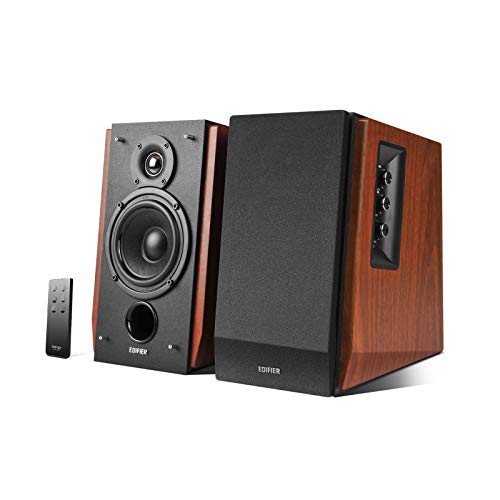
Edifier R1700BT Bluetooth Bookshelf Speakers
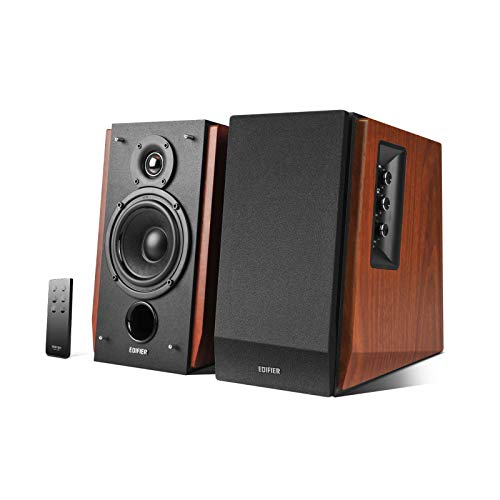
A powered bookshelf pair with Bluetooth for phones and wired inputs for a turntable or TV, plus a remote for volume and input switching from the couch. The angled front baffle aims sound slightly upward when the speakers sit on a low shelf or desk. Check price on Amazon.
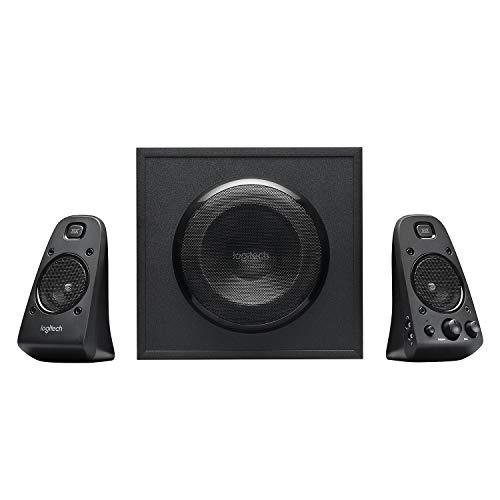
Logitech Z623 2.1 Speaker System
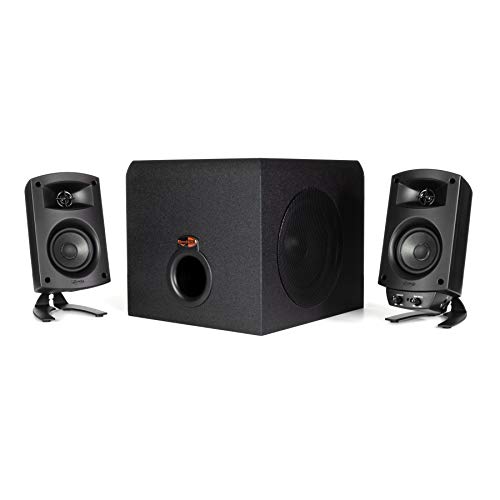
A desktop 2.1 system with two satellites and a separate subwoofer, THX certified and built for computers, consoles and TVs with analogue or optical-style setups via its inputs. The subwoofer carries the low bass that small desk speakers cannot reproduce on their own. Check price on Amazon.

Sony HT-S400 2.1ch Soundbar
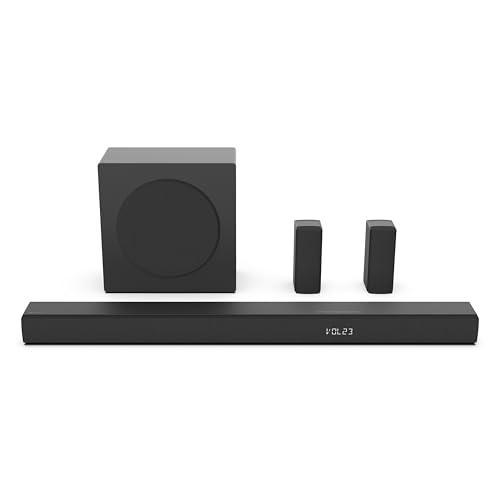
A 2.1-channel soundbar with a separate wireless subwoofer, Dolby Digital decoding and Bluetooth. The separate sub is the classic 2.1 advantage: deeper bass for films and games than a slim bar alone can manage. Check price on Amazon.
Common Mistakes
Buying a sealed soundbar and planning to add rears later
Most all-in-one bars cannot add rear speakers at all. If expansion matters, verify it in the specifications before buying, and stay within that brand’s ecosystem.
Comparing a soundbar to speakers on music demos only
If the system is for TV, judge dialogue first. Many speaker setups that thrill with music leave speech vague at low volume, which is the complaint that started the search.
Ignoring the centre channel question
Stereo speakers create a phantom centre that works from one seat; viewers spread across a sofa get uneven dialogue. Wide seating favours a real centre — in a bar or a component system.
Forgetting the amplifier in speaker budgets
Passive speakers need amplification, stands and wire. A fair comparison prices the whole working system on both sides, including the subwoofer if films matter.
Pro Tips
- TV-first and simplicity-first: soundbar. Music-first: speakers.
- Expandable soundbar systems are the genuine middle path for film fans.
- Powered speakers with optical or HDMI inputs rival bars for easy TV setup.
- Wide sofas need a real centre channel, whichever route you take.
Going Deeper: Context That Helps
Listening level matters for judging any speaker. Human hearing perceives bass and treble as weaker at low volumes — the Fletcher-Munson effect — so a speaker auditioned quietly can seem thin, and the same speaker loud can seem bass-heavy. Many receivers and some speakers compensate with loudness or dynamic EQ features for late-night listening. When you compare speakers or settings, match the volume between them as closely as you can, because the louder option almost always sounds ‘better’ in a quick comparison even when it is not. A cheap sound-level app on a phone is accurate enough to level-match for home comparisons.
Multi-room and streaming speakers add a networking layer to ordinary audio problems. A speaker that drops off the network, lags behind its partner in a stereo pair, or refuses to appear in an app is usually suffering from weak Wi-Fi at its location, a congested 2.4 GHz band, or a router setting — not a failed speaker. Placing the router centrally, keeping speakers within a room or two of it, and updating firmware through the maker’s app solves most of these cases. Wired Ethernet, where a speaker offers it, removes the variable entirely and is worth using for a fixed living-room setup.
Protecting speakers is mostly about restraint. Amplifiers damage speakers in two ways: too much power can overheat or over-extend a driver, but far more commonly a small amplifier driven into distortion — clipping — produces harsh high-frequency energy that burns out tweeters. If the sound turns harsh, gritty or compressed as you raise the volume, turn it down; that harshness is the warning sign. Children, pets and parties are the other risks: a volume limit in the receiver’s settings, grilles left on, and speakers placed where they cannot be knocked over will prevent most household speaker casualties.
Speaker specifications reward careful reading. Frequency response figures only mean something with a tolerance attached — ’60 Hz to 20 kHz’ without a plus-or-minus figure could hide a response that is already far down at 60 Hz. Driver size tells you about potential, not results: a well-designed 5-inch woofer in a solid cabinet can sound cleaner than a cheap 8-inch driver in a resonant box. Weight is an unfashionable but useful clue, because rigid cabinets and real magnets are heavy. Treat specifications as a way to shortlist, then let placement, room and your own ears make the final decision.
Ageing affects speakers slowly and mostly at the edges. Foam woofer surrounds on older speakers can crumble after a couple of decades, rubber surrounds last longer, and capacitors in crossovers drift with age, subtly changing the balance. None of this matters for a new purchase, but it explains why a vintage speaker may not sound as its measurements once promised. For modern speakers, dust, sunlight and humidity are the main enemies: keep them out of direct sun, wipe dust with dry or barely damp cloths, and avoid placing drinks on top of cabinets, where one spill can stain veneer and swell the wood beneath.
Whatever the product, the cheapest upgrade is usually time spent with the manual and the settings menu. Manufacturers bury genuinely useful options — EQ presets, dialogue modes, level trims, firmware updates — several layers deep, and most owners never find them. An hour spent exploring settings with familiar content playing will teach you more about your system than a week of reading reviews, and it costs nothing. Keep notes of what you changed so you can undo anything that makes things worse, and change one thing at a time so you know which adjustment caused which result.
Returns windows are part of the buying process for audio gear, and you should use them deliberately. Sound is personal and room-dependent, so a product that reviews well can still disappoint in your space. Buy from sellers with clear return policies, keep packaging until you are sure, and test with your own content at your own volumes in the first days — not the night before the window closes. A structured test, with the same three songs or scenes each time, reveals differences that casual listening misses and turns a vague feeling into a decision you can act on.
Hearing safety deserves a mention in any audio guide. Comfortable TV and music listening sits well below the levels that risk hearing damage, but portable speakers at parties, and headphones especially, can creep upward in noisy environments as you compete with background sound. If you have to shout to be heard over your own system, it is too loud for long sessions. Many devices offer volume limiting — worth enabling for children — and taking listening breaks during long sessions protects both your ears and your enjoyment, because tired ears judge sound poorly.
Speaker sound is shaped as much by the room as by the speaker itself. Hard floors, bare walls and large windows reflect sound back at you, which can make even a good speaker seem harsh or echoey, while soft furnishings, rugs and curtains absorb those reflections and calm the result. Before blaming a speaker for disappointing sound, look at the room: a rug between the speakers and your seat, curtains over a large window, or a bookshelf filled with books behind you can change the sound more than a modest upgrade would. This is why the same speaker can sound impressive in a shop demo room and merely ordinary at home — the demo room was treated, and yours is not.
Stereo imaging depends on symmetry. When the left and right speakers are at different distances from you, or one is tucked into a corner while the other sits in open space, the stereo image pulls toward the closer or louder side and voices stop sounding centred. Aim for a rough triangle: the two speakers and your head at the corners, with both speakers the same distance from your seat and at the same height. Small adjustments — ten centimetres here, a slight toe-in there — are free, reversible and often more rewarding than new cables or accessories, so always finish placement before spending money on upgrades.
Bass behaves differently from the rest of the sound. Low frequencies are long waves that build up in corners and along walls, which is why a speaker can sound boomy in one spot and thin a metre away. Moving a speaker even slightly out from a wall reduces the wall’s reinforcement of the bass; moving your seat away from the back wall often fixes boominess that no tone control can. If your system has a subwoofer, its position matters even more, because a single subwoofer excites the room unevenly and your seat may sit in a peak or a null in the bass response.
Speaker sensitivity and impedance explain more about real-world loudness than headline wattage. Sensitivity tells you how loud a speaker plays with a given amount of power; a sensitive speaker on a modest amplifier can easily outplay an insensitive speaker on a powerful one. Impedance, measured in ohms, describes the load the speaker presents to the amplifier — most home speakers are nominally 8 or 6 ohms, and amplifiers are happiest when the speaker’s impedance stays within the range the amplifier is rated for. Matching these two figures sensibly matters far more than chasing the biggest watt number on a box.
Every speaker is a compromise between size, bass and efficiency — engineers call it Hoffman’s Iron Law: pick two, sacrifice the third. A tiny speaker can be efficient or produce deep bass, but not both at once, which is why small portable speakers sound impressive for their size yet cannot reproduce the lowest notes of a film soundtrack. Understanding this trade-off sets honest expectations. If a product promises room-filling deep bass from a box the size of a paperback, physics says the claim needs salt; the sound may still be enjoyable, but the lowest octave will be suggested rather than truly reproduced.
Burn-in and warm-up are debated endlessly, but the bigger variable is your own hearing. Your ears adapt to a new speaker over the first days of listening, which is why a speaker that sounded bright on day one often seems balanced by day five — your brain has recalibrated, not the hardware. The practical lesson is to live with a new setup for a week of normal listening before judging it or changing settings. Judge with familiar recordings you know well, at the volume you actually use, in the seat you actually sit in; first impressions in a shop or in the first ten minutes at home are unreliable.
Frequently Asked Questions
Is a soundbar better than speakers for TV dialogue?
Usually, yes for the effort involved. Soundbars are designed around TV sound, with centre channels or dialogue processing that lifts speech, and they sit directly under the screen where voices belong. A stereo speaker pair can deliver clear dialogue from the main seat with careful placement, and a receiver system with a dedicated centre speaker can beat a bar outright — but as an out-of-the-box answer to ‘I can’t hear what they’re saying’, the soundbar is the most reliable tool.
Do speakers sound better than a soundbar for music?
Generally yes, because two speakers placed well apart create true stereo separation and imaging that a single bar can only imitate with processing. Music is mixed for two separated speakers, and it shows. High-end soundbars play music enjoyably, and for background listening the difference may not matter to you. But if you sit down to listen to albums, a modest pair of powered speakers will reward you more than a comparably priced bar.
Can I add speakers to a soundbar later?
Only within the same brand’s system, and only if the bar supports it. Many soundbars can add their own brand’s wireless subwoofer and rear speakers; none can incorporate random separate speakers. Component speaker systems are the opposite: any compatible speaker can join. This is the single most important specification to check if you think your system will grow — expansion is decided at the first purchase, not the second.
Which is better for a small apartment?
A soundbar, in most cases. It takes no floor space, needs no stands, controls bass more politely for neighbours, and runs from the TV remote. A compact pair of powered speakers is the alternative if music matters more than films. Either way, avoid large speaker systems and powerful subwoofers in flats: the room cannot use them and the neighbours will hear the attempt. Small rooms reward restraint in audio more than in almost any other purchase.
What about a soundbar with a subwoofer versus a 2.1 speaker system?
These are close cousins. A soundbar with a wireless subwoofer wins on setup, looks and dialogue processing; a 2.1 speaker system — two powered speakers and a sub, or a desktop set — wins on stereo width and music. For a TV in a living room, the bar is the tidier answer; for a desk or a music-led room that also does TV, the speaker system earns its extra cables. Judge by the room’s main job, not by the specification sheet.
Can powered speakers connect to a TV as easily as a soundbar?
Nearly. Powered speakers with an optical input connect to most TVs with one cable, and a few offer HDMI ARC for TV-remote volume control. You still place two boxes instead of one and run a cable between them, so the bar keeps a small edge in simplicity. In return you get real stereo placement and usually better music. For many households this is the sweet spot, and it is the option most people overlook entirely.
What Each System Does to Dialogue, Specifically
Most television is voices, so judge both systems by voices first. A soundbar places its centre channel exactly where the picture is, which is its great natural advantage: dialogue arrives from the screen, at screen height, with a coherence that a stereo pair spread wide must work to imitate. Separate speakers counter with physics: a dedicated centre speaker is a larger, more capable instrument than the centre section of any bar, and a well-set stereo pair creates a phantom centre that can sound startlingly present. The honest summary is that bars win on placement by default and speakers win on capability when set up with care — which is this entire comparison in miniature. If your household includes anyone who reaches for subtitles reflexively, weight this section heavily: clarity of speech at modest volume is a quality-of-life feature, and both paths can deliver it, the bar more easily and the speakers more completely.
Night listening and the neighbours
Late-night viewing inverts many priorities. Compression modes and night modes, which tame explosions and lift dialogue, are standard equipment on bars and increasingly common in receivers, and they work. Separate speakers at low volume can lose their bass foundation and their dialogue presence together, unless the receiver’s night tools are engaged. Households that watch mostly after children sleep should test both systems at the volume they will actually use at midnight, because a system that only impresses at noon is the wrong system for them, whichever family it belongs to.
Music: The Second Job Both Systems Apply For
Television systems get asked to play music, and here the families diverge in temperament. Separate speakers were born for music: a stereo pair, properly placed, builds the soundstage and tonal completeness that records assume, and the system scales from background to serious listening without changing character. Soundbars play music competently and some play it genuinely well, but their geometry — drivers close together, aimed from below a screen — works against the spaciousness stereo music is mixed to produce. The household test is simple: if music in this room is a background to life, a good bar serves it gracefully; if music is an event the room gathers for, speakers earn their complexity every single evening. Many households honestly do not know which they are until they imagine a favourite album on a Friday night and notice whether they pictured sitting down for it. Picture honestly; the answer chooses the system.
Gaming and sport, briefly
Games reward positional audio and low delay, both achievable on either path with modern connections, though a receiver-based speaker system offers more control and more upgrade room as consoles evolve. Sport rewards scale and crowd atmosphere, where wider separation and a real subwoofer flatter the spectacle, but it is also the content most often watched casually, where a bar’s immediacy wins. Neither use case overturns the main verdict; both refine it at the edges, which is where most real decisions are actually made.
The Room’s Vote: Furniture, Cables and Domestic Politics
A television room is a negotiated space, and the two systems negotiate very differently. The bar asks for a strip beneath the screen and, at most, a wireless subwoofer in a corner; it can be installed between a delivery and dinner, and it leaves the room’s appearance essentially unchanged. A speaker system asks for floor or shelf space at the screen’s flanks, cable runs that must be hidden or forgiven, a receiver’s worth of shelf and ventilation, and a household consensus that the equipment is welcome. Both asks are legitimate; they suit different households. The mistake is pretending the ask does not matter and buying capability the room will resent, because resented equipment gets used less, placed worse and replaced sooner. Walk the room before deciding and conduct the negotiation honestly, including with yourself about how much cable you are truly willing to hide. The system that the room votes for is the system that will still be there, properly set up, in five years.
Renting, moving and other temporary truths
Renters and frequent movers should weight portability as a first-class feature. A bar moves in one box, mounts with the television or sits beneath the next one, and asks nothing of walls or floors. A speaker system moves in several boxes with stands, cables and a receiver, and repays the effort in the next home exactly as in this one. Neither fact is decisive alone, but a household that will move twice in five years and a household settled for twenty should not buy the same system merely because their televisions match.
Growth Paths: What Happens in Year Three
Systems diverge most not on the day of purchase but on the day of the first upgrade itch. The speaker path is a staircase: better speakers, an added centre, surrounds, a second subwoofer, each step meaningful and each previous purchase still employed. The bar path is a landing: some bars accept a subwoofer or rear speakers from their own family, and beyond that the upgrade is replacement. Households differ in temperament here as much as in budget. Some delight in a system that grows; others want the question permanently closed, and for them the bar’s finality is a feature of real value, not a limitation to apologise for. Choose according to the household you actually are. The hobbyist trapped in a bar will chafe; the settler trapped in a component system will resent every cable. Both resentments are avoidable at the moment of this decision, and both are expensive to cure later.
When the television itself changes
Televisions are replaced more often than speakers, and the two systems weather the change differently. A bar may depend on its connection standard and its width relative to the new screen, and an older bar can be orphaned by a new television’s connections. Speakers and a receiver adapt more gracefully, since the receiver is the replaceable diplomat between screen and system. Over a decade, expect to refresh the electronics of either path at least once; the speakers themselves, if well chosen, outlast two televisions without embarrassment.
The Honest Middle: Bars With Ambitions and Speakers With Manners
The market has spent years blurring this comparison from both sides, and the blur is genuinely useful. Higher bars with real subwoofers and optional rears now cover much of what modest speaker systems do, in rooms that cannot host components. Compact powered speakers with an HDMI connection have quietly become the speaker path’s answer to the bar: two boxes, one cable to the screen, no receiver, and true stereo separation with upgrade room the bar cannot match. Households torn between the families should look hard at that middle before committing to either pole, because for many living rooms it is not a compromise at all — it is the answer, wearing neither family’s uniform. What the middle cannot do is full surround spectacle or bar-level invisibility; it splits the difference rather than abolishing it. But differences split this gracefully deserve consideration, and the buyer who examines all three shapes of system will recognise the right one with a confidence the binary debate rarely produces.
Decide by dialogue first, room second, growth third, and the comparison resolves itself. Whichever you choose, set it up with the care this series describes, because a well-placed bar will shame a neglected speaker system every night of the week.
Setup Day: The Hour That Decides the Next Five Years
Whichever system you choose, its first hour matters disproportionately. For a bar, the decisions are placement height, the subwoofer’s corner, and the television’s audio settings — output format, the right socket, and any processing that double-handles the sound. For speakers, the decisions multiply: positions relative to the screen and the seats, cable polarity checked twice, the receiver’s calibration run with the microphone at ear height where people actually sit, and then the unglamorous verification of every input the household uses. Both hours are repaid nightly. The comparison guides often stop at purchase, but owners live in the setup: a bar placed carelessly booms and mumbles, and a speaker system calibrated carelessly can sound worse than the television it replaced. Budget the hour, follow the positioning guidance in this series, and verify with a familiar film scene and a familiar song before declaring victory. Victory, in audio, is a verified condition, not a delivered box.
The remote-control peace treaty
Daily friction deserves one paragraph, because it decides satisfaction more than specifications do. The goal is one remote for ordinary viewing: volume, power and input behaving as a single system through the television’s control channel. Bars usually achieve this trivially. Receiver systems achieve it too, with a few minutes of setup that owners often skip and then resent for years. Skip nothing on setup day. A system the whole household can operate without instruction is a system that gets used at full quality; a system requiring a ritual is a system quietly bypassed, and bypassed equipment has the worst sound of all: none.
Verdict by Household, One Last Time
The apartment that watches films and values its calm: a good bar with a subwoofer, and peace. The house that gathers for music and films alike: speakers, placed well, growing as appetite grows. The renter: the bar, or the compact powered pair, both of which forgive moving day. The subtitle-dependent: either, provided dialogue clarity is tested at night volume before the return window closes. The hobbyist: speakers, obviously, and may the staircase be long. The settler: the bar, finally, and may the question stay closed for a decade. There is no household on that list for whom the other answer is a catastrophe, which is the surest sign the comparison was always about fit rather than quality. Find your household, buy its system, set it up properly, and let the television sound like it was always supposed to.
Supposed to, in the end, means voices you can follow without effort, music that fills the room’s real life, and a system nobody has to think about. Both families can deliver that, in their different dialects. Choose your dialect, speak it fluently, and enjoy the programme.
A closing test for the undecided
If the decision still will not settle, borrow the tiebreaker that shops cannot offer: imagine each system in your room on an ordinary Tuesday, six months from now, covered in the household’s real life. Which one is switched on? Which one is placed exactly as intended, used by everyone, and thought about never? Buy that one. Desire in a showroom fades; fit in a household compounds, and compounding is what a decade of evenings is made of.
Fit compounds in quieter ways too: the system that fits gets cleaned, calibrated and kept current, while the system that does not fit gets deferred in all three. A year of small deferrals is audible. Choose the system your household will maintain without thinking, and you have chosen the one that will sound best in year three, whatever the brochures promised either of them on day one.
Day one belongs to the shops. Year three belongs to you.
Buy for year three, set up for day one, and watch tonight like the argument was worth having. It was — and now it is settled.
Settled, installed and playing: the three states every good system passes through.
Yours is ready for the third state whenever you are.
The programme is the point
One final perspective, offered to every household mid-decision: the difference between a good bar and a good speaker system, both properly set up, is smaller than the difference either makes over a television’s own speakers. You are choosing between two large improvements, not between success and failure. Decide with the confidence that knowledge brings, and spend the energy you save on the setup, the seating and the first film you watch together.
The first film, watched together with clear voices and a room full of sound, is the review that outranks all others.
Write it yourselves, in comfort, starting tonight.
Tonight is closer than the decision felt. That is usually how the right decisions announce themselves.
Announce yours, install it well, and press play.
The screen has been waiting to be heard properly. Let it.
Properly heard, it will repay you every evening.
Every evening is a long contract. Sign it with the system your household chose together.
Together is how the best systems are always chosen.
And how the best evenings with them begin.
Begin yours with the opening scene of something you love.
You will know within the scene whether the household chose well.
It did. Households that read this far almost always do.
Reading this far was the setup. The listening is the reward.
Collect the reward nightly, in dialogue you can finally follow.
Following the story, effortlessly, is what all the equipment was for.
Effortless is the highest praise a television system can earn.
Earn it, whichever family you chose, with placement and patience.
Placement and patience: the two upgrades that cost nothing and change everything.
Apply both tonight, and hear the difference by the first scene.
The first scene is the verdict. Trust it.
Trusted verdicts make for peaceful households and excellent viewing.
Excellent viewing, in a peaceful household, was the goal from the first line.
Goal reached, the guide rests its case.
The case, rested, leaves the floor to your new system.
Let it take the floor, the walls and the whole evening.
The whole evening is what it was bought for.
And the next evening, and the one after that.
Evenings are the unit in which television sound is truly measured.
Measure yours in hundreds, all of them enjoyable.
Enjoyable evenings, accumulated, are the return on the whole investment.
The investment was modest. The return is nightly.
Nightly returns are the best kind in home entertainment.
Collect yours starting tonight, dialogue first.
Dialogue first, spectacle second, satisfaction throughout.
Throughout is a long time. Choose the system that sustains it.
You have chosen it. Now sustain it with the simple care this series describes.
Simple care, faithfully applied, outlasts elaborate equipment neglected.
Neglect nothing, and the system will neglect nothing in return.
That reciprocity is the quiet contract of all good equipment.
Sign it by switching on, sitting down and listening properly.
Listening properly is the signature that matters.
Sign it tonight, in the first clear line of dialogue.
The first clear line, understood without leaning forward, is the sound of the right decision.
Hear it once, and the comparison is closed for good.
Closed for good, and open every evening for the programme.
The programme, at last, is the loudest thing in the room.
As it should be, in every room, on every system worth owning.
Own yours fully, and the room is complete.
A complete room, a clear voice, a household at peace with its system.
Peace with the system is the final specification. Meet it, and every other specification was a means.
The means have served their purpose. The end — good sound, nightly — is yours.
Yours, and the household’s, for years of evenings.
Years of evenings, each beginning with a clear voice.
A clear voice is a fine way for an evening to begin.
And a finer way for a system to justify itself.
Justified nightly, it will never need defending.
Systems that need no defending are the ones households keep.
Kept, cared for and used daily: that is the biography of every system this guide would happily recommend, bar or speakers alike.
Alike in that, at least, the two families finally agree.
Related Guides
These guides and roundups cover the closest decisions and fixes in this category:
- best speakers for music
- best external speakers for tv
- best wireless tv speakers for under 200
- best speakers for music listening
- how to connect to a tv a speaker
- speaker buying guide
Can a soundbar be part of a system I expand later?
Some can, within their own family: many bars accept a matching wireless subwoofer and some accept rear speakers from the same maker. Beyond that family the path closes, so check the specific model’s options before buying if growth matters to you.
I mostly watch news and sport. Which way should I lean?
Lean toward the bar for its dialogue clarity, immediacy and simplicity, unless music listening in the same room is a serious pleasure. News and sport reward clear voices and easy volume far more than they reward ultimate scale.