A mirrorless camera sensor explained properly starts with what makes it different from a DSLR’s: it never rests. In a mirrorless camera the sensor is the viewfinder, the autofocus system, the light meter and the recording medium all at once — it powers the live preview you compose with, reads out constantly for subject-detection autofocus, and then captures the photograph or video itself. That always-on life explains mirrorless cameras’ talents (eye autofocus, exposure preview, silent shooting) and their traits (battery appetite, heat, dust exposure) in a single idea.
This guide unpacks how the mirrorless sensor works: its sizes, its readout and shutter behaviour, phase-detection autofocus on the chip, stabilisation on a floating stage, and why video pushes it hardest. Whether you are choosing a camera or troubleshooting one, this is the component doing the work — understanding it turns spec sheets into sense. For the size question across all cameras, camera sensor sizes explained is the companion read.
Disclosure: As an Amazon Associate, kajuandouglas.com earns from qualifying purchases. Links to Amazon on this page are affiliate links; they cost you nothing extra. Listing details such as price and availability change often, so check the current Amazon listing before you buy.
Anatomy: What the Sensor Actually Is
A modern mirrorless sensor is a CMOS chip covered in millions of photosites, each with a colour filter (usually in a Bayer pattern of green, red and blue) and a microlens concentrating light. Photons striking a photosite free electrons; the chip measures that charge and converts it to the numbers that become your image. In front of the chip sits a protective glass filter — the surface you actually clean — often with infrared and anti-aliasing properties tuned by the maker. Behind and around it, processors handle the firehose of data the sensor produces, especially in video and high-speed bursts.
Mirrorless sensors add two structures a DSLR sensor historically lacked. Phase-detection autofocus pixels are embedded across the chip, comparing light from different parts of the lens to calculate focus instantly — this is why mirrorless autofocus can cover nearly the whole frame and track eyes. And on IBIS bodies, the whole sensor assembly floats on a motorised stage, shifting to cancel your shake; the sensor is not merely a recorder but a moving part, with all the engineering elegance and care requirements that implies.
In this guide
Sensor Sizes in Mirrorless Systems
Mirrorless mounts were designed around their sensors: full frame (36 x 24mm) in Canon RF, Nikon Z, Sony E and the L-Mount alliance; APS-C in Fujifilm X and the crop lines of Canon, Nikon and Sony; Micro Four Thirds (17.3 x 13mm) shared by OM System and Panasonic. Because there is no mirror, the lens sits closer to the sensor than in any DSLR, letting designers build smaller bodies and new lens formulas — the system’s founding advantage.
Size still obeys physics: larger sensors gather more light per exposure, giving cleaner high-ISO files and shallower depth of field at equivalent framing, while smaller sensors enable smaller lenses and give telephoto reach via their crop. The mirrorless twist is that readout speed and processing now matter as much as size: a fast APS-C sensor can out-shoot a slow full-frame one for sports, because it clears its data sooner. Choose size for light and lenses; choose the specific sensor generation for speed.
Readout, Rolling Shutter and the Electronic Shutter
A sensor reads its image line by line, top to bottom, and the time that sweep takes — readout speed — has visible consequences. With the fully electronic (silent) shutter, a slow sweep distorts fast movement: golf clubs bend, propellers curl, panning backgrounds lean. This is rolling shutter, and it is a sensor-speed artefact, not a lens fault. Premium ‘stacked’ sensors read so quickly that the effect nearly vanishes; standard sensors ask you to use the mechanical shutter for action and save silence for ceremonies and wildlife that must not hear you.
Video lives under the same law: readout speed decides how much rolling shutter bends verticals when you pan, and how high frame rates can climb before the sensor must crop or skip lines. When a camera advertises 4K60 from a cropped region, it is the sensor confessing it cannot read its full area that fast. Understanding readout explains half the asterisks in mirrorless spec sheets — and why two cameras with identical megapixels can behave like different species.
Heat, Battery and Dust: The Sensor’s Working Conditions
An always-on sensor is a warm sensor. Continuous live view, autofocus computation and high-resolution video push heat into a small sealed body, which is why long 4K takes can end in thermal shutdowns — the subject of how to fix mirrorless camera overheating — and why battery life trails DSLRs, whose sensors sleep until the shutter fires. Makers fight back with efficient processors, heat-sinking body structures and, in video-focused models, fans. As an owner, your levers are mode choice, airflow and shade.
Dust is the other working condition: with no mirror, the sensor faces every lens change directly, sitting millimetres behind the mount where its static charge invites particles. The mitigations are designed-in — ultrasonic cleaning cycles, optional shutter curtains that close at power-off — and behavioural, per how to protect a mirrorless camera. Expect to clean a mirrorless sensor occasionally; it is maintenance, like oiling a bicycle chain, not a defect.
Gear for This Guide
Three sensor philosophies in real bodies — a high-resolution full-frame sensor, a fast APS-C sensor and a Micro Four Thirds video favourite:

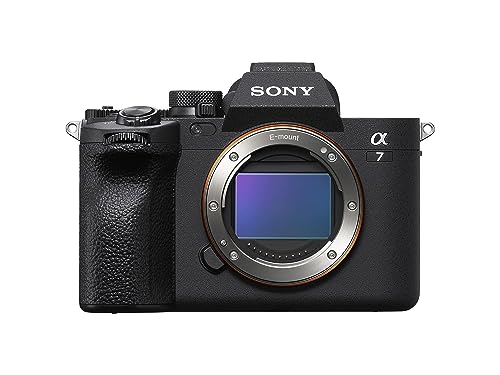
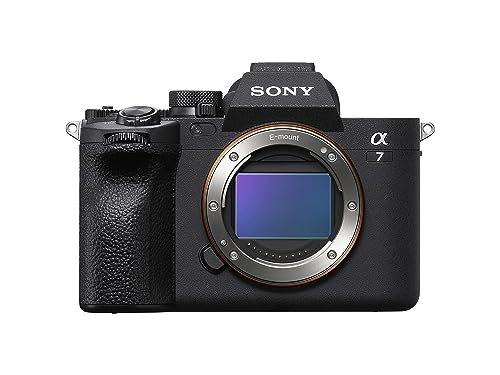
Sony Alpha 7 IV Full-Frame Mirrorless Camera — Check price on Amazon. A solid, widely available option that fits this guide; confirm the exact kit contents and lens mount on the listing before ordering.

Canon EOS R10 Mirrorless Camera with RF-S 18-150mm Lens Kit — Check price on Amazon. A solid, widely available option that fits this guide; confirm the exact kit contents and lens mount on the listing before ordering.

Panasonic LUMIX G7 4K Mirrorless Camera with 14-42mm Lens — Check price on Amazon. A solid, widely available option that fits this guide; confirm the exact kit contents and lens mount on the listing before ordering.
Common Misconceptions
Misconception one: the sensor is the camera’s image quality, full stop. Lenses resolve the image the sensor records, light shapes it, and processing interprets it; a superb sensor behind a poor lens produces faithfully recorded mediocrity. Misconception two: more megapixels means a better sensor. Count is one variable among photosite size, readout speed, dynamic range and noise behaviour — sports and video shooters routinely prefer fewer, faster pixels.
Misconception three: electronic shutters are simply superior because they are silent and wear-free. They carry rolling-shutter and banding-under-artificial-light costs that mechanical shutters avoid, which is why good cameras offer both. Misconception four: sensor dust means a careless owner. Mirrorless sensors collect dust by design exposure; careful owners clean methodically and carry on shooting.
Mirrorless Camera Sensor Explained: From Light to File
Follow one photograph through the sensor to make the abstraction concrete. Light through the lens strikes the sensor’s microlenses, which funnel it onto photosites behind colour filters; each photosite accumulates charge in proportion to the light it received — more photons, more charge. When the exposure ends, the charge is measured and converted to numbers, row by row, at the readout speed this guide discussed. The processor then demosaics the colour-filter pattern into full colour, applies noise reduction and lens corrections, and writes the file — while, in RAW, preserving the sensor’s measurements nearly untouched for your own later interpretation.
Every specification you will ever read hangs on this chain somewhere: megapixels count the photosites; dynamic range measures their charge capacity against the noise floor; ISO amplifies the measured signal; readout speed times the conversion; IBIS moves the entire apparatus mid-exposure. A photographer who can narrate the chain can predict a camera’s behaviour from its specification sheet — including its failure modes, from rolling shutter to thermal limits — which is the practical definition of understanding your equipment.
Sensor Care Follows From Sensor Design
The design facts in this guide dictate the care rules elsewhere in this series, and seeing the connection prevents most sensor incidents. Because the sensor is exposed at every lens change, lens swaps are a discipline (power off, mount down, caps ready). Because you clean the protective filter glass rather than the chip itself, proper swabs are safe — and improvised tools are not. Because the stage floats for IBIS, cleaning mode locks it before a swab touches down. Because the sensor works continuously and warms, video modes have thermal envelopes that planning must respect.
In other words, the mirrorless sensor is not a delicate mystery but a well-understood component with published handling rules — the camera manual’s cleaning and storage pages are engineering documents, not legal padding. Read them once with this guide’s model in mind and they become obvious. That literacy, more than any accessory, is what separates owners who fear their sensor from owners who simply maintain it.
Pixels, Photosites, and What Resolution Really Means
The sensor is often described by a single number — its megapixel count — but the interesting story is what each of those millions of sites does, and what the trade-offs between their size and number mean for your photographs.
One photosite, one bucket of light
Each photosite gathers photons during the exposure and converts them into an electrical signal proportional to the light it received. A larger photosite gathers more photons in the same exposure, and more photons mean a cleaner signal relative to the electronic noise that accompanies every reading — the fundamental reason larger sensors, with room for larger photosites at a given resolution, behave better in dim light. Resolution and low-light ability are therefore in quiet tension on any sensor: divide the same area into more, smaller sites and you gain detail while each site sees less light. Modern processing narrows this tension impressively, but physics still sets its terms.
Colour: the filter array above the pixels
Photosites themselves are colour-blind; they count photons without knowing their colour. The colours in your photographs come from a mosaic of red, green, and blue filters laid over the sites — most commonly in the pattern bearing the Bayer name, with twice as many green sites as red or blue because human vision is most sensitive to green detail. The camera’s processor then interpolates a full colour value for every pixel from its neighbours, a process called demosaicing, which is why raw files need software to become photographs at all. A minority of designs arrange their filters differently to trade this interpolation for other advantages, but the principle — colour reconstructed from a filtered mosaic — underlies nearly every mirrorless photograph ever taken.
Bit depth and the richness of the file
Raw files record each pixel’s value at a precision of twelve or fourteen bits, thousands of gradations per channel, far beyond what a JPEG’s eight bits retain. That depth is the editing headroom you experience when a sky grades smoothly instead of banding, or when shadow detail lifts without falling apart. It is also part of why sensor discussions belong in real photographs rather than in charts: the numbers describe a capacity, and your editing reveals whether your photography uses it.
Sensor Technologies: BSI, Stacked, and Global Ambitions
Recent mirrorless generations are defined by three architectural ideas. Each solves a specific problem described elsewhere in this guide, and each carries costs that explain why it does not appear in every camera.
Back-side illumination
In a traditional sensor, the wiring that reads the photosites sits in front of them, partially shadowing the light-gathering surface. Back-side illuminated designs flip the structure, placing the wiring behind the photosites so light reaches them unobstructed. The gain is efficiency — more of each photon’s information captured — which shows up as cleaner high-ISO performance and better dynamic range, especially valuable as pixels shrink. BSI has become the mainstream architecture for good reason: it improves the fundamental gathering act on which everything else depends.
Stacked sensors and the speed dividend
A stacked sensor bonds a layer of fast memory directly to the sensor itself, letting it read its full image dramatically faster. Speed is the cure for the rolling-shutter distortions explained in the main guide: fast readout means the top and bottom of the frame are captured nearly simultaneously, so electronic shutters become usable for moving subjects, viewfinders stay live and blackout-free during bursts, and flash synchronisation with electronic shutters becomes possible. The cost is manufacturing complexity, which is why stacked sensors debut in flagships and filter down slowly. When they arrive in a camera class, they quietly retire several compromises at once.
The global shutter horizon
A global shutter captures every photosite at the same instant, eliminating rolling-shutter distortion entirely rather than merely outrunning it. Long confined to specialised industrial sensors, it has begun appearing in consumer mirrorless bodies, trading some dynamic range and sensitivity for perfect temporal integrity. Whether it becomes universal depends on how completely engineers close that trade-off. For the explainer’s purposes, it is the logical end of the story the main guide began: the mirrorless sensor’s one structural weakness, designed away at the source.
The Sensor at Work: Exposure Decisions It Forces on You
Understanding the sensor changes how you photograph, because several everyday decisions are really negotiations with its properties.
Exposing to the right, and when not to
Because digital sensors record the most information in their brightest stops, deliberately exposing a scene as brightly as possible without clipping highlights — then darkening in editing — yields cleaner shadows than exposing dark and brightening. This technique, exposing to the right, is a direct application of sensor behaviour, and your mirrorless histogram makes it practical in the field. Its limit is the highlight itself: clipped highlights hold no information at any setting, so the technique protects them absolutely and gambles only with brightness that can be surrendered in post.
ISO invariance, in plain terms
Many modern sensors are close to ISO invariant, meaning a photograph deliberately underexposed at a low ISO and brightened in editing looks nearly identical to one shot at the higher ISO in camera. The practical gift is freedom: you can protect highlights by keeping ISO low in contrasty scenes and recover the shadows later, rather than letting the camera’s amplification decide. It also means the ISO dial is less a quality cliff than beginners fear — the sensor’s captured information is what matters, and modern sensors capture generously.
Long exposures, heat, and noise
Sustained exposures warm the sensor, and warmth raises noise, which is why long-exposure photographs benefit from the camera’s dark-frame subtraction — it takes a second, shutter-closed exposure of equal length and subtracts the heat pattern it records. Knowing this explains the mysterious pause after a thirty-second exposure and lets you plan for it in night work. It also connects back to the overheating discussion elsewhere in this guide family: the sensor is a working electronic component with a thermal life, and respecting that life is part of using a mirrorless camera well.
A Short Glossary for Sensor Conversations
Sensor discussions accumulate jargon quickly. These plain definitions cover the terms used in this guide and in most serious reading beyond it.
- Photosite: the individual light-gathering element on the sensor; one photosite corresponds to one pixel in the final image.
- Pixel pitch: the distance between photosite centres, a measure of photosite size and therefore of light-gathering capacity per pixel.
- Full well capacity: how much charge a photosite can hold before saturating — the ceiling that highlight clipping represents.
- Read noise: the electronic noise added as the sensor’s signal is measured; the floor that shadow detail must rise above.
- Dynamic range: the span between the brightest and darkest tones a sensor can record usefully in one exposure.
- Colour filter array: the mosaic of coloured filters over the photosites that makes colour photography possible.
- Rolling shutter: the line-by-line readout that captures different parts of the frame at slightly different times.
- Quantum efficiency: the proportion of arriving photons a photosite successfully converts into signal.
With those eight terms secure, most sensor writing becomes accessible, and — more usefully — most sensor marketing becomes transparent, because claims can be translated into the physical quantities they actually describe.
How Sensors Age, Fail, and Get Judged at Resale
Sensors are among the longest-lived components in a camera, but they are not immortal, and understanding their ageing helps owners interpret symptoms and buyers evaluate used cameras.
What changes over a sensor’s life
Individual photosites can weaken or fail, appearing as the hot and dead pixels discussed elsewhere in this guide family; cameras compensate by mapping them out, and a slowly growing count across years is normal ageing rather than impending death. The filter glass can accumulate the history of its cleans and its environments. What does not happen, despite persistent belief, is general wear from ordinary use: a sensor does not fade like a print, and a high shutter count says more about the mechanical shutter’s life than about the sensor’s health. A well-kept sensor a decade old can produce files indistinguishable from its youth.
Judging a used camera’s sensor
The diagnostic frame from the cleaning guides is also the buyer’s instrument: a plain, bright exposure at a narrow aperture reveals dust and marks, while a capped, long exposure reveals clusters of faulty pixels glowing in the dark. A few of either is normal and negotiable; patterns suggesting fungus, scratches, or line defects are reasons to walk away or to price in professional attention. Sellers who will let you take those two frames are selling honestly, and the frames take under a minute to make.
Laser damage and other rare catastrophes
Concert and event photographers should know that direct laser beams can burn lines of photosites in an instant — a real, documented sensor injury that no setting prevents except keeping the lens capped or pointed away when lasers sweep a crowd. It is rare, instant, and permanent, and it is mentioned here not to alarm but to complete the picture: the sensor’s enemies are mostly slow and manageable, and the fast ones are specific enough to avoid once you know they exist.
From Sensor to System: Why This Component Shapes the Whole Camera
The sensor is not merely a part of a mirrorless camera; it is the organ around which the entire design is arranged, and closing the explainer here explains several features of modern bodies that otherwise seem arbitrary.
Why mirrorless bodies are shaped as they are
Removing the mirror freed designers to place the lens mount close to the sensor — the short flange distance behind the wide, modern mounts — which in turn permits lens designs impossible on DSLRs, especially fast wide-angle glass. The sensor’s constant live view dictates the camera’s power budget, its heat management, and its processor load, which is why mirrorless bodies think so hard about batteries and cooling. Even the viewfinder exists because the sensor sees: the electronic finder is simply the sensor’s own view, presented to your eye.
Why the sensor’s future is the camera’s future
Each sensor generation’s improvements — faster readout, cleaner shadows, smarter on-sensor processing — arrive as camera capabilities a season later: blackout-free bursts, pre-capture modes that record before the shutter press, subject recognition that improves by firmware. When you choose a mirrorless camera, you are therefore choosing a sensor platform and its trajectory as much as a body. That is the deepest reason this explainer exists: the small glass-covered rectangle at the back of the mount is not a component among many. It is the camera, and everything else is its support system.
Sensor Size, Depth of Field, and the Equivalence Conversation
No sensor topic generates more heat than the relationship between format size and depth of field. The physics is calm even when the forums are not, and it follows directly from the ideas already covered.
Why format changes depth of field
To frame the same subject identically, a smaller sensor uses a shorter focal length or a greater distance, and both choices deepen the zone of acceptable sharpness at a given aperture number. Conversely, a larger sensor at the same framing and aperture renders a shallower zone. This is geometry, not quality: the same total light, gathered across a larger area, is what also underlies the larger format’s low-light advantage, because the two effects — shallower depth of field and cleaner high sensitivities — are twins born of one fact, the sensor’s total area.
Equivalence, stated without drama
Equivalence simply converts settings between formats so that framing, depth of field, and total light match: multiply focal length and aperture by the crop factor, and the photographs converge. It is a translation tool, useful when moving between systems or comparing lenses honestly, and it becomes contentious only when wielded as a ranking. A smaller system’s lens that is fast for its format is not secretly slow; it is correctly described within its own geometry. Photographers who understand equivalence gain a map between formats. Photographers who use it as a scoreboard gain only arguments.
What this means when choosing lenses
Judge a lens by the photographs its format and aperture actually produce: the depth of field you will really get, at the distances you really shoot, in the light you really have. A portrait photographer choosing between formats is choosing how easily subject isolation comes; a landscape photographer is choosing how easily front-to-back sharpness comes. The sensor size decision, made with this understanding, stops being a hierarchy and becomes what it always should have been — a matching of geometry to intention.
The Processor: The Sensor’s Interpreter
A sensor’s signal is not yet a photograph, and the processor that interprets it is responsible for more of the final image’s character than spec sheets admit.
From signal to file
The processor demosaics the colour filter array’s data, applies noise reduction shaped by the sensitivity in use, corrects known lens aberrations where profiles exist, and renders the JPEG’s colour and tone according to the maker’s taste. Two cameras sharing a similar sensor can therefore produce visibly different JPEGs, because interpretation is authorship. Raw files keep the processor’s role minimal and transfer that authorship to you and your software — which is why raw shooters speak of a sensor’s quality while JPEG shooters speak of a camera’s look, and both are describing the same partnership from different ends.
Computational features that begin at the sensor
Many modern capabilities are really sensor-plus-processor duets: high-resolution pixel-shift modes that move the sensor by single photosites to capture full colour at every point, focus stacking assistance, and pre-capture buffering all depend on the sensor’s speed and the processor’s appetite working together. When a firmware update improves autofocus or adds a feature, it is usually the interpretation improving rather than the hardware changing — a reminder that the sensor you bought is, within limits, a platform whose performance can mature after purchase.
Worked Examples: Reading Real Photographs Through Sensor Knowledge
Theory earns its keep when it explains photographs you have actually taken. These three familiar experiences are sensor behaviour wearing everyday clothes.
The banded concert photograph
A frame from a concert shows dark bands across it under coloured stage lights, worst in the shots taken with the silent shutter. This is the rolling readout meeting flickering light: the lights pulse faster than the sensor reads, so different rows record different brightness. The photographer’s remedies all follow from the mechanism — use the mechanical shutter, choose shutter speeds that align with the flicker, or enable the camera’s flicker-reduction timing. What looked like a defect is a predictable interaction, and predictable interactions have settings, not sorrows.
The smeared propeller and the leaning tower
Aircraft propellers bend into bananas and fast trains lean in electronic-shutter photographs because the scene moved during the readout’s journey down the frame. The same physics explains why your stacked-sensor flagship, reading in a fraction of the time, renders the same subjects almost honestly. Knowing the readout story converts these curiosities into a simple operational rule: the faster the subject’s motion across the frame, the more the electronic shutter’s convenience must be weighed against the mechanical shutter’s simultaneity.
The noisy photograph that was not the ISO’s fault
A dim photograph, brightened in editing, reveals ugly shadow noise, and the owner blames the high ISO — until the metadata shows the exposure was simply starved: a fast shutter and a modest aperture gave the sensor very few photons to work with. Noise is fundamentally a photon shortage, and ISO merely amplifies what arrived. The cure next time is more light on the sensor — slower shutter within stabilisation’s gift, wider aperture within depth of field’s budget — rather than fear of the ISO dial. Of all the lessons sensor knowledge teaches, this one improves the most photographs.
Choosing and Using Cameras With Sensor Understanding
The explainer’s practical dividend is a calmer relationship with specifications, purchases, and your own files.
Reading a specification sheet like a physicist
Translate every claim into photons and time: how large are the photosites, how much light reaches them, how fast is the frame read, how cleanly is the signal measured. Marketing numbers that cannot be translated into those terms are decoration. This habit will not tell you which camera to love — ergonomics and lenses still vote — but it will stop you paying for decorations, and it will let you predict a camera’s behaviour in your light before you ever hold it, which is the closest thing photography offers to buying without surprise.
Using your current camera better, starting today
Feed the sensor light when quality matters, protect highlights absolutely, treat ISO as an amplifier rather than a sin, and match the shutter type to the subject’s motion. None of these require a new camera; all of them follow from this guide’s contents, and together they extract from the sensor you own a quality that its specification sheet, read carelessly, would never have promised you. Understanding, in the end, is the highest-resolution upgrade available, and it transfers to every camera you will ever own.
Heat, Noise, and the Sensor’s Working Temperature in Practice
The main guide introduces heat as one of the sensor’s working conditions; its practical consequences deserve a fuller account, because they explain several behaviours owners meet and misread.
Why long sessions change your files
As a sensor works — in live view, in video, in long exposures — it warms, and warm electronics are noisier electronics. The effect is gradual and mostly subtle: shadows in the last hour of a long video session are a little less clean than in the first, and a night of long exposures shows a rising pattern of hot pixels that a cool camera would not produce. None of this is damage; it is physics with a thermostat. The practical responses are the ones threaded through this guide family — shade and airflow for the working camera, dark-frame subtraction for long exposures, and rest for a body that has earned it — applied with the understanding that you are managing a temperature, not fighting a fault.
Why climate belongs in sensor conversations
A camera’s thermal life in a temperate studio and the same camera’s life in a tropical summer are genuinely different working conditions, and owners in hot climates meet overheating warnings, condensation events, and battery behaviour that temperate reviewers never encounter. Sensor knowledge travels across climates precisely because it is physical: the photon does not care about geography, but the temperature of the silicon counting it does. Buy and judge with your own climate in the room, and weight the experience of owners who shoot where you shoot above the experience of those who merely shoot what you shoot.
Where Sensor Development Goes Next
An explainer should end facing forward, because the sensor in your next camera is being designed now, and its likely directions follow from the problems this guide has catalogued.
The directions that matter
Readout speed will keep climbing toward the global shutter’s simultaneity, retiring rolling-shutter compromises genre by genre. Sensitivity and dynamic range will keep their slower, harder climb, bounded by the physics of photons themselves — expect ingenuity in how signals are read and combined rather than miracles in how much light a small area can gather. And computation will move steadily into the sensor’s own layers, with stacked designs hosting processing that recognises subjects and optimises capture before the file exists. Each direction solves a named problem from these pages, which is the surest sign they are the real directions and not marketing weather.
What will not change
Photons will still arrive one by one, lenses will still gather them, and a larger bucket will still catch more of them than a smaller one in the same light. The fundamentals in this guide — photosites, noise, readout, heat — will describe your next camera and its successor accurately, because they describe the act of digital photography itself. Formats and features will churn; the physics will keep its counsel. Learn the physics once, as you now have, and every future camera announcement becomes a translation exercise you are equipped to perform — calmly, sceptically, and in terms of your own photographs.
Questions This Explainer Leaves You Equipped to Answer
A good test of understanding is the questions you can now settle without reaching for a search engine. Why do spots appear at small apertures and vanish at wide ones? Because dust shadows sharpen as the light cone narrows. Why does the silent shutter bend fast subjects? Because the frame is read over time, not at once. Why does a larger sensor shrug off dim rooms? Because its photosites drink more photons per exposure. Why does a long video session end early in summer? Because the working sensor is a warming sensor, and warmth has limits the camera enforces to protect itself.
Each answer took a paragraph of physics and no brand loyalty whatsoever. Keep hold of that standard — mechanism first, conclusion second — and you will find that most new claims about sensors, from any maker, in any year, can be evaluated in minutes. The sensor will keep evolving, as the previous section described. Your ability to understand it, having been built on the fundamentals rather than on any generation’s feature list, will not need to evolve nearly as fast.
A Brief Note on Comparing Sensors Across Generations
Owners often ask whether a new sensor is meaningfully better than the one they own, and the honest method of answering follows from everything above. Compare the quantities, not the adjectives: readout speed if you shoot motion with the electronic shutter, shadow cleanliness at the sensitivities you actually use, dynamic range in the contrast your subjects present. Then ask the deciding question — which of my photographs, specifically, would this sensor have improved? If you can name a recurring failure it addresses, the upgrade is real. If the answer dissolves into a general feeling of advancement, the sensor you own, understood as thoroughly as you now understand it, will keep producing the work while the money stays available for the lens, the trip, or the time that improves photographs in ways no silicon can.
There is a pleasing symmetry in ending here. The mirrorless camera exists because designers asked what the sensor could do if it were allowed to see continuously, and the answer reorganised photography around it. Understanding that small, tireless, photon-counting surface — its buckets and filters, its rolling readout and its warmth — is therefore not a technical hobby on the edge of the craft. It is the centre of the craft, stated in silicon, and you are now equipped to read it in every camera you meet.
One final calibration for the road: when a future specification impresses you, ask which photosite, which readout, which degree of warmth it describes. If it describes none of them, admire it politely and move on. If it describes one of them clearly, you will know — precisely, and in terms of your own photographs — exactly what it is worth.
The next time you remove a lens in good light and see that small, bright rectangle waiting at the back of the mount, you will know what you are looking at: not a part, but the place where light becomes memory. Treat it with the understanding it deserves, and it will repay you in kind.
That, in a single image, is the whole subject of this explainer — and it never entirely stops being remarkable.
Related Guides
- best mirrorless cameras for photography
- best mirrorless cameras for travel
- best mirrorless cameras under 1000 for stills
- best mirrorless cameras for professionals
- best mirrorless cameras for landscape photography
Frequently Asked Questions
What is a stacked sensor, and do I need one?
A stacked sensor bonds memory and processing layers directly behind the photosites, letting it read the whole frame many times faster than a conventional design. The benefits are minimal rolling shutter, blackout-free high-speed bursts and faster video modes. Sports, wildlife and hybrid video shooters gain most; landscape, portrait and casual shooters gain little they will notice, and stacked sensors command premium prices — buy one for speed-critical work, not for status.
Why does my mirrorless sensor get dusty so easily?
Because nothing shields it: removing the lens exposes the sensor directly, millimetres behind the mount, and its surface carries a static charge that attracts particles. DSLRs hid the sensor behind a mirror and a deeper chamber. Mitigate with power-off lens changes (some bodies close a shutter curtain), mount-down swaps away from wind, and prompt caps — and clean with a blower when test shots at small apertures reveal spots.
Does the sensor affect autofocus performance?
Profoundly, in a mirrorless camera: autofocus lives on the sensor itself. Embedded phase-detection points, their coverage across the frame, the sensor’s readout speed and the processor behind it together decide how fast and how intelligently the camera tracks eyes, animals and vehicles. This is why autofocus leaps between camera generations even at the same megapixel count — the sensor-processor pair is the autofocus engine.
What does sensor size mean for my existing lenses?
A lens projects an image circle sized for its format. Full-frame lenses work on crop bodies of the same mount (showing a cropped view), but crop-designed lenses usually cannot cover a full-frame sensor — the camera may offer a crop mode at reduced resolution. When changing formats within a mount, audit your lens shelf first; the sensor you buy decides which of your lenses remain fully useful.
How long does a camera sensor last?
Sensors do not wear out like shutters; they have no moving parts and typically outlive the camera’s other systems. Failures are rare and usually trace to damage — laser strikes at events, liquid ingress, cleaning accidents — rather than age. Dead or hot pixels can appear over years and are usually mapped out by a camera setting or service. Treat the sensor gently and it will almost certainly retire with the body, still working.
Why do mirrorless cameras overheat when DSLRs rarely did?
A DSLR sensor woke for the exposure and slept otherwise; a mirrorless sensor works continuously — preview, autofocus, metering — and video multiplies that load while high resolutions multiply the data. All of it happens in a smaller, sealed body with fewer places for heat to go. The result is thermal limits on long, heavy video modes, managed by the settings and airflow practices in our overheating guide.
Does a bigger sensor always produce better image quality?
It produces advantages in specific, identifiable conditions — dim light, high sensitivities, shallow depth of field, and shadow recovery — and little visible difference in good light at moderate settings, where smaller modern sensors are already excellent. Better also depends on the lens in front of the sensor and the photographer’s technique around it. The honest statement is that sensor size buys headroom at the extremes, and whether that headroom matters is a question about your photographs, not about the formats.
Why do two cameras with the same megapixels produce different-quality images?
Because megapixels count photosites and say nothing about their size, the sensor’s architecture, its readout electronics, or the processing applied to its signal. Two sensors with identical counts can differ in low-light cleanliness, dynamic range, colour depth, and speed. Resolution is the easiest number to print and one of the least informative to compare, which is why this guide treats the sensor as a system rather than a score.