Affiliate disclosure: this article contains affiliate links. If you buy through a link on kajuandouglas.com, the site may earn a commission at no extra cost to you.
This keyboard plates guide materials types sound survey is about the sheet of metal, plastic or composite that sits between your switches and the circuit board — the plate — and the outsized influence it wields over how a keyboard feels and sounds. The plate holds every switch in alignment, transmits or absorbs the energy of every keystroke, and tunes the board’s voice the way a soundboard tunes a piano’s: aluminium rings bright and firm, brass deepens and weighs, polycarbonate softens and mutes, and the modern composites split the differences with engineering. Owners who swap a plate for the first time routinely describe the result as a different keyboard wearing the same switches, which is only a slight exaggeration of the physics.
The guide works through the materials one by one with their honest characters, the plate’s structural variations — full versus half plates, flex cuts, mounting compatibility — and the method for choosing a plate against a sound target rather than a fashion. Verified kits whose plates can actually be chosen or swapped are reviewed in the middle, since a plate decision is only real on platforms that offer it. The closing sections give a swap walkthrough, the mistakes that make plates the most over-bought and under-understood component in the hobby, and the questions owners ask with a bare plate in their hands, wondering how something so simple can matter so much.
Key takeaways
The plate tunes stiffness and pitch together: aluminium is the firm, bright reference; brass is heavier, deeper and more muted; steel is the stiffest and sharpest; polycarbonate and POM flex and soften toward a deep, quiet voice; FR4 and carbon fibre sit between, with carbon the lightest and crispest. Half plates and flex cuts localise give for the alphas. The plate cannot rescue a bad case or switch choice — it voices the assembly it is given, within the range the keyboard sound thock clack guide maps.
In this guide
What the Plate Does All Day
A plate’s first job is mechanical and unglamorous: it is the grid that holds the switches square, at the correct spacing, against the forces of typing, so that sixty separate switches behave as one instrument. In plate-mount designs the switches clip into the plate itself; in PCB-mount designs the plate is a reinforcing partner to the board. Either way, every keystroke’s energy passes through it — down into the case on the press, back up through it on the return — and the material’s stiffness and density decide how much of that energy becomes structure-borne sound, at what pitch, and how much is absorbed or flexed away. The plate is thus simultaneously the board’s skeleton and its tuning fork, and the guide’s materials survey is really a survey of skeletons that sing differently.
Flex is the plate’s second job, and the modern one: a plate that gives slightly under the fingers cushions the bottom-out, and a plate that refuses makes the board feel carved from one piece. Mounting mediates this — the same plate behaves differently tray-mounted, top-mounted or floating on gaskets, per the keyboard cases guide materials types survey — but the material sets the range within which the mount can work. This is why plate swaps are the connoisseur’s tuning move: they change the board’s physical dialect without touching its switches, caps or case, and the change is large enough to matter and small enough to be a preference rather than a verdict.
Sound follows from the physics with unusual directness. Stiff, light materials (aluminium, carbon fibre) transmit higher frequencies faithfully and add their own bright ring at the extremes; dense materials (brass) lower the assembly’s pitch and damp its shimmer; polymers (polycarbonate, POM) absorb high frequencies and flex, producing the soft, deep, quiet voices the current era prizes. No material is ‘best’ outside a target, which is why this guide insists on the target-first method in its third section — and why the recordings method of the keyboard sound test guide must be applied to plates with special care, since a plate’s voice is inseparable from the case it was recorded in.
The Materials, One by One
Aluminium is the reference plate: light, rigid, corrosion-proof, anodisable into the colour palette of the hobby, and voiced bright-firm with a clean attack. It is the plate most kits ship with and the one against which all others are described, and its dominance is earned — it suits the widest range of switches and cases without imposing a strong opinion of its own beyond firmness. Brass is the traditionalist’s upgrade: two to three times aluminium’s density in the same footprint, it adds genuine heft, lowers the board’s pitch, and mutes the high shimmer into a deeper, more expensive-sounding fundamental; it also tarnishes, which its owners either polish, lacquer or embrace as patina. Steel is brass’s sterner sibling — the stiffest common plate, the sharpest voice, the least forgiving bottom-out — beloved by a minority who want their board to feel machined from a single billet and ignored by everyone chasing softness.
The polymers are the modern movement. Polycarbonate plates flex visibly, absorb the high frequencies, and produce the soft, deep, rounded sound that defines the current aesthetic; paired with gasket mounting they create the cushioned typing feel that sells the era’s keyboards. POM (acetal) is the connoisseur’s polymer — even softer in voice, self-lubricatingly smooth in character, and less commonly offered. FR4, the circuit board’s own fibreglass material, splits the metal-polymer difference at a friendly price and has become the value tier’s thinking choice. Carbon fibre is the engineer’s outlier: extremely light, extremely stiff for its weight, crisp and dry in voice, priced like the aerospace material it is. The how to build a keyboard guide’s kits span most of this shelf, and the swap walkthrough below assumes one of these platforms.
Thickness and cut complete each material’s identity. Standard plates run about 1.5 mm; thicker plates firm the board and deepen it slightly, while flex cuts — slots engineered around the alpha cluster or along the plate’s spine — let even metal plates give locally, in designed places. The half plate is the extreme of the idea: the alphas’ region is removed entirely, leaving those switches PCB-mounted and dramatically softer while the modifiers keep the plate’s discipline — a zoned instrument, and the clearest proof in the category that plate design is now a discipline of its own rather than a by-product of manufacture.
Choosing Against a Target: the Method
The plate decision should be the last tuning decision, not the first purchase, because the plate voices an assembly — case, mount, switches, caps — whose character must exist before it can be voiced. The method therefore starts with the board as it stands and a recording of it, per the cluster’s standing discipline. Name the delta, not the destination: ‘brighten the attack without firming the bottom-out’ is a plate brief (aluminium or carbon, standard cut); ‘deepen and soften everything’ is another (polycarbonate, or brass if weight is welcome); ‘keep the modifiers crisp but cushion the alphas’ is the half plate’s exact job description. Owners who shop by delta buy one plate. Owners who shop by destination buy four, and the drawer they fill is the mistakes section’s recurring location.
Compatibility is the method’s gate, and it is stricter than for any other component: a plate is cut for one PCB, one layout, one case’s mounting geometry — stabiliser positions, screw holes, USB cutout and all. Plates are therefore bought from the kit’s own ecosystem or from specialists who name the exact board, and ‘looks the same’ is not a specification. The keyboard PCBs guide types features companion covers the PCB half of the marriage; the pair must be verified together, ideally from the maker’s own compatibility list, before the plate’s material is even discussed. A plate that cannot be installed has no sound at all, which is the category’s driest joke and its most expensive one.
Cost realism closes the method. A plate is among the cheaper components of a build, and its swap is an evening’s disassembly — which makes it, per unit of audible change, one of the best-value tuning moves available, provided the delta was named honestly. The same cheapness tempts collection, and the guide’s counsel is the cluster’s counsel: the plate you type on teaches you more than the three in the drawer, and the swap’s lesson — what this material does in this case — transfers to every future build only if it was learned one plate at a time, with recordings.
Keyboard Plates Guide Materials Types Sound: The Shortlist
Plates are bought inside kit ecosystems, so the verified picks are the platforms whose plate choice is real: the kit with the deepest plate aftermarket, the aluminium board whose maker sells alternate plates, and a polycarbonate-native build for the soft end of the spectrum. Each plate and board discussed below was matched to the Amazon catalogue records verified by this site.

Glorious GMMK Pro
The plate-swap platform
- 75 percent aluminium kit
- Stock aluminium plate, gasket-mounted
- Aftermarket plates in brass, polycarbonate, FR4 and more
- Hot-swap PCB for painless swaps
No mainstream kit teaches the plate lesson like the GMMK Pro, because no other board at its scale accumulated such a plate aftermarket: brass for depth, polycarbonate for the soft modern voice, FR4 for the middle path, each cut precisely for its PCB and case. An owner can run this guide’s entire method on one board — baseline recording, delta named, plate swapped, verdict recorded — for the price of the plates alone, and emerge with a materials education that transfers to every build they will ever spec. As a teaching instrument it has no rival at the price.
The board itself remains the familiar proposition: weighty aluminium, gasket mount, knob, hot-swap — with stock stabilisers that reward the tuning attention the building guide prescribes. Judged purely as a keyboard it is a strong mainstream kit; judged as a plate laboratory it is the category’s default recommendation, and the two judgements together explain its ubiquity in the hobby’s desk photographs.
Strengths
- Deepest plate ecosystem in its class
- Hot-swap makes swaps an evening, not a project
- One board teaches the whole materials shelf
Trade-offs
- Plates cost extra, one lesson at a time
- Heavy aluminium case throughout
- Stock stabilisers want tuning
Best for: Builders who want to learn plates by swapping them.
Not suited for: Owners who will never open the board twice.
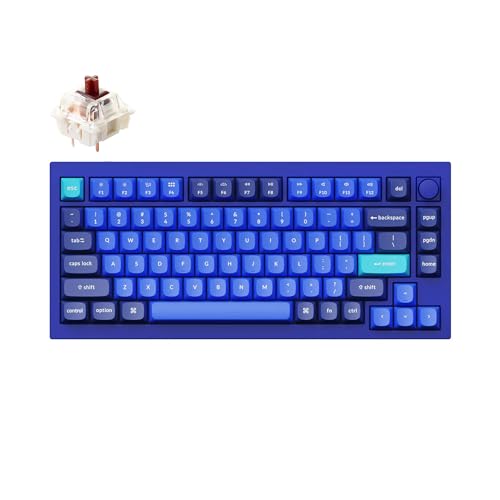
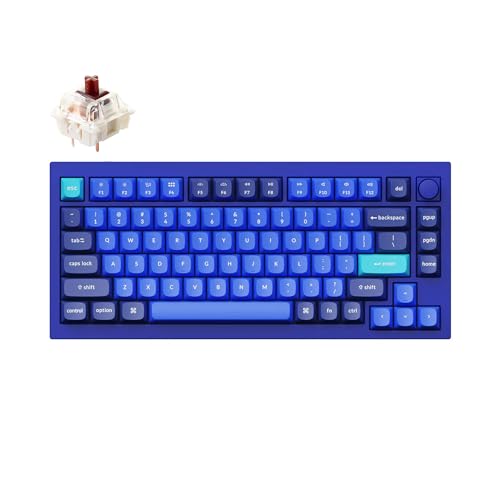
Keychron Q1
The flagship with options
- 75 percent aluminium, gasket mount
- Steel plate standard on many versions
- Alternate plate materials from the maker
- QMK/VIA, hot-swap
The Q1 is instructive in a plate guide for a subtler reason: many of its versions ship with a steel plate — the stiff, sharp option of the materials survey — which gives the board its notably firm, precise typing character out of the box, and the maker’s alternate plates let owners soften or deepen that character deliberately. It is the mainstream’s clearest demonstration that plate material is a shipping specification with a feel attached, not an aftermarket abstraction, and Q1 owners debating their board’s firmness are usually, whether they know it or not, debating its plate.
As a platform it pairs the plate question with the full flagship stack — machined case, open firmware, hot-swap — so a plate swap here is a tuning decision on a board with no other excuses. Version and plate specifications vary across the line’s generations; the verified listing in the sources file fixes the configuration this article describes, and buyers should confirm the shipping plate material explicitly, since it is the specification this guide has taught them to care about.
Strengths
- Plate choice is a real, supported decision
- Flagship case and firmware
- Steel stock plate shows the firm end honestly
Trade-offs
- Alternate plates are extra purchases
- Revision differences across generations
- Firm stock feel divides typists
Best for: Flagship buyers who want voicing control.
Not suited for: Softness seekers unwilling to swap the stock plate.
Akko PC75B Plus
The soft end, native
- Polycarbonate case construction
- Gasket-mounted assembly
- 75 percent with knob
- Tri-mode models in the line
The PC75B represents the plate philosophy’s destination when it is allowed to design the whole board: a polymer case and a flex-friendly assembly voiced, as a system, toward the soft and deep register that polycarbonate plates chase one component at a time. For the reader whose delta is ‘softer and deeper, comprehensively’, buying the board designed at that end of the spectrum can be more rational than swapping a metal board toward it plate by plate — the guide includes it as the standing reminder that tuning has two directions: modify the board you have, or choose the board whose factory voicing is your target.
Its material taxes are the polycarbonate family’s — scratch care, lighter mass — and its variant discipline is the line’s usual one, with the verified listing in the sources file as the authority. As an exhibit it completes the survey: aluminium’s firmness, steel’s edge, brass’s depth and this board’s cushioned glow are all purchasable positions on one spectrum, and the reader now owns the map.
Strengths
- System-level soft voicing from the factory
- Distinctive glow and character
- Undercuts flagship aluminium pricing
Trade-offs
- Polycarbonate needs scratch care
- Light mass wants a mat
- Less plate-swapping culture around it
Best for: Soft-register seekers buying the destination directly.
Not suited for: Plate experimenters who want a swap platform.
The Swap Itself: What Changes and What Does Not
A plate swap is a full disassembly — caps off, switches out, case opened, assembly lifted, plate exchanged, and the whole board rebuilt — and its honest duration for a careful owner is an evening the first time and an hour thereafter. What changes is exactly the plate’s portfolio: the assembly’s stiffness distribution, its resonant pitch, the bottom-out’s cushioning. What does not change is equally important to expect correctly: the switches’ own character, the case’s cavity behaviour (foam’s department), and the keycaps’ contribution all persist, which is why before-and-after recordings of a plate swap are such good education — they isolate one component’s voice inside a system the listener knows intimately. Owners who expect a transformation are disappointed; owners who expect a voicing are delighted, and the difference is entirely in the brief they wrote before ordering.
Two practical notes from the swap’s folklore deserve print. First, plate swaps are the moment to service everything the disassembly exposes — stabilisers tuned, foam inspected, the case cleaned — because the board will not be this open again soon, and stacking the maintenance into the opening is the cluster’s standing efficiency advice. Second, the removed plate is a permanent asset: kept flat and labelled, it is the board’s alternative voice, reinstallable in any future season when the owner’s taste rotates. A board with two plates is a board with two voicings, and the drawer that holds the spare is not the mistakes section’s drawer of regret — provided the second plate was bought against a named delta and not a passing mood.
Plates and the Mounting Marriage
Plate behaviour cannot be separated from the mount that holds it, and the guide closes its survey with the marriage’s terms. In a tray-mount board the plate-and-PCB assembly is screwed rigidly to the case, and the plate’s material speaks at full volume — brass’s depth and steel’s edge are at their most pronounced, and flex cuts earn their keep. In gasket systems the assembly floats on soft strips that filter the plate’s extremes: polymer plates grow softer still, metal plates lose a degree of their ring, and the system’s voice becomes a negotiation in which the gaskets hold the veto. Top-mount sits between, suspending the plate from the frame with a firmness gaskets refuse and a isolation trays cannot offer — the gasket mount vs top mount keyboard comparison argues the pair directly.
The purchasing consequence is that a plate should be chosen for the mount it will live in, not in the abstract: the polycarbonate plate that sings in a tray-mount build can turn to mush inside an already-soft gasket system, and the brass that deepens a firm board can deaden a damped one. System thinking — the refrain of every guide in this cluster — reaches its purest form here, because the plate is the component with no voice of its own at all: only a voice in context, which the recording method exists to capture and the delta method exists to direct.
Plate Geometry: The Cutouts Are the Specification
A plate is usually shopped by its material and should be shopped by its geometry first, because the cutouts decide what the plate can be. The switch cutout’s tolerance — the hole’s fit around the switch — sets whether switches clip firmly or swim fractionally, a difference felt as solidity or as a faint, board-wide looseness that owners misattribute to the switches themselves. The stabiliser cutouts decide which stabiliser families the plate accepts, and a plate cut for one family’s clips will not forgive another’s. The layout’s options are literally cut into the metal: a plate that supports a split spacebar shows the extra cutouts; a plate that doesn’t, doesn’t, and no switch arrangement will persuade it. The how to build a keyboard guide’s inventory step exists to catch these facts before assembly; the plate-literate buyer catches them before purchase, from the photograph, which shows every cutout the plate will ever have.
Plate coverage is the geometry’s second axis: full plates carry every switch; half plates carry the perimeter and free the alphas to the PCB’s own flex — a deliberate architecture for softness that the keyboard pcbs guide types features guide’s flex discussion completes. Plateless builds are the axis’s end, where switches mount to the PCB alone and the typing is the PCB’s character unfiltered. Each step along the axis trades support for compliance, and the trade is the build’s feel budget being spent at the plate’s address. Buyers who choose the material first and discover the coverage later have the budget’s logic backwards: decide how much support the build wants, then choose the material that tunes the support’s character.
And the plate’s edges deserve a glance: on gasket builds, the plate’s perimeter is where the gaskets grip, and its tabs and their placement are part of the mounting’s design; on top-mount boards, the plate’s screw points are its voice’s entry into the case. A plate is not a sheet with holes but a component in a mounting system, and its geometry — cutouts, coverage, edges — is that system’s constitution. Materials amend the constitution; they do not replace it.
The Materials, Revisited by the Ear and the Hand Together
The main guide grades the plate materials by sound; this expansion grades them by the combined evidence of ear and hand, because the two senses file one report and builds should be designed for the report’s whole text. Aluminium reads as definition: the keystroke’s event is crisp in the fingers and bright-ish in the ear, the board’s events separated cleanly — the plate for typists who like punctuation in their typing. Brass reads as density: a heavier, lower, more expensive-feeling event, with a sustain the ear notices and the hand registers as solidity — and a weight penalty that travel grades harshly. Steel reads as aluminium’s sterner sibling, brighter and harder, beloved by few and defended fiercely by them. The carbon fibre plate reads as lightness with a dry, focused voice, its feel less about flex than about the absence of ring.
The polymers are the compliance school, and they divide by degree. FR4 — the PCB’s own material, borrowed — is the balanced middle: a softened attack, a lowered voice, a price that makes it the default recommendation for a first build’s plate, because it forgives the build’s other choices while teaching the ear what a plate does. Polycarbonate is softer again, its keystrokes cushioned and its voice deep, the plate for builds chasing the soft register with intent. POM is the school’s extreme in the common market — the most compliant, the deepest, the plate whose typing feels upholstered — and its devotees accept its structural informality (it can feel vague in a build that wanted definition) as the price of its register. The gradient across the whole family is one dial — stiffness — and the materials are its marked positions. Choose the position, then the material that holds it, and the build’s other components can be tuned around a known quantity.
There is a second dial the materials carry: their behaviour across the board’s life. Metal plates are immortal and indifferent; polymer plates can creep microscopically under a decade of gasket compression, softening a build by degrees its owner will attribute to nostalgia. FR4 sits between, ageing like the circuit boards it is borrowed from — which is to say, on a scale beyond most ownerships. None of this should frighten a buyer off the polymers, whose registers are worth their terms; it should simply be known, the way every material in this cluster is known — by its decade, not its demo.
Plate-Mount, PCB-Mount and the Stabiliser’s Address
The plate’s least discussed job is holding the stabilisers, and the arrangement decides a service relationship that lasts the board’s life. Plate-mount stabilisers clip into the plate’s cutouts: they can be serviced, tuned and replaced with the switches removed and nothing desoldered, which makes them the beginner’s friend and the tuner’s convenience. PCB-mount stabilisers — screw-in or clip-in at the board — sit lower, feel firmer in many owners’ grading, and demand the PCB’s access for service: on an assembled board, that means the build guide’s disassembly, every time the spacebar’s tune drifts. The plate choice and the stabiliser choice are thus one choice, made at the listing, with consequences at every future maintenance session — the kind of coupled decision this cluster’s guides exist to surface before it is paid for.
The coupling extends to sound: the stabiliser’s mounting decides how its wire’s energy enters the structure — into the plate’s material and voice, or into the PCB’s — and the rattle’s cure, when it comes, is applied at the address the mounting chose. A build chasing a specific stabiliser feel should therefore choose its plate and PCB as a system from one maker’s ecosystem where possible, because the tolerances among plate cutout, stabiliser housing and PCB hole are a three-body problem that single-ecosystem parts have already solved for each other. Mixed ecosystems usually work; usually is the operative word, and the builder who mixes should budget the fitting session the tolerances may demand.
And the stabiliser’s address decides the plate’s own removal: a plate carrying plate-mount stabilisers lifts away with them in a build’s disassembly, simplifying the foam and tape services; a PCB-mount arrangement leaves the stabilisers resident and the plate a separate lift. Small choreographies, repeated at every service for a decade — which is to say, not small at all. The plate is a long-term relationship disguised as a sheet of material, and its mounting clauses deserve the reading this section gives them.
Trying Plates Without Buying Them All
The plate’s effect is real, material and difficult to audition, because almost nobody can type the same build on five plates in an afternoon — and this section collects the honest approximations the community uses. The first is the meetup and the friend’s build, again: plates are the component most sensitive to system context, so a plate auditioned in another build is evidence about that build, and its transfer to yours is partial at best — directionally useful (brass will be denser than FR4 in your build too) and specifically unreliable (by how much is your system’s secret). The second approximation is the single-build swap: many kits sell spare plates in alternate materials at prices that make the experiment the cheapest education in the build’s whole budget, and a weekend with two plates in one build teaches more than a year of forum reading, because every other variable holds still while the plate speaks.
The third approximation is the recording library, used with the keyboard sound test guide‘s scepticism: same-build plate comparisons, recorded by one microphone in one room, are the internet’s best plate evidence, and their verdicts about relative character transfer even when their absolute sound cannot. The fourth is the material sample’s logic applied mentally: stiffness is a dial whose positions you may already know from other objects — the difference between a wooden ruler and a steel one, struck — and while the analogy is crude, it correctly orders the family’s registers for a first purchase. Combine the four and a buyer can choose a first plate with justified confidence, reserving the swap experiment for the second build or the spare-plate weekend.
What none of the approximations replaces is the interval: a plate, like every component in this cluster, should be lived with before it is judged finally, because the hand’s verdict at hour one (novelty, in either direction) and at hour fifty (the register’s true cost and gift) regularly disagree. Builders who swap plates weekly own a laboratory and no instrument; builders who live with each plate for a month own an education. The plate is the build’s slowest variable to judge and its most instructive, and the patience it demands is the tuition for the ear’s whole training.
The Plate in Prebuilt Boards: Asking the Right Question
Prebuilt buyers meet the plate as a line in a specification, and the line deserves interrogation because it is often the build’s most honest sentence. A maker who states the plate’s material, its mounting and its options is describing a designed system; a maker whose specification is silent on the plate has usually made it of the cheapest adequate material and fixed it beyond the owner’s reach, which is information of a different kind. The plate’s fixity matters to the prebuilt’s future: a board whose plate is part of a standard kit architecture can be re-plated at the first service; an integrated plate is the board’s permanent accent, to be chosen at purchase with the same care as its switches. The how to choose a mechanical keyboard the buyers guide checklist gains a line here: what is the plate, and can it ever be anything else?
The prebuilt plate also interacts with the board’s marketing in a way worth decoding: ‘flex-cut PCB’ headlines on boards with rigid aluminium plates are selling a flex the plate vetoes, and ‘gasket mount’ headlines on boards whose plates are screwed to the case at eight points are selling a float that the screws forbid. The system’s coherence — PCB flex, plate compliance, mounting isolation, adding to a sum rather than cancelling — is the actual specification, and it can only be read by combining the lines the listing separates. This is the plate’s final lesson and the cluster’s recurring one: components are adjectives, systems are nouns, and boards should be bought as nouns. The plate, read as part of its system, tells you what the board is. Read alone, it tells you what the board is made of, which is a smaller and more expensive kind of knowledge.
A Plate Decision, Worked in the Open
This guide closes by working one decision completely, as a model for the reader’s own. The build: a 75 percent gasket kit, destined for a home office, typed on eight hours a day, in a room shared in the evenings; the switches a medium linear; the caps Cherry profile PBT. The candidates: the kit’s stock aluminium plate, an FR4 spare, a polycarbonate spare. The aluminium’s case: definition and brightness — but the room is shared in the evening, the switches are already crisp, and the board’s voice wants lowering, not defining; the aluminium is also the plate the builder’s previous board had, and its verdict is known and merely acceptable. The FR4’s case: the balanced softener, cheap, the register lowered a step, the attack kept — the safe increment. The polycarbonate’s case: the full cushion, the deepest voice, the feel upholstered — attractive for the long typing days, risky if the board’s definition dissolves past the owner’s taste, which is untested at that register.
The decision, by this cluster’s method: buy the kit with the aluminium fitted (it is the reference), order the FR4 spare with it (the group-buy doctrine — spares are cheapest at the source), and live a month on each, recordings at each change, the polycarbonate deferred until the FR4’s month files its report: if the direction is right and more is wanted, the PC is the next step, bought with evidence; if the FR4 lands exactly, the PC is never bought and its price is saved. The worked example’s point is not the answer — another desk’s answer differs — but the shape: reference first, one variable, evidence, then the next increment. Every material guide in this cluster is that shape wearing its component’s clothes, and a reader who has learned the shape can retire the guides, which is, as ever, the guides’ ambition for them.
Plates in the Wild: What Owners Report After a Year
Launch reviews grade plates on their first evenings; this section collects the year-scale reports, because a plate’s character includes its behaviour across time and its owners’ settled verdicts differ from their first impressions in instructive patterns. The aluminium plate’s year is the quietest: its verdict barely moves, because its properties are structural and its sound is its sound forever — owners who liked it keep liking it, owners who found it bright have usually solved the brightness elsewhere (foam, switches) rather than blaming the plate, which suggests the plate was never the brightness’s author but only its messenger. The brass plate’s year is dominated by its weight’s verdict, which splits owners by desk: the stationary bless it, the travellers sell it, and the plate itself — tarnishing gently where it is visible at the board’s edges — is otherwise the same dense, low-voiced component it was. The polymer plates’ year is the interesting one: a measurable share of their owners report the build softening further across the first year — the material’s creep under gasket compression, the board settling into its final register — and the report divides them into those who experience the settling as the build maturing and those who experience it as the build going vague, a division that maps almost perfectly onto whether they chose the polymer for its register or merely accepted it in a kit.
FR4’s year deserves its own sentence because it is the default’s: nothing happens, which in a component is the highest praise available — no creep worth naming, no tarnish, no loosening, the plate disappearing into the build’s background exactly as a middle component should. The year’s reports also contain a pattern about swaps: owners who bought spare plates overwhelmingly report that the second plate got a month and the first got the year, whichever order they were tried in — the reference plate’s advantage is not quality but tenure, the hand’s loyalty to the register it learned the board in. Builders planning a plate experiment should therefore try the experimental plate first if they want it judged fairly, because the incumbent’s advantage is real, unearned and nearly unbeatable in a short trial.
And the year’s strangest report is how rarely plates are the subject at all after month three: they recede, like every well-chosen foundation, into the build’s unexamined background, while switches and caps — the surfaces — continue to be discussed, swapped and judged. That recession is the plate’s success criterion, and it inverts the shopping instinct that gives the plate a listing’s last glance. The component you will stop thinking about first deserves a decision you will not need to revisit — which is to say, the careful one, made from the system’s design rather than from the material’s romance. The year’s reports, read whole, are the sound of a thousand such decisions either holding or being quietly reversed, and they argue for the holding kind.
Swapping a Plate, Step by Step
On a hot-swap kit board; allow an evening the first time and keep the baseline recording beside you.
- Record the baseline with the stock plate — same sentence, same position, same desk — and write the delta you are buying in one sentence. If the sentence cannot be written, the swap waits.
- Strip the board: keycaps off with the wire puller, switches out with the switch puller and stored in order, per the removal guide’s discipline. Photograph the assembly before opening the case.
- Open the case, disconnect any daughterboard or ribbon with its lock released properly, and lift the plate-PCB assembly out as a unit. Note the gasket strips’ positions if the mount uses them — they return exactly as found.
- Separate the old plate from the PCB, transfer any plate foam that belongs to the build, and seat the new plate, confirming every switch position and stabiliser cutout aligns before a single switch is pressed in.
- Rebuild in reverse: assembly into the case with gaskets seated, case closed and screwed evenly, switches pressed home with pins checked, keycaps last. Service the stabilisers while the board is open if they have ever asked for it.
- From the same position, record the same sentence. Type for two days before the verdict — plates, like layouts, have a bedding-in of the ears — then file both recordings and a sentence of verdict with the spare plate, labelled, in the drawer.
Plate Mistakes From the Swap Bench
Buying a plate for a board it does not fit.
Plates are the least interchangeable component in the hobby — cut for one PCB, one layout, one case — and ‘same size class’ is not compatibility. The maker’s list or the specialist’s explicit naming of your exact board is the only evidence accepted. Every other plate purchase is a donation to the resale market’s saddest category: plates, mint, wrong board.
Expecting the plate to fix the switches or the case.
A plate voices an assembly; it does not redeem a scratchy switch set or silence a hollow case, and owners who ask it to end up owning three plates and the same complaints. Diagnose the system’s actual offender with the cluster’s guides — ping, echo, rattle each have their owners — and let the plate be bought for the plate’s own portfolio: stiffness and pitch.
Swapping plates weekly and learning nothing.
Each swap without a baseline, a delta and a bedding-in period is a coin toss with extra steps. The material lesson a plate teaches is comparative and cumulative, and it is only available to owners who keep the recordings and give each plate its fortnight. The drawer of plates is not the failure; the absence of verdicts is.
Forgetting the plate foam’s allegiance.
Plate foam cut for the old plate’s layout or thickness can foul the new plate’s fit or double up where the new plate has its own treatment. Inspect what belongs to the plate and what belongs to the build during the swap, and re-cut rather than stack blindly — foam discipline and plate discipline are the same discipline at different addresses.
Judging the swap in a different room or on a different desk.
The swap’s verdict is a comparison, and comparisons require constants: same desk, same mat, same recording position, same sentence. A plate judged at the kitchen table against a baseline from the study has been measured against the room, not against its predecessor, and the conclusion — whichever way it falls — is about furniture.
Buying every plate material at once to ‘test them all’.
The full set of spares arrives, each gets an afternoon, and the builder learns the plates’ first impressions — the least reliable data each will ever produce — while spending the price of a second kit. Buy the reference and one alternative, live a month on each, and let the evidence sequence the rest. The plates keep; the budget and the patience are the perishables.
Frequently asked questions
Which plate material sounds best?
The question has no answer outside a target, and the guide’s materials survey is the map for forming one: aluminium for the firm bright reference, brass for depth with weight, polycarbonate for the soft modern register, FR4 for the balanced middle, carbon for crisp lightness, steel for the firmest edge. ‘Best’ is the name of the delta between your board’s current voice and your target — name the delta and the material selects itself, which is the method this guide exists to teach.
Can I swap the plate on a prebuilt keyboard?
Generally no — prebuilt boards’ plates are part of a fixed assembly, often with soldered switches, and are not sold as components. Plate choice is a kit-ecosystem freedom, which is one of the building guide’s standing arguments for kits. Prebuilt owners tune voice through foam, tape, caps and switches; the plate joins the toolbox when the board is a platform that offers it.
Do flex cuts weaken the plate?
They are engineered removals, designed into the plate’s structure to flex at chosen points while retaining alignment everywhere else — a flex-cut plate from a reputable maker is not a damaged plate but a tuned one. Their service life in normal typing is not a documented concern. What they do change is feel, locally and deliberately, which is the entire point of their existence.
Is a brass plate worth the weight and the tarnish?
For owners chasing depth who type at a permanent desk, the brass plate’s pitch drop is one of the most satisfying single swaps in the hobby, and its heft reads as quality every time the board is lifted. The tarnish is real and manageable — lacquered plates exist, polishing is a five-minute ritual, and many owners prize the patina. For travelling boards the arithmetic inverts: the weight is taxed daily and the depth is unheard in hotel rooms.
How much difference does a plate really make?
In an A/B recording, unmistakable; in a sentence, a voicing rather than a transformation. Expect the bottom-out’s firmness and the assembly’s pitch to move clearly, and the switches’ fundamental character to persist. Owners calibrated by the sound guides in this cluster will hear a plate swap as one strong variable among the system’s several — which is exactly the size of truth the category’s marketing usually inflates, and exactly large enough to be worth an evening.
What is a half plate for?
It removes the plate beneath the alpha keys entirely, leaving those switches PCB-mounted and dramatically softer, while the modifiers keep the plate’s alignment and discipline. The result is a zoned board — cushioned where the fingers live, firm where the thumbs strike — and it suits typists whose delta is precisely that asymmetry. It is the advanced end of plate design, and it is bought after the uniform materials have been learned, not before.
Does the plate affect typing feel or only sound?
Both, inseparably: the plate is in the keystroke’s mechanical path, and its stiffness sets how the bottom-out’s energy is returned to the finger — as a defined stop on stiff plates, a cushioned one on compliant plates — while the same stiffness sets the voice’s brightness. Owners often report a plate swap as a feel change first and a sound change second, which is why this guide grades materials by the two senses’ joint report. If you are choosing for one sense only, expect the other to file its opinion anyway, within the first day.
Can I run a build without a plate?
Yes — plateless mounting, switches seated in the PCB alone, is a legitimate architecture with a soft, PCB-defined character, provided the PCB and case were designed for it: the switches need the PCB’s full support, the stabilisers are PCB-mount by definition, and the build’s flex is the PCB’s own. Retrofitting platelessness onto a plate-designed kit is a different matter — the case’s tolerances and the assembly’s support assume the plate — so plateless should be chosen as a design, at the listing, rather than improvised at the bench.
Does a plate need maintenance?
Almost none: it wants the dust removed when the board is open for other services, a check that its screws (where the mounting uses them) are snug, and — for brass — acceptance of its tarnish or an occasional polish if its visible edges matter to you. Polymer plates want one additional glance at their gasket contact points for compression wear during annual services. Beyond that, the plate is the build’s most maintenance-free component, which is part of its recession into the background that the year-scale reports describe.
The plate is the keyboard’s quiet argument that small components, honestly understood, outrank large purchases made blindly. A sheet of brass or polycarbonate, swapped in an evening against a named delta and judged on a kept recording, teaches its owner more about their board’s voice than a second keyboard would — and costs a tenth as much. That is the plate’s place in the tuning economy: the highest education per unit of currency in the whole system, available on any platform that lets its owner choose.
Choose the platform, name the delta, keep the recordings, and let each plate earn its fortnight. The board that emerges will not merely sound different; it will sound intended — voiced by an owner who knows what each material does in their case, with their switches, under their hands. In a hobby of interchangeable parts, that intention is the one component that cannot be bought. It can only be swapped in, one plate at a time.