Learning how to choose a laptop backpack sounds simple until you count what rides on the decision: a computer worth a month of rent, carried daily, through weather, crowds, and the occasional sprint for a train. A good backpack disappears into your routine — weight distributed, laptop suspended safely, the right pocket findable without looking. A bad one announces itself daily: straps that dig, a zipper that fails in month two, a laptop corner that meets the pavement through padding too thin to matter.
This guide orders the decision the way experienced carriers do: fit your laptop first, then your body, then your carry load, then your environment — and only then style. Work through the steps with your actual laptop measurements and your actual daily inventory in hand, and the shortlist will build itself.
Disclosure: As an Amazon Associate, kajuandouglas.com earns from qualifying purchases. Links to Amazon on this page are affiliate links; they cost you nothing extra. Listing details such as price and availability change often, so check the current Amazon listing before you buy.
Quick answer: measure your laptop and buy for its exact sleeve size, choose capacity from your daily load (slim commuter loads suit roughly 15–20 liters, full work-and-gym loads 24–30), insist on a padded, preferably suspended laptop compartment, comfortable straps and back panel for your commute length, and zippers and fabric rated for your weather and travel.
Gear for This Guide
Verified reference points across the commuter spectrum — business, all-round, and creator-leaning.

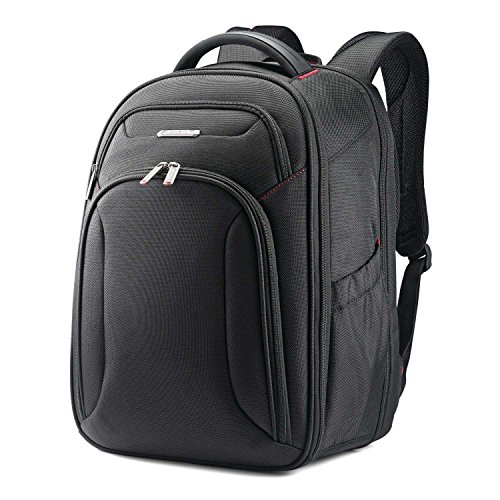
Samsonite Xenon 3.0 Laptop Backpack, 1680D Ballistic Poly, Fits 15.6” Laptop, TSA Compatible, Air Mesh Back Padding, Tablet Pocket, Smart Sleeve, Quick Stash Pocket, Durable & Lightweight – Large — A business-commuter reference point: ballistic fabric, a proper 15.6-inch compartment, a trolley sleeve for travel, and the organized interior daily office loads want. Check price on Amazon.

Thule Paramount Backpack 24L, Black — A structured everyday pack in the mid-20-liter class with a protective laptop sleeve — the all-rounder profile most commuters should start from. Check price on Amazon.

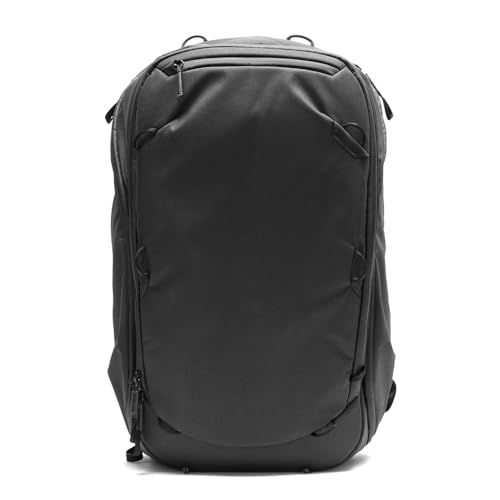
Peak Design Everyday Backpack 20L, Black, Fits 15″ Laptop — A 20-liter design-led option with flexible internal dividers, showing how camera-style organization translates to tech carry for creators. Check price on Amazon.
In this guide
What You Need
- Your laptop exact dimensions — or its model name, which gives them
- Everything you carry daily, laid out on a table
- Your commute reality: minutes carried, walking versus transit versus cycling
- Your weather: how often the bag gets rained on
- Whether you fly with it, and your usual airlines size habits
The table exercise is not optional theater. People consistently misjudge their daily load by half until they see it in a pile — the charger, the bottle, the book, the lunch, the just-in-case layer. Choose for the pile you see, not the one you imagine.
How to Choose a Laptop Backpack: Step by Step
Step 1: Fit the laptop compartment to your actual laptop
Measure your laptop width, depth, and thickness, or look up its model dimensions, and compare them against the backpack laptop compartment stated dimensions — not the marketing size on the tag. A 15-inch class label covers machines of genuinely different footprints, especially thin modern models versus older thick ones. You want a snug, padded fit: loose enough to slide in one-handed, close enough that the machine does not swim. A suspended design — the sleeve bottom raised above the bag floor — is the single best protection feature in any backpack, because drops land on the bag bottom, not on your laptop corner.
Step 2: Size the capacity to your daily load
Capacity in liters is the honest sizing language: slim commuter loads — laptop, charger, notebook, bottle — live happily around 15 to 20 liters. Add lunch, a change of clothes, or camera gear and you are shopping 24 to 30. Beyond that is travel territory. Lay out your pile, then be suspicious of both directions: too small means daily Tetris and strained zippers; too large means a floppy, half-empty bag that carries badly and tempts you to haul clutter. Your real load, plus a little grace, is the number — our sizing explainer linked below goes deeper on matching liters to life.
Step 3: Judge carry comfort like you will feel it at minute forty
Straps should be padded, contoured, and wide enough to spread load; the back panel should have structure and airflow channels if your commute is a warm walk. A sternum strap stabilizes heavy loads more than its simplicity suggests, and a waist belt matters once loads pass what a laptop and lunch weigh. If you can, try the bag loaded — a shop that lets you add weight tells you more in two minutes than a month of reviews. Height matters too: the bag bottom should sit at or above your waist, not sagging against your lower back.
Step 4: Read the protection and weather story
Padding thickness around the laptop, a reinforced base, and water-resistant fabric with a coated zipper path decide how the bag treats your computer in the real world. If your climate rains, look for genuinely water-resistant materials and covered zippers, or plan on a rain cover habit. If you set your bag on wet platforms and café floors, a structured, wipe-clean base is not a detail — it is the feature you will bless weekly. Security counts as protection too: lockable zippers and a hidden pocket change how relaxed you feel in crowds and transit.
Step 5: Match organization to your habits, honestly
Organization is personal religion: some carriers want a pocket per object and a place for every cable; others want one big cavity and pouches of their own. Neither is wrong, but buying against your nature is. Inventory your small things — charger, mouse, earbuds, pens, keys, badge — and check the bag gives them homes you will actually use. One external quick-access pocket for phone and keys is nearly universal wisdom. Water-bottle pockets should fit your actual bottle, a measurement as checkable and as skipped as the laptop fit.
Step 6: Check the build quality tells
Zippers are where backpacks go to die: look for reputable zipper brands, smooth action, and pulls you can grip with gloves. Stitching at strap anchors should be dense and reinforced — those two seams carry the whole load, literally. Fabric denier tells a durability story, with higher numbers generally tougher, and bar-tack reinforcement at stress points is the mark of a maker who expects the bag to be used hard. A warranty measured in years, from a brand that answers email, is the final tell: it is the manufacturer own estimate of the bag lifespan, printed in policy form.
Step 7: Decide style last — then commit
Now, and only now, weigh looks: the boardroom-appropriate briefcase-look pack, the technical outdoor style, the minimalist city bag. Style matters — you will wear this daily, and liking it is legitimate — but it is the tiebreaker among bags that already fit your laptop, your load, your body, and your weather. Buy from a seller with a real return window, load the bag at home, walk your actual commute route with it, and only then cut the tags. A backpack is a three-to-five-year companion; choose it like one.
Common Mistakes
Buying by laptop screen size alone
A 15-inch label on the bag and a 15-inch screen on your laptop do not guarantee a fit, because bezels, thickness, and aspect ratios vary across generations. Measure the machine, read the compartment dimensions, and leave the label to do no more than narrow the shelf. Returns for fit are the most common backpack return there is, and they are entirely preventable with a tape measure.
Choosing capacity by the biggest day of the year
The conference trip and the camping weekend are not your daily carry. A bag sized for your maximum load carries badly on the 240 ordinary days, sagging and swinging with its usual contents lost inside. Size for the daily pile; handle the exceptional days with a second bag or a packing cube strategy.
Ignoring the empty weight of the bag itself
A heavily built pack can weigh as much as a small laptop before you load it. On a long walking commute, that base weight is a daily tax. Balance durability against your carry distance: cyclists and long walkers should weigh the bag itself as seriously as its features list.
Trusting water-resistant to mean waterproof
Water-resistant fabric sheds a shower and buys you time in rain; it does not make the bag a dry bag, and zippers remain the weak point in any downpour. If your commute includes real rain, plan the rain cover or a waterproof liner for the laptop — hope is not a weather strategy, and laptops are unforgiving students of the difference.
Skipping the loaded test walk
An empty bag in a mirror tells you about fashion. The same bag with your laptop, charger, bottle, and lunch, walked for fifteen minutes, tells you about straps, balance, bounce, and zipper reach — the things you will actually live with. Every good retailer return policy exists to enable this test; use it before the tags come off.
Pro Tips
Photograph your daily pile next to a ruler before shopping. The picture disciplines every capacity claim you read afterward.
If you fly often, check the bag against your usual airline personal-item dimensions — a pack that slides under the seat saves fees and overhead-bin warfare on every trip.
Prefer a bag whose laptop access works the way you move: top-loading for desk life, clamshell opening for travel and security lines.
Register the warranty and keep the receipt photo in your cloud drive. Backpack warranties are genuinely honored by good brands, but only by owners who can prove purchase in year three.
Capacity, Translated: What Litres Mean in Real Objects
Capacity figures are the backpack equivalent of soundbar wattage: technically meaningful, practically confusing, and measured differently by different makers. Translate before you compare. A typical workday load — a mid-sized laptop, its charger, a water bottle, a paperback or tablet, a packed lunch, a light jumper and small personal items — occupies a volume that surprises people when they pack it into a box and look at it. Do that exercise, literally, with your own typical load in a cardboard box, and you will shop with a number earned from your life rather than borrowed from a product page.
Everyday, heavy-day and travel loads are three different bags
Most people own one bag but live three load patterns. The everyday load is the honest basis for choice. The heavy day — gym kit, a second device, a change of shoes — tempts buyers into a larger bag that then swallows the everyday load in an unstructured cavern where small items vanish. The travel load adds clothes and toiletries and argues for expansion or a separate cabin bag entirely. Choose the bag for the everyday, handle heavy days with a supplementary tote or the bag’s expansion if it has one, and let travel make its own case; the bag bought for the biggest day is the wrong bag on the other three hundred days.
Shape matters as much as volume. A tall, narrow bag carries books, bottles and a laptop elegantly and fights you over a lunchbox or camera; a wide, shallow bag reverses the argument. Pack your most awkward regular object — the lunch container, the headphones case, the umbrella — into candidate bags in the shop if you can, or at least measure it against the stated dimensions, because the awkward object, not the average one, decides whether a bag’s capacity is usable or merely theoretical.
Carry Comfort as a System, Not a Padding Thickness
Comfort at minute forty is produced by a system: strap shape and spacing, back panel structure, load distribution, hip transfer where the design offers it, and the bag’s own empty weight working against all of them. Curved, contoured straps suit some shoulders and slip off others; a sternum strap stabilises a load on a moving wearer and is worth more than extra padding for cyclists and brisk walkers; a ventilated back panel trades a little internal volume for a dry shirt in summer, a trade commuters in warm climates should take every time.
Fitting the bag to the body you have
Torso length decides where a bag’s weight lands, and wearers at the extremes of height feel a wrong fit first. Load the bag properly in the shop — a bag tested empty tells you nothing — walk, climb the shop’s stairs if it has them, and sit down wearing it, because a bag that digs in a chair will dig through a train journey. Check that the laptop compartment’s padding does not create a hard ridge against your back, that zips and buckles sit where your arms do not brush them, and that the straps adjust with room to spare in both directions for winter coats and summer shirts.
Weight distribution inside the bag is yours to control daily. Heavy items — the laptop, books, a full bottle — belong close to the back and centred, never swinging at the bag’s outer face, where they lever the load away from your body and multiply its felt weight. A bag whose internal layout helps you obey that rule, with the laptop sleeve against the back panel and heavy pockets low and central, will feel lighter than a nominally lighter bag that lets the load wander.
Protection in Depth: Drops, Rain and Theft Considered Together
Protection is three subjects wearing one coat. Drop protection is about the laptop compartment’s suspension, corner padding and what happens when the bag falls from a car seat or a luggage rack — test the story by asking where the laptop’s corners sit relative to the bag’s base and sides, because corners are where screens die. Rain protection is about fabric, coatings, zip design and whether a rain cover exists or a liner habit is needed; remember that most water enters through zips and seams, not through fabric, so a bag’s wet-weather honesty lives in those details.
Theft and opportunism, realistically
The realistic threat model for most commuters is opportunistic: a bag opened in a crowd, a pocket dipped on a platform, a laptop lifted from a café table during a moment’s distraction. Features that answer it are lockable or concealed zips, pockets that sit against the body, cut-resistant straps for the truly exposed commute, and above all a bag that closes fully and quickly, because the half-open bag is the invitation. Weigh exotic anti-theft armour against your actual routes; a quiet suburban commute needs less fortress than a daily crush through a major terminus, and weight spent on armour you do not need is comfort stolen from every journey.
Inside protection counts too: a fleece-lined pocket for glasses or a phone screen, a padded home for a camera or headphones, a key leash that ends the doorway excavation ritual. These details separate bags designed by people who carry things from bags designed by people who draw bags, and they reveal themselves in a shop if you bring your real small items and try housing them, one by one, before buying.
Organisation Philosophies: The Compartmentalist and the Minimalist
Bags embody philosophies. The compartmentalist design offers a pocket for everything, which delights organised carriers and punishes improvisers, whose items never match the designer’s categories. The minimalist design offers one honest volume and a laptop sleeve, which delights pouch-users who organise themselves and punishes everyone else with a daily rummage. Neither is superior; the match to your own habits is everything, and the diagnostic is your current bag: if its pockets are all used as intended, buy its philosophy again; if its main compartment holds a geological layer of everything, buy the minimalist and a set of pouches, and be free.
Access patterns: top, front and suitcase styles
How a bag opens decides how it lives. Top-loading bags are simple, weather-shedding and secure, and make you dig for anything at the bottom. Front-panel loaders open like a suitcase, glorious for packing and travel, slightly less elegant for a quick grab on a platform. Clamshell and half-zip hybrids compromise. Match the opening to your dominant act: the commuter who retrieves one item at a time on the move wants top or quick-access pockets; the traveller who packs and unpacks wholesale wants the panel. Buy for the act you perform daily, not the one you perform picturesquely twice a year.
Quick-access pockets deserve their own audit: phone, travel card, keys, earbuds, a pen — the five things reached for without setting the bag down. A bag that houses all five accessibly, without exposing them, understands commuting. Test in the shop with your own phone and card, wearing the bag, reaching as you would on a platform with a coffee in the other hand; that small pantomime predicts daily satisfaction better than any feature list.
Materials, Hardware and the Five-Year View
Fabrics trade weight, weather resistance, look and longevity against each other. High-denier synthetics shrug off abrasion and rain and look technical; canvas and leather age beautifully, weigh more and ask for care; recycled fabrics now match conventional ones in performance for most uses and differ mainly in story. Zips are the bag’s moving parts and its most common failure: look for reputable zip manufacture, smooth action under load, and pulls you can operate with gloves. Buckles should be replaceable or at least standard, because a bag retired by a broken buckle is a waste the planet and your wallet share.
Repairability and warranties as buying criteria
A maker who sells replacement straps, buckles and zip pulls, and who offers a repair service, is telling you the intended lifespan of their product. Read the warranty for what it excludes as much as what it covers, and favour the bag whose weak points are serviceable over the bag with no weak points claimed and no service offered. Over five years of daily use, the repairable bag wins on cost, on waste and on the quiet pleasure of keeping a familiar tool — and familiarity, in the bag you reach for every morning, is worth more than novelty.
End the evaluation where it began: with your actual laptop, your actual load, your actual commute rehearsed in the shop as far as the shop allows. Then buy once, buy the bag whose compromises are the ones you care about least, and stop comparison shopping. A backpack is a daily companion measured in thousands of carries; the right one disappears into your routine, and that disappearance, not any specification, is the sign the choice was correct.
The Commute Audit: Let Your Journey Specify the Bag
Before specifications, audit the journey. Time yourself door to desk and note its chapters: the walk, the wait, the vehicle, the stairs, the crowd, the weather it cannot be postponed for. Each chapter specifies something. A long walk prices comfort and weight above all. A crowded vehicle prices a slim profile, closures that cannot be opened behind you, and a bag that stands or hangs without collapsing into other passengers’ space. Stairs and platforms price a sternum strap and a load that does not sway. A cycling chapter prices stability, visibility and weatherproofing so heavily that it can overrule every other consideration, which is why cyclists should shop in their own category first and borrow from general commuter bags only with caution.
Public transport, driving and walking produce different winners
The driver-commuter’s bag lives a gentler life: car seat to office, protected from weather, rarely carried for more than minutes. Organisation and professional appearance can lead, and weight hardly matters. The walking commuter’s bag is athletic equipment and should be judged like it. The public-transport commuter’s bag is a compromise machine — carried, set down, guarded, squeezed — and durability of zips, base and straps matters most, because its life is measured in thousands of small abrasions rather than in dramatic accidents. Naming your chapter honestly prevents the classic error of buying the bag for the commute you wish you had.
Hybrid workers should audit both lives: the home-to-office day and the café-and-meetings day, which differ in load and in how long the bag is carried versus parked. A bag that serves the heavier-carry day comfortably will serve the lighter day without complaint, while the reverse is not true, so when the two lives disagree, let the harder one specify.
Sizing for Real Laptops: Thickness, Chargers and Docks
Laptop compartments are advertised by screen diagonal, but laptops of the same diagonal differ in thickness, footprint and attitude — a gaming machine and a slim ultraportable with identical screens are different animals, and only one of them fits the sleeve you are imagining. Measure your machine’s actual dimensions, including its feet and any protruding hinge design, and compare them with the compartment’s internal measurements rather than its marketing label. Then add the entourage: the charger, which on some machines is a brick worthy of the name; a mouse; a docking or hub accessory; cables that multiply like wire coat hangers. A compartment that fits the laptop and forces its charger to live against the screen, separated by one layer of fabric, has solved the wrong problem.
Work-issued machines and the two-laptop household
If your laptop is work-issued, consider its replacement cycle: the next issued machine may be larger, and a compartment with a little honest headroom insures the bag against your employer’s purchasing department. Carriers of two machines — a work laptop and a personal one, or a laptop and a large tablet with keyboard — need a bag whose second device has a padded home of its own, not a shared sleeve where two screens rub through a commute. Test with both devices and both chargers aboard, and walk; the two-device load is where marginal comfort goes to die, and discovering that in the shop is the entire point of bringing your real kit.
Finally, weigh the whole assembly as you will carry it and compare it with your own tolerance over your real distance. There is no universal correct number, but there is a personal one, discoverable in a week of honest attention to how your shoulders feel at the end of the day. A bag purchase that ignores total carried weight in favour of the bag’s empty weight alone has measured the smaller half of the problem.
Style, Workplaces and the Bag as a Signal
A backpack sends a message before you reach the meeting, and workplaces read it variously. In conservative professions, a structured, muted bag in leather or a sober fabric passes without comment where a technical outdoor design, however excellent, spends credibility its owner may not wish to spend. In creative and technical workplaces the polarity reverses. Neither reading is fair and both are real, so choose with your actual rooms in mind: the clients you face, the seniority you hold or seek, the journey between sites. The mature position is not surrender to the signal but literacy about it — you may still buy the technical bag, but buy it knowing the message it sends in your building.
Colour, branding and longevity of taste
Colour is a longevity decision disguised as a preference. A vivid bag delights for a season and dates for a decade; a quiet colour survives changes of job, wardrobe and taste, and shows travel and weather more forgivingly in dark, textured fabrics. Branding follows the same logic: prominent logos advertise the maker’s priorities and, occasionally, the bag’s contents to the wrong audience. For a five-year daily companion, understatement is rarely regretted, and the owners of decade-old bags are disproportionately the owners of plain ones, because plainness never gave them a reason to stop carrying a bag that still worked.
Convertibility deserves a word in the style conversation: bags that convert between backpack and briefcase or tote serve the worker whose day crosses contexts — site in the morning, client in the afternoon — and the conversion, if well designed, is a genuine feature rather than a gimmick. Test both modes loaded, because a bag that is a mediocre backpack and a mediocre briefcase is worse than either honest single-purpose design, however elegant the idea sounded in the product video.
The Loaded Test: A Protocol for the Shop and the Trial Week
Do not buy a backpack you have not carried loaded. Bring your laptop, charger, bottle and the day’s ordinary contents, pack the candidate as you would at home — heavy items against the back, small items in their intended pockets — and walk the shop for several minutes, including stairs, a sit-down, and a pantomime of your platform reach for phone and travel card. Note hot spots on shoulders, any sway, any zip that needs two hands, any pocket your hand cannot find blind. These minutes are the highest-value research in the entire purchase, and a shop that discourages them has told you something about the shop.
The trial week at home
If returns allow, give the finalist a week of real service before committing: the full commute in weather, the heavy day, the day of meetings. Keep the tags question in mind honestly — a week is long enough for the bag’s true character to replace its first impressions, and short enough to act on. At week’s end, ask the only question that predicts year three: did the bag disappear into the routine, or did it keep asking for attention — a strap adjusted, a pocket cursed, a load repacked? Buy the disappearing bag. The spectacular one has already told you its price, and the price is daily.
Record what the trial taught you even if you keep the bag, because the note — what fits, what pinches, what the rain did — is the beginning of the next purchase’s wisdom, years from now, when this bag finally retires. Good equipment decisions compound across a lifetime of them, and the compounding starts with writing down what your own back learned.
Second Bags, Travel Systems and Knowing When One Is Not Enough
Some lives genuinely need two bags: a slim daily carrier and a travel pack, or a work bag and a gym-inclusive carrier, and forcing one bag to serve both masters can produce a compromise that serves neither. The honest arithmetic compares the cost and cupboard space of a second, purpose-fit bag against years of daily friction with a forced compromise, and friction usually loses. If you travel monthly with the laptop, a travel bag with a proper clothing compartment and a trolley sleeve will repay its existence in the first few trips, while the daily bag stays lean and pleasant for the other three hundred days.
The trolley sleeve and other travel specifics
Frequent flyers should treat the trolley sleeve — the strap that slides the backpack over a suitcase handle — as close to mandatory, because it converts airports from carries into rolls. Check its security: a bag that slides off a handle at a run is worse than none. Add the other travel specifics to the audit: whether the laptop compartment opens flat for security lanes where that is required, whether the bag’s dimensions respect your usual airline’s cabin rules when honestly packed, and whether a concealed pocket exists for passport and documents against the back. Travel is where backpack design is most severely examined, and the bags that pass were specified by travellers, not adapted for them as an afterthought.
Gender, Fit and the Myth of the Universal Backpack
Backpacks are still too often designed around one default body and sold to every body, and the differences are not cosmetic. Shoulder width and curvature decide whether straps sit on muscle or migrate towards the neck; torso length decides where the load lands; strap spacing and sternum-strap height decide comfort across the chest in ways makers’ unisex claims politely ignore. The practical response is fitting, not labelling: try bags loaded, adjust every strap the bag offers, and distrust any design whose comfort depends on your body resembling its designer’s. Makers who offer genuinely different fits — sizes, women’s-specific harness geometry, adjustable torso lengths — are answering a real problem, and a wearer who has suffered a default-fit bag for years will feel the difference within fifty loaded paces.
Carrying for two: the parent and carer specification
Carriers who also carry a child’s or another person’s world — snacks, wipes, a change of clothes, a toy whose absence would be a diplomatic incident — should specify a bag that segregates the two lives, because a laptop sharing a compartment with a leaking drink bottle is an insurance claim in rehearsal. A sealed, separately accessed section for the care load, washable in its lining, plus the ordinary laptop virtues, converts an impossible specification into a merely demanding one. The same logic serves medics, teachers and anyone whose bag is partly a toolkit for others: compartments are not fussiness when the contents include other people’s emergencies.
And a word for the smallest specification of all, which decides daily pleasure out of proportion to its size: the handle. You will lift the bag by its top handle a thousand times — off floors, out of footwells, onto scanners — and a handle that is padded, centred so the bag hangs true, and strong enough to trust is a feature you will thank more often than any pocket. Test it loaded in the shop, and let its verdict count.
The Airport, the Office and the Weekend: One Bag or Three, Revisited in Practice
Put the one-bag question to a calendar test. Mark last month’s days: office days, travel days, days the bag carried a second life — gym, market, a child’s necessities. If one pattern dominates overwhelmingly, a single bag specified for it, with tolerable manners in the minority patterns, is the efficient answer. If two patterns split the month evenly, the compromise bag will be wrong half your life, and two honest bags — each excellent at its own pattern, each cheaper than the mythical bag that does everything — will serve you better and probably cost no more in total. The calendar does not care about product marketing, which is exactly why it is the right instrument for this decision.
Retiring a bag well
End the subject where ownership ends. A good bag retired from daily service still has lives in it: the car-boot bag, the storage bag for cables and seasonal kit, the donation that equips a student whose commute is just beginning. Repair what is cheaply repairable before passing it on, empty its pockets of the small archaeology every long-carried bag accumulates, and let it go with its story. The backpack you chose with the care this guide describes will have earned that consideration — thousands of carries, weather survived, a laptop protected through years of small accidents — and choosing its successor with the same care is how a lifetime of mornings gets quietly, reliably equipped.
The Final Fitting: A Bag Is Chosen by the Back
Every argument in this guide — capacity, protection, organisation, materials, style — must finally pass one judge that cannot be argued with: your own back, at minute forty, under your real load, on your real journey. Specifications shortlist; the back decides. Honour its verdict even when it contradicts the spreadsheet, because the spreadsheet will not be carrying the bag in February rain. Choose the bag your back forgets, keep the receipt until it has survived a trial week, and then commit to it for years — a well-chosen backpack is not a purchase to be repeated annually but a piece of equipment to be lived in, and living in it well begins the morning it disappears into your routine.
A Note on Buying Once, in an Age of Buying Often
A laptop backpack is one of the last purchases that still rewards the old discipline of buying once and buying well, because its quality is proven in years rather than in unboxing minutes and its failure modes are all slow ones. Resist the annual itch for a marginally different bag; a familiar bag, worn in, its pockets mapped by muscle memory, is worth more to a working life than any incremental redesign. Replace yours when it can no longer protect the machine or the back that carries it — and not before — and let this guide’s questions, asked once and answered honestly, serve for the decade of mornings that follows.
Related Guides
- best laptop backpacks for travel
- best laptop backpacks for business
- best laptop backpacks for work
- best laptop backpacks for under 100
- best backpacks for camera
- how to fix a broken backpack zipper
- how to clean a laptop backpack
- how to pack a laptop backpack
Frequently Asked Questions
What size backpack do I need for a 15-inch laptop?
The laptop compartment must fit your machine exact dimensions — measure it, because 15-inch class laptops vary — and the bag capacity should match your load: around 15–20 liters for laptop-plus-essentials commuting, 24–30 if you add lunch, clothes, or gear. Our sizing explainer works through the liter question in detail. When between sizes, the smaller bag that fits your pile carries better than the larger one that swallows it.
Is a suspended laptop sleeve worth it?
Yes — it is one of the few features with a clear mechanical benefit. By holding the laptop above the bag floor, it ensures that the most common drop — bag set or knocked straight down — lands on padding and structure rather than transmitting through your computer corner. Combined with adequate padding, it is the difference between a scare and a repair bill. If a bag you love lacks it, a separate padded sleeve inside recovers most of the benefit.
How long should a good laptop backpack last?
A well-made pack from a reputable brand, used daily, should serve three to five years before zippers, straps, or fabric retire it — and premium makers back that with multi-year or lifetime warranties. Cheap bags commonly fail inside a year at a zipper or strap anchor. The economics favor buying once at quality: cost per year of a durable bag is lower, and it does not fail you in month two with your laptop inside it.
Are anti-theft features worth paying for?
If your commute involves crowded transit, festivals, or travel through busy stations, yes: lockable zippers, cut-resistant straps, hidden pockets, and RFID-shielded slots for cards are cheap insurance and real peace of mind. If your bag goes from your shoulder to your office chair in a quiet suburb, they are harmless extras rather than necessities. Match the security spend to the crowd density of your actual route.
Can one backpack serve work and travel?
A 24–30 liter pack with a clamshell opening, a trolley sleeve, and personal-item-friendly dimensions is the classic one-bag answer and serves most people for both. The compromises are real — it is slightly large for pure desk days and slightly small for week-long trips — but for the majority whose travel is two-to-four-day trips, the dual-purpose bag beats owning two specialists. Choose this shape deliberately and it will be the most-used luggage you own.
What is the best material for a laptop backpack?
For daily durability, tightly woven nylon or polyester in a substantial denier, ideally with a water-resistant coating, is the workhorse answer. Ballistic nylon is the toughness benchmark for business bags. Leather looks superb and ages beautifully but adds weight and fears rain. Recycled fabrics from good makers now match conventional durability. Judge the specific fabric weight, coating, and construction together rather than by fiber name alone — a well-made polyester pack outlasts a badly made nylon one.
Is a hard-shell laptop compartment better than a suspended sleeve?
They protect against different harms. A hard shell resists crushing and knocks from outside; a suspended sleeve protects against the most common accident of all, the bag set down hard or dropped, by keeping the laptop from ever touching the base. For typical commuting, suspension plus good corner padding covers the realistic risks best; hard shells earn their weight for travellers whose bags are stacked and compressed in transit.
How do I clean and maintain a laptop backpack?
Empty it fully, shake out the debris that collects in seams, and wash according to the maker’s instructions — usually a gentle hand wash or a careful machine cycle for synthetics, never for leather. Air-dry completely before reloading, lubricate tired zips with a graphite pencil or zip lubricant, and reproof water-resistant coatings when rain starts soaking in rather than beading. Ten minutes twice a year doubles most bags’ useful lives.
Can a laptop backpack count as a personal item on flights?
Often, yes, but dimensions and enforcement vary by airline and fare, and a bag that qualifies when half empty may fail a sizer when packed full. Check your usual airline’s personal-item dimensions against the bag’s measurements, and be honest about your packed size rather than the empty one. If you fly one airline constantly, let its sizer be one of your buying specifications.