The dlp vs lcd projector comparison is about how the image is made. A DLP projector reflects light off a chip covered in microscopic mirrors, one per pixel, while an LCD projector, in home models almost always a three chip design called 3LCD, shines light through three liquid crystal panels, one for each primary colour. Both approaches produce superb home cinema images, and both have characteristic strengths and one or two quirks worth knowing before you buy.
DLP designs are typically compact, sharp and strong on motion, with a small number of viewers sensitive to rainbow artefacts on single chip models. 3LCD designs offer strong colour brightness, no rainbow effect, and often more lens shift flexibility. This guide compares them on the criteria that survive marketing: colour, contrast, motion, flexibility and living with each design, so you can match the technology to your eyes and your room.
Disclosure: As an Amazon Associate, kajuandouglas.com earns from qualifying purchases. Links to Amazon on this page are affiliate links; they cost you nothing extra. Listing details such as price and availability change often, so check the current Amazon listing before you buy.
Quick answer: Quick verdict: choose 3LCD for maximum colour brightness, no rainbow artefacts and flexible lens shift placement. Choose DLP for compact size, sharpness, strong motion handling and often lower tiers in portable and gaming models. If you can, view a DLP model before buying to check your own rainbow sensitivity.
DLP vs LCD Projector: Side-by-Side Comparison
The table below summarises the contest before the detailed sections argue each criterion in full.
| Criterion | DLP | 3LCD (LCD) |
|---|---|---|
| How the image forms | One chip of microscopic mirrors, colour added by a wheel or sequential light source | Three LCD panels, one per primary colour, combined into one image |
| Colour brightness | Varies by design; check colour light output figures on colour wheel models | Typically equals white brightness, a headline strength of the technology |
| Rainbow artefacts | A small minority of viewers see colour flashes on single chip models in high contrast scenes | None, because all colours are present simultaneously |
| Contrast behaviour | Strong ANSI contrast and sharp pixel structure on good models | Strong full screen contrast on good models; pixel structure slightly softer |
| Placement flexibility | Often limited lens shift on compact models; check carefully | Frequently offers generous zoom and lens shift, easing installation |
| Typical strengths | Portable, gaming and compact home models | Living room and dedicated home cinema models with flexible installs |
In this guide
Colour Brightness and the Rainbow Question
Brightness has two faces: white brightness and colour brightness. A projector can be dazzling on a white test image yet muted on a colourful one if its design sacrifices colour light to boost white. Three chip LCD designs inherently produce colour brightness equal to their white brightness, which is why their images look rich and saturated in colourful scenes and presentations. DLP designs vary: models with a colour wheel segment layout favouring white can measure lower on colour brightness, while well designed home cinema DLP models perform far better, so check the colour light output figure where it is published.
Rainbows are the other famous difference. On a single chip DLP projector, sensitive viewers catch brief red, green and blue flashes when their eyes move quickly across a high contrast image, such as white subtitles on black. Most viewers never see them; a minority find them distracting or tiring. Modern faster colour systems have reduced the effect considerably. The only reliable test is personal: watch a dark, high contrast scene on a DLP model and move your eyes across it. If you see nothing after a few minutes, the issue is closed for you.
Sharpness, Motion and Contrast in Practice
DLP mirrors switch extremely fast and the single chip design keeps the three colours perfectly aligned, which gives DLP images a crisp, precise quality that suits text, gaming and detailed film work. Its motion handling is a traditional strength, with fast response that keeps sport and games clean. ANSI contrast, the contrast measured within a single mixed scene, is often a DLP highlight, giving punchy images with bright and dark elements together.
3LCD images are fractionally softer at the pixel level, which many film viewers actually prefer for its smooth, analogue quality, and modern high resolution 3LCD models are sharp by any reasonable standard. Their contrast strength tends to show in full dark scenes on models with dynamic iris systems. In practice, at normal seating distances with film content, both technologies look excellent, and lens quality, brightness honesty and room darkness separate individual models more than the imaging badge does.
Placement, Size and Living With Each Design
Installation flexibility differs in ways spec sheets hide. Many 3LCD home models offer wide zoom ranges and generous vertical and horizontal lens shift, which makes ceiling mounting and shelf placement forgiving. Many compact DLP models offer little or no lens shift and a fixed offset, demanding precise placement. If your room forces a compromise position, that difference can decide the purchase before picture quality is even discussed, so check shift ranges against your measured layout early.
Ownership is otherwise similar: both need lens care, filters checked and sensible ventilation. DLP portables dominate the travel and garden movie classes for size and simplicity, while 3LCD anchors many living room and dedicated cinema installs. The mature way to choose is sequential: confirm you are not rainbow sensitive if DLP tempts you, confirm the placement flexibility your room needs, then compare the specific models on brightness, lens and lag for your content mix.
Who Each Option Suits
- Choose 3LCD if: You want colour brightness guaranteed, you or family members see rainbows on DLP, or your installation needs generous lens shift and zoom flexibility.
- Choose DLP if: You have confirmed no rainbow sensitivity, you value compact size, sharpness and motion, or you are buying portable or gaming focused models where DLP choice is widest.
- Either serves you well if: You are comparing quality home cinema models for a dark room with a straightforward central installation; then lens, brightness and price on the day should decide.
Final Recommendation
Final recommendation: run the rainbow test if a DLP model leads your list, and run the placement calculation for both. Those two personal checks eliminate most wrong purchases. What remains is a choice between excellent implementations of both technologies, and at that point the specific model lens, brightness honesty and features deserve your money more than the category label does.
The Rainbow Test, Done Properly in Five Minutes
If a DLP model leads your shortlist, test your own eyes before money moves. In a dim room, play a dark scene with bright highlights or white subtitles on black, the highest contrast content you own. Watch normally for a minute, then let your eyes move quickly across the screen a few times, and glance away and back. Viewers who see rainbows see them under exactly these conditions, as brief colour separations at the edges of bright objects. Viewers who see nothing after this test almost never develop the sensitivity later.
Test the household, not just yourself, because the projector serves everyone. Children and occasional guests will not report an effect they cannot name; they will simply enjoy film night less. If anyone in the household sees the effect clearly, the decision is made for you, and it is a painless one, because the 3LCD alternatives at the same tier are excellent. The test costs five minutes in a store or a retailer returns window, and it converts the most debated topic in projection into a personal fact.
Sealed Light Paths, Dust and Other Ownership Differences
Many DLP designs seal their light path, which keeps dust out of the imaging area and makes them tolerant of dusty rooms, rentals and portable life. Traditional 3LCD designs breathe through filters that need periodic cleaning, and in very dusty environments, dust can eventually reach the panels and appear as soft coloured blobs that need professional cleaning. Modern designs have improved considerably, and a normally clean home will never trouble either technology, but a workshop, a renovation prone house or a smoky room tilts the ownership experience towards the sealed design.
Fan noise and heat follow the individual model more than the technology, and both should be judged on the specific unit in its quiet mode. The pattern across this whole comparison repeats: the technologies set the questions, rainbow sensitivity, colour brightness, placement flexibility, dust tolerance, and the individual model answers them. Buyers who work through the questions in that order rarely choose badly, whichever badge ends up in the room.
Real-World Scenarios and Examples
Abstract advice lands differently in real rooms. These scenarios apply the guidance above to the situations readers describe most often.
- The rainbow sensitive viewer: Sees colour flashes in the five minute test. 3LCD, without regret; the alternatives at the tier are excellent and the effect would have taxed every film.
- The dusty workshop cinema: Films projected where projects happen. A sealed DLP design tolerates the environment that would slowly film an open light path.
- The presentation professional: Colourful slides in lit rooms. 3LCD colour brightness equality keeps charts vivid, and text stays persuasive at the back of the room.
- The travelling gamer: Projector in a bag, games at friends houses. Compact DLP portables dominate this life, with lag figures checked model by model.
- The flexible install: Ceiling position compromised by beams and lights. The 3LCD model with generous lens shift absorbs the room compromises optically.
Gear for This Guide
These verified examples place a real model on each side of the comparison, including the lens flexibility difference this guide highlights.

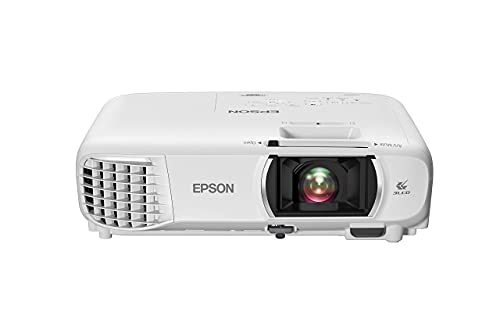
Epson Home Cinema 1080 3-Chip 3LCD 1080p Home Theater Projector — A 3LCD home model with strong colour and white brightness, representing the LCD side of this comparison for living room use. Check price on Amazon.
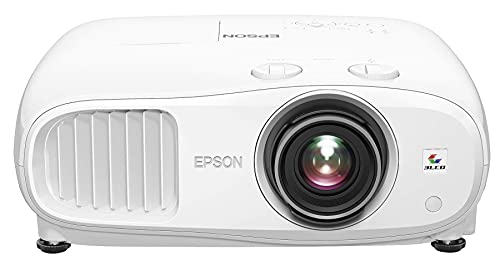
Epson Home Cinema 3800 4K PRO-UHD 3-Chip 3LCD Projector with HDR Technology — A 4K PRO-UHD 3LCD model with the lens flexibility typical of the technology, useful for checking shift ranges against your room. Check price on Amazon.

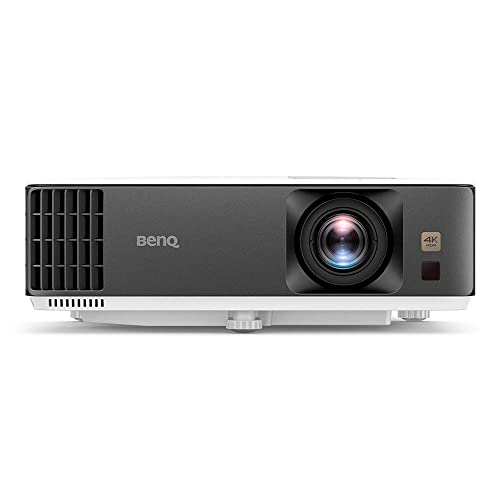
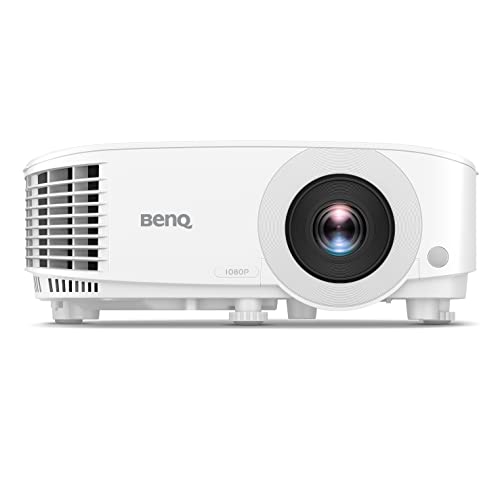
BenQ HT2150ST 1080P Short Throw Projector — A DLP short throw gaming friendly model representing the DLP side: compact, sharp and built for low lag play. Check price on Amazon.
Inside the Two Light Engines: Why the Pictures Feel Different
DLP and LCD projectors can share a resolution, a brightness figure and a price tier yet produce images with distinctly different characters. Understanding where those differences come from — the path light takes through each engine — explains nearly every practical contrast between them, from motion handling to dust behaviour.
How DLP builds the picture
A DLP chip carries hundreds of thousands of microscopic mirrors, one per pixel, each tilting thousands of times per second to send light toward the lens or away from it. Brightness is time: a mirror spends more of each moment in the on position for bright pixels. Colour in most home models comes from sequencing — red, green and blue light presented in rapid succession while the mirrors paint each colour’s contribution, and your visual system blends them. That sequencing is the source of DLP’s two famous traits: excellent motion clarity, because each colour field is brief and the mirrors switch almost instantly, and rainbow artefacts for sensitive viewers, because a fast eye movement across the screen can separate the colour fields for an instant.
How LCD builds the picture
An LCD projector splits white light into red, green and blue paths, passes each through its own liquid-crystal panel — one per colour, each with a pixel grid that opens or closes to modulate the light — then recombines the three coloured images through a prism into a single full-colour picture, all colours present simultaneously. Because the three panels must align to a fraction of a pixel, convergence is a defining LCD topic: slight misalignment shows as colour fringing on text edges. Because the panels modulate continuously rather than by rapid switching, LCD motion looks more like a sample-and-hold display, with a touch more blur in fast pans than DLP, but with no colour sequencing there are no rainbows for anyone, ever — a decisive point for households where several viewers have different sensitivities.
What this means at the screen
Put the mechanisms together and the familiar comparison writes itself. DLP tends to look crisper in motion and holds tight pixel structure; LCD tends to deliver colour brightness equal to its white brightness, so saturated colours stay vivid in bright scenes, and its image has a calm, simultaneous quality some viewers find easier on the eyes over long sessions. Neither character is a defect. They are the visible signatures of two genuinely different ways of making a picture, and your content mix decides which signature you will enjoy more.
The Rainbow Question, Taken Seriously
Who sees them and when
Rainbow artefacts — brief red, green and blue fringes seen when your eyes move quickly across a bright element on a dark background — affect a minority of viewers strongly, more notice them occasionally, and many never see them at all. They are most visible in high-contrast scenes: white subtitles on black, a torch beam in a dark film, credits scrolling. Sensitivity is personal and not predictable from eyesight quality; it is about how your visual system samples the sequenced colour. Children and guests may see them when you do not, which matters for a family projector bought by one insensitive viewer for a room full of other people.
Reducing rainbows on a DLP you already own
If rainbows bother you mildly, several adjustments soften them: lower peak brightness in dark scenes, since the artefact scales with contrast; avoid the fastest colour-wheel or sequencing modes if the projector offers alternatives; sit a little further back so eye movements sweep smaller angles; and keep subtitles in a softer colour if your player allows it. If rainbows bother you strongly, be honest that these are mitigations, not cures — the correct fix is an LCD or other simultaneous-colour projector, and trading across is cheaper than years of irritation.
Testing before you buy
A showroom test should include the worst case, not the demo reel: ask for a dark scene with bright highlights and move your eyes deliberately across the screen, and watch white text on black. Ten minutes with demanding content tells you more than an hour of colourful animation, which hides the artefact almost completely. If buying unseen, favour retailers with straightforward returns for this specific reason, and test in your own room during the return window with the darkest content you own.
Ownership Realities: Dust, Filters, Alignment and Ageing
Dust and the sealed light path
Most DLP light engines are effectively sealed, so dust rarely reaches the imaging surfaces; when dust appears it is usually on the lens, where it is easy to clean. Traditional LCD light paths are more open, and a dust blob on a panel shows as a soft coloured spot, most visible on plain backgrounds. Regular filter cleaning is the LCD owner’s main chore and it genuinely matters: clogged filters raise internal temperatures and shorten component life. Newer LCD designs seal their paths better than older ones, so treat this as a tendency to check on the specific model, not a law — but the filter habit is worth forming regardless of technology.
Convergence and pixel alignment over time
LCD’s three panels can drift very slightly with heat cycles and knocks, softening text edges with colour fringes; many models include a panel-alignment adjustment in the menus that corrects small errors electronically. DLP’s single chip has nothing to converge, one reason its text stays pin-sharp for data and spreadsheets. For a projector that will show presentations or a desktop, that stability is a real working advantage; for films, small convergence errors are invisible at viewing distance and should not dominate the decision.
How each technology ages
- LCD panels can slowly lose contrast over many years of heat and light exposure, and polarisers age; the change is gradual and mostly matters to enthusiasts measuring it.
- DLP chips are famously durable; the moving parts around them — colour wheels in lamp models, fans in all models — are the more likely failure points.
- Both depend on fans and filters; the quiet, boring maintenance of cleaning filters and keeping vents clear does more for lifespan than the choice between these two technologies.
Matching the Technology to Your Content
Sport and fast action
Fast pans across a football pitch or a racing game reward DLP’s switching speed with cleaner motion and less smear on the ball and the background alike. LCD counters with colour brightness that keeps kits and pitch vivid in a bright room. If your viewing is mostly daytime sport in a family room, LCD’s vividness may serve you better; for evening sport in a darkened room, DLP’s motion edge is the one you will notice.
Films and dark scenes
Cinema content exposes black level and contrast first. DLP models, particularly with dynamic iris or laser dimming, often dig deeper blacks in dark scenes, while LCD models with good irises compete well and add freedom from rainbows during exactly the high-contrast scenes where rainbows appear. The film-lover’s decision is therefore personal in a specific way: if you are rainbow-sensitive, LCD removes a distraction no contrast advantage can outweigh; if you are not, DLP’s dark-scene performance is tempting.
Gaming, presentations and mixed family use
Gamers should weigh input lag figures for the specific models — both technologies include low-lag designs and laggy ones, and the engine type predicts lag poorly. Presenters and teachers benefit from LCD’s colour brightness for charts and from never worrying whether an audience member sees rainbows during a long session. Mixed family use, the most common case of all, usually lands on practicalities: the LCD’s calm image and the DLP’s sharpness and compactness are both defensible, and the deciding vote often goes to the model whose brightness, throw and lens fit the room — a reminder that engine choice, while real, is one factor among several and rarely the one that should override the room’s geometry.
Brightness Claims: White, Colour and What the Numbers Hide
The most consequential difference between these technologies hides inside a specification both appear to share. A lumen figure measures white light, and the two engines produce white very differently — which means identical headline numbers can describe visibly different projectors.
Why DLP white and DLP colour diverge
Many single-chip DLP designs boost their white brightness with a clear or white segment in the colour sequence, which lifts the measured white output while contributing nothing to saturated colours — and can slightly wash them out at peak settings. The result: a DLP projector can measure impressively on a white test pattern while a fully red or blue scene renders considerably dimmer. This is not dishonesty so much as a measurement that flatters one architecture, but for buyers it means the headline number overpromises exactly the content — sport, animation, games — where colour carries the picture. It also explains a common owner’s puzzle: test patterns look blazing, films look merely fine.
LCD’s equal colour brightness
A three-panel LCD projector makes white by adding its red, green and blue channels, so its colour brightness equals its white brightness by construction: a saturated scene gets the full output the specification claims. In bright rooms, where projectors fight ambient light for every scrap of visibility, that equality is a working advantage that no white-lumen figure reveals. When comparing across these technologies for a bright room, the colour brightness figure — published as colour light output by makers who support the standard — is the number to set against a DLP model’s white figure, and independent reviews that measure both are worth seeking out for exactly this reason.
Testing colour brightness yourself
In a showroom, the test takes a minute: display a saturated red, green and blue full-screen image in turn — any test-pattern app or video provides them — and compare each against the white screen’s apparent brightness, on both projectors, in the same picture mode. The projector whose colours hold up against its own white is the one whose films and matches will stay vivid at home. Also watch what maximum-brightness modes do to colour on the DLP: many gain their peak by leaning on the white segment, and the picture’s richness drains as the number climbs — a trade you should make knowingly, for daytime sport perhaps, and never unknowingly for film night.
Motion, Gaming and Input Lag in Detail
How each engine draws a moving picture
DLP’s mirrors switch almost instantly and its colour fields are brief, so a moving object is drawn sharply in each instant and the eye integrates clean motion — the technical root of DLP’s reputation for crisp sport and gaming. LCD panels change state more slowly and hold each frame until the next replaces it, which the eye reads as a gentle smear on fast pans. Modern LCD models narrow the gap with faster panels and higher refresh support, and for most viewers at film frame rates the difference is subtle; for fast gaming and sport in a dark room, it remains the clearest picture-quality divide between the engines after rainbow artefacts.
Lag is a model property, not an engine property
Input lag — the delay between your controller and the screen — is set by the projector’s processing chain far more than by its light engine. Both technologies include models with dedicated low-lag game modes that competitive players accept, and both include models whose processing makes fast games feel unresponsive. The buyer’s rule is absolute: check the measured lag, in game mode, at the resolution and refresh rate you will play, for the specific model. Never infer it from the engine, the brand or the price. And when you test, turn the game mode on — many projectors only reach their quoted lag with image processing bypassed, which is a setting, not a default.
High refresh and the LCD catch-up
Recent LCD gaming models support high refresh rates that, combined with their freedom from rainbows and their colour brightness, make them compelling for players who game in lit rooms or who are rainbow-sensitive. DLP counters with inherently clean motion at any rate. The practical outcome is that gamers no longer have a default engine: the decision runs through measured lag, your rainbow sensitivity, your room’s light and the specific models’ game modes — a more complicated answer than a decade ago, and a better one, because both engines now field genuinely good gaming machines.
Size, Placement and Installation Differences
Why DLP models are often smaller
A single chip and a compact light path let DLP designs shrink: many of the smallest serious projectors — the ones that travel between rooms and houses — are DLP. Three panels, a prism and a more open light path make LCD models typically larger and heavier at a given performance level, though home-cinema LCD models use the size for quieter cooling and bigger lenses. If the projector must live invisibly or move often, the DLP catalogue offers more choices; if it mounts once on a ceiling, size stops mattering and the LCD’s bulk becomes an asset in airflow and lens quality.
Lens shift and zoom: LCD’s traditional stronghold
Generous lens shift and wide zoom ranges have historically been LCD home-cinema territory, because the larger chassis accommodate larger, better-travelling lenses. Many DLP models offer little or no shift, demanding precise placement or the keystone correction that costs sharpness. This is a decisive practical point that picture comparisons miss entirely: in a room where the projector cannot sit dead-centre — most rooms — an LCD model’s placement flexibility can deliver a geometrically perfect, uncorrected image where a DLP model requires compromise, and a perfect image from the flexible projector beats a theoretically crisper one that arrives resampled. Always check shift and zoom against your room before falling for either engine’s picture.
Noise and heat placement
Cooling follows size: larger LCD bodies usually move air more slowly and quietly at a given brightness, suiting them to mounts near seating in quiet cinema rooms, while compact DLP models work their fans harder — though design quality varies more than engine type, and the best compact models are impressively civilised. Judge the specific model’s measured noise in its cinema mode, and remember the mount’s distance from your ears outweighs small specification differences either way. A projector you can hear thinking during quiet dialogue will be resented regardless of which engine makes the picture.
The Decision, Distilled by Viewer
- Rainbow-sensitive viewers and their families: LCD, without further debate — comfort outranks every other criterion.
- Dark-room film lovers who are not rainbow-sensitive: DLP’s contrast and motion are tempting; decide on the measured black levels of the specific models.
- Bright-room all-rounders: LCD’s colour brightness is the working advantage; verify with saturated content, not white patterns.
- Presenters and teachers: LCD for colour brightness and an audience-proof image; DLP if the projector must travel light.
- Gamers: no engine default — measured lag, game mode, refresh support and rainbow sensitivity decide, model by model.
- Awkward rooms: whichever engine offers the lens shift and zoom your geometry needs, because placement beats theory.
Two mature technologies, two honest sets of trade-offs, and not a loser between them: that is the real conclusion of this comparison. The buyers who regret their choice are rarely those who picked the wrong engine — they are those who picked an engine in the abstract and discovered their room, their eyes or their content had a vote. Give them the vote first, and either technology will reward you with years of pictures you stop analysing and start enjoying.
Three-Chip DLP, LCoS and the Wider Family
The comparison in this guide concerns the mainstream forms — single-chip DLP and three-panel LCD — but buyers researching seriously will meet two relatives, and placing them prevents confusion.
Three-chip DLP
High-end and cinema installations use three DLP chips, one per colour, eliminating the colour sequence entirely — and with it, rainbows — while keeping DLP’s motion clarity and contrast character. The cost is the point: three chips, a prism and the optics to align them put these machines in a different price world from anything else in this guide. They matter to the mainstream buyer mainly as proof that rainbow artefacts are a single-chip compromise, not a DLP essence — and as the technology your local cinema most likely uses, which is why nobody reports rainbows at the movies.
LCoS and its house names
Liquid crystal on silicon — sold under several brand names — is a reflective cousin of LCD that has earned a devoted following for film: very high native contrast, smooth, densely packed pixels with almost no visible grid, and no rainbows. Its trade-offs are price, size and motion that sits closer to LCD’s character than to DLP’s. If your research keeps circling back to black levels and a calm, filmic image, and the budget stretches, LCoS is the third chair at this table — but for the mainstream decision, the DLP-versus-LCD frame in this guide remains the one most buyers are actually choosing within.
LED and laser variants change the source, not the engine
Both DLP and LCD engines now pair with lamp, LED and laser light sources, and the pairing is independent of the imaging choice: a laser DLP still sequences colour and can still rainbow; an LED LCD still has three panels to converge. When a listing leads with its light source, remember to ask the engine question separately, because the two choices multiply into combinations whose characters are the sum of both halves of this site’s comparisons.
Long-Term Picture Drift: What Owners Notice at Year Five
New-projector comparisons dominate reviews, but the engines age differently in ways owners eventually notice. LCD panels and their polarisers can lose a little contrast and uniformity across many years of heat, sometimes with a gentle colour cast creeping into one region; quality models resist for a long time, and the change is gradual enough that owners adapt until a side-by-side comparison startles them. DLP’s chip is essentially ageless, but its colour wheel (in lamp models) is a mechanical part with bearings, and its eventual wear announces itself in noise before picture changes. In both cases the cooling system is the lifespan governor — fans and filters again — and the owner who kept them clean owns the projector that still looks right at year five, whichever engine is inside. Choose the engine for your eyes and your room; then keep it cool and clean, and the ageing argument largely takes care of itself.
Colour Accuracy and Calibration Behaviour
Out of the box, both engines include accurate modes and vivid modes, but they respond differently to calibration and to the settings owners actually leave them in. Three-panel LCD designs, with independent control of each colour channel, traditionally offer calibrators fine-grained control and hold their primaries steadily as brightness changes. Single-chip DLP designs manage colour through their sequence and wheel design, and their brightest modes trade accuracy hardest — the white segment that buys lumens spends colour purity to get them. For most owners this stays academic, because both engines’ cinema modes are pleasingly accurate. It matters for two groups: enthusiasts who will calibrate, who should check the depth of colour controls on the specific model, and bright-room users who will live in the punchy modes, who should judge those modes’ colour in person rather than trusting the calibrated cinema mode’s reputation to transfer.
3D Performance, For Those Who Still Care — Rightly
Projectors remain the best way to watch 3D at home, and the engines divide interestingly. DLP’s fast switching suits active-shutter 3D beautifully, with minimal crosstalk between eyes, which is why it became the 3D enthusiast’s default. LCD models have improved their 3D greatly but historically showed more ghosting on high-contrast edges. Both lose substantial brightness through the glasses, which loops back to the colour-brightness discussion: a 3D library is an argument for output headroom whichever engine you choose. If 3D matters to you, it deserves a line in the decision — test your own discs, on your shortlisted models, with the glasses you will actually wear.
What Renters, Venues and Shared Owners Should Choose
Shared and public settings tilt this comparison in specific ways worth naming. An audience is a sample of the whole population, which means it statistically contains rainbow-sensitive viewers; a venue that chooses single-chip DLP accepts that a fraction of every audience will spend the screening distracted, while an LCD choice is invisible to everyone. Classrooms and halls also run projectors for long hours in lit rooms, where colour brightness earns its keep daily and filter maintenance can be scheduled like any other facilities task. Rental and hire fleets lean the other way on durability and size, favouring compact DLP units that travel and survive. The pattern is the same one this guide has followed throughout: the engine question has no floating answer, only answers anchored to viewers, rooms and content — and shared spaces simply make the anchors heavier, because the viewers are strangers whose sensitivities you cannot ask about in advance. When in doubt for a public room, choose the technology nobody in the audience can object to, and let private rooms indulge private preferences.
The Answer for the Undecided
If both engines survive your filters — no rainbow sensitivity in the household, a room either can serve, models at similar measured quality — then let placement and price decide without guilt. Check which shortlisted model offers the lens shift and zoom your room needs, which runs quieter in its cinema mode, and which is better supported where you live. These are not consolation criteria; they are the factors owners actually live with after the engine debate is forgotten. The picture will be good either way, because at this level both technologies are good, and the projector that fits the room, the budget and the audience is the correct one by the only definition that survives contact with real life.
Related Guides
- best projectors for iphone
- best projectors for camping
- best projectors for home theater
- best projectors for bright rooms
- best projectors for living room
- projector lumens explained
- what is throw ratio on a projector
Frequently Asked Questions
What are rainbow artefacts and will I see them?
They are brief flashes of separate red, green and blue that some viewers perceive on single chip DLP projectors when their eyes move quickly across high contrast content, because the colours are presented in rapid sequence rather than simultaneously. Most viewers never notice them, and modern faster colour systems have reduced them. A minority find them distracting. The only reliable answer is a personal test: watch a dark scene with bright highlights or subtitles on a DLP model for a few minutes and move your eyes naturally. 3LCD projectors cannot produce the effect.
Which is brighter, DLP or LCD?
Compare colour brightness, not just the headline white figure. 3LCD models produce colour brightness equal to their white brightness by design, so colourful images and presentations hold their punch. DLP models vary by design: some colour wheel layouts trade colour brightness for white brightness, while dedicated home cinema DLP models do much better. Where makers publish a colour light output figure, use it. Judge both on ANSI lumen honesty first, then on colour brightness, and the comparison becomes fair for colourful content.
Is DLP or LCD better for gaming?
DLP has a strong gaming tradition, with many models offering low input lag and fast response that keeps motion clean, and it dominates portable gaming friendly designs. 3LCD gaming capable models exist and perform well, with the advantage of high colour brightness for vivid game worlds. The deciding figures are the specific model input lag in its game mode and its refresh support, not the technology badge. Check those numbers on your finalists, and if choosing DLP, confirm your rainbow sensitivity with fast, high contrast game scenes.
Which technology has better contrast?
It depends which contrast you mean. DLP models often excel at ANSI contrast, the punch within a mixed bright and dark scene, thanks to their mirror design and sharp pixel structure. 3LCD models with good dynamic iris systems can excel at full screen contrast between a fully dark scene and a fully bright one. In a dark room with film content, quality models of both kinds look deeply impressive, and the room darkness and screen contribute as much as the chip. Compare specific models with the same dark scene rather than trusting category claims.
Do DLP and LCD projectors need different maintenance?
Day to day care is the same: keep the lens clean with a blower, respect ventilation clearances and service any air filter the manual describes. LCD models with air filters in dusty rooms may need those filter checks more attentively, because the light path design is less sealed than many DLP designs, which are often dust sealed. Lamp changes, where applicable, follow the same routine on both. Neither technology asks anything unusual of an owner who follows the manual intervals.
Why do so many portable projectors use DLP?
The single chip DLP design is compact, light and mechanically simple, which suits portable and mini projectors, and it delivers sharp images and good motion from a small package. That is why travel, garden movie and presentation portables are overwhelmingly DLP. 3LCD designs need three panels and a larger light path, favouring bigger home units. If portability leads your brief, you will mostly choose among DLP models, and the checks that matter become ANSI brightness honesty, battery or power arrangements and focus quality at the corners.
Which is better for a home cinema used mostly at night?
For viewers who do not see rainbow artefacts, DLP’s contrast and motion handling make it a strong night-time choice; for rainbow-sensitive viewers, LCD delivers the same films without the distraction. Room darkness removes LCD’s colour-brightness advantage from the equation, so the decision comes down to your eyes and the specific models’ measured black levels.
Do LCD projectors still suffer from dust blobs?
Far less than older designs did, thanks to better-sealed light paths, but the risk is not zero and filter maintenance remains part of LCD ownership. A dust blob, if one appears, shows as a soft coloured patch on plain scenes and is a cleaning matter — prevention through filter care is the owner’s share of the bargain.
Can I stop seeing rainbows if I buy a faster DLP model?
Faster colour sequencing reduces rainbows for many borderline viewers, and some stop noticing them entirely. Strongly sensitive viewers, however, usually still see them on any single-chip design. If rainbows are pronounced for you, treat the faster models as a test to run in person, not a promise to buy on.