The best close up cameras are the ones that can focus near enough to fill the frame with a small subject: a flower, an insect, a coin, a watch, or the texture of a leaf. Most cameras focus well at a distance and poorly up close, so a camera that works well for close-up photography needs a lens that focuses near, a sensor that holds detail, and a screen or viewfinder that shows the focus clearly. The six cameras below were chosen because their listings describe exactly that ability.
Close-up photography is also called macro photography, and the two terms describe the same job: making a small subject large in the frame. The cameras here range from the Olympus Tough TG-7, whose listing states 44x macro shooting, to the Sony RX100 VII with its 24-200mm zoom, the Canon PowerShot G7 X Mark III, the Fujifilm X100VI, and the Panasonic Lumix ZS300 and ZS99 with their long zoom ranges. Each listing was checked in full before it earned a link, and any listing marked as renewed or used was set aside.
What changes across the list is how each camera gets close: the TG-7 through a dedicated macro mode, the RX100 VII and the G7 X Mark III through a versatile zoom, the X100VI through a fixed lens with close focusing, and the Panasonic models through a long zoom that reaches distant detail. The sections below lay out those differences, so the choice is made on the camera that fits the subject.
In this guide
Quick picks: best close up cameras
| # | Product | Where to buy |
|---|---|---|
| 1 | Sony Cyber-shot RX100 VII | Check on Amazon |
| 2 | Canon PowerShot G7 X Mark III | Check on Amazon |
| 3 | OM System Olympus Tough TG-7 | Check on Amazon |
| 4 | Fujifilm X100VI | Check on Amazon |
| 5 | Panasonic Lumix ZS300 | Check on Amazon |
| 6 | Panasonic Lumix ZS99 | Check on Amazon |
How the picks were chosen
Close-focusing ability came first. A camera earned a place here when its listing described a camera suited to close-up work: a stated macro mode, a close-focusing lens, or a zoom range that reaches small subjects. The TG-7 listing states 44x macro shooting plainly, and the other listings describe zoom ranges and compact designs that serve the same job.
The picks were checked for the whole camera, not the macro mode alone. Sensor size, zoom range, video capability, and ruggedness were all weighed, because a close-up camera is also carried outdoors, used in all weather, and expected to record video as well as stills. The list mixes waterproof, pocket, and travel cameras to show the range of what a close-up camera can be.
Every listing was verified in full before linking. The brand and the complete model name in the listing had to match the camera described, including the zoom range and any bundle contents where stated. Listings marked as renewed or used were dropped, and any listing whose title described a different model was set aside.
Quick comparison
| Product | Standout feature | Best for |
|---|---|---|
| Sony Cyber-shot RX100 VII | 24-200mm zoom with a 1-inch sensor | the most capable pocket camera for close-up work |
| Canon PowerShot G7 X Mark III | Pocket camera with 4K close-up video | a pocket camera for close-up stills and video |
| OM System Olympus Tough TG-7 | 44x macro in a waterproof body | the strongest macro camera in the toughest body |
| Fujifilm X100VI | Fixed-lens character for close-up work | a fixed-lens camera with character for close-up work |
| Panasonic Lumix ZS300 | 15x zoom with a 1-inch sensor | a travel zoom for close-up and distant subjects |
| Panasonic Lumix ZS99 | 30x zoom for distant close-ups | the longest zoom for close-up work from a distance |

Sony Cyber-shot RX100 VII
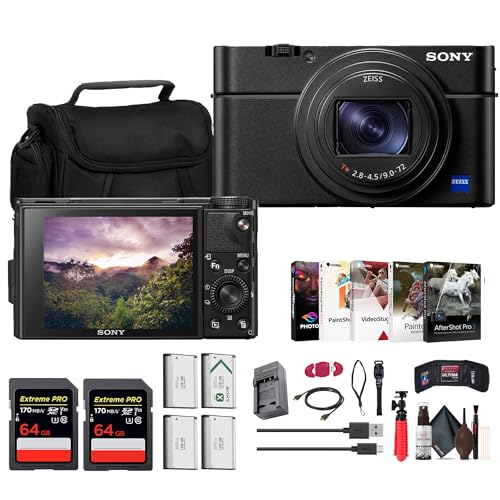
The Sony RX100 VII is the most capable compact on this list, and its listing describes a camera with a 24-200mm lens, a 20.1 MP 1-inch stacked CMOS sensor, and a Creator Bundle with two 64 GB memory cards and a case. The 24-200mm zoom range is the detail that matters for close-up work, because it reaches from wide scenes to distant detail without a lens change.
The 1-inch sensor is larger than the sensor in most compact cameras, and that size shows in close-up photos: more detail, cleaner images in dim light, and smoother background blur behind a small subject. The 20.1 MP resolution holds the detail when a close-up is cropped, and the Creator Bundle means the camera arrives with the cards and the case needed to start shooting.
For a buyer who wants the most capable pocket camera for close-up work, the RX100 VII is the pick. It is the camera that does the most jobs in the smallest body, and its zoom range means it is ready for a flower at arm's length and a bird across the garden.
Key specifications: 20.1 MP 1-inch stacked CMOS sensor; 24-200mm lens; Creator Bundle with 2x 64 GB memory cards and case; model DSC-RX100M7.
This camera fits a buyer who wants the most capable pocket camera for close-up work, with a versatile zoom and a large sensor.
Strengths
- The 24-200mm zoom reaches close and distant subjects alike.
- The 1-inch sensor holds more detail than smaller compacts.
- The Creator Bundle includes cards and a case to start shooting.
Trade-offs
- The small body has a small grip for long sessions.
- The zoom is a variable-aperture lens, not a fast prime.
- It has no weather sealing stated in the listing.
The Sony RX100 VII suits photographers who want one small camera for everything. It fits a traveller, a nature lover, or anyone who wants close-up detail without carrying a large camera.
Best for: the most capable pocket camera for close-up work / Not suited for: a buyer who wants a large grip or weather sealing
Check price on Amazon: Sony Cyber-shot RX100 VII

Canon PowerShot G7 X Mark III
The Canon PowerShot G7 X Mark III is the classic vlogging compact that also works well up close, and its listing describes a digital camera with Wi-Fi and NFC, an LCD screen, and 4K video, in black. The G7 X line is known for its bright lens and its close focusing, and the Mark III continues that with a camera that fits in a pocket and focuses near enough for detail shots.
The Wi-Fi and NFC stated in the listing make it easy to send close-up photos to a phone, which is how most detail shots are shared, and the 4K video means the camera also records close-up video of a subject that moves. The LCD screen shows the focus clearly, which matters when the depth of field is thin and the focus has to be exact.
For a buyer who wants a pocket camera that handles close-up stills and video, the G7 X Mark III is the pick. It is the camera for a creator who photographs small subjects and films them too, and its size means it is carried everywhere.
Key specifications: Digital camera; Wi-Fi and NFC; LCD screen; 4K video; black.
This camera fits a buyer who wants a pocket camera for close-up stills and video, with easy sharing to a phone.
Strengths
- The pocket size means it is carried everywhere.
- Wi-Fi and NFC make sharing close-up photos easy.
- 4K video records close-up subjects that move.
Trade-offs
- The listing states no sensor size or zoom range.
- The small body has a small grip for long sessions.
- It has no weather sealing stated in the listing.
The Canon PowerShot G7 X Mark III suits creators who shoot small subjects. It fits a vlogger, a crafter, or anyone who wants close-up photos and video from a pocket camera.
Best for: a pocket camera for close-up stills and video / Not suited for: a buyer who wants a stated zoom range or weather sealing
Check price on Amazon: Canon PowerShot G7 X Mark III

OM System Olympus Tough TG-7
The Olympus Tough TG-7 is the macro specialist of this list, and its listing states the reason plainly: a red underwater camera, waterproof and freeze proof, with a high-resolution bright lens, 4K video, and 44x macro shooting. The 44x macro figure is the strongest close-up claim on this list, and it means the TG-7 can photograph a subject far smaller than any other camera here can.
A waterproof, freeze-proof camera changes where close-up photography happens. The TG-7 photographs flowers in the rain, insects on a wet morning, and tide-pool life underwater, all places where another camera would stay in the bag. The 4K video records close-up subjects that move, and the bright lens gathers light in the dim places where small subjects live.
For a buyer who wants the strongest macro camera and the toughest body, the TG-7 is the pick. It is the camera for close-up photography outdoors in any weather, and its macro mode is the reason to choose it over every other camera here.
Key specifications: Waterproof; freeze proof; high-resolution bright lens; 4K video; 44x macro shooting; red.
This camera fits a buyer who wants the strongest macro camera in the toughest body, for close-up photography outdoors in any weather.
Strengths
- The 44x macro shooting is the strongest close-up claim here.
- Waterproof and freeze-proof design works in any weather.
- 4K video records close-up subjects that move.
Trade-offs
- The listing states no sensor resolution figure.
- The small sensor is smaller than the 1-inch sensors above.
- It is a tough camera first, so its controls are simpler.
The Olympus Tough TG-7 suits outdoor macro photographers. It fits a nature lover, a tide-pool explorer, or anyone who photographs small subjects in rain and rough weather.
Best for: the strongest macro camera in the toughest body / Not suited for: a buyer who wants the largest sensor or the most manual control
Check price on Amazon: OM System Olympus Tough TG-7

Fujifilm X100VI
The Fujifilm X100VI is the fixed-lens compact of this list, and its listing describes a digital camera in silver. The X100 line is known for its fixed lens, its classic dials, and its film-like colour, and the X100VI continues that with a camera that is bought for the way it sees, not for the zoom range it offers.
A fixed lens changes how close-up photography is done. There is no zoom to reach for, so the photographer moves closer, and the camera rewards that with a close-focusing lens and a sensor that holds detail. The silver finish and the classic design make it a camera that is carried for its character as much as for its pictures.
For a buyer who wants a fixed-lens camera with a distinctive look and close-focusing ability, the X100VI is the pick. It is the most characterful camera on this list, and its close-up work has a quality that a zoom camera does not match.
Key specifications: Digital camera; silver.
This camera fits a buyer who wants a fixed-lens camera with character and close-focusing ability, for deliberate close-up photography.
Strengths
- The fixed lens encourages moving closer to the subject.
- The classic design and dials suit deliberate photography.
- Fujifilm colour gives close-up photos a distinctive look.
Trade-offs
- The listing states no sensor, lens, or macro details.
- The fixed lens cannot zoom to distant subjects.
- It is the most expensive class of camera on this list.
The Fujifilm X100VI suits photographers who value character. It fits a street shooter, a detail lover, or anyone who wants a camera that sees the world in its own way.
Best for: a fixed-lens camera with character for close-up work / Not suited for: a buyer who wants a zoom lens or a stated macro mode
Check price on Amazon: Fujifilm X100VI
Panasonic Lumix ZS300
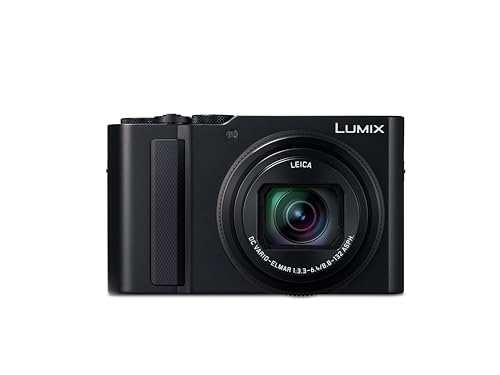
The Panasonic Lumix ZS300 is the travel zoom of this list, and its listing states the details plainly: a compact travel camera with a 1-inch sensor, 15x zoom, and 4K video, with a 20.1 MP 1-inch sensor and a 15x optical zoom from 24 to 360mm. The 15x zoom range is the detail that matters for close-up work, because it reaches from a wide scene to a distant subject without a lens change.
The 1-inch sensor is larger than the sensor in most travel cameras, and that size shows in close-up photos: more detail, cleaner images in dim light, and smoother background blur. The 20.1 MP resolution holds the detail when a close-up is cropped, and the 4K video records close-up subjects that move.
For a buyer who wants a travel camera that also works well up close, the ZS300 is the pick. It is the camera for a traveller who photographs flowers in the morning and landscapes in the afternoon, and its zoom range means it is ready for both.
Key specifications: 20.1 MP 1-inch sensor; 15x optical zoom 24-360mm; 4K video; compact travel camera.
This camera fits a buyer who wants a travel camera with a long zoom and a large sensor for close-up and landscape work.
Strengths
- The 15x zoom reaches close and distant subjects alike.
- The 1-inch sensor holds more detail than smaller compacts.
- 4K video records close-up subjects that move.
Trade-offs
- The small body has a small grip for long sessions.
- The zoom is a variable-aperture lens, not a fast prime.
- It has no weather sealing stated in the listing.
The Panasonic Lumix ZS300 suits travelling photographers. It fits a holiday shooter, a nature lover, or anyone who wants one small camera for close-up and distant subjects.
Best for: a travel zoom for close-up and distant subjects / Not suited for: a buyer who wants a large grip or weather sealing
Check price on Amazon: Panasonic Lumix ZS300

Panasonic Lumix ZS99
The Panasonic Lumix ZS99 is the longest-zoom camera on this list, and its listing states the range plainly: a compact point-and-shoot camera for travel with a 30x zoom from 24 to 720mm, 4K video and photo, in black with a case and a 64 GB SD card. The 30x zoom is the longest reach here, and it means the camera photographs a small subject from a distance that would disturb it up close.
A 30x zoom changes close-up photography, because the photographer does not need to approach a shy subject. A butterfly, a bird, or a flower across a garden can be photographed from where the photographer stands, and the 4K video records it moving. The case and the 64 GB card in the listing mean the camera arrives ready to shoot.
For a buyer who wants the longest reach for close-up work, the ZS99 is the pick. It is the camera for a photographer who watches small subjects from a distance, and its zoom range is the reason to choose it over every other camera here.
Key specifications: 30x zoom 24-720mm; 4K video and photo; compact point and shoot; case and 64 GB SD card included; black.
This camera fits a buyer who wants the longest zoom for close-up work from a distance, with a case and a card included.
Strengths
- The 30x zoom is the longest reach on this list.
- It photographs shy subjects from a distance.
- The case and 64 GB card are included to start shooting.
Trade-offs
- The listing states no sensor size.
- The long zoom needs a steady hand at full reach.
- It has no weather sealing stated in the listing.
The Panasonic Lumix ZS99 suits photographers who watch from afar. It fits a birdwatcher, a concert-goer, or anyone who photographs small subjects without approaching them.
Best for: the longest zoom for close-up work from a distance / Not suited for: a buyer who wants a stated sensor size or weather sealing
Check price on Amazon: Panasonic Lumix ZS99
Best close up cameras: what matters most: what matters most
Minimum focusing distance is the first filter, and it decides how close the camera can get. A camera with a dedicated macro mode, like the TG-7 with its 44x macro shooting, focuses far nearer than a camera without one, and that distance is what makes a small subject fill the frame. The listings here state the macro ability where it is the headline, and the zoom ranges where it is not.
Sensor size is the second filter, because it decides how much detail a close-up holds. The 1-inch sensors in the RX100 VII and the ZS300 record more detail than the smaller sensors in most compact cameras, and that detail shows when a close-up is cropped. The 20.1 MP resolution on both cameras holds the detail well.
Zoom range is the third filter, and it decides whether the photographer approaches the subject or photographs it from a distance. A long zoom like the 30x range on the ZS99 reaches a shy subject without disturbing it, while a fixed lens like the X100VI asks the photographer to move closer. The right choice depends on the subject.
Stability is the last filter, because close-up photography magnifies every shake. A camera with a bright lens gathers more light and allows a faster shutter, and a camera with a good grip is easier to hold still. The TG-7's rugged body and the RX100 VII's compact grip both help in different ways.
Buying guide: choosing close up cameras
Start with the subject. A photographer who shoots flowers and insects needs a macro mode like the TG-7's 44x macro shooting, a photographer who shoots distant small subjects needs a long zoom like the ZS99's 30x range, and a photographer who shoots detail at arm's length needs a versatile zoom like the RX100 VII's 24-200mm.
Then check the sensor and the resolution in the listing. The 1-inch sensors and 20.1 MP resolution on the RX100 VII and the ZS300 hold more detail than smaller sensors, and that detail matters when a close-up is cropped. The TG-7 trades sensor size for macro ability and ruggedness, which is the right trade for outdoor work.
Check what is in the box. The RX100 VII Creator Bundle includes two 64 GB cards and a case, and the ZS99 includes a case and a 64 GB card, so both arrive ready to shoot. The other cameras need cards bought separately, and a close-up camera without a card takes no photos.
Finally, think about where the camera will be used. A camera for rain and rough weather needs the waterproof TG-7, while a camera for travel needs the compact zoom of the ZS300 or the ZS99. Buy the camera for the places it will go, not for the specification alone.
Using and caring for your close up cameras
Get close, then get closer. A beginner's close-up photos are usually taken from too far away, and the subject fills too little of the frame. Move closer until the subject fills the frame, and use the macro mode or the zoom to do it. The TG-7's macro mode is made for exactly this.
Hold the camera still. Close-up photography magnifies every shake, so brace the camera against a table, a wall, or a knee, and use a faster shutter speed than for a normal photo. A small tripod helps, and it costs little compared to the photos it saves.
Use the light. Small subjects look best in soft, even light, such as an overcast day or a shaded spot, which shows detail without harsh shadows. Direct sun creates hard shadows on a small subject, and a close-up taken in shade will look better than one taken in bright sun.
Common mistakes to avoid
The most common mistake is standing too far away. A close-up photo needs the subject to fill the frame, and a photographer who stands back and zooms only a little gets a photo of a small subject in a large scene. Move closer, use the macro mode, and fill the frame.
Another frequent error is using too little depth of field. A close-up has very thin focus, and a subject that is only partly sharp looks like a mistake. Use a smaller aperture to keep more of the subject sharp, and check the focus on the screen before taking the shot.
A third mistake is ignoring the background. A close-up with a cluttered background distracts from the subject, and a plain background makes the subject stand out. Move the camera until the background is simple, and the subject will look far better.
Budget and value
A close-up camera does not need to cost the most. The TG-7 shows that a dedicated macro camera with a rugged body can sit below the most expensive compacts, while the ZS99 shows that a long zoom is available in a travel camera. The right budget is the one that buys the macro ability actually used.
Value here means matching the camera to the subject. A photographer who shoots flowers needs the TG-7, a photographer who shoots distant subjects needs the ZS99, and a photographer who shoots everything needs the RX100 VII. Spending more than that buys specification that sits idle.
Final recommendation
If one camera has to win, it is the Olympus Tough TG-7 for the strongest macro ability in the toughest body. For the most capable pocket camera, the Sony RX100 VII is the pick, and for the longest reach, the Panasonic ZS99 with its 30x zoom is the one. The Fujifilm X100VI is the choice for character, and the Lumix ZS300 is the choice for travel.
Whichever camera suits the subject, the rule is the same: get close, hold still, use soft light, and fill the frame. Do that, and any of the six cameras on this list will record small subjects in large, clear detail.
Frequently asked questions
What is the difference between close-up and macro photography?
They describe the same job: making a small subject large in the frame. Macro usually means a dedicated mode or lens that focuses very near, like the 44x macro shooting stated for the TG-7, while close-up is the general term for photographing small subjects.
Which camera here has the strongest macro mode?
The Olympus Tough TG-7, whose listing states 44x macro shooting, is the strongest macro camera on this list. It is also waterproof and freeze proof, so it works in weather that would stop other cameras.
Do I need a tripod for close-up photography?
It helps. Close-up photography magnifies every shake, so bracing the camera or using a small tripod makes a visible difference. A table, a wall, or a knee works as a brace when no tripod is available.
Can I photograph insects with these cameras?
Yes, with the right approach. A long zoom like the ZS99's 30x range photographs insects from a distance without disturbing them, while the TG-7's macro mode photographs them up close. Move slowly, use soft light, and the insect will stay still longer.
Why are my close-up photos blurry?
Usually because the camera moved or the focus missed. Close-up photography has very thin depth of field, so hold the camera still, brace it if possible, and check the focus on the screen before taking the shot.
Is a 1-inch sensor better for close-up work?
It helps. The 1-inch sensors in the RX100 VII and the ZS300 record more detail than smaller sensors, and that detail shows when a close-up is cropped. The TG-7 trades sensor size for macro ability and ruggedness, which is the right trade for outdoor work.
Lighting a small subject
Light is the hardest part of close-up photography, because a small subject is easily overwhelmed by harsh shadows. Soft, even light is best, and an overcast day or a shaded spot gives it for free. Direct sun creates hard shadows on a small subject, and a close-up taken in shade will look better than one taken in bright sun.
A small reflector, even a piece of white card, bounces light into the shadow side of a subject and softens the contrast. Hold it opposite the light source, close to the subject, and the difference is immediate. It costs nothing and it is the most useful accessory a close-up photographer owns.
Depth of field up close
Close-up photography has very thin depth of field, which means only a sliver of the subject is sharp. A flower photographed up close may have one petal sharp and the rest soft, and that is not a mistake: it is the nature of working close. The skill is choosing which part to keep sharp.
A smaller aperture keeps more of the subject sharp, and it is worth trying. Close the aperture down, accept the slower shutter or the higher sensitivity, and the subject will hold together better. Focus stacking, combining several photos at different focus points, is the advanced technique for when one sharp sliver is not enough.
Photographing insects
Insects are the classic close-up subject and the hardest to photograph, because they move. The trick is patience: approach slowly, avoid casting a shadow over the insect, and photograph in the cool morning when insects are sluggish. A long zoom, like the 30x range on the ZS99, lets the photographer work from a distance that does not disturb the subject.
The TG-7's macro mode is made for this work, because it focuses very near and its rugged body survives the wet grass and the mud where insects live. A photographer who wants insect photos should start with the TG-7 and learn patience before buying anything else.
Flowers and plants up close
Flowers are the most forgiving close-up subject, because they do not move, and they are the best place for a beginner to start. A flower photographed up close shows detail invisible to the eye: the texture of a petal, the pollen on a stamen, and the veins in a leaf.
The best flower photos are taken in soft light, with the flower filling the frame and the background kept simple. A plain background makes the flower stand out, and a camera that focuses close, like any of the six here, will do the rest.
Using a tripod for macro
A tripod is the most useful accessory for close-up photography, because it holds the camera still while the photographer composes and focuses. Close-up work magnifies every shake, and a tripod removes the shake entirely, which means slower shutter speeds and smaller apertures become possible.
A small, light tripod suits the compact cameras here, and it need not be expensive. Set it low, close to the ground where small subjects live, and use the camera's timer so the act of pressing the shutter does not shake the shot.
Close-up video
Close-up photography is not only about stills. A flower swaying in the breeze, an insect walking across a leaf, or water dripping from a petal all make compelling video, and the cameras here that record 4K video, from the RX100 VII to the TG-7, handle it well.
Video up close needs the same care as stills: soft light, a steady camera, and a simple background. A small tripod helps, and the flip-out screen on a camera like the ZV-E10, while not on this list, shows why a screen that tilts is useful for low-angle close-up work.
Cleaning and caring for a macro camera
A close-up camera is used outdoors, close to the ground, and it collects dust, pollen, and moisture. Wipe the lens with a soft cloth before shooting, because a 200 MP sensor or a 1-inch sensor records every speck, and a dirty lens softens every close-up.
The TG-7 is the easiest camera here to care for, because it is waterproof and can be rinsed clean. The other cameras need a soft cloth and a little patience, and a case that keeps dust out when the camera is packed away.
Choosing a macro lens
A dedicated macro lens is the next step for a close-up photographer who has outgrown a compact camera, and it is worth understanding before buying one. A true macro lens focuses to life-size, which means a subject 24mm wide fills a full-frame sensor, and the working distance, the gap between the lens and the subject, decides whether the subject is disturbed.
A 100mm macro lens is the standard choice, because it gives a comfortable working distance for insects and flowers, while a 60mm macro is shorter and lighter but forces the photographer closer. A beginner should borrow or rent before buying, because the focal length that suits one subject may not suit another.
The compact cameras on this list do the same job without a separate lens, and for many photographers they are enough. A macro lens is for the photographer who has reached the limit of a compact and wants more control, not for one who is just starting.
Water and reflections up close
Water is one of the most rewarding close-up subjects, because it holds reflections, droplets, and movement in a single frame. A dewdrop on a leaf acts as a lens, a ripple on a pond mirrors the sky, and a droplet falling from a petal freezes into a sculpture for a fraction of a second.
The TG-7 is the camera for this work, because it is waterproof and can be used at the water's edge without worry. A photographer with another camera should keep it dry and work from the bank, but the subjects are the same, and the light after rain is the best light for water photography.
The technique is patience and a fast shutter. Water moves quickly, and a fast shutter freezes it, while a slow shutter blurs it into silk. Both are valid, and the photographer should try both to learn which suits the subject.
Textures and abstracts
Close-up photography is not only about flowers and insects. Bark, rust, fabric, stone, and peeling paint all hold textures that make striking abstract photographs, and a close-up camera reveals detail that the eye passes over every day.
The exercise is to photograph ten textures in a single walk, without looking for a subject at all. Bark on a tree, rust on a gate, and stone on a wall are all within a few steps, and the resulting photos teach the photographer to see detail rather than to look for a subject.
Abstract close-ups also teach composition, because a texture has no obvious centre and the photographer must create one. A crack in the bark, a patch of rust, or a vein in a leaf becomes the subject, and the frame is built around it.
Seasonal close-up subjects
Close-up subjects change with the seasons, and a photographer who follows them will never run out of material. Spring brings buds and blossoms, summer brings insects and butterflies, autumn brings fungi and fallen leaves, and winter brings frost and ice crystals.
Each season demands a different approach. Spring needs a fast shutter for bees, autumn needs a careful eye for fungi in dim woods, and winter needs warm clothes and a camera that works in the cold. The TG-7, with its freeze-proof design, is the camera for winter close-up work.
The habit to build is a seasonal list: one subject per season, photographed well, rather than a hundred subjects photographed carelessly. A photographer who follows the seasons will build a body of work that shows the year, not just a day.
More guides from KajuanDouglas
compact cameras for close-up photos cameras for macro photography under 300 cameras for macro video compact digital cameras under 200 dollars