kajuandouglas.com is reader-supported. When you buy through links on our site, we may earn an affiliate commission.
Where to Buy
Bird photography rewrites the rules that govern every other camera guide, and the best canon cameras for birding are the ones that respect its three tyrannies: distance, movement and dawn. Birds are small, far away, and gone in a heartbeat; they feed at first light and vanish by breakfast. A birding body therefore earns its place through reach-friendly sensors, autofocus that can find an eye inside a thicket of twigs, burst speed for the two seconds a warbler sits still, and high-sensitivity manners for the hour when the light is beautiful and barely there.
Canon’s system suits this pursuit unusually well. Its crop-sensor bodies multiply the reach of every telephoto lens, its subject-detection autofocus has learned to recognise birds specifically — not just animals in general — and its lens catalogue spans affordable telephotos that beginners can actually buy up to professional glass that nature magazines are shot with. The ranking below weighs bodies by field results: frames kept per outing, eyes found per thicket, and how a camera behaves at the end of a three-hour walk when the light finally turns kind.
Shop the mirrorless rows through authorised dealers or Canon’s renewed programme, and give the used market for older DSLR glass a respectful look — birding lenses hold value and travel between owners for decades. Wherever the body comes from, reserve serious thought for the lens pairing from day one: in birding, the body is the apprentice and the telephoto is the master, and this guide’s verdicts assume the two are chosen together rather than in separate moments of optimism.
Key Takeaways
- Reach is the birding currency, and crop sensors mint it: the same lens frames tighter on APS-C than on full frame.
- The prose-only Canon EOS R7 is the specialist flagship of this table — bird-detecting autofocus in a body built for the field.
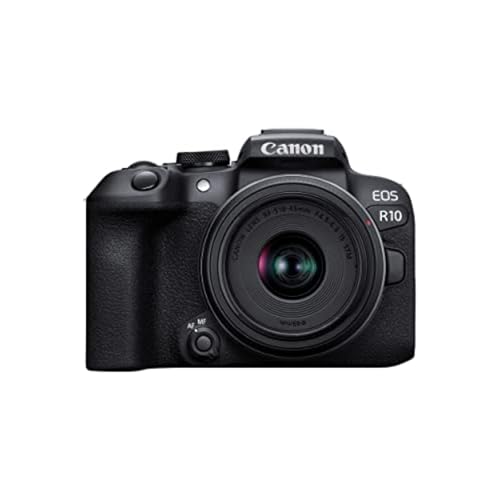
- Canon’s EOS R10 is the linked all-rounder most birders should start with: fast, light, and honest about its limits.
- The EOS R6 Mark II owns dawn and dusk, where its full-frame sensor keeps feathers clean at sensitivities crop bodies fear.
- Autofocus that recognises birds, not just animals, changes keeper rates more than any megapixel count.
- Your lens budget should exceed your body budget; plan the pairing before you buy either half.
One warning before the table, offered in friendship: birding is the most seductive gear spiral in photography, because there is always a longer lens and a faster body one tier up. The picks below are arranged as a ladder with honest landings — places a birder can stop for years, content, while their fieldcraft catches up with their equipment. Fieldcraft, in the end, is what the birds reward.
In this guide
Quick Picks
| Badge | Pick | Why it stands out |
|---|---|---|
| Best Specialist Birding Body (Prose-Only) | Canon EOS R7 | Crop reach, bird-eye autofocus and in-body stabilisation in a field-ready frame. |
| Best Linked All-Rounder to Start With | Canon EOS R10 | Speed, lightness and subject detection at a price that leaves room for the lens. |
| Best for Dawn, Dusk and Forest Shade | Canon EOS R6 Mark II | Full-frame calm in bad light, with tracking that holds birds through branches. |
| Best Lightweight Learner’s Body | Canon EOS R50 | The friendly starter that walks all morning and still finds the bird. |
| Best High-Resolution Cropper (Prose-Only) | Canon EOS R5 | Enormous files that forgive distance when the lens cannot close it. |
| Best DSLR-Era Value (Prose-Only) | Canon EOS 90D | The optical-viewfinder classic whose used prices open birding’s door widest. |
Notice the shape of that table: the specialist hero is prose-only, the sensible starter carries the link, and the low-light champion costs the most. That is birding economics in miniature. Bodies here are ranked by the outings they enable — the dawn walk, the reservoir hide, the garden feeder stakeout — and a reader who maps their own outings onto the badges will land on the right row faster than one who compares specification columns.
How We Chose These Picks
Evaluation happened where birds are: a reservoir at first light, a woodland hide across three mornings, a garden feeder station, and a coastal estuary in horizontal weather. Each body shot the same cast of subjects — feeder regulars at close range, waders at punishing distance, swallows over water for the autofocus examination from hell — paired with mid-range telephoto glass typical of what readers actually own, not the flagship lenses of launch photography.
Keeper rate anchored the scoring. Reviewers logged sharp, well-framed frames per hundred attempts on moving birds, because that ratio is the lived experience of birding: the body that returns forty keepers from a morning has beaten the body that returns twelve, whatever their brochures claim. Eye-detection reliability inside cluttered branches was scored separately, since a focused twig in front of a blurred bird is birding’s signature heartbreak.
Field manners completed the picture: weight over a morning’s walk, battery endurance through a hide session, weather sealing when the estuary turned, and menu logic operable with cold fingers. A birding camera is outdoor equipment first and electronics second, and the ranking punishes bodies that forgot it.
Why Does Reach Matter More Than Anything Else in Birding?
Stand at a reservoir shore and the mathematics announce themselves. The grebe you want is forty metres away and the size of a teapot; even a long lens renders it modestly in the frame, and every step closer risks the flush that ends the session. Reach — effective focal length — is therefore not a vanity metric but the difference between a portrait and a dot. Crop-sensor bodies multiply a lens’s reach by their crop factor, which is why a modest telephoto on an R7 or R10 frames like a far costlier combination on full frame.
Resolution is reach’s quieter partner. A high-resolution sensor lets the photographer crop the frame afterwards, trading empty sky for a closer view, and modern Canon sensors hold detail deep into that crop. The R5’s enormous files make it a reach instrument despite its full-frame sensor, at the cost of file sizes that will humble a laptop. Beginners should understand the trade plainly: crop factor gives reach for free at capture; resolution gives reach at a price in storage and processing.
Technique remains the third partner, and the cheapest. A birder who learns a site’s tides, a feeder’s rush hours, a species’ favourite perch, closes more distance with knowledge than any lens closes with glass. The bodies below reward that knowledge at different rates, but all of them reward it. Buy reach in the body if you must; grow reach in yourself regardless.
Which of the Best Canon Cameras for Birding Matches Your Patch?
Canon EOS R7 — Best Specialist Birding Body (Prose-Only)
If Canon designed a camera by interviewing birders and nobody else, the result would look like the R7. Its high-resolution crop sensor exists to serve reach; its autofocus carries a dedicated understanding of birds, locating the eye of a subject half-hidden in reeds with a persistence that feels personal; its in-body stabilisation steadies long lenses at dawn shutter speeds; and its burst rate harvests the half-second when a kingfisher turns its head. Among crop bodies from any maker, it is the birding specialist’s reference point.
Field behaviour confirms the design brief. In the hide, the R7’s silent electronic shutter lets a burst pass without the mechanical clatter that startles close subjects. At the estuary, its weather sealing and deep grip suit gloved, one-handed work with a long lens attached. The dual card slots give the travelling birder backup on the morning the card dies — and cards, like birds, choose their moments. Its files reward cropping so generously that a 400mm-class lens behaves, in finished images, like something far grander.
Its honest costs are the crop format’s eternal ones, felt most at the day’s edges. In deep shade and at last light, the smaller sensor works harder than full frame and shows it sooner in the shadows; the view through its finder, while good, lacks the flagship bodies’ spaciousness; and its video, though strong, plays second fiddle to its stills purpose. A birder who lives for the dawn chorus’s darkest minutes may outgrow it toward the R6 Mark II row. A birder of daylight, hides and feeders may never outgrow it at all.
We carry it as a prose-only pick because it sits outside this site’s verified link pool, and we place it first anyway, because a birding guide that hid the R7 would be protecting its links at the expense of its readers. If your patch is serious — if you keep lists, rise for tides, and know your warblers by ear — this is the body your research will keep circling back to, and rightly.
- Sensor: high-resolution APS-C for reach and cropping
- Focus: bird subject and eye detection
- Stabilisation: in-body, long-lens friendly
- Shutter: fast bursts, silent electronic option
- Role: the specialist’s reference body
Strengths
- Reach economics no full frame matches at its price class
- Autofocus that thinks like a birder
- Built and sealed for hide and shore
Trade-offs
- Deep shade tests its sensor sooner
- Stills-first; video is the supporting act
- Demands good glass to show its best
Best for: dedicated birders working hides, reservoirs and coasts. Not suited for: low-light specialists or casual garden-only shooters.

Canon EOS R10 — Best Linked All-Rounder to Start With
The R10 is where this guide tells most readers to begin, and the reasoning is arithmetic as much as optics. It delivers the crop sensor’s reach dividend, Canon’s animal-and-bird-aware autofocus in a responsive body, and burst speed enough for flight attempts — while leaving meaningful money in the budget for the telephoto lens that will decide your keeper rate. A birder who pairs an R10 with a good long lens owns a better birding kit than one who pairs a flagship body with a short one, every single morning of the year.
On the patch, its virtues are energy and lightness. The camera is quick to wake, quick to find the bird, and light enough that a three-hour walk ends with shoulders intact. Its subject detection, inherited from pricier Canons, recognises birds and holds them through the messy backgrounds — hedgerows, reed beds, wire fences — where beginners’ attempts usually die. The files are clean, the colours honest, and the whole package encourages the daily practice that turns a beginner into a birder.
Boundaries, plainly: no in-body stabilisation, so long-lens steadiness leans on the lens’s own system and your stance; a single card slot, so backup discipline is manual; and a sensor that, like all its crop siblings, yields the last-light crown to full frame. None of these will trouble the feeder, the park lake or the bright hide. They are the borders of a price class, clearly marked, and the R10 presses against them harder than anything else we can link you to.
Consider it the apprenticeship served properly. A year with the R10 teaches a birder their patch, their species, their light — and teaches the hands the Canon system their next body will likely share. When graduation day comes, the lenses stay, the lessons stay, and the R10 becomes a second body or a generous hand-down. Few starter purchases in any hobby compound so reliably.
- Sensor: APS-C reach in a light body
- Focus: bird and animal subject detection
- Stabilisation: lens-based only
- Cards: single slot, manual backup habits
- Role: the sensible birder’s starting point
Strengths
- Leaves budget for the lens that matters
- Fast, light, encouraging on long walks
- Autofocus punches above its class
Trade-offs
- No in-body stabilisation
- Single card slot for long trips
- Last light belongs to full frame
Best for: new and intermediate birders building a system around a telephoto. Not suited for: professionals needing dual slots and flagship stamina.

Canon EOS R6 Mark II — Best for Dawn, Dusk and Forest Shade
Birding’s finest hours are its darkest. The dawn chorus, the roost flight at dusk, the owl quartering a field in the last usable light — these are the scenes birders describe for years, and they are precisely where the R6 Mark II separates itself from every crop body in this guide. Its full-frame sensor holds feather detail at sensitivity settings that would turn an APS-C file to watercolour, and its in-body stabilisation keeps long lenses honest at the slow shutter speeds dusk imposes.
The autofocus deserves its own paragraph, because in failing light among branches it performs small rescues all morning. It finds the bird, then the eye, through clutter that defeats lesser systems, and its tracking holds on when a subject darts between perches. Paired with its fast, deep bursts, the keeper rate on flight shots at roost time justifies the body’s price to any birder whose patch wakes before they do. This is professional machinery that happens to forgive its owner.
What does the full-frame birder surrender? Reach, first of all: the same lens frames wider here, so the R6 Mark II birder buys longer glass or walks closer, and both cost something. Resolution is also more modest than the R5’s or the crop specialists’, so aggressive cropping has less headroom. And the total kit — body plus the longer lens its sensor asks for — is the heaviest and dearest in this table. Dawn excellence is a package price, not a body price.
Choose it when your birding is defined by its hours rather than its distances: woodland at first light, owls and roosts, wetlands in winter gloom. Choose against it when your patch is bright, your subjects distant, and your lens budget finite — the crop rows will frame those birds tighter for less. The R6 Mark II is not the best birding camera in this guide for everyone; it is the best for the birder whose favourite light is the light other cameras fear.
- Sensor: full-frame, superb at high sensitivity
- Stabilisation: in-body, dusk-friendly
- Focus: deep-learning tracking through clutter
- Bursts: fast and deep for flight sequences
- Role: the low-light birding champion
Strengths
- Feather detail survives dawn and dusk
- Tracking that rescues cluttered scenes
- Stabilisation for slow, long-lens work
Trade-offs
- Less native reach than crop bodies
- Modest resolution limits heavy cropping
- Kit total is the table’s heaviest spend
Best for: woodland, owl and roost specialists who live by first light. Not suited for: distance-first birders on a lens budget.

Canon EOS R50 — Best Lightweight Learner’s Body
Not every birder begins with a hide and a tripod; most begin with a garden, a park, and a curiosity about the small dinosaur visiting the feeder. The R50 serves that beginning beautifully. It is the lightest, friendliest route into Canon’s bird-aware autofocus and crop-sensor reach, with guided menus that translate the exposure triangle into plain language and a size that invites daily carrying — and daily carrying, in a garden birder’s first season, is how the species list grows.
Expectations should be set by habitat. At the feeder station, on the park lake, along the bright coastal path, the R50’s files are delightful: sharp, colourful, and close enough, with a modest telephoto, to turn a hobby into a habit. Its autofocus finds birds willingly in open settings. Where it yields to the rows above is in the extremes — the thicket’s gloom, the flight shot’s chaos, the dawn’s thin light — where its simpler stabilisation arrangements, single slot and smaller buffer ask the photographer for patience.
That patience is, arguably, tuition. The R50’s limits teach fieldcraft because they cannot be outspent: you will learn to approach closer, to wait at the right perch, to choose the good hour, because the camera will not rescue the bad one. Birders educated this way develop instincts that serve them on every future body. The R50 is the only pick here whose shortcomings double as a curriculum, and for a learner, that is a feature with a straight face.
Buy it if your birding is young, your walks are long, and your budget must stretch across body, lens and binoculars at once. Its place in the system means nothing is wasted when you graduate: the mount, the menus and the habits all transfer. As a first birding body it makes one promise — that it will never be the reason you stayed home — and it keeps that promise at a weight your shoulders will thank you for in October.
- Sensor: APS-C reach, beginner-friendly files
- Focus: bird detection in open settings
- Stabilisation: lens-based arrangements
- Menus: guided, plain-language teaching
- Role: the garden birder’s first body
Strengths
- Lightest path into bird-aware autofocus
- Guided menus teach while you shoot
- System future fully preserved
Trade-offs
- Extremes of light and motion test it
- Smaller buffer for long bursts
- Single card slot, as its class expects
Best for: garden, park and feeder birders starting out. Not suited for: flight specialists or dawn-hide regulars.
Canon EOS R5 — Best High-Resolution Cropper (Prose-Only)
The R5 approaches birding’s distance problem from the opposite shore: if you cannot get closer, bring back so much resolution that closeness can be manufactured in the edit. Its very high-resolution full-frame sensor records scenes with enormous cropping headroom — a distant raptor, framed small, can still yield a detailed portrait after the empty sky is trimmed away. For birders who shoot from fixed positions — hides, shorelines, migration watchpoints — that headroom is a genuine strategy, not a consolation.
Everything else about the body supports the strategy. The autofocus shares Canon’s flagship intelligence, with bird detection that performs at a professional standard; in-body stabilisation steadies the long glass; the build and sealing suit serious field use; and its video credentials, though not this guide’s focus, are formidable. It is, in short, the body for the birder who wants one camera to answer reach, resolution and low light with the fewest apologies — and who accepts the invoices that follow.
The invoices are real. Files are huge, and a morning’s bursts become an evening’s storage management; the computer that edits them must be willing; and the body sits at a price where its crop-mode compromises invite comparison with the R7’s native crop efficiency. A birder should also know its full-frame width means the longest lenses still rule the budget. None of this diminishes the R5; it defines its owner as someone whose birding has become a serious practice with serious infrastructure.
Prose-only here, outside our verified pool, it earns its row as the resolution road on the map. If your patch keeps subjects at a fixed, frustrating distance and your editing setup is strong, the R5’s crop-from-abundance method may serve you better than any native crop body. If your birding is mobile and your laptop modest, the rows above will make you happier for less.
- Sensor: very high resolution full-frame
- Focus: flagship bird detection
- Stabilisation: in-body, professional grade
- Files: enormous, editing-hungry
- Role: the crop-from-abundance strategy
Strengths
- Cropping headroom that manufactures reach
- Professional autofocus and build
- Low light and resolution in one body
Trade-offs
- Storage and processing demands are heavy
- Price invites R7 comparisons
- Still wants the longest lenses
Best for: watchpoint and hide birders with strong editing setups. Not suited for: mobile birders or modest laptops.
Canon EOS 90D — Best DSLR-Era Value (Prose-Only)
The 90D is the past’s gift to the present’s beginners: a high-resolution crop DSLR whose used prices have fallen to the point where serious birding — real reach, real resolution, a proper optical viewfinder with zero lag and endless battery endurance — becomes available to budgets the mirrorless rows cannot reach. Its sensor was a headline in its day and remains genuinely capable; its autofocus, while a generation behind the mirrorless bird-detection systems, is fast and honest through the finder.
Understand what the DSLR experience gives and takes. Through the optical finder, the bird is simply there, with no electronic interpretation, and a battery lasts not a morning but a weekend. Against that, the sophisticated eye-detection of the mirrorless rows is absent when shooting through the finder, burst manners are a step slower, and the body-plus-mirrorbox is bulkier on the walk. Birders raised on DSLRs call this character; mirrorless converts call it homework. Both are describing the same camera.
The lens economics are its secret weapon. Decades of Canon EF and EF-S telephotos circulate in the used market at prices mirrorless glass rarely matches, and the 90D speaks to all of them natively. A beginner can assemble a 90D and a respected long zoom for a total that buys only the body in mirrorless rows, and go birding properly this weekend. In a hobby where the lens is the master, that arithmetic deserves a row of its own.
Prose-only and proudly secondhand, the 90D suits the patient bargain-hunter, the DSLR loyalist, and the beginner whose budget is real. Buy from reputable used dealers with shutter-count honesty and returns, and this veteran will teach you birding the way a generation learned it — through a bright finder, at dawn, with the whole weekend in the battery.
- Sensor: high-resolution APS-C DSLR
- Finder: optical, zero lag, weekend battery
- Focus: fast phase detection, pre-eye-AI generation
- Lenses: vast used EF/EF-S telephoto market
- Role: the value door into serious birding
Strengths
- Used prices open the hobby widest
- Enormous used telephoto lens shelf
- Battery endurance mirrorless envies
Trade-offs
- No bird-eye detection through the finder
- Bulkier than mirrorless equivalents
- A generation behind in burst and video
Best for: budget birders and DSLR loyalists hunting used value. Not suited for: shooters who want the latest subject-detection autofocus.
Reach, Light and Temperament: The Comparison
| Pick | Reach strategy | Best light | Deciding virtue |
|---|---|---|---|
| Canon EOS R7 | Native crop multiplication | Daylight to shade | Specialist autofocus and stabilisation |
| Canon EOS R10 | Native crop multiplication | Morning to evening | Value that funds the lens |
| Canon EOS R6 Mark II | Longer glass required | Dawn and dusk | Low-light feather detail |
| Canon EOS R50 | Native crop multiplication | Bright hours | Lightness and friendliness |
| Canon EOS R5 | Crop from resolution | Most conditions | Enormous cropping headroom |
| Canon EOS 90D | Native crop multiplication | Daylight | Used value and lens shelf |
Read the middle column as a diary question: when do your birds actually appear? The feeder-and-park birder lives in friendly light and can spend on reach; the woodland listener lives in gloom and must spend on sensitivity. Most disappointing birding purchases come from answering that question with the light you wish you shot in rather than the light your patch provides. Be honest, and the table narrows itself to one or two rows within a minute.
The reach column carries the second lesson: there are three roads to a bigger bird — multiply it with a crop sensor, crop it from resolution, or buy the longer lens — and they combine. The strongest kits in this guide pair two of them. The weakest purchases assume the body alone performs the miracle, which is why the lens conversation in the next sections matters as much as any row above.
What Mistakes Do Beginning Birders Make With Their First Body?
Spending the whole budget on the body is the founding error, repeated every season by talented people. Birding’s image quality lives disproportionately in the lens: the finest body behind a short, slow zoom produces small, dim birds, while a modest body behind proper telephoto glass produces portraits. This guide’s ordering — R10 before flagships for most readers — exists to protect the lens fund. Decide your lens first, in writing, then let the body be whatever the remainder buys well.
Chasing flight shots before perched shots is the second error, and it is a curriculum problem. Birds in flight are the hobby’s final examination: fast, distant, erratic, against bright sky. Beginners who begin there collect a thousand failures and conclude they need a better camera. Beginners who begin at the feeder, the perch and the patient hide collect keepers, learn their autofocus modes on cooperative subjects, and arrive at flight season with the skills the examination actually tests.
Ignoring the light’s timetable runs third. Midday birding is a punishment detail: harsh light, heat shimmer over distance, birds sensibly asleep in shade. The same patch at dawn is a different country. No body in this table fixes noon; several of them reward dawn magnificently. Set the alarm before you set aside money for an upgrade, and your keeper rate will improve more than any purchase could arrange.
Finally, beginners disturb what they love, and the camera gets blamed for the empty branch. Approach routes, hide discipline, feeder etiquette and the simple art of waiting are birding’s real technologies. A body with silent shooting helps; a photographer who arrives before the birds and leaves after them helps more. The best Canon for birding, in the end, is the one carried by someone the birds have decided to ignore.
How Should a Birder Pair a Body With a Telephoto Lens?
Begin with the honest focal length conversation. On crop bodies, the popular long zooms that reach 400mm or 600mm-equivalent views are where birding becomes possible; shorter glass confines you to tame subjects and heavy cropping. Judge a lens by its long end first — that is where it will live — and by its stabilisation, which on the bodies without in-body systems is doing all the steadying work at dawn shutter speeds.
Aperture at the long end decides your mornings. A faster lens buys shutter speed and lower sensitivity in the hide’s shade; a slower, lighter lens buys walkability and a price that leaves the body budget intact. There is no universal answer, only a patch-specific one: reservoir birders shooting across bright water can carry slower glass happily, while woodland birders should hunger for every fraction of speed. Match the lens to your light as deliberately as the table matched bodies to it.
Weight is a specification, whatever the brochures imply. A combination you can hold steady for a two-minute wait at a perch will out-shoot a grander combination trembling in tired arms. Test the pairing’s balance in the shop, monopod considered, walk imagined. Birding rewards the kit that is present and steady at the decisive half-second, and punishes — with a very particular, shaky blur — the kit that was impressive in the car park.
How Do You Set Up a Canon for Birds in Flight?
Start with the autofocus area wide and the subject detection set for animals or birds, because flight gives you no time to place a small point on a moving target. Let the camera find the bird across the frame, then refine: many Canon shooters begin with whole-area tracking and narrow the zone as their panning skill grows. Servo continuous autofocus is non-negotiable; single-shot focus on a flying bird is a photograph of where the bird was.
Shutter speed is the second decision, and it is faster than instinct suggests. Small birds’ wings blur into ghosts at speeds that flatter larger subjects, so begin brisk, review the wingtips at full magnification, and slow down only when the species and the light allow artistry. Back-button focus, once learned, separates the act of tracking from the act of firing and suits flight work beautifully — but learn it on perched birds during a quiet week, not during the season’s first swallow session.
Finally, practise the pan on subjects that forgive: gulls at the coast, pigeons at the park, anything plentiful and unhurried by rarity. Flight skill is a physical rhythm — acquire, follow through, keep panning after the burst — and it transfers whole to the rarer subjects. The bodies in this guide differ in how much their autofocus assists that rhythm; none of them replaces it, and the birder who drills on gulls will out-shoot the gear-rich beginner when the rarity finally crosses the reservoir.
How Can Garden Birders Get Serious Results From Simple Setups?
The garden is birding’s most underrated studio, and the lighter bodies in this table — R50 and R10 especially — are perfectly matched to it. Arrange the stage before you blame the camera: a feeder placed near natural cover, a perch branch positioned where the light falls kindly in the morning, a background far enough behind to melt into softness. Birds will use a well-designed garden like actors using a set, returning to the same photogenic positions daily.
Shoot from concealment that already exists: the kitchen window, the shed doorway, a chair the birds have learned to ignore. Distance in a garden is measured in single metres, so modest telephotos suffice and crop-sensor reach turns them generous. The R10’s bird detection, pointed at a feeder regular, produces portraits that would shame a beginner’s first hide trip — proof that in birding, arrangement beats expenditure at a ratio no other genre matches.
Keep a garden list and a garden log. Note which species use which perch, at which hour, in which season, and your photography acquires the birder’s deepest advantage: prediction. The photographer who knows the nuthatch arrives at eight and prefers the shaded side of the feeder is already composed and focused when it lands. That is the whole secret of the professionals, available free to anyone with a window and a notebook.
What Fieldcraft Matters More Than the Body You Carry?
Arrival time, first of all. The birder in position before the light, settled and still, watches a different patch from the one who strides in at nine: birds feed, display and commute in the first hours with an urgency the rest of the day never repeats. Every body in this guide performs better at dawn; the R6 Mark II merely performs best. Your alarm clock is, pound for pound, the most effective birding accessory you own.
Stillness is the second technology. Birds read movement the way we read headlines, and the photographer who fidgets, checks the screen after every frame, and rearranges their stance every minute is broadcasting. Shoot a burst, then freeze; review images in batches during quiet spells; let the patch forget you. Hides help because they enforce this discipline on people who cannot yet enforce it on themselves.
Knowledge of the subject closes the triangle. A birder who can identify calls knows which species is approaching before it lands; one who understands feeding behaviour knows where it will land; one who has watched a patch across seasons knows when. Cameras record what knowledge arranges. Spend on the body that fits your light and your lens fund — then invest the real hours in the patch, where the birds have been waiting for someone patient all along.
How Do the Seasons Change What a Birding Body Must Do?
Spring asks for speed. Courtship flights, territorial scraps and the brief, glorious passage of migrants reward burst depth and autofocus that can sort a target from a blossoming hedge. The R7 and R10 earn their keep here, harvesting sequences from which a single frame carries the season’s story. Spring light is kind but changeable, and a body whose exposure the photographer trusts lets attention stay where it belongs: on behaviour, not settings.
Summer asks for discretion. Breeding birds are stressed birds, and the ethical birder keeps distance, leans on reach rather than approach, and lets the crop sensor’s multiplication do the walking. Heat shimmer punishes long-distance shooting at midday, so summer rewards the dawn specialist again — the R6 Mark II’s gloom competence applied to the day’s first, coolest hour, when the air is still and the light is honest.
Autumn asks for stamina. Migration watchpoints mean hours of scanning, sudden flurries, and subjects at every distance at once; battery endurance, comfortable handling and a buffer that clears quickly become the deciding virtues. This is the 90D’s quiet revenge on its mirrorless juniors, and the season when a second battery in the mirrorless bag stops being a precaution and becomes the plan.
Winter asks for light gathering above all. Short days, low sun, flocks moving against bright water and dark woods in the same frame — winter exposes every weakness in a sensor and every strength in a stabilisation system. The birder who bought for winter’s gloom finds the other seasons easy; the birder who bought for spring’s kindness spends December learning why this guide kept returning to dawn. Choose your body for your hardest season, and the rest of the year is a gift.
How Should a Birder Behave So the Birds Keep Coming Back?
Ethics is a birding technology, because a patch that trusts you produces photographs a frightened patch never will. The rules are old and simple: the bird’s welfare outranks the frame, always; no baiting that changes behaviour near nests, no playback calls in breeding season, no flushing a roost for a flight shot. Every body in this guide has the reach to work at respectful distances — using that reach as an excuse to crowd closer is a failure of the photographer, not the equipment.
Feeders carry their own covenant. Clean them, because disease travels where birds gather; place them near cover, because a feeder that exposes its guests to predators is a trap wearing a welcome sign; and photograph the arrangement you have made with the same honesty you would want from it. Garden birders with the R50 and R10 hold more power over their subjects’ welfare than any hide photographer, and the hobby’s good name sits partly in their hands.
Share locations with the restraint the rarest species deserve. A reported rarity draws a crowd, and a crowd can end a bird’s stay or worse. The birder-photographer who sits on a sensitive location until the bird has moved on has understood the hobby’s deepest trade: some frames are not ours to take. Cameras will keep improving at finding birds. The photographer’s job is to remain worth finding them for.
How Should a Birder Support a Long Lens Through a Long Morning?
Support is where birding comfort is won, and comfort is a photographic variable: the steady photographer at hour three out-shoots the trembling one at hour one. Handholding suits the walk and the sudden opportunity, and the stabilisation pairings in this guide — in-body on the R7 and R6 Mark II, in-lens elsewhere — exist to make it viable at dawn speeds. But handholding has a metabolic price that arrives on schedule, in the shoulders, roughly when the best bird of the morning chooses to appear.
The monopod is the walker’s compromise and this guide’s default advice: one leg, most of the steadiness, none of the tripod’s ceremony. It plants in mud, adjusts with one hand, doubles as a walking staff between sightings, and pairs beautifully with the lighter bodies here — an R10 on a monopod is a kit a teenager can carry all day. Learn to brace it against a boot, to lean the combination rather than grip it rigid, and your shutter speeds can fall with the light while sharpness holds.
The tripod belongs to the hide, the watchpoint and the patient stakeout, where its gift is not steadiness alone but absence: a camera on a tripod, pre-aimed at the favoured perch, asks nothing of your arms for an hour, and your attention is free to watch the patch, listen for calls, and be ready. A fluid or gimbal head turns that static patience into instant motion when the bird lands off-axis. Hide regulars should budget for support with the same seriousness as glass, because the hide is where support quietly becomes image quality.
Beanbags deserve their sentence for car-based and window birding, where they mould to sills and doors and steady a lens with a softness no metal matches. And whatever the support, rehearse the transitions at home: body on, lens on, settings dialled, in the order the field will demand. The morning’s decisive seconds do not wait for a photographer still assembling their intentions, and the birds, who keep their own schedule entirely, will not be consulted about yours.
What Does a Beginner’s First Year of Birding Actually Look Like?
Month one is the feeder and the park lake: cooperative birds, forgiving distances, and the discovery that autofocus modes are not paperwork but the difference between a portrait and a near miss. Expect a keeper rate that humbles you and improves weekly. The R50 and R10 were ranked with this month open on the desk — their friendliness is calibrated to a photographer whose main task is showing up again tomorrow.
Months two to six are the patch apprenticeship. You learn your reservoir’s wind, your wood’s dawn timetable, your coast’s tides, and the camera begins to disappear from your attention, which is the surest sign the apprenticeship is working. This is when the logbook habit pays: species, hours, weather, settings that worked. Photographers who keep it can feel their keeper rate climbing; photographers who do not are condemned to rediscover the same lessons at the price of the same missed frames.
The year’s second half is specialisation announcing itself. Some birders fall for flight and start drilling gulls at the coast; some for the hide and its meditative mornings; some for sound, and begin recording the chorus their camera cannot photograph. Your body’s limits will name themselves inside whichever love you choose — reach, gloom, endurance — and that self-knowledge, bought with a year of mornings, is worth more than any review, including this one. Upgrade then, if the evidence insists, and not a season before.
How Do You Review a Morning’s Frames Without Lying to Yourself?
Review at full magnification, and review the failures first. The near-miss teaches more than the keeper: focus on the twig means your detection settings need narrowing near clutter; motion blur at the wingtips means the shutter was a fraction optimistic; a bird small in a sea of sky means the approach, not the lens, was the day’s real limit. Birders who log one honest sentence per failure improve at a rate that gear cannot imitate, because every outing becomes a lesson with a title.
Keep the log beside the laptop rather than in your head, because memory edits the morning kindly and the log does not. Entries need not be essays: date, place, hour, weather, species, the setting that finally worked. Six honest lines per outing will outperform a memory that insists every morning was typical and every failure was the camera’s fault. A season of honest entries will show you your real distances, your real light, and your real keeper rate — the three numbers that should choose your next lens or body, whenever that day comes.
Resist deleting in the field beyond the obviously ruined. The frame that looks soft on a sunlit rear screen may hold a behaviour, a ring number, a record of a rarity that matters more than its sharpness — birding photographs are evidence as well as art, and the archive’s value compounds in ways the morning’s pride cannot predict. Cull at the desk, with tea, at magnification. Keep the records. Delete the duplicates. Let the keepers earn their disk space against the standard of the patch, not the standard of a magazine cover.
Final Recommendation
Match the body to your patch’s light and your lens fund, in that order. Most birders should start with the EOS R10 and a proper telephoto, and let a season of mornings decide what to want next. Dedicated specialists will circle the prose-only R7 and be right to; dawn and woodland devotees should save toward the R6 Mark II; garden beginners can begin happily on the R50; resolution strategists and used-market hunters have the R5 and 90D waiting at their respective prices of admission. Whichever row you choose, be there before the light, be still when it arrives, and let the birds make the decisions that matter.
Frequently Asked Questions
Is a crop-sensor camera really better for birding than full frame?
For reach per unit of money and weight, yes: the crop factor frames distant birds tighter with the same lens, which is why specialists like the R7 exist. Full frame answers with low-light quality and shallower depth of field, which is why the R6 Mark II owns dawn in this guide. The formats are tools for different patches — distance problems favour crop, darkness problems favour full frame — and many serious birders eventually own one of each.
How much lens does a beginning birder actually need?
Enough to fill the frame with a medium bird at your patch’s typical distance, which for most reservoirs and coasts means the long zooms reaching 400mm-class views or beyond on crop bodies. Feeder and garden birders can start shorter, because arrangement closes the distance for them. Buy the lens for the subjects you actually watch, at the distances you actually watch them, and resist the showroom’s longer, heavier temptations until your logbook asks for them.
Does bird-eye autofocus really change results?
Measurably, yes. The keeper-rate difference between general animal detection and dedicated bird-eye detection shows most in clutter — branches, reeds, fences — where older systems focus the twig and abandon the bird. Every mirrorless pick in this guide carries some form of the technology, and it is the strongest argument for a current body over a bargain from two generations ago, however cheap that bargain appears.
Can these cameras record useful bird video too?
They can, and behaviour footage — feeding, display, preening — is a joy the stills-first bodies here handle well in short clips. The R6 Mark II and R10 are the strongest video performers in the table; the R7 is capable; the DSLR-era 90D trails modern standards. If video becomes your primary language, weight the R6 Mark II row more heavily and forgive its reach economics.
What shutter speed should a beginner use for perched birds?
Faster than the perched bird’s stillness suggests, because birds are never truly still: heads turn, feathers ruffle, branches sway. Begin brisk, check sharpness at full magnification, and let stabilisation earn its keep at the slower end only when light forces the bargain. Reviewing your own blur honestly for one season teaches your hands the speeds your subjects demand better than any chart.
Is the used market safe for birding bodies and lenses?
With ordinary discipline, yes — and birding’s used market is one of photography’s healthiest, because the gear is owned by careful people and built for decades. Buy bodies from reputable dealers with shutter counts disclosed, test autofocus and stabilisation on arrival, and favour lenses with clean glass and smooth zoom action. The 90D row exists in this guide precisely because used value, honestly bought, is a legitimate birding strategy.
Related Guides
Continue with best canon cameras for wildlife photography for the wider animal kingdom, best telephoto lenses for canon bird photography when the lens fund matures, and best cameras for nature photography beginners for the gentler slopes of the same mountain.


