kajuandouglas.com is reader-supported. When you buy through links on our site, we may earn an affiliate commission.
Where to Buy
Ask a dozen photographers to define the best cameras for taking nature photography and the argument starts before the kettle boils, because nature is not one subject but a hundred sharing a postcode. A misted valley at dawn, a fungi cluster in wet woodland, a heron holding its grey nerve at the reed edge, a ridgeline rearranging itself under fast weather — each asks a different virtue of a camera, and the honest guide admits it before ranking anything. The six picks below divide the outdoor world by how you actually walk through it: how far, how wet, how patient, and whether the picture in your head is a print, a field record or a film.
Weight is the first fact of nature photography and the one brochures discuss least. Every gram in the bag is carried up the hill by a person whose enthusiasm is a finite resource, and the camera that comes on the marginal walk — the Tuesday evening wander, the unpromising grey Saturday — takes more nature photographs than the masterpiece that stays home awaiting a worthy expedition. Two picks in this list exist almost entirely to honour that arithmetic, and their owners’ archives, fat with ordinary Tuesdays, testify more eloquently than any specification.
Weather writes the second fact. Nature performs most honestly at the edges of comfort: rain beading on autumn leaves, frost sharpening a meadow before sunrise, sea fret rolling over a cliff path. Cameras that shrug at drizzle keep shooting through those performances, while fair-weather bodies watch them from inside a plastic bag. Sealing, grip with cold fingers and screens that work in slanting light are scored heavily below, because the natural world’s best light and worst weather are so frequently the same event.
Patience is the third fact, and it is a camera feature in disguise. Battery stamina across a cold morning, a shutter quiet enough not to end a woodland encounter, autofocus that can find a small bird inside a large bush, stabilisation that permits a slower shutter while kneeling in wet grass — these are the mechanisms by which patience gets converted into photographs. A nature camera is not really being asked to be brilliant for a second. It is being asked to be ready, hour after hour, for the second that matters.
This guide also keeps a promise about honesty of scope. Generalist cameras like these six can photograph an enormous range of the natural world beautifully, from landscapes to garden birds to deer at a woodland edge. They are not, without serious telephoto glass, professional wildlife instruments for distant shy subjects, and the reviews below say plainly where each body’s honest frontier lies. A reader who knows the frontier buys once and happily; a reader sold past it buys twice and bitterly.
Finally, a word for the natural world’s side of the bargain. Every recommendation here assumes photography that leaves the subject’s life undisturbed: no baiting, no trampling toward a nest, no drone of attention around a resting animal. The best nature photographs in any portfolio are the ones the subject never noticed being taken, and several cameras below earn marks precisely for the quiet, distant, unobtrusive way they let that happen.
Key Takeaways
- Nature rewards patience and weather sealing more reliably than it rewards another increment of resolution.
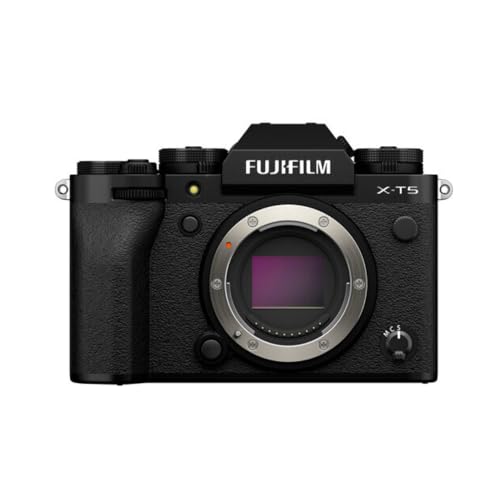
- Fujifilm X-T5 leads for landscape colour and dial-driven stills craft on the trail.
- OM SYSTEM OM-5 Mark II is the hiker’s champion, shrinking the whole kit without shrinking ambition.
- Nikon Z50 II brings subject detection that finds birds and animals a beginner’s eye would lose.
- Canon EOS R10 keeps nature photography affordable to learn, with tracking that flatters new wildlife shooters.
- Sony Alpha 7 IV and Panasonic LUMIX S5II serve the print-maker and the landscape filmmaker respectively.
In this guide
Quick Picks
| Badge | Pick | Why it stands out |
|---|---|---|
| Best for Landscape Craft | Fujifilm X-T5 | High-resolution files, filmic colour and dials that suit deliberate outdoor stills. |
| Best for Hikers | OM SYSTEM OM-5 Mark II | A weather-sealed, featherweight system that actually comes on every walk. |
| Best for Learning Wildlife | Nikon Z50 II | Subject detection that finds birds and animals, in a body priced for mortals. |
| Best Value for Nature Beginners | Canon EOS R10 | Friendly tracking, light weight and RF telephoto options for new field shooters. |
| Best for Prints and Detail | Sony Alpha 7 IV | Full-frame dynamic range and lens depth for landscape photographers who print. |
| Best for Landscape Film | Panasonic LUMIX S5II | Stabilised, fan-cooled video and stills for photographers who also film the wild. |
How We Chose These Nature Picks
Candidates were walked rather than merely tested: dawn starts in cold fields, drizzle on a coastal path, woodland shade at midday and the long static wait beside a pond that nature photography consists of far more than its highlight reels admit. We noted which cameras were still pleasant at hour three, which batteries sulked in the cold, which viewfinders stayed readable against a bright sky, and which autofocus systems could separate a wren from the hedge it was performing in. Field character, in short, outranked bench numbers throughout.
Image judging split by the two great nature temperaments. For landscape work we prized dynamic range in a raw file — skies held while shadowed valleys kept their detail — and colour that rendered spring green as a hundred colours rather than one. For living subjects we prized detection and tracking: eyes found inside foliage, focus held through a takeoff, bursts deep enough to cover a wingbeat sequence. Cameras were allowed to be specialists, and the list is stronger for containing both temperaments in honest measure.
Kit reality closed the selection. A nature body is a down payment on lenses, batteries, cards and a bag that fits them, so each pick was weighed as the centre of a system a real person assembles over seasons. Mount depth, the availability of weather-sealed telephotos, and whether the whole outfit still respects the weight arithmetic of the introduction all shaped the final six — and explain why some technically dazzling bodies did not survive contact with a rucksack.
What Actually Makes a Nature Photograph Good?
Light before subject is the field’s oldest law, and equipment serves it only indirectly. The valley that was a postcard at dawn is a car park by eleven, not because the valley changed but because the light stopped modelling it. Cameras help by being present at the unsociable hours, which loops the argument back to weight, weather sealing and batteries that survive a frost. When this guide praises a camera’s readiness, it is really praising the number of dawns its owner will attend — and attendance, compounded over seasons, is what a nature portfolio is actually made of.
Separation is the second law: the subject lifted from its background by light, by focus or by the photographer’s feet. Shallow depth from a fast lens is the famous route, but nature photographers separate with mist, with backlight, with a darker bank behind a lit flower, with the patience to wait until the heron steps from grey reeds into a shaft of sun. Cameras with trustworthy exposure tools and honest screens help a photographer see separation while it is still available to be used, which is why the detailed reviews discuss viewfinders and histograms as creative instruments rather than settings.
The third law is restraint in the edit’s service: a frame that leaves the subject its context. Beginners crop nature into specimens; experienced field photographers let the habitat share the picture, because the habitat is where the story lives. High-resolution files and good telephotos tempt the specimen habit, and several verdicts below deliberately praise cameras whose character encourages the wider, truer frame. Nature photography at its best is biography rather than portraiture, and the equipment should keep whispering that.
How Much Zoom Does Nature Really Need?
Landscapes need less than the industry implies. Most enduring landscape photographs are made at wide and moderate focal lengths, where the land’s geometry does the composing and the camera’s job is fidelity: dynamic range, colour, a tripod thread and a screen that composes honestly. The Fujifilm and the full-frame pair below build their landscape cases on exactly that fidelity, and the hiker’s OM SYSTEM makes the same argument at half the carried weight. A beginner who spends the telephoto money on a better tripod and more dawns has understood the genre’s economics perfectly.
Living subjects rewrite the arithmetic completely. A garden robin tolerates a moderate telephoto and a slow approach; a fieldfare in winter hedgerow tolerates neither, and honest working distances for birds and mammals begin where kit zooms end. This guide’s bodies all accept serious telephoto glass within their mounts, and the detection systems in the Nikon and Canon picks were chosen partly to make that glass productive in a learner’s hands. Buy the body for the detection and the mount, then rent the long lens for the rut, the migration or the hide weekend before deciding it is a purchase.
Between those poles lives the telephoto landscape, the compressed ridgeline and the isolated tree that experienced photographers shoot far more than beginners expect. A moderate telephoto in the bag serves both the distant detail and the patient animal at a woodland edge, which is why several systems below are praised for their sealed mid-telephoto options. Nature kits mature toward versatility carried willingly, not toward a lens for every rumour of a subject.
How Do You Photograph Wildlife Without Disturbing It?
Distance is the whole technique and the whole ethics in one word. Work from paths, hides and field edges; let the animal’s behaviour set the closest approach; treat alarm calls, stopped feeding and direct staring as the subject’s review of your conduct, delivered in real time. Long lenses, quiet shutters and the subject detection in these cameras exist to make distance productive rather than merely virtuous. The photographer who masters distance gets natural behaviour — feeding, bathing, courtship — while the photographer who presses closer gets a portfolio of departures.
Fieldcraft multiplies what distance allows. Wind direction, low silhouettes, clothing that rustles less than a crisp packet, arriving before the subject and letting it approach you — these cost nothing and outperform most upgrades. Cameras assist quietly here: silent shooting modes, dimmable screens and pre-capture or rapid bursts that reduce the time a photographer spends fidgeting at the decisive moment. Two picks below were scored up specifically for manners that suit a hide, because in wildlife work the photographer’s invisibility is a technical specification.
Site knowledge completes the ethic and the art together. Returning to the same wood, pond or shore across seasons teaches where the light lands in October, which perch the kingfisher favours, when the deer use the lower field — knowledge no lens can purchase and every local photographer quietly owns. The cameras in this guide are best understood as instruments for that long local apprenticeship: reliable enough to disappear, capable enough to honour what returning teaches.
Why Do Landscape Photographers Swear by Awkward Hours?
Because the land’s beauty is mostly a lighting condition. Dawn and dusk rake low light across relief, turning a ploughed field into corduroy and a hillside into sculpture, while the blue minutes before sunrise give water and mist their long, quiet exposures. Weather fronts arriving and clearing stage the same drama at noon, which is why seasoned landscape photographers watch forecasts the way sailors do. Equipment serves these hours through stabilisation for hand-held dusk work, batteries that survive cold dawns, and sealing for the front’s arrival — all scored in the reviews below, all in service of a photographer’s willingness to be somewhere awkward, early, on purpose.
The awkward hours also thin the world helpfully. Famous viewpoints empty, wildlife moves between feeding grounds, and the land belongs briefly to whoever set the alarm. A camera kit light enough to carry on a speculative dawn — the OM SYSTEM’s entire philosophy — collects these hours the way a trawler collects tides. Heavier systems answer with file quality that honours the expedition, and the full-frame picks below justify their rucksacks on exactly the mornings when everything aligns.
Planning is the unglamorous multiplier. Sun direction apps, tide tables, frost forecasts and the humility to return to one location until it performs — these convert luck into a method. When the method finally meets the morning, the camera’s remaining job is simple fidelity, and that is why this guide’s landscape verdicts keep returning to dynamic range and colour rather than to speed. The land does the performing; the camera must merely refuse to fumble the recording.
How Should a Beginner Build a Nature Kit Over the First Year?
Spend the first season on attendance rather than acquisition. The body from this guide, its standard zoom, a waterproof bag, decent boots and a notebook will teach more than any second lens bought early, because the notebook is where a beginner discovers their actual subjects — the ones within walking distance, at the hours life permits. Most early lens purchases are made for imagined subjects on imagined trips, and they gather the particular dust of good intentions. Let a season of field notes, brutally honest about distance and light, write the second purchase order.
When the notes speak, they usually ask for one of three things: reach, for the subjects that stayed rumours; width, for the landscapes that would not fit; or closeness, for the fungi, insects and flowers that turned out to be the real passion. Each answer exists inside every system in this guide, which is precisely why mount choice outranks body choice for a beginner. A system bought for its future lenses is a five-year decision made once, while a body is a two-year decision made cheerfully and often.
Resist the final beginner trap, which is upgrading the body to fix a technique problem wearing a specification’s clothes. Soft dawn landscapes are usually a tripod, a shutter delay and a warmer alarm clock, not a sensor. Missed birds are usually position and patience before they are autofocus. The cameras here were selected to stay innocent of most beginner failures — capable enough that when a photograph fails, the honest diagnosis is educational rather than commercial, and education compounds while equipment merely depreciates.
What Changes When Nature Photography Turns Toward Winter?
Cold rewrites every specification’s fine print. Batteries surrender charge they happily gave in October, screens slow their manners, and the photographer’s own fingers become the least reliable component in the system — which is why this guide scored dials, grips and glove-friendliness as creative features. The X-T5’s tactile controls, the OM SYSTEM’s sealed compactness inside a mitt-friendly bag, and the full-frame pair’s stamina all read differently in January, and winter portfolios are quietly shaped by which cameras their owners could still operate at the interesting temperatures.
Winter light, meanwhile, pays the season’s rent in full. The sun never climbs, so the raking modelling of dawn lasts all day; frost performs the separation work that summer leaves to depth of field; bare branches reveal the birds that foliage hid, and snow turns exposure metering into a honest negotiation every camera here handles differently. Photographers who dress properly and carry a camera that tolerates the cold collect a portfolio their summer-only rivals cannot imitate at any price, because the season itself is the location.
Wildlife etiquette tightens with the temperature. Animals in winter are running an energy budget with no slack, and a photographer’s approach that costs a deer its resting hour or a bird its feeding rhythm is theft denominated in survival. Distance stops being merely technique and becomes the season’s moral arithmetic — one more reason the detection and reach in this guide matter: they let a photographer stay far, stay brief, and leave the subject’s winter exactly as funded as they found it.
How Does a Photographer Choose Between a Meadow and a Mountain?
Genre loyalty in nature photography is usually geography in disguise. The photographer with a marsh ten minutes away becomes a bird photographer; the one beneath a ridgeline becomes a landscape devotee; the woodland at the end of the road manufactures fungi specialists by the dozen. Choosing a camera before knowing your geography is the one ordering mistake this guide most wants to prevent, because the systems above diverge exactly where local subjects diverge — reach for the marsh, sealing and stamina for the ridge, colour and closeness for the wood. Walk your own map first, with any camera at all, and let the map file the purchase request.
Seasonality argues for versatility within the chosen loyalty. The marsh photographer faces a winter of landscapes when the birds thin out; the mountaineer meets alpine flowers at ankle height all summer. A body whose system spans the neighbouring genre gracefully — and every mount in this guide does, at some focal length — protects the hobby against its own calendar. Buy the centre of your map generously and its edges adequately, and the kit will follow the year instead of fighting it.
There is also the question of company. Nature photography looks solitary and is quietly social: hides are shared, patch gossip trades sightings, clubs run the dawn outings that get beginners out of bed. A camera system’s local popularity — the borrowed lens, the shared settings wisdom, the friend whose spare battery fits — is a real feature that no review metric captures. When two picks in this guide score level for your map, the one your walking companions shoot is a legitimate tiebreaker, and it has settled more purchases happily than any laboratory chart.
Trail by Trail: Which of the Best Cameras for Taking Nature Photography Matches Your Walking?

Fujifilm X-T5 — Best for Landscape Craft
The X-T5 is the camera landscape photographers describe with their hands, miming dials, because its exposure controls sit on the body’s surface where cold fingers and gloved thumbs can run them without a screen. That tactile honesty suits a genre practised at dawn in weather, and it pairs with a high-resolution sensor whose files hold a valley’s worth of detail for the big print that landscape work still dreams about. Fujifilm’s colour — the greens of spring woodland rendered as a spectrum rather than a sauce — saves hours of correction and has quietly converted a generation of nature shooters who were tired of arguing with their own files.
In the field its virtues compound quietly. Weather sealing permits the drizzle that makes autumn woodland glow, in-body stabilisation steadies the hand-held dusk shot when the tripod is a kilometre downhill in the car, and the tilting screen composes the low fungi frame without requiring the photographer to lie full-length in wet leaf litter — though the camera will not judge those who do. Film simulations give the day’s work a coherent mood straight from the field, which matters to photographers who share the walk as well as the summit frame.
Wildlife sets its honest frontier. The X-T5’s autofocus is capable and improving with each generation, and garden birds at feeders or deer at a field edge sit comfortably within its talents, especially paired with Fujifilm’s telephoto options. Fast, distant, erratic subjects — the swallow over the reservoir, the warbler inside the hedge — will find its limits sooner than the Nikon’s or Canon’s below. Buy it as the landscape and general nature instrument it magnificently is, and its wildlife competence arrives as a generous bonus rather than a broken promise.
Woodland photographers who live with the X-T5 develop a ritual around its simulations: one recipe for the blue hour in beech woods, another for the saturated hour after rain, each rendering the walk home half-edited before the kettle boils. That immediacy changes behaviour in the field — the photographer shoots finished photographs rather than raw material, commits to the mood the wood offered, and returns with a set that coheres like a chapter. In a genre drowning in infinite editing options, the Fujifilm’s gentle insistence on deciding early feels less like nostalgia than like discipline.
- Role: high-resolution mirrorless for landscape-led nature work
- Controls: tactile dials usable with cold hands
- Sealing: weather resistant for field drizzle
- Stabilisation: in-body for hand-held dusk frames
- Colour: film simulations loved by woodland shooters
Strengths
- Files that honour a big landscape print
- Colour that treats green as a spectrum
- Dials that work at dawn, gloved
Trade-offs
- Wildlife tracking trails the newest rivals
- High resolution asks for careful technique
- Telephoto depth still growing in-mount
Best for: landscape, woodland and plant photographers who walk for dawn light and print big. Not suited for: dedicated fast-bird specialists needing the deepest tracking available.

OM SYSTEM OM-5 Mark II — Best for Hikers
Judge this camera by the walks it attends. The OM-5 Mark II and its compact lenses form a nature kit that disappears into a daypack, survives being rained on with a shrug its maker demonstrates gleefully, and therefore witnesses the unplanned natural world — the kestrel over the lunch stop, the rainbow over the descent, the frost pocket found by accident — that expedition-grade kits never meet because they were left at home for the big day. In nature photography, attendance is destiny, and no camera in this guide attends more faithfully.
Small format, serious fieldcraft: the computational talents this system pioneered serve nature work specifically. Hand-held long exposures smooth waterfalls without a tripod’s ceremony, focus stacking assembles a fungi portrait’s depth from a kneeling position in wet grass, and stabilisation so effective it changes what shutter speeds a walking photographer considers normal. The Micro Four Thirds mount doubles effective reach for a given lens size, which is why birders on a budget and a mountain path have quietly loved this system for years: telephoto results at rucksack weights nothing else matches.
Trade-offs are written in physics and admitted freely. The smaller sensor concedes low-light cleanliness and shallow-depth drama to the full-frame picks, and landscape perfectionists chasing the largest prints may eventually feel its ceiling. Most nature portfolios, though, are built from daylight, weather and attendance rather than from extremes, and for the photographer whose first question is whether the kit comes along at all, the OM-5 Mark II is not the compromise in this list. It is the argument the others must answer.
Mountain users tell a consistent story about the OM-5: it is the camera in the summit photograph of their lives, present at the col in the storm break, because it was the camera in the bag rather than the camera in the car. Its size creates a second dividend on multi-day trails, where food and shelter arithmetic is merciless and every saved hundred grams becomes an extra day’s range. Expeditions are portfolios of access, and access is bought with weight discipline more reliably than with any optical specification ever printed.
- Role: compact weather-sealed system for walking photographers
- Weight: daypack-friendly body and lens combinations
- Features: hand-held long exposure and focus stacking
- Mount: Micro Four Thirds, reach at small sizes
- Stabilisation: highly effective for trail shooting
Strengths
- Comes on every walk, not just expeditions
- Sealed against the weather nature performs in
- Computational tools built for field subjects
Trade-offs
- Sensor size concedes low-light extremes
- Shallow-depth drama limited versus full-frame
- Print perfectionists may find a ceiling
Best for: hikers, travellers and naturalists whose best subject is the one found by walking. Not suited for: studio-grade print maximalists or devotees of extreme shallow depth.

Nikon Z50 II — Best for Learning Wildlife
Wildlife beginners lose most photographs in the same half-second: the bird is somewhere inside a bush full of almost-bird shapes, the camera is focusing on leaves, and the moment files for divorce. The Z50 II attacks exactly that half-second with subject detection inherited from Nikon’s professional bodies — eyes and animals recognised inside clutter, focus that understands what a bird is, bursts ready when the takeoff finally happens. For a learner, that intelligence is not a luxury feature; it is the difference between a frustrating hobby and a portfolio that encourages a second season.
Nikon’s handling flatters the apprenticeship further. The body sits securely in cold hands, the viewfinder stays honest in bright field light, and Z-mount’s growing telephoto shelf — including comparatively attainable long zooms — gives the beginner a visible upgrade path that does not require changing systems at the exact moment the hobby bites. Video talents are strong enough for the behaviour clips that increasingly accompany a wildlife portfolio, and the whole package remains light enough for the bicycle-and-binoculars style of local patch birding where most skills are actually built.
Its ceiling is the enthusiast ceiling, stated without apology: full-frame low-light polish and the deepest professional buffers live further up Nikon’s range, and a photographer who graduates to dawn owls and distant raptors will eventually shop there. The Z50 II’s achievement is making that graduation a choice rather than a rescue. As the body on which to learn whether wildlife photography is your life’s quiet obsession, it offers the highest concentration of genuinely professional detection ever fitted to a camera at its station.
Patch birders grow into the Z50 II in a recognisable way: the first season is all gratitude for the detection, the second is all technique — positioning, light, the ethics of the patient wait — because the camera has stopped being the reason photographs fail. That is the finest compliment an enthusiast body can earn. It retires itself as the bottleneck early, hands the apprenticeship back to the photographer, and still has the mount headroom to reward the graduate with serious glass when the obsession confirms itself.
- Role: APS-C mirrorless tuned for living subjects
- Detection: bird and animal subject recognition
- Handling: secure grip and honest field viewfinder
- Mount: Z-mount telephotos with room to grow
- Video: capable behaviour clips alongside stills
Strengths
- Finds subjects a beginner’s eye would lose
- A system path that grows with the hobby
- Light enough for patch walks and cycling
Trade-offs
- Full-frame low-light polish lives elsewhere
- Serious reach still means serious lens money
- Enthusiast ceiling on buffer depth
Best for: aspiring wildlife photographers learning birds and mammals on a local patch. Not suited for: professionals needing flagship buffers and full-frame dawn files.

Canon EOS R10 — Best Value for Nature Beginners
The R10 understands its buyer’s real position: new to nature, serious about learning, unwilling to remortgage for the privilege. Into that position it places autofocus subject detection that recognises animals and tracks them with a competence that would have been flagship science within memory, a burst rate that covers a garden bird’s bath-time chaos, and a body light enough that the camera joins the dog walk — where, as this guide keeps insisting, nature photography actually accumulates. Canon’s menus and colour lower the tuition further, producing pleasing files while the owner’s raw-editing education catches up.
Its system’s long game deserves emphasis, because beginners buy mounts as much as bodies. RF’s telephoto catalogue now spans from attainable zooms that make a heron at the pond a realistic Sunday project to professional glass the owner can rent for the holiday of a lifetime, all without an adapter or a change of allegiance. The R10 also moonlights gracefully as the family and travel camera, which matters in households where one body must justify itself across the whole of life rather than only at the reed bed.
Weather sealing is the honest absence to plan around: this is a camera for a dry bag in the rucksack and a rain cover in the pocket, not for standing unbothered in a downpour like the OM SYSTEM above. Its sensor, too, is an enthusiast APS-C rather than a low-light aristocrat. Neither fact prevents the verdict for its reader. As the first serious nature camera for the greatest number of beginners — tracked subjects, kind files, a mount with a future — the R10 remains the easiest recommendation in this guide to defend at a kitchen table.
Households that adopt the R10 for nature discover its stealth second career: it becomes the camera that teaches the children. Light enough for a ten-year-old’s careful hands, kind enough in its automation to reward a beginner’s afternoon, and connected to a mount the family’s hobby can grow inside, it turns a parent’s solo dawn habit into a shared one. Nature photography’s future is recruited exactly this way, at ponds, with a borrowed camera and a patient adult, and the R10’s friendliness is a genuine strategic virtue for the genre.
- Role: lightweight APS-C all-rounder for new nature shooters
- Detection: animal subject tracking for beginners
- Bursts: rapid sequences for bath-time and takeoff
- Mount: RF telephotos from attainable to professional
- Carry: dog-walk weight, family-camera manners
Strengths
- Tracking that teaches rather than frustrates
- A mount the hobby can grow inside
- Light enough to be carried daily
Trade-offs
- No weather sealing for downpour work
- APS-C low-light ceiling applies
- Serious wildlife still wants lens investment
Best for: beginners photographing garden birds, ponds and local reserves while learning the craft. Not suited for: all-weather expedition work or committed low-light specialists.

Sony Alpha 7 IV — Best for Prints and Detail
When the destination is a framed print above a mantelpiece rather than a feed, the Alpha 7 IV’s case assembles itself. Its full-frame files carry the dynamic range that holds a bright sky and a shadowed combe in the same exposure, the resolution that survives an honest crop when the composition improves at home, and colour that behaves under the mixed light of real weather. Paired with E-mount’s unmatched catalogue — every landscape focal length, every telephoto ambition, at every level of financial seriousness — it is the system purchase for the nature photographer who intends to still be shooting, and printing, in a decade.
Living subjects find it equally prepared. Sony’s eye autofocus, the benchmark against which rivals are introduced, locates a bird’s eye inside foliage with a persistence that feels like a field assistant, and the body’s bursts and buffer handle the sequence when a kingfisher finally commits to the dive. Hides, reserves and patient woodland work all suit it; so does the mixed life of a photographer whose nature trips share a calendar with family events the same body must also honour.
Weight and weather are its terms of service. A full-frame Sony kit is a rucksack decision rather than a pocket one, and while the body is sealed for field use, the photographer should assemble sealed lenses to complete the promise. Cold dawns will also tax batteries faster than the OM SYSTEM’s frugal example. Accept those terms and the Alpha 7 IV repays them with the most future-proof files in this guide — the camera for the reader who has stopped experimenting with nature photography and started practising it.
Print-makers who settle on the Alpha 7 IV speak about its files the way darkroom printers once spoke about a favourite negative stock: predictable, generous, forgiving of the photographer’s exposure sins and rewarding of their intentions. A season of landscapes from this body develops a house style almost by itself, because the files respond to the same editing hand consistently across weather and geography. That consistency is what turns a folder of good landscapes into a portfolio, and it is the least specifiable, most valuable property in this entire guide.
- Role: full-frame all-rounder for print-led nature work
- Files: dynamic range for sky and shadow together
- Focus: benchmark eye detection in foliage
- Mount: E-mount, the deepest nature catalogue here
- Build: sealed body, system weight to plan for
Strengths
- Prints that hold together at serious sizes
- Lens for every subject nature invents
- Eye focus that feels like an assistant
Trade-offs
- A rucksack kit, not a pocket companion
- Sealed lenses needed to complete the promise
- Cold dawns shorten battery patience
Best for: committed landscape and mixed nature photographers building a decade-long system. Not suited for: ultralight hikers or buyers wanting one small bag for everything.

Panasonic LUMIX S5II — Best for Landscape Film
Nature increasingly gets remembered in motion: the river’s commentary under a heron shot, the time-lapse of a front clearing a summit, the dawn chorus filmed as much as heard. The S5II serves that memory with the guide’s most serious video constitution — fan-cooled recording that outlasts the weather sequence it was set up to capture, stabilisation that steadies a windy ridgeline clip, and phase-detect autofocus that holds a subject through the slow approach shots nature filming consists of. Photographers whose nature work feeds a channel, a documentary habit or a family’s film archive will find no stills camera here that takes their second medium this seriously.
Stills remain a first-class citizen rather than a video camera’s hobby. Full-frame files grade beautifully for the moody, weather-led landscape style, L-mount’s alliance glass includes the wide zooms and fast primes that scenery loves, and the body’s field manners — sealing, sensible controls, honest monitoring — suit the tripod hours at a tarn as comfortably as the streaming session. The S5II’s nature identity is the complete recorder: what the place looked like, sounded like and moved like, in one carried system.
Choose it with the same clarity as the other specialists. Its autofocus, while transformed in this generation, still cedes the absolute tracking crown to Sony and the newest rivals for the fastest erratic wildlife; its ecosystem is younger; and pure stills photographers will not use the cooling they are carrying. For the hybrid field recordist, though, those are other people’s objections. The S5II is the camera that comes home from a stormy weekend with a film and a portfolio, and for a growing tribe of nature storytellers that double harvest is the whole point.
Field recordists using the S5II build a habit its rivals rarely inspire: the camera goes out for sound as much as for sight. A dawn chorus filmed at a tarn, a river’s hour recorded while mist does its slow theatre, a rut filmed from a respectful distance with the audio carrying the drama — the Panasonic’s endurance turns these from experiments into a practice. Nature’s memory is increasingly audiovisual, and the photographers building that archive now are disproportionately carrying this body or wishing they were.
- Role: full-frame hybrid for nature film and stills
- Cooling: fan design for long weather sequences
- Stabilisation: steady ridgeline and shoreline clips
- Focus: phase-detect for approach shots
- Mount: L-mount wides and primes for scenery
Strengths
- Films a whole weather front without stopping
- Stills files grade beautifully for moody landscapes
- One system harvests film and portfolio together
Trade-offs
- Tracking crown belongs to faster rivals
- Younger lens ecosystem than Sony’s
- Video constitution wasted on stills purists
Best for: nature filmmakers, channel creators and hybrid recordists of wild places. Not suited for: stills-only photographers chasing the fastest bird tracking.
The Field Kit Compared: Six Cameras on One Trail
| Pick | Type | Standout trait | Watch out for |
|---|---|---|---|
| Fujifilm X-T5 | APS-C mirrorless | Landscape colour and dial craft | Wildlife tracking ceiling |
| OM SYSTEM OM-5 Mark II | Micro Four Thirds | Weight, sealing, field tricks | Low-light and depth limits |
| Nikon Z50 II | APS-C mirrorless | Bird and animal detection | Enthusiast buffer ceiling |
| Canon EOS R10 | APS-C mirrorless | Beginner value and tracking | No weather sealing |
| Sony Alpha 7 IV | Full-frame mirrorless | Print files and lens depth | Kit weight to carry |
| Panasonic LUMIX S5II | Full-frame hybrid | Nature film endurance | Stills purists underuse it |
The table divides cleanly into three philosophies wearing two cameras each. Fujifilm and Sony argue for the file — colour and craft from one, range and resolution from the other — and serve photographers whose destination is a print or a portfolio. OM SYSTEM and Canon argue for attendance and apprenticeship: the kit that always comes, and the body that teaches kindly. Nikon and Panasonic argue for the living and the moving subject respectively, detection for one and duration for the other. Most mature nature kits eventually confess to two philosophies at once, which is why so many field photographers own a small sealed body beside a full-frame one.
Lens budgets rearrange the table more than body prices do, and the wise reader prices the walk they actually take: a landscape walker needs one excellent wide zoom more than any telephoto, while a patch birder should invert that sentence completely. Every system here can be assembled sensibly over seasons; the unforgivable purchase is the magnificent body paired with the wrong single lens, carried rarely, to subjects it cannot reach.
A closing observation from photographers who own two rows of this table: the cameras divide their year rather than compete for it. The small sealed body owns the walking months and the speculative mornings; the larger system owns the planned expedition, the hide weekend and the print project. Recognising which of those calendars is actually yours — not the one in the brochure of your imagination — is the final skill this comparison can teach, and it is worth more than the difference between any two cameras listed above it.
What Mistakes Do Beginners Make in Nature Photography?
Chasing subjects instead of light is the beginner’s signature error, and expensive glass enables it beautifully. A portfolio built from a hundred approached animals shows a hundred departures, while the photographer who learned one local wood — its dawns, its perches, its deer paths — photographs residents behaving naturally at moderate distances. Every camera in this guide performs better inside that patient method than a flagship performs inside the chase, which is why the reviews keep scoring quietness, sealing and attendance alongside image quality.
Buying the body and starving the system runs second. Nature photography’s real budget lines are the tripod that makes dawn sharpness possible, the boots that make the location reachable, the spare batteries that make the cold morning finishable and the long lens that makes the subject honest. A mid-ranked body inside a complete system outperforms a flagship wearing a kit lens and optimism, and readers should allocate accordingly before upgrading a single specification.
The third mistake is leaving the camera at home for ordinary days, and it is the one the OM-5 Mark II exists to absolve. Nature does not schedule its performances for expeditions; the waxwings arrive on a Tuesday, the frost is Thursday, the otter is a rumour confirmed on the school run. A nature photographer’s archive is built from carried readiness, and the finest camera in this guide, for any given reader, is the one that reader will genuinely carry into an unpromising morning.
Final Recommendation
Choose by describing your next twenty walks rather than your dream expedition. If they are dawn landscapes close to home, the Fujifilm’s craft or the Sony’s files will serve you for years. If they are long paths in unreliable weather, the OM SYSTEM’s attendance outweighs every laboratory advantage in this guide. If a local patch and its birds are the real subject, Nikon’s detection or Canon’s kindness will teach you fastest, and if the walks increasingly want filming, the Panasonic is waiting with both harvests in one bag.
Whichever body leaves with you, spend the following month on knowledge rather than accessories: one location, many visits, every kind of light. The camera will quietly become the least interesting part of the results, which is the surest sign the purchase was right. Nature photography is a long apprenticeship disguised as shopping, and these six are simply the most honest tools this guide can offer for serving it.
A nature photographer’s education eventually arrives at a sentence that sounds like surrender and is actually mastery: the camera was never the expedition. These six were chosen to hurry that arrival — reliable enough to be forgotten in the field, capable enough that forgetting them costs nothing, and honest enough about their frontiers that the learning can proceed without a second purchase interrupting it. Take the one your map demands, walk out before the light is convenient, and let the natural world begin its long, generous tuition.
Frequently Asked Questions
Do I need a full-frame camera for nature photography?
No — three of this guide’s six picks use smaller sensors and each wins its category outright, because nature work rewards sealing, reach-per-weight, detection and attendance as much as sensor acreage. Full-frame earns its rucksack when large prints, extreme low light or the shallowest depth are the actual brief. Buy the sensor size your walking and your walls require, not the one forums applaud.
What lens should a nature beginner buy first?
The lens that matches your commonest subject at your commonest distance: a versatile wide-to-moderate zoom for landscape walkers, or the longest sensible telephoto zoom your system offers if living subjects are the draw. Beginners consistently under-buy reach for wildlife and over-buy it for landscapes, so let a month of honest field notes — not a shop’s enthusiasm — arbitrate the purchase.
How important is weather sealing really?
It is the difference between photographing weather and photographing around it. Rain, frost and sea spray produce a disproportionate share of memorable nature images, and sealed bodies like the OM-5 Mark II and X-T5 keep working through them with ordinary care. Unsealed bodies remain excellent in fair conditions but ask for covers, bags and retreat, each of which quietly subtracts photographs from a season.
Can these cameras photograph birds in flight?
The Nikon Z50 II, Canon R10 and Sony Alpha 7 IV are the natural choices, pairing subject detection with the bursts flight sequences demand — provided a suitable telephoto is mounted and the photographer practises on gulls and pigeons before graduating to swifts. Flight photography is a skill with equipment prerequisites, not an equipment purchase with skill included, and local gulls are the finest free tuition in the genre.
Is a quiet shutter worth prioritising?
For woodland and hide work, genuinely yes: mechanical shutter noise at close range can end an encounter that patience built, and the electronic options across these cameras let a photographer work in near silence when the subject is near. Balance it against the rolling-shutter quirks electronic modes can show with fast movement, and choose per subject — silence for the resting deer, mechanics for the diving kingfisher.
How do I improve fastest without buying anything?
Return to one place relentlessly. A single wood, pond or shoreline visited across seasons teaches light, behaviour and composition at a rate no new location or lens can match, and it gives a photographer the comparison set that turns accidents into method. Every camera in this guide is good enough to be transformed by that discipline; none is good enough to substitute for it.
Are kit lenses good enough for nature work?
For landscapes, plants and learning the craft, yes — modern kit zooms are optically respectable and their limitations teach composition faster than excellence would. Wildlife exposes their reach first, which is a lens budget question rather than a body failure. The sensible sequence is body and kit, a season of honest field notes, then the one lens the notes demand; every system in this guide rewards that patience with a clear next step.
Related Guides
Wander further with our neighbouring field guides on best cameras for landscape and nature best cameras for nature and wildlife photography best cameras for scenery photography.


