kajuandouglas.com is reader-supported. When you buy through links on our site, we may earn an affiliate commission.
Where to Buy a Movie Camera, and Where the Line Between Video and Cinema Sits
The best cameras for professional movie making are chosen by a different court than the one that judges ordinary video. A wedding film must be beautiful by Friday; a movie must survive a colourist, a festival screen forty feet wide, and an audience that has paid to sit in the dark and notice everything. That court cares about dynamic range in a sunlit window, about highlight roll-off on a face crossing a room, about codecs that hold up under a grade, about focus that can be pulled by a human hand with intention. This guide ranks six cameras by that court’s standards — the ones independent features, serious shorts and professional productions actually reach for when the word “movie” is meant literally.
Honesty about the field first: true cinema cameras form a rental-house aristocracy far above this guide’s pool, and no list that pretends otherwise deserves trust. What the last decade changed is the distance between that aristocracy and the cameras below. The mirrorless bodies here shoot raw or near-raw codecs, resolve detail that embarrasses older cinema rigs, and have finished feature films in credited hands. The gap that remains is ergonomic and cultural — built-in ND, timecode ecosystems, bodies designed for a crew rather than a person — and this guide names it wherever it matters, including one prose-only pick representing the dedicated cinema path.
A movie camera is also a bet on a workflow. Footage must be lit, blocked, pulled, recorded, backed up, graded and mixed by a team that may be three friends and a borrowed apartment. The camera that serves that team is the one whose files the colourist thanks you for, whose media the DIT can manage half-asleep, whose look the director can describe in a sentence. Choose for the workflow and the sensor will take care of itself; choose for the sensor alone and the workflow will present its invoice during the grade.
Who is this ranking for? The independent filmmaker financing a feature in instalments, the cinematographer building a personal kit between hired rigs, the production company whose commercials must look like cinema, the film-school graduate whose thesis must survive a big screen. If your footage is destined for a dark room and a critical audience, read on — the order below is by cinematic seriousness, tempered always by whether one person can actually run the thing.
Key Takeaways
- Movie making judges dynamic range, highlight roll-off and codec depth — not resolution headlines.
- The Panasonic LUMIX S5II leads this pool for cinema-leaning tooling and stabilised operating.
- The Sony Alpha 7 IV brings the deepest lens and rental ecosystem a production can standardise on.
- The Canon EOS R6 Mark II gives faces the colour that narrative work lives on.
- A dedicated cinema body (prose-only here) remains the ergonomic benchmark — plan the upgrade path.
- Light, lenses and a colourist-friendly codec matter more than the last megapixel.
In this guide
Quick Picks
| Camera | Badge | Why filmmakers choose it |
|---|---|---|
| Panasonic LUMIX S5II | Best cinema-leaning hybrid | Professional video tooling, open-gate flexibility and stabilisation for small crews. |
| Sony Alpha 7 IV | Best production standard | The ecosystem every crew knows, with colour and low light features trust. |
| Canon EOS R6 Mark II | Best for faces and narrative warmth | Colour science that flatters actors and detection that protects the take. |
| Fujifilm X-T5 | Best film-emulation look | Film simulations that give shorts and features a finished palette on set. |
| Blackmagic Pocket Cinema Camera 6K | Best dedicated cinema step (prose-only) | Raw recording and a colour pipeline built purely for the grade. |
| DJI Osmo Pocket 3 | Best impossible-angle camera | Gimbal moves and tight-space shots a full rig cannot make. |
How Did We Choose These Cameras for Movie Work?
We judged as a colourist and a first AC would, because those are the two chairs every movie camera must satisfy. From the colourist’s chair: how much light information survives in a mixed scene, how gracefully highlights surrender, how the codec behaves when the grade pushes it two stops in a direction the set did not intend. From the AC’s chair: can focus be pulled repeatably, can the camera be built onto a rig without a science project, does it run cool and long on the batteries a set actually carries.
Dynamic range was weighed in scenes, not charts: the actor at the window, the car interior at noon, the night exterior with one practical. Cameras whose files held the window and the face in the same frame — or surrendered the window beautifully rather than clipping it into a white wound — rose. Narrative cinema lives in exactly those frames, and a camera that cannot shoot an actor against daylight is a camera that dictates your locations.
Codec and recording depth formed the third test. A movie’s footage will be pushed — in exposure, in colour, in reframing for delivery formats — and the files that survive pushing are the ones with bit depth and data rate to spare. We favoured bodies offering the richest recording options in this pool, and we say plainly where the pool’s ceiling sits: none of these replaces a raw-shooting cinema body for the most demanding grades, which is why one such body stands in this list as the prose-only benchmark.
Finally, the set test: timecode friendliness, monitoring outputs, rigging points, media discipline, and the unglamorous question of what the second unit shoots on. Movies are made by departments. A camera that only satisfies its operator is a hobby with a large sensor; a camera that satisfies the colourist, the AC, the DIT and the rental budget is a production tool, and that is the standard the six below were held to.
What Does a Movie Actually Ask of Its Camera?
It asks for latitude in both senses: exposure latitude in the file, and creative latitude on the day. A scene is lit for a mood, blocked for a story, and shot under time pressure that forbids perfection; the camera must forgive the stop the gaffer could not give you and the cloud that arrived mid-take. Files with deep shadows that lift cleanly and highlights that roll rather than break are the technical form of forgiveness, and they are worth more on a feature than any resolution figure yet printed.
It asks for focus as a performance. Autofocus has earned its place in cinema — the gimbal shot, the improvised documentary moment — but narrative focus remains a storytelling act: the rack from the letter to the face, the deliberate softness that holds a secret. Cameras for movie work must serve both religions — autofocus that can be trusted with a moving actor, and manual focus that is smooth, repeatable and free of the breathing and stepping that betray the lens’s stills heritage. The lens shelves behind these bodies were weighed for exactly that dual citizenship.
It asks for colour that can be an identity. A feature’s look is decided in conversations between director, cinematographer and colourist, and the camera’s native colour is the accent the whole film will speak with. Some productions want neutrality to build on; some want a palette with a memory of film baked in. Both are legitimate, and the picks below divide honestly along that line, because the worst movie camera is the one whose accent fights the film’s.
And it asks for endurance of an unglamorous kind: the twelve-hour day, the night shoot in the cold, the location with one generator and no patience. Media that is affordable enough to treat as expendable, batteries that every rental house stocks, a body that rigs onto the standard plates and cages without bespoke machining. Cinema is an industrial art. The camera is a machine in a factory that happens to manufacture dreams, and it is judged like one.
How Should a Small Feature Build Its Camera Package?
Anchor on one body and one lens family, then spend the savings on light. The independent feature’s classic error is two bodies and no gaffer package; its classic triumph is one well-chosen body, a set of primes that share a character, and a lighting kit that makes every location look intentional. The bodies in this guide were partly ranked on how far their ecosystems stretch that logic — affordable primes with cinema manners, media cheap enough to shoot generously, stabilisation that returns the gimbal’s rental fee to the lighting budget.
Primes before zooms for narrative work, because primes teach the camera department its discipline: the frame is chosen, the camera moves to it, the actor’s marks mean something. A three-prime set in the classic lengths covers most features ever shot, and the shelves behind these bodies all offer that set at independent prices. Add the standard zoom when the schedule turns predatory and coverage must be gathered faster than feet can move.
Plan the grade during pre-production, not after the wrap. Shoot tests on the actual body, in the actual locations’ light, and run them through the intended pipeline to the intended screen. An afternoon of tests settles the codec, the profile, the exposure habits and the lens character arguments that otherwise consume the first week of the shoot and the first month of post. The cameras here all reward that professionalism with files that behave; the ones that behave best under your pipeline are the ones to hire.
Finally, insure and duplicate the irreplaceable: the media, above all. A feature’s footage is the one asset that cannot be re-bought at any price, and the DIT’s two-copy rule is the cheapest production insurance in this entire guide. Bodies can be rented by morning; last Tuesday’s performance cannot. Build the package around that hierarchy and the camera choice, important as it is, takes its proper place — first among tools, never above the footage.

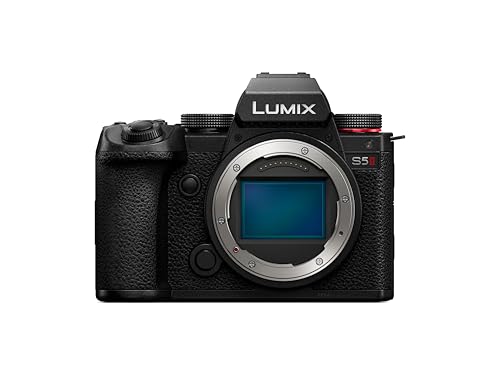
Panasonic LUMIX S5II — Best cinema-leaning hybrid
Panasonic built its reputation in the rooms where video is a profession rather than a feature, and the LUMIX S5II is the body that brings that heritage closest to cinema in this pool. Its recording options are the filmmaker’s kind — flexible framing including open-gate capture that lets a production shoot once and deliver in several aspect ratios, professional monitoring aids that show the exposure the file actually holds, and a log profile with the latitude narrative work demands. In the hands of a small crew it behaves like a cinema camera that happens to fit in a mirrorless bag.
The stabilisation rewrites small-feature logistics. The walking shot through the location, the stairwell descent, the car interior’s gentle life — shots that once required a gimbal technician and a rigging hour come from the operator’s hands, and the hours saved become lighting hours, which is where small features are actually won. Its phase-detect autofocus, the line’s long-awaited addition, holds an actor through a scene’s movement with a confidence that lets the operator think about framing instead of focus anxiety.
The L-mount alliance gives it a lens path with real cinema manners: manual-friendly primes, shared mounts with dedicated cine glass, adapters that open the vintage shelves whose character independent films love. Its colour is the modern neutral kind — a clean negative for the colourist to print from — which suits productions whose look will be built in the grade rather than baked on set.
Its boundaries are the pool’s boundaries, honestly worn: no internal raw of the dedicated cinema kind, an ecosystem smaller than Sony’s for exotic rentals, and a stills identity that matters only if the production also sells frames. For the filmmaker whose deliverable is a movie — feature, short, or the commercial that must feel like one — the S5II is the most cinema-serious tool this guide can link, and it leads for that reason.
- Recording: flexible framing incl. open gate, pro log
- Stabilisation: class-leading in-body system
- Tooling: monitoring aids for exposure and focus
- Mount: L-mount alliance, cine-friendly glass
Strengths
- The most filmmaker-shaped toolset in this pool.
- Handheld movement with a cinema accent.
- Files that grade like they were meant to.
Trade-offs
- No dedicated-cinema raw recording.
- Rental depth for exotics trails Sony.
- Menu depth rewards a prep day.
Best for: independent features and shorts with small crews. Not suited for: productions standardised on another brand’s fleet.

Sony Alpha 7 IV — Best production standard
The Alpha 7 IV is the camera a production chooses when the decision must defend itself to everyone: the producer counting rentals, the AC counting familiar menus, the colourist counting on a known pipeline. Its low-light grace serves the night exterior and the available-light interior that independent schedules live on; its autofocus serves the improvised moment; its colour, in its log profile, is the industry’s most widely understood starting point — which in post-production terms is a form of wealth.
Sony’s lens shelf is the deepest argument. Cinema-mannered primes, focus-by-wire done well, a third-party renaissance that put fast glass within independent reach, and cinema lines above it that share the mount’s logic — a production can build a package at almost any budget without leaving the family. When the feature grows a second unit, the B-cameras match; when a lens dies on location, the rental house has its twin. Movies are logistics, and no ecosystem here is more logistical.
The caveats are a cinematographer’s caveats: rolling shutter that asks for disciplined pans in its strongest modes, colour that asks the grade to give it a personality rather than arriving with one, and a body whose ergonomics serve the operator more than the rigged crew. None has ever stopped a feature; all are known quantities, which on a production is its own kind of virtue.
Choose the A7 IV when the film is ambitious and the production must be boring — when the camera department’s creativity should be spent on light and lenses, not on coaxing an exotic body through a schedule. It is the standard for a reason, and standards are what features are finished on.
- Sensor: full-frame, strong in low light
- Autofocus: reference eye and subject tracking
- System: deepest lens and rental ecosystem
- Colour: widely understood log pipeline
Strengths
- Every crew member already knows it.
- Night and available-light work excels.
- Matches B-cameras and rentals anywhere.
Trade-offs
- Rolling shutter asks for calm pans in its strongest modes.
- Colour needs the grade for personality.
- Ergonomics favour operator over rig.
Best for: features and series standardising a package. Not suited for: filmmakers wanting a baked-in film palette.

Canon EOS R6 Mark II — Best for faces and narrative warmth
Narrative cinema is, in the end, photography of faces under emotional pressure, and Canon’s colour science has spent decades making faces the most trusted in the business. The EOS R6 Mark II brings that inheritance to movie work: skin that holds its warmth under mixed practicals, highlights on a cheek that surrender gently, and a log profile that grades toward the human rather than the technical. Directors cast faces; this camera is how those faces survive the pipeline with their casting intact.
Its detection system serves the actor’s process. Eye and head tracking that holds through a turn, a gesture, a partner crossing the frame lets the operator — or the autofocus itself, on the small crew’s gimbal shot — protect the performance’s geography. Canon’s in-body stabilisation steadies the handheld intimacy that modern narrative loves: the close two-shot breathing with the actors, the follow through a doorway that a dolly could not make.
The professional cautions: long takes at the highest quality settings ask for heat awareness on warm stages, and Canon’s cinema-leaning glass at the top of the RF shelf is priced for the productions that can bill it. Its recording options, while strong, are a step behind the Panasonic’s filmmaker-specific depth. None of this touches its centre: faces, warmth, trust.
For the director whose film lives in performances — the drama, the romance, the family story — the R6 Mark II is the pool’s most humane instrument. Audiences forgive many things in a movie; they do not forgive faces that look wrong. This camera’s whole design conspires to keep them right.
- Colour: skin rendering with narrative warmth
- Detection: eyes and heads held through movement
- Stabilisation: in-body for handheld intimacy
- Media: dual slots for protected takes
Strengths
- Actors look the way the casting promised.
- Focus protection for one-take performances.
- Handheld narrative shots stay graceful.
Trade-offs
- Longest top-tier takes need heat planning.
- Finest RF cine-leaning glass is dear.
- Filmmaker tooling a step behind Panasonic.
Best for: performance-led features and narrative shorts. Not suited for: long stage recordings in hot rooms.

Fujifilm X-T5 — Best film-emulation look
There is a school of filmmaking that wants the film to look like film — not as nostalgia, but as a palette with a century of emotional associations mixed into it. The Fujifilm X-T5 is that school’s camera in this pool. Its film simulations, descended from actual film stocks, give a feature or a short a finished, characterful palette on the day of the shoot; its high-resolution sensor and beloved prime lenses render faces and places with a texture that digital neutrality has to chase in post.
The practical cinema case is stronger than romantics admit. A look decided on set is a look the whole crew can light for, act for and protect; the colourist inherits a direction rather than a question. For the micro-budget feature whose post-production is one person and a deadline, footage that arrives nearly finished is not a compromise — it is the schedule’s salvation. Fujifilm’s lens shelf, built around compact fast primes, suits the small locations and smaller crews that school works in.
The boundaries are real: APS-C depth of field and low-light ceilings sit below the full-frame picks, the video tooling is a stills-led camera’s tooling, and productions wanting a neutral negative for an elaborate grade should look to the Panasonic or Sony. Autofocus for chaotic action likewise trails the leaders, though narrative pace rarely files that complaint.
Choose the X-T5 when the film’s look is its signature and its budget is its discipline — the festival short with a palette people describe afterwards, the feature whose period feel is baked into every frame by design. It is the most authored camera in this guide, and authored is a compliment cinema understands.
- Colour: film simulations as a finished palette
- Sensor: high-resolution APS-C
- Lenses: compact fast primes with character
- Handling: dials for deliberate, lit shooting
Strengths
- A festival-ready look straight from the camera.
- Post-production burden dramatically lighter.
- Small kit for small locations and crews.
Trade-offs
- Full-frame still owns the extremes of darkness and depth.
- Neutral-negative grades start further back.
- Video tooling shallower than the leaders.
Best for: shorts and features selling a filmic palette. Not suited for: elaborate grades from a neutral negative.
Blackmagic Pocket Cinema Camera 6K — Best dedicated cinema step (prose-only)
This pick carries no purchase link in this guide, deliberately: it stands here as the honest benchmark, the shape of tool the hybrid bodies above are approximating. The Pocket Cinema Camera line was built with a single brief — cinema, only cinema — and its signatures are the ones this guide has used as a measuring stick throughout: raw recording that hands the colourist the sensor’s whole testimony, a colour science designed for the grade rather than the screen, and an interface that speaks in frames, scopes and timecode instead of stills-camera dialects.
Its presence in a production changes the package around it. The large files demand a DIT discipline the hybrids forgive; the body asks for rigging, external power and a focus puller’s full attention; stills, autofocus glamour and hybrid convenience are simply not its department. In exchange, the footage enters post with a freedom the pool’s linked cameras approach but do not equal — the freedom to decide the look after the day, completely.
Why include a camera we do not link? Because the professional movie maker reading this guide deserves the map drawn whole: the hybrids for the productions they finish beautifully today, and the dedicated step visible on the horizon for the production whose grade will demand it. Many working cinematographers own exactly this pairing — a hybrid for the week, a cinema body for the feature — and rent upward from both when the budget blooms.
Treat it as the reference point when you test the linked picks: shoot the window scene, grade both files, and measure the distance with your own eyes and your own colourist’s patience. For most independent work the distance is smaller than the forums claim. For some work it is the whole ballgame — and now you know which work is yours.
- Recording: raw, built for the grade
- Design: cinema-only interface and rigging
- Colour: pipeline designed around post
- Role: dedicated step beyond hybrid bodies
Strengths
- The fullest post-production freedom here.
- A colour pipeline with cinema as its only job.
- The benchmark the hybrids are measured against.
Trade-offs
- No hybrid convenience — stills and AF are not its world.
- Large files demand serious media discipline.
- Needs rigging and external power to shine.
Best for: features whose grade is the signature. Not suited for: hybrid, run-and-gun or stills-carrying work.

DJI Osmo Pocket 3 — Best impossible-angle camera
Every feature has a shot list of impossibilities: the camera inside the fridge, the glide through the keyhole of the set, the stairwell spiral that would take a crane the budget laughs at. The DJI Osmo Pocket 3 is how small productions steal those shots. Its mechanical gimbal produces movement with a cinema accent from a device the size of a chocolate bar, and its sensor holds up in the mixed light of real interiors far beyond what its size promises.
Its professional uses are specific and growing: the insert that needs a floating camera inches from the prop, the location scout footage that sells the director on a move, the second unit’s establishing glide through a doorway the main rig cannot pass. Face and subject tracking serve the rehearsal and the behind-the-scenes film, which on an independent production is not vanity — it is the funding trailer for the next one.
Its limits are the honest ones of scale: a fixed lens, an internal battery that wants a power plan across a long day, and files that intercut with the full-frame bodies when each is handled with care rather than by default. It is a special-teams player, and productions that ask it to be the A-camera misunderstand both it and themselves.
Budget-wise it may be the most cinematic money in a small package: the shots it adds are the ones audiences feel as production value — movement, intimacy, impossible geography — and it adds them for less than a single day of crane rental. A feature is remembered by its images; the Pocket 3 manufactures the images the rest of the kit cannot.
- Stabilisation: true 3-axis mechanical gimbal
- Form: fits inside sets and props
- Tracking: face and subject follow
- Role: inserts, glides and second-unit moves
Strengths
- Movement shots no rig in this budget matches.
- Deploys in seconds, anywhere on set.
- Intercuts honestly when handled with care.
Trade-offs
- Fixed lens and perspective family.
- Internal battery needs a power plan.
- Not an A-camera for principal photography.
Best for: inserts, glides and impossible angles. Not suited for: carrying a feature’s main unit.
How Should a Filmmaker Test Before Committing?
Test the film you are actually making, in miniature, before the money commits to a system. Borrow or rent the two finalists for one weekend and shoot the same three scenes on both: the actor at the window in hard daylight, the two-shot in the mixed-light kitchen, the night exterior under practicals. Use your lenses if you have them, your locations if you can, your actual lead if they owe you a favour. Then grade both sets of files in your real pipeline, on your real screen, with your real colourist — even if the colourist is you at midnight, especially then.
Score the weekend like a production, not a honeymoon. Which files survived the grade with their dignity intact? Which body did the operator stop noticing by the second scene? Which autofocus earned trust in the improvised take, and which focus throw invited the puller’s hand? How did the media, the batteries and the menus behave at hour six, when the test day got long the way shoot days do? Write the answers down; memory edits test footage as ruthlessly as it edits everything else.
Then price the whole truth: the body, the lens set in its character, the media for a feature’s appetite, the batteries for a twelve-hour day, the case that makes it one lift. The finalists in this guide separate themselves at that ledger more honestly than at any sensor chart — an ecosystem whose primes you can afford beats a flagship whose lenses remain a rumour. The test weekend’s last lesson is always financial, and it is the one that decides well.
Filmmakers who test this way rarely regret their cameras, because the camera was chosen by the film itself, in the film’s own light, through the film’s own pipeline. It is the closest thing equipment buying has to a rehearsal — and every other department of your production already knows that rehearsals are where the disasters are supposed to happen.
How Do Lenses Change a Movie More Than Bodies Do?
Swap two bodies behind the same lens and the audience shrugs; swap two lenses on the same body and the audience feels a different film. Lenses carry the image’s accent — contrast, flare, the way a face’s edge surrenders to the background — and the shelves behind these six bodies divide by that accent more honestly than by price. The professional movie buyer therefore shops backwards: choose the lens family whose character the film speaks, then choose the body in this guide that wears it. It is the opposite of consumer logic and the beginning of cinematography.
Focus behaviour is the lens’s second character. Cinema pulling demands rotation that is long, smooth and repeatable, with hard stops and no breathing theatrics; stills autofocus demands the opposite virtues. The modern middle path — fly-by-wire lenses with cinema manners, manual classics adapted to new mounts — is where the ecosystems behind these bodies compete hardest, and where a testing weekend earns its fee. A lens that fights the puller will lose takes no sensor can win back.
Vintage glass deserves its paragraph because independent cinema loves it for reasons beyond thrift: older coatings flare like memory, render skin like forgiveness, and give a digital sensor an accent no plug-in fully counterfeits. The mirrorless mounts in this guide adapt nearly everything ever made with a focusing helicoid, which turns the world’s lens history into a rental shelf. The discipline is matching — a set whose members share a character — because a film whose lenses argue with each other looks like several films edited into one.
And the humble truth underneath: one great prime, owned and known, out-shoots a case of strangers. The DP who has shot a hundred scenes through a single focal length directs with it instinctively, the way a writer types without watching the keys. Buy the body’s mount for the lens you will marry, date the rest through rentals, and let the film’s accent be a decision rather than an accident of inventory.
What Happens in the Grade, and Why the Camera Decides Half of It?
The grade is where a movie’s footage confesses what the shoot actually captured, and the confession’s honesty is fixed on the day by the camera’s choices: the codec’s depth, the profile’s latitude, the exposure’s discipline. A colourist can build a cathedral from a good negative and only a tent from a poor one, which is why this guide weighted recording depth as heavily as sensors. When you test bodies — and you must — grade the tests. The camera that wins in the grading suite is the camera; the one that wins on the camera-store monitor is a screensaver with a mount.
Exposure is the grade’s raw material and the set’s cheapest insurance. The modern temptation is to underexpose for safety and lift later; the files in this pool forgive a stop gracefully and punish two with noise that no suite fully forgives. Expose for the grade you intend — highlights protected, faces placed where the profile loves them — and the colourist inherits a negative instead of a rescue mission. The monitoring tools ranked throughout this guide exist to make that discipline visible at the moment it is still free.
Consistency is the grade’s second currency. A feature is graded as one object, and bodies whose colour agrees across a fleet — A-camera, B-camera, the benchmark’s second unit — save the suite days of matching that a small budget feels as blood. This is the unglamorous argument for standardising on one ecosystem from this list, and for shooting the grey card and the colour chart at every setup change like a ritual nobody is too senior to perform.
Finally, the grade is where the baked-look and log philosophies settle their argument per production, not per ideology. The Fujifilm’s finished palette and the Panasonic’s neutral negative are both professional answers; the question is whose hours the look will consume — the set’s or the suite’s. Answer it in pre-production, with tests, and the camera decision makes itself. Answer it in post, and the answer arrives as an invoice.
How Does a Crew Grow Around One of These Bodies?
It grows by trust accumulated in dailies. The body that returns footage the director loves becomes the production’s house camera; the AC builds its rig by muscle memory; the DIT’s pipeline hardens around its files; the second unit inherits it without a briefing. That accumulation is a real asset — call it fluency capital — and it is why professionals resist switching systems mid-career even when a rival’s chart is prettier. The six bodies here are all fluent-able; the question is which one’s accent your crew wants to dream in.
The growth path matters too: the hybrid that starts as the whole department becomes the B-camera when the benchmark body arrives, and the A-camera when the benchmark is rented out of reach. Ecosystems that let a body slide down that ladder without leaving the lens shelf — all of this guide’s majors do — protect the investment across a career’s whole shape. Buy the body your next body will still respect.
Rental relationships complete the picture. The house that stocks your mount knows your package, your preferences, your emergencies; the 2 a.m. replacement body arrives speaking your menus. Independent cinema runs on such relationships as surely as on talent, and the camera choice quietly selects which relationships are available to you. In a small market that can be the deciding vote, and there is no shame in it — logistics is a department of cinematography.
So choose the body the way a company hires its first employee: for character, for reliability, for the network it brings, and for the work it makes possible next year. The six here would all be fine hires. The film you are about to make is the interview; conduct it with tests, and hire in haste only the light.
How Does Sound Design Begin at the Camera?
Movies are half heard, and the camera department’s relationship with sound starts with humility: the camera is the noisiest neighbour the microphone has. Fan whir, handling creaks, autofocus motors hunting through a quiet scene — each is a small betrayal the sound recordist must hide, and the bodies in this guide were partly chosen for their manners in a quiet room. The hybrid generation has grown civilised about this; the cinema benchmark in this list exists partly because its designers never had to apologise to a boom operator.
The practical disciplines are old and unglamorous. Keep the camera’s own microphone as a sync reference and nothing more; record the performance on dedicated equipment placed for the voice, not for the frame. Choose lenses whose focus and aperture work silently when the scene is intimate — a virtue the cinema-mannered shelves behind these bodies advertise and the stills bargains often do not. And run the camera’s fan and thermal settings with the sound department in the conversation, because a take saved by a quieter camera mode is worth more than a stop of anything.
Dialogue scenes expose the autofocus question in its sharpest form. A hunting focus motor is audible; a breathing lens is visible; a rack focus performed by an algorithm has no opinion about the line being spoken. The professional answer is layered — autofocus for the improvised and the moving, a human hand for the performed and the quiet — and the cameras here were weighed for how gracefully they let a production move between those layers without changing bodies.
Finally, the set’s sound discipline is a culture the camera choice can only support, never supply: slates clapped, room tone captured, the generator parked around the corner of the world. A production that respects sound in its planning will find every body in this guide a willing accomplice. A production that treats sound as post-production’s problem will make even the benchmark camera sound like a student film, because that is what it will be.
What Does the Director of Photography Actually Decide?
Everything the audience will feel and almost nothing they will name. The DP choosing among these bodies is really choosing a set of defaults: the highlight behaviour that will shape how windows are lit, the low-light grace that decides how much of the night exterior is practical lamps and courage, the colour accent the whole film will speak. Those defaults become the production’s visual grammar, repeated across a hundred setups until they read as style. The camera decision is therefore a directing decision wearing a purchase order’s clothes.
The wise DP tests with the film’s actual problems, not the showroom’s: the mixed-temperature kitchen the script lives in, the car interior at noon, the lead actor’s skin under the intended key. An afternoon of such tests, run through the grade, settles arguments that spec sheets inflame. It also reveals the body’s manners under the crew’s hands — how the AC builds it, how the operator frames through it at hour eleven — which no chart records and every schedule depends on.
There is also the question of the second camera, which features answer more honestly than the first. The B-body that matches in colour, shares the lens mount and the media, and can be run by the second unit without a translator — that pairing is a production design, and the ecosystems in this guide were ranked partly by how gracefully they form it. A feature is a hundred days of small compatibilities; the camera system that supplies them invisibly is worth a resolution class of anyone’s money.
And beneath all of it sits the DP’s oldest truth: the camera is the least of the image. Light, production design, lenses and the actor’s face make the frame; the body merely refuses or agrees to record it faithfully. Choose the body that agrees most completely at your budget — the six here all agree handsomely — and spend the anxiety where it belongs, on the light.
How Do the Six Compare Side by Side?
| Camera | Cinema role | Look | Crew size it loves |
|---|---|---|---|
| Panasonic LUMIX S5II | A-camera, small features | Clean neutral negative | One to four |
| Sony Alpha 7 IV | A-camera, standard package | Industry log pipeline | Any |
| Canon EOS R6 Mark II | A-camera, performance-led | Warm, face-first | Two to six |
| Fujifilm X-T5 | A-camera, authored look | Film emulation | One to three |
| Blackmagic Pocket Cinema Camera 6K | Dedicated cinema step | Raw, grade-first | Three and up |
| DJI Osmo Pocket 3 | Special shots, second unit | Clean and mobile | One |
What Mistakes Do First-Feature Camera Buyers Make?
Buying the camera before the pipeline is the founding error: a body chosen on a showroom screen, whose files the production’s actual edit-and-grade chain handles like a foreign language. Shoot tests through your whole pipeline — your editor, your colourist, your delivery screen — before money moves. The camera that wins the pipeline test is the camera; the one that wins the spec sheet is a screensaver.
The second mistake is starving light and lenses to feed the body. A feature shot on the second-best body here, lit with intention through characterful primes, will out-screen a flagship body under a ceiling bulb every day of the festival. The allocation that works is almost insulting in its plainness: body sufficient, lenses characterful, light generous, sound professional — then, with whatever remains, body again.
The third mistake is ignoring the sound department’s camera requirements. Production audio is recorded beside the camera, and fan noise, handling noise and rigging ergonomics all enter the microphone’s world. The quiet, rig-friendly bodies earn a gratitude from sound recordists that never appears in camera reviews — and on a dialogue feature, the sound recordist’s gratitude is worth more than a stop of dynamic range.
One Sentence of Advice From Every Department
The director says: choose the camera whose look you can describe at the pitch meeting, because the film will be that sentence with pictures. The cinematographer says: choose the one whose highlights forgive the window you cannot afford to flag. The AC says: choose the one whose focus you can pull in the dark at hour eleven. The DIT says: choose the one whose media you can afford to treat as expendable and whose files your laptop does not fear. The producer says: choose the one the rental house can replace by morning. The colourist says: shoot the test, grade the test, and believe the test over every voice in this paragraph — including the ones in this guide. The six bodies above are the rare shortlist on which all six of those sentences can be true at once, at six different scales of production. Pick the scale that matches your film, and go and make it.
A Note on the Word “Professional” in This Guide’s Title?
Professional, here, has been used in its working sense rather than its marketing one: not the most expensive tool, but the tool a production can bill against — the one that shows up, behaves, matches its partners and survives the schedule. By that definition every body in this list is professional in the hands that prepare it, and the most expensive camera in the world is amateur in the hands that do not. The distinction matters because it returns the decision to where it belongs: your production’s habits. Buy the body your habits deserve, then let the habits, practised across a hundred setups, make the footage professional. The camera is the first of those habits — nothing more, and nothing less.
Final Recommendation
For the independent feature or serious short, build on the Panasonic LUMIX S5II if the crew is small and the grade is yours, on the Sony Alpha 7 IV if the production must standardise with the world’s rentals and second units, and on the Canon EOS R6 Mark II if the film lives in its faces. Choose the Fujifilm X-T5 when the palette is the signature, keep the Blackmagic benchmark in view for the production whose post-production ambitions outgrow hybrid files, and let the Pocket 3 steal the shots no rig can make.
Then spend the difference — there is always a difference — on light, lenses and the colourist’s time. A movie is not a camera test; it is a hundred decisions a day, of which the body is only the first. These six make that first decision well at six different scales of ambition. The other ninety-nine are yours, and they are the film.
Frequently Asked Questions
Can a mirrorless camera really shoot a feature film?
Yes — features shot on hybrid bodies have played major festivals, because the limiting factors at this level are light, lenses and the grade far more than the badge on the camera. The bodies here were chosen for the traits features actually consume: latitude, codec depth, focus discipline and endurance.
Is raw recording necessary for professional movie making?
Not necessary, but liberating: raw gives the colourist the widest freedom to build or rescue a look. Many professional productions shoot high-quality log codecs and never miss raw. The prose-only benchmark in this guide shows what the dedicated step buys; most independent work is honestly served by the linked hybrids.
Full-frame or APS-C for cinema?
Full-frame offers the shallowest focus and strongest low light; APS-C offers smaller lenses, deeper natural focus — often a blessing for a small crew pulling focus — and lower package cost. Cinema’s own classic format sits closer to APS-C than to full-frame, which should end any snobbery on the subject.
How important is autofocus on a movie set?
Increasingly important for small crews, gimbal work and improvised moments; still secondary to a good focus puller for classical narrative coverage. The strongest setups use both: autofocus where the shot is unrepeatable, manual craft where the focus itself is storytelling.
What lens set should a first feature own?
Three primes in the classic lengths — wide, normal, short telephoto — sharing one character, bought in the mount your body standardises on. That set has shot a large fraction of the features you admire; the standard zoom joins when schedules demand speed over ceremony.
Where does the camera rank in a feature’s budget?
Below light, lenses, sound and the colourist — deliberately. The body is the platform those departments stand on, and every pick here is platform enough. Overspending on the body while starving the departments is the one allocation error this guide exists to prevent.
Should a first feature rent instead of buy?
Often, yes — rent the tier the film dreams of for the shoot’s weeks, and own the tier your year-round work sustains. The bodies in this guide occupy the ownable tier precisely because their rental logic also works in reverse: a camera the rental houses stock is a camera whose lenses, media and knowledge surround you everywhere.
How do I choose between log and a baked-in look?
Decide by your colourist — including if the colourist is you, honestly assessed. Log buys freedom at the price of skill and time; a baked look buys speed and coherence at the price of commitment. Test both through your real pipeline on your real locations before the shoot makes the decision for you.
Related Guides
Continue: the best cameras for production work, cinema lenses for mirrorless systems explained, and the best cameras for professional street photographers.


