kajuandouglas.com is reader-supported. When you buy through links on our site, we may earn an affiliate commission.
Where to Buy Outdoor Cameras, and What a D3200 Owner Is Really Asking
Searches that name a beloved old camera are really two questions wearing one coat. The first: is my Nikon D3200 still a good outdoor camera? The second, quieter: if I step up, what should the best cameras for outdoor photography Nikon D3200 owners consider look like? This guide answers both honestly, because the D3200 — a 24-megapixel DSLR that taught a generation to photograph — deserves a verdict based on evidence rather than nostalgia or salesmanship.
The short answer to the first question is yes, within daylight’s generous terms. The D3200’s sensor remains genuinely capable in the light the outdoors provides most: landscapes with real detail, portraits in open shade, wildlife at sensible distances with the right lens. Its weaknesses are equally real and specific: autofocus designed for a slower era, a screen that does not tilt, video that belongs to another decade, and no sealing against the weather it photographs.
So the list below begins with the D3200 itself, recommended in prose as the camera many readers already own — keep it, feed it a better lens, and spend nothing until its limits are the ones actually frustrating you. Five pool-verified successors follow, each solving a different D3200 limitation: mirrorless Nikons that keep the family’s handling, a Canon that wins on value, and two OM System bodies built for weather the D3200 must hide from.
Notice the philosophy: an upgrade should be purchased against a named frustration, not a vague sense of ageing. The sections after the picks include a frank audit of what the D3200 still does well, so owners can decide whether their frustration is autofocus, weather, weight, video or low light — and buy precisely the successor that answers it.
If you arrived camera-less, researching the D3200 second-hand as a first outdoor camera, you are welcome here too. The same audit will tell you what your money buys and what it cannot, and the successors double as the new-camera shortlist your research was always going to produce.
One ground rule for the whole guide: lenses outlive bodies, and outdoor photography is a lens’s game — the long telephoto for wildlife, the wide zoom for landscapes. Every recommendation below is made with its lens ecosystem in view, because a camera is a promise that its lenses must keep.
Key Takeaways
- The D3200 remains a fine daylight outdoor camera; its sensor was never its problem.
- Its real limits are era-typical: slow live-view autofocus, no tilting screen, no weather sealing, dated video.
- The Nikon Z50 II is the natural heir for D3200 owners who want to stay in the family.
- The OM SYSTEM OM-5 Mark II and Tough TG-7 answer the weather question the D3200 cannot.
- Buy an upgrade against a named frustration — focus, weather, weight or dusk — not against a birthdate.
- A better lens often revives a D3200 more cheaply than a new body revives anything.
In this guide
Quick Picks
| Camera | Badge | Why it made the list |
|---|---|---|
| Nikon D3200 | Best budget answer: the camera you own | A 24-megapixel DSLR whose daylight image quality still earns its place — recommended in prose as the baseline. |
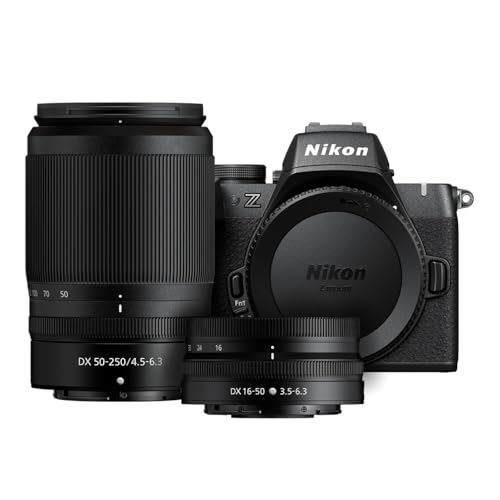
| Nikon Z50 II | Best natural successor for Nikon owners | Flagship-flavoured subject detection and a superb viewfinder in the compact mirrorless body your hands already understand. |
| Nikon Z30 | Best lightweight video-leaning step up | A compact, screen-first mirrorless made for creators — the D3200’s opposite in every ergonomic way. |
| Canon EOS R50 | Best value crossing to a new system | Canon’s friendly APS-C body delivers modern autofocus, colour and video at the friendliest price in this guide. |
| OM SYSTEM OM-5 Mark II | Best for weather and long walks | A compact, weather-sealed Micro Four Thirds body with superb stabilisation — the outdoors specialist. |
| OM SYSTEM Tough TG-7 | Best for water and rough country | Waterproof, drop-proof and frost-proof — the outdoor camera for the places a D3200 must never go. |
How Did We Judge Successors to a Much-Loved DSLR?
We treated the D3200 as the control in the experiment: every candidate had to beat it at something a D3200 owner actually complains about on a walk, not merely out-specify it on paper. Autofocus that works in live view and video, screens that tilt for ground-level flowers, sealing for the weather that makes the best photographs, and stabilisation for the telephoto ends of long zooms — those were the tests, applied in the field conditions the keyword promises.
Familiarity counted as a feature. A D3200 owner’s hands know Nikon’s dial logic and their eye knows Nikon’s colour, so the Nikon mirrorless picks earned credit for continuity — while the Canon and OM System picks had to justify the border crossing with a virtue the family could not offer, namely value in one case and weatherproofing in the other.
We also respected the economics of the audience. D3200 owners are, by revealed preference, people who keep cameras for a decade and extract full value; recommendations were weighted toward bodies with long useful lives, sane lens prices and second-hand ecosystems deep enough to shop in.
Finally, weight and weather were scored as outdoor virtues in themselves. A camera that halves the bag’s weight gets carried on the speculative walk; a camera that shrugs off rain gets used in the dramatic light. Both beat resolution in the field, whatever the brochures say.
Which Cameras Should a D3200 Owner Consider?
Nikon D3200 — Best budget answer: the camera you own
Begin with respect, because the D3200 earned it. Released as an entry-level DSLR, it carried a 24-megapixel sensor that embarrassed more expensive contemporaries, and in good light that sensor still produces outdoor photographs — landscapes, portraits, travel scenes — that print beautifully and shame the assumption that old means incapable. If your outdoor photography happens in daylight and your subjects are patient, the most honest recommendation in this guide is: keep shooting.
Its optical viewfinder deserves a defence modern cameras cannot make for themselves. Looking through the lens at the real scene, with no lag, no battery drain and no screen glare, remains a pleasure and a discipline; D3200 owners who learned composition through that finder carry a skill that transfers to every camera they will ever own. The DSLR’s appetite for batteries is similarly old-fashioned: a charge lasts for days of walking where mirrorless bodies ask for a spare by lunch.
The lens mountain is the second defence. A decade and more of Nikon F-mount glass circulates second-hand at prices that make experimentation cheap: a fast prime for portraits, a long telephoto for the reserve, a macro for the garden’s small citizens. A D3200 fed with one thoughtful lens upgrade frequently outperforms, for its owner’s actual subjects, a new body bought with the kit lens and no money left over.
Now the honest ledger of limits, because this guide’s credibility depends on it. Autofocus through the viewfinder is competent for still and slow subjects but belongs to its era for tracking; autofocus in live view and video is slower still, and the fixed screen makes ground-level and overhead work an exercise in kneeling and guessing. There is no weather sealing, no stabilisation in the body, and high-sensitivity files soften sooner than modern sensors’ — dusk is where the D3200’s age shows first and most.
Working outdoors with those limits is a learnable craft: pre-focus for the bird’s favourite branch, expose for the highlights and let shadows fall, shoot the golden hour rather than the blue hour after it, and keep the camera under your coat in rain rather than pretending it is sealed. Generations of photographers made fine work inside exactly these fences; the fences are real, but so is the work.
Video requires the plainest words: the D3200’s movie mode was a checkbox in its day and is a historical document now. Owners whose outdoor storytelling has grown toward film — the walk vlog, the wildlife clip, the family expedition record — have the clearest single reason to upgrade in this entire guide, and every successor below treats video as a first-class citizen.
Second-hand buyers researching the D3200 as a first camera should hear both halves. For the price of a modest phone accessory you can own a real photographic instrument with a great sensor and a mountain of cheap lenses, and learn more from it in a summer than from a year of computational snapshots. What you cannot buy your way out of, at that price, is modern autofocus and weather resistance — know which subjects you love before deciding whether that matters.
The verdict this guide gives its namesake: not obsolete, but specialised by time into a daylight, patient-subject, stills-first camera. Owners whose photography matches that description should spend on lenses and trips. Owners whose photography keeps colliding with the fences — dusk, rain, motion, video — should read the next five picks as a targeted shopping list.
Either way, the D3200 has already won its argument: it is still in people’s bags, still making the photographs on their walls, more than a decade after the industry moved on. Cameras are tools, and a tool that serves for a decade is not a problem awaiting replacement. It is the standard its successor must meet.
Maintenance is part of the D3200’s longevity story: a sensor clean, a fresh strap, a battery replaced before it swells with age, and firmware checked once — small acts of care that keep a decade-old body honest for another decade. Owners who perform them are not being sentimental. They are maintaining the cheapest good camera they will ever own, which is the one already paid for.
There is also a teaching afterlife unique to cameras of this era: fully manual controls with no computational rescue make the D3200 a strict and excellent tutor. Photography clubs and parents alike use surviving examples to teach exposure from first principles, because the camera shows the student exactly what their settings did — nothing more, nothing hidden. A tool that teaches is never merely old.
- Type: APS-C DSLR, 24 megapixels (prose recommendation)
- In one line: daylight stills quality that outlives its era
- Lenses: vast second-hand F-mount ecosystem
- Carry style: the classic DSLR shoulder carry
Strengths
- Sensor quality in daylight remains excellent
- Optical viewfinder and multi-day battery life
- Cheap, deep second-hand lens market
Trade-offs
- Autofocus and video belong to its era
- No weather sealing or tilting screen
- Low-light files soften earlier than modern rivals’
Best for: Patient daylight photographers and learners on a budget.
Not suited for: Video storytellers, dusk specialists and all-weather shooters.

Nikon Z50 II — Best natural successor for Nikon owners
For the D3200 owner whose frustration is autofocus, the Z50 II is the answer written in their own language. Its subject detection — inherited from Nikon’s flagship line — recognises people, animals, birds and vehicles, and holds them through the kind of movement that reduced the D3200’s tracking to a hopeful suggestion. The dog at full sprint, the grandchild on the swing, the heron lifting off: subjects that were lotteries become assignments.
The viewfinder experience will feel like a homecoming with the lights upgraded. Where the D3200’s optical finder showed the scene, the Z50 II’s bright electronic finder shows the photograph — exposure, colour and focus confirmed before the shutter rather than reviewed after it. D3200 owners consistently describe the first week as a revelation in hit-rate: fewer wasted frames, more confidence at the edges of the day.
Video’s transformation needs no elaboration for anyone who has suffered the D3200’s live view: the Z50 II films like a modern camera, with autofocus that follows subjects and quality that serves the family archive and the walking vlog alike. The outdoor storyteller who has been carrying a phone for video can finally carry one camera for everything.
Continuity extends to colour and handling. Nikon’s rendering will make your old files and new files sit comfortably in the same album, the control logic is a dialect your hands already speak, and an adapter can give treasured F-mount lenses a second life on the new body while you build a native collection at a humane pace. Upgrades that respect the past get adopted; this one does.
Weather resistance improves on the D3200’s complete absence, the body is smaller and lighter than the DSLR it replaces, and the tilting screen ends the kneeling era for flower and fungi photography. Each improvement answers a specific, named D3200 frustration — which is this guide’s definition of a justified upgrade.
The APS-C format keeps the lens economics sane: the crop that D3200 owners already understand still stretches telephoto lenses for wildlife, and Nikon’s growing Z-mount DX range plus the adapted F-mount mountain give the Z50 II the deepest lens larder of any pick here for a Nikon loyalist.
Who should hesitate? Owners whose D3200 frustration is really about full-frame low-light rendering, and owners with a large, beloved F-mount collection they refuse to adapt. For the great majority of the D3200’s faithful, though, this is the succession that feels less like switching and more like the same camera, ten years of progress later.
Buy it with the kit zoom, adapt your favourite F-mount prime, and spend the first month photographing your D3200’s favourite walks. The comparison will make the upgrade’s case more eloquently than this guide can.
It is the pick we would hand to the D3200 owner who says the words ‘I just want it to focus’ — and mean it as the whole sentence.
Battery reality deserves a sentence, since D3200 owners are spoiled by multi-day DSLR endurance: mirrorless bodies trade that stamina for their screens and processors, and the Z50 II is no exception. The adjustment is a spare battery in the bag and a charging habit at the trailhead café — a small cultural change that every convert makes within a month and then forgets they made.
For the landscape half of outdoor photography, the Z50 II’s files reward the tripod-and-patience school as faithfully as its autofocus rewards the action school: clean detail, Nikon’s colour in the greens and skies, and a screen that tilts for the low compositions. A successor should serve both halves of an owner’s practice, and this one conspicuously does.
- Format: APS-C mirrorless (pool-verified)
- Core talent: subject-detection autofocus for moving life
- Viewfinder: bright electronic with exposure preview
- Lenses: native Z DX plus adapted F-mount
Strengths
- Solves the D3200’s autofocus frustration completely
- Familiar Nikon colour and handling
- Modern video in the same family
Trade-offs
- Adapter needed for F-mount glass
- APS-C low-light ceiling remains APS-C
- A real purchase beside a working D3200
Best for: D3200 owners frustrated by focus, video or the fixed screen.
Not suited for: Full-frame seekers and F-mount purists refusing adapters.

Nikon Z30 — Best lightweight video-leaning step up
The Z30 is what the D3200 would look like if it had been designed by vloggers instead of photographers, and for a growing tribe of outdoor storytellers that is precisely the recommendation. No viewfinder, a fully articulating screen, a body that disappears into a jacket pocket’s neighbourhood, and video-first controls: this is the camera for the walker whose outdoor photography now shares equal billing with the walk’s film.
Its natural habitat is the self-filmed outdoors: the hiking diary, the fishing channel, the van-life record, the guided tour filmed by the guide. Set it on a small tripod or a rock, flip the screen, and it frames you against the landscape with face autofocus holding while you talk, gesture and point at the view. The D3200 could no more do this than it could make a phone call.
Stills photographers should calibrate expectations honestly. The Z30 shares the modern Nikon APS-C sensor family’s quality — a clear step beyond the D3200 in low light and dynamic range — but the absence of a viewfinder changes the craft: bright sunlight on a rear screen is manageable rather than pleasant, and the deliberate, eye-to-the-finder discipline of DSLR photography is simply not this camera’s invitation.
Where it surprises is as a second camera and a travel camera. Z50 II owners add it for video duty; D3200 owners who travel light adopt it as the camera that comes on the speculative walk, where the DSLR’s bulk once argued for staying home. Its lens compatibility with the wider Z system means the small body drinks from the same lens pool as its bigger siblings.
Battery and endurance are compact-camera ordinary, so the walking filmmaker budgets spares and a power bank as part of the design rather than as a complaint. The camera’s whole philosophy is that creativity favours the unencumbered, and its power manners are the price of the philosophy, payable in inexpensive batteries.
Choose the Z30 when your outdoor story has begun talking — when the photographs are becoming a channel, a diary, a record narrated by its maker. Choose it also when weight is the named frustration and video the growing ambition. It is the furthest point on this list from the D3200, which is exactly why some owners will love it most.
There is a generational poetry in the pairing that this guide cannot resist noting: the D3200 taught stills to a generation at kitchen tables; the Z30 teaches moving pictures to the same generation on mountain paths. Both are Nikon’s entry doors. They simply open onto different decades.
Buy it with a wide lens for the vlogging frame and keep the D3200, if you keep it, for the stills days when the finder calls. Many owners run exactly that two-camera household and report no conflict at all.
Its role in this list is to remind you that ‘upgrade’ sometimes means sideways into a new medium, not merely upward within the old one.
One caution belongs to bright, snowy and beach-bright conditions, where any screen-only camera works harder for its living: a small hood or shade for the display, and exposure checked on the histogram rather than the picture, keep the Z30 honest in glare. Its owners develop these habits quickly; its detractors are usually photographers who never gave the screen-first craft its fair trial.
The Z30 also quietly excels as the family-holiday camera in a D3200 household: small enough for a parent’s day bag, simple enough for a teenager to film with, and good enough that the holiday’s record improves on every axis at once. Equipment that the whole household uses multiplies its value in a way specification sheets cannot price.
- Format: APS-C mirrorless, screen-first (pool-verified)
- Known above all for: creator video in a pocketable body
- Screen: fully articulating for self-filming
- Lenses: Z-mount, shared with larger Nikon bodies
Strengths
- The self-filmed outdoor story, solved
- Modern sensor quality beyond the D3200
- Genuinely pocket-adjacent for a system camera
Trade-offs
- No viewfinder for bright-light stills
- Compact battery life on long filming days
- A different craft from DSLR photography
Best for: Walking filmmakers, vloggers and weight-first travellers.
Not suited for: Viewfinder traditionalists and stills-only purists.

Canon EOS R50 — Best value crossing to a new system
Crossing systems is a serious decision, and the R50 makes the case for it the way value always does: by delivering the modern essentials — subject-detect autofocus, clean video, a tilting screen, gentle colour — at a price that leaves money for the lens that actually transforms outdoor photography. For the D3200 owner without a deep F-mount investment, the border crossing costs less than loyalty does, and this guide would be dishonest not to say so.
The autofocus is the headline for wildlife-curious photographers. Canon’s subject detection finds animals and birds with a confidence that makes the D3200’s tracking feel like a different century, because it is one. Paired with Canon’s affordable long RF telephoto zooms — a genuine ecosystem strength — the R50 assembles the cheapest credible bird-photography kit in this entire guide.
Canon’s colour science flatters the outdoor portrait: skin against green landscapes, family against sunsets, the dog against everything. D3200 owners switching will notice a different rendering — neither better nor worse in the abstract, but warmer in the ways that family albums appreciate — and most adapt within a weekend of shooting.
Handling is beginner-kind in the best sense: a guided interface for the new, full manual control for the ready, and a body light enough that the speculative walk argument applies with force. The R50 is the camera on this list most likely to be bought by a D3200 owner for a spouse or teenager — and then quietly borrowed back for its autofocus.
Its limits are the value tier’s usual: one card slot, modest weather resistance compared with the OM bodies below, and a native lens range still growing, though Canon’s telephoto value already covers the outdoor brief well. None of these touch the core promise, which is modern capability per pound spent, unmatched here.
The upgrade logic differs subtly from the Z50 II’s: you are not continuing a system but starting a cheaper one, trading your F-mount past for RF’s affordable future. Owners with one kit lens and no attachments should run the numbers coldly; owners with a shelf of Nikon glass should stay in the family. The R50 rewards the unattached.
Video, again, is modern and willing — clean 4K, autofocus that tracks a walking presenter, and a screen that flips for the self-filmed segments. The D3200 owner whose frustration list reads ‘focus, video, screen, price’ will find this pick reading it back to them in order.
Buy it as the value answer and spend the savings on the long lens; outdoor photography is telephoto-hungry, and the R50 is the only pick here whose price routinely leaves a lens budget intact.
It is, in the end, the pick for the pragmatist — and outdoor photography, a discipline of weather and patience, has always belonged to pragmatists.
A note on the guided interface, which experienced D3200 owners sometimes dismiss as a beginner’s toy: it doubles as the fastest way to hand the camera to a companion mid-walk and receive competent pictures back. Outdoor photography is social, and a camera your walking partner can operate is a camera that appears in your own photographs occasionally — a benefit owners notice in their albums within a month.
Canon’s second-hand RF market is young but growing, and the R50’s popularity ensures a healthy supply of bodies and lenses for years. The D3200 owner, accustomed to shopping a deep used market, will find the RF shelves shallower today and deeper every season — a trajectory worth buying into early if the value case already persuaded you.
- Format: APS-C mirrorless (pool-verified)
- Defining trait: modern autofocus at a value price
- Lenses: RF range with affordable long telephotos
- Handling: guided interface plus full manual control
Strengths
- Cheapest route to bird-capable autofocus
- Leaves budget for the lens that matters
- Warm, family-friendly colour
Trade-offs
- Leaves your Nikon lenses behind
- Weather resistance is modest
- Single card slot
Best for: Unattached D3200 owners and value-first birders.
Not suited for: Owners with a deep F-mount collection.

OM SYSTEM OM-5 Mark II — Best for weather and long walks
If the D3200’s most dangerous fence is weather, the OM-5 Mark II is the gate. OM System — heir to Olympus’s outdoor lineage — builds cameras for people who photograph in the conditions that make photographs: sealed bodies, small weather-sealed lenses, and stabilisation so effective that telephoto shots at dusk, handheld, become a realistic plan rather than a prayer. This is the pick for the photographer whose D3200 spends its life under a coat.
Size reframes the whole outing. Micro Four Thirds lenses are dramatically smaller than APS-C equivalents at the same reach, so the wildlife kit that filled a rucksack in Nikon form becomes a shoulder bag in OM form. For hill walkers, that arithmetic is not convenience; it is the difference between carrying a telephoto and leaving it, between photographing the summit wildlife and describing it later.
The stabilisation deserves its reputation in practical terms: slower shutter speeds stay sharp, which buys back the small sensor’s low-light disadvantage in the field’s real currency. Paired with the system’s computational kindnesses — live composite for star trails and waterfalls, high-resolution modes for landscapes on still days — the OM-5 II offers outdoor tricks that no other pick here attempts, at any price.
Weather sealing must be read as a system property: the body and the lens must both be sealed, and OM’s sealed lens range is deep and comparatively affordable. A sealed OM kit in Lakeland rain is a genuinely different instrument from a D3200 in a plastic bag, and the photographer behaves differently — staying out, staying late, staying for the clearing storm that makes the picture of the year.
The trade is sensor size, honestly stated for the third time in this guide because it matters: Micro Four Thirds files soften sooner as light fails than the APS-C picks’, and the depth-of-field look differs. Outdoor photographers who work in daylight and weather — this camera’s congregation — rarely find the trade binding; portraitists chasing blur should look elsewhere in the list.
Handling is enthusiast-dense: customisable everything, a learning curve with a view. D3200 owners stepping up will spend a weekend in the menus and emerge with a camera configured like a personal tool. The OM-5 II rewards that investment for a decade, which matches the D3200 owner’s demonstrated relationship with equipment.
Second-hand depth is a quiet OM advantage: the Olympus lineage means years of excellent lenses circulate affordably, and the system’s walkers are careful owners. A D3200 pragmatist will feel at home in that market.
Buy it when the named frustrations are weather, weight and reach-per-gram, and when your outdoors is measured in ridgelines rather than gardens. It is the specialist’s pick, and its specialism is the outdoors itself.
No other camera in this guide so completely embodies its keyword. If ‘outdoor photography’ were a brief given to one manufacturer, this is the camera that would come back.
Cold deserves a specific mention for this body: winter photographers report the OM system’s compact batteries and controls behaving well in gloves-and-frost conditions where larger kits grow clumsy, and the sealed construction shrugs off the condensation cycle of cold days and warm huts better than unsealed rivals. The D3200’s owner who photographs winters seriously will feel the difference in the first January.
The system’s macro heritage is the other quiet dividend: OM’s small, sharp macro lenses turn the walk’s smallest subjects — lichens, frost, the fungi season — into a parallel photography that APS-C systems serve at twice the carried weight. Outdoor photographers frequently discover their second favourite genre through exactly this door.
- Format: Micro Four Thirds mirrorless (pool-verified)
- In one line: weather sealing and stabilisation for real conditions
- Lenses: compact sealed range with long reach per gram
- Features: computational modes for landscapes and night
Strengths
- Photographs in weather that benches the D3200
- Telephoto reach at half the carrying weight
- Stabilisation that buys back the dusk
Trade-offs
- Smallest sensor among the system picks
- Menu depth asks a learning weekend
- Sealing requires sealed lenses too
Best for: Hill walkers, weather chasers and reach-per-gram counters.
Not suited for: Low-light portraitists chasing maximum blur.

OM SYSTEM Tough TG-7 — Best for water and rough country
Every D3200 owner knows the photographs that were never taken: the snorkelling reef, the kayak day, the beach with toddlers and sand, the summit in spindrift — all declined because the camera was too precious for the place. The Tough TG-7 exists to end those declensions. It is waterproof, shock-resistant and freeze-proof, and it reframes the outdoor question from ‘is it safe for the camera?’ to ‘where shall we point it?’.
Its macro modes open the miniature outdoors that DSLR owners need a dedicated lens to reach: rock-pool anemones, frost feathers on the tent, the wildflower’s architecture at near-lens distances. A D3200 household adding a TG-7 discovers a second photography living at ground level and water level, in the same places they already walk, rendered in a detail their telephoto world never showed them.
As a system decision it is the easiest in this guide: the TG-7 replaces nothing. It accompanies the D3200 or any successor, riding in the pocket the DSLR cannot fit, swimming where nothing else here swims, and surviving the drops that end careful cameras. Families designate it the rough-duty camera; expeditions designate it the camera that comes back.
Image quality is compact-class and honestly presented: bright conditions flatter it, darkness taxes it, and its photographs win on presence rather than purity. The reef picture taken beats the reef picture imagined, and the TG-7’s entire design is a machine for taking it.
Field recording deepens its documentary value: GPS, compass and environmental data log the where and the weather of every frame, turning a holiday’s rough-duty snaps into a located record. Outdoor families and citizen scientists alike grow attached to that quiet bookkeeping.
For the D3200 owner whose frustration is neither focus nor video but fear — the camera left behind, the moment declined — this is the most liberating purchase in the guide, and the cheapest. It does not ask you to abandon your DSLR. It asks you to stop leaving photography at home.
Buy it for the water, the winter and the small children, and let it teach the household that a camera can be a tool you use hard rather than an object you protect. The D3200 will still be there, dry and dignified, for the daylight portraits.
Between the two of them — the veteran DSLR and the indestructible compact — an outdoor family’s photographic territory doubles. Few upgrades in this guide can promise that arithmetic at this price.
It closes the list as it closes the argument: the best outdoor camera is sometimes the one that survives the outdoors.
Parents of small children should hear the TG-7’s case stated without euphemism: it is the camera you can hand to a five-year-old at the beach. The photographs will be joyful, the camera will survive, and a child’s-eye archive of family summers is a treasure no careful DSLR has ever produced. Some features cannot be expressed in specifications; insouciance is one of them.
Expedition leaders and outdoor instructors have standardised on the Tough line for group work for the same reason: one camera per party, indestructible enough to issue without a lecture, logging its own track through the day. The D3200 household that also runs a scout troop, a kayak club or a field course will find the TG-7 becoming institutional within a season.
- Format: rugged waterproof compact (pool-verified)
- Core talent: survives water, drops, sand and frost
- Modes: microscope macro for the miniature outdoors
- Logging: GPS and environmental sensors built in
Strengths
- Goes everywhere the D3200 cannot
- Macro world at your feet and in the rock pool
- Replaces nothing — accompanies everything
Trade-offs
- Compact-class image quality
- Short zoom range
- Not a successor, a companion
Best for: Water, winter, beaches and rough family duty.
Not suited for: Anyone seeking a single do-everything successor.
How Do the D3200 and Its Successors Divide the Outdoors?
| Camera | Badge | Standout trait | Watch out for |
|---|---|---|---|
| Nikon D3200 | Best budget answer: the camera you own | The control in the experiment | Its fences are focus, weather and dusk |
| Nikon Z50 II | Best natural successor for Nikon owners | The heir apparent | Budget for the adapter if your lenses are beloved |
| Nikon Z30 | Best lightweight video-leaning step up | The medium-changer | Decide if your story talks before buying |
| Canon EOS R50 | Best value crossing to a new system | The pragmatist’s crossing | Price your lens collection into the decision |
| OM SYSTEM OM-5 Mark II | Best for weather and long walks | The weather answer | Seal the lens as well as the body |
| OM SYSTEM Tough TG-7 | Best for water and rough country | The liberation pick | Judge it on presence, not purity |
What Can a D3200 Still Do Brilliantly Outdoors?
Landscapes in good light, first and always: the sensor resolves real detail, the dynamic range handles a bright sky over a shaded valley with a graduated filter or a bracketed pair, and the files print at sizes that fill living-room walls. Portraits in open shade flatter with any of the cheap fast primes. Garden and park wildlife at conversational distances — the squirrel, the robin grown tame — remain entirely within its gift.
The craft is to work with its era rather than against it: manual focus for the macro and the stars, pre-focus for the predictable bird, the tripod as a default rather than an admission. Photographers who internalise those habits produce D3200 work indistinguishable, on the wall, from far newer cameras’ — because on the wall, light and composition are all that ever showed.
Which D3200 Frustration Should Drive Your Upgrade?
Name it precisely. ‘It misses the dog’ is autofocus: the Z50 II or R50. ‘It stays home in rain’ is sealing: the OM-5 II, or the TG-7 as a companion. ‘The bag is too heavy by the summit’ is weight: OM again, or the Z30. ‘My stories have started moving’ is video: Z30 or R50. ‘Dusk defeats it’ is the hardest frustration, answered partially by every successor and completely by none at this level — manage it with faster lenses first.
An unnamed frustration — a general sense that the camera is old — is not a buying reason; it is marketing working as designed. The D3200 owners who upgrade happily are those who arrived with a sentence beginning ‘it cannot…’. Complete that sentence honestly and this guide’s list reads itself.
How Do You Get More From a D3200 Before Spending Anything?
Buy the lens first: a fast prime transforms its portraits and its dusk, a long telephoto transforms its wildlife, and both lenses remain useful — the telephoto on a future mirrorless body via adapter, the prime as the teacher it always was. Then audit your technique with the cruelty of a friend: most soft D3200 wildlife shots are shutter speed and focus placement, not sensor age.
Accessories with genuine leverage are few and cheap: a sturdy tripod, a remote release for the long exposures, a rain sleeve for the brave days, and a second battery for the cold ones. A summer spent with those four and one new lens has postponed more body upgrades than any review ever written — usually by revealing the upgrade was never needed.
What Happens to Your Nikon Lenses If You Go Mirrorless?
Within Nikon, the FTZ adapter carries F-mount lenses onto Z bodies with autofocus preserved for the great majority of modern AF-S glass; older screw-drive lenses focus manually, which suits landscapes and macro and frustrates nobody who knew the lenses. Your D3200’s kit lens adapts too, though most owners take the moment to upgrade it.
Across the Canon border, the lenses stay behind — sell them honestly into the deep second-hand market, where they fund the crossing surprisingly well, or keep the D3200 as the second body they serve. There is no wrong answer, only an unpriced one: count the glass before choosing the body, always.
How Should You Test a Successor Before Committing?
Rent or borrow for one real outing — your outing, your subjects, your weather — rather than judging by a shop’s fluorescent mercy. Carry it the full walk, shoot your D3200’s favourite subjects, and compare files at home at the sizes you actually print and share. The successor must win on your photographs, not on the category’s charts.
Test the named frustration specifically: the dog, the dusk, the rain, the vlog. If the new body does not visibly retire that frustration on your own card, it is not your successor whatever its reputation. This discipline, applied once, is worth more than a month of reviews — including, respectfully, this one.
How Do You Photograph Wildlife Ethically With Any of These Cameras?
The outdoors has residents, and every camera in this guide — from the D3200 to the longest OM telephoto — is subject to the same covenant: the animal’s welfare outranks the photograph. Work from paths and hides, let the animal close the distance if it chooses, never bait, call or flush for a frame, and treat breeding sites as closed rooms whatever the lens could technically reach. Reach exists to make this covenant easier, not to test its edges.
Leave the location as a rumour rather than a map pin when the species is sensitive, and share your finest wildlife work with the conservation bodies whose reserves made it possible. A D3200 owner who has photographed the same valley for a decade is, whether they applied for the title or not, one of its witnesses — and witnesses have duties that no camera manual mentions.
Which Mistakes Do D3200 Owners Make When Upgrading?
Upgrading the body and keeping the kit lens is the classic false economy. The new sensor resolves the old lens’s softness with fresh enthusiasm, and the owner concludes the upgrade failed. Outdoor photography spends its money in glass first for a reason: allocate the budget as lens, then body, and the photographs will testify to the order.
Chasing megapixels repeats the error in another dialect. The D3200 already has 24 million of them; its successors mostly do too. What changed across the decade is focus, sealing, screens, stabilisation and video — the things owners actually feel. A buyer comparing headline resolution between a D3200 and its heirs is comparing the one thing that stood still.
Abandoning the old camera entirely wastes a genuine asset. A D3200 makes a superb second body, a teaching camera for a teenager, a dedicated time-lapse or infrared-conversion candidate, and a risk-free loaner. Owners who keep it in service consistently report it earns its shelf space for years after the succession.
Ignoring the weight of the new system until the first long walk is the outdoors-specific mistake. Mirrorless promised lightness and delivered it unevenly; some modern lenses outweigh the DSLR glass they replace. Weigh the whole carried kit — body, lenses, batteries — against your D3200 bag before the summit teaches you arithmetic.
Finally, buying against a borrowed frustration: the forum’s obsession, the reviewer’s priority, a friend’s subject matter. Your D3200’s limits are the ones your photography meets. The upgrade that retires your frustration will look boring in someone else’s thread and perfect on your walks, which is the correct distribution of excitement.
And the mirror-image mistake to close: refusing to upgrade when the frustration is real, out of loyalty to a camera that would not mind. The D3200’s dignity does not depend on your suffering its fences forever. When the named frustration is genuine and the successor retires it, upgrading is not betrayal — it is the same pragmatism that bought the D3200 in the first place.
Final Recommendation
The verdict for the faithful: keep the D3200 if your photography is daylight, patience and stills, and spend first on a lens and a trip. Step up to the Z50 II when focus, video or the screen are the named frustrations and you want the family’s continuity; cross to the R50 when value rules and your lens shelf is shallow.
For weather and ridgelines, the OM-5 Mark II is the outdoors’ own answer, and the TG-7 liberates the places no system camera should go. The Z30 serves the storyteller whose stills have learned to talk. Every one of them honours the D3200 the same way: by solving a specific problem its owner actually has.
That is the standard this guide recommends for all equipment decisions, taught by a camera that has served a decade on it: buy against a named frustration, keep what still serves, and spend the difference on getting outdoors. The D3200’s owners already know the last part. It is why their cameras still work.
Frequently Asked Questions
Is the Nikon D3200 still worth using in 2026?
Yes, for daylight stills photography, where its 24-megapixel sensor remains genuinely capable. Its age shows in autofocus sophistication, video, low light and the absence of sealing — not in the quality of a well-made daylight photograph, which is most outdoor photography.
What is the best first lens upgrade for a D3200 outdoors?
It depends on the subject: a long telephoto zoom transforms wildlife more than any other purchase, a fast prime transforms portraits and dusk, and a wide zoom serves landscapes. Buy for your most-photographed subject, not for the category’s general advice.
Can I use my D3200 lenses on a Nikon Z camera?
Yes, via Nikon’s FTZ adapter, with autofocus preserved for most modern AF-S lenses. Older screw-drive AF lenses focus manually on the adapter. The kit lens adapts as well, though the move is a natural moment to upgrade it.
Which successor is best for bird photography?
The Z50 II within the Nikon family and the R50 as the value crossing both bring modern bird-detect autofocus; the OM-5 Mark II counters with reach-per-gram and sealing. All three retire the D3200’s tracking limits; choose by lens budget and how far you walk.
Is it worth buying a D3200 second-hand today?
As a learning instrument and daylight camera, yes — its price buys real photographic education and a vast cheap lens market. Buy with a checked shutter count and a return option, and go in knowing autofocus, video and sealing belong to its era.
Why does my D3200 struggle at dusk compared with newer cameras?
Sensor design and processing have advanced in sensitivity and noise control, and modern in-body stabilisation lets successors hand-hold slower speeds. A fast lens narrows the gap considerably and costs less than a body — try that before concluding the camera is finished.
Should I sell my D3200 when I upgrade?
Consider keeping it: as a second body, a teaching camera or a conversion candidate it retains real utility, and its resale value is modest beside that utility. Many owners report the kept D3200 still earns outings years later, especially in the hands of family members it taught.
What if my only frustration is video?
Then the Z30 and R50 are your shortest answers — both film with modern autofocus and articulating screens the D3200 never dreamed of. The Z30 leans furthest into self-filmed storytelling; the R50 balances video with the more conventional stills craft.
How long will Nikon support the D3200 with parts and service?
Support for a discontinued body winds down gradually, and independent repairers extend practical life well beyond official windows — one more advantage of a camera built in the millions. For planning purposes, a healthy D3200 today has years of service available to it; treat any specific failure as an economic decision, not an emergency.
Related Guides
D3200 owners tend to ask the same follow-up questions, and these guides answer the most common of them: our guide to affordable telephoto lenses for wildlife how to adapt older Nikon lenses to mirrorless bodies a beginner’s guide to weather-sealed camera kits


