kajuandouglas.com is reader-supported. When you buy through links on our site, we may earn an affiliate commission.
Where to Buy a Press Camera, and What the Misspelled Search Really Asks
The search term that brought you here drops a letter, and that small accident is worth honouring rather than hiding: best cameras for ohotojournalism means best cameras for photojournalism, the discipline of making truthful pictures of real events under time pressure, in bad light, in worse weather, with an editor waiting. Nothing about that job rewards spec-sheet vanity. It rewards cameras that wake instantly, focus on a face in a crowd without hunting, stay quiet when the room demands quiet, and hand over files that a picture desk can publish within the hour.
Deadline work sorts cameras brutally. A body that produces gorgeous files but hesitates half a second before the first frame will miss the raised hand, the exchanged glance, the moment a verdict lands. The six cameras below were chosen the way a wire photographer would choose them: reliability first, autofocus trust second, file speed third, and only then the refinements of colour science and video that matter once the news itself is safely captured.
Two working realities shape this list. First, most photojournalists today file moving images alongside stills, so every pick here shoots credible video without a second bag. Second, news budgets are real budgets, and the list deliberately spans a flagship-grade full-frame body down to a compact that lives in a coat pocket, because the best camera at a breaking story is frequently the one that happened to be on your shoulder.
Geography shapes the choice too. A photographer working a rural patch drives between stories and shoots landscapes of consequence — flooded fields, closed factories, empty high streets — where resolution and dynamic range earn their keep. A metropolitan shooter lives at arm’s length from subjects, in available darkness, where sensitivity and silence rule. Both are photojournalism; they simply tax different parts of the camera, and the guide below keeps both in view.
Treat what follows as a working kit conversation rather than a ranking carved in stone. A court photographer, a sports stringer and a conflict-zone freelancer will weight these six differently, and the buying-guide sections after the picks explain how to weight them for your own patch, your own editor and your own tolerance for risk.
One clarification before the picks, because the misspelling in the search deserves a straight answer: there is no separate discipline called ohotojournalism, and no separate class of camera for it. The word is photojournalism typed in a hurry — which is, when you think about it, exactly how photojournalists type everything. The recommendations below are written for the real discipline, in full, with nothing held back for readers who spelled it perfectly.
Finally, a note on temperament, because it decides more purchases than any table below: buy the camera you will carry on the days nothing is scheduled. News does not book appointments, and the photographer’s real competitive advantage is being present, equipped and unhurried when the ordinary day turns. Every pick that follows was judged against that standard first.
Key Takeaways
- Photojournalism rewards wake-up speed and autofocus you can trust blind, not headline resolution.
- The Canon EOS R6 Mark II and Sony Alpha 7 IV are the two full-frame workhorses most picture desks would recognise on sight.
- Silent electronic shutter shooting matters in courtrooms, places of worship and press conferences alike.
- The Sony RX100 VII earns its place as the camera that is simply always with you.
- Weather sealing is not a luxury on a news patch; it is the difference between filing and going home.
- Fast card writing and dual slots protect the one asset you cannot reshoot: the moment itself.
In this guide
Quick Picks
| Camera | Badge | Why it made the list |
|---|---|---|
| Canon EOS R6 Mark II | Best all-round press body | Deep-learning subject detection, superb high-ISO files and a burst rate that covers sport and spot news in one body. |
| Sony Alpha 7 IV | Best hybrid news camera | A 33-megapixel sensor, famously sticky eye autofocus and video credentials that suit the modern multimedia reporter. |
| Canon EOS R10 | Best value for stringers | Canon’s small APS-C body borrows the autofocus brain of its bigger siblings and costs a fraction of a flagship. |
| Nikon Z50 II | Best small Nikon for news | Nikon’s refined APS-C body brings flagship-flavoured subject detection and a viewfinder that flatters fast work. |
| Fujifilm X-T5 | Best for documentary discretion | A 40-megapixel sensor in a retro-styled body with physical dials, beloved by photographers who work slowly inside fast stories. |
| Sony RX100 VII | Best pocket camera for breaking news | A 24-200mm zoom and startlingly capable autofocus in a camera that fits the pocket where your press pass lives. |
How Did We Choose Cameras a Picture Desk Would Actually Trust?
We started from the assignment diary rather than the showroom. Each candidate was imagined at a wet November protest, a fluorescent-lit council meeting and a floodlit stadium tunnel, and scored on how it behaves in those three rooms: how fast it wakes, how surely it locks onto an eye, how clean its files stay when the light turns the colour of weak tea.
Discretion testing took a particular form: how does the camera behave in a quiet room full of people who did not ask to be photographed — a waiting room, a place of worship, a family’s front room on the worst day of their year? Shutter sound, physical presence and the photographer’s ability to work without raising the camera to the eye all counted. Two of the six picks are here largely because they lower the emotional temperature of exactly those rooms.
File handling carried unusual weight. Photojournalists live inside deadlines measured in minutes, so we favoured cameras with quick buffer clearing, sensible JPEG quality straight from the body for wire filing, and wireless transfer that does not require a laptop ceremony. A beautiful RAW file that arrives after the story moves is a beautiful failure.
Finally, we weighed discretion and durability together. News work puts cameras in crowds that may turn hostile, in rain that voids warranties in spirit if not in letter, and in courtrooms where a mechanical shutter click can end your access. Bodies that shoot silently, seal against weather and survive being swung against a door frame scored accordingly.
We also considered the afterlife of the files. News pictures are archives in embryo: they get re-licensed, exhibited, subpoenaed and reprinted decades later. Cameras whose colour and detail age gracefully — and whose manufacturers support their RAW formats over the long term — protect that future value. It is a quiet criterion, but the photographers who ignore it are usually the ones whose early work is hardest to republish.
Which Photojournalism Cameras Earn a Place in the Bag?

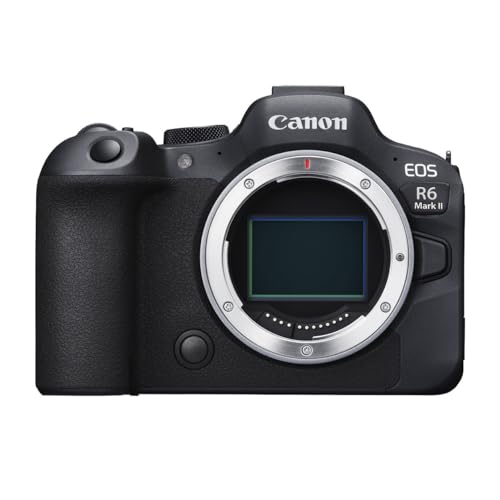
Canon EOS R6 Mark II — Best all-round press body
Canon’s R6 Mark II has quietly become the default answer when a newsroom issues kit, and the reason is trust rather than novelty. Its autofocus finds eyes in a scrum, holds them through raised placards and turned heads, and does so in light low enough that the photographer is working by instinct. For photojournalism that reliability is the entire product: the camera removes itself from the list of things you are worrying about while the story happens in front of you.
Consider the specific rhythm of a verdict day. Hours of nothing outside a courthouse, then ninety seconds in which everything occurs at once — the doors, the family, the lawyers, the shouted questions. The R6 Mark II’s deep buffer and fast clearing mean those ninety seconds are covered frame by frame, and its clean files at sensitivities that would have ruined film-era assignments let you keep shooting as the light fails over the courthouse steps. The electronic shutter keeps the whole performance silent enough for the room.
Ergonomics matter across a ten-hour shift, and this body understands the assignment: a grip that fills the hand without punishing it, controls that fall under gloves, and menus a tired brain can navigate at midnight. Paired with a fast standard zoom it is the camera on this list we would hand to a photographer covering literally anything tomorrow.
Picture a council chamber at 9 p.m., the public gallery restless, a controversial planning vote about to be read aloud. This is the R6 Mark II’s home turf. You are working from the back wall on a long zoom, the light a queasy mix of fluorescent tubes and the last grey daylight through high windows, and the camera simply does not make a drama of any of it. Faces stay found. Files stay usable. When the vote lands and the gallery erupts, the burst runs long enough to give the desk a sequence rather than a single hopeful frame, and the sequence is what tells the story honestly.
Lens planning for this body follows the classic news pattern: a fast standard zoom lives on it, a wide zoom rides in the bag for interiors and marches, and a bright 50mm-equivalent prime covers the darkest rooms. Because the mount now has a deep bench of native glass at several price levels, a photographer can build that kit gradually — one lens per season of fees — without ever feeling the body is waiting on the glass. Third-party options widen the arithmetic further for freelancers counting every invoice.
Ownership over years, which is how newsrooms judge kit, flatters it too. The body tolerates the knocks of a working life, the control layout stays consistent with Canon’s wider line so a borrowed second body feels familiar, and the files slot into any desk’s existing workflow without colour arguments. It is, in the best sense, an unexciting camera to own: the excitement is reserved for the pictures, which is exactly the division of labour a photojournalist wants.
A word about insuring and maintaining a body at this level, because professionals think in years: the R6 Mark II sits in the class of equipment that insurers and newsroom asset registers take seriously, with parts and servicing widely available and a second-hand market that holds its value when the day comes to rotate it into a backup role. Cameras in this tier rarely become worthless; they become the second body, then the loaner, then the training camera for the new starter, earning their keep at every stage of the descent.
- Format: full-frame mirrorless
- Strength in brief: subject-detect autofocus and fast bursts
- Video: capable 4K for news packages
- Carry style: primary body on a strap, all day
Strengths
- Autofocus that tracks faces through chaotic crowds
- Clean files in poor light for evening assignments
- Silent shooting for sensitive rooms
Trade-offs
- A serious investment before lenses enter the bill
- Electronic shutter needs care around flickering lights
- Second body envy is real once you rely on it
Best for: Staff and agency photographers who need one body that covers every assignment type.
Not suited for: Hobbyists who shoot occasionally and would never use its speed.

Sony Alpha 7 IV — Best hybrid news camera
The Alpha 7 IV reflects how the job itself has changed. The modern reporter is expected to return with stills for the gallery, a vertical clip for social and ninety seconds of usable video for the package, and Sony’s hybrid flagship was designed by people who clearly read that job description. Its eye autofocus is the stuff of newsroom folklore — set it, trust it, and compose instead of chaperoning focus points around the frame.
On a press-conference assignment the camera’s virtues compound quietly. The higher resolution leaves room to crop a mid-room podium shot into a tight head shot when the scrum blocks your advance, the articulating screen helps when you are holding the camera above a forest of phones, and the video is good enough that the picture desk and the video desk stop arguing about whose kit you should carry. Files move off the camera quickly, which on deadline is a feature worth more than a stop of anything.
Long shifts expose small kindnesses: a grip that suits smaller hands, custom buttons that let you park your three most-used settings under your fingers, and a menu system that finally behaves. It is the pick for the reporter whose output is measured in formats, not just frames.
Take the modern assignment that defines the A7 IV’s case: a morning press launch where the desk wants a stills gallery by ten, a captioned vertical clip by eleven and a two-minute package by lunch. Shooting all three on one body used to mean compromise stacked on compromise. Here the stills carry enough resolution to crop for the gallery’s tight lead image, the video is clean and broadcast-plausible, and switching between the two is a dial turn rather than a bag rummage. The reporter’s bag gets lighter as the job description gets longer.
Sony’s lens ecosystem is the quiet multiplier. Years of E-mount development mean the news photographer can choose between premium glass, excellent mid-priced zooms and compact primes that keep the whole kit discreet, and the same lenses serve the video work without adapters or apologies. For a one-person multimedia operation — increasingly the default in regional news — that shared ecosystem is a genuine economic argument, not a brochure point.
There are working habits to build: configure the custom buttons before your first deadline, decide your crop-mode settings in calm conditions, and learn the menu’s geography once, properly. Photographers who make that small investment describe the camera as an extension of intention; those who skip it describe the menus. The hardware underneath the learning curve is the most format-flexible tool in this guide.
Second-hand buyers should note that the A7 IV’s popularity cuts both ways: plenty of well-kept examples circulate as owners step up to cinema-oriented bodies, which makes it one of the easier full-frame cameras to find used with a low shutter count and an honest history. Check the sensor for the dust that sensor-shift cleaning missed, test the card doors and dials, and a used A7 IV can anchor a multimedia kit at a meaningfully gentler cost than the new price suggests.
- Format: full-frame mirrorless
- Strength in brief: resolution headroom plus eye autofocus
- Video: strong 4K with news-friendly options
- Carry style: one-body multimedia kit
Strengths
- Crop-friendly resolution for blocked sightlines
- Eye autofocus that frees you to watch the scene
- Genuinely dual-purpose stills and video
Trade-offs
- Rolling shutter shows in fast electronic pans
- Menus reward setup time before they reward you
- Crop-mode video narrows some lens choices
Best for: Multimedia reporters filing stills, clips and packages from the same assignment.
Not suited for: Purists who never shoot video and resent paying for it.

Canon EOS R10 — Best value for stringers
Freelance stringers live on arithmetic: the call comes at dawn, the fee is fixed, and the kit has to earn its keep without a newsroom behind it. The EOS R10 is the arithmetic working in your favour. It carries autofocus subject detection descended from Canon’s professional line, a mechanical burst quick enough for spot news and school sport, and a body small enough that carrying it speculatively — just in case the day turns — costs you nothing in shoulder pain.
That speculative carrying is the stringer’s real edge. The R10 on a short strap disappears under a coat at a vigil, rides unnoticed at a community meeting, and still delivers files a regional desk will run on the front page. Its crop sensor even flatters the working kit: a modest telephoto reaches further than it would on full frame, which matters when the police tape decides your distance for you.
Compromises exist and are honestly placed. Low-light files grain sooner than the full-frame picks, and the single card slot asks for a disciplined backup habit. But judged as a business tool that pays for itself in a handful of shifts, nothing else here argues its case as cleanly.
The R10’s defining assignment is the one nobody scheduled. You are covering a routine community fun run, camera carried speculatively, when a road incident two streets away turns your morning into spot news. Because the body was light enough to bring on a hunch, you are filing pictures while colleagues are still driving back to their cars. That is not a marginal advantage in local journalism; it is frequently the entire story of who got the picture and who got the apology.
Money deserves a plain paragraph. A stringer’s R10 kit — body, standard zoom, one fast prime — can be assembled for less than the cost of the flagship bodies alone on this list, and it will earn professional fees from its first weekend. The crop sensor’s extra reach means the affordable telephoto zoom you add later behaves like a longer, dearer lens at the football, the court steps and the harbour wall. Few cameras anywhere make the freelance business case this cleanly.
Its limits appear honestly at the extremes: a night-time motorway incident in sleet will push its high-sensitivity files harder than a full-frame body would be pushed, and the single card slot means your backup routine must be a reflex rather than an intention. Working photographers manage both with discipline — spare cards, immediate phone backup of the selects — and in exchange keep a kit that never gives them a reason to leave it at home.
There is a training argument for the R10 that rarely appears in buying guides: it teaches professional habits without professional consequences. Its autofocus encourages a young photographer to trust modern subject detection while still learning to anticipate, its files are good enough that technique — not equipment — is always the visible limit, and its price means a dropped body is a bad day rather than a financial event. Newsrooms running intern schemes could do far worse than a small fleet of these.
- Format: APS-C mirrorless
- Strength in brief: pro-derived autofocus in a small body
- Video: oversampled 4K for short packages
- Carry style: everyday speculative carry
Strengths
- Professional autofocus thinking at a freelance price
- Light enough to carry on the off chance
- Crop reach stretches affordable telephotos
Trade-offs
- High-ISO files trail the full-frame picks
- Single card slot demands backup discipline
- Smaller body can feel cramped with big lenses
Best for: Stringers and local reporters building a paid kit on real-world fees.
Not suited for: Photographers whose work is mostly night assignments in dreadful light.

Nikon Z50 II — Best small Nikon for news
Nikon’s Z50 II is what happens when a manufacturer listens to the people who used the first version on real assignments. The subject-detection autofocus now recognises the full cast of a news day — people, animals, vehicles, aircraft — and the camera inherits processing from Nikon’s flagship line, which shows most clearly in how calmly it keeps a face locked while the scene churns around it. For a reporter covering a market day, a match day or a ministerial visit, that calm is the feature.
The viewfinder deserves its own sentence, because photojournalists live in it. Bright and clear, it keeps composition honest in glaring daylight where rear screens wash out, and the body’s handling — a proper grip, a sensible dial layout — suits the grab-and-shoot rhythm of street reporting. Nikon’s colour rendering flatters skin tones in mixed light, which editors notice even when they cannot name why a file feels right.
As with the R10, the crop sensor is a working advantage disguised as a compromise: reach for distant podiums, smaller lenses for long walks between assignments, and a kit bag that stays civilised. Photographers already holding Nikon glass or Nikon habits will find this the most natural route onto this list.
Spend a Saturday with the Z50 II on a typical regional patch — farmers’ market colour in the morning, a non-league football match in the afternoon, a mayoral walkabout between the two — and its character emerges. The viewfinder keeps you honest in the hard midday light at the market, the subject detection sorts players from officials at the match without supervision, and the whole kit crosses town on your shoulder without the end-of-day ache that quietly shortens careers. It is a camera designed by people who understand that news is mostly walking.
Nikon’s colour science earns its mention here for a practical reason: skin tones under mixed market lighting — shade, canvas, fluorescent spill from the butcher’s stall — come out of this camera needing less rescue than most. For a photographer filing JPEGs against a deadline, every file that does not need correction is time returned to the next assignment. Desks notice the consistency across a gallery even when they never learn its source.
Growth room is the fair caveat. The APS-C Z-mount lens shelf is younger than its rivals’, so a photographer planning an exotic lens collection should browse the catalogue first. For the standard news trinity — wide, standard, telephoto zooms plus a fast prime — the shelves are stocked, the prices are sane, and the body’s own ambitions will not outgrow them soon.
Photographers stepping up from Nikon’s DSLR era will find the Z50 II a gentle border crossing: the handling logic, the colour character and the menu philosophy all feel like a dialect of a language they already speak, while the mirrorless advantages — silent shooting, subject detection, a viewfinder that previews exposure — arrive without a relearning penalty. In a craft where hesitation costs pictures, that continuity is a working feature, and it explains why so many of these bodies are bought by experienced hands rather than beginners.
- Format: APS-C mirrorless
- Strength in brief: flagship-derived subject detection
- Video: clean 4K for interviews and clips
- Carry style: compact primary or second body
Strengths
- Bright viewfinder for harsh daylight work
- Subject detection across people and vehicles
- Pleasing colour for skin tones in mixed light
Trade-offs
- APS-C lens line is still growing
- Low-light ceiling below the full-frame picks
- No second card slot for redundancy purists
Best for: Nikon-leaning reporters wanting a light, fast everyday news body.
Not suited for: Existing Canon or Sony shooters mid-system with lenses to protect.

Fujifilm X-T5 — Best for documentary discretion
Not all photojournalism sprints. The long-form documentary tradition — weeks inside a community, a workplace, a family’s hard year — asks for a camera that subjects forget about, and the X-T5’s unassuming, film-era silhouette is a social tool as much as an optical one. People relax around it. Doors open. The 40-megapixel sensor then rewards that access with files detailed enough for exhibition prints, let alone the page.
Physical dials for shutter speed, sensitivity and exposure compensation change how a photographer behaves: settings are visible at a glance, adjustable without menus, and the camera encourages the deliberate, pre-set way of working that suits documentary patience. Fujifilm’s film simulations, treated seriously rather than as filters, give long projects a consistent visual voice straight from the camera, which matters when a project spans months of scattered shooting days.
It would be wrong to file the X-T5 as merely gentle. Its autofocus is thoroughly modern, its stabilisation helps in dim interiors, and it shrugs off weather that sends lesser bodies into bags. Choose it when the story is measured in trust rather than minutes, and when the photographer wants the camera to lower the temperature of every room it enters.
The X-T5’s assignments run on a different clock. Think of a six-month documentary project inside a fishing community facing a harbour closure: the photographer returns weekly, drinks tea, hears the same arguments sharpen, and shoots throughout. A large, assertive camera would reset the room’s honesty every visit. The Fujifilm’s modest profile and quiet manner let it become furniture — present, unremarkable, trusted — and the resulting pictures carry an intimacy that no amount of telephoto reach can buy from outside the fence.
Its dials shape the work in a way worth understanding. With shutter speed and sensitivity sitting on physical controls, the documentary photographer sets the camera before raising it, the way film-era shooters did, and that pre-commitment produces a calmer, more consistent visual language across a long project. The film simulations extend the same idea to colour: choose a rendering that suits the story’s mood and hold it for six months, and the final edit coheres almost by itself.
None of this makes it a poor news camera in a pinch — its resolution, stabilisation and weather resistance are all thoroughly professional — but its genius is relational rather than rapid. Buy it when your journalism is measured in return visits, and when the difference between a good picture and a true one is whether your subject forgot you were holding a camera at all.
Prints deserve a mention in the X-T5’s case, because documentary projects increasingly end as exhibitions and books rather than only as web galleries. The resolution is there for large prints, but the subtler point is tonal: files from this camera hold gentle gradations in skin and sky that survive the transition to paper gracefully, and the film simulations give a printer a consistent starting point across a whole project. Photographers planning a physical endpoint for their work should weight that heavily.
- Format: APS-C mirrorless with high-resolution sensor
- Strength in brief: dials, discretion and project-long consistency
- Video: capable, though stills are the headline
- Carry style: unobtrusive everyday documentary kit
Strengths
- Subjects relax around its classic styling
- High resolution suits print and exhibition
- Dials encourage deliberate, pre-set working
Trade-offs
- Autofocus trails the Canon and Sony for chaotic sport
- High-resolution files fill cards and drives faster
- Retro controls are a taste not everyone shares
Best for: Documentary photographers building long projects on access and trust.
Not suited for: Wire shooters whose editors measure them in minutes.

Sony RX100 VII — Best pocket camera for breaking news
Every experienced news photographer carries a scar from the day the story happened while the real camera was in the car. The RX100 VII exists to delete that scar. It rides in a jacket pocket with a zoom range that covers a street scene and a distant speaker alike, wakes fast, and focuses with a confidence borrowed from Sony’s professional line. The pictures it makes have run on front pages, which is the only credential a pocket camera for journalism ultimately needs.
Its working method differs from the interchangeable-lens picks: you compose with the pop-up viewfinder or the tilting screen, lean on the excellent automation, and accept that the small sensor asks more of good light than its full-frame stablemates. In return you gain invisibility. At a tense public meeting or a quiet hospital corridor, a compact camera changes the room far less than a gripped professional body with a white lens, and sometimes the picture only exists because nobody felt photographed.
Battery life is measured in hundreds of frames rather than thousands, and the controls are necessarily fiddly, so treat it as the always-present second camera rather than a primary body. Within that role — the camera of first resort for the unexpected — it has no serious rival on this list.
Its finest hour is unglamorous: the evening a major story breaks while you are off duty, in a café, in the rain, forty minutes from your kit. The RX100 VII comes out of the pocket, the zoom covers the cordon and the wide scene in one movement, and the desk has publishable pictures before the agency photographers have parked. News organisations quietly love these cameras for exactly this reason, and many a staff photographer keeps one charged the way other people keep a spare phone battery.
Working technique matters more here than with the bigger bodies. Brace the camera, lean on its stabilisation, favour its excellent automatic modes when the scene is moving faster than your fingers, and reserve manual control for the static moments. The pop-up viewfinder, small as it is, transforms bright-daylight work, and the tilting screen earns its keep for the discreet waist-level frame in a crowd that would react to a raised camera.
Treat its compromises as the price of omnipresence and they shrink: carry the spare battery, accept that the deepest darkness belongs to the full-frame bodies, and forgive the small controls their fiddliness with gloves. What you are buying is not a specification. It is the near-certainty that when the unexpected happens — and in news it is the only certainty — a real camera is already on your person.
One underappreciated use: the RX100 VII is the camera experienced photographers hand to a trusted companion — a driver, a fixer, a colleague from the text desk — when a second angle matters and there is no second photographer. Its automation is good enough that a thoughtful non-specialist can produce usable supplementary frames with ten minutes of instruction, and in fast-moving news, a second angle from inside the crowd can be the frame the whole package turns on.
- Format: 1-inch compact with built-in zoom
- Strength in brief: pocketable reach and fast autofocus
- Video: strong 4K with microphone input
- Carry style: jacket pocket, always with you
Strengths
- Genuinely pocketable with a long zoom range
- Fast, confident autofocus for a compact
- Unobtrusive in sensitive situations
Trade-offs
- Small sensor limits deep low-light work
- Battery life demands spares
- Tiny controls frustrate gloved hands
Best for: Any journalist who wants a real camera within reach at all times.
Not suited for: Photographers needing a primary body for daily professional volume.
How Do the Six Compare on a Working Day?
| Camera | Badge | Standout trait | Watch out for |
|---|---|---|---|
| Canon EOS R6 Mark II | Best all-round press body | The most complete deadline toolkit here | Budget for lenses, not just the body |
| Sony Alpha 7 IV | Best hybrid news camera | Resolution plus hybrid video in one body | Set the menus up before deadline day |
| Canon EOS R10 | Best value for stringers | The business case, not just the camera case | Carry spare cards and back up early |
| Nikon Z50 II | Best small Nikon for news | The viewfinder and the handling | Check your lens needs against the Z-mount APS-C range |
| Fujifilm X-T5 | Best for documentary discretion | Access and atmosphere over raw speed | Budget storage for the big files |
| Sony RX100 VII | Best pocket camera for breaking news | The camera that is there when news breaks | Carry two batteries, always |
What Should a Photojournalist Prioritise When the Light Is Awful?
Evening assignments are the norm in news, not the exception: winter protests at dusk, indoor meetings under tubes, stadium tunnels lit like car parks. Prioritise, in order, autofocus that works in near-darkness, files that stay clean at high sensitivities, and a lens plan that gathers light — a fast standard zoom or a bright prime matters as much as the body. The full-frame picks here pull ahead precisely in this territory, while the APS-C bodies remain entirely usable if you accept a little more grain as the honest texture of the scene.
Also rehearse your camera’s behaviour before the assignment does it for you. Know which shutter mode stays silent, how your camera renders mixed tungsten and daylight, and where your personal ceiling sits for acceptable noise. Editors forgive grain; they do not forgive missed focus on the one frame that mattered.
How Do You Stay Ethical and Legal While Working Fast?
Speed is no exemption from the discipline’s ethics. Photojournalism’s contract with the reader is that the picture shows what happened, unsteered and unembellished: no directing subjects, no removing distractions in post, no captions that outrun what the frame can prove. Choose cameras and settings that support that honesty — faithful colour, minimal computational trickery, and files whose provenance you can defend if an editor or a court ever asks.
Legality varies by place and situation, and working photographers learn their local rules on public spaces, private property, children, victims and court precincts before they need them. A discreet camera like the X-T5 or RX100 VII is an ethical tool as well as a practical one: it lets you witness without turning a grief or a crisis into a spectacle staged around your equipment.
What Does a Sensible Two-Body News Kit Look Like?
Most working kits pair a fast full-frame body wearing a standard zoom with something that extends reach or shrinks presence. From this list, the classic pairing is the R6 Mark II or Alpha 7 IV as the primary, with the RX100 VII in the pocket for the moments between assignments; documentary shooters substitute the X-T5 as the second body and gain a different visual voice rather than a different focal length.
Whatever the pairing, standardise what you can: similar control layouts, shared batteries where possible, and a filing routine — card out, backup made, selects sent — that you can perform exhausted, in the rain, from the front seat of a car. Kit decisions are workflow decisions wearing a price tag.
How Should You Set Up a News Camera Before the Assignment Starts?
Preparation is the invisible half of photojournalism, and it happens the night before: batteries charged, cards formatted in-camera, clock and location settings correct so your captions and timestamps survive an editor’s scrutiny, and the camera’s custom modes loaded with your three working personalities — silent room, general news, and fast sport. Photographers who do this ritual can walk into chaos with a calm camera; those who skip it spend the first ten minutes of the story negotiating with a menu.
Caption discipline belongs in the same ritual. Modern bodies let you preset copyright information, location codes and even voice-memo recordings attached to individual frames, and the photographers whose work flows fastest through a desk are the ones whose files arrive already knowing who, where and when they are. The camera is a reporting tool, not just a picture tool, and setting it up like one is a professional courtesy that editors remember at commissioning time.
What About Video, Audio and the Multimedia Expectation?
However a photographer feels about it, the multimedia expectation is now structural: desks assume a moving-image option exists on every assignment. The good news is that every camera here shoots respectable video; the better news is that audio, the half of video that audiences actually judge, is mostly a matter of a modest external microphone and the discipline to monitor it. Budget for the microphone before budgeting for any lens beyond the standard zoom.
Working method matters more than settings. Shoot short, purposeful sequences — the wide establisher, the working hands, the face listening — rather than long wandering clips, and record a minute of clean ambient sound at every scene. Editors can build a package from those ingredients; they can do almost nothing with twenty minutes of unlogged wandering, however sharp it is.
How Do You Work a Scene Without Disturbing It?
The fly-on-the-wall skill is partly technical: pre-set exposure from the doorway, focus quietly, and avoid the chimping glance at the rear screen that announces a photographer is present and reviewing. Cameras with silent shutters and tilting screens — most of this list — let you work from waist height with your eyes on the room rather than on the equipment, and the room, sensing ordinary attention rather than surveillance, returns to being itself.
It is also partly social choreography. Arrive early, be introduced, explain plainly what you are doing and what will happen to the pictures, then stay long enough to become boring. The best news and documentary frames are usually made in the second hour, when the performance for the camera has exhausted itself. No specification buys that hour; only patience does, and the camera’s job is simply not to squander it.
Which Mistakes Do New Photojournalists Make With Their Kit?
The classic error is buying resolution when the job needed reliability. A new shooter falls for the highest megapixel count in the budget, then discovers on a rainy picket line that autofocus confidence and weather sealing were the specs that mattered. Read this list backwards if that sounds familiar: start with the camera whose behaviour you trust, and let resolution be the tiebreaker, not the headline.
A second mistake is shooting everything on the widest aperture and the longest lens, producing dramatic mush where the story needed context. News pictures must explain as well as move, and the explanatory frame — the wide shot that shows where, how many, and what surrounds the moment — is usually the one the desk leads with. Practise stepping back, literally, before the assignment teaches you.
There is also the social mistake, made with the camera rather than by it: photographing at people instead of among them. The shooter who hovers at the edge with a long lens, never introducing themselves, gets thinner pictures and a colder welcome next time. The cameras here are discreet enough to work from inside the room; the photographer’s manners must be discreet enough to be allowed to stay there.
Finally, beginners neglect the unglamorous chain after the shutter: slow cards, no backup, selects sent without captions. More good journalism has been lost to a corrupted card and a missing name spelling than to any lens ever made. Build the boring habits — dual recording where available, immediate backup, names checked twice — into the same muscle memory as your exposure settings.
A fourth error deserves its own warning because it is a settings error rather than a buying one: arriving with yesterday’s camera configuration. The silent shutter from the funeral still engaged at the football, the white balance from the tungsten hall carried into daylight, the card still holding last week’s shoot — every working photographer has a story in this genre, and all of them end with an avoidable loss. The two-minute pre-assignment check is the cheapest insurance in the entire craft.
Underneath all of these sits the mistake of treating the camera as the career. Young photographers watch seniors’ kit instead of seniors’ habits: the early arrival, the researched background, the remembered names, the courtesy to the bereaved and the firmness with officials. No body on this list supplies those. Buy a camera from it, by all means — then go and practise the things that actually separate photojournalists from people who own cameras.
Final Recommendation
If one camera must be named, the Canon EOS R6 Mark II is the body we would issue to a photographer walking into an unknown assignment tomorrow: nothing about it will be the reason a picture was missed. The Sony Alpha 7 IV runs it close and passes it for multimedia reporters, while the R10 and Z50 II prove that professional news work no longer requires professional-body money.
Between those poles, match the tool to the temperament of your work. The Z50 II suits the walker and the generalist, the X-T5 the patient documentarian, and the RX100 VII belongs in every coat regardless of what hangs from the shoulder. There is no wrong door here — only doors that open onto different kinds of assignments.
The honest closing note is that photojournalism is a discipline of presence. The camera that gets you there early, keeps you there calmly and files without drama is the right camera, and every body on this list clears that bar for a different kind of working life. Choose for the patch you actually cover, then go and stand in the rain with it — that is where the pictures are.
A last word on money, since news pays unevenly and kit decisions echo for years: buy the body that matches your current assignments, not the career you hope to have in five years, and put the difference into lenses, batteries and the unglamorous logistics of getting to stories. Cameras date quickly; access, reliability and a full tank of fuel do not.
And if the budget stretches to only one purchase this year, make it the purchase that removes your most common excuse. For most working photographers that excuse is weight, darkness or doubt about whether the camera will cope. Every body above removes at least one of those excuses completely. The rest — the standing, the watching, the waiting — was always your job, and it is the part of photojournalism no manufacturer will ever sell you.
Related guides
Frequently Asked Questions
Is a full-frame camera necessary for photojournalism?
No, though it helps after dark. Generations of defining news images were made on far less capable equipment than the APS-C bodies here. Full frame buys cleaner high-sensitivity files and shallower focus control; it does not buy access, timing or judgement, which remain the actual currency of the craft.
Can I use a compact camera for professional news work?
Yes, as the RX100 VII demonstrates, particularly for breaking stories where presence beats perfection. Desks care about the picture’s news value and basic technical competence — sharp, exposed, captioned — far more than about which sensor size produced it.
How important is a silent shutter?
Increasingly important. Courtrooms, ceremonies, press conferences and sensitive interviews all reward or require silent shooting, and electronic shutters also spare subjects the flinch that a clattering mirror or curtain can cause at close quarters.
Should I shoot JPEG or RAW for a picture desk?
Both, if your camera allows it: JPEG for immediate wire filing, RAW as the insurance file for difficult light. Many staff photographers file excellent JPEGs straight from modern bodies whose colour and noise handling are tuned for exactly that workflow.
What lens should a beginner photojournalist buy first?
A fast standard zoom covering the wide-to-short-telephoto range handles the majority of news assignments. Add a bright prime later for the darkest rooms, and resist long telephotos until your work genuinely involves distant, fixed subjects like sport or wildlife.
How do I keep my files safe on assignment?
Back up before you leave the scene whenever possible, keep the backup physically separate from the camera, and never format a card until the desk confirms receipt. Redundancy is a habit, not a product, though dual-slot bodies make the habit easier.
How long should a news camera last?
Professionally used bodies commonly serve three to five years as a primary camera before migrating to backup duty, and shutter mechanisms in this class are built with that workload in mind. Care — dry storage, prompt cleaning, a strap you trust — extends the span more than any specification does.
Do photojournalists really need weather sealing?
If your patch includes weather — and every patch eventually does — yes. Rain is when stories happen outdoors: floods, storms, vigils, queues, rescues. Sealing is never a licence to be careless, but the difference between a body you shelter under your coat and one you keep shooting with is, on the biggest news days of the year, the difference between having pictures and having an explanation.
Related Guides
News work leads naturally to neighbouring crafts, and these companion reads continue the conversation: our guide to cameras for documentary filmmaking a field workflow for backing up photos on assignment the best camera bags for working photographers


