kajuandouglas.com is reader-supported. When you buy through links on our site, we may earn an affiliate commission.
Where to Buy a Camera for Home Use, for the Life That Happens Between Occasions
The best cameras for home use are chosen by the home itself: its lamplight and its window light, its toddlers at carpet altitude and its grandparents at the table, its pets conducting their night business and its front door receiving the world’s parcels. A home camera’s subject is not the holiday or the event — other cameras visit those — but the ordinary, unrepeatable traffic of a household: first steps, last birthdays in this kitchen, the dog asleep in the exact patch of sun. It succeeds by being present, charged, and forgiven its simplicity, every day of the year.
“Home use” honestly covers two households in one: the family that wants its life photographed kindly, and the house that wants an eye kept on it — the nursery watched, the door answered, the pet’s day reported. Most homes want some of both, and this list refuses to pretend otherwise: four of the picks are family cameras for the life indoors, and two are the home’s own watchers, chosen to the same standard of presence and simplicity. Many readers will buy one of each kind, and the guide is written so the pair works as one household system.
Where to buy: each linked name below leads to that camera’s Amazon listing, and home buyers should order for the household, not the hobby — the camera, its charger stationed where the camera will live, the memory card already inside, and for the watchers, the mount and cable their post requires. A home camera that needs a setup project will still be in its box at the first birthday it was bought for.
The family four divide by temperament: a friendly mirrorless for the household that wants real quality without a learning cliff, a video-native compact for the far-flung family’s messages, a pocketable all-rounder for the home that is also always going out, and an instant camera for the fridge-door gallery. The watching two divide by post: a sharp indoor eye for the rooms, and a colour-night watcher for the door and drive.
One principle governs both households: the camera must be easier than the moment is fleeting. Every pick here wakes fast, focuses itself, and forgives the operator’s divided attention — because at home, the photographer is also the cook, the host, and the person the toddler is running toward.
Key Takeaways
The household briefing:
- Home use means two jobs — photographing the family’s life and keeping an eye on the house — and this list staffs both.
- The Canon EOS R50 leads the family side: real quality, friendly manners, present for everything.
- Presence beats specification at home: the camera that lives charged on the shelf photographs the year; the masterpiece in the cupboard photographs occasions.
- The watching picks — eufy’s sharp indoor eye and Wyze’s colour-night camera — cover the rooms and the door without a system’s complexity.
- Buy the household kit complete: charger stationed, card inside, mounts fitted, before the first occasion arrives.
In this guide
Quick Picks
Six cameras for the home — four for its life, two for its watch.
| Camera | Badge | Why it earns its place here |
|---|---|---|
| Canon EOS R50 | Best Family Camera for the Home | Friendly, capable, and present — the household’s real camera for everything indoors and out. |
| Sony ZV-1F | Best for Family Messages | The kitchen-table studio for video calls, stories, and clips to family far away. |
| Canon PowerShot G7 X Mark III | Best Home-and-Out All-Rounder | Bright lens for lamplight, pocket size for the school run — one camera for the whole household round. |
| Fujifilm Instax Mini 12 | Best for the Fridge-Door Gallery | Instant prints that turn the home’s moments into the home’s decorations, immediately. |
| eufy 4K Indoor Camera E30 | Best Indoor Watch | A sharp, private, pan-and-tilt eye for the nursery, the hall, and the pet’s secret life. |
| Wyze Cam v4 | Best Door and Drive Watch | Colour night vision and a spotlight for the doorstep, at a price that invites a second for the gate. |
How Did We Choose the Best Cameras for Home Use?
Presence was the first screen, applied to both households: does the camera live ready — charged, awake in a second, simple enough for any family member to use without a briefing? A home camera’s operator pool is the whole household, including the visiting grandparent and the babysitter, and equipment that needs its owner present to function is, for home purposes, equipment that functions a third of the time.
Second, lamplight honesty. Homes are lit for living, not for photography, so we weighted bright lenses, kind high-sensitivity files, face detection that works at family distances, and — for the watchers — night pictures that identify rather than merely detect. Third, the photograph’s journey: prints for the fridge, transfers the family will actually perform, footage stored where the household controls it.
What we discounted: professional depth nobody’s kitchen requires, systems whose learning curve would exile the camera to a cupboard, and watching features that treat the household as a suspect. A home camera is a member of the household; this list interviewed for temperament as much as for talent.
What Does a Home Camera Photograph in a Real Week?
Monday’s evidence is unglamorous and irreplaceable: the toddler’s new word, filmed because the camera was on the shelf and charged; the recipe’s triumph, photographed for the family chat; the parcel’s arrival, noted by the door’s watcher while everyone was out; the cat’s occupation of the clean laundry, documented by the indoor eye with a pan-and-tilt’s discretion. None of it would justify a camera bag’s expedition. All of it is the archive the family will actually treasure, because it is the life rather than the celebration of it.
The week’s rhythm exposes the specification that matters: repetition. A home camera performs its small duties hundreds of times a year, and its virtues compound accordingly — the wake-fast, the focus that simply finds the face, the battery that is always adequate because its charging station is where the camera lives. Occasion cameras are judged by their peaks; home cameras are judged by their Tuesdays, and this list was graded on Tuesdays.
By the weekend, the two households merge: the birthday at home wants the family camera’s best and the watchers stood down to party mode; the empty house on the day trip wants the watchers awake and the family camera in the bag. A household that owns one of each kind, as this guide suggests, finds the whole week covered without a single decision feeling like a compromise.
Notice, across that week, how rarely the word “quality” decides anything and how often the words “ready,” “charged,” “where it lives,” and “anyone can use it” decide everything. That is the home’s own specification sheet, written by the life itself, and it is the one this list was graded against from the first pick to the last.
Why Does the Home Need Watching Cameras at All?
Because the modern house has a life when its people are out, and some of that life is worth knowing: the delivery that did or did not happen, the dog’s afternoon revealed as a opera of naps, the elderly parent’s morning routine confirmed with a discreet check that respects everyone, the nursery watched by a parent in the next room with a love that technology, properly used, simply extends. The watchers in this list were chosen for households that want that knowledge with their privacy engineered in — local storage, stand-down modes, cameras that are visibly cameras rather than hidden ones.
The honest limits belong in the same paragraph: a watching camera is not a security service, its alerts are information rather than protection, and its presence in shared rooms is a household decision to be made by the household, openly. Families who treat the watchers as appliances — known, discussed, configured together — get their benefits without their disquiet, and the picks here were chosen to make that conversation easy to have.
For many readers the watching pair will be the whole purchase, and that is a legitimate reading of “home use”: the door and the nursery covered, the family’s photography left to phones that satisfy them. The guide serves that household with the same seriousness as the photographic one — the last two picks are not an appendix but a co-equal answer.
Which Cameras Belong in the House? The Six Picks in Detail

Canon EOS R50 — Best Family Camera for the Home
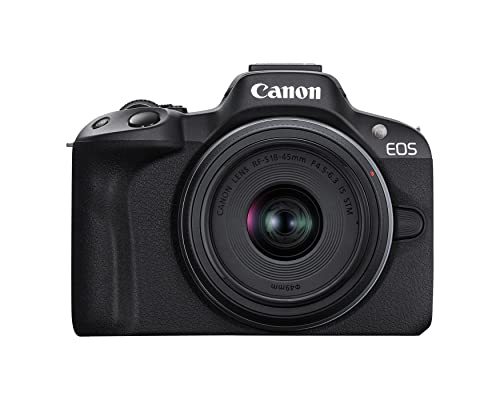
The R50 is the home’s real camera: a mirrorless body friendly enough for every member of the household to use, capable enough that its files honour the occasions, and sized for the shelf by the door rather than the cupboard of honour. Its autofocus finds the toddler, the dog, and the birthday girl with the same unbothered competence; its colour renders lamplight faces the way the family remembers them; and its guided manners mean the photograph happens even when the household’s keenest photographer is the one blowing out the candles.
At home its range is the week’s whole curriculum: the kit lens for the room, the low-light manners for the evening, video for the first steps and the school-project film, and stills that print for the wall rather than merely posting to the chat. It is also the camera that leaves home honourably — the holiday, the match, the graduation — so the household’s one real camera is never the wrong one to have grabbed.
The system’s growth is the family’s insurance: a brighter lens when the evenings demand it, a longer one when the children’s sports begin, all on the body the household already knows. Few purchases in a home compound as reliably as a camera system the whole family has learned.
It asks for a shelf, a charging habit, and a weekend’s learning from one household member who then teaches the rest at the speed of need. For the home that wants photography taken seriously without being taken solemnly, it is this list’s clear first answer.
- Type: friendly mirrorless system
- Signature: the whole household can use it
- Focus: faces found, occasions kept
- Growth: lenses as the family grows
- Home role: the household’s real camera
Strengths
- Quality that honours occasions.
- Manners every member can operate.
- Leaves home as well as it stays.
Trade-offs
- A shelf and a habit, not a pocket.
- One member learns first, teaches rest.
- Kit lens is the starting point.
Best for: family archives, birthdays, growing households.
Not suited for: pocket-only lives or zero-learning homes.

Sony ZV-1F — Best for Family Messages
The ZV-1F is the home’s correspondence department: a wide-lensed, video-first compact that turns the kitchen’s good window into a studio for the messages modern families run on — the bedtime story to the grandchild abroad, the new house toured for the parents overseas, the baby’s bulletin filmed at the table where the light is kind. Its autofocus holds the storyteller’s eyes; its frame includes the room’s context; its whole design assumes the audience is loved and far away.
At home it lives on its small tripod by the window, charged and ready, which converts video calling’s usual archaeology — the laptop hunted, the angle negotiated — into a seat taken and a button pressed. Its stills cover the household’s casual record honourably, and its simplicity makes it the camera the family’s least technical member may use the most, which in many homes is exactly the correspondent who matters.
Choose it when the family’s geography is its defining fact: children on other continents, parents in another timezone, the household’s heart distributed across a map. The archive it builds — grandparents’ voices, kitchens, laughter mid-sentence — is the kind families later describe as priceless with unusual literal accuracy.
Its fixed wide lens sets its parish: no zoom for the school stage, no system to grow. Within the home’s correspondence, it is complete; and households that pair it with the R50 own both the message and the archive, which between them are the family’s whole visual life.
- Type: video-first compact, wide lens
- Signature: the kitchen-table studio
- Focus: the storyteller’s eyes, held
- Station: tripod, window, ready
- Home role: the correspondence camera
Strengths
- Messages look warm and effortless.
- Ready in the time a kettle boils.
- The least technical member flourishes.
Trade-offs
- No zoom for distant stages.
- Stills are the supporting act.
- Fixed lens frames by furniture.
Best for: scattered families, storytellers, new-baby bulletins.
Not suited for: school plays or system ambitions.

Canon PowerShot G7 X Mark III — Best Home-and-Out All-Rounder
The G7 X Mark III refuses the home’s boundary: it is the camera of the kitchen and the school gate, the birthday and the day trip, because it lives in a pocket and performs like a resident. Its bright lens is its home credential — lamplight, candlelight, and the theatre’s gloom all photographed without the flash’s interrogation — and its face focus and kind colour make it the household’s portraitist of record at every table it attends.
Its tilting screen serves the home’s geometry: the cake photographed from above, the toddler met at carpet altitude without the photographer’s knees filing a protest, the group shot framed with the photographer inside it. Video covers the household’s moving archive — the song, the speech, the first ride of the bicycle — with a competence that has made this model a quiet standard for family creators.
Choose it as the one-camera household’s answer when a system feels like a commitment too far: it asks for a pocket, a charger, and nothing else, and it repays with files that print, post, and project without apology. Homes that later grow into the R50 often keep the Canon as the always-along second, because presence is a virtue no upgrade replaces.
Its battery wants a spare for the long day out, and its small controls are a compact’s eternal footnote. As the home-and-out all-rounder, it is the list’s most carried camera — and at home, carried is everything.
- Type: premium compact, bright lens
- Signature: lamplight without interrogation
- Screen: cakes above, toddlers below
- Video: the household’s moving archive
- Home role: the always-along resident
Strengths
- Bright lens flatters indoor life.
- Pocket presence, album files.
- Everyone in the group shot.
Trade-offs
- Spare battery for long days.
- Small controls, big hands, patience.
- No system to grow into.
Best for: one-camera households, tables, day trips.
Not suited for: system builders or stage-distance zoom.

Fujifilm Instax Mini 12 — Best for the Fridge-Door Gallery
The Instax Mini 12 is the home’s instant decorator: its prints go from the birthday to the fridge door in four minutes, from the visit to the grandparent’s handbag before the coats are on. In a house, that immediacy changes photography’s social physics — the picture becomes part of the occasion it records, children perform for it, guests leave with it, and the home accumulates a gallery that no cloud album has ever matched for daily visibility.
Its operation is the household’s simplest: twist on, press, hand over. Grandparents, toddlers, and the technically unbothered all operate it at first attempt, and its automatic exposure forgives the lamplight and the garden with equal grace. As the home’s second camera — the party camera, the children’s camera, the guest-book camera at the wedding the family hosts — it has no rival on this page.
The prints’ small size is their social genius: they fit the fridge, the wallet, the mirror’s edge, the school bag’s pocket. A home papered with small, recent, beloved photographs is a home whose camera is succeeding at the only metric the household ultimately keeps.
Film is its running cost, budgeted like the good biscuits, and its prints will never be the wall’s enlargements. Judge it as the home’s joy department: the R50 keeps the archive, the Instax keeps the day.
- Type: instant film camera
- Signature: prints join the occasion
- Operation: the household’s simplest
- Gallery: fridge, wallet, mirror’s edge
- Home role: the joy department
Strengths
- Photographs become decorations instantly.
- Every age operates it at once.
- Guests leave with the evidence.
Trade-offs
- Film is a continuing cost.
- Prints stay keepsake-sized.
- Dim rooms lean on its flash.
Best for: parties, children, fridge galleries, guest books.
Not suited for: the family archive or enlargements.
eufy 4K Indoor Camera E30 — Best Indoor Watch
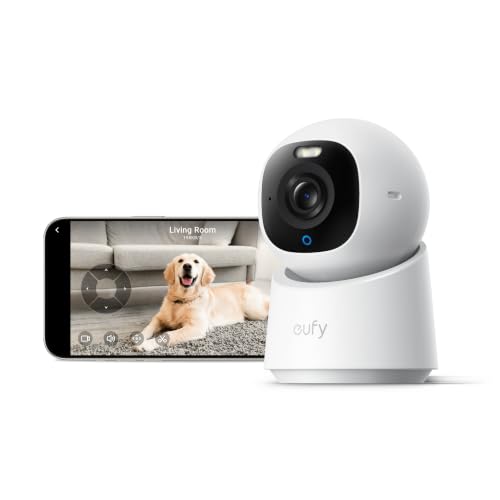
The E30 is the home’s indoor eye, chosen for households that want the watching done properly and privately: high-resolution pictures day and night, a pan-and-tilt view that covers a room from one corner, and local storage that keeps the family’s footage inside the family’s walls. The nursery, the hallway, the pet’s territory, the elderly relative’s living room — its posts are the home’s intimate geography, and it serves them with a discretion engineered rather than promised.
Its tracking follows the room’s action like a polite guard — the toddler’s patrol, the dog’s route to the forbidden sofa — and its person and pet awareness trims the alerts to the cast that matters, so the household believes its notifications past the first week. Night pictures carry the detail its resolution promises: the face, the mischief, the all-clear, rendered for recognition.
Privacy is its architecture’s headline: footage stored locally, modes that stand the camera down when the household is home, and no forced cloud between the family and its own rooms. In the watching category, that is the difference between an appliance and an arrangement, and households feel it daily.
It is wired and indoor-bound — the door and drive are the next pick’s parish — and its richest recognition varies with the household’s storage choices. As the rooms’ watcher in a two-camera home, it is the list’s most complete indoor answer.
- Type: indoor pan-and-tilt camera
- Signature: sharp, local, discreet
- Storage: the footage stays home
- Tracking: follows the room’s cast
- Home role: the rooms’ watcher
Strengths
- Night detail that identifies.
- Privacy engineered, not promised.
- Whole rooms from one corner.
Trade-offs
- Indoors and wired only.
- Features vary with storage setup.
- Sees the untidy room faithfully.
Best for: nurseries, pets, elderly relatives’ homes.
Not suited for: doors, drives, or wire-free wishes.

Wyze Cam v4 — Best Door and Drive Watch
The Wyze Cam v4 watches the home’s threshold: colour night vision that keeps the visitor’s jacket and the car’s shade honest, a small spotlight that wakes to give the doorstep its evidentiary moment, and a price of admission so modest that the second camera — for the side gate, the garage, the drive’s far end — is a rounding decision rather than a budget meeting. For most homes, this is where the watching should start.
Its day shift matches its night: sharp pictures, person and vehicle awareness in its smarter modes, local recording for households who keep footage at home, and a setup measured in minutes. Mounted under an eave or at a window with its night mode managed, it covers the approach, the parcels, and the neighbours’ cat’s diplomatic visits with equal fidelity.
In the two-household system this guide builds, the Wyze is the perimeter to the E30’s interior: the door answered, the drive observed, the night rendered in colour. Paired, they give a home a complete, comprehensible watch — two apps at most, two posts, no integrator required.
The ecosystem’s terms apply in miniature: the richest features lean on an optional subscription, and wired power steers its placement toward the sockets’ geography. Neither dents its verdict as the threshold’s best value in home watching.
- Type: wired smart camera, indoor-outdoor
- Signature: colour nights at the threshold
- Recording: local card or cloud plans
- Spotlight: the doorstep’s evidence light
- Home role: the perimeter watcher
Strengths
- Colour at night identifies visitors.
- Second and third posts are affordable.
- Setup is a ten-minute errand.
Trade-offs
- Best features lean on subscription.
- Wired power steers placement.
- Window glass defeats night modes.
Best for: doors, drives, gates, first watching systems.
Not suited for: wire-free posts or the subscription-averse wanting everything.
How Do the Six Compare at a Glance?
The home divides its cameras into the life and the watch, so the table casts each pick to its household and names its limit.
| Camera | Form | Decisive edge | What you give up |
|---|---|---|---|
| Canon EOS R50 | Mirrorless system | Family quality and growth | Pocket presence |
| Sony ZV-1F | Video compact | Family correspondence | Zoom and stills depth |
| Canon PowerShot G7 X Mark III | Premium compact | Home-and-out range | System growth |
| Fujifilm Instax Mini 12 | Instant | Prints in the room | Archive quality |
| eufy 4K Indoor Camera E30 | Indoor watcher | Sharp private watch | Outdoor posts |
| Wyze Cam v4 | Smart camera | Threshold value | Wire-free placement |
How Do You Set Up a Home Camera So the Whole Household Uses It?
Give the camera a home inside the home: the shelf by the door or the kitchen’s charging corner, its station plugged in permanently, its strap on, its card inside, its settings made once by the household’s keenest member — automatic modes as the constitution, face detection on, every cleverness that can misfire retired. Then announce the constitution at a family meal, in one sentence: it is always ready, anyone may use it, put it back on its station. Households that skip the announcement own a camera one person uses; households that make it own a family archive.
The watching pair get the same treatment in their dialect: posts chosen together, privacy modes agreed aloud, alerts routed to the adults who asked for them, and a household rule — written nowhere, understood everywhere — that the watchers are appliances, not evidence in family disputes. The dog’s sofa offence is fair game; the teenager’s evening is not a case to be built.
Review the system at the season’s turn: batteries, cards, the watchers’ lenses wiped, the family camera’s archive copied to its two homes. A home’s cameras, maintained on this light liturgy, simply disappear into the household’s furniture — which is the precise definition of home technology succeeding.
Write the household’s camera facts on a card in the station’s drawer: the wifi’s name for the watchers, the archive’s two locations, the print route, the keen member’s phone number for the evening the system sulks while they are away. Homes run on such cards long after their authors have forgotten writing them, and the camera system that documents itself is the one that survives its own installer.
What Are the Most Common Mistakes With Cameras at Home?
The first is the occasion camera bought for daily life: the magnificent system that attends birthdays and holidays while the year’s real archive — the Tuesdays — goes unphotographed, because nobody reaches into the cupboard of honour for a toddler’s breakfast. The second is the reverse: relying on a watching camera for the family’s memories, and discovering that surveillance angles make poor portraits and worse nostalgia.
The third is the uncharged, uncarded, unset camera discovered at the moment it was bought for. The fourth is the watcher installed without the household’s conversation — discovered by a guest, resented by a teenager, and removed by a family that would have accepted it gladly if it had been proposed rather than planted. Each mistake is a mismatch between the camera’s job and the home’s life, and each is cured by the guide’s first principle: presence, agreed and stationed, beats specification every day of the week.
How Do You Photograph Children and Pets at Home Without Chasing Them?
Let the home come to the camera: station yourself where the light is kind — the window’s side of the room, the garden door’s shade — and let the children’s orbit bring them through it, camera ready, focus on the nearest eye, bursts rationed to the genuine peaks. Chased children perform or flee; orbited children simply live, and the living is the photograph the family will keep.
Pets ask for the floor’s perspective and the day’s patience: the camera at their altitude, the nap photographed as the portrait it is, the play caught in the bright room where shutter speeds live. The watchers contribute their own candid archive here — the E30’s record of the dog’s day is, in many homes, the most-watched footage in the house, and there is no shame in that whatsoever.
Print the results for the rooms they happened in. A home decorated with its own current life — this season’s toddler, this year’s dog, last month’s birthday — is the home camera’s whole argument made visible, and it renews itself every time the Instax clicks.
How Do You Photograph the Home Itself — Rooms, Gardens, and the House’s Own Story?
Houses deserve portraits too, and they sit for them patiently: the kitchen in morning light before the day messes it, the garden at its June maximum, the room as it was the week before the renovation erased it forever. A home camera that never photographs its own home misses the archive’s foundation — the setting in which every other family photograph happened, changing slowly, then suddenly, across the years.
The craft is the interior’s: the camera at chest height in the doorway, the room’s own lights balanced against the window’s, the honest clutter reduced by one armful rather than sterilised into a showroom. Take the set at the season’s turns — the same doorway, the same garden corner, four times a year — and the house gains a biography in pictures that future occupants, and future family, will read like a novel.
The watchers contribute unintentionally: their time-stamped record of the hall and the drive is the house’s diary of arrivals, weather, and seasons, and households that keep a year’s worth own a document no one set out to make. The home, photographed on purpose and by accident, becomes the family’s longest-running subject — which, considering how much of life it contains, is only proportionate.
How Should a Household Share Photographs Without a Family IT Department?
Appoint the ritual, not the system: one evening a month — the transfer evening, with tea or wine as its budget — when the keen member empties the cards, files the month by its occasions, orders the prints, and updates the shared album the scattered family actually looks at. Rituals survive because they are appointments; systems die because they are intentions, and the difference has buried more family archives than any equipment failure.
Keep the sharing formats boring and universal: the album link that opens on any phone, the prints that arrive by post for the grandparents, the year’s dozen framed for the hall. Exotic platforms orphan archives; boring ones inherit them. The cameras here were chosen partly for files that behave in every ordinary tool the household already owns, because a photograph that requires a special viewer is a photograph in a locked room.
Back the archive up in the same ritual: two copies, one outside the house, checked by opening them rather than by trusting the icon. The home’s photographs are the only contents of the house that insurance cannot replace, and the monthly ritual is their entire premium — an evening, a kettle, and a family’s memory made durable.
What Happens at the Big Occasions — the Wedding at Home, the Reunion, the Last Christmas?
The home camera’s examinations are its occasions, and they should be staffed like them: batteries charged the day before, cards emptied, the Instax stocked, the watchers stood down to their party manners, and one person — rotated, relieved, and thanked — appointed the occasion’s photographer so the duty is honoured rather than diffused. Diffused photography is how a family hosts a wedding and owns eleven photographs of the cake.
Shoot the occasion’s margins as faithfully as its peaks: the preparations, the arrivals, the kitchen’s backstage, the exhausted happy ending. Occasions are remembered by their margins in the long run — the peaks belong to everyone who was there, but the margins belong to the photographer, and they are the frames the family will quote in thirty years.
And be in some of the photographs. The household’s photographer is the archive’s traditional absentee, present in every year but their own appearance; the tripod, the timer, the handed-over camera, and the watchers’ candid angles between them can correct the record — but only if the photographer insists, occasionally, on being a member of the household as well as its memory.
The occasion’s photographs should be printed before the next one arrives — the reunion’s set on the fridge while the reunion is still the family’s conversation — because prints made warm carry a charge that the same files, printed at some later tidying, never quite recover. The Instax understands this instinctively; the digital household must schedule it, and the monthly ritual is where the scheduling lives.
How Do You Keep Home Cameras Safe From the Home Itself?
The home is a hazardous posting: toddlers treat cameras as percussion, dogs as rivals, kitchens as saunas of steam and flour, and teenagers as a borrowing economy with no central bank. The defences are domestic rather than technical — the camera’s station out of the toddler’s parish but inside the adult’s reach, the strap as a condition of borrowing, the case for the garden, and the household rule that the camera returns to its station as surely as the keys return to their hook.
Insurance and records complete the system: serial numbers photographed, receipts with the household papers, the cameras named in the home policy where their value warrants it. Homes lose cameras to accidents and generosity in roughly equal measure; the recorded camera is recoverable from the first and traceable through the second.
Accept the patina as the archive’s signature. A home camera that survives a childhood will carry its scars, and they are not damage but documentation — the instrument aged alongside the life it recorded, which is the most honourable retirement any camera in this guide can imagine.
How Will the Home’s Cameras Serve the Family in Twenty Years?
As its memory’s evidence. The questions the future asks are already known — what did the kitchen look like, how did grandfather laugh, when did the dog get old, who was at the table the last year everyone was — and they will be answered, if at all, by the cameras stationed in the home today, working their Tuesdays. That is the whole case for buying presence over brilliance, for printing over posting, for the ritual over the system: the future’s gratitude is being decided by this year’s charging habits.
So choose the cameras the household will actually keep ready, agree their jobs like family, and let the archive accumulate at the speed of life. Twenty years is not a long time in a house’s biography; it is exactly one childhood, one dog, one garden’s maturity — and the home that photographs itself through all three owns a treasure no later money can commission.
The future will not ask which badge the camera wore. It will ask whether the camera was there, charged, and pointed at the life as it happened — and the household that can answer yes, across twenty years of Tuesdays, will find that the photographs have quietly become the family’s most honest history book, written by whoever happened to pick the camera up.
How Do You Choose Between the Family Camera and the Watchers, If the Budget Buys One First?
By the household’s loudest sentence. If the sentence is “we have no good photographs of the children,” the family camera comes first, and the R50’s shelf is its throne. If the sentence is “we never know what’s happening at the house,” the watchers come first, and the door’s Wyze is the opening post. Both sentences are honourable; buying against the quieter one first is how cameras end up resented, because equipment bought for a secondary worry is judged by the primary one’s standard.
The second purchase, when it comes, will be informed by the first’s evidence — the family camera’s success arguing for the watchers’ peace, the watchers’ usefulness arguing for the archive’s quality. Households grow into the pair the way they grow into the house itself: room by room, need by named need, with the whole becoming obvious only in retrospect.
How Do You Film the Home’s Occasions — Speeches, Songs, and First Steps — Well?
The home’s cinema is unrepeatable by definition, so its craft is readiness rather than direction: the family camera charged and carded, a position chosen for the light before the candles are lit, and the recording started early and stopped late, because the speech’s best line is the one before the speech and the first steps end in a fall and a laugh that no edit would dare invent. Trim in the archive, never at the moment.
Sound is the home film’s soul and its usual casualty: move the camera — or its operator — closer than feels necessary, quiet the television that nobody is watching, and let the room’s own acoustics be the music. The ZV-1F’s table-side manners and the R50’s microphone options exist for this parish; whichever serves, the principle is the room’s: near beats loud, every time, in every kitchen.
Name and back up the occasion’s files the same evening, while the names and dates are still in everyone’s mouth. Home films mislaid are the archive’s saddest category, because their content is the least replaceable footage a family owns — a fact that only becomes clear at the anniversary when somebody goes looking for it.
How Do You Teach Children to Use the Home Camera Well?
By lending it, with the strap as the only condition, earlier than instinct suggests. The first camera a child is trusted with teaches more than photography: it teaches that the household’s memory is a shared responsibility, and that their seeing — literally lower, literally closer to the dog — counts as evidence in the family’s record. Children photograph the home from altitudes and angles the adults have forgotten — the table’s underside society, the dog’s-eye view of the kitchen, the family’s faces unposed because the photographer is beneath notice — and their archive, kept kindly, becomes some of the household’s most original evidence. The Instax is the traditional first instrument, because its cost per lesson is visible and its results are instant; the family camera follows when the hands and the care have both been demonstrated.
Teach the household’s two commandments and no more: ask before the close portrait, and bring the camera back to its station. Everything else — composition, light, the decisive moment — children learn by the household’s oldest method, which is looking at the prints on the fridge and wanting theirs beside them.
What Should a Renter’s Home Camera Kit Look Like?
Renting rewrites the installation rules, not the photographic ones: nothing screwed, nothing wired through walls, everything removable at the lease’s end without a trace. The family side is untouched by the constraint — the shelf, the pocket, and the fridge ask no landlord’s permission — and the watching side adapts gracefully: the Wyze on its shelf or window-adjacent post with its night manners managed, the E30 on a bookcase, both departing in the same box they arrived in.
The renter’s kit also travels between homes more often, which argues for the compact and the complete-in-one-box: cameras whose whole system is a charger and a case survive moves that scatter a system’s accessories across three households’ garages. Buy the station, keep the box, and the home’s cameras will be unpacked first at every new address — which, veterans of moving will confirm, is exactly their rank among the household’s treasures.
How Do You Start, This Week, Without Buying Anything Twice?
Audit the home’s existing evidence first: the phones’ camera rolls, the drawer camera, the doorbell’s app — and name, in one sentence each, what they fail to do. The failures are the shopping list, in the order the household feels them: the unphotographed Tuesdays, the unwatched door, the messages that look like hostage videos. Buy against that list, one camera at a time, station each before buying the next, and the home will assemble its system the way it assembled its furniture — by need, in order, without a single piece bought twice.
Final Recommendation
Take the Canon EOS R50 as the family’s camera, the Canon PowerShot G7 X Mark III as its always-along companion, and the Fujifilm Instax Mini 12 for the fridge door. Choose the Sony ZV-1F when the family’s heart is scattered across timezones, the eufy 4K Indoor Camera E30 for the rooms’ watch, and the Wyze Cam v4 for the threshold.
Whichever cameras the home adopts, station them, charge them, and agree their jobs aloud at a family meal. A home’s cameras succeed the way its kettle does — by being ready, daily, without ceremony — and the archive they quietly build is the house’s memory of itself.
Related guides
- Best Digital Video Cameras for Home Use: 6 Picks for Family Life, Filmed Properly
- Best Desk Mount IP Cameras for Home: Shelf and Desktop Picks That Watch at Eye Level
- Best Cameras for Inside House: 6 Picks for Pets, Kids and Peace of Mind
Frequently Asked Questions
Is one camera enough for a home, or do I need the watching kind too?
One family camera covers the life; the watchers cover the house, and the two jobs share almost no equipment. Most households in this guide’s audience end with one of each kind — a family camera on its shelf and a watcher at the door or nursery — bought in whichever order their own anxieties and joys dictate. Neither purchase makes the other redundant.
Can a watching camera double as a baby monitor or pet camera?
The indoor watcher here is widely used for exactly that — its night picture, person and pet alerts, and two-way talk serve the nursery check and the dog’s day honourably. It is not a medical device and should never be the only safeguard for a child, but as the household’s eyes in the next room, it is the pick this list would install.
How do home photographs get printed without a fuss?
The Instax prints itself. For the digital picks, the household’s working routes are the memory card at a high-street kiosk, the monthly family transfer-and-order ritual, or a home printer maintained by the household’s keenest member. Choose the route when you choose the camera, station the habit with the charger, and the prints will actually happen.
What about privacy with indoor watching cameras?
Make it a household decision, openly: posts agreed, privacy modes and stand-down schedules used, guests told, footage stored locally where the picks allow. The E30’s local-first design exists for exactly this negotiation. A watcher the whole household has agreed to is an appliance; one that surprises anybody is a problem wearing a lens.
Which camera is best for a home with elderly relatives?
For photographing them and being photographed by them, the friendly compacts and the Instax — big manners, instant results. For keeping a kind eye on a relative living alone, the indoor watcher’s check-in, arranged with the relative’s full knowledge and consent, is the use families describe with gratitude. Both answers honour the same rule: the relative is the customer, never the subject of a surprise.
Can the family camera be too good for home use?
Only if its goodness costs presence: a camera so valuable, complex, or fragile that it lives in a cupboard and attends occasions has failed the home’s first test regardless of its files. The picks here were chosen below that line deliberately — quality the household will actually spend daily. If a grander camera joins the home later, let it be the second camera, and let the stationed one keep the Tuesdays.
How long will a home camera last before it feels old?
Longer than its owner fears: home duties — faces, lamplight, the door at night — were solved well by this generation, and a camera stationed and maintained will serve a family’s whole chapter. Replace on evidence, when the photographs name a limitation, rather than on the calendar; the shelf by the door rewards loyalty with an archive in one consistent voice.
Where should the family camera live so ordinary moments stand a chance of being caught?
Give it a permanent home base on a hall shelf or kitchen counter near the door, charged, card inside, strap attached, in the same orientation every single time. A camera buried in a drawer under takeaway menus will miss the toddler’s first unaided steps across the rug, however excellent its sensor may be. Agree that whoever brings it back plugs it in and mentions any nearly full card at dinner, rather than leaving a silent trap for the next birthday. Add a small printed note of the household’s preferred settings beside the charger, so a grandparent returning it after a garden session has not left it in some specialised mode nobody else understands. Choose that spot away from steam, splashes and direct afternoon sun, all of which punish electronics slowly in kitchens. A shallow tray underneath gives wandering chargers, lens caps and spare cards a boundary, stopping the camera’s small companions from dispersing through the house. Once the habit forms, children learn it too, returning the camera to its shelf with the unthinking reliability they apply to shoes by the door on school mornings.
Why does our watching camera keep reporting movement when nobody is there?
Curtains breathing in a draught, a cat crossing its favourite windowsill, sunlight sweeping the floor and insects wandering close to the lens all look like events to a sensor that notices change rather than intent. Begin by narrowing the watched zone to the doorway or path that genuinely matters, lower sensitivity one step at a time across several evenings, and angle the unit so passing headlights and swaying branches sit outside its view. Person detection, where a pick offers it, deserves priority over raw motion alerts. The aim is a household that trusts the chime enough to look up, instead of one trained by fifty false alarms to ignore the evening something real finally happens. Review the week’s alerts together for a month after any adjustment, because patterns hide in repetition: the same hour, the same curtain, the same delivery scooter pausing opposite. Move a plant, retie a blind cord or trim one branch, and a surprising share of nuisance reports disappear without any setting being touched. What remains after that patient tidying is a shorter, more believable list, and a camera whose warnings the household answers promptly instead of debating whether to bother getting up from the sofa again.
Related Guides
Household neighbours in this series: best cameras for grandparents best cameras for family photos best cameras that have night vision


