The best 35mm digital cameras are built around a full-frame sensor, the same size as a frame of 35mm film, and that size is the whole point. A full-frame sensor gathers more light than the smaller sensors in most cameras, which means cleaner images in dim rooms, smoother background blur in portraits, and more detail to work with when a photo is cropped or printed large. For a photographer who has outgrown a smaller sensor, the step to full-frame is the single biggest upgrade available.
The six cameras below are all full-frame mirrorless models, and each listing states that plainly. They range from the Sony A7 IV and the Canon EOS R6 Mark II to the Nikon Z6 III, the Panasonic Lumix S5II, the Sony A7C II, and the Canon EOS R8. Each one was checked in full before it earned a link, and any listing marked as renewed or used was set aside.
What changes across the list is everything around the sensor: the resolution, the autofocus system, the video capability, and the size of the body. The sections below lay out those differences plainly, so the choice is made on the camera that fits the photographer, not on the sensor size alone.
In this guide
Quick picks: best 35mm digital cameras
| # | Product | Where to buy |
|---|---|---|
| 1 | Sony Alpha 7 IV | Check on Amazon |
| 2 | Canon EOS R6 Mark II | Check on Amazon |
| 3 | Nikon Z6 III | Check on Amazon |
| 4 | Panasonic Lumix S5II | Check on Amazon |
| 5 | Sony Alpha 7C II | Check on Amazon |
| 6 | Canon EOS R8 | Check on Amazon |
How the picks were chosen
The full-frame sensor came first. Every camera on this list has a full-frame sensor stated in its listing, verified before linking. Cameras with smaller sensors were not considered, because the article is about 35mm-format digital cameras, and the sensor size is what defines the category.
Autofocus and video were weighed next. A full-frame camera is bought for serious work, so the autofocus system has to track a moving subject and the video has to be usable, not an afterthought. The listings here state autofocus features like Phase Hybrid AF and Dual Pixel AF II, and video features like 6K recording, and those details shaped the picks.
Every listing was verified in full before linking. The brand and the complete model name in the listing had to match the camera described, including whether the listing is for a body only or a lens kit. Listings marked as renewed or used were dropped, and any listing whose title described a different model was set aside.
Quick comparison
| Product | Standout feature | Best for |
|---|---|---|
| Sony Alpha 7 IV | Proven all-round full-frame mirrorless | the most proven all-round full-frame camera |
| Canon EOS R6 Mark II | 24.2 MP full-frame for photo and video | a fast Canon full-frame body for stills and video |
| Nikon Z6 III | 6K/60p RAW video in a full-frame body | the strongest video capability with full-frame stills |
| Panasonic Lumix S5II | Phase Hybrid AF with unlimited 10-bit video | the most fully specified full-frame body |
| Sony Alpha 7C II | Compact full-frame for travel and street | full-frame quality in the smallest body here |
| Canon EOS R8 | Lightest full-frame with a kit lens | the easiest full-frame start, with a lens included |

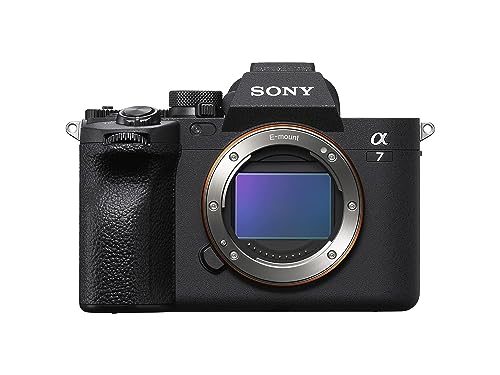
Sony Alpha 7 IV Full-Frame Mirrorless Camera
The Sony Alpha 7 IV is the reference full-frame camera of this list, and its listing states the category plainly: a full-frame mirrorless interchangeable lens camera. It is the camera that most photographers mean when they talk about stepping up to full-frame, because it balances resolution, autofocus, and video in a body that works for stills and for video alike.
The interchangeable lens design is the point of a camera like this. The body is only the start, and the photographer builds the system around it with lenses for portraits, landscapes, or video. The full-frame sensor gives every lens its true field of view, with no crop factor to calculate, which is the honest advantage of the 35mm format.
For a buyer who wants the most proven full-frame camera on this list, the A7 IV is the natural first pick. It is not the cheapest, and it is not the most specialised, but it is the camera that does the most jobs well, and that is why it appears on so many shortlists.
Key specifications: Full-frame sensor; mirrorless; interchangeable lens camera.
This camera fits a photographer stepping up to full-frame who wants the most proven all-round body, and who will build a lens system around it.
Strengths
- The full-frame sensor gathers more light than smaller sensors.
- The interchangeable lens design builds into a complete system.
- It balances stills and video in one body.
Trade-offs
- The listing states no resolution or autofocus details.
- It is a body-only listing, so a lens must be bought separately.
- It is a full-size body, not the most compact pick here.
The Sony A7 IV suits photographers who want one camera for everything. It fits a portrait shooter, a landscape photographer, or anyone moving from a smaller sensor to full-frame.
Best for: the most proven all-round full-frame camera / Not suited for: a buyer who wants a compact body or a lens included in the box
Check price on Amazon: Sony Alpha 7 IV

Canon EOS R6 Mark II
The Canon EOS R6 Mark II is the fast, capable Canon of this list, and its listing states the key figures: a mirrorless camera, body only, with a full-frame sensor and a 24.2 megapixel CMOS sensor, for photo and video. The 24.2 megapixel figure is the detail that matters, because it is the resolution that balances detail with low-light performance and file size.
A 24.2 megapixel full-frame sensor is the sweet spot for many photographers. It records enough detail for large prints, yet its files are manageable and its low-light performance is strong, because each pixel is large enough to gather light well. The body-only listing means the buyer chooses the lens, which is the right way to buy a camera at this level.
For a buyer who wants a Canon full-frame camera that handles both stills and video well, the R6 Mark II is the pick. It is a serious camera, and it should be bought with a lens budget in mind, but its sensor and its system are among the strongest here.
Key specifications: 24.2 megapixel CMOS sensor; full-frame; mirrorless; body only; photo and video.
This camera fits a photographer who wants a Canon full-frame body for stills and video, and who will choose lenses to match the work.
Strengths
- The 24.2 MP full-frame sensor balances detail with low-light strength.
- It is built for both photo and video work.
- The Canon RF lens system offers a wide choice of lenses.
Trade-offs
- The body-only listing means a lens must be bought separately.
- 24.2 MP is less resolution than the higher-megapixel cameras elsewhere.
- It is a full-size body, not the most compact pick here.
The Canon EOS R6 Mark II suits serious photographers who shoot both stills and video. It fits a wedding photographer, an event shooter, or anyone who needs a fast, capable Canon body.
Best for: a fast Canon full-frame body for stills and video / Not suited for: a buyer who wants a lens included or the smallest body
Check price on Amazon: Canon EOS R6 Mark II

Nikon Z6 III
The Nikon Z6 III is the video-strong full-frame camera of this list, and its listing states the headline: a black full-frame mirrorless stills and video camera with 6K/60p internal RAW recording, as a USA model. The 6K/60p internal RAW figure is the detail that sets it apart, because it means the camera records very high-quality video without an external recorder.
A camera that records 6K RAW internally is a serious video tool, and the Z6 III is built for photographers who shoot video as well as stills. The full-frame sensor gives video the same shallow depth of field and low-light strength as the stills, and the USA model status means it is the version made for this market.
For a buyer who wants a full-frame camera that leads on video, the Z6 III is the pick. It is the most video-capable camera on this list, and its stills are strong too, which makes it the right choice for a hybrid shooter who does both jobs with one camera.
Key specifications: Full-frame; mirrorless; stills and video; 6K/60p internal RAW recording; black; USA model.
This camera fits a hybrid shooter who wants the strongest video capability on this list, with full-frame stills to match.
Strengths
- 6K/60p internal RAW recording is the strongest video here.
- The full-frame sensor gives video shallow depth of field.
- The USA model is made for this market.
Trade-offs
- The listing states no resolution figure for stills.
- It is a body-only listing in effect, so a lens must be bought separately.
- 6K RAW video needs large, fast memory cards.
The Nikon Z6 III suits photographers who shoot video seriously. It fits a filmmaker, a hybrid creator, or anyone who wants 6K RAW without an external recorder.
Best for: the strongest video capability with full-frame stills / Not suited for: a buyer who wants a lens included or the highest stills resolution
Check price on Amazon: Nikon Z6 III

Panasonic Lumix S5II
The Panasonic Lumix S5II is the most completely specified camera on this list, and its listing states the details plainly: a mirrorless camera with a 24.2 MP full-frame sensor, Phase Hybrid AF, new Active I.S. technology, and unlimited 4:2:2 10-bit recording, model DC-S5M2BODY9, in black. Every part of that listing is a feature a serious photographer will use.
Phase Hybrid AF is the detail that matters most here, because it is the autofocus system that tracks a subject reliably, and the S5II was the camera that brought it to Panasonic's full-frame line. The 24.2 MP sensor balances detail with low-light strength, and the unlimited 4:2:2 10-bit recording means video never stops for a recording limit.
Active I.S. technology steadies the image, which helps both stills and video, and the body-only listing means the buyer chooses the lens. For a buyer who wants the most fully specified full-frame camera on this list, the S5II is the pick.
Key specifications: 24.2 MP full-frame sensor; Phase Hybrid AF; Active I.S. technology; unlimited 4:2:2 10-bit recording; model DC-S5M2BODY9; black.
This camera fits a photographer who wants the most fully specified full-frame body, with strong autofocus and unlimited video recording.
Strengths
- Phase Hybrid AF tracks subjects reliably.
- Unlimited 4:2:2 10-bit recording suits serious video work.
- The 24.2 MP sensor balances detail with low-light strength.
Trade-offs
- The body-only listing means a lens must be bought separately.
- The L-mount lens system is smaller than Canon or Sony's.
- It is a full-size body, not the most compact pick here.
The Panasonic Lumix S5II suits hybrid shooters who want it all specified. It fits a filmmaker, a documentary shooter, or anyone who wants Phase Hybrid AF and unlimited recording.
Best for: the most fully specified full-frame body / Not suited for: a buyer who wants the largest lens system or the smallest body
Check price on Amazon: Panasonic Lumix S5II

Sony Alpha 7C II
The Sony Alpha 7C II is the compact full-frame camera of this list, and its listing states the category plainly: a full-frame interchangeable lens camera, in silver. The 7C line is Sony's compact full-frame body, and it is the camera for a photographer who wants the full-frame sensor without the full-size body.
A compact full-frame body changes how a camera is carried. It fits in a smaller bag, it draws less attention on the street, and it is easier to hold for a long day of shooting. The interchangeable lens design means the photographer still builds a system around it, and the full-frame sensor gives every lens its true field of view.
For a buyer who wants full-frame quality in the smallest body on this list, the A7C II is the pick. It gives up the larger grip and the bigger controls of the full-size bodies, but it keeps the sensor that matters, and for travel and street photography that trade is worth making.
Key specifications: Full-frame sensor; interchangeable lens camera; silver.
This camera fits a photographer who wants full-frame quality in a compact body, for travel and street photography.
Strengths
- The compact body is the smallest full-frame option here.
- The full-frame sensor gives every lens its true field of view.
- It draws less attention for street and travel photography.
Trade-offs
- The listing states no resolution or autofocus details.
- The small grip is less comfortable with large lenses.
- It is a body-only listing in effect, so a lens must be bought separately.
The Sony A7C II suits travellers and street photographers. It fits a carry-everywhere camera, a second body, or anyone who wants full-frame without the bulk.
Best for: full-frame quality in the smallest body here / Not suited for: a buyer who wants a large grip or a lens included
Check price on Amazon: Sony Alpha 7C II

Canon EOS R8
The Canon EOS R8 is the lightest full-frame camera on this list, and its listing describes a mirrorless camera with an RF 24-50mm f/4.5-6.3 IS STM lens, in black. It is the only camera here sold as a kit with a lens in the box, and that makes it the easiest full-frame camera to start with.
The RF 24-50mm lens in the kit covers the wide to short telephoto range, which is the range most photographers use most of the time, and the IS in the lens name means it is stabilised. The R8 body is light, which matters on a long day of shooting, and the Canon RF system offers a clear path to more lenses later.
For a buyer who wants to start with full-frame and a lens in one box, the R8 is the pick. It is the most accessible camera on this list, and its kit lens means it can be used the day it arrives, without a separate lens purchase.
Key specifications: Mirrorless camera; RF 24-50mm f/4.5-6.3 IS STM lens included; black.
This camera fits a buyer who wants to start with full-frame and a lens in one box, without a separate lens purchase.
Strengths
- It is the only camera here sold with a lens in the box.
- The kit lens covers the most-used focal range.
- The light body is easy to carry all day.
Trade-offs
- The listing states no resolution or sensor details beyond the category.
- The kit lens is a variable-aperture zoom, not a fast prime.
- It has no in-body stabilisation stated in the listing.
The Canon EOS R8 suits first-time full-frame buyers. It fits a beginner stepping up, a traveller who wants a light kit, or anyone who wants to start shooting the day the camera arrives.
Best for: the easiest full-frame start, with a lens included / Not suited for: a buyer who wants a body only or the highest specification
Check price on Amazon: Canon EOS R8
Best 35mm digital cameras: what matters most: what matters most
Sensor size is the first filter, and full-frame is the largest common sensor in a mirrorless camera. It gathers more light than a smaller sensor, which means cleaner images at high sensitivity, smoother background blur, and more detail when a photo is cropped. That is the advantage every camera on this list shares.
Autofocus is the second filter, and it decides how often the camera gets the shot. Phase Hybrid AF on the S5II and Dual Pixel AF II on the Canon models track a moving subject and hold focus on an eye, which matters for portraits, sports, and any subject that does not sit still. A camera that misses focus misses the photo, whatever its sensor can do.
Video capability is the third filter, because most full-frame cameras are now bought for video as well as stills. The 6K/60p internal RAW on the Z6 III and the unlimited 4:2:2 10-bit recording on the S5II are the strongest video features here, and they matter for anyone who films seriously.
Size and the lens system are the last filters. The A7C II is the compact body for travel, the R8 is the light body with a kit lens, and the larger bodies suit bigger lenses and longer days. The lens system matters too, because the body is only the start, and the photographer will live with the lenses for years.
Buying guide: choosing 35mm digital cameras
Start with the work. A photographer who shoots portraits needs strong autofocus and a good portrait lens, a landscape photographer needs resolution and a wide lens, and a video shooter needs the recording features stated in the listing. The camera should be chosen for the hardest job it will do, not the easiest.
Then check whether the listing is for a body only or a kit. Most cameras here are body-only listings, which means a lens must be bought separately, and the lens budget should be planned at the same time as the body. The R8 is the exception, with its RF 24-50mm kit lens in the box.
Check the lens mount and the system. Sony E-mount, Canon RF, Nikon Z, and Panasonic L-mount are all different, and lenses do not move between them. The photographer should choose the system with the lenses they want, because the body will be replaced long before the lenses are.
Finally, hold the camera before ordering if possible. A full-frame body is a large object to hold for hours, and the grip, the weight, and the button layout matter as much as the specification. The compact A7C II suits small hands and travel; the larger bodies suit big lenses and long days.
Using and caring for your 35mm digital cameras
Protect the sensor. A full-frame sensor is large and exposed when the lens is changed, so change lenses with the camera pointing down, in a clean place, and keep the body cap on when no lens is fitted. A dusty sensor shows in every photo, and cleaning it is a job for a blower, not a cloth.
Learn the autofocus modes. A full-frame camera offers tracking, eye detection, and zone modes, and the right mode depends on the subject. Spend an afternoon practising with each mode on a moving subject, and the camera will reward the effort with far more keepers.
Shoot RAW for serious work. A full-frame sensor records a great deal of information, and RAW keeps it all, which gives far more room to adjust exposure and colour later. JPEG is fine for quick sharing, but RAW is the format for photos that matter.
Common mistakes to avoid
The most common mistake is buying a full-frame body and a cheap lens. The sensor can only record what the lens delivers, and a weak lens on a strong sensor wastes the camera. Budget for a good lens at the same time as the body, and the camera will perform the way it should.
Another frequent error is buying a body-only camera without a lens budget. Most cameras here are body-only listings, and a camera with no lens takes no photos. Plan the lens purchase before ordering the body, not after it arrives.
A third mistake is ignoring the memory cards. High-resolution stills and 6K video need large, fast cards, and a slow card will stop a video recording or slow the camera down. Buy cards rated for the video the camera records, and carry a spare.
Budget and value
A full-frame camera is an investment, and the body is only part of it. Lenses, memory cards, and a bag add to the cost, and the photographer should budget for the system, not just the body. The R8 with its kit lens is the cheapest way in, because it includes the lens that the other cameras need bought separately.
Value here means matching the camera to the work. A photographer who shoots portraits needs autofocus and a portrait lens; a video shooter needs the recording features; a traveller needs the compact body. Spending more than that buys specification that sits idle, and spending less buys a camera that cannot do the job.
Final recommendation
If one camera has to win, it is the Sony A7 IV for the most proven all-round full-frame body. For video, the Nikon Z6 III with its 6K/60p RAW recording is the pick, and for the most fully specified body, the Panasonic S5II with Phase Hybrid AF is the one. The Canon R8 is the choice for the easiest start, with a lens in the box, and the Sony A7C II is the choice for travel.
Whichever camera suits the work and the hand, the rule is the same: budget for a good lens, buy fast memory cards, and protect the sensor. Do that, and any of the six cameras on this list will reward the step to full-frame.
Frequently asked questions
What does 35mm mean for a digital camera?
It means the sensor is the same size as a frame of 35mm film, which is called full-frame. A full-frame sensor gathers more light than a smaller sensor, which gives cleaner images in dim light, smoother background blur, and more detail when a photo is cropped.
Do I need a full-frame camera to take good photos?
No. A smaller-sensor camera takes excellent photos, and many photographers never need full-frame. The step matters most for low light, shallow depth of field, and large prints, where the larger sensor shows its advantage.
Are these cameras sold with a lens?
Most are body-only listings, which means a lens must be bought separately. The Canon EOS R8 is the exception on this list, sold with an RF 24-50mm lens in the box, so it can be used the day it arrives.
Which camera here is best for video?
The Nikon Z6 III, with 6K/60p internal RAW recording stated in its listing, is the strongest video camera here. The Panasonic S5II follows with unlimited 4:2:2 10-bit recording, and the Canon R6 Mark II is built for photo and video together.
What is Phase Hybrid AF?
It is Panasonic's autofocus system, stated in the listing for the Lumix S5II. It combines phase detection with contrast detection to track a subject reliably, which matters for portraits, sports, and any subject that moves.
How much should I budget for lenses?
At least as much thought as the body deserves. A full-frame sensor can only record what the lens delivers, so a good lens matters as much as the body. Plan the first lens at the same time as the body, and add lenses as the work demands them.
Full-frame and depth of field
A full-frame sensor gives shallower depth of field than a smaller sensor at the same aperture, and that is the look most photographers want from it: a sharp subject against a soft, blurred background. The effect is strongest with a fast lens, and it is the reason portrait photographers moved to full-frame in the first place.
The depth of field is also thinner, which means focus matters more. A portrait taken at a wide aperture has only a sliver in focus, and the autofocus must land on the eye, not the nose. The autofocus systems on the cameras here, from Phase Hybrid AF to Dual Pixel AF II, are built for exactly that job.
Lenses matter more than the body
A full-frame sensor can only record what the lens delivers, and a weak lens on a strong sensor wastes the camera. The photographer should budget for a good lens at the same time as the body, and the lens should match the work: a fast prime for portraits, a wide zoom for landscapes, and a versatile zoom for travel.
Lenses also outlast bodies. A photographer will replace the camera body several times before replacing a good lens, so the lens system matters more than any single body. Sony E-mount, Canon RF, Nikon Z, and L-mount are all different systems, and the choice of system is a choice for years.
Shooting in low light
Low light is where a full-frame sensor shows its advantage most clearly. The larger sensor gathers more light, which means cleaner images at high sensitivity, and a photographer can shoot in a dim room or at dusk without the noise that a smaller sensor would show.
The practical advice is to let the sensor work. Use a higher sensitivity rather than a slower shutter, because a noisy photo can be cleaned up but a blurred photo cannot be saved. The stabilisation on the S5II and the fast lenses available for these systems help too, but the sensor is the foundation.
Video on a full-frame camera
Most full-frame cameras are now bought for video as well as stills, and the cameras here show why. The Nikon Z6 III records 6K/60p internal RAW, and the Panasonic S5II records unlimited 4:2:2 10-bit video, which are serious video features in cameras that also take excellent stills.
Video needs its own preparation. Large, fast memory cards are essential, because 6K video fills cards quickly, and a tripod or a gimbal keeps the footage steady. A photographer who films should budget for cards and support at the same time as the camera.
Protecting the sensor
A full-frame sensor is large and exposed when the lens is changed, and dust on the sensor shows in every photo. Change lenses with the camera pointing down, in a clean place, and keep the body cap on when no lens is fitted. A blower removes dust safely, while a cloth can scratch the sensor.
Check the sensor regularly by photographing a plain sky or a white wall at a small aperture. Dust spots show as dark marks, and they are easy to remove with a blower when caught early. A sensor that is checked often stays clean, and a clean sensor means clean photos.
Choosing a first full-frame lens
The first lens for a full-frame camera should be versatile, because the photographer does not yet know what they will shoot most. A 24-70mm or 24-105mm zoom covers landscapes, portraits, and everyday scenes, and it is the lens that stays on the camera most of the time.
The Canon R8 kit, with its RF 24-50mm lens, is the easiest start on this list, because the lens arrives in the box. For the body-only cameras here, the buyer should choose a zoom that covers the same range, and add a fast prime later when the work demands it.
Travelling with full-frame
Full-frame cameras are larger and heavier than smaller-sensor cameras, and travelling with one takes planning. The Sony A7C II is the compact body here, and it suits a traveller who wants full-frame quality without the bulk, while the larger bodies suit a photographer who prioritises handling over size.
Pack light: one body, two lenses, and a spare battery. A traveller who carries every lens owns a heavy bag and uses only one lens, while a traveller who carries two lenses uses both. The best travel kit is the smallest one that covers the work.
When full-frame is not the answer
Full-frame is not right for every photographer. A smaller sensor gives more reach for wildlife, because the crop factor magnifies the lens, and a smaller camera is easier to carry all day. A photographer who shoots birds or sports may be better served by a crop-sensor camera with a long lens.
The honest test is the work. A photographer who shoots portraits in low light needs full-frame, while a photographer who shoots wildlife in daylight may not. Buy the sensor for the work, not for the status, and the camera will serve better.
Autofocus modes explained
Modern full-frame cameras offer several autofocus modes, and the right one depends on the subject. Single-point focus suits a still subject, tracking follows a moving one, and eye detection locks onto a person's eye for portraits. The cameras here, from the S5II with Phase Hybrid AF to the Canon models with Dual Pixel AF II, all offer these modes, and the photographer should learn each one.
The exercise is simple: photograph a moving subject with tracking, then with single-point, and compare the results. The tracking mode will keep far more shots sharp, and the difference is the lesson. A photographer who learns the modes will miss far fewer shots.
Eye detection deserves special attention, because it changes portrait photography. The camera finds the eye and holds it, even as the subject moves, which means the photographer can concentrate on composition and light rather than on focus. It is the single most useful autofocus feature on these cameras.
Shooting portraits on full-frame
Portraits are where a full-frame sensor shows its advantage most clearly. The shallow depth of field isolates the subject from the background, and the larger sensor renders skin tones smoothly. A fast prime lens, such as a 50mm or an 85mm, is the classic portrait lens on full-frame, and it is the first lens a portrait photographer should buy.
The light matters as much as the lens. A portrait taken by a window, with soft light falling on the face, will look better than one taken under harsh overhead light, whatever the camera. The full-frame sensor rewards good light more than a smaller sensor does, because it records the subtle gradations that good light creates.
The background is the third element. A plain background keeps the attention on the subject, while a cluttered one distracts from it. Move the subject away from the background, open the aperture, and the background dissolves into a soft blur that makes the portrait.
Landscape photography on full-frame
Landscapes reward a full-frame sensor with detail and dynamic range. The large sensor records the bright sky and the dark foreground in the same frame, and the resolution holds the fine detail of a distant ridge or a textured rock. A wide-angle lens is the classic landscape lens, and it is the first lens a landscape photographer should buy after the kit zoom.
The light matters most for landscapes, and the best light comes at dawn and dusk. A photographer who rises early will find soft, warm light that a midday sun cannot match, and the full-frame sensor will record the colours faithfully. A tripod helps, because it allows a small aperture for depth of field and a slow shutter for moving water.
Composition is the skill that separates a good landscape from a snapshot. A foreground element, a leading line, and a clear subject give the photo depth, and the photographer who practises these three will improve faster than one who only chases better gear.
Street photography on full-frame
Street photography suits a compact full-frame camera like the Sony A7C II, because it is small enough to carry unnoticed and fast enough to catch a fleeting moment. The full-frame sensor gives clean images in the mixed light of a street, and the shallow depth of field isolates a person from the crowd.
The skill in street photography is anticipation: seeing a moment before it happens and being ready for it. A photographer who watches a scene for a few minutes will see the pattern of people and light, and the camera should be ready before the moment arrives, not after it has passed.
Ethics matter on the street. A photographer should respect the people photographed, avoid intruding on private moments, and know the local rules about photographing in public. A camera that is carried openly and used respectfully will rarely cause a problem.
Storing and backing up full-frame files
Full-frame files are large, and a photographer who shoots RAW will fill cards and drives quickly. A 24 MP RAW file is far larger than a phone photo, and a day of shooting can produce gigabytes of data. The habit to build is a backup routine: copy the cards to a computer after every shoot, and back the computer up to a second drive or a cloud service.
Memory cards deserve the same care as the camera. Buy cards rated for the video the camera records, carry a spare, and replace cards that show errors rather than trusting them again. A card that fails loses the day's work, and no photograph is worth that risk.
The file system matters too. Organise photos by date and by subject, so that a photo can be found months later without searching. A photographer who can find their work can use it, and one who cannot has only a pile of files.
More guides from KajuanDouglas
full-frame cameras for video advanced mirrorless cameras weather-sealed mirrorless cameras full-frame vs crop sensor