kajuandouglas.com is reader-supported. When you buy through links on our site, we may earn an affiliate commission.
Where to Buy
Honesty must open this guide, because the search phrase itself contains a misunderstanding worth correcting kindly. The best cameras to use for tintype are not digital cameras at all in the strict sense: a true tintype is a wet-plate collodion image made on a thin sheet of iron, coated, exposed, and developed within minutes while the plate is still wet, most often in a large-format camera older in design than electricity in the home. No digital body in this guide — or anywhere — makes a real tintype, and any article claiming otherwise is selling you a filter under a false name.
What this guide can honestly do is map the two real roads. The first road is authenticity: the film-era and traditional equipment, presented here as prose-only guidance without shopping links, that practitioners actually use to pour, expose, and fix genuine plates. The second road is kinship: modern digital cameras whose rendering, discipline, and monochrome character come closest to the tintype spirit for people who love the look but need files, speed, or a smaller commitment. Both roads are described truthfully and labelled clearly, so no reader mistakes an homage for the historical process.
That distinction is not pedantry; it protects your money and your expectations. Wet-plate work involves chemistry, patience, and a portable darkroom, and it rewards its practitioners with an object no printer can replicate — a physical plate that was present in the scene it depicts. Digital homage involves none of that and delivers its pleasures instantly. Decide which pleasure you are actually seeking, and the picks below sort themselves.
Key Takeaways
- Genuine tintypes require a large-format camera, a plate holder, and wet-plate chemistry — covered here as prose-only picks.
- A traditional field camera with a plate holder is the authentic practitioner’s centrepiece.
- A fast vintage-style portrait lens setup matters because wet plates are extremely slow by modern standards.
- Fujifilm X100VI offers the closest digital discipline: one lens, deliberate pace, film-like rendering.
- Fujifilm X-T5 gives digital shooters interchangeable lenses and monochrome simulations with a classic dial layout.
- Canon EOS R6 Mark II serves digital portraitists who want modern reliability with a vintage-lens pathway.
In this guide
Quick Picks
| Badge | Pick | Why it stands out |
|---|---|---|
| Best Authentic Route | Large-Format Field Camera with Wet-Plate Holder | The traditional centrepiece for pouring and exposing real tintype plates. |
| Best Authentic Lens Route | Vintage-Style Brass Portrait Lens Setup | Fast, characterful optics suited to slow plates and period portraits. |
| Best Digital Discipline | Fujifilm X100VI | Fixed lens, film simulations, and a slow, deliberate shooting rhythm. |
| Best Digital System | Fujifilm X-T5 | Dials, interchangeable lenses, and monochrome rendering for homage work. |
| Best Digital Portrait Platform | Canon EOS R6 Mark II | Full-frame portraits, reliable focus, and easy adaptation of older lenses. |
| Best Compact Digital Companion | Nikon Z50 II | Manageable mirrorless body for monochrome walks and practice portraits. |
How We Chose These Picks
Authenticity was the first filter, applied without sentimentality. Equipment was listed as a true tintype route only if a practitioner could genuinely coat a plate, expose it in that apparatus, and develop it on location. That standard admits the large-format field camera and the period-style lens setup, and it excludes every digital body from the authentic category, however evocative its filters may be.
For the digital companions, the criteria were kinship rather than imitation. We valued a deliberate pace over automation, monochrome and film-like rendering that respects mid-tone texture, handling that encourages tripod-and-think photography, and the ability to use older manual lenses whose imperfections rhyme with wet-plate character. Cameras that merely add a sepia preset scored poorly.
Practical honesty governed the presentation throughout. The traditional picks carry no links and no invented specifications, because their market is a world of makers, restorers, and specialist suppliers that a single product listing cannot represent fairly. The digital picks link normally, with their modern virtues described as modern virtues — convenient, repeatable, and openly different from chemistry.
What Is a Tintype, and Why Does the Process Dictate the Camera?
A tintype begins as a thin iron plate coated with collodion, sensitised in a silver bath, exposed in the camera, and developed before the coating dries — a window of roughly ten to fifteen minutes in which the entire photograph must happen. The plate is both film and final object. There is no negative, no enlargement, and no second chance at the same plate, which is why tintype portraits carry their famous stillness: the sitter, the photographer, and the chemistry all had to cooperate inside one brief, wet interval.
That slowness explains the traditional camera. Wet plates respond to light far more weakly than modern film or sensors, so exposures in shade can run to several seconds, demanding a tripod, a lens that gathers generous light, and a sitter willing to hold a pose with nineteenth-century patience. Large format is favoured because the plate is the print: a bigger plate means a bigger finished portrait, with contact-print directness and no enlargement to soften it.
The look follows from the chemistry, not from a style menu. Collodion sees the world with its own spectral sensitivity — blues render light, reds render dark, skin takes on a luminous, sometimes weathered character, and eyes can appear strikingly pale. Reproducing that response digitally is an approximation at best, which is why this guide treats digital monochrome as a neighbouring art rather than a substitute, and why practitioners speak of their plates with a pride no preset has ever quite earned.
Understanding the process also protects beginners from the commonest purchasing error: buying a digital camera, a vintage-looking case, and a software filter, then feeling cheated when the result lacks the depth of a real plate. The depth is the process. If the object matters to you, budget for chemistry, instruction, and a plate holder before any camera body; if the mood matters more, the digital picks below will serve you honestly and immediately.
How Should a Beginner Choose Between the Real Process and a Digital Homage?
Ask what you want to hold at the end of the day. If the answer is a unique metal plate, made by your hands in the presence of your subject, with all the ritual and fallibility that implies, then you want wet plate, and the honest path runs through a workshop, a mentor, or a well-taught kit before any major purchase. The learning curve involves chemistry safety as much as photography, and guided first plates prevent expensive discouragement.
If the answer is a body of portraits with period gravity — monochrome texture, deliberate pacing, faces allowed to be still — delivered as files you can share and print, then digital homage is not a lesser choice but a different art wearing historical clothing. The Fujifilm picks in particular reward that art with rendering and handling designed by people who plainly love film’s discipline.
Time is the third question. A tintype sitting may produce a handful of plates in an afternoon; a digital homage session produces a contact sheet. Neither number shames the other, but they suit different lives. Many photographers ultimately practise both: wet plate for occasions and commissions where the object is the meaning, digital for the daily portrait work that keeps the eye trained. The picks below are arranged to make that dual life coherent rather than competitive.
Cost honesty completes the decision. Wet plate’s recurring expenses are chemistry, plates, and safe disposal; digital’s are the body and lenses, paid once. Neither is the cheap option in any meaningful sense, and anyone promising an inexpensive shortcut to genuine tintype is omitting the silver bath from the invoice. Choose with open eyes and the process you pick will feel like a craft rather than a trick.
Which of the Best Cameras to Use for Tintype Fits Your Intentions?
Large-Format Field Camera with Wet-Plate Holder — Best Authentic Route
This is the real instrument, described without a shopping link because the right example might be a restored antique, a modern wooden field camera from a specialist maker, or a studio monorail adapted with a plate holder — and a practitioner should choose among those with guidance, not a buy button. What unites them is the essential architecture: a light-tight box, a ground-glass back for composing upside down under a dark cloth, bellows for focusing, and a holder that keeps a wet, sensitised plate flat and protected until the moment of exposure.
Working with such a camera reorganises a portrait sitting around ceremony. The sitter watches the plate being poured and sensitised, understands viscerally that the next few minutes matter, and settles into the stillness the long exposure requires. Photographers who love tintype often love that ceremony as much as the image: the camera is less a device than a small theatre in which photographer, subject, and chemistry agree to be present together.
Format choice within this world is a genuine decision. Smaller plates make an intimate, jewel-like object and stretch chemistry further; larger plates make portraits of real presence and demand more of the lens, the tripod, and the sitter. Beginners are usually counselled toward a middle format where plates are affordable, holders are findable, and mistakes — there will be many, and they are the tuition — cost the least sorrow.
Support equipment is not optional decoration. A tripod of genuine sturdiness, a dark cloth, a focusing loupe, and above all the portable darkbox or tent in which plates are coated and developed form one system with the camera. Budget and plan for the system whole. The camera alone, however beautiful, makes exactly no tintypes, and honest guidance must say so before enthusiasm spends money in the wrong order.
Learn the handling from a practitioner if you possibly can. Bellows extension changes exposure, plate holders have their own loading rituals in near-darkness, and the choreography of slide, exposure, and development must become muscle memory because the wet clock forgives no fumbling. A single supervised weekend compresses months of solitary error into a foundation on which a real practice can be built.
- Format: large-format plates, contact-printed by nature
- Viewing: ground glass under a dark cloth
- Holder: dedicated wet-plate holder required
- Support: sturdy tripod and portable darkroom
- Learning: workshop or mentor strongly advised
Strengths
- The only route to a genuine tintype object
- Ceremony produces portraits of unusual presence
- Plates are unique, archival, and deeply personal
Trade-offs
- Chemistry demands training and safe handling
- Only a few plates are possible in a session
- The full system costs more than the camera
Best for: committed practitioners who want real wet-plate portraits. Not suited for: anyone seeking files, speed, or a casual weekend experiment without instruction.
Vintage-Style Brass Portrait Lens Setup — Best Authentic Lens Route
Wet plate’s hunger for light makes the lens a portrait’s destiny. The traditional answer is a fast portrait lens of nineteenth-century design — the Petzval pattern above all — whose generous aperture feeds the slow plate and whose rendering, sharp in the centre and swirling gently toward the edges, has become inseparable from the period portrait’s dreamlike authority. Originals survive in brass and age; modern makers also produce faithful revivals, and either path is a specialist purchase best made with expert advice, hence its prose-only place here.
That rendering is not a defect to apologise for. The softening field curves attention onto the sitter’s eyes with a force modern corrected optics achieve differently, and the out-of-focus character gives plain backgrounds a painterly motion that flatters still, formal poses. On a plate, where every tonal transition is earned by chemistry, the lens’s personality prints as atmosphere rather than aberration.
Working without a shutter in the modern sense is part of the discipline. Many traditional setups time exposure with a lens cap or a simple shutter while an assistant or a head brace keeps the sitter honest, and the photographer learns to count seconds the way musicians count rests. Beginners find the ritual alarming for one sitting and meditative ever after; the portraits carry that meditation visibly.
Match lens to plate size with care, because coverage is a hard physical limit rather than a preference: a lens that illuminates a small plate may darken the corners of a larger one. Specialist suppliers and practitioner forums are the reliable guides here, and their counsel is worth more than any general review. Buy once, with the format settled, and the lens will likely outlast several cameras — brass and glass age more gracefully than almost anything else in this guide.
Digital shooters should note the bridge this pick builds. Revival portrait lenses are also made in modern mounts, and using one on the digital bodies below is the single most convincing step a homage photographer can take — real optical character, honestly produced at capture, instead of a filter’s imitation applied afterwards. The lens, in both worlds, is where the nineteenth century most truly survives.
- Design: fast portrait pattern of period origin
- Rendering: sharp centre, swirling edges
- Exposure: often timed without a modern shutter
- Coverage: must match the chosen plate size
- Sourcing: specialist makers and restorers
Strengths
- Feeds slow plates with generous light
- Period rendering no filter truly replicates
- Usable, in revival form, on digital bodies too
Trade-offs
- Specialist purchase needing expert guidance
- Edge softness is inherent, not adjustable
- Exposure technique must be learned deliberately
Best for: authentic practitioners and serious homage portraitists investing in optics. Not suited for: photographers wanting corrected, clinical sharpness across the frame.

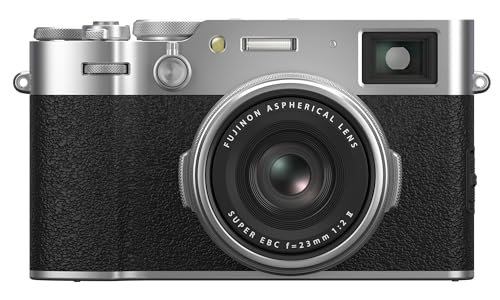
Fujifilm X100VI — Best Digital Discipline
No digital camera makes a tintype, and the X100VI earns its place here precisely by not pretending to. What it offers instead is the closest widely available approximation of the wet-plate working rhythm: one fixed lens that forbids zooming your way out of a composition problem, tactile dials that slow the hand, in-body stabilisation that permits deliberate handheld work in dim rooms, and film simulations — including restrained monochrome renderings — that give portraits a textured gravity straight from the camera.
The fixed focal length teaches the portraitist’s oldest lesson: move yourself, arrange the sitter, and let stillness do the work. Tintype sitters held poses because chemistry demanded it; X100VI sitters settle because the session feels unhurried, and the resulting expressions — composed, direct, unsnapping — are the homage’s most convincing element. Followers and clients read that composure as period authenticity more readily than any sepia tone.
Its leaf-quiet discretion helps in the small rooms where portrait homage usually happens, and the hybrid viewing options suit photographers who like to compose slowly and check sparingly. Files carry generous detail for printing at portrait sizes, where a well-made monochrome homage, printed matte and framed simply, holds a wall with surprising authority.
Keep expectations labelled honestly when the work is shared: call it wet-plate-inspired, monochrome portraiture, or period homage — never a tintype. That honesty, besides being simple integrity, is what practitioners of the real process ask of digital neighbours, and honouring it costs the digital photographer nothing while buying the respect of the whole community.
Availability remains the practical caveat, as with every camera in this celebrated line, and the single lens will frustrate anyone whose portrait work needs varied distances in cramped spaces. As a discipline engine and a monochrome portrait companion, though, it is the digital pick whose philosophy sits closest to the plate camera’s — one frame, made carefully, on purpose.
- Sensor: APS-C with in-body stabilisation
- Lens: fixed prime encouraging deliberate framing
- Rendering: film simulations including monochrome
- Handling: tactile dials and quiet operation
- Role: digital discipline closest to plate pace
Strengths
- Working rhythm echoes the deliberate plate session
- Monochrome rendering with genuine texture
- Discreet presence keeps sitters composed
Trade-offs
- Makes homage files, never real tintypes
- One focal length limits cramped sessions
- Demand can make purchase slow
Best for: digital portraitists who love the tintype spirit and pace. Not suited for: anyone who needs an actual plate or interchangeable lenses.

Fujifilm X-T5 — Best Digital System
Where the X100VI commits to one lens, the X-T5 builds the homage photographer’s system: a dial-led body in the classic mould, a deep catalogue of lenses including fast primes for portrait distances, and Fujifilm’s film simulations anchored by monochrome options that respect mid-tone texture instead of crushing it. For a studio or a location practice producing period-flavoured portraits regularly, it is the most complete digital answer in this guide.
The interchangeable mount opens the vintage bridge properly. Adapted older manual lenses — the portrait glass of the film era, with its gentler contrast and characterful flare — mount happily and focus with modern aids, letting the photographer combine period optics with digital convenience. That combination, lens character at capture plus monochrome rendering in camera, produces homage work of real conviction rather than costume.
Resolution and stabilisation serve the printed portrait, which is where homage work proves itself. A monochrome file from this body, printed large on matte paper, holds tonal gradation through faces and fabrics in a way that invites comparison with darkroom prints — a different lineage from tintype, honourably acknowledged, and a legitimate destination for the same love of physical portraiture.
Video and modern conveniences ride along without diluting the brief; a portraitist who also documents the studio’s life will find the body willing. The honest limits are the familiar ones: it is a system to buy into, with lens costs ahead, and its simulations, however fine, remain simulations. Label the work as homage and the X-T5 becomes what it should be — a serious modern instrument in respectful conversation with an older art.
Handling deserves a closing word, because homage photographers spend long sessions behind the camera. The dial layout keeps exposure decisions tactile and visible, the body balances well with portrait primes, and the whole experience encourages the unhurried, tripod-friendly pace that period portraiture rewards. Tools shape temperament; this one shapes it in the right direction.
- Sensor: APS-C, Fujifilm X mount
- Controls: classic dial-led handling
- Rendering: film simulations with strong monochrome
- Lenses: native primes plus adapted vintage glass
- Output: detailed files for large matte prints
Strengths
- The most complete digital homage system here
- Vintage lenses adapt into the workflow gracefully
- Print quality honours the portrait tradition
Trade-offs
- System lenses add cost beyond the body
- Simulations remain homage, not chemistry
- Dial handling suits deliberate pace best
Best for: regular digital portraitists building a period-flavoured practice. Not suited for: purists seeking plates or minimalists wanting one fixed lens.

Canon EOS R6 Mark II — Best Digital Portrait Platform
A working portraitist who loves period character but answers to modern clients needs reliability above romance, and that is the R6 Mark II’s brief within this guide. Its full-frame sensor renders faces with smooth tonal transitions, its autofocus holds an eye through the small movements of a long sitting, and its low-light strength keeps lamplit, window-lit homage sessions clean without forcing the sitter under studio glare.
The vintage-lens pathway is especially graceful here. Full-frame coverage welcomes older portrait optics at their intended perspective, adapters are well supported, and focus assistance turns manual glass from a gamble into a method. Pair a characterful older prime with the body’s monochrome picture style and the homage gains optical authenticity where it matters most — at capture, in the glass.
Stabilisation in the body steadies both modern and adapted lenses, which matters in the dim, deliberate conditions homage favours, and the files carry the latitude for careful monochrome printing. A photographer can deliver a client gallery digitally on Monday and a framed period-style portrait on Friday from the same session, a commercial flexibility no plate camera pretends to offer.
Scale is the caveat: body and full-frame lenses make this the heaviest digital commitment in the list, and its very competence can seduce a session toward modern polish when the brief asked for period gravity. Discipline — one vintage lens, one monochrome recipe, a tripod, and time — keeps it honest. Under that discipline, it is the professional’s homage platform.
Long sittings also benefit from its ergonomics and battery manners, the unglamorous virtues that decide whether a portrait practice survives its diary. A camera that disappears into reliability lets the photographer attend to the sitter, and attention to the sitter, in tintype’s century and in ours, is where portraits actually come from.
- Sensor: full-frame with in-body stabilisation
- Focus: dependable eye detection for sittings
- Lenses: RF natives plus adapted vintage optics
- Light: strong performance in dim interiors
- Role: professional digital portrait platform
Strengths
- Smooth full-frame tonality for faces
- Vintage glass adapts with modern assistance
- Reliability suited to paid portrait work
Trade-offs
- Largest and costliest digital route here
- Modern polish must be deliberately restrained
- Still homage only — never a plate
Best for: professional portraitists adding a period-flavoured line of work. Not suited for: beginners or anyone seeking authentic wet-plate results.

Nikon Z50 II — Best Compact Digital Companion
Not every homage photographer needs a system with professional obligations. The Z50 II serves the learner and the walker: a manageable APS-C body, Nikon’s clean colour and monochrome rendering, and handling friendly enough that a beginner’s attention stays on the sitter and the light rather than on the menu tree. As a practice instrument for the portrait eye — while saving for a workshop, or instead of one — it is a sensible, honest companion.
Its size changes where portrait practice can happen. Carried on walks, visits, and family afternoons, it accumulates the informal monochrome portraits from which a style is actually built, long before any formal sitting is arranged. Tintype’s masters learned by repetition under constraint; a light camera that invites daily repetition teaches the same lesson in a modern accent.
Adapted and native lenses both have a place here, with compact primes suiting the body’s scale and Nikon’s focus aids keeping manual glass usable for learners. Video competence rides along for documenting process and place, which matters to photographers who share their learning publicly — an audience for honest homage work, clearly labelled, is easy to gather and pleasant to serve.
Expect APS-C limits in the darkest interiors and a lens catalogue still maturing beside its larger rivals. Neither undermines the role: a companion camera for developing a monochrome portrait practice, at a scale and friendliness that keep the practice daily. Grow from it toward the X-T5’s system or the field camera’s chemistry as your intentions clarify — that clarity, not any body, is the real purchase this pick protects.
One habit will multiply its value: shoot monochrome natively, reviewing in black and white at the scene rather than converting colour later. Seeing in tones while the sitter is present — noticing how a red sweater darkens, how blue eyes lighten, how collodion’s strange palette might have read the same face — trains exactly the vision both the homage and the authentic process demand.
- Sensor: APS-C, Nikon Z mount
- Handling: friendly for learners and walkers
- Rendering: clean colour and monochrome options
- Carry: compact enough for daily practice
- Role: companion for building a portrait eye
Strengths
- Daily-carry size encourages portrait practice
- Approachable handling for beginners
- Monochrome workflow trains period vision
Trade-offs
- APS-C limits in very dim interiors
- Lens shelf narrower than larger systems
- Homage files only, like all digital picks
Best for: learners building a monochrome portrait practice. Not suited for: authentic plate work or demanding professional sittings.


