kajuandouglas.com is reader-supported. When you buy through links on our site, we may earn an affiliate commission.
Where to Buy
One rule stands in front of every recommendation in this guide, and it is not negotiable: when you search for the best cameras for taking pictures of solar eclipse events, the camera matters second and the solar filter matters first. A dedicated solar filter — made for this purpose, fitted securely over the FRONT of the lens before the camera is pointed anywhere near the Sun — is what makes eclipse photography safe for your equipment and for you. Concentrated sunlight through a lens can destroy a sensor in seconds, and the same optics pointed at an eye can injure it permanently. Every pick below is therefore reviewed as half of a system: camera plus proper front solar filtration, used with the discipline this guide repeats until it becomes reflex.
The companion rule concerns your own eyes, and it deserves its own sentence in bold company: never look at the Sun through an unprotected optical viewfinder. A DSLR-style optical finder shows you the Sun itself, magnified; an electronic viewfinder shows you a screen’s image of it, which is a different and safer thing, but the habit this guide teaches is simpler and stronger — compose on the rear screen or through the fitted solar filter, keep eclipse glasses on your own face for any direct glance at the sky, and treat the unfiltered Sun as something no part of you or your camera ever faces directly outside the brief minutes of totality.
Totality is the single exception, and it must be understood precisely. For observers inside the path of totality, during the short window when the Moon covers the Sun completely, the filter comes off and the corona — the eclipse’s whole reason for existing — becomes photographable and visible. The moment the first bright sliver of sunlight returns at totality’s end, the filter goes back on before any further photographing or looking. Outside the path of totality, where the eclipse remains partial all day, the filter NEVER comes off. This guide repeats that geography because confusing the two situations is how cameras and eyes get hurt.
With safety established as the price of admission, the photography itself divides into three assignments. The partial phases reward telephoto reach and patient exposure bracketing as the Moon’s bite deepens. Totality rewards preparation rehearsed to the level of choreography, because its minutes are too few for menu-diving. The environment — the falling light, the temperature drop, the crowd’s involuntary gasp — rewards the wide lens and the second camera nobody in eclipse forums ever regrets bringing. The six picks below divide those assignments among themselves, and the detailed reviews say plainly which assignment each camera owns.
Reach is the specification beginners underestimate most. The Sun and Moon share a modest apparent size in the sky, and filling a frame with the eclipsed disc demands serious telephoto focal lengths or brave cropping from a high-resolution file. That arithmetic shapes this list: bodies whose mounts offer attainable long telephotos, and sensors whose resolution forgives a crop, rank above bodies that would leave the eclipse as a bright coin in a large black sky. Eclipse photography is one of the few genres where the lens budget honestly outranks the body budget, and the reviews spend accordingly.
Finally, temperament: an eclipse is a rehearsal sport. The photographers who come home with the corona practised on ordinary full moons, timed their filter changes with gloves on, and wrote their exposure sequence on a card taped to the tripod. Every recommendation below assumes that rehearsal and rewards it — cameras whose controls can be run by touch, whose screens behave in bright daylight, whose batteries survive a morning of waiting. The sky will give you one performance. This guide’s job is to make sure your equipment has already seen the play.
Key Takeaways
- Safety outranks every specification here: a dedicated solar filter over the front of the lens, fitted before the camera ever points sunward.
- Never look at the Sun through an unprotected optical viewfinder; compose on a screen or through the filter, always.
- Canon EOS R6 Mark II leads the picks with resolution, tracking discipline and a viewfinder workflow that suits filtered practice.
- Sony Alpha 7 IV and Panasonic LUMIX S5II serve the hybrid shooter filming the partial phases and the crowd’s reaction.
- Nikon Z50 II and Canon EOS R10 keep eclipse photography within reach of first-time chasers with telephoto options.
- Fujifilm X-T5 brings dial-led exposure control that partial-phase bracketing rewards enormously.
In this guide
Quick Picks
| Badge | Pick | Why it stands out |
|---|---|---|
| Best Overall for Eclipse Day | Canon EOS R6 Mark II | Resolution, disciplined controls and RF telephoto depth for the corona sequence. |
| Best for Hybrid Chasers | Sony Alpha 7 IV | Deep lens catalogue, strong video and files that forgive a brave crop. |
| Best First Chaser’s Body | Nikon Z50 II | Friendly handling, Z-mount telephotos and a price that leaves budget for the lens. |
| Best for Bracket Craft | Fujifilm X-T5 | Surface dials and high resolution for the photographer who exposes deliberately. |
| Best for Filming the Eclipse | Panasonic LUMIX S5II | Fan-cooled endurance for time-lapses and films of the whole event, partial phases included. |
| Best Budget Chaser | Canon EOS R10 | Light, friendly and RF-compatible — an eclipse rig a beginner can carry anywhere the shadow falls. |
How We Chose These Eclipse Picks
Safety architecture came before image quality in the judging, which inverts this guide’s usual order deliberately. We favoured bodies that encourage screen-based composition, electronic viewing and remote or timer release — workflows that keep eyes away from finders and hands off a sun-pointed rig at the critical moments. Cameras were also assessed on how securely standard front-filter arrangements sit within their lens ecosystems, because the filter is not an accessory in this genre; it is the licence to participate, and a system that makes filtration awkward makes photographers careless.
Telephoto reality formed the second filter. Each candidate’s mount was audited for the long lenses an eclipse actually consumes — the attainable zooms a first-time chaser can rent or buy, the serious glass an experienced one already owns — and for the resolution headroom that lets a shorter lens’s file be cropped into a respectable disc. Bodies marooned in mounts without honest telephoto paths were excluded however fine their sensors, because an eclipse guide that recommends a camera you cannot point at the event has failed before the Moon moves.
The third filter was rehearsability: controls operable by touch and memory, exposure bracketing that behaves predictably, interval and timer tools for hands-off sequences, and battery manners across a long morning of standby and bursts. Eclipse day punishes menu archaeology more than any other assignment in photography, and the six survivors are the bodies a photographer can genuinely learn to run blindfold before the shadow arrives.
How Do You Photograph an Eclipse Without Hurting Your Eyes or Your Camera?
Assemble the discipline as a sequence, because sequences survive excitement and intentions do not. The solar filter — dedicated, undamaged, made for front-of-lens use — is fitted while the camera still points at the ground. Only then does the rig rise toward the Sun, and from that moment every composition happens on the rear screen or through an electronic viewfinder fed by the filtered sensor, never through an unprotected optical path. Eclipse glasses guard any direct glance at the sky itself. Sunglasses, smoked glass, exposed film and every folk remedy in photography’s attic are not filters, and this guide names them only to banish them.
Sensor protection follows the same front-door logic. A lens concentrates sunlight the way a magnifying glass does, and an unfiltered camera pointed sunward — even idly, even while ‘just checking the framing’ — can cook shutter curtains and sensor sites in seconds. The filter therefore goes on before aiming and comes off only for totality’s brief window, inside the path, with the rig already aimed and the photographer already rehearsed. Outside the path, or before and after totality within it, there is no photographic idea in this guide worth an unfiltered second.
Tripod discipline completes the safety picture, because eclipse sites are crowded fields of excited people and trailing cables. Tape the legs’ footprint, keep the rig out of walkways, and rehearse the totality drill — filter off, sequence shot, filter on — until it runs under two minutes of genuine darkness with a racing heart. The photographers who injure equipment at eclipses are rarely the ignorant; they are the hurried. This guide’s entire method is designed to make its readers neither.
What Actually Happens During Totality, Photographically?
Darkness arrives like a dimmer being turned by the sky itself, and the corona blooms where the filtered disc had been — a pearly, structured crown many times wider than the Sun it surrounds, changing as the minutes pass. This is the only time the filter comes off, and the photography transforms with it: exposures lengthen, brackets widen to capture streamers both faint and brilliant, and the prepared sequence — rehearsed on the Moon, taped to the tripod — earns its entire existence in about two minutes of shooting that feel like twenty seconds. Nobody improvises totality successfully. It is the most choreographed assignment in amateur photography, and the choreography is the hobby’s open secret.
The environment performs alongside the corona and deserves its share of the rehearsal. Light falls to a deep twilight, temperatures drop noticeably, stars and planets emerge near the eclipsed Sun, and the horizon glows in a full circle of sunset colours. A second camera — even the humblest body in this list, set wide on a fixed tripod and running a sequence unattended — harvests that environment while the main rig serves the corona. Photographers who skip the wide record regret it at every retelling, because totality is an event that happens to a landscape and a crowd, not only to a disc in the sky.
Then the diamond ring ends it: the first sliver of returning sunlight, blinding and beautiful, and the drill reverses instantly — filter back on the lens before another frame, glasses back on faces before another glance. Partial phases resume their patient rhythm, and the field exhales. Every pick in this guide was judged partly on how gracefully it supports that reversal: controls findable in dim light, filter threads accessible with cold fingers, screens that will not blast the photographer’s dark adaptation with a white menu at the critical second.
How Much Telephoto Reach Does the Sun Actually Need?
Do the arithmetic the forums argue about, once, plainly. The Sun’s disc spans roughly half a degree of sky, which means a moderate lens renders it as a small bright coin and a serious telephoto renders it as a subject. Photographers chasing a frame-filling eclipsed disc with corona detail live at the long end of their systems — the longest zoom the mount offers, converters where the system supports them, and crops taken from the highest-resolution files their budget reaches. This is why the picks below are introduced as systems: the body is the recording end of a telephoto decision made at the lens shelf.
Cropping is the honest second telephoto, and resolution is its currency. A high-resolution file from a shorter lens, cropped with conviction, can out-resolve a noisy grab from a longer, slower one — particularly during totality, when exposures lengthen and technique steadies. The Fujifilm and the two full-frame leaders below build part of their eclipse case on exactly that currency. Beginners should price both routes — the long lens rental for eclipse week, or the higher-resolution body used at moderate reach — because either can be the rational purchase depending on what the rest of the year’s photography demands.
Practice targets exist, mercifully, in every month. The full Moon matches the Sun’s apparent size and forgives everything the Sun forbids, making it the perfect rehearsal subject: same framing arithmetic, same tripod discipline, none of the filtration danger. A photographer who has framed twenty full moons knows their eclipse field of view in their bones, and that knowledge — not any specification in this guide — is what totality’s two minutes will actually spend.
Why Do Eclipse Photographers Rehearse Like Pilots?
Because the event offers no second performance and forgives no learning curve, which makes it aviation rather than tourism. The checklist culture of eclipse chasing — written exposure sequences, timed filter drills, a printed timeline of contact moments for the specific site — looks obsessive in the forum and looks like genius in the field. Cameras were scored here on checklist-friendliness: can the bracket sequence be set the night before, can the interval timer run the partial phases unattended, can every totality control be found by a fingertip that has practised in a darkened room?
Rehearsal also calibrates ambition, which is a kindness. A first-time chaser who attempts the corona sequence, the wide environment record and a video of the crowd will execute three mediocre assignments; the same photographer, rehearsed into one assignment owned completely, comes home with the photograph of their life. The picks below map to those ambitions honestly — one camera, one job, done beautifully — and the guide’s final advice will push most readers toward the main rig plus the unattended wide, the two-assignment maximum that experience keeps endorsing.
Weather rehearsal is the final, humbling layer. Eclipse chasers plan mobility the way sailors plan harbours: a primary site, a forecast watched for a week, a willingness to drive at dawn toward the clear sky the satellite promises. Equipment serves that mobility when it packs small, sets up in minutes and runs on batteries that forgive a cold clear morning at altitude. Several verdicts below turn on exactly that packability, because the best eclipse camera in a cloudy field is a photograph of a cloud, taken beautifully.
What Should a First-Time Chaser Actually Plan to Shoot?
Own the partial phases first, because they are guaranteed and the corona is not. From any site, in any weather that permits gaps, the filtered sequence of the Moon’s progress — shot at steady intervals, identically framed — assembles into the eclipse’s most satisfying souvenir: the composite that shows the whole story in one frame. That assignment needs a tripod, a filter, a timer and any body in this guide, and its success rate approaches certainty, which is exactly what a first chase should be built on.
Add totality only if the site is inside the path, and add it as a rehearsed sequence rather than a hope. Decide the bracket range at home, practise the filter removal until it is boring, and give the wide environment record to a second body or a phone on a fixed support rather than to your own divided attention. Then — the advice every veteran gives and every beginner resists — schedule thirty seconds of totality for your own eyes, behind no lens at all. The corona is the most astonishing thing most people ever see, and a photographer who never actually saw it has archived an event they missed.
Accept, finally, that the first chase is tuition. Whatever the result — clouded out, perfectly executed, fumbled gloriously at the diamond ring — the chaser joins a fraternity whose members plan holidays around shadow paths decades in advance. The cameras in this guide are ranked to serve chase one without embarrassing chase five, because the honest prediction for anyone who reads this far is that there will be a chase five, and the equipment should still be invited.
How Do You Choose an Eclipse Site Like a Photographer?
Site selection is the chaser’s largest creative decision and it is made with a map, a forecast and a scouting drive rather than with a camera. Inside the path, duration of totality grows toward its centre line, and those extra seconds are the currency the whole expedition spends — worth an hour’s drive, not worth a cloudy postcode. Photographers scout foregrounds the way landscape shooters do: the tree, the monument, the water that will hold the twilight’s reflection, because totality’s wide record is a landscape photograph with the strangest light on Earth, and landscapes are composed before they are lit.
Logistics guard the art. Arrive the day before if the site allows, rehearse the rig in the actual field at the actual hour, and keep the morning itself free of every decision except the sky’s. The chasers who lose totality to a forgotten adapter, a full card or a parking dispute are legion, and their stories share a moral this guide endorses completely: eclipse day is for executing, and everything executable beforehand is a debt the prepared photographer refuses to owe.
What Should You Photograph in the Hour Before the Eclipse Begins?
The hour before first contact is the chaser’s portrait session with themselves, and it deserves a place in the plan rather than a scramble at its edges. Photograph the rig in the field, filter fitted, exactly as it will work; photograph the companions, the thermos, the ridiculous hat, the site’s ordinary morning beauty before the light turns strange. These frames become the story’s first chapter, and they are unrepeatable in the specific way eclipse mornings are: nobody can restage the anticipation once the shadow has been and gone, however the photographs of the disc itself turn out.
That hour is also the final systems check, performed calmly because it was scheduled. Batteries confirmed, cards formatted with yesterday’s rehearsal already archived, the filter inspected against the light one last time and refitted, the sequence card taped where the eye will fall at totality. Chasers who build this hour into the timeline arrive at first contact in a state the unrehearsed mistake for luck. It is not luck; it is an hour, spent on purpose, and every camera in this guide rewards it identically — by simply working, while its owner watches the Moon arrive.
Share the hour generously, because eclipse fields run on borrowed experience. The neighbouring chaser’s spare cable, the warning about the ditch behind the tripod line, the forecast update from somebody’s cousin at the weather service — the field’s informal economy saves more photographs than any equipment in this guide. A chaser with a working rig and time in hand is rich in that economy, and spending the wealth is the hobby’s oldest pleasure. The shadow, when it comes, finds a small temporary civilisation that preparation built.
Assignment by Assignment: Which of the Best Cameras for Taking Pictures of Solar Eclipse Handles Yours?

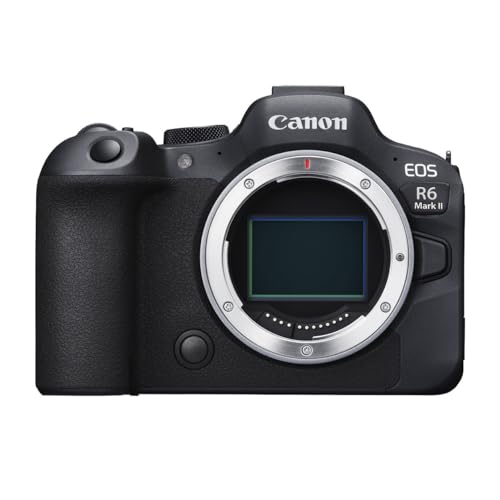
Canon EOS R6 Mark II — Best Overall for Eclipse Day
The R6 Mark II takes the head of this list by being the body a rehearsed chaser can run in the dark without a wasted motion. Its controls fall to practised fingers, its electronic viewfinder and screen support the screen-based, filter-on composition this guide mandates, and its sensor balances resolution for cropping against the low-light grace totality’s longer exposures demand. Canon’s subject tools are irrelevant to the Sun itself — the disc does not need tracking — but the discipline of the body’s whole design, built for fast professional work under pressure, translates directly into an eclipse morning executed calmly.
RF telephoto depth completes the case. The mount offers the attainable long zooms a first chaser rents, the serious telephotos an experienced one owns, and converters that stretch both for the frame-filling disc the assignment wants. Files from the R6 Mark II bracket beautifully across totality’s wide brightness range, holding the corona’s faint outer streamers and its brilliant inner ring in one disciplined sequence — provided, as always in this guide, that the sequence runs through a proper front solar filter during every partial moment and the filter returns the instant totality ends.
Its honest costs are the professional ones: RF’s finest eclipse glass is an investment, and the body’s talents in ordinary photography are so broad that eclipse buyers should confirm the purchase serves their whole year, not only their shadow. For the chaser who wants one body to rehearse on moons, execute on the day, and then serve a decade of everything else, the R6 Mark II is the most complete answer this guide can give — with the filter rule riding on every frame it takes.
Chasers who campaign with the R6 Mark II tell a consistent story about the diamond ring moment: the rehearsed sequence simply happened, because the body’s controls had become furniture in their hands. That is the deepest compliment an eclipse rig can earn. Totality does not grade your camera; it grades your preparation, and this Canon is the body most owners in this guide manage to prepare on completely.
- Role: full-frame mirrorless for the main eclipse rig
- Viewing: electronic finder and screen for filtered composition
- Mount: RF telephotos from rental zooms to pro glass
- Files: bracket-friendly across totality’s range
- Controls: run by touch after rehearsal
Strengths
- A rig that can be operated in totality’s dark
- Telephoto shelf for every chaser’s budget
- Files that hold corona detail across brackets
Trade-offs
- Pro RF glass is a serious investment
- Talents exceed a once-a-decade assignment
- Filter and rehearsal remain the owner’s duty
Best for: committed chasers wanting one body for eclipse day and the decade around it. Not suited for: casual viewers better served by a simpler, smaller rig.

Sony Alpha 7 IV — Best for Hybrid Chasers
Sony’s entry argues from the lens shelf outward. E-mount contains more eclipse-capable telephoto options, at more prices, than any system in this guide — long zooms to rent for the week, serious glass to own for the decade, and a used market deep enough to equip a chaser on a mortal budget. Behind whichever lens is chosen, the Alpha 7 IV’s files offer the resolution and dynamic range that let a slightly short lens be cropped into a respectable disc, and its video specification serves the chaser whose assignment includes filming the partial phases and the crowd’s face at totality.
Field manners suit the morning’s rhythm. The body’s screen-based workflow keeps composition safely behind the front solar filter, its bracketing and interval tools run the partial-phase sequence without a photographer’s constant attendance, and its autofocus — superfluous on the Sun — earns its keep on the environment record: faces in the strange twilight, the horizon’s ring of sunset, the reactions that make an eclipse film human. A hybrid chaser covering both the disc and the day will find this Sony the most fluent single body in the list.
The cautions are the familiar Sony ones, stated for an eclipse context: menus reward the photographer who configures everything the night before — which this genre demands anyway — and the most demanding video settings in a hot, sun-exposed field deserve the thermal respect the Panasonic below was built to waive. Neither dents the verdict for the system buyer. Equipped with its filter, rehearsed on its moons, the Alpha 7 IV is the chaser’s general-purpose instrument, as comfortable at the shadow as it is everywhere else.
The Alpha 7 IV’s second eclipse career is social: it is the camera other chasers borrow lenses for, lend batteries from and gather around when somebody’s rig misbehaves, because E-mount’s installed base turns a field of strangers into a parts department. In a hobby practised in remote fields at rare intervals, that ecosystem citizenship is a practical feature no specification table lists and every veteran understands.
- Role: full-frame hybrid for disc and documentary
- Mount: E-mount, the deepest telephoto catalogue here
- Files: resolution that forgives a brave crop
- Tools: bracketing and intervals for unattended sequences
- Video: strong record of phases and crowd
Strengths
- A telephoto for every budget in-mount
- Covers the eclipse and the day around it
- Unattended partial sequences run cleanly
Trade-offs
- Menus demand the night-before configuration
- Hot-field video at peak settings needs planning
- Filter discipline still entirely manual
Best for: hybrid chasers filming the event while photographing it, inside a deep lens system. Not suited for: minimalists wanting the smallest possible eclipse kit.

Nikon Z50 II — Best First Chaser’s Body
First-time chasers consistently misallocate their money toward the body and away from the lens, and the Z50 II is this guide’s correction: a capable, friendly body priced to leave the telephoto — the purchase eclipse photography actually runs on — properly funded. Z-mount’s long zooms give the beginner a genuine frame-filling disc rather than a bright coin, Nikon’s handling keeps the rehearsal curve gentle, and the body’s screen workflow supports the filtered, screen-composed discipline from the first practice moon onward.
Its talents beyond the eclipse justify the shelf space across the years between shadows. Subject detection that finds birds and animals, video strong enough for the family archive, a size that joins ordinary travel without negotiation — the Z50 II is a camera a beginner grows with rather than out of, which matters in a genre whose events arrive years apart. The eclipse becomes the summit of a general apprenticeship instead of a single-use expedition, and that is exactly how sustainable chasing careers begin.
Resolution is its honest frontier: the crop headroom for rescuing a too-short lens is smaller than the full-frame leaders offer, so the lens decision matters more and should be made with the rehearsal moons as evidence. Buy or rent the reach properly, fit the dedicated solar filter before the rig ever rises, and the Z50 II will execute a first chase with a competence that surprises everyone except the Nikon engineers who democratised it.
Beginners who chase with the Z50 II report the same relief at the first practice moon: the camera felt like it was on their side. Friendly menus, a grip that survives nervous hands, and files that forgive a beginner’s exposure wobble convert rehearsal from homework into play — and rehearsal volume, as this guide has argued from its first page, is the true predictor of eclipse-day success.
- Role: APS-C mirrorless for the first eclipse campaign
- Mount: Z-mount long zooms within mortal reach
- Handling: gentle rehearsal curve for beginners
- Viewing: screen workflow for filtered composition
- Life: a general camera between eclipses
Strengths
- Leaves the budget where eclipses spend it — the lens
- Friendly enough to rehearse thoroughly
- A body the years between shadows still use
Trade-offs
- Less crop headroom than full-frame leaders
- The lens decision carries more weight
- Enthusiast ceiling on burst depth
Best for: first-time chasers funding one proper telephoto and a body that teaches kindly. Not suited for: champions of the maximum-resolution crop strategy.

Fujifilm X-T5 — Best for Bracket Craft
Totality rewards the photographer who thinks in exposures, and the X-T5 is built for that photographer: shutter, sensitivity and compensation live on surface dials that a rehearsed hand adjusts in darkness without a screen’s betraying glow. Its high-resolution sensor is the crop strategist’s instrument, delivering a respectable eclipsed disc from a moderate telephoto and holding the corona’s structure across a carefully stepped bracket sequence. Fujifilm’s colour, so loved by landscape shooters, renders totality’s strange twilight — the silvered landscape, the impossible horizon — with a fidelity that needs no apology in the edit.
The system’s telephoto shelf has matured into genuine eclipse capability, with long zooms that make the X-T5 a complete chasing rig rather than a beautiful compromise. Weather sealing suits the dawn drive and the exposed field, the tilting screen serves the filtered composition posture this guide mandates, and the whole body rehearses beautifully: a month of full moons on this Fujifilm teaches its owner a manual fluency that transfers, second for second, to the shadow’s arrival.
Its autofocus, capable as it is, is not the reason to buy it — the Sun needs no tracking and the environment record forgives everything — and action shooters between eclipses should weigh the Nikon and Canon above for living subjects. The X-T5’s eclipse identity is the craftsman’s: deliberate exposure, high resolution, tactile control in the dark. For the chaser whose temperament matches, it is not the fourth pick in this list. It is the first one they will reach for.
The X-T5 inspires a particular rehearsal aesthetic: owners practise with the screen folded away, dials only, like musicians running scales. By eclipse morning the exposure sequence lives in their fingers, and totality — two minutes of darkness and wonder — finds them looking up at the corona as often as down at the camera. A rig that returns your eyes to the sky has understood the assignment completely.
- Role: high-resolution mirrorless for deliberate exposure work
- Controls: surface dials operable in darkness
- Files: resolution for the crop strategy
- Mount: X-mount telephotos now genuinely long
- Sealing: weather resistant for field mornings
Strengths
- Bracketing by touch while totality runs
- Crop headroom from a moderate lens
- Twilight colour rendered faithfully
Trade-offs
- Tracking talents trail action-first rivals
- Long X-mount glass is a newer shelf
- Manual temperament must suit the owner
Best for: exposure craftsmen who rehearse brackets and think in dials, not menus. Not suited for: chases built on autofocus and fast living subjects between eclipses.

Panasonic LUMIX S5II — Best for Filming the Eclipse
An eclipse is a four-hour film that most chasers only photograph, and the S5II is the pick for the one who intends to shoot the movie. Its fan-cooled body runs time-lapse sequences through the partial phases — filter fitted, always — without the thermal anxiety that sun-exposed rigs invite, holds a wide environment record through totality while the stills rig works the corona, and films the crowd, the horizon and the returning light with monitoring tools that tell the exposure truth in difficult, changing darkness. As the event’s cinematographer, it has no rival in this list.
Stills shooters are served honestly too: full-frame files, L-mount telephotos adequate to a cropped disc strategy, and phase-detect autofocus for the day’s human story. The S5II’s eclipse weakness is the stills specialist’s footnote — its resolution is the moderate kind, so the frame-filling disc demands the longer lens rather than the brave crop — while its strength, duration, is precisely what time-lapse and film assignments are made of. Every pick in this guide has such a trade; this one’s is simply the easiest to plan around.
Choose it as the second rig of a serious chase or the first rig of a film-led one, fit its filter with the same reverence as every camera here, and let it do what it was built for: never stop recording. When the shadow has passed and the stills chasers are comparing corona frames, the S5II’s owner will be watching the whole morning breathe — the light falling, the field darkening, the world gasping — and that film will be the chase’s most rewatched souvenir.
Time-lapse builders praise one S5II behaviour above the specifications: it forgives the long morning. Hours of standby in gathering heat, a sequence running through changing light, a battery regime that does not demand mid-event surgery — the Panasonic treats eclipse day as a duration problem, and duration is the one problem every other camera in the field is quietly having.
- Role: full-frame hybrid for eclipse film and time-lapse
- Cooling: fan design for sun-exposed sequences
- Monitoring: exposure tools for changing twilight
- Mount: L-mount telephotos for a crop strategy
- Stills: full-frame files alongside the film
Strengths
- Records the whole event without thermal drama
- The environment film nobody else brings home
- Stills remain a genuine second harvest
Trade-offs
- Moderate resolution demands longer glass
- A working camera’s size in a crowded field
- Stills purists underuse its constitution
Best for: film-led chasers, time-lapse builders and second-rig documentary coverage. Not suited for: stills-only maximalists chasing the tightest disc.

Canon EOS R10 — Best Budget Chaser
Mobility is an eclipse strategy, because the clear sky is rarely the convenient one, and the R10 is this guide’s mobility pick: a light, friendly body that travels in a small bag to wherever the forecast sends the chase, mounts the same RF telephotos as its flagship relatives, and asks so little of its owner that the rehearsal — the genre’s real price — gets paid gladly. For the chaser whose eclipse plan involves a dawn drive, a borrowed field and a picnic, the camera that comes is the camera that counts, and the R10 always comes.
Its files and manners serve the first chase honourably. Resolution supports a sensible crop from an attainable zoom, Canon’s colour flatters the environment record and the portraits of fellow chasers in the strange light, and the screen-based workflow fits the filtered discipline from the first practice session. Between eclipses it moonlights as the family and travel camera its price class promises, which keeps the investment warm across the shadow’s long intervals — a real consideration in a genre measured in years.
Plan around the honest limits: no weather sealing for a dewy dawn field, so the rain cover rides in the bag; an enthusiast sensor whose totality brackets want care; and a telephoto decision that, as with the Nikon above, must be funded properly rather than wished away. With its dedicated solar filter fitted and its sequence rehearsed, the R10 executes the beginner’s eclipse — partial composite, environment record, thirty seconds of naked-eye wonder — as completely as cameras costing far more, and it will be carried to the next shadow without a negotiation.
The R10’s eclipse testimonial comes from the chasers who drove furthest. When the home forecast collapsed and the clear sky sat four hours away, the light kit was the one that got packed without a spreadsheet — body, zoom, filter, tripod, thermos — and the photographs from that borrowed field are indistinguishable in spirit from the expedition rigs’. Mobility is not a compromise in this genre. It is a forecast strategy.
- Role: lightweight APS-C body for mobile chasers
- Mount: RF telephotos shared with flagship relatives
- Files: sensible crops from attainable zooms
- Workflow: screen composition behind the filter
- Carry: small-bag travel to wherever sky clears
Strengths
- Goes wherever the forecast sends the chase
- Friendly enough that rehearsal gets done
- A family camera between eclipses
Trade-offs
- No sealing for dewy dawn fields
- Totality brackets want careful technique
- Reach must be funded at the lens shelf
Best for: first chasers travelling light to clear skies, on a sane total budget. Not suited for: expedition chasers needing sealed, flagship rigs.
Eclipse Morning Compared: Six Rigs at the Shadow’s Edge
| Pick | Type | Standout trait | Watch out for |
|---|---|---|---|
| Canon EOS R6 Mark II | Full-frame mirrorless | Rehearsed corona execution | Pro glass investment |
| Sony Alpha 7 IV | Full-frame hybrid | Lens depth and documentary fluency | Menu configuration discipline |
| Nikon Z50 II | APS-C mirrorless | Beginner budget done honestly | Crop headroom limits |
| Fujifilm X-T5 | APS-C mirrorless | Dial-led bracket craft | Action talents secondary |
| Panasonic LUMIX S5II | Full-frame hybrid | Films the whole event | Moderate resolution for discs |
| Canon EOS R10 | APS-C mirrorless | Mobility and friendliness | Unsealed, enthusiast sensor |
Every row of this table assumes the same two companions, and the comparison is meaningless without them: a dedicated solar filter fitted over the front of the lens, and a rehearsal month behind the photographer. Given those, the rows divide by ambition. The Canon R6 Mark II and Fujifilm serve the corona craftsman, one by fluency and one by dials; the Sony serves the documentarian; the Panasonic owns the film; and the Nikon and the R10 bring the whole event within a first chaser’s honest reach, one by lens-budget logic and one by mobility.
Second-rig logic completes most real chases: a main telephoto body from the table’s top half, an unattended wide body from anywhere in it, and a photographer’s eyes scheduled for thirty unmediated seconds. Readers assembling that pattern should notice that the cheapest body here, properly filtered and fixed on the wide record, contributes photographs the flagship cannot — because the flagship was busy being magnificent at the disc.
A word about the comparison nobody can table: the same six cameras under a cloudy sky produce six identical photographs of a cloud, which is why veteran chasers spend their money in the order filter, mobility, rehearsal, and only then body. This guide’s ranking serves the clear morning. The chaser’s wisdom is arranging to be standing under it.
What Mistakes Ruin Eclipse Photographs — and Eclipse Days?
The unforgivable mistake is improvising with safety: pointing an unfiltered camera sunward to ‘check the framing’, glancing through an optical finder, trusting sunglasses or a folk filter. This guide has repeated the discipline until it risks rudeness — front solar filter on before aiming, screen-based composition, glasses for the sky, filter off only inside totality’s window and back on before the first returning sliver — because the injuries this genre can deal are permanent and the precautions cost nothing but rehearsal. No photograph in this guide’s whole argument is worth an eye, and no sensor is worth a shortcut.
The second mistake is arriving unrehearsed with a magnificent plan. Totality’s minutes consume choreography, not intentions, and the chaser who meets their camera’s bracketing menu for the first time in the dark will meet nothing else. Rehearse on full moons, tape the sequence to the tripod, and cut the plan until it fits inside two calm minutes with room for wonder. A smaller plan executed completely is the professional’s signature in this genre; the sprawling one is the amateur’s confession.
Forgetting the event for the disc completes the classic trio. Chasers who spend totality entirely inside a viewfinder return with files and without a memory, having missed the temperature’s fall, the horizon’s ring of fire-coloured light and the sound a crowd makes when the sky does the impossible. Schedule the eyes their thirty seconds. The cameras in this guide, properly rehearsed, will work unattended for exactly that long — it is what their timers, intervals and sequences are for.
Final Recommendation
Decide by naming your assignment in one sentence before naming a camera. ‘I will shoot the partial composite and watch totality with my own eyes’ is a complete, honourable plan that the R10 or Z50 II executes beautifully with a filter and a month of moons. ‘The corona sequence is my photograph’ belongs to the R6 Mark II or the X-T5. ‘I am making the film of the day’ is the S5II’s or the Alpha 7 IV’s sentence. The camera follows the sentence; the filter precedes them all; and the rehearsal, as ever, is the photograph.
Whichever body you choose, buy the dedicated solar filter for its lens first, fit it before the rig ever rises, and begin the moon rehearsals this month rather than in eclipse week. The shadow will arrive on its own schedule, indifferent and magnificent, and it will find two kinds of photographers waiting: those with a plan their hands already know, and those with excellent cameras. This guide has done everything it can to enrol you in the first group — the rest is practice, weather and the oldest light in the world, briefly, gloriously interrupted.
One last word, from every veteran whose advice shaped this guide’s method: protect your eyes as if the photograph did not matter, because one day you will be old, the eclipse photographs will be in a drawer, and the eyes will still be yours. Filter on, screen up, glasses on — and then enjoy the shadow. It has travelled a long way to meet you.
Related guides
- Best Drones for Kids With Cameras: Safe First Picks by Age and Temperament
- Best Digital Cameras for Children: A Parent's Guide to Safe, Durable Picks
Frequently Asked Questions
Can I photograph an eclipse with no filter if I am quick?
No. There is no quick enough: concentrated sunlight through a lens can damage a sensor almost immediately, and an eye behind an optical finder has no defence at all. The only safe unfiltered photography in this guide’s method happens during totality itself, inside the path, in the brief window of complete cover — and the filter returns before the first sliver of sunlight does. Every other frame, at every phase, is made through a dedicated solar filter fitted over the front of the lens.
Are eclipse glasses enough protection for my camera?
No — glasses are for eyes, and a camera needs its own dedicated solar filter, made for optics and fitted securely over the front of the lens before aiming. The two protections are parallel, not interchangeable: glasses guard your direct glances at the sky, the front filter guards the sensor and makes screen-based composition safe. Bring both, use both, and inspect the filter for damage before eclipse morning rather than during it.
What focal length do I actually need?
As long as your system sensibly offers, or a shorter lens on a high-resolution body with a planned crop — the Sun’s disc is small in the sky, and frame-filling eclipse images are telephoto work. Rehearse the arithmetic on a full Moon, which matches the Sun’s apparent size: frame it with your intended lens, and you will know, months early, whether the budget belongs in longer glass or in resolution. Every pick in this guide supports one of those two honest routes.
Can I look through the viewfinder if the filter is on?
With the dedicated solar filter fitted over the front of the lens, the light reaching any finder has already been made safe — but this guide still teaches screen-first composition as the default habit, because habits are what survive excitement. Electronic viewfinders show a screen’s image rather than the Sun itself. Optical finders on any camera should never be used to view the Sun unfiltered, under any circumstances, for any duration. When in doubt, compose on the rear screen and keep your glasses on.
What if my site only gets a partial eclipse?
Then your assignment is the partial phases in full, and it is a genuinely beautiful one: the filtered sequence, the composite of the Moon’s progress, the strange crescent shadows under trees, the light’s slow oddness. The filter never comes off at a partial-only site — there is no totality window to borrow — and the discipline is identical from first bite to last. Many photographers’ finest eclipse work is partial work, made patiently, an hour from home.
Should I buy a camera just for the eclipse?
Buy the system for your photography’s whole year and let the eclipse be its summit, which is how every pick in this guide was chosen. The single-purpose purchases an eclipse actually justifies are the dedicated solar filter, the tripod you may already own, and the telephoto rental for eclipse week. Bodies bought for one morning and sold in disappointment litter the classifieds after every shadow; bodies bought for a decade get carried to the next one.
How early should I start practising?
A month of clear nights is a comfortable runway: several full-Moon sessions to fix framing and focus habits, two timed filter drills, one complete dress rehearsal of the totality sequence in a dark garden. Photographers who begin earlier gain the luxury of boredom — the drill so practised it frees attention for wonder — and boredom, in this one genre, is the mark of the fully prepared.
Related Guides
Prepare for the sky’s other appointments with our guides on best cameras for moon pictures best cameras for night sky best cameras for capturing northern lights.


