kajuandouglas.com is reader-supported. When you buy through links on our site, we may earn an affiliate commission.
Where to Buy a Camera for Miniatures Video, and Why Small Worlds Break Ordinary Rules
The best cameras for shooting miniatures video are judged at distances other photographers never visit: four inches from a model railway signal box, close enough to a painted miniature that its brushstrokes have weather. At that range the ordinary rules invert. Depth of field shrinks to a sliver, so the tiniest focus error becomes a ruined take; a camera movement of one centimetre reads on screen as an earthquake; and light that flatters a human face turns a diorama into a toyshop. Filming small worlds is a discipline of millimetres, and the camera is either built for that discipline or constantly apologising for its absence.
Buy from a dealer who will let you test close focus with your own subjects — bring the model, the figure, the diorama corner — because the specification that decides this category, real-world minimum focus with real autofocus behaviour, is printed nowhere honestly. A lens that focuses close but hunts, breathes or refuses to track a slow push-in will waste more evenings than any other flaw in this guide. Our rankings were settled on the miniature bench itself: focus distance and trustworthiness, depth-of-field tools, magnification for detail work, stabilisation that respects tiny movements, and the patience features — remotes, tethering, flip screens — that let a filmmaker work around a set without breathing on it.
Consider, before spending anything, the testimony of the hobby’s elders: miniature filmmakers almost never cite their camera as the reason a film failed. They cite the light that flattened it, the hand that shook it, the focus that wandered off mid-take. This guide takes that testimony seriously — which is why its rankings weight trustworthiness over brilliance, and why the most expensive body here is not the first recommendation for most benches. At small scale, reliability is not the safe choice. It is the ambitious one.
One truth before the rankings: miniatures video is a lighting hobby wearing a camera’s clothes. The camera matters enormously, but it matters second, after the small, controlled light that makes a model read as a world. Every pick here was chosen to cooperate with that light — to expose it cleanly, focus through it reliably, and stay out of its way.
Key Takeaways
- Close-focus trustworthiness beats resolution: a lens that hunts at macro distance ruins takes no sharpness can save.
- Depth of field at miniature range is measured in millimetres, so focus stacking, small apertures and careful set design are core skills.
- Tiny movements read as earthquakes on screen — stabilisation, sliders and remote operation matter more than in any other genre here.
- A flip screen and remote control let you work around a set without touching it, which is half the craft.
- High-resolution sensors earn their keep by cropping into a miniature scene without rebuilding the set.
- Light the model like a landscape, not a product: small, directional light sells scale better than brightness.
- Spend on light and support before glass: at miniature scale, a panel and a slider improve footage more than a lens tier.
- Keep hands off the set — remotes and apps are earthquake prevention, not convenience.
- Judge a system by the closest-focusing lens you would actually buy, and test the pair on your own models.
- Wire the bench camera for mains power before a long sequence; batteries drift, die and demand touching.
In this guide
Quick Picks
| Pick | Badge | Why it earns the spot |
|---|---|---|
| OM SYSTEM OM-5 Mark II | Best for macro depth | Computational focus tools, tiny lenses and a macro heritage built for subjects measured in millimetres. |
| Sony ZV-E10 II | Best all-round miniature video | Clean 4K, showcase autofocus and a lens shelf with genuine macro options for tabletop channels. |
| DJI Osmo Pocket 3 | Best for moving shots | A gimbal that glides around a set at model height, with close focus and subject tracking built in. |
| Canon EOS R50 | Best for beginners at the bench | Guided handling and forgiving autofocus for a first miniature channel or diorama diary. |
| Fujifilm X-T5 | Best for detail and cropping | High-resolution files that let you reframe a tiny scene in the edit without rebuilding it. |
| Nikon Z30 | Best compact desk setup | A small, screen-first body that lives above the workbench and records long sessions without fuss. |
How Did We Choose the Best Cameras for Shooting Miniatures Video?
Testing happened on the bench, not the street. Each candidate filmed a model railway diorama, a painted gaming miniature and a dollhouse interior under the small LED panels miniature filmmakers actually use, at the distances they actually use them. We marked autofocus on whether it would settle on a figure’s face — a centimetre of painted resin — and stay settled during a slow push-in, because hunting at macro range is not a softness, it is a seizure the whole audience sees. Focus breathing, the quiet change of framing as focus shifts, was scored for the same reason: rack-focus shots are this genre’s signature, and breathing turns them into accidents.
We also filmed the unglamorous middle distances — the whole workbench, the maker’s hands at a vice, the layout from the doorway — because miniature channels are watched as much for the making as for the world. A camera that only excels at four inches and fails at four feet would strand its owner between two hobbies. Every pick here handles the human scale of the bench gracefully; the specialisations begin where the human scale ends.
Depth-of-field tools formed the second sieve: aperture control that stays smooth on video, focus peaking honest enough to trust, and — on the system bodies — computational help such as focus bracketing for the stills that become thumbnails and channel art. The third sieve was coexistence with the set: flip screens, remote and app control, and bodies small enough to mount inside a scene’s geography without demolishing a street of card buildings to make room. Resolution mattered, but as a cropping tool, not a bragging right.
Why Does Filming Miniatures Punish Ordinary Cameras?
The filmmaker’s own body becomes a weather system at this scale. Breath moves a hanging set; a sleeve brushes a chimney off a roof; the warmth of a hand fogs a tiny window. Experienced miniature filmmakers work like surgeons — elbows planted, movements rehearsed, tools laid out before the take — and they choose cameras that cooperate with that discipline: small, remotely operable, content to be set and left alone. Half the verdicts below are, on inspection, judgements about how politely a camera behaves in a world it could crush.
Scale changes the physics of everything. A full-size portrait at arm’s length enjoys inches of acceptable sharpness; a miniature portrait at the same framing enjoys almost none, so focus must be placed with a jeweller’s intent and held against a camera’s every instinct to wander. Light scales strangely too — a softbox that wraps a human subject becomes, to a model, the size of a weather system, and hard little shadows that read as texture on a face read as noon in the desert on a diorama. Even time behaves differently: the slow push-in that feels stately across a room becomes, at model scale, a flight over a landscape, and a hand’s tremor becomes a gale.
Sound, improbably, scales too. A full-size room tone under miniature footage makes the world feel hollow, and the makers who think like sound designers record close, small sounds — the actual click of a model coupling, paper, brush on resin — or none at all beneath music. None of the cameras here will solve that for you, but the ones with proper microphone inputs at least refuse to prevent the solution, and at the bench, where the microphone can sit an inch from the action, even a modest recorder transforms the illusion.
The cameras below survive this inversion for different reasons — macro optics, computational focus, gimbal steadiness, cropping resolution — and the verdicts are written against the bench’s real jobs: the layout tour, the painting tutorial, the stop-motion-adjacent product film, the dollhouse walkthrough. Choose by which of those jobs is yours, because at miniature scale, specialisation is not a preference. It is the difference between a world and a toy.
Which Camera Belongs on Your Workbench?
Six benches, six different crafts — a railway layout, a painting desk, a dollhouse, a product table. The verdicts below are addressed to those benches one at a time.
A note on prices and permanence before they begin: miniature gear ages slowly, because the physics of small worlds does not change with fashion. A body bought for this year’s layout will film the next decade’s with equal conviction, which makes the cost-per-evening of every pick here among the lowest in photography. Buy the one that matches the craft, and expect to keep it long enough to name it.

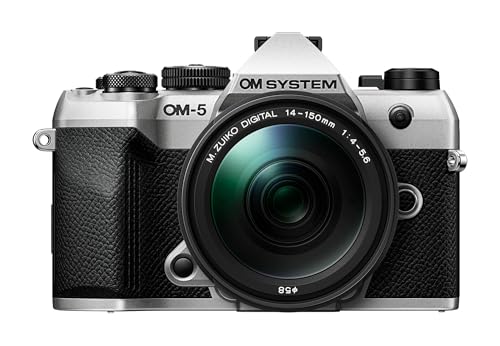
OM SYSTEM OM-5 Mark II — Best for macro depth
No system in this guide was born closer to the miniature bench. The Micro Four Thirds format’s smaller sensor is, at macro distances, an advantage disguised as a compromise: for the same framing it delivers deeper useable focus than larger sensors, which is the exact currency miniatures are poor in. Add the maker’s long macro heritage — lenses that focus to true macro magnifications, computational focus stacking and bracketing inherited from a line of cameras beloved by naturalists — and the OM-5 becomes the instrument for filmmakers who want a whole street of a diorama sharp, not a apologetic sliver of it.
The body itself suits the bench’s geography: compact, weather-sealed against the dust and scenic scatter of a modelling room, and happy on small tripods and sliders where a full-frame body would loom. Video is strong and stabilisation is excellent, which matters when the camera rides a slider at model height and every vibration is a landslide. The smaller sensor concedes the low-light crown to larger rivals, but miniature sets are lit deliberately, not found in the dark — the one genre where that concession barely bills you.
Painting-tutorial makers should look twice: the magnification on offer turns a brush tip and a figure’s eye into a full screen, and the focus tools let a demonstrator work with both hands in frame while the camera minds its own sharpness. For the filmmaker whose miniature world must be deep, detailed and dependable, this is the specialist the rest of the list measures itself against.
- Format: Micro Four Thirds mirrorless, compact interchangeable system
- Focus tools: computational focus stacking and bracketing modes
- Lenses: true macro options with high magnification
- Stabilisation: strong in-body system for slider and handheld bench work
- Build: weather-sealed, small enough for tight set geography
Strengths
- Deeper useable focus at macro framing than larger-sensor rivals.
- Focus stacking heritage serves thumbnails and detail stills beautifully.
- Small lenses and body fit inside a set’s geography without demolition.
Trade-offs
- Smaller sensor trails the field for filming in dim, found light.
- Video specification is strong rather than class-leading.
- The system’s charms reward commitment; casual dabblers may underuse them.
Best for: railway layouts, dioramas and any set that must be sharp front to back.
Not suited for: filming miniatures in near-darkness as a deliberate style.
Model engineers form this camera’s most demanding jury, and their verdict is worth borrowing: at exhibitions, where a layout must be filmed in hall light through a crowd’s shoulders, the OM-5’s combination of reach, depth and stabilisation produces the reference footage other exhibitors ask about. A camera that survives the exhibition circuit — dust, knocks, borrowed tripods, ten thousand questions — has passed an examination no laboratory offers, and it passes it with the same small bag it carried in.

Sony ZV-E10 II — Best all-round miniature video
For a miniature channel that must do everything — layout tours, painting close-ups, the maker’s face introducing both — this Sony is the complete sentence. Its 4K video is clean enough to crop, its product-showcase autofocus was practically designed for a hand presenting a finished model to the lens, and the E-mount catalogue includes genuine macro glass alongside the wide zooms a layout tour needs. Colour can be set to finished-in-camera, which keeps a weekly channel’s workflow to filming and posting rather than filming and grading.
Bench manners are strong: the flip screen frames a shot from behind the set, remote and app control fire the camera without a finger’s earthquake, and the body is small enough for the crowded geography of a workbench shelf. The absence of in-body stabilisation matters less here than anywhere — miniature cameras live on tripods, sliders and benches, the most stable habitats in filmmaking — and a stabilised macro or standard lens closes most of the remaining gap.
It concedes the OM SYSTEM’s computational focus wizardry and the Fujifilm’s cropping depth, and in exchange offers the fewest weaknesses across the whole miniature brief. Channels grow in unpredictable directions — today’s layout tour is next year’s product review — and the all-rounder’s insurance is that no direction embarrasses it. For most benches buying one camera, this is the one.
- Format: APS-C mirrorless body, E-mount lenses
- Video: clean 4K with creator picture profiles
- Autofocus: product-showcase mode for presenting models to camera
- Lenses: macro and wide options across a deep mount
- Control: flip screen plus app and remote operation
Strengths
- One body covers tours, tutorials and talking-to-camera equally well.
- Showcase focus presents a finished model without focus drama.
- Finished colour profiles keep a weekly posting rhythm light.
Trade-offs
- No in-body stabilisation for handheld bench work.
- Focus stacking tools trail the OM SYSTEM specialist.
- Menus reward a setup session before the first real shoot.
Best for: miniature channels that mix tours, tutorials and presentation.
Not suited for: pure macro specialists who live at maximum magnification.
There is a workflow detail that endears this body to weekly makers: tethered and app-based monitoring on a proper screen, so focus at macro distance is judged on a monitor rather than guessed on a three-inch display. At miniature scale, the difference between “probably sharp” and “provably sharp” is the difference between a take and a retake, and retakes at a glued, painted, finished set are the genre’s true cost. The Sony’s connectivity quietly pays for itself in un-rebuilt scenery.

DJI Osmo Pocket 3 — Best for moving shots
Every miniature filmmaker dreams the same shot: the camera flying at street level down a model high street, through the station, out over the harbour — the layout seen from inside itself. That shot is this DJI’s home address. The gimbal holds the horizon like a rail, the camera’s small head fits between buildings that would stop any mirrorless body, its close focus keeps the near street sharp, and subject tracking can hold a tiny locomotive as it runs the circuit. Footage that would take a slider, a crane and a prayer from other systems comes out of one hand and a slow walk.
Used as a static bench camera it is merely good — the lens is fixed and wide, magnification for painting detail is limited, and serious macro work belongs to the system bodies. But miniature filmmaking’s static shots are the easy half; the moving half is where productions live or die, and no other pick moves like this. Many benches will pair it with a system body and consider the pair, together, the complete miniature studio: one camera for the world, one for travelling through it.
The rotating screen deserves a practical note: at model height, framing is guesswork for every camera, and the Pocket’s screen — visible from above, from the side, from wherever the filmmaker is crouching — turns guesswork into composition. Add its painless wireless offload for reviewing takes on a big screen, and the little gimbal becomes the scout as well as the traveller: walk the route, watch it properly, then commit the good cameras to the shots that deserve them.
- Format: gimbal camera that fits a coat pocket
- Movement: smooth tracking shots at model height and scale
- Focus: close focus with subject tracking for moving models
- Screen: rotating touchscreen for awkward bench angles
- Sensor: large sensor for its size, strong in set lighting
Strengths
- Flies through a set where no other camera here physically fits.
- Gimbal steadiness turns a walk into a tracking shot.
- Screen visibility solves the framing problem at model height.
Trade-offs
- Fixed wide lens cannot do true macro or painting detail.
- Stills and long static takes are supporting roles only.
- The gimbal head asks for care around scenic scatter and glue.
Best for: layout tours, dollhouse walkthroughs and in-world travelling shots.
Not suited for: macro tutorials or maximum-magnification detail work.
Dollhouse creators have adopted it for a reason beyond smoothness: the camera can enter the house. Through a doorway, down a hallway, into a room whose ceiling would stop every other body in this guide — the Pocket films interiors from the inhabitant’s perspective, and the resulting walkthroughs have a storybook quality no external camera can imitate. For miniature real estate, stop-motion sets and any world built with interiors, that ability to go inside is not a feature on a list. It is the whole film.

Canon EOS R50 — Best for beginners at the bench
A first miniature channel has enough to learn — lighting, set craft, editing, the patience of glue — without apprenticing itself to a difficult camera. The R50’s guided menus, forgiving eye-and-subject autofocus and likeable default colour let a beginner’s early videos look intentional while the craft catches up. Its flip screen and app control serve the bench properly, and the RF mount’s macro options wait patiently for the day close focus becomes an obsession rather than an accident.
Value compounds the case. The money not spent on a specialist body buys the small lights, the slider and the scenic materials that miniature video is actually made of — a trade this guide endorses at every level, and beginners most of all. Stills for thumbnails and community posts are strong, and Canon’s colour flatters painted subjects, whose makers are famously sensitive to how their reds and skin tones survive filming.
Its limits are the honest ones of its class: no in-body stabilisation, computational focus tools absent, and low-light polish a step behind the leaders — all forgivable at a lit bench. What it offers instead is momentum, the beginner’s scarcest resource: videos finished, posted and improving, on a camera that never once made the process feel like an examination. Miniature hobbies are marathons of small evenings; this Canon is built to keep a beginner company for all of them.
- Format: APS-C mirrorless with guided interface
- Autofocus: subject detection that forgives beginner framing
- Screen: flip touchscreen plus app control for bench work
- Mount: Canon RF, macro lenses available as skills grow
- Video: 4K recording with friendly default colour
Strengths
- Guidance and forgiveness keep a first channel moving.
- Colour treats painted subjects with unusual respect.
- Leaves budget for the lights and tools the genre runs on.
Trade-offs
- No focus stacking or in-body stabilisation.
- Macro depth arrives only with a dedicated lens purchase.
- Low-light video is adequate rather than distinguished.
Best for: first layout channels, diorama diaries and learning filmmakers.
Not suited for: specialists needing computational focus or maximum macro reach today.
School and club benches deserve a line here, because the R50 has become a common sight in school maker spaces and modelling clubs: it survives communal handling, its guidance teaches while it records, and its price leaves the club’s budget alive for materials. The videos those benches produce — a term’s worth of bridges, railways and robots, documented as they grew — are exactly the archive such places exist to create, and a camera that makes the documenting effortless serves the institution as much as the hobbyist.

Fujifilm X-T5 — Best for detail and cropping
Resolution is usually a bragging right; at miniature scale it becomes a production tool. The X-T5’s high-resolution sensor lets a filmmaker shoot a whole diorama scene, then crop into a quarter of the frame for the close-up — two shots from one setup, with the set built once and the camera unmoved. For stop-motion-adjacent work, product films of finished models and any workflow where rebuilding the set is the expensive step, that cropping headroom is worth more than any single lens in the bag.
The traditional dials serve the bench’s slow craft: aperture set by a ring, shutter and sensitivity by knurled wheels, all readable at a glance in the set’s own light. Fujifilm’s macro-capable lenses and extension options cover the detail work, film simulations give finished models a colour character straight from the camera, and the tilting screen handles the low, in-world angles. Motion is a strong supporting act rather than the headline — this is the stills-led body of the six, and its video, while capable, asks a little more manual care than the Sony’s.
Choose it when the miniature work is precious and singular: the competition model, the museum-grade diorama, the product film where one perfect setup must yield a whole edit. Its files reward the archivist’s temperament, and its dials reward the craftsman’s. Benches that film weekly at speed should take the Sony; benches that film rarely and perfectly should take this, and keep it for decades.
- Format: high-resolution APS-C mirrorless
- Files: resolution headroom for cropping into scenes
- Controls: traditional dials for aperture, shutter and sensitivity
- Lenses: macro options and a deep prime catalogue
- Colour: film simulations with character for finished models
Strengths
- Cropping turns one set build into several finished shots.
- Dial control suits slow, deliberate bench craft.
- Files archive beautifully for portfolio and print.
Trade-offs
- Video autofocus and tools trail the creator-led Sony.
- High resolution magnifies any focus error at macro range.
- No computational focus stacking of the OM SYSTEM kind.
Best for: precious builds, product films and crop-heavy workflows.
Not suited for: fast weekly channels that need video to run itself.
Museum and competition photographers form this body’s natural constituency beyond the bench: the builders whose models travel to be judged, and who need files that honour a year’s workmanship in a single frame. The X-T5’s resolution and colour have a gravitas that suits that duty — and its dials, worked slowly in a quiet room, match the temperament of people who measure success in hundreds of hours per square inch. Some cameras are bought for output; this one is bought for respect.

Nikon Z30 — Best compact desk setup
Some miniature cameras should disappear into the furniture of the bench, and the Z30 is the disappearing kind: a small, screen-first body that mounts above a painting desk or inside a layout room’s corner and stays there, ready for the session, the stream and the work-in-progress update. Long recording times suit the genre’s real rhythms — a two-hour painting session, a layout build filmed start to finish — and the wide kit lens frames a whole workbench without evicting the modeller from it.
Nikon’s colour and low-light grace flatter both painted subjects and the maker’s hands, and the Z mount borrows serious macro glass on the days a detail shot justifies it. The limits are the known ones of its size: no viewfinder, modest burst and tracking, a single card. At a fixed bench, none of those bite the way they would in the field; the Z30’s design assumes a home base, and miniature filmmaking is the most home-based genre in this entire series of guides.
Streamers of the miniature arts — the live painting sessions and build-alongs that communities gather around — may find this the most natural pick of the six. It asks for no operator, forgives a long evening, and produces a picture of the bench that looks like the bench feels: lamplight, concentration, small things becoming beautiful slowly. That is a harder effect to buy than sharpness, and this little Nikon sells it cheaply.
- Format: small APS-C mirrorless, screen-first
- Recording: long continuous takes for builds and painting sessions
- Screen: articulating, faces the maker
- Mount: Nikon Z, macro glass available to borrow
- Kit: wide zoom that frames a whole bench
Strengths
- Lives above the bench permanently, always session-ready.
- Long recording matches the genre’s unhurried rhythms.
- Streams and build-alongs look warm and composed.
Trade-offs
- No viewfinder and no in-body stabilisation.
- Macro excellence requires borrowing or buying Z macro glass.
- One card slot means a download routine is part of the deal.
Best for: painting desks, build-along streams and permanent bench setups.
Not suited for: roaming layout tours or maximum-magnification macro work.
Night-shift hobbyists — the painters whose bench time begins when the house sleeps — may understand this camera best. It waits in the dark corner without complaint, starts without ceremony, and records a quiet hour of brushwork in lamplight that looks like the hour felt. Filming a solitary craft at midnight is a peculiar genre, half diary and half meditation, and the Z30’s unobtrusive residence above the desk serves it better than any flagship’s brilliance could.
How Do the Six Miniature Cameras Compare at the Bench?
| Camera | Bench speciality | Depth-of-field story | Movement style | Biggest caution |
|---|---|---|---|---|
| OM SYSTEM OM-5 Mark II | Macro and stacking | Deepest useable focus | Slider and tripod | Dim found light |
| Sony ZV-E10 II | All-round channel work | Lens-dependent, honest | Tripod, slider, handheld | No in-body stabilisation |
| DJI Osmo Pocket 3 | Travelling shots | Wide and forgiving | Handheld flight through sets | No true macro |
| Canon EOS R50 | Beginner channels | Kit now, macro later | Tripod and bench | Tools are basic |
| Fujifilm X-T5 | Detail and cropping | Shallow but precise | Locked-off and deliberate | Video needs manual care |
| Nikon Z30 | Permanent desk rig | Kit-lens depth, graceful | Fixed above the bench | No viewfinder |
One absence in the table should be explained: no action cameras, no phones, no webcams, though all three appear on real benches. Their focus behaviour at macro distance and their refusal of manual control disqualify them from a genre whose first commandment is that the filmmaker, not the device, decides what is sharp. The OBSBOT-style tracking webcams tempt streamers, but at miniature range their cleverness hunts; the honest desk cameras above out-serve them.
The depth-of-field column is the table’s honest core. Miniature filmmakers spend their lives negotiating with focus — stacking it, stopping down for it, designing sets that hide its absence — and each row above represents a different treaty with that physics. Read the column against your sets: a deep-focus railway and a shallow-focus portrait of a single figure are different art forms sharing a workbench.
How Should You Light and Move a Camera in a World Four Inches Tall?
Light a miniature the way the sun lights a valley: one strong direction, softened by distance, with the shadows allowed to be long. Small LED panels placed low and to the side give a diorama its morning; a big soft source overhead gives it a warehouse. Keep the light still and move the camera instead, because moving light on a static set reads as weather changing mid-scene. For movement, think in model scale — a push-in of ten centimetres is a journey — and let a slider, a lazy Susan under the subject, or the DJI’s gimbal supply the motion while your hands stay off the set entirely. Remote control is not a convenience in this genre; it is earthquake prevention.
Backgrounds deserve the same discipline as light. A miniature filmed against the visible clutter of a real room — the mug, the bookshelf, the window — collapses in scale instantly, because the eye reads the background’s size before the subject’s. A plain backdrop, a sky board, or a set deep enough to fill the frame keeps the illusion sealed. The cameras’ flip screens earn their keep here too, showing the filmmaker the frame’s edges, where scale-breaking intruders always enter first.
Focus technique finishes the lesson. Place focus on the story’s subject — the figure’s face, the signal, the shop sign — and let the rest fall where physics puts it, or stop down and stack for the deep-focus look and accept the longer craft. What you must not do is let the camera choose: autofocus left to its own devices at macro range will choose the nearest rivet, every time, with total confidence.
What Mistakes Shrink a Miniature World Back Into a Toy?
Before the specific errors, a general one: impatience. Miniature sets take weeks to build and minutes to film badly, and the temptation to shoot the moment the glue dries — in room light, by hand, at the wrong height — has ruined more first films than any equipment gap. The cameras in this guide cannot supply patience, but their remotes, screens and stacking tools all reward it, which is the closest a buying guide can come to teaching it.
Lighting it like a product on a white background is the first and commonest: bright, flat, shadowless light announces “model” to the brain faster than any other cue, while one directional source with honest shadows whispers “place.” Second comes touching the set to adjust the camera — the fingerprint on the road surface, the nudged figure — when remotes and apps exist precisely to keep hands out of the world. Third, filmmakers shoot at human height and human speed, then wonder why the footage feels like a drone over a toy fair; the camera must live at the inhabitants’ eye level and travel at their pace.
A fourth mistake is subtler: filming the miniature at the frame rates and shutter habits of full-size life, so motion blurs at the wrong scale and a model train’s wheels smear like a racing car’s. Small worlds move in small time; crisper shutter behaviour keeps their mechanics believable. Like everything in this genre, the setting is not right or wrong in itself — it is right or wrong at four inches tall.
Depth-of-field carelessness completes the set: a razor-thin plane of focus wandering across a street destroys scale more thoroughly than any other error, because real worlds are sharp in depth and only photographs of small things are not. Fight it with aperture, distance, stacking and set design — or embrace it deliberately as the tilt-shift look — but never let it happen to you by accident while the camera was choosing.
How Do the Main Miniature Crafts Differ Behind the Camera?
Model railways are cinema at landscape scale: the camera travels, the world is deep, and focus must hold a valley, not a face — the OM SYSTEM’s depth and the DJI’s travelling shots divide that kingdom between them. Gaming miniatures are portraiture at insect scale, where one painted eye carries the film and magnification is the whole game; the Sony’s showcase focus and the Fujifilm’s cropping serve that altar. Dollhouses are architecture, asking for interiors, verticals and a camera small enough to live in the rooms it films. Product films of finished models are advertising in miniature, where colour truth and clean backgrounds outrank every other virtue.
Exhibition filming scrambles the crafts into a fifth: the layout under hall lights, filmed between visitors, with no control over anything except the camera. There, stabilisation, depth and a body that starts instantly outrank every bench virtue, and the OM SYSTEM and the little DJI divide the honours. Makers who exhibit should weight those two verdicts double and treat the rest of the list as home form.
The crafts share a bench but not a camera, which is why this guide refuses a single winner with unusual firmness. A filmmaker who names their craft honestly can stop reading at the matching verdict; a filmmaker with three crafts should buy the all-rounder and borrow the specialists’ tricks — the slider, the stacking, the in-world walk — one at a time, as each production demands.
What About Stop Motion and Time-Lapse at Miniature Scale?
Adjacent crafts lean on the same bodies differently. Stop motion wants a camera that can be tethered, triggered without touch, and trusted to hold every setting — exposure, focus, white balance — absolutely still across a thousand frames, because any drift reads as flicker, and flicker is the amateur’s signature. The system bodies here all serve, with the dials-and-manual Fujifilm and the computational OM SYSTEM the natural elders of that parish. Time-lapse of a build — the layout rising over a winter, the diorama weathering over a month — wants interval recording, external power and a body content to live above the bench, which is the Nikon Z30’s exact description of itself.
Power is the stop-motion detail nobody budgets for: a camera on battery across a three-day sequence will drift, die or be disturbed at the battery change, so mains adapters and dummy batteries are the parish’s quiet sacraments. Every system body here accepts them. The bench that films time should wire its camera like it wires its lights — permanently, and before the first frame rather than after the first failure.
Both crafts reward the same unglamorous accessory above all others: a remote or an app, because the frame you do not touch is the frame that does not move. Miniature filmmakers learn this in their first week, usually by ruining a sequence that took an evening to pose. The cameras in this guide all offer the escape; the discipline of using it is the filmmaker’s own contribution.
How Should a Miniature Filmmaker Grow Across the First Year?
Spend the first season on light and stillness: one panel, one direction, locked-off shots that teach the eye what scale looks like when it succeeds. The second season adds movement — a slider, then the travelling shot — because motion exposes every weakness the locked frame forgave. Glass comes third, when the bench knows whether its hunger is magnification or width, and only then does a second body earn discussion, usually as the specialist partner to the all-rounder the year began with.
Keep the early footage. Miniature filmmakers improve faster than almost any other kind, because the feedback is microscopic and undeniable — focus, light and scale either convince or they do not — and the distance between the first layout tour and the twelfth is the most encouraging archive a hobby produces. The cameras above were chosen to still be worthy at the twelfth, which is the only growth criterion that matters.
Where Should a Miniature Budget Go First?
Miniature video has the healthiest budget arithmetic in filmmaking, because its decisive tools are cheap: a small panel light, a slider, a backdrop board and a remote together cost less than most lenses, and they improve footage more than any body upgrade on this page. The sensible order is therefore body first — any of the six — then light, then support, then the macro lens, then, much later and only if the channel demands it, a second body for the travelling shots. Filmmakers who invert that order own magnificent cameras filming badly lit worlds, a combination the audience reads instantly and forgives never.
Second-hand macro glass is the budget’s secret ally. Macro lenses are bought by photographers in a fit of ambition and sold in mint condition by the same photographers a year later, because macro is a discipline and disciplines shed dabblers. A used macro on a new body is the miniature filmmaker’s classic arbitrage, and every mount in this guide has a deep used shelf to arbitrage from. Bodies are the opposite case: buy those new and warrantied, because they will live among glue, paint and scenic scatter for years.
What Does a Finished Miniature Production Actually Need?
Less than its maker fears. A layout film needs a travelling shot, a handful of locked scenes with honest depth, one human moment — hands, a face, the maker’s satisfaction — and an edit that respects the world’s scale in every cut. A painting film needs magnification that honours the brush, colour that respects the painter, and the patience to let a technique occupy the screen for as long as it occupied the desk. In both cases the camera’s job is fidelity to a craft that happened elsewhere, at another scale, and the bodies in this guide were chosen for exactly that fidelity: they disappear, and the world remains.
It is worth pausing on how forgiving this genre is of everything except its core demands. A miniature film can be silent, short, imperfectly exposed and oddly framed, and still hold an audience completely, provided the world convinces. Conversely, the most polished production values cannot rescue a set the eye refuses to believe. That asymmetry is the miniature filmmaker’s freedom: spend your perfectionism on the illusion’s foundations — focus, light, scale — and let everything else be as rough as the schedule demands.
That disappearance is the final test this guide applied, and the hardest to fake. A camera that announces itself — hunting focus, breathing frames, screens too dim to trust, controls that need the set disturbed — breaks the miniature illusion from behind the lens. A camera that serves quietly lets a four-inch street hold an audience for ten minutes. All six picks pass that test in their own parish; the verdicts exist to match the parish to the priest.
Final Recommendation
Specialists should start with the OM SYSTEM OM-5 Mark II, whose focus depth and stacking tools were practically invented for this bench. Channels that mix every kind of miniature content belong with the Sony ZV-E10 II, and any filmmaker dreaming of travelling shots through the set should add — or start with — the DJI Osmo Pocket 3. Beginners will finish more videos on the Canon EOS R50, archivists of precious builds will treasure the Fujifilm X-T5’s cropping depth, and permanent painting desks deserve the Nikon Z30’s quiet residence. If two picks still tie after all this, let the tie be broken by your hands: the bench is a tactile place, and the camera whose controls your fingers trust in the dark of a layout room will produce the steadier footage. Specifications end arguments on paper; at four inches from a finished world, trust is a specification too. Whichever body takes the bench, spend the next money on light and a slider: the best cameras for shooting miniatures video are the ones given a world worth filming, at the scale the world was built.
Related guides
Frequently Asked Questions
How close can these cameras focus?
Close enough, with the right glass, to fill a frame with a figure’s head — but the honest answer is that focus distance is a lens specification, not a body one, which is why every verdict above discusses the mount alongside the camera. Judge a system by its closest-focusing lens you would actually buy, and test that pair, together, on your own models before committing.
Do I need a macro lens for miniatures video?
For painting detail and true close-ups, yes — a macro lens is the genre’s defining glass, and the system bodies here all offer one. For layout tours and room-scale dioramas, a standard lens that focuses reasonably close covers most shots, which is why the guide separates the benches: know which miniature world is yours before buying glass for the other one.
Why does my miniature footage look like a toy?
Usually three culprits conspire: flat overhead light, a camera positioned at human height, and depth of field too thin for the scene. Fix them in that order — one directional light, the camera at the inhabitants’ eye level, and focus managed by aperture or stacking — and the same set starts reading as a place.
Can I film miniatures with a phone instead?
For casual clips, phones do surprisingly well at moderate distances. They fall behind exactly where this genre lives: trustworthy close focus, controlled depth of field, remote operation and clean cropping. The moment a miniature project becomes a channel or a portfolio, the bodies here repay their cost in retakes alone.
What is focus stacking and do I need it for video?
Stacking combines several frames focused at different depths into one image sharp throughout. It is a stills technique — superb for thumbnails, channel art and detail photographs, which is why the OM SYSTEM’s tools matter — while video achieves depth through aperture, distance and set design instead. Treat stacking as your stills superpower, not a video requirement.
What tripod or support suits a miniature bench?
A small, stiff tripod with a smooth video head, or a tabletop slider — rigidity matters more than height, because at macro distances a cheap tripod’s tremor is a landslide. Many benches add a lazy Susan beneath the subject for rotation shots and a monitor arm to hold the camera inside a set’s geography. Spend on the support before the second lens; the footage will show it sooner.
How do I film a moving model train smoothly?
Track it with the DJI’s subject tracking for the in-world shot, or pace it from a slider with a system body for the lineside shot — and match the camera’s movement to the train’s scale speed, not its real one. A slow, steady pass sells a heavy locomotive; a hurried pan sells a toy on a table.
One last encouragement, addressed to the filmmaker whose bench is currently a corner of a kitchen table: the great miniature films were not made in studios. They were made in corners, over winters, by people whose cameras were chosen well once and then forgotten about — which is the highest state a camera in this genre can achieve. Choose yours, light your world kindly, and get on with the important business of building the next street.
Related Guides
The miniature bench connects to several larger crafts. Makers filming their builds should read our guide to cameras for product and craft videos, while railway and diorama specialists will find our macro photography camera picks deepen the close-focus argument. And when the set deserves an audience beyond the bench, our tabletop video lighting guide covers the small lights that make small worlds believable. Start small, in every sense: one world, one camera, one light — and let the films grow at the pace the craft itself grows, which is slowly, beautifully, and an inch at a time. Your audience, when it finds you, will not ask what the films were shot on. It will ask when the next street opens, when the harbour is finished, when the little people get their railway — and that is the question every camera in this guide was chosen to help you answer, season after season, exhibition after exhibition, one small, convincing, beautifully lit world at a time — which is, in the end, the only production schedule this hobby has ever honoured or needed.


