kajuandouglas.com is reader-supported. When you buy through links on our site, we may earn an affiliate commission.
Where to Buy a Camera for Your Quadcopter, and Why Weight Is the First Specification
The best cameras for quadcopter flying live under a tyranny no other camera genre knows: gravity, itemised. Every gram a camera adds to a drone is paid for in flight time, agility and motor strain, and the pilot feels the invoice in the sticks within the first minute. So this guide ranks six action cameras for quadcopter duty by the only order that matters in the air — footage quality per gram, stabilisation that survives propeller vibration, and toughness for the landings that are really controlled crashes — whether the quad is a camera drone moonlighting as a subject, an FPV freestyle rig, or a hobby quad asked to carry an eye it was never designed for.
Two different sports hide inside this search, and the picks divide between them honestly. The first is the carried camera: a quadcopter — often a larger hobby or cine quad — lifting an action camera as its main eye, where the footage is the product and the drone is the tripod that flies. The second is the FPV world, where small, naked or stripped cameras ride freestyle and racing quads, and the footage is the flight’s black-box diary and showreel in one. Both sports worship at the same altar of grams and glass; they differ in how much camera the frame can honestly carry, and this guide says which pick belongs to which sky.
One honesty before the ranking: the famous camera drones carry their own integrated cameras, and nothing in this guide bolts onto them to improve matters — this is a guide for quads that carry a separate camera, the hobby and FPV fleets. If your aircraft’s camera is built in, your upgrade path is a different aircraft. If your aircraft has a mount, a strap or a 3D-printed cradle waiting, read on: the six below are the eyes that fleet actually flies.
Regulations deserve their sentence early, because they shape the weight conversation legally as well as aerodynamically: many jurisdictions draw registration and category lines at specific all-up weights, and a camera that pushes a quad across one of those lines changes the pilot’s obligations, not just the flight time. Know your local rules, weigh the whole aircraft with the camera fitted, and let the legal all-up weight be one of the numbers on your shopping list. The sky is shared; the paperwork is part of flying.
Key Takeaways
- On a quadcopter, footage quality per gram is the only honest ranking metric.
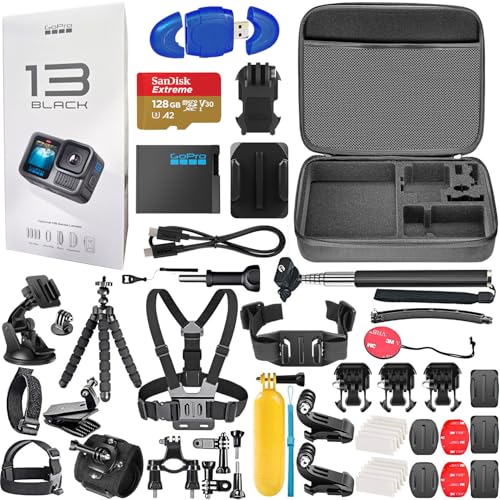
- The GoPro HERO13 Black is the carried-camera standard: the footage FPV and cine quads are judged by.
- The Insta360 X4 turns one flight into every angle — reframe after landing.
- The DJI Osmo Action 5 Pro brings long battery life for a full session of packs.
- The AKASO Brave 7 LE is the crash-economics pick: fly it where losing a camera is likely.
- Weigh the whole aircraft with the camera fitted — legal weight classes are real.
In this guide
Quick Picks
| Camera | Badge | Why pilots mount it |
|---|---|---|
| GoPro HERO13 Black | Best carried camera overall | The reference footage for quads, with stabilisation that eats vibration for breakfast. |
| Insta360 X4 | Best for reframed flight films | 360 capture means the perfect line is chosen in the edit, not in the air. |
| DJI Osmo Action 5 Pro | Best session endurance | Battery life that outlasts a bag of flight packs, with colour editors respect. |
| Insta360 Ace Pro 2 | Best low-light flights | Dusk sessions and shaded forests stay clean where rivals smear. |
| GoPro HERO12 Black | Best proven FPV workhorse | The previous flagship, flown by everyone, with a mountain of mounts and knowledge. |
| AKASO Brave 7 LE | Best crash-budget camera | Honest footage at a price that lets a learner risk it on a learner’s quad. |
How Did We Choose These Cameras for Quadcopter Duty?
Weight and footage were scored as a ratio, never separately. A camera that films like a cinema rig and weighs like one is a paperweight to a 5-inch quad; a feather that films mush is a diary nobody watches. The six below sit on the useful frontier of that trade — from the full-fat flagships a cine quad carries proudly to the budget body whose entire virtue is that its loss would not end a season.
Stabilisation was judged against the quad’s specific violence. Propeller vibration is high-frequency and relentless, a different enemy from a walker’s sway, and the electronic systems here were weighed for how their footage behaves when the airframe is buzzing at full song. Pilots also fly with stabilisation applied in post from gyro data, so a camera’s cooperation with that workflow — clean gyro tracks, predictable files — counted as heavily as its onboard smoothing.
Mounting reality formed the third test. The quad world runs on a shared grammar of mounts, cases and printed cradles, and cameras inside that grammar inherit a thousand solutions: the flagship shapes with their universal accessories, the 360 body with its specific guards, the budget body with its waterproof case doing double duty as a crash shell. A camera that fits the fleet’s hardware is worth real money in the field, where the alternative is tape and hope.
Finally, crash economics — the genre’s unmentionable specification. Quadcopters meet the ground at speed as a condition of employment, and the camera is the most fragile expensive thing aboard. We weighed repairability, case protection, lens vulnerability and sheer replaceability, because the best quad camera is partly the one whose funeral the pilot can afford. That honesty is why a budget pick stands in this list beside flagships without embarrassment.
What Does a Quadcopter Do to a Camera?
It vibrates it at frequencies the camera was never designed around, and the footage shows the assault as jello: the rolling-shutter wobble that turns straight lines to jelly when the airframe buzzes. The defences are a stack — balanced props, a mount with a whisper of isolation, a camera whose stabilisation and shutter behaviour handle the residue — and pilots learn to read jello as a diagnostic: this frequency, this mount, this prop. These are the ones the FPV community has collectively taught to survive that stack.
It exposes the camera to weather at speed. A quad flies through the air it films, meeting drizzle as horizontal rain, dust as a sandblast, and cold as a battery problem doubled — the camera’s cells and the aircraft’s cells fading together on a winter morning. Sealed action bodies are not a luxury in this genre; they are the entry ticket, which is why this guide’s pool is action cameras entire. Anything with a protruding lens or an opening port lives on a quad borrowed-time-first.
It also subjects the camera to the landing distribution: mostly gentle, occasionally a tumble through a tree’s committee of branches, rarely but memorably a full-speed appointment with the one rock in the field. Lens position decides survival — recessed and cased lenses walk away from meetings that scar exposed 360 glass — and the mounting position on the frame decides whether the camera is the crumple zone or is sheltered by it. Pilots who mount with the crash in mind keep their cameras for seasons; the footage shows that, too, in its continuity.
And it asks the camera to be two instruments: the eye that makes the film, and the recorder that explains the flight. Rates, lines, the moment the branch arrived — the quad camera’s footage is the debrief as well as the showreel, which is why pilots favour cameras whose files are predictable, time-honest and easy to sync with flight logs. A quadcopter camera is a witness that flies. Choose witnesses with care.
How Do You Mount and Set Up a Camera on a Quad?
Start with the all-up truth: weigh the aircraft complete — camera, mount, case, strap — and fly the number against the quad’s character honestly. A camera that costs a cine quad a minute of flight is a fair trade for the footage; the same camera on a freestyle rig can cost the snap that makes the trick, and pilots feel that cost in their thumbs before any scale reports it. When the footage matters more than the flight, carry the flagship. When the flight is the footage, carry the lightest honest eye.
Settings on a quad are set-and-trust: the camera cannot be adjusted mid-flight, so its exposure discipline must be chosen on the ground for the sky’s whole range — the shaded forest floor and the sunlit climb in one battery. Locked or capped exposure strategies, ND filters for the bright days to keep shutter speeds cinematic, and frame rates chosen for the slow-motion the edit will want: these decisions are the pilot’s cinematography, made with the props still. The cameras here reward that preparation with predictable files; unpredictability at altitude is a tax nobody can pay twice.
Protect the lens like the investment it is. A sacrificial filter or the case’s lens cover takes the stone chip, the branch kiss, the landing’s gravel spray — each a funeral for unprotected glass and a shrug for protected. 360 pilots accept a stitch-line compromise for guarded lenses; flat-lens pilots accept the filter’s tiny weight. Both are cheaper than the alternative, which the crash-economics section of this guide has already priced.
Finally, rehearse the failure: a camera that departs the aircraft mid-flight should be findable — bright tape, a buzzer’s friendship, a last-known line on the flight footage. The field always collects its tuition; the prepared pilot pays in tape rather than in cameras. Mount like you will crash, set like you cannot adjust, protect like glass is mortal — because on a quadcopter, all three are simply true.

GoPro HERO13 Black — Best carried camera overall
The HERO13 Black is the camera the quad world measures itself against, for reasons that compound: the footage — sharp, colour-honest, with stabilisation that has eaten a decade of propeller vibration and asked for more — the accessory grammar of mounts and cases that every frame designer assumes, and the gyro data that post-stabilisation tools drink like they were designed together, which in spirit they were. When a cine quad or a freestyle rig carries one camera for the footage that matters, this is the default shape of that decision.
Its generation’s refinements serve pilots specifically: lens options that change the eye’s character without changing the aircraft, battery and thermal manners improved for the long session, and a body whose toughness has been crash-certified by a global fleet of amateurs volunteering their worst landings as data. The footage intercuts with the previous generation’s seamlessly, which matters to fleets standardised across years.
The costs are the flagship’s costs, financial and gravitational: it is the dearest way to put an eye on a quad, and its full-fat weight is a real line item on a small frame’s budget. Pilots answer the first with the footage and the second with honesty — the HERO13 belongs on quads built to carry it, and forcing it onto a featherweight frame makes both aircraft and camera worse.
For the pilot whose quad exists to bring back film — the cine lifter, the freestyle showreel, the travel quad’s main eye — the HERO13 is the professional answer in this pool, and the one the other five are ranked against.
- Footage: reference sharpness and colour
- Stabilisation: onboard plus gyro-data workflow
- System: universal mount and case grammar
- Build: waterproof, crash-proven toughness
Strengths
- The footage every quad film is judged by.
- Survives the genre’s landing distribution.
- Accessories exist for every frame ever built.
Trade-offs
- Flagship price rides on a crash-prone aircraft.
- Full weight taxes small frames’ flight time.
- Best results reward post-stabilisation skill.
Best for: cine quads and freestyle showreels. Not suited for: ultralight frames where grams rule alone.

Insta360 X4 — Best for reframed flight films
The X4 changes what a quad flight is for. Instead of aiming a camera, the pilot flies a sphere of vision: every direction recorded at once, the line chosen afterwards in the edit, the impossible shot — looking back at the quad, down the dive, across at the chase — extracted from a flight that only had to be flown once, well. For travel films, chase footage and the freestyle line that deserves three angles, that reframing freedom is a genre of its own.
On the airframe it asks for respect: the twin lenses are its eyes and its vulnerability, guarded lenses are near-mandatory for quad duty, and its weight sits in the middleweight class — a cine or larger freestyle quad’s passenger, not a toothpick’s. The footage’s stitch and resolution reward the larger screen and punish nothing; the workflow’s reframing stage is the honest price, paid in editing time for angles no other single camera can sell.
Its invisible-stick trick translates oddly and wonderfully to quads: the mount disappears from the sphere, and the footage floats as if the camera were flying alone — which, in the edit’s fiction, it is. Chase pilots and travel filmmakers have built signature looks on exactly that fiction.
Choose the X4 when the film matters more than the flight log: when one pass must yield the whole story, when the pilot is also the director and refuses to choose angles at 100 km/h. It is the most editorial camera in this guide, and editors who fly swear by it in proportion.
- Capture: full 360, reframed in edit
- Lenses: guards strongly advised for quads
- Effect: mount invisible in the footage
- Class: middleweight — larger frames
Strengths
- Every angle from a single flight.
- Impossible shots become editing choices.
- A signature look no flat camera copies.
Trade-offs
- Exposed lenses and quads are uneasy partners.
- Reframing adds an editing stage per flight.
- Too heavy for the smallest frames.
Best for: travel films, chase footage and one-pass storytelling. Not suited for: crash-heavy freestyle practice.

DJI Osmo Action 5 Pro — Best session endurance
A quad session is a rhythm of packs: fly four minutes, land, swap, repeat — while the camera, ideally, simply keeps being ready. The Osmo Action 5 Pro’s battery life breaks that rhythm’s tyranny: it outlasts a whole bag of flight batteries, so the camera stops being a consumable to manage and becomes the session’s constant. For pilots who measure a day in dozens of flights, that endurance is a workflow feature worth more than a resolution line.
Its footage carries DJI’s colour discipline — consistent, editor-friendly, and notably composed in the mixed light under trees and between buildings where quads live. Stabilisation is strong, the dual screens make ground checks quick, and the body shrugs weather that would send lesser cameras into the bag. DJI’s own aircraft heritage shows in the details pilots notice: the camera behaves like it was designed by people who have met a propeller.
The compromises are ecosystem-shaped: its accessory world, while growing, does not yet match GoPro’s universal grammar, so exotic mounts may need adaptation; and its gyro-data workflow, while supported, is younger than the incumbent’s. Neither troubles the pilot who values the session’s flow over the catalogue’s depth.
For the high-volume flyer — the club regular, the coach, the travel pilot shooting all day — the Action 5 Pro is the endurance professional: always awake, always consistent, and still recording when the last flight pack comes home.
- Battery: the session’s longest watch
- Colour: consistent, editor-friendly
- Screens: front and rear for quick checks
- Build: weather-ready action body
Strengths
- Outlasts the flight batteries it serves.
- Footage consistency across a long day.
- Designed by a house that knows aircraft.
Trade-offs
- Accessory grammar younger than GoPro’s.
- Post-stabilisation ecosystem still growing.
- Premium price for a crash-exposed role.
Best for: all-day sessions and high-volume flying. Not suited for: pilots deep in the GoPro mount ecosystem.

Insta360 Ace Pro 2 — Best low-light flights
Some of the best flying light is the light other cameras cannot use: the last twenty minutes of the day when the air calms and the sky performs, the forest interior where the freestyle lines live in permanent dusk, the night session under the field’s floodlights. The Ace Pro 2’s low-light footage — clean, coloured, stable — claims that territory for quad work. Where rivals smear the trees into watercolour, it keeps the line readable and the film worth keeping.
Its action body keeps the rest of the quad brief: compact, case-friendly, with a flip screen that makes the ground checks and the pilot’s own pieces to camera easy between packs. Stabilisation is strong, and its processing leans toward footage that reaches the phone quickly — the session’s best flight shared before the batteries are even cool.
The honest edges are its price — a premium body on a crash-exposed aircraft is a decision, not a default — and an accessory grammar still younger than the GoPro standard it challenges. Its weight sits in the flagship class, so the frames that carry it should be chosen with the same honesty as the HERO13’s.
For the pilot whose signature is the golden-hour session and the forest line, the Ace Pro 2 is the specialist that turns the day’s most beautiful and difficult light into the showreel’s best thirty seconds. Specialists earn their place by owning a shift; this one owns the dusk.
- Low light: class-leading clarity
- Body: compact with flip screen
- Stabilisation: strong for forest lines
- Workflow: fast to phone for sharing
Strengths
- Dusk and forest footage stays filmable.
- Small body, big-camera results.
- Quick sharing suits club flying.
Trade-offs
- Premium price in a crash-exposed seat.
- Mount ecosystem still maturing.
- Flagship-class weight for small frames.
Best for: golden-hour and forest flying. Not suited for: budget builds or crash-heavy learning.

GoPro HERO12 Black — Best proven FPV workhorse
The HERO12 Black is the camera a generation of quad pilots already owns, trusts and has crashed in every available way — and that collective experience is itself a specification. Every mount exists, every setting’s consequence is documented in a thousand forum threads, every frame designer assumes its shape. On a quad, where the field’s knowledge is the real manual, flying the known camera is a professional decision, not a failure of ambition.
Its footage remains genuinely excellent: the stabilisation, the colour, the gyro workflow that post-production tools are built around. For freestyle and travel work it lacks nothing its successor’s owners can point to on a screen and name. Its long battery options and time-warp habits serve the scenic quad as happily as its toughness serves the freestyle one.
The generational gaps are real but modest — refinements in endurance, lens options and thermal manners rather than a different class of footage — and the second-hand market prices them accordingly, which is precisely why the HERO12 is the smart fleet purchase: two proven bodies for a flagship’s money is a crash-economics argument no pilot needs explained twice.
Standardise on it if your fleet, your club or your budget values the known over the new. In a genre where the aircraft provides enough novelty per flight, a camera that never surprises is a form of luxury.
- Footage: proven flagship quality
- Knowledge: every setting documented by the fleet
- Mounts: the universal grammar, complete
- Value: strong on the second-hand market
Strengths
- The most field-proven quad camera here.
- Footage a generation of films stands on.
- Fleet buying at sensible money.
Trade-offs
- A generation behind in refinements.
- Same flagship weight class as its successor.
- Thermal manners good, not class-leading.
Best for: fleets, clubs and freestyle regulars. Not suited for: pilots chasing the newest lens options.

AKASO Brave 7 LE — Best crash-budget camera
Every quad pilot’s education includes a semester of gravity, and the Brave 7 LE is the camera priced for the tuition. Its footage is honest — clear, stabilised, entirely presentable — and its cost is low enough that the learner’s quad can carry it into the trees, the gates and the ground at the speed learning requires, without each lesson carrying a flagship’s funeral expenses. That is not a small virtue in this genre; it is the virtue that keeps beginners flying.
Its weather-sealed build and included case serve the quad life directly — the case is a crash shell as much as a diving shell — and its dual-screen arrangement helps the ground checks. Mounted on a first freestyle quad or a club trainer, it records the flights that matter most to a pilot’s development: the ones reviewed to learn why the tree won.
The compromises are the budget’s usual ones, honestly worn: footage a clear class below the flagships in detail and low light, stabilisation that handles cruising better than chaos, and an accessory world thinner than the leaders’. A pilot who outgrows it will know exactly when — the footage, not the marketing, will say so — and by then it retires to the trainer quad with honour.
Buy it for the learning fleet, the risky line, the borrowed quad, the day you are teaching a friend. The Brave 7 LE exists so that courage stays affordable — and in a hobby where courage is the curriculum, that makes it a serious camera.
- Value: footage per cost, class-leading
- Build: weather-sealed with case included
- Screens: dual for easy checks
- Role: trainers and learning fleets
Strengths
- Crashable without financial drama.
- Honest footage for learning review.
- Case doubles as crash protection.
Trade-offs
- Detail and low light below the flagships.
- Stabilisation prefers cruising to chaos.
- Thinner accessory ecosystem.
Best for: learners, trainers and risky lines. Not suited for: client films or showreel finals.
How Do Weather and Season Rewrite the Camera Brief?
Wind is the quad camera’s first weather: it tilts the aircraft into its work, eats the battery that stabilisation and flight share, and writes a shake into the footage that no post tool fully irons. The cinematic pilot treats wind as a scheduling fact — the calm at dawn and dusk is the film’s studio — while the freestyle pilot treats it as an opponent whose gusts are part of the line’s difficulty. Cameras divide by their manners in it: the heavier flagships’ footage holds its composure longer into a rising wind, while the light rigs call the session earlier. Know your pairing’s honest ceiling and the weather stops ruining films and starts casting them.
Cold is the second: lithium chemistry, the camera’s and the aircraft’s alike, fades in winter, and the session shrinks from both ends. The endurance pick in this guide earns a winter premium for exactly that arithmetic, and the field ritual — batteries warmed in a pocket, the camera’s own cell kept kind until the props spin — is the difference between a January showreel and a January story about a camera that slept. Winter light, low and golden all day, rewards the pilots whose discipline survives it.
Rain ends most sessions and should: the quads in this hobby are rarely as waterproof as the cameras riding them, and a camera that survives a drenching its aircraft did not is a camera filming a funeral. The action bodies’ sealing serves the drizzle-mist and the landing in wet grass, the splash zone of the hobby’s ordinary life — not a licence to fly into weather. Read the sky like a pilot first and a cinematographer second; the order matters and the footage will show it.
Summer writes the opposite brief: heat in the camera at the hover, glare that demands the ND discipline, thermals that make the cine quad dance. Each season, in other words, re-ranks this guide slightly — and the pilot who owns two of its six, a flagship and a Brave, a sphere and a workhorse, holds an answer for the whole calendar. Fleets are seasonal clothing for the sky.
What Does a Camera Add to a Quad’s Working Life?
Inspection is the working quad’s first trade: the roof, the gutter, the chimney, the solar array — photographed from the air at a quality a phone on a pole cannot approach. The recording cameras in this guide turn a hobby quad into the household’s and the small business’s aerial ladder, and their footage’s honesty — stabilised, detailed, time-stamped by the flight’s own record — is what makes an inspection more than a look. Homeowners, farmers and site managers fly these cameras as tools that happen to be enjoyable.
Search and training are the second trade: the quad that finds the lost model in the crop, the dog on the hill, the boundary fence’s breach — carrying a camera whose footage can be reviewed frame by frame on the ground. The 360 pick’s whole-sky memory serves search patterns beautifully, because the searcher cannot know in flight which direction will matter. What the camera adds here is not cinema; it is certainty, delivered after landing.
Mapping and measurement form the third: overlapping stills from a steady camera at a disciplined height become the field’s plan, the roof’s measurement, the project’s progress record. The flagship cameras’ consistency — same lens, same colour, flight after flight — is the specification that matters, because a map assembled from a wandering camera is a rumor with coordinates. The working quad’s camera is a measuring instrument that flies, and it is chosen like one.
All three trades share the hobby’s foundation: they are flown by pilots whose camera discipline — weight, balance, settings, spares — was learned in the filming game. That is why this guide treats the working and the cinematic briefs as one subject. The camera does not care why it flies. The pilot who mounts it properly gives every reason the same quality of eye.
How Do You Learn to Film With a Quad, Not Just Fly One?
The pilot’s first camera flights are usually terrible in a specific way: flown like flights, not like shots. The quad yaws where a camera should pan, punches where it should breathe, and centres the subject like a gunsight because that is what flying teaches. Filming is a second skill laid over the first — the line chosen for the light, the move rehearsed as a sentence with a beginning and an end, the restraint to let a subject cross the frame instead of chasing it into a corner. The cameras in this guide cannot teach that, but the forgiving ones — the X4’s sphere, the flagships’ stabilisation — widen the margin while the pilot learns.
The exercises are old and effective. Fly the same line at three speeds and learn what the footage does to each. Orbit a fixed point until the orbit is a circle and not an egg. Practise the reveal: rise from behind the treeline into the valley’s whole story, in one breath of throttle. Review each flight’s film the same evening with a coach’s cruelty, because the quad camera’s footage is the only instructor who was actually there. Pilots who keep that review habit improve at a rate the stick-only pilots visibly envy by the second season.
Light is the curriculum’s second term. The quad films a landscape that changes its mind hourly, and the cinematic flights cluster at the day’s edges for reasons every aerial film demonstrates. Learn what your camera does to a low sun through the props’ arc, what the forest’s dusk does to its noise, what the ND filter buys at noon — on test flights, deliberately, before the travel day when the light performs once. The Ace Pro’s dusk strength and the flagships’ filter threads exist for this term of the course.
And keep the showreel honest and short. A pilot’s reel is a promise about the next flight; ninety seconds of the best lines, cut without mercy, will teach more in the watching than a season of raw uploads — and will show its maker, frame by frame, exactly which skill to practise next. The camera is the mirror. Fly, review, adjust: the loop is the whole school.
What Should a Club or a Crew Standardise?
Everything that touches the ground station: the camera model the fleet’s mounts assume, the card format the clubhouse reader swallows, the settings card taped inside the flight case — frame rate, profile, stabilisation mode — so any pilot’s camera can be set by any crew member in the dark. Standardisation sounds corporate until the morning a borrowed camera saves a shoot because it spoke the fleet’s language fluently. The HERO twins’ dominance in this guide is partly that argument wearing footage’s clothes.
Spares are the standard’s second article: the spare camera body in the case — often the Brave, by this guide’s economics — the spare mounts, the lens filters in a strip, the cards in a rotation nobody improvises. A club that standardises its spares turns a crash from a day-ender into a ten-minute pit stop, which changes the flying itself: pilots attempt the line the film needs when the cost of failure is a pause rather than a funeral.
Data discipline is the third: footage offloaded at the field to the day’s drive, cards returned to the rotation only after the copy verifies, the best flights logged against the pilot and the line. Clubs accumulate archives the way they accumulate trophies, and the archive’s value — coaching, recruitment films, the anniversary reel — depends entirely on whether Tuesday’s card was handled like it mattered. It did; it was the only copy of the sky that day.
None of this requires a big club or a budget — a two-pilot crew standardises in an afternoon and benefits for years. The cameras ranked here were chosen to be standardisable: mainstream, documented, mountable, replaceable. In the air the quad is alone; on the ground it should be part of a system, and the system is a choice the pilot makes once, gratefully, forever.
How Do Freestyle, Cine and Camera-Carrying Quads Differ in Their Camera Needs?
Freestyle is violence with choreography: the quad dives at gates, threads trees and meets the ground as a punctuation mark, and its camera must be a crash-rated diarist whose footage turns chaos into flow. Stabilisation and toughness rule; weight is audited in grams and paid in snap; the HERO twins and the Brave divide the freestyle fleet by budget and bravery. The freestyle film’s grammar — proximity, speed, recovery — is written by the camera’s survival as much as by the pilot’s thumbs.
The cine quad flies like a camera crane that escaped: slow, deliberate, allergic to drama, carrying the best eye the production can afford into positions no crane reaches. Here the flagship logic inverts the freestyle audit — footage quality rules, weight is a budget line the airframe was built around, and the X4’s sphere or the HERO13’s eye earns its grams in every reframed or relished frame. The cine pilot and the freestyle pilot can share a field and a friendship; they cannot share a camera philosophy.
The working quad — the roof inspector, the field surveyor, the search trainer — wants a third thing: dependability as a documentary instrument. Its camera is a measuring tool whose footage must be consistent, time-honest and boring in the best way, flight after flight. The Action 5 Pro’s endurance and consistency serve that fleet, and its pilots speak of cameras the way surveyors speak of levels: calibrated, trusted, never the story.
Most real fleets contain all three temperaments across a season, which is why this guide’s six divide by role rather than by rank. The pilot who knows which flight today’s is — violence, cinema or work — already knows which camera to bolt on. The cameras are interchangeable; the honesty about the mission is the skill.
What Does Post-Production Do for Quad Footage?
More than in any other genre in this series, because the quad camera’s footage is a raw material by design. Gyro-based stabilisation in post takes the airframe’s buzz out of the file with a precision onboard systems approximate — the pilot shoots a little wider, keeps the gyro data sacred, and finishes the smoothing where computing is cheap and time is plentiful. How gracefully a file enters that pipeline counted heavily in the ranking, because the showreel you admire was almost certainly finished there.
Speed is post’s second gift: the ramp from cruise to punch-out, the dive slowed at the gate and released into the climb, the orbit that breathes. Frame-rate choices made on the ground — this guide’s recurring sermon — are what buy those options; a flight shot at a cinematic rate alone can never be slowed honestly, while the high-rate flight can be shaped into anything. Pilots plan the edit before the props spin, in the same breath as the line itself.
Colour is the third gift, and consistency is its price. A session’s flights cut together when the cameras’ colour agrees, which is why fleets standardise and why the same-body pairings in this guide matter to working pilots. The grade then gives the film its weather — the golden session, the steel-grey freestyle — and a consistent negative grades in an evening while a patchwork grades in a weekend.
None of this diminishes the flight. Post-production is where the quad film is finished, but the flight is where it is made — the line, the light, the nerve — and the cameras ranked here were chosen to bring the post room honest material. Garbage at altitude is garbage in the edit, at higher resolution. Fly it well; then finish it properly.
How Do the Six Compare Side by Side?
| Camera | Quad role | Weight class | Signature strength |
|---|---|---|---|
| GoPro HERO13 Black | Main eye, cine and freestyle | Flagship | Reference footage |
| Insta360 X4 | Reframed film camera | Middleweight | Every angle, one flight |
| DJI Osmo Action 5 Pro | Session camera | Flagship | Endurance |
| Insta360 Ace Pro 2 | Low-light camera | Flagship | Dusk clarity |
| GoPro HERO12 Black | Fleet workhorse | Flagship | Proven everything |
| AKASO Brave 7 LE | Trainer camera | Light-middle | Crash economics |
What Mistakes Do Quad Pilots Make With Cameras?
Over-cameraring the aircraft is the founding error: the flagship bolted to a frame that then flies like a wardrobe, teaching the pilot that the footage is lovely and the flying is miserable — a trade that quietly ends hobbies. Match the camera to the frame’s honest payload and the pilot’s actual purpose, and remember that the lightest camera in this guide has filmed more joy than the heaviest has filmed regret.
The second mistake is flying the lens unprotected into a genre that guarantees contact. A sacrificial filter, a case, guarded 360 lenses — these weigh grams and save cameras, and the arithmetic is not close. The pilot who skips protection to save nine grams is making a loan at terrible rates, and the field always collects.
The third mistake is leaving the legal all-up weight unexamined until an official, an insurer or an incident asks for it. Camera choices move aircraft across regulatory lines; the time to discover that is at the kitchen scale, not afterwards. Weigh the complete aircraft, know your category, and let the camera decision be a flying decision and a legal one in the same breath.
What Does the First Month With a Quad Camera Teach?
Week one teaches humility: the footage is shakier, duller and more honest than the flights felt, and the gap between the pilot’s memory and the camera’s testimony is the syllabus itself. Watch everything, keep almost nothing, and write down the three faults that recur — the horizon’s lean, the yaw’s impatience, the exposure’s surprise at the treeline — because those three, and not the catalogue’s promises, are your actual shopping and practice list.
Week two teaches settings as cinematography: the same line flown at two frame rates, with and without the ND, at the cruise’s shutter and at the cinematic one, until the differences stop being theory. The camera stops being a passenger and becomes an instrument whose dials you speak. This is also the week the mount earns scrutiny — the jello’s frequency read like a fingerprint, the isolation adjusted, the prop balanced — because the footage now deserves a clean signal.
Week three teaches the edit’s arithmetic: an hour of flying becomes ninety seconds, and the ninety seconds expose which lines were flown for the film and which were flown for the pilot. Both are legitimate; confusing them is the waste. Pilots start planning the cut before the flight — the reveal first, the orbit second, the landing’s flare as the full stop — and the camera’s role clarifies into what it always was: the witness of decisions made on the ground.
By week four the pairing has a character: this frame, this camera, this pilot, a look that clubmates recognise before the title card. That recognition is the month’s real diploma. The six cameras in this guide each offer a different route to it — flagship fidelity, spherical freedom, endurance, dusk, pedigree, or affordable courage — and the route matters less than the walking of it, one reviewed flight at a time.
What Should You Buy First: The Camera or the Quad That Carries It?
The honest sequence depends on which side of the hobby you arrived from. Pilots who fly already should buy the camera their current frame carries honestly — the pairing test flown gently, the balance respected — and let the footage teach them whether a dedicated camera quad belongs in the fleet’s future. Film-makers who arrive camera-first should invert the logic: choose the eye whose footage they want, then buy the airframe built around that eye’s weight class, because a quad bought blind will spend its life apologising to a camera it was never sized for.
Either way, the second purchase is the one the first month’s footage argues for, as this guide’s month-by-month section described — a lighter body for the freestyle frame the flagship made miserable, a sphere for the travel film the flat camera kept cropping, a Brave for the line the flagship should not risk. Fleets, like films, are edited: assembled from evidence, cut without sentiment. The six cameras here are the current cast list for that editing, across every budget the hobby honestly contains.
One Last Ground Check Before the Props Spin?
Run the camera through the same pre-flight liturgy as the aircraft, because it is part of the aircraft now: card formatted and empty enough for the session’s ambition, battery seated and full, lens wiped and protected, mount torqued and tethered where the frame allows, settings read aloud once — frame rate, profile, stabilisation — the way pilots read checklists in every scale of aviation. Thirty seconds, spoken, unhurried. More quad films have been saved by that half-minute than by any specification in this guide, and more have been lost for its absence than any crash ever cost. Then, and only then, arm, breathe, and fly the line you came for.
Final Recommendation
For the quad that exists to film, the GoPro HERO13 Black is the standard — mount it on a frame built for it and bring back the footage the genre is judged by. For the film that needs every angle from one flight, the X4; for the all-day session, the Action 5 Pro; for the dusk and the forest, the Ace Pro 2. Fleets and freestyle regulars should standardise on the proven HERO12, and every learner’s quad should carry the Brave 7 LE until the trees have finished their teaching.
Whatever rides your aircraft, weigh it, protect its lens, and set it on the ground like you cannot touch it in the air — because you cannot. The sky rewards the prepared and invoices the hopeful, and the difference between a quad film and a quad story about a lost camera is usually decided before the props spin. Decide well, then go and fly the light.
Frequently Asked Questions
Can I mount an action camera on any quadcopter?
On any quad with the payload and a mounting point — which excludes most camera drones with integrated cameras, whose upgrade path is a different aircraft. Hobby and FPV quads are built for carried cameras; check the frame’s honest payload, weigh the complete aircraft, and respect your local weight-category rules.
How much flight time does a camera cost?
It varies with the frame’s margin: a cine quad built for the load may lose a minute; a freestyle rig at its limit can lose its agility entirely, which costs more than time. The pilot’s test is the sticks — if the quad feels like it is carrying a passenger, it is, and the footage should be worth the fare.
Do I need ND filters for quad filming?
For cinematic motion blur on bright days, yes — they let the shutter stay at the frame-rate-friendly speeds while the light is strong. They are also sacrificial lens protection, which on a quad makes them two products in one very light package.
Is 360 worth it on a quad?
When the flight is unrepeatable or the angles are the story — travel, chase, one-pass locations — the reframing freedom is unmatched. For freestyle practice and crash-heavy flying, the exposed lenses and editing overhead argue for the flat cameras. Match the tool to the flight’s purpose.
How do I stop jello in my footage?
Work the stack: balanced props, a sound mount with slight isolation, a healthy airframe, then the camera’s stabilisation and post gyro tools for the residue. Jello is a system symptom; cameras in this guide handle their layer of it well, but no camera out-stabilises a bent prop.
What should a beginner’s first quad camera be?
The one whose loss would not end the hobby: the Brave 7 LE for most learners, or a second-hand HERO12 where the budget stretches. Learning to fly is a contact curriculum, and the camera should be priced for the syllabus.
Should I strip a camera down to save weight?
The FPV world’s naked-camera culture exists because grams are real, but stripping a camera voids its toughness, its warranty and often its weather manners. For most pilots the honest answer is a lighter camera or a stronger frame, not a scalpel — reserve naked builds for experienced hands who accept the whole bargain knowingly.
How do I keep the lens clean in the field?
A microfibre in a sealed bag, a blower for the dust, and the discipline to check the lens in the pre-flight ritual — a smear discovered in the edit has ruined more good flights than any crash. Sacrificial filters make the check a wipe rather than a worry.
Related Guides
More airborne and outdoor filming in our guides to the best cameras for rc airplane flying, action cameras for racing car videos, and the best action cameras for adventure travel.


