kajuandouglas.com is reader-supported. When you buy through links on our site, we may earn an affiliate commission.
Where to Buy a Camera Under $200, and What That Budget Honestly Buys
First, the keyword itself, read honestly: ‘photographyunder 200’ is ‘photography under $200’ with the space swallowed, and this guide treats it exactly that way — as a strict budget ceiling for getting into real photography. The best cameras for photography under 200 dollars cannot be ranked by the standards of the flagship guides in this series, so they will not be. They are ranked by a harder question: at this tier, which compromises are survivable and which are fatal?
A budget figure in a keyword is a framing device, not a price list, and this article follows the house rule strictly: no product prices are printed here, because prices move and a budget guide that quotes them rots within a season. Check the current price on any pick before buying; what this guide guarantees is the tier each pick belongs to and the honesty of its compromises.
What does the tier actually contain? Three honest categories. Instant cameras that make photography a physical, social object again. Action and home cameras whose stills are genuinely useful. And — the connoisseur’s secret — the knowledge that this budget, pointed at the used market for older interchangeable-lens bodies, buys more photography than any new product here. That fourth path gets its own section, because a budget guide that hides it is not serving its reader.
Expectations deserve calibration before the names. Nothing at this level resolves like a modern mirrorless camera, shoots a wedding in a dark hall, or grows into a system. What the best of them do is remove the phone from between a beginner and the craft: real controls to learn on, files that print at family sizes, and the dignity of a device that exists only to make photographs.
The picks are ordered by photographic seriousness within the tier, and each review names its ceiling plainly. A budget honoured honestly is not a small thing; it is how most photographers in history actually started.
One more piece of honesty before the names. Prices in this tier drift with sales, bundles and seasons more than anywhere else in photography, so a pick that sits comfortably inside the budget this month may hover at its edge the next. Treat the ceiling as a discipline rather than a guarantee: if a pick has drifted above it when you shop, its rival in the same role is named in the same list, and the used-market section remains the budget’s permanent pressure valve.
Key Takeaways
- Under $200 buys honesty, not headroom: choose the compromise you can live with.
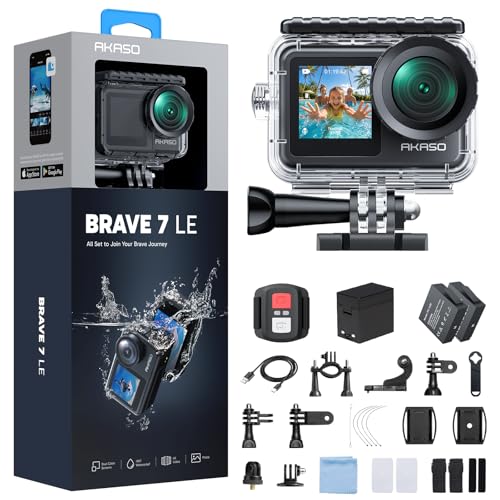
- The AKASO Brave 7 LE is the tier’s most versatile stills-and-motion tool.
- Instant cameras — Instax Mini 12 and Polaroid Go — teach composition by costing every frame.
- The used market is this budget’s secret flagship: older mirrorless bodies outshoot everything new here.
- Home cameras like the Wyze Cam v4 double as photographic records for projects and property.
- Save part of the budget for cards, batteries and a print run — output teaches faster than gear.
In this guide
Quick Picks
| Camera | Badge | Why it made the list |
|---|---|---|
| AKASO Brave 7 LE | Best budget all-rounder | An action camera with stills good enough to learn on, weatherproofing and a price tier that leaves change for accessories. |
| Fujifilm Instax Mini 12 | Best for learning to see | An instant camera whose every frame costs money — the strictest, happiest composition teacher in this guide. |
| Polaroid Go Generation 2 | Best pocket instant | The smallest Polaroid ever made, with double-exposure play and prints that fit a wallet and a life. |
| Wyze Cam v4 | Best for project records | A home camera whose stills, timelapse and colour night vision document renovations, gardens and workshops on a budget. |
| Blink Mini 2 | Best compact home recorder | A small plug-in home camera with person detection and weather resistance for indoor-outdoor records on a budget. |
| Blink Outdoor 4 | Best for gardens and exteriors | A battery-powered outdoor camera with long battery life that records wildlife visitors, weather and the garden’s year. |
How Did We Judge Photography at the Hardest Price in the Series?
We judged within the tier and refused to import flagship standards. Each candidate was asked what a beginner, a parent or a student actually receives: a photograph worth keeping, controls worth learning, and a device that survives being the cheap thing in the bag. Products whose stills were an afterthought to a surveillance or novelty purpose were marked down without mercy.
Learning value carried unusual weight. At this budget the camera is a teacher before it is a tool, so anything that encourages deliberate shooting — an instant camera’s costly frames, an action camera’s manual modes, a home camera’s timelapse discipline — scored above raw convenience.
Total cost of ownership was audited the way a student would: film packs for the instant cameras, mounts and cases for the action camera, subscriptions that some home cameras nudge toward. A cheap camera with expensive habits is not cheap, and the reviews keep the running costs in daylight.
Finally, the exit strategy. Budget cameras are beginnings, and we favoured picks that either remain useful forever in a niche — the holiday action camera, the hallway instant camera — or teach skills that transfer intact to a future system. Dead ends were penalised even when their first month is fun.
We also asked a ruder question of every candidate: would a photography teacher, handed this device and a class of beginners, be relieved or dismayed? Relief is a measurable curriculum outcome — the device starts fast, forgives errors, shows its settings honestly and produces a keepable photograph in the first hour. Dismay, at this budget, usually wears the costume of a specification the class will never reach.
Which Budget Cameras Deserve a Place in Your Pocket?

AKASO Brave 7 LE — Best budget all-rounder
The Brave 7 LE leads this list because it is the only budget resident that behaves like a general-purpose camera. Its stills are honest daylight photographs — the school trip, the bike ride, the beach week — and its sealed body removes the beginner’s terror of using the cheap camera in the places where photographs actually happen. Learning requires shooting; shooting requires not being afraid of rain.
Its video talents fund the stills education in a way beginners underestimate. A young photographer who films the skate park all summer returns in autumn with an eye for timing and sequence that pure stills shooting teaches more slowly, and this camera’s stabilisation makes those early films watchable enough to keep the motivation alive.
Now place it in a student’s bag for a year abroad, the second scene of its case. It survives the monsoon trek, the scooter spill and the hostel dorm’s humidity, documents everything at a quality the family album accepts, and — crucially — its loss or theft would be a bad day rather than a ruined year. Budget travel photography runs on exactly that replaceability.
Manual controls exist in modest form, enough to teach the exposure triangle’s outline and the discipline of checking settings before the moment. Nobody will mistake it for a system camera’s education, but as a first instructor it is patient, waterproof and unbothered by being dropped by its pupils.
The ceilings are plain: small-sensor files that soften after dusk, a fixed wide lens that distorts faces at conversational distance, and stills resolution that prints happily at family sizes and no further. Within daylight and motion — the budget photographer’s natural habitat — those ceilings sit high enough.
Buy it as the starter that can go anywhere, the second camera for risky places, or the gift that starts a teenager’s photographic life without insuring the gift. In this tier, versatility with courage is the winning specification.
Its accessory ecosystem deserves a budget paragraph of its own: mounts, cases and spare batteries circulate cheaply and widely, so the camera’s usefulness can be extended in birthday-sized increments. A budget tool that grows by small purchases respects the way its owners actually live.
Sell it on when you graduate and it will fund a lens; keep it and it becomes the household’s designated risk-taker for beaches, boats and festivals. Either way, its cost per photograph across a student year works out at a figure that makes flagship owners thoughtful.
A final word for parents: it survives being lent to a careful ten-year-old, which no other camera in this series can claim at any price, and the photographs children make with a real, riskable camera are a genre of family treasure unto themselves.
One more constituency swears by it: sports clubs and school trip leaders, who need a camera that can be issued, dropped, soaked and replaced inside a term’s budget. Institutions buy courage by the box, and this is the box they buy.
There is a final, unfashionable metric in its favour: photographs per pound across a year. Owners shoot it constantly because it is always along and never precious, and volume at the learning stage is not vanity — it is the curriculum itself, being delivered daily.
- Type: waterproof action camera
- Strength in brief: courage and versatility per coin
- Workflow fit: travel, sport, student years
- Lens note: fixed wide, stabilised video
Strengths
- Goes anywhere a beginner’s life goes
- Stills and video teach together
- Replaceable without financial drama
Trade-offs
- Dusk files soften quickly
- Fixed wide lens flatters nobody up close
- Prints cap out at family sizes
Best for: Students, travellers and teenagers starting photography.
Not suited for: Anyone planning large prints or dark venues.

Fujifilm Instax Mini 12 — Best for learning to see
The Instax Mini 12 makes this list on a pedagogical argument no digital camera can match: when every photograph costs real money and arrives in ninety seconds, the photographer slows down. Framing becomes deliberate, backgrounds get checked, the second shot is earned by the first one’s lessons. A month of Instax teaches more composition than a year of unlimited digital bursts, and it teaches it joyfully.
The camera itself is simplicity engineered kindly: automatic exposure that handles parties and picnics, a selfie mirror and close-up mode for the social uses that dominate its real life, and a design cheerful enough to be welcomed at gatherings where a serious camera would change the mood. Its photographs are small, warm and physical — objects, not files.
Picture it at a student house party, the second scene of its portrait. The prints appear on the fridge that night, get annotated, argued over and kept, while the phone photographs from the same evening sink into a camera roll nobody opens again. Instant photography’s survival into the digital age is not nostalgia; it is the discovery that a photograph people can hold outcompetes a photograph they can scroll.
Honesty about running costs is mandatory in a budget guide: film is the subscription here, priced per pack, and a heavy shooter will spend the camera’s cost again in film within a season. That is the tuition model, stated plainly. Budget for film as part of the purchase or the camera becomes a shelf ornament by spring.
Image quality obeys the format’s physics — small prints, gentle detail, colour that flatters people and forgives venues. Nobody should buy it to document a product range or a building. Everybody should consider it to document a friendship group, a first flat, a baby’s first year in prints that live on walls rather than in clouds.
Buy it for the beginner who needs slowing down, the family that wants prints without a printer, and any household where photographs should be objects again. It is the cheapest serious composition course in this entire series.
There is a social physics to it that hosts understand: an Instax at a gathering gives guests a gift rather than taking their image, reversing photography’s usual extraction. Hosts who keep one by the door find their parties documented more warmly than any phone achieves.
Grandparents, once again, are its secret power users: handed one at a family gathering, they produce the prints that end up on the fridge, because the camera asks for joy rather than for settings. Intergenerational usability is a specification this tier should prize, and this camera defines it.
Keep the prints in an album from the first pack. The discipline of the album — selecting, sequencing, captioning by hand — is the oldest photographic education there is, and this little camera delivers its owner to that education faster than any digital workflow.
Wedding planners have adopted its class as the guest-book camera, and the lesson transfers to any family: an instant camera stationed at an event produces the album while the event is still happening. No other technology in this guide delivers a finished archive before the guests go home.
Its prints have begun appearing in school art rooms as teaching material, because a teacher can pin a morning’s lesson to the wall by lunch. Technologies that survive the classroom have passed an examination no laboratory sets, and this one passes it weekly.
- Type: instant film camera
- Strength in brief: costly frames teach seeing
- Workflow fit: parties, family, first flats
- Film note: budget packs as running costs
Strengths
- Every frame teaches deliberate framing
- Prints become household objects instantly
- Welcomed where serious cameras chill a room
Trade-offs
- Film costs accumulate honestly and fast
- Small prints, gentle detail
- No digital file for sharing or printing large
Best for: Beginners, families and friendship groups who print.
Not suited for: Anyone needing files, zoom or detail.

Polaroid Go Generation 2 — Best pocket instant
If the Instax is the classroom, the Polaroid Go is the notebook in the coat pocket: the smallest instant camera in this guide, carried the way diaries are carried, for the photographs that happen between occasions. Its prints are small enough for a wallet or a journal page, which turns out to be a feature — this is photography as annotation of a life, not documentation of an event.
Its creative controls nod at the enthusiast hiding inside the budget buyer: double exposures, a selfie mirror, a self-timer for the group shot that includes the photographer. Within a strict budget tier, that invitation to experiment distinguishes it from pure point-and-shoot appliances and gives a curious beginner threads to pull for months.
See it travelling, the second scene of its case. A pocket Polaroid on a rail trip produces a strip of small prints that becomes the journey’s souvenir in real time — traded with seatmates, taped into notebooks, mailed home on postcards’ backs. Digital archives are superior in every measurable way and somehow poorer at this specific magic, which is why the format endures.
The same running-cost honesty applies as with its Fujifilm rival: proprietary film, priced per pack, is the real budget line, and the camera’s low entry tier should be read alongside a season of film. The guide repeats the warning because budget guides exist to prevent exactly this surprise.
Print character differs from the Instax in ways owners feel strongly about: a dreamier, less predictable rendering that devotees call soul and detractors call inconsistency. In a budget guide both descriptions are data — try to see prints from each before choosing your household’s instant allegiance.
Buy it for the diarist, the traveller and the gift-giver who wants the smallest possible camera-shaped joy. It will not be anyone’s only photographic tool for long, and it was never trying to be.
Its size creates a habit other cameras cannot: it is the one that goes on the dog walk, the commute, the school run, and habit — as this series keeps concluding — is the true engine of any archive. Small prints of ordinary days become, in aggregate, a autobiography.
Its double-exposure mode has a teaching function disguised as a toy: layering two scenes forces a beginner to think about tone and silhouette abstractly, which is composition theory learned through play. Budget education works best when it does not announce itself.
Its prints also make it the budget list’s best gift, full stop: a camera whose output is itself a present, given at the moment of taking, needs no wrapping of justification. In a tier defined by constraint, it is the pick that feels like abundance.
Its community of diarists trades prints by post, a small analog network that has outlasted several social platforms. Buying into the format buys into that network’s gentle culture, which for a solitary beginner can be the difference between a hobby and a habit.
Keep a few prints in your own wallet, whoever you are. The small commerce of showing a real photograph, hand to hand, starts conversations that a phone screen ends — and conversations, for the diarist photographer, are where half the next photographs come from.
- Type: pocket instant film camera
- Strength in brief: photography as diary-keeping
- Workflow fit: travel, journals, everyday carrying
- Film note: small prints, per-pack costs
Strengths
- Small enough to be a daily habit
- Double exposures invite experiment
- Prints live in wallets and notebooks
Trade-offs
- Film is the real, recurring budget
- Prints are the smallest here
- Rendering divides opinion by design
Best for: Diarists, travellers and everyday carriers.
Not suited for: Anyone wanting predictable, shareable files.

Wyze Cam v4 — Best for project records
A budget photography guide that ignored the home camera would miss where much under-budget imaging actually happens. The Wyze Cam v4 earns its seat as a recording instrument: fixed at a renovation, a workshop bench, a garden bed across a season, its stills and timelapses become a photographic record no handheld camera has the patience to make.
Its colour night vision and honest daylight imaging exceed what its tier promises, and for documentation purposes — the state of the roof project in March, the seedlings’ progress, the delivery at the door — that quality is not a compromise but a specification met. Not all photography is art; some of it is evidence, and evidence has its own dignity.
Now watch it serve a small landlord or a maker, the second scene of its portrait. The workshop camera that catches the process timelapse also photographs the finished piece for the listing, watches the empty property between tenants, and documents the storm damage for the insurer. One budget device, four departments — the economics that put it in this guide.
Photographic growth from it is real but specific: timelapse teaches interval thinking, fixed framing teaches composition within constraint, and reviewing a season of garden frames teaches light’s annual patterns better than any tutorial. It will not teach lens craft or exposure improvisation, and the review will not pretend otherwise.
Subscription nudges are the tier’s familiar footnote: some cloud features live behind a plan, while local recording keeps the essentials independent. A budget buyer should set it up around local storage from day one and treat any subscription as an optional extra, never a ransom.
Buy it as infrastructure for projects and property, and let it quietly become the household’s most prolific photographer. Its frames will never win a competition, and its archive may end up the most consulted in the family.
Local electricians and landlords have standardised on this class of camera for a reason worth copying: it is cheap enough to leave in place permanently, so the record has no gaps where a borrowed camera was elsewhere. Permanence is a documentation feature.
For renters, its impermanence is the feature: no drilling, no landlord negotiations, a record that moves house when you do. Budget photography includes the photography of people whose homes are temporary, and this device respects that reality completely.
Treat its timelapse of a single plant or building as the gateway project this guide recommends to every new owner. A month of patient frames, played back in a minute, teaches more about light’s behaviour than a shelf of tutorials — for the price of leaving it plugged in.
Sceptics should consider its secondhand life: units circulate cheaply as households upgrade, so a project can be documented by several angles for the price of one new device. Multi-angle renovation records, once a professional luxury, are now a budget possibility.
Its quietest triumph is archival: families reviewing a year of its frames discover they own a documentary of their own home’s life that nobody remembered commissioning. Infrastructure that produces accidental archives is the budget tier’s gift to the future.
- Type: smart home camera
- Strength in brief: patient, tireless recording
- Workflow fit: renovations, gardens, workshops
- Storage note: set up local recording first
Strengths
- Timelapse records no human would sustain
- Colour night imaging beyond its tier
- One device serves several household departments
Trade-offs
- Fixed viewpoint, no lens craft to learn
- Cloud extras sit behind optional plans
- Not a camera for occasions or portraits
Best for: Homeowners, makers and landlords documenting projects.
Not suited for: Anyone seeking a carry-everywhere camera.

Blink Mini 2 — Best compact home recorder
The Blink Mini 2 is the Wyze’s close rival and this guide’s second infrastructure pick, chosen for households already inside its ecosystem or preferring its particular balance: a compact plug-in camera, usable indoors or out with the appropriate power arrangement, with person detection that keeps its photographic record relevant rather than exhaustive.
Its stills and clips serve the same evidentiary kingdom — the nursery, the porch, the home office, the elderly relative’s hallway with consent — and its small size lets it work unobtrusively where a larger camera would dominate a room. In domestic documentation, discretion is a quality specification.
Consider it in a new baby’s household, the second scene of its case. The camera that watches the nursery also becomes the family’s accidental archivist: first rolls, first steps crossing its frame, grandparents visiting on the feed from another continent. Budget home cameras have quietly become family-memory machines, and pretending otherwise would make this guide less honest, not more.
The ecosystem caveat deserves plain speech: its cloud history and some features pair with a subscription, and households should weigh that recurring cost inside the budget from the start, favouring local storage options where their setup allows. As with its rival, configured thoughtfully it serves; configured naively it nags.
As photography education it offers the same fixed-frame lessons as the Wyze — composition by placement, light by season — with the additional discipline of motion-triggered thinking: what enters the frame, when, and whether the record will make sense to a stranger. Investigators and insurers think in exactly those terms.
Buy it if your household already speaks its ecosystem’s language, or if its size and detection manners fit your rooms better than its rival’s. Between the two infrastructure picks, the honest answer is that the household’s existing allegiance should decide.
Its person detection has a photographic side effect households come to value: the record it keeps is edited by relevance from the start, so reviewing a month of family life at the door and in the nursery is minutes of meaning rather than hours of empty rooms.
In a home office it earns a second salary as the meeting-room witness and the package-porch eye, and its stills of the desk’s changing projects have become more than one maker’s process diary. Infrastructure that moonlights as a journal is infrastructure well bought.
And when the household upgrades its main camera someday, this little recorder remains on duty — the mark, repeated across this list, of budget equipment chosen well: it does not become obsolete, it becomes infrastructure.
Care settings deserve a careful sentence: used with consent, a small camera in an elderly relative’s home lets family check wellbeing and share ordinary moments across distance. Budget imaging, handled ethically, is a kindness technology as much as a security one.
For the household historian, its stills of ordinary thresholds — the door, the hall, the nursery — accumulate into the record of how a family actually lived in a place. Historians of the future will mine exactly such humble archives, and will bless the households that kept them.
- Type: compact smart home camera
- Strength in brief: discreet domestic recording
- Workflow fit: nurseries, porches, home offices
- Ecosystem note: weigh cloud plans in the budget
Strengths
- Small enough to disappear into a room
- Person detection keeps records relevant
- Doubles as the family’s accidental archivist
Trade-offs
- Best features lean on its ecosystem
- Fixed lens, fixed lessons
- Not an occasion camera in any sense
Best for: Households already in its ecosystem needing records.
Not suited for: Photographers wanting a creative tool.

Blink Outdoor 4 — Best for gardens and exteriors
The Outdoor 4 closes the list outdoors, where budget photography has a secret kingdom: the garden across a year. Battery-powered and weather-resistant, it can live on a fence post or a tree for seasons, recording the fox at dawn, the storm in August, the first frost on the greenhouse — a photographic vigil no household member would keep in person.
Battery longevity is its enabling specification, measured in the manufacturer’s generous terms and, in real gardens, in months of not thinking about it. A record camera that demands weekly attention stops recording; one that can be forgotten becomes an archive. For the budget naturalist, that forgettability is the entire product.
Place it on a bird table or a pond edge, the second scene of its portrait, and it becomes the poor photographer’s hide: motion-triggered stills and clips of visitors that a human presence would scatter. The images will not rival the wildlife guide’s telephoto work, and they will exist — which, in the economy of family wonder, outranks not existing at a higher resolution.
Its limitations mirror its sibling’s: ecosystem subscriptions hover over the cloud features, image quality is documentation-grade, and there is no craft to learn beyond placement and patience. Placement and patience, the wildlife photographers in this series keep insisting, are most of photography anyway.
For property, it doubles as the exterior witness — deliveries, weather damage, the fence dispute’s timeline — and that dual citizenship between wonder and evidence is the budget tier’s characteristic bargain. One device, bought cheaply, serving poetry and paperwork alike.
Buy it for the garden, the allotment, the rural doorstep. It is the list’s reminder that photography under this budget is not a diminished version of the real thing; it is the real thing, practised at the scale the money allows.
Allotment and community-garden groups share these cameras communally, splitting one device across a row of plots for security and for the shared pleasure of the dawn wildlife reel. Budget tools thrive in such commons, and the commons thrive on them.
Weather itself becomes its subject across a year — the archive of storms, frosts and heatwaves on one fence line is a small climate record, and local history societies have begun to value exactly such accidental archives. Cheap cameras, left running, write history.
Close the list where it lives, outdoors: the first frost photograph it sends you, of your own garden made strange and silver, will justify its entire cost in one frame. Budget photography’s wonders are mostly a matter of being switched on when the world does something beautiful at 6 a.m.
Its night frames have their own austere beauty — the garden under infrared, emptied of colour, full of visitors. More than one owner has printed a series of them, and the prints hold a wall surprisingly well. Documentation and art are neighbours at this tier, not strangers.
And so the cheapest camera in this guide to run may be the one that runs longest, out on the fence, season after season, asking nothing. There are worse definitions of a good photographic tool, at any budget, than that.
- Type: battery outdoor camera
- Strength in brief: seasons of forgotten vigilance
- Workflow fit: gardens, wildlife visitors, exteriors
- Power note: long-life batteries are the point
Strengths
- Months of unattended outdoor recording
- A hide camera for garden wildlife
- Evidence and wonder from one device
Trade-offs
- Documentation-grade images only
- Ecosystem costs need weighing
- No creative controls to grow into
Best for: Gardeners, allotment holders and rural households.
Not suited for: Anyone seeking portraits or prints of size.
How Do the Six Under-$200 Picks Compare?
Six budget residents, three philosophies: learn by doing, learn by paying per frame, or record by patience. The grid compresses the tier’s honest trade-offs.
| Camera | Badge | Standout trait | Watch out for |
|---|---|---|---|
| AKASO Brave 7 LE | Best budget all-rounder | The tier’s fearless generalist | Learn its manual modes early |
| Fujifilm Instax Mini 12 | Best for learning to see | The strict, happy teacher | Budget the film before the camera |
| Polaroid Go Generation 2 | Best pocket instant | The pocket diary camera | See both instant films before choosing |
| Wyze Cam v4 | Best for project records | The tireless household recorder | Configure local storage on day one |
| Blink Mini 2 | Best compact home recorder | The discreet domestic witness | Decide the storage plan before mounting |
| Blink Outdoor 4 | Best for gardens and exteriors | The garden’s patient witness | Place it before the season starts |
Why Is the Used Market This Budget’s Secret Flagship?
Because depreciation is the photographer’s friend. Interchangeable-lens bodies that launched at enthusiast prices five to eight years ago now circulate at this guide’s budget tier through reputable dealers, and they outshoot every new product above in resolution, low light, lens choice and growth. A budget guide that concealed this would be serving shops, not readers.
The discipline is in the buying: choose a body with a modest shutter count, buy from a dealer offering a warranty window, test every dial and the sensor for marks, and keep part of the budget for the standard lens if the body comes alone. The camera clubs and forums for each system will tell you which ageing models are the beloved bargains; that folklore is reliable because it is earned.
Accept the tier’s honest costs — older batteries, no warranty beyond the dealer’s, video that trails modern natives — and the exchange is overwhelmingly favourable for stills photography. For many readers, the correct answer to this entire keyword is a used body and a prime lens, and this guide says so without embarrassment.
What Can This Budget Not Do, Stated Plainly?
It cannot photograph a dark wedding reception to a professional standard, resolve a distant bird, blur a background like a fast prime on a large sensor, or print a landscape at exhibition size. Naming these limits is not pessimism; it is the service a budget guide exists to perform, because disappointment is just an unlisted specification discovered late.
It also cannot grow. With the honourable exception of the used-market path, every pick above is a complete, closed answer — which is why the reviews keep asking what each device remains useful for after the beginner graduates. A budget camera that becomes the permanent holiday camera, nursery witness or garden recorder has not been outgrown; it has been promoted sideways.
And it cannot substitute for light. At this tier more than any other, photography is the art of finding good light because the equipment cannot manufacture it. That constraint, embraced, is the finest free education in this entire series of guides.
How Should a Beginner Shoot Deliberately on Unlimited Digital?
Borrow the instant camera’s discipline without buying one: ration a walk to twenty-four frames, review only at home, and print the best six at small size. Scarcity manufactures attention, and attention is the skill every budget in this series is ultimately buying.
Work in sequences with a rule — only doorways, only hands, only the colour yellow — because constraints convert a neighbourhood wander into an education. The action and home camera picks above impose such rules by design; the deliberate beginner imposes them by choice and learns the same lessons free.
Keep a notebook page per outing: what the light was, what failed, what to retry. Budget photography’s advantage is that its lessons are cheap; the notebook is how they are banked instead of evaporating between weekends.
Which Accessories Deserve Money Before a Better Camera?
A tripod, even a humble one, transforms every pick in this guide at dusk and in interiors, and it costs less than the difference between tiers. A spare battery and a second card end more photographic days prematurely than any sensor limitation at this level, and a small print run — actual prints, ordered monthly — teaches editing with a severity no screen matches.
For the instant picks, the accessory is film, bought in the largest sensible quantity to tame its per-frame cost, plus an album that gives the prints a home. For the home cameras, it is local storage, configured once and forgotten. In each case the accessory completes the product the budget actually bought.
Light, finally, is an accessory: a cheap LED panel or a north-facing window understood properly will improve a budget camera’s output more than the next model up. Buy light before glass at this tier, and glass before bodies.
How Do You Print Well From Modest Files?
Print smaller and honestly. Budget files at postcard and small-album sizes are indistinguishable from flagship files to every viewer who is not holding a magnifier, and family archives live at those sizes. The budget photographer who prints small and often owns a richer archive than the flagship owner who prints never.
Choose a lab or service and stay with it, because consistency teaches you how your files translate to paper — which exposures print dark, which colours shift — and that feedback loop quietly calibrates your shooting within a season.
Matte papers forgive modest files; glossy papers interrogate them. Albums forgive everything and get looked at for decades. The budget archive strategy is albums of small matte prints, added to monthly, and it has preserved more family history than any hard drive in this guide’s readership.
When Should a Budget Photographer Upgrade, and to What?
When the ceiling is named in photographs, not specifications: the recital that came out soft, the portrait that needed a blur the lens cannot give, the print that dissolved at the size the wall demands. A named ceiling points at its own remedy — usually one lens or one used body — rather than at a whole new system.
Upgrade along the path of transferable skill. The instant graduate brings composition; the action-camera graduate brings timing; the home-camera graduate brings patience and project thinking. Every pick above was chosen partly so that its owner’s education survives the upgrade intact.
And keep the budget camera in service after upgrading, in the sideways roles the reviews describe. The household that graduates its beginner to a used system body while the AKASO takes the beach and the Wyze keeps the garden has not spent twice; it has built a small, complete photographic department for less than one flagship.
How Do You Keep a Photography Habit Alive on Almost No Money?
By shrinking the unit of practice. A photograph a day from the same window, a weekly portrait of the same person, a monthly print — habits at this scale cost nothing but attention and compound like interest. The budget cameras above are sized and priced to be present for such habits, which is their deepest qualification for this list.
Join the free institutions: library exhibitions, club guest nights, community darkrooms and the vast, generous folklore of each system’s forums. Photography’s knowledge economy is unusually open-handed, and the budget photographer who plugs into it receives an education that money genuinely cannot shortcut.
Finally, photograph what is near and loved rather than what is famous. The garden, the street, the family’s faces across a year — budget photography’s archive, kept faithfully, becomes the most valuable photographic object its owner possesses, at any tier, by the only measure that survives: what it would cost to lose.
How Do You Photograph People Well With Humble Equipment?
Light and distance do the work that lenses do elsewhere. Place your subject near a window or in open shade, step closer instead of zooming with your feet where the camera allows, and photograph people occupied — cooking, laughing, working — rather than posed, because budget cameras forgive everything except the stiffness of a subject performing for them.
Backgrounds are the beginner’s free upgrade. A step sideways that removes the clutter, the bright window or the stranger’s head from behind your subject costs nothing and improves the portrait more than any purchase in this guide. Budget photography is largely the art of the step sideways.
Shoot more of the people you love and fewer of the places you visit. At every tier, but poignantly at this one, the archive’s future value concentrates in faces. The budget photographer who understands that early owns, within a few years, the richest archive in their family — whatever it was shot on.
Which Budget Photography Mistakes Waste the Little Money Available?
Buying the novelty first is the classic: the toy camera, the gimmick lens, the gadget whose fun expires in a fortnight, purchased instead of the honest tool that would have taught for a year. At this tier every purchase is a curriculum decision, and the picks above were sequenced to be curricula, not novelties.
Ignoring running costs runs second — the instant camera without a film budget, the home camera whose cloud plan quietly becomes a second purchase, the action camera without the mounts that make it usable. A budget is a year of ownership, not a checkout total, and this guide has priced the year wherever the manufacturers priced the day.
The third mistake is shame: hiding the cheap camera, apologising for it, waiting for the ‘real’ one before photographing seriously. The history of photography is substantially a history of modest equipment in devoted hands. Shoot proudly with what the budget bought, print the results, and let the work argue.
One more waste deserves naming: spending the whole budget on the camera and nothing on the means to use it — no card, no case, no film, no prints. A budget split across the whole practice outperforms a budget concentrated on a box, every single season, and the picks above were costed as practices rather than as products for exactly that reason.
Final Recommendation
Within the new market, take the AKASO Brave 7 LE as the tier’s working camera, the Fujifilm Instax Mini 12 as its teacher, the Polaroid Go Generation 2 as its diary, and the Wyze and Blink pair as the household’s tireless recorders, indoors and out. Each is the best version of a small promise, kept honestly.
And hold the guide’s open secret in view: pointed at the used market with patience and a dealer’s warranty, this same budget buys an interchangeable-lens education that outclasses every new product above. Whichever path you take, spend something on prints this month. Photography under $200 is not photography diminished; it is photography distilled to light, patience and nerve — which were always the expensive parts, and they are free.
A benediction for the budget photographer, earned by every generation that started with almost nothing: the archive does not ask what the camera cost. It asks whether you were there, whether you looked carefully, and whether you printed the result. Answer those three questions well and this tier has no ceiling that matters.
Related guides
Frequently Asked Questions
Can you really do photography under $200, or is it all toys?
Really — with honest ceilings. Daylight, family, travel, projects and records are all genuinely served at this tier, by the picks above and supremely by the used market. What the budget excludes is low-light professional work, distant wildlife and exhibition printing, and this guide names those exclusions rather than discovering them after purchase.
What is the best single buy in this list for a total beginner?
The AKASO Brave 7 LE for the beginner who wants to shoot everything immediately, or the Fujifilm Instax Mini 12 for the beginner who needs to slow down and see. The used-market path beats both for a beginner certain the hobby is serious, as the dedicated guide section explains.
Are instant cameras a waste of money because of film costs?
They are a tuition model, and should be judged as one: the film is the course fee, paid per lesson, and the lessons — framing, patience, printing — are real. Budget the film honestly across a season and the Instax or Polaroid becomes the cheapest structured photography education available.
Why are home cameras in a photography guide at all?
Because recording is a branch of photography with its own craft — placement, interval, light across seasons — and because at this budget, households genuinely use these devices as their project, property and family-record cameras. Excluding them would describe the market manufacturers wish for rather than the one readers live in.
Should I buy a used camera instead of everything here?
If stills quality and growth matter most and you can buy through a reputable dealer with a warranty window, yes — the guide’s dedicated section argues that case in full. If warranty, simplicity, water or instant prints matter more, the new picks above earn their place. Both answers are honest; the reader’s priorities choose.
What about my phone — is it not better than all of these?
For convenience and computational polish in good light, often. What the picks add is what phones ration: optical honesty in the action camera’s world, physical prints from the instants, tireless fixed recording from the home cameras, and — on the used path — real lenses and controls. The phone is the baseline this budget must beat in specific ways, and each pick was chosen for the way it beats it.
How long will a budget camera remain useful?
In its first role, perhaps a year or two of learning; in its sideways role — holiday camera, nursery witness, garden recorder — indefinitely. The picks were selected for that second life, which is where budget equipment quietly repays its cost many times over.
What is the first photograph to take with a budget camera?
The view you see every day — the window, the street, the garden gate — taken carefully, then taken again monthly as the light and seasons change. It costs nothing, it teaches everything this tier can teach, and in ten years it will be the most valuable frame the camera ever made.
Is a budget camera a good gift for a child?
The action and instant picks here are the strongest candidates: the AKASO survives a child’s adventures, and the Instax teaches a child that photographs are precious objects. Match the gift to the child’s temperament — motion or patience — and include the first season of film or the first accessory in the box, so the gift arrives complete.
Related Guides
Budget photography grows toward craft, printing and the used market, and these guides continue each path: our guide to buying used mirrorless cameras safely a beginner’s printing and album-making primer the timelapse and project-recording handbook for home cameras


