kajuandouglas.com is reader-supported. When you buy through links on our site, we may earn an affiliate commission.
Where to Buy a House Camera, and Why Rooms Punish Careless Gear
Photographing a house sounds like the gentlest assignment in this entire series, right up until the first interior defeats you. The best cameras for photographing house interiors and exteriors must survive a conspiracy of difficulties: rooms smaller than any lens wants, windows blazing beside walls in shadow, vertical lines that lean if you tilt the camera a degree, and colours that shift between tungsten lamps and grey daylight in a single frame.
Estate agents learned these lessons through decades of listings that sat unsold beneath gloomy photographs. A bright, honest, spacious-looking set of images is now understood to be worth real money, which is why the cameras below were judged as listing tools first. Can the body tame a ten-stop brightness range between window and corner? Does the system offer a genuinely wide lens that keeps door frames vertical? Will files arrive at the portal looking clean without an evening of rescue work?
Homeowners documenting a renovation, a sale, an insurance record or a family farewell to a long-loved home face the same physics with higher emotional stakes. The shortlist therefore spans a full-frame listing professional down to a pocket compact that a seller can operate one-handed while holding a toddler, because houses get photographed by everyone, not only by hired photographers.
Video has quietly joined the brief. Portals reward walkthrough clips, agents shoot vertical tours for social feeds, and a camera that handles both stills and a smooth room-to-room glide saves carrying a second device. Every pick here can record respectable walkthrough footage, though the reviews are honest about which ones merely cope and which ones glide.
Read the technique sections even if a relative is lending you a camera instead. Houses forgive modest sensors remarkably well; they never forgive tilted verticals, mixed white balance left uncorrected, or a wide lens used so greedily that the living room resembles a ballroom.
A final framing thought before the names. Every house in this guide is simultaneously a product, a record and a memory, and different readers weight those identities differently. The reviews keep all three in view, so an agent chasing click-through and a daughter photographing her childhood home can both find their camera here without either being served the other’s priorities.
Key Takeaways
- Vertical lines matter more than megapixels: a level camera and a sensible wide lens sell rooms.
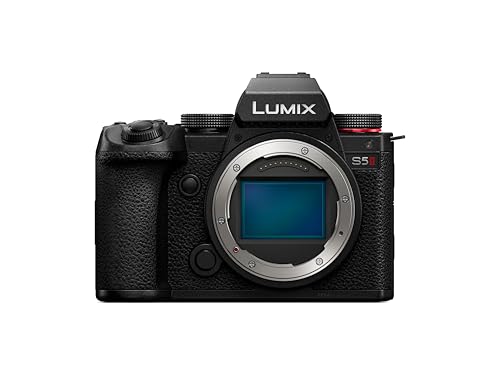
- The Panasonic LUMIX S5II pairs dynamic range with affordable wide glass for serious listings.
- Window glare is a scheduling problem first — shoot interiors when outside light softens.
- The Sony ZV-1F turns nervous sellers into competent listing photographers in one afternoon.
- Bracket exposures for bright windows instead of trusting any single frame to hold everything.
- A tripod, a spirit level habit and decluttering beat every camera upgrade on this page.
In this guide
Quick Picks
| Camera | Badge | Why it made the list |
|---|---|---|
| Panasonic LUMIX S5II | Best for serious listings | Full-frame dynamic range, strong stabilisation and sensibly priced wide lenses for whole-house shoots. |
| Canon EOS R10 | Best value for sellers | An APS-C body with friendly guidance, strong autofocus and access to wide lenses without full-frame cost. |
| Sony ZV-1F | Best for nervous first-timers | A pocket compact with an ultra-wide fixed lens, product-showcase smarts and zero lens decisions. |
| Fujifilm X100VI | Best for character homes | A beloved fixed-lens camera whose film simulations make period homes look like memory feels. |
| Canon EOS R50 | Best for video-led listings | A creator-focused body with strong video, flip screen and guided stills for agents who film every tour. |
| Sony RX100 VII | Best pocket option for landlords | A zoom compact with a viewfinder, fast handling and quality that embarrasses phone shots of rental homes. |
How Did We Judge Cameras Against Real Rooms and Real Deadlines?
Testing happened in imagination against the houses that break cameras: a north-facing cottage kitchen at four in the afternoon, a glass-walled flat at noon, a Victorian terrace whose hallway has never met daylight. Bodies scored on dynamic range first, because the window-versus-corner problem defines interior photography more than any other single challenge.
Lens systems were audited for honest wide options. A house kit lives or dies at the wide end, so mounts with affordable rectilinear wides — lenses that keep skirting boards straight — outranked mounts whose wide choices are exotic, enormous or corrected so aggressively in software that edges smear.
Colour behaviour under mixed lighting formed the third test. Homes blend daylight, warm lamps and the greenish shrug of cheap LEDs, and cameras whose auto white balance stays calm across a pan save hours of correction across a forty-image listing set.
Speed of delivery closed the judging. Agents photograph a house in the morning and publish by lunch, so straight-out-of-camera JPEG quality, quick wireless transfer and reliable battery life all counted. A technically superior camera that slows the pipeline loses listings to a merely good one that ships on time.
Finally, we weighted forgiveness. Many readers will photograph exactly one house — their own — and a camera that produces a decent listing in automatic modes with a little guidance deserves its place beside the professional tools.
Which Cameras Make Houses Look Like Themselves, Only Better?

Panasonic LUMIX S5II — Best for serious listings
Dynamic range is the S5II’s listing superpower. Expose for the room and the windows bloom into white voids; expose for the garden and the sofa drowns. This body’s files hold both ends of that argument with enough grace that a single frame often suffices, and when it does not, its bracketing is quick, quiet and easy to merge into a natural-looking result rather than an HDR cartoon.
The L-Mount lens bench completes the case. Wide zooms and primes from three manufacturers compete at prices a working listing photographer can actually amortise, and the rectilinear options keep architecture honest. A straight door frame is a subliminal promise to buyers that the house itself is sound; this system keeps that promise cheaply.
Now watch the camera work a twilight shoot, the second angle that secures its place here. The blue-hour exterior — warm windows glowing against a deep blue sky — is the single most persuasive image in property marketing. The S5II’s stabilisation lets you shoot that frame handheld at the exact fleeting minute it works, without unpacking a tripod while the light drains away.
Its video walkthroughs deserve their own sentence. Smooth stabilisation, dependable autofocus and clean high-ISO footage turn a one-take glide from front door to garden into a portal-ready asset, and the same body then shoots the stills set without a bag change.
Battery behaviour suits the working pattern of listings: intense bursts across two or three houses, then a drive between appointments. USB charging in the car tops the body up en route, a mundane convenience that working photographers mention with genuine affection.
Choose this body if houses are income. Choose it also if you are selling one important house and intend to keep the camera afterwards, because its general-purpose excellence means the purchase does not expire with the listing.
Weather resistance earns a mention that listing photographers will understand in their bones. Houses are photographed in all seasons because completions do not respect forecasts, and a body that shrugs off drizzle during the exterior set keeps the appointment — and the twilight shot — alive when a lesser camera would be sheltering under a porch.
Support after purchase rounds out the professional case. Panasonic’s service turnaround and the L-Mount lens rental market mean a working photographer is never stranded mid-season by a failure or a dropped lens. Tools that earn money need an ecosystem that respects deadlines, and this one demonstrably does.
One more working truth: clients judge the photographer by the gallery’s consistency, and this body’s files edit so predictably that a single saved preset carries an entire season of listings. That invisible efficiency is what turns a talented amateur setup into a business that can photograph three houses a day without quality wobbling.
If the budget stretches to exactly one upgrade after this body, spend it on the widest rectilinear lens the mount offers at a working aperture, not on a faster standard zoom. Houses are photographed at the wide end for entire careers; the lens is the listing, and the body is its faithful recording instrument.
- Type: full-frame mirrorless, L-Mount
- Strength in brief: dynamic range for window light
- Workflow fit: listings, twilight exteriors, walkthroughs
- Lens note: wide options at working prices
Strengths
- Holds window and room in one frame more often
- Wide glass available without exotic pricing
- Twilight exteriors possible handheld
Trade-offs
- Heavier than the compact picks here
- Menus reward an initial setup session
- Best results still need bracketing discipline
Best for: Listing photographers and serious sellers who want portal-ready sets.
Not suited for: Anyone wanting a camera that vanishes into a coat pocket.

Canon EOS R10 — Best value for sellers
The R10 understands its likely owner: somebody selling a house, helping parents sell theirs, or starting a small listing business from a standing start. Its guided modes and clear menus lower the temperature of the whole task, while the underlying sensor and processor are serious enough that the results do not look like a beginner’s compromise.
Canon’s RF-S wide zoom options give this smaller sensor the room-filling angle houses demand, and they do it at prices and weights that suit a one-person operation. The combination — compact body, genuinely wide lens, dependable colour — covers the standard listing set of exteriors, room wides, detail vignettes and a garden tour without a single lens costing more than the camera.
Consider the camera at a family sale, the emotional angle behind its ranking. Photographing the home you grew up in, for the listing that ends an era, is not a technical exercise. The R10’s forgiving automation lets the photographer stay present for that strange afternoon instead of wrestling settings, and its files are good enough to print a farewell album afterwards.
Autofocus, borrowed from far pricier Canons, locks onto dim hallway corners without drama, and the burst speed handles the neighbour’s dog photobombing the exterior shot with comic reliability. Small mercies, gratefully received on moving day.
Its video is competent rather than cinematic, which matches the portal reality: a steady 4K walkthrough with clean sound from an accessory microphone is what buyers actually watch. The camera will not make you a filmmaker; it will make your listing look professionally tended.
Long after the sale, the R10 remains a fine family and travel camera, which softens the purchase for one-house users. Few listing tools double as the camera you take on the holiday you book with the proceeds.
Second-hand thinking suits this body well. Because it is a popular starter camera, clean used examples circulate widely, and a seller can buy one for the listing, keep it for the move-in documentation at the new place, then sell it on with minimal loss. Few purchases in a house move come with that kind of exit strategy.
There is a teaching dividend for families. A teenager can learn real photography on the R10 while helping with the sale — manual modes are present and honest once the guided training wheels come off. The camera that documents the old house may well start a young photographer’s serious hobby in the new one.
Colour straight from the camera deserves the last word here. Canon’s rendering of skin, wood and painted walls needs so little correction that a seller can upload the JPEG set the same evening with a clear conscience. In a market where the first forty-eight hours of a listing do the heavy lifting, that immediacy is money.
Keep expectations calibrated and this camera will delight: it is a daylight-and-good-light champion whose files only ask for help in the gloomiest interiors, where a tripod and bracketing answer completely. Within that honest envelope, it may be the best value in property photography anywhere in this series.
- Type: APS-C mirrorless
- Strength in brief: guidance without condescension
- Workflow fit: one-person listing operations
- Lens note: affordable RF-S wide zoom
Strengths
- Friendly modes produce publishable sets fast
- Wide lens access at sensible cost
- Colour that flatters interiors gently
Trade-offs
- APS-C dynamic range trails full-frame picks
- No in-body stabilisation for video glides
- Advanced users may outgrow its controls
Best for: Sellers, family helpers and new listing photographers on a budget.
Not suited for: Professionals shooting luxury homes in brutal light daily.

Sony ZV-1F — Best for nervous first-timers
Some houses are photographed by people who would rather be doing anything else. The ZV-1F was designed for vloggers, yet its talents map eerily well onto the reluctant seller: an ultra-wide lens that fits a small room from its doorway, a bright screen, one-button operation and processing that delivers bright, cheerful files without a single menu expedition.
The fixed lens is the feature, not the limitation. There is nothing to choose, nothing to mount backwards, nothing to leave at home. Stand in the doorway, keep the camera level — an on-screen guide helps — and the room is captured at an angle agents consider standard. For a studio flat or a narrow terrace, that simplicity is worth more than a bag of options.
Picture the camera in a probate sale, the second scenario it quietly serves. Executors and relatives clearing a house under time pressure need a photographic record for agents, insurers and family abroad. The ZV-1F produces that record respectfully and quickly, then slips into a pocket while the real work of emptying cupboards resumes.
Its walkthrough video is genuinely useful, with stabilisation that smooths a careful hallway glide and a microphone that captures a narrated tour intelligibly. Vertical video for social listings requires no thought at all, which in this market is a commercial feature.
Honesty requires the limits: no RAW headroom worth mentioning for brutal window light, no interchangeable lens for a grand staircase that deserves a longer view, and low-light files that soften. Within its brief — ordinary homes, ordinary light, extraordinary simplicity — those limits rarely bite.
Buy it for the seller who will not read a manual. Lend it to the relative who volunteered. It is the camera most likely to come back with a complete, level, publishable set from a first attempt.
Battery simplicity deserves its paragraph. The little Sony charges from the same USB cables that live in every kitchen drawer, so the camera that arrived flat can be photographing the living room after twenty minutes on the counter. For a seller mid-boxes, that forgiveness is a genuine purchasing argument.
Accessibility is its final virtue. Large, clear on-screen controls and forgiving automation make it usable by sellers with limited vision, unsteady hands or simple exhaustion — the actual population photographing many homes. Technology that respects tired people at stressful moments deserves more credit than it usually receives.
There is dignity in a tool that knows its audience. The ZV-1F does not mock its owner with dials they will never learn; it simply makes the bright, level, wide photograph the situation needs. For thousands of ordinary sales each year, that is not a compromise — it is the entire requirement, met completely.
Grandparents selling the family home are its secret constituency. Handed this camera and ten minutes of encouragement, they produce sets their agent can genuinely use — and they enjoy doing it, because the device behaves like an appliance rather than an examination. Usability at life’s stressful moments is a design achievement, full stop.
- Type: fixed-lens compact, ultra-wide
- Strength in brief: doorway-to-listing simplicity
- Workflow fit: first-time sellers and records
- Lens note: none needed, none possible
Strengths
- Ultra-wide view fits small rooms easily
- Almost no learning curve
- Walkthrough video with no setup
Trade-offs
- Fixed lens limits grand interiors
- Low-light files soften noticeably
- Little RAW rescue for extreme windows
Best for: First-time sellers and anyone recording a home quickly and kindly.
Not suited for: Luxury listings or cavernous rooms needing lens choice.

Fujifilm X100VI — Best for character homes
Not every house photograph is a sales document. Some are love letters: the cottage before the renovation, the grandparents’ bungalow in its last summer, the first flat photographed for the family group chat. The X100VI, with its film simulations and tactile dials, makes images that feel the way those places feel, and for character homes that emotional accuracy is a legitimate form of truth.
Its fixed moderate-wide lens enforces a photographer’s discipline that suits period interiors. You compose with your feet, you notice the light through the leaded window, you shoot the detail vignettes — the range cooker, the worn stair carpet, the garden door — that listing photographers skip and families treasure. The resulting set reads as a portrait of a home rather than an inventory of rooms.
Now place it in an agent’s hands for a character property, the commercial angle that justifies its seat here. Period cottages and quirky conversions sell on atmosphere, and this camera’s straight-from-camera files carry atmosphere in bulk. A listing that leads with three X100VI images of a firelit inglenook will out-click a technically superior set of sterile wides.
The leaf shutter and built-in flash help in a specific interior situation: balancing a lamp-lit room against a bright window at modest power, quietly, without the clunk and drama of a focal-plane setup. It is a niche trick that period interiors request surprisingly often.
Limits are real and should be respected. The lens is not wide enough for tiny bathrooms, there is no zoom for the facade across a narrow street, and demand has made the camera genuinely hard to buy at sensible money. Treat it as the character instrument in a two-camera plan, not the only tool.
For the right house — old, loved, atmospheric — nothing else in this guide makes photographs that the family will frame. That is a different victory from the portal metrics, and for many readers it is the one that matters.
Prints close the Fujifilm case. Its files carry a quality that survives enlargement, so the farewell set can become a large print of the house in its best light — the image that hangs in the new home and starts the stories. Listing cameras rarely earn wall space; this one was designed for it.
Resale value protects the romantics. Demand for this camera family has historically kept used prices firm, so buying one to document a beloved home is closer to renting it from the market for a small fee. Sentiment, unusually, comes with a sensible balance sheet attached.
Ownership culture adds a gentle bonus: the community around this camera shares interior and architectural work prolifically, so a new owner studying how others photograph cottages and cabins will find a library of relevant examples rather than the usual street photography alone. Inspiration, in this niche, is unusually well stocked.
Use it where it sings and forgive it where it cannot. The bathroom will need the wider tool, the facade may need a step back across the street, but the sitting room at golden hour will produce the photograph the family talks about at the housewarming of the next place. Every kit deserves one instrument of joy.
- Type: fixed-lens premium compact
- Strength in brief: atmosphere in every file
- Workflow fit: character homes and farewell sets
- Lens note: moderate-wide prime, leaf shutter
Strengths
- Film simulations flatter period interiors
- Quiet leaf shutter balances lamps and windows
- Images families actually keep and frame
Trade-offs
- Not wide enough for the smallest rooms
- No zoom for tight street facades
- Availability and pricing can be awkward
Best for: Character cottages, farewell albums and atmosphere-led listings.
Not suited for: Small modern flats needing true wide angles throughout.

Canon EOS R50 — Best for video-led listings
Portals increasingly rank listings with video, and social feeds are now a genuine source of buyers. The R50 was built for that world: a flip screen for presenting to camera in the hallway, clean 4K footage, reliable autofocus that holds a face while its owner walks backwards through a kitchen describing the granite. Agents who talk on camera should start their shortlist here.
Stills are no afterthought. The sensor is the R10’s close relation, colour is Canon’s crowd-pleasing recipe, and the same affordable wide zooms fit, so the stills set and the video tour come from one small bag and one battery system. Consistency between the two halves of a listing matters more than either half’s peak quality.
Watch the camera serve a solo agent, the working pattern it was chosen for. One person arrives, films the tour in two takes, shoots thirty stills, records a vertical teaser for social media in the driveway, and is editing in the car within the hour. The R50’s whole design conspires toward that solo efficiency.
Its guided stills modes help the agent’s assistant or the seller themselves capture supplementary shots — the garden in evening light, the street at dusk — without a training course. Delegation is a real feature in a busy agency.
Trade-offs mirror its sibling: APS-C dynamic range asks for bracketing in the hardest window light, and there is no in-body stabilisation, so walkthroughs reward a slow, deliberate glide or a small gimbal. Neither flaw is hidden; both are manageable with technique the guide sections below describe.
As a first camera for a new agency hire, it may be the smartest money in this entire list: video-forward, stills-capable, and cheap enough to insure without a meeting.
Agency economics favour the R50 in a way spec sheets miss. Two bodies and two wide zooms equip a two-person listing team for less than one flagship alternative, and matched files mean one editing preset serves every property on the books. Consistency across a portfolio is a brand asset, and this camera buys it cheaply.
Sound quality separates its walkthroughs from phone tours more than picture quality does. With an inexpensive accessory microphone, the R50 records narration that sounds like a person in a room rather than a voice down a well — a difference buyers register as professionalism without ever naming it.
Growth headroom protects the purchase. An agent who outgrows the R50’s stills can promote it to dedicated video duty and buy a stills-focused sibling that shares its lenses and batteries. Equipment that gets promoted rather than replaced is the cheapest equipment a small business ever owns.
Training a new hire on the R50 takes an afternoon, because its video and stills logic are one coherent language rather than two dialects. Agencies scale on that simplicity: the third photographer produces on-brand listings in their first week, and the portfolio’s look survives staff changes intact.
- Type: APS-C mirrorless, creator-focused
- Strength in brief: presenter-friendly video tours
- Workflow fit: solo agents and social listings
- Lens note: shares RF-S wide options
Strengths
- Flip screen suits on-camera presenting
- One kit covers stills, tours and teasers
- Guided modes make delegation easy
Trade-offs
- Walkthroughs need a steady hand or gimbal
- Window extremes still demand bracketing
- Fewer dials than enthusiast bodies
Best for: Agents and creators whose listings lead with video.
Not suited for: Stills-only photographers wanting maximum control dials.

Sony RX100 VII — Best pocket option for landlords
Landlords and property managers photograph houses in a different rhythm: between tenants, during inspections, in the fifteen minutes before the next viewing. The RX100 VII fits that rhythm because it lives in a jacket pocket, starts instantly, zooms from room-wide to facade-detail, and produces files that stand up in a deposit dispute or a maintenance record.
The zoom range is its listing argument. One device covers the wide room shot, the closer view of the new kitchen, and the compressed exterior from across the street that makes a modest house look established. No lens changes in an empty property with dust on every surface; no bag left in an unlocked hallway.
Consider its inspection role, the second job that earns its keep. Photographing meter readings, boiler plates, wall condition and garden boundaries demands a camera that focuses close, exposes honestly and timestamps reliably. The RX100 VII’s speed and viewfinder — invaluable in bright gardens where screens wash out — make those records crisp enough to settle arguments.
Image quality from its one-inch sensor comfortably exceeds phone output in dim interiors, which is where rental photography lives. Files hold together for portal use, small prints and documentation, and the camera’s JPEGs are honest rather than beautified, a virtue when the photograph may become evidence.
It will not match the interchangeable-lens picks for ultimate window-light range or for video walkthrough polish, and its tiny controls reward small hands. As the always-present second camera for anyone who manages property, though, it has no rival in this guide.
Buy it as infrastructure. Like a good ladder or a reliable key safe, it is the unglamorous purchase that makes every future tenancy changeover calmer.
Durability across a rental portfolio is the closing argument. This compact has the build to live in a work jacket for years, surviving the knocks of ladders, lofts and garden gates. Spread across fifty tenancies, its cost per shoot becomes trivial while its evidence-grade files keep quietly settling disputes.
A last practical note: its lens retracts completely, so there is no protruding glass to snap in a crowded hallway or a car door. For a camera whose workplace is other people’s homes during their most chaotic weeks, that small mechanical modesty is worth real money.
Think of it finally as the camera of record. Phones get replaced, their libraries scattered across clouds and old handsets, while a dedicated compact keeps a property’s photographic history in one deliberate archive. Managers who have searched for a three-year-old inspection photograph understand exactly what that orderliness is worth.
Finish with the arithmetic of presence. A camera carried to fifty properties a year at pocket weight will out-document a superior camera that stays in the office because the day felt rushed. The RX100 VII wins its category the way most real tools do — by being there, charged, ready and uncomplaining, every single time.
- Type: one-inch sensor zoom compact
- Strength in brief: pocketable zoom with viewfinder
- Workflow fit: inspections, rentals, condition records
- Lens note: wide-to-telephoto zoom built in
Strengths
- Every listing angle from one pocket device
- Viewfinder works in glaring gardens
- Fast startup suits snatched opportunities
Trade-offs
- Small controls challenge big hands
- Window range below full-frame picks
- Premium price for a compact
Best for: Landlords, managers and agents needing an always-carried camera.
Not suited for: Primary listing photographers chasing maximum quality.
How Do the Six House Photography Picks Compare?
A house asks four things of a camera: go wide, stay level, hold the windows, flatter nothing. The grid below scores the six against that brief in shorthand.
| Camera | Badge | Standout trait | Watch out for |
|---|---|---|---|
| Panasonic LUMIX S5II | Best for serious listings | Window light tamed at working prices | Level the camera before every room |
| Canon EOS R10 | Best value for sellers | A listing business in one small bag | Add a tripod for the darkest rooms |
| Sony ZV-1F | Best for nervous first-timers | The listing set with no decisions | Keep it level; the guide lines help |
| Fujifilm X100VI | Best for character homes | Memory-grade images of loved homes | Pair it with a wider tool for bathrooms |
| Canon EOS R50 | Best for video-led listings | The solo agent’s complete kit | Glide slowly; stabilisation is on you |
| Sony RX100 VII | Best pocket option for landlords | Property infrastructure in a pocket | Use the viewfinder outdoors, always |
How Wide Should You Go Before a Room Starts Lying?
There is a focal length where a room stops looking spacious and starts looking dishonest, and experienced listing photographers patrol that border carefully. Ultra-wide lenses stretch foregrounds, shrink distant walls and make a modest lounge read as a function room — until the viewing, when buyers feel deceived and the sale cools. Use the widest view that fits the room truthfully, then step back into the doorway rather than reaching for more angle.
Stand in corners sparingly. A camera jammed into every corner produces listings where no two rooms seem to connect, and buyers cannot build a mental floor plan. Shoot from doorways and natural standing positions at chest height, and the set reads as a walkthrough rather than a surveillance reel.
Two honest shots per room beat one greedy panorama. A view from the door and a reverse angle toward it teach buyers the room’s real shape, its light and its relationship to the hall. Portals allow the images; take them.
What Time of Day Flatters Each Face of a House?
Interiors love bright overcast: the sky becomes a softbox, windows stop blazing, and rooms photograph evenly without bracketing gymnastics. If the forecast offers a grey-bright morning, that is your listing weather, whatever the estate agent’s diary says.
Exteriors obey the sun’s itinerary. A front facade lit squarely shows its materials honestly; a facade in its own shadow photographs as a silhouette with a door. Check which hours light the front of this particular house and schedule around them, even if it means two visits.
Twilight is the exception that sells. For twenty minutes after sunset, interior warmth and exterior blue balance perfectly. Arrive early, set up the exterior frame, lights on inside, curtains open — and be ready before the moment, because it does not wait for tripod adjustments.
How Do You Keep Verticals Vertical Without Special Lenses?
Tilt is the whole secret. A camera pointed up at a house makes walls lean inward like a collapsing tent; pointed down, they splay. Keep the camera level — truly level, using the built-in gauge rather than your hopeful eye — and verticals take care of themselves, even on an ordinary kit lens.
Level usually means cropping. A level wide shot of a facade includes generous foreground street and sky; crop them away afterwards and the building stands straight with dignity. Photographers who tilt to fill the frame are choosing composition over architecture, and houses always win that argument in the buyer’s subconscious.
Steps and ladders solve the rest. Photographing from waist height in rooms and from a slight elevation outdoors keeps the level camera’s viewpoint natural. A small step ladder is standard kit for listing professionals precisely because it buys viewpoint without tilt.
Which Rooms Deserve Extra Frames, and Which Need Mercy?
Kitchens and principal living spaces carry the listing and deserve the full treatment: bracketed exposures, two angles, a detail vignette of the surface or appliance buyers will zoom into. Bathrooms get one honest wide and no heroics; over-photographing a small bathroom makes buyers suspicious of what the lens is hiding.
Hallways are connective tissue, not destinations — one frame that shows where rooms lead is worth three artistic studies of a staircase. Gardens, by contrast, are chronically under-photographed; a set that ends with two garden frames and the view from the bottom looking back will outperform one that ends at the kitchen door.
Mercy applies to flaws. You must not hide material problems — that is both unethical and, in many places, unlawful — but you are not obliged to photograph the scuffed skirting at macro distance either. Honest framing at normal distances is the professional settlement.
How Should You Prepare a House Before the Camera Arrives?
Decluttering is worth more than any lens in this guide. Clear surfaces to one or two deliberate objects, hide cables, remove the fridge-magnet archive, and make beds like a hotel is inspecting them. Cameras exaggerate clutter mercilessly; a room that feels cosy in person can read as chaotic in a frame.
Light preparation comes next: every bulb working, all the same colour temperature where possible, curtains fully open or fully closed rather than apologetically half-drawn. Replace the one dead bulb in the hallway fitting. Buyers zoom into photographs, and a dark fitting reads as neglect.
Finally, rehearse the route. Walk the photographer’s path — exterior, hall, living spaces, kitchen, bedrooms, bathroom, garden — moving obstacles and opening doors in advance. A smooth route produces a coherent set, and coherence is what turns a gallery of rooms into the feeling of a home.
What Belongs in a Walkthrough Video That Buyers Actually Finish?
Brevity and steadiness. Ninety seconds of slow, level gliding beats five minutes of enthusiastic wandering. Move at half the speed you think is slow, keep the camera at chest height, and let rooms reveal themselves through doorways rather than spinning to show everything at once.
Sound is optional and often better absent. A silent tour with captions naming rooms and features respects viewers watching at work, and avoids the echoing narration that empty houses inflict on built-in microphones. If the agent presents to camera, film those pieces separately with the camera static.
End outside. A walkthrough that finishes in the garden, looking back at the house in good light, leaves the buyer with the postcard image. Begin at the front door, end at the garden gate: the tour should have the shape of a visit, not a search.
How Do You Photograph a House Honestly for Insurance or Records?
Documentation photography obeys different aesthetics: completeness over beauty. Work room by room in a fixed order, photograph every wall, include ceilings and floors where condition matters, and capture serial plates, meters and shut-off valves in legible close-up. A future claim is an argument, and these frames are its evidence.
Include a scale reference where size matters — a ruler beside the crack, a tape across the stain — and photograph the exterior from every side plus the roofline from the street. Insurers think in elevations; give them all four plus the roof if a ladder or a neighbour’s window allows it safely.
Store the set untouched. Original files with intact timestamps, backed up in two places, unedited except for copies. The prettiest listing set in this guide would fail as evidence if its files had been beautified; keep the record set boring, complete and pristine.
How Do You Handle a House That Photographs Badly No Matter What?
Some homes fight back: low ceilings, tiny windows, a layout that hides its own virtues. The professional response is honesty plus emphasis. Photograph the light it does have at the hour it arrives, lead the set with the garden or the street if those are its glories, and let detail vignettes — a fireplace, a reading corner, a crafted staircase — carry the character that wide shots cannot.
Close, warm details sell awkward houses because buyers fall for moments, not floor plans. A breakfast table by the one good window, photographed at breakfast time, tells a truer and more persuasive story than a distorted wide of the whole kitchen ever will.
And sometimes the answer is sequence: photograph after the furniture leaves, when space itself becomes the feature, or after the first stage of renovation when potential is visible. A good agent and a patient camera between them can find the hour when any house looks like somebody’s answer.
What Settings Should You Lock In Before Walking Through the Door?
Decide the boring things in the driveway: white balance fixed per lighting type rather than drifting automatically, a moderate aperture that keeps a room sharp front to back, and exposure compensation ready on a dial for window walls. A listing set looks professional largely because its frames agree with each other, and agreement is manufactured by locked settings.
Turn off anything that varies between frames — dynamic range optimisers that change their mind, auto lighting corrections, creative filters. Consistency in the raw material means one gentle edit lifts the whole set; inconsistency means forty individual rescues and a missed portal deadline.
Set the level gauge visible, the grid on, and the file naming to the property address if your camera allows custom prefixes. Future you, searching an archive of nine hundred similar living rooms, will be pathetically grateful for that small act of administrative kindness.
How Do You Photograph the Exterior When the Street Fights Back?
Parked cars, wheelie bins and the neighbour’s scaffolding conspire against every facade. Arrive early on bin-free days where the calendar allows, shoot from slightly across the street at an angle that shows depth rather than a flat elevation, and accept a three-quarter view as the honest classic it is — architects have drawn houses that way for centuries.
Elevation flatters most homes. A raised viewpoint from a step ladder or a gentle slope shows the roofline behaving and the garden beginning, which grounds the house in its plot. Shooting from knee height, by contrast, makes modest homes loom and grand homes glower.
If the street truly cannot be escaped, embrace the detail strategy: the door with its number and knocker, the bay window from the garden path, the facade glimpsed through the gate. A set that admits the house lives on a real street reads as trustworthy, and trust is the currency every listing trades in.
Which House Photography Mistakes Do Buyers Spot Instantly?
The leaning room is the universal tell. Walls that converge, doors that taper, a kitchen sliding downhill — buyers may not name the fault, but they feel the house is wrong and move to the next listing. Level the camera, crop later, and let architecture stand up straight.
Mixed white balance left uncorrected runs second: a living room that is orange on the left and blue on the right reads as dingy even when it is spotless. Choose one white balance per room, correct the set consistently, and never let auto settings drift frame to frame across a single space.
The third failure is the fisheye fantasy — rooms stretched into halls, gardens into parks. Beyond the ethics, it backfires commercially: viewings booked on a lie produce disappointed buyers and wasted Saturdays. Photograph the house you are selling, at its true size, lit kindly. That house, honestly shown, is somebody’s perfect home.
Over-staging deserves a dishonourable mention of its own. A dining table set for a banquet nobody will eat, towels rolled like a spa in a family bathroom, a laptop open on the bed — buyers read these signals as theatre and discount the whole set accordingly. Stage for tidiness and light, never for fantasy.
Final Recommendation
For a working listing kit, the Panasonic LUMIX S5II and a wide lens remain the recommendation that survives contact with real portals and real weather. Sellers on a budget should take the Canon EOS R10 without a moment’s regret, video-led agents the Canon EOS R50, and the reluctant or the rushed will be rescued by the Sony ZV-1F. Character homes deserve the Fujifilm X100VI’s affection, and landlords should simply buy the Sony RX100 VII and stop photographing tenancies on a phone.
Whatever you choose, remember the hierarchy this guide keeps repeating: prepare the house, level the camera, mind the windows, then shoot. The camera is the fourth most important thing in a great house photograph — which is exactly why the right one, removing friction from the first three, is worth choosing well.
One last encouragement for the one-house reader: your home does not need to look like a magazine. It needs to look like itself on its best morning — tidy, level, honestly lit and completely shown. Any camera named above, plus a free afternoon and this guide’s preparation ritual, will get you there.
Related guides
Frequently Asked Questions
What lens do I need for photographing a house?
A genuinely wide one: on full-frame that means a wide zoom reaching the mid-teens of millimetres, on APS-C a wide zoom designed for the smaller sensor. Rectilinear designs that keep lines straight matter more than exotic aperture speed for this work.
Should I photograph my own house or hire a professional?
If the sale price is significant and your camera is a phone, hire the professional — their fee is trivial against a percentage point of achieved price. If you own any camera in this guide and will follow the preparation advice, a careful owner can produce a genuinely competitive set.
How many photos does a listing need?
Most portals reward a complete set: exterior, hall, each reception room from two angles, kitchen with a detail, each bedroom, bathrooms, garden and any feature spaces. Twenty-five to forty honest frames is the usual professional range for a family house.
Can a compact camera really shoot a listing?
Yes, within limits. The Sony ZV-1F and RX100 VII in this guide produce portal-ready sets of ordinary homes in ordinary light. What they cannot do is rescue brutal window contrast or cover cavernous rooms, which is where the interchangeable-lens picks earn their price.
Is HDR mode a good idea for interiors?
Gentle exposure bracketing merged naturally is a professional staple for window light. Aggressive in-camera HDR looks, with glowing edges and grey walls, are a listing cliché buyers distrust. Merge softly, keep whites white and shadows plausible, and the technique stays invisible.
What is the best camera here for a rental portfolio?
The Sony RX100 VII, because portfolio photography is about presence and speed across many properties rather than perfection at one. It lives in a pocket, covers every angle with its zoom, and its viewfinder keeps working in bright courtyards.
Should I shoot video as well as stills?
Increasingly, yes. A short, steady walkthrough materially increases engagement on most portals, and several picks here — the R50 and S5II especially — were chosen partly because they make that second asset painless to produce on the same visit.
How do I stop windows blowing out to white?
Expose for the room, then bracket additional darker frames for the windows and merge them, or schedule the shoot for overcast light when the brightness gap narrows. Pulling curtains of sheer fabric across blazing windows also works and looks natural in the photograph.
What is the single most useful accessory for house photography?
A small step ladder. It buys the slightly raised, level viewpoint that makes rooms and facades compose naturally, steadies the twilight exterior, and doubles as a place to set the camera bag in a house where every surface is staged. After that, a tripod for the darkest interiors.
Do buyers really care about photo quality?
Portals and agents have measured it for years: listings with bright, level, complete photography attract more clicks, more viewings and stronger early offers than identical homes shown poorly. Photography is the shop window of the entire transaction, and buyers shop with their eyes first.
Related Guides
House photography borrows from architecture, interiors and video at once, and these guides continue each thread: our guide to wide-angle lenses for interiors a room-by-room decluttering checklist for sellers the beginner’s guide to property walkthrough video


